
“All things pass, all things return; eternally turns the wheel of Being. All things die, all things blossom again, eternal is the year of Being. All things break, all things are joined anew; eternally the house of Being builds itself the same. All things part, all things welcome each other again; eternally the ring of Being abides by itself. In each Now, Being begins; round each Here turns the sphere of There. The center is everywhere. Bent is the path of eternity.” Friedrich Nietzsche
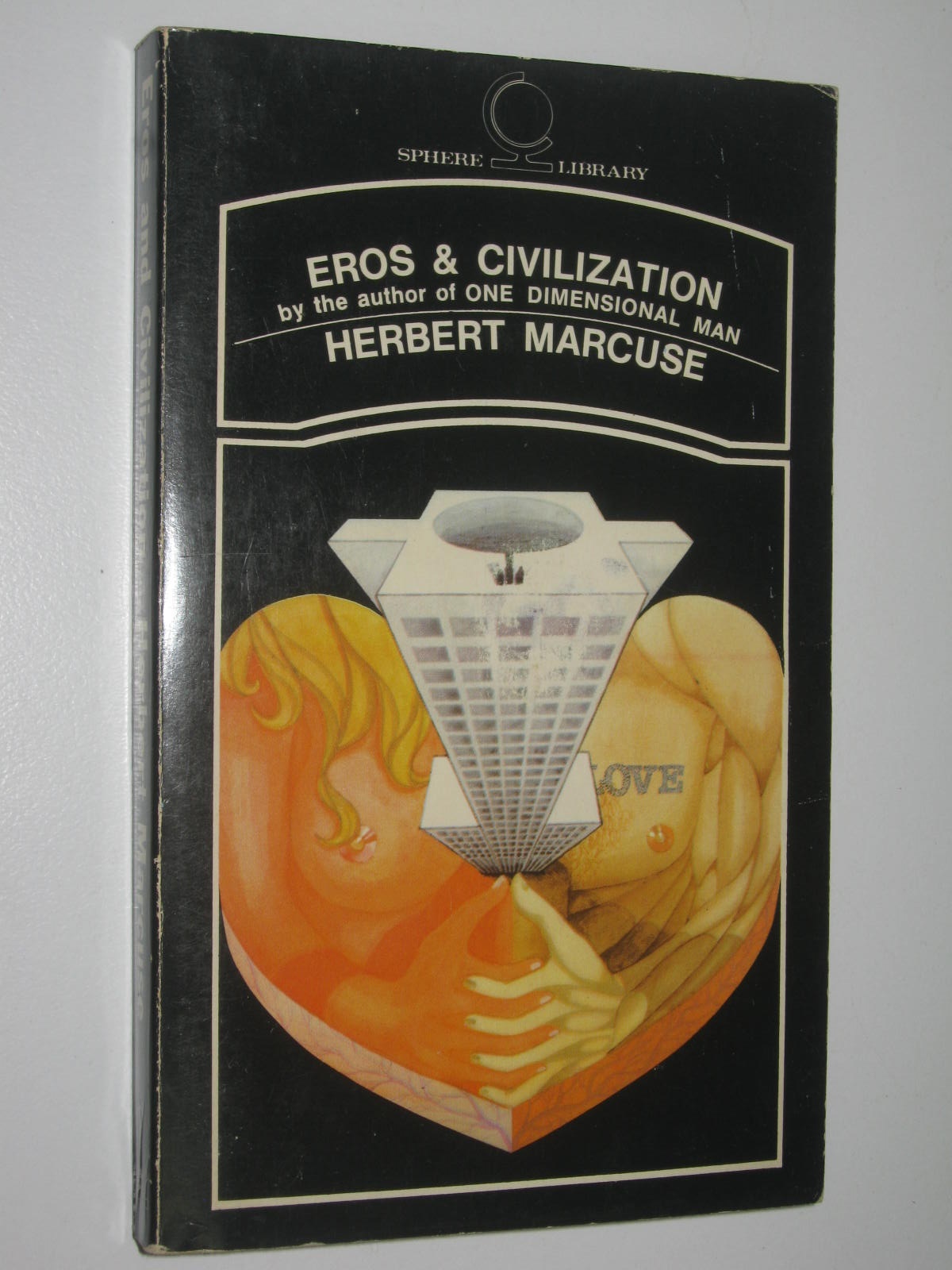
Excerpt from Herbert Marcuse Eros and Civilization, 1955:
“Eternity, long since the ultimate consolation of an alienated existence, had been made into an instrument of repression by its relegation to a transcendental world — unreal reward for real suffering. Here, eternity is reclaimed for the fair earth– as the eternal return of its children, of the lily and the rose, of the sun on the mountains and lakes, of the lover and the beloved, of the fear for their life, of pain and happiness. Death is; it is conquered only if it is followed by the real rebirth of everything that was before death here on earth — not as a mere repetition but as willed and wanted re-creation. The eternal return thus includes the return of suffering, but suffering as a means for more gratification, for the aggrandizement of joy.
“With the triumph of Christian morality, the life instincts were perverted and constrained; bad conscience was linked with a “guilt against God.” In the human instincts were implanted “hostility, rebellion, insurrection against the ‘master,’ ‘father,’ the primal ancestor and origin of the world.”
“Repression and deprivation were thus justified and affirmed; they were made into the masterful and aggressive forces which determined the human existence. With their growing social utilization, progress became of necessity progressive repression. On this road, there is no alternative, and no spiritual and transcendental freedom can compensate for the repressive foundations of culture. The “wounds of the spirit,” if they heal at all, do leave scars. The past becomes master over the present, and life a tribute to death: And now cloud upon cloud rolled over the Spirit, until at last madness preached: “all things pass away, therefore all things deserve to pass away! And this is justice itself, this law of Time, that it must devour its children: thus preached madness.”
“Nietzsche exposes the gigantic fallacy on which Western philosophy and morality were built – namely, the transformation of facts into essences, of historical into metaphysical conditions. The weakness and despondency of man, the inequality of power and wealth, injustice and suffering were attributed to some transcendental crime and guilt; rebellion became the original sin, disobedience against God; and the striving for gratification was concupiscence. Moreover, this whole series of fallacies culminated in the deification of time: because everything in the empirical world is passing, man is in his very essence a finite being, and death is in the very essence of life. Only the higher values are eternal, and therefore really real: the inner man, faith, and love which does not ask and does not desire. Nietzsche’s attempt to uncover the historical roots of these transformations elucidates their twofold function: to pacify, compensate, and justify the underprivileged of the earth, and to protect those who made and left them underprivileged. The achievement snowballed and enveloped the masters and the slaves, the rulers and the ruled, in that upsurge of productive repression which advanced Western civilization to ever higher levels of efficacy. However, growing efficacy involved growing degeneration of the life instincts — the decline of man.
“Man comes to himself only when the transcendence has been conquered – when eternity has become present in the here and now. Nietzsche’s conception terminates in the vision of the closed circle — not progress, but the “eternal return.”
“The closed circle has appeared before: in Aristotle and Hegel, as the symbol of being-as-end-in-itself… Nietzsche envisages the eternal return of the finite exactly as it is –in its full concreteness and finiteness. This is the total affirmation of the life instincts, repelling all escape and negation. The eternal return is the will and vision of an erotic attitude toward being for which necessity and fulfillment coincide.
“The horror of pain derives from the “instinct of weakness,” from the fact that pain overwhelms and becomes final and fatal. Suffering can be affirmed if man’s “power is sufficiently strong” to make pain a stimulus for affirmation – a link in the chain of joy. The doctrine of the eternal return obtains all its meaning from the central proposition that “joy wants eternity” – wants itself and all things to be everlasting.”
“Shield of necessity!
Star-summit of Being!
Not reached by any wish, not soiled by any No, eternal Yes of Being:
I affirm you eternally, for I love you, eternity.”
Eros and Civilization:
“the title expressed an optimistic, euphemistic, even positive thought, namely, that the achievements of advanced industrial society would enable man to reverse the direction of progress, to break the fatal union of productivity and destruction, liberty and repression — in other words, to learn the gay science (gaya sciencia) of how to use the social wealth for shaping man’s world in accordance with his Life Instincts, in the concerted struggle against the purveyors of Death. This optimism was based on the assumption that the rationale for the continued acceptance of domination no longer prevailed, that scarcity and the need for toil were only “artificially” perpetuated– in the interest of preserving the system of domination. I neglected or minimized the fact that this “obsolescent” rationale had been vastly strengthened (if not replaced) by even more efficient forms of social control. The very forces which rendered society capable of pacifying the struggle for existence served to repress in the individuals the need for such a liberation. Where the high standard of living does not suffice for reconciling the people with their life and their rulers, the “social engineering” of the soul and the “science of human relations” provide the necessary libidinal cathexis. In the affluent society, the authorities are hardly forced to justify their dominion. They deliver the goods; they satisfy the sexual and the aggressive energy of their subjects…
“Mass democracy provides the political paraphernalia for effectuating this introjection of the Reality Principle; it not only permits the people (up to a point) to chose their own masters and to participate (up to a point) in the government which governs them – it also allows the masters to disappear behind the technological veil of the productive and destructive apparatus which they control, and it conceals the human (and material) costs of the benefits and comforts which it bestows upon those who collaborate. The people, efficiently manipulated and organized, are free; ignorance and impotence, introjected heteronomy is the price of their freedom…
“Polymorphous sexuality” was the term which I used to indicate that the new direction of progress would depend completely on the opportunity to activate repressed or arrested organic, biological needs: to make the human body an instrument of pleasure rather than labor.”
 rainbow messenger