

“In order to free homosexuality from being viewed through the lens of pathology and perversity, we may need to return it to the gods.” Christine Downing, Myths and Mysteries of Same Sex Love.
Greek historian Plutarch (lived 46-c119 CE), who was himself a priest of Apollo, wrote in his work Parallel Lives:
‘And there is some reason in supposing that Deity, who is not a lover of horses or birds, but a lover of men, should be willing to consort with men of superlative goodness, and should not dislike or disdain the company of a wise and holy man. But that an immortal god should take carnal pleasure in a mortal body and its beauty, this, surely, is hard to believe.
‘And yet the Aegyptians make a distinction here which is thought plausible, namely, that while a woman can be approached by a divine spirit and made pregnant, there is no such thing as carnal intercourse and communion between a man and a divinity. But they lose sight of a fact that intercourse is a reciprocal matter, and that both parties to it enter into a like communion. However, that a god should have affection for a man, and a so-called love which is based upon affection, and takes the form of solicitude for his character and his virtue, is fit and proper.
‘And therefore it is no mistake when the ancient poets tell their tales of the love Apollo bore Phorbas, Hyacinthus, and Admetus, as well as the Sicyonian Hippolytus also, of whom it is said, that, as often as he set out to sail from Sicyon to Cirrha, the Pythia, as though the god knew of his coming and rejoiced thereat, chanted this prophetic verse:
“Lo, once more doth beloved Hippolytus hither make voyage.”
King Hippolytus of Sicyon, one of the most ancient Greek cities, was one of several royal lovers of the Sun God Apollo. Hippolytus was a great-grandson of Hercules, because of these reasons the conquering Prince Agamemnon kept Hippolytus on the throne when he took over the territory.

Greek poet Callimachus wrote that Apollo was “fired with love” for Admetus, a King of the ancient city Pherae in Thessaly, who was famed for his justice and hospitality. Apollo was sent by the Gods to serve as the king’s herdsman as punishment for slaying the giant serpent threatening Delphi (in later accounts for killing the one-eyed Cyclopes). Ovid also wrote of Apollo’s great love for Admetus, and Roman poet Tibullus wrote that the God stayed on willingly after the sentence was completed.
Apollo was lover of Phorbas, a Thessalian prince who became a venerated hero of Rhodes when he cleared the island of invading snakes – for his achievement he won a place among the stars as the constellation Serpentarius or Ophiuchus.

Apollo loved Cinyras, King of Cyprus and priest of Aphrodite, who brought acts of ritual sex worship out of the darkness and into the sunshine. Christian theologian Clement of Alexandria, in his Protrepticus, recorded that “Cyprian Islander Cinyras dared to bring forth from night to the light of day the lewd orgies of Aphrodite in his eagerness to deify a strumpet of his own country.”
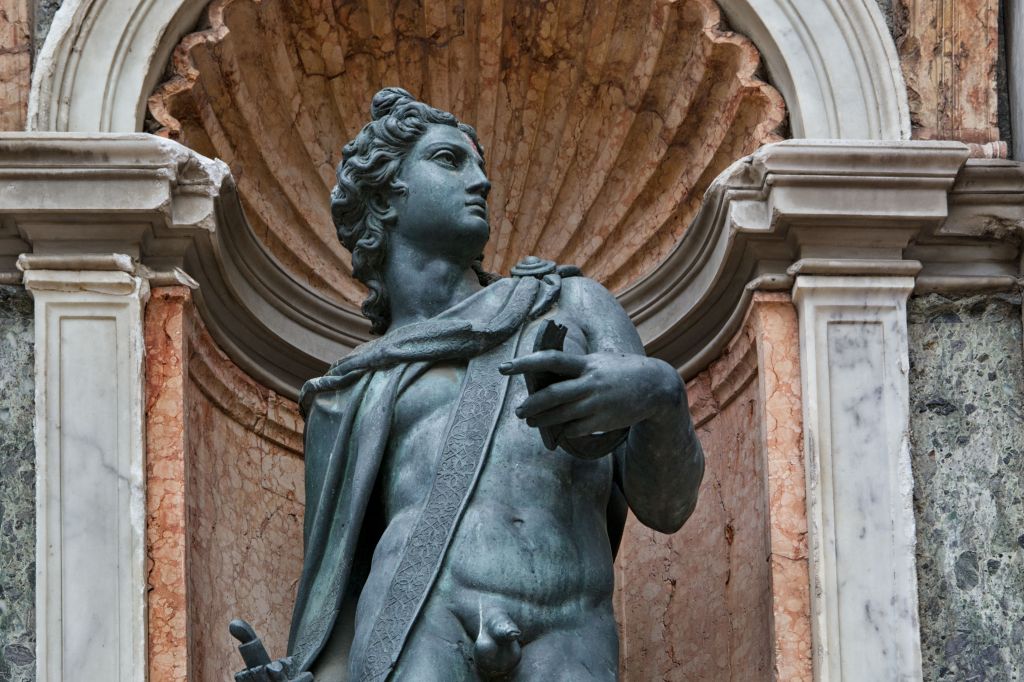
And Apollo also loved the king’s son Adonis, which possibly led the god’s sister Artemis to kill the beautiful young man because she didn’t like her brother messing with mortals. Adonis was born of incest between Cypriot King Cinyras and his daughter princess Myrrha – Aphrodite had cursed Myrrha to be infatuated with her father after Myrrha’s mother had called her daughter more beautiful than the Goddess. When the King was drunk Myrrha disguised herself and became his lover. When discovered, Myrrha was banished – and became the myrrh tree. Adonis was brought up by Persephone in the underworld. When grown, Adonis became the lover of both Aphrodite and Apollo, but came to an unhappy end, killed by a boar while out hunting, most likely sent by jealous Artemis or (Aphrodite’s husband) Ares. “They say that the androgyne Adonis fulfilled the part of a man for Aphrodite, but for Apollo the part of a wife,” reported 9th century Patriarch of Constantinople, Photius.

Apollo also loved other beautiful young men –
the Sun God loved Carnus, a seer from Arcanania in the west of Greece. Apollo taught him divination, and when King Hippotes of the Dorians killed Carnus with a spear (for giving obscure prophecies) the Sun God struck with a plague. The suffering people consulted an oracle, then banished Hippotes and established a cult of Apollo Carneius.

Apollo was erastes to his eremenos the young Cyparissus, a grandson of Hercules. This young man’s grief was so great when he accidently killed his favourite stag (a gift from Apollo) while out hunting, that his body transformed into the Cypress tree, possibly at Apollo’s instigation.

Apollo loved the gentle and divine hero Hyacinth, taught him the use of the bow and the lyre, the art of prophecy, exercises in the gymnasium – and also resurrected him to immortality after Hyacinth was killed during a game of quoit, when the discus was blown off course by the jealous Zephyr, God of the West Wind. The love of Apollo and Hyacinth was celebrated in Sparta annually in a 3 day summer festival – the first day mourning the death, the next two celebrating the resurrection of the young man.
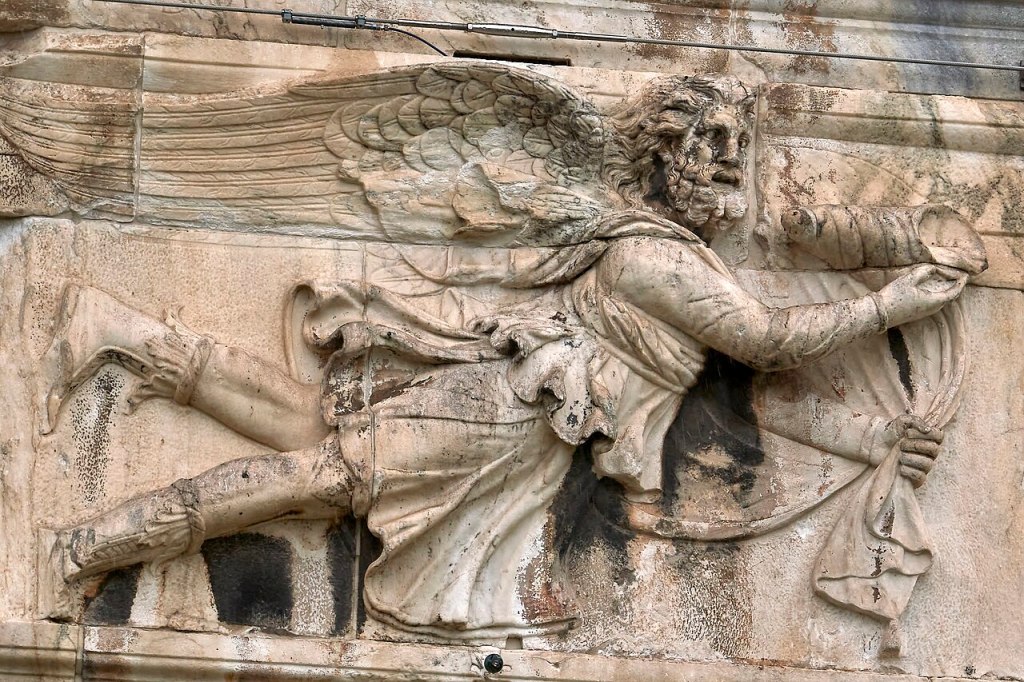
The Sun God and the God of the West Wind were certainly not friends, but Apollo was, according to his Argonaut sons, Zetes and Calais, “beloved of our sire,” Boreas, the God of the North Wind.
The Sun God also went for older human men too:
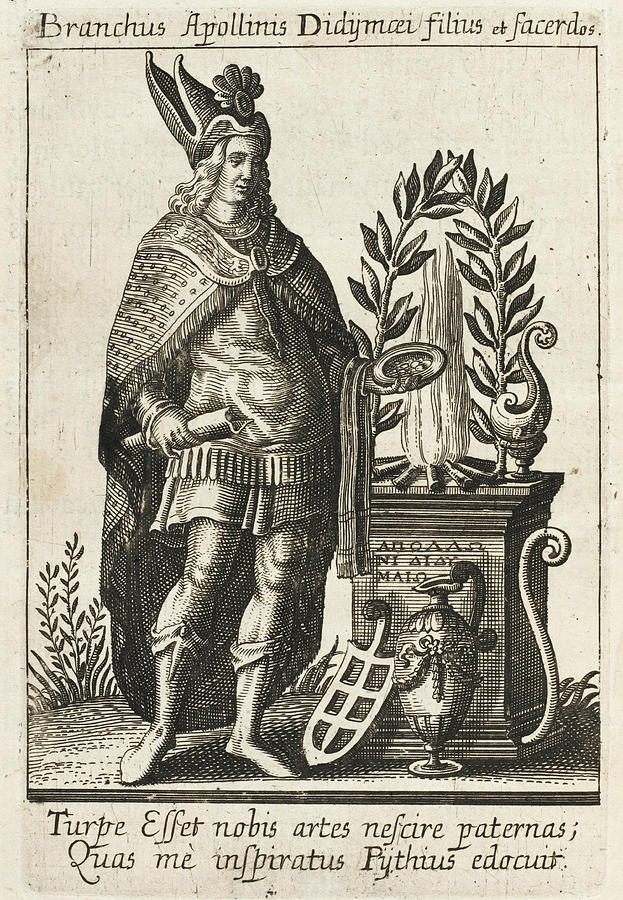
‘Branchus grew up to be the most handsome of men. One day, he came across Apollo in the woods and, being enchanted with the beauty of the god, kissed him. Apollo embraced him and returned his affections. Later Apollo gave him a crown and a magical staff, and breathed the gift of prophecy into him. Having received these gifts, Branchus became a prophet and a priest of Apollo. He established the cult of Apollo at Didyma. After Branchus suddenly disappeared, an altar was built on the place he kissed Apollo.’
Another version of the myth relates that:
‘One day, Apollo left Delos on a dolphin and reached a place called hiera hyle (sacred woods). It was there that he saw Branchus tending to his flocks and felt attracted to him. Wanting to seduce the mortal, Apollo appeared to him disguised as a goatherd. He first offered assistance in milking the goats, but the distracted god ended up milking a billy goat. Embarrassed, Apollo revealed his divine nature. In order to persuade Branchus to abandon the herding and accompany him instead, Apollo guaranteed the safety and promised a supply of good grazing to the flocks. After they became lovers, Apollo taught Branchus the mantic arts. Apollo also looked after the flocks while Branchus practiced the art…
‘Milesians built temples dedicated to Branchus and Apollo and named them Philesia, after the kiss of Branchus. There, the god was worshipped under the name Apollo Philesius (Apollo of the kiss). Temples dedicated to Branchus alone were called Branchiadon. The oracles given by him were said to be second only to Apollo’s oracles at Delphi. The Branchides, who claimed descent from Branchus, were an important clan of prophets.’ wikipedia
 rainbow messenger