
The Spiritual Nature and Call of QUEER PEOPLE.
“There must be radical healing of the gatekeepers if our globe is to truly be healed.” Malidoma Some
Andrew Harvey, Gay Mystics (1997): “Delving into the truth of homosexual history, one begins to understand that homophobia is a purely human and relatively recent cultural construct, and it has no basis in divine ordination. In earlier times, up until the Roman era, contemporary cultural historians such as Riane Eisler and Randy Conner make clear in their calmly groundbreaking work, reverence for the Sacred Feminine and the Divine Mother led to a reverence for all forms of life and love. Many shamans were and are homosexual; many of the worshipers of the Goddess under her various names and in her various cults all over the world – from the Mediterranean to the Near East to the Celtic parts of northern Europe – openly avowed their homosexuality and were accepted and even specially revered as priests, oracles, healers, and diviners. Homosexuals, far from being rejected, were seen as sacred – people who, by virtue of a mysterious fusion of feminine and masculine traits, participated with particular intensity in the life of the Source. The Source of Godhead is, after all, both masculine and feminine, and exists in a unity that includes but transcends both. The homosexual was thought to mirror this unity and its enigmatic fertility and power in a special way. The tribe or culture gave to him or her specific duties that were highly important and sacred, acknowledging this intimacy with divine truth and the clairvoyant help it could bring to the whole society.”
Riane Tennenhaus Eisler (born 22 July 1931) is an Austrian-born American systems scientist and author who writes about the effect of gender politics historically on society. She is most known for her 1987 book The Chalice and the Blade in which she coined the terms “partnership” and “dominator” to describe the two underlying forms of society. Partnership societies are characterized by gender equality, peace, sustainability, caring, while dominator societies are characterized by sexism, chronic war, ecological destruction, and unsustainability. According to her research, which references the work of archaeologists Marija Gimbutas and James Mellaart, among others, for millennia human societies were built on partnership, in which human capacity to give, nurture and sustain life was held in the highest regard, and shared responsibility was the gold standard. The fall into domination occurred around 6,500 years ago. Eisler has argued that the switch from partnership to dominator has led to gender biased monogamy, prostitution and illegitimacy, women’s dependence and the acceptance of chronic war.
Blossom of Bone by Randy P. Connor (1952-2022), published in 1993, was a multi-cultural exploration of the sacred experience, roles, and rituals of gay and gender-queer men, from the ancient priests of the goddess through nature-honouring tribal cultures to Oscar Wilde, pop music icon Sylvester and the Radical Faeries – highlighting the rich tradition of queer people who have embodied the interrelationship between androgyny, homoeroticism, and the quest for the sacred that reveals how central a part gay consciousness has played in the spiritual and creative evolution of humanity.


In a chapter called ‘Homosexual Love’, in his book The Origin and Development of Moral Ideas, Finnish philosopher Edward Westermarck (1862-1939), published1906, wrote that:
“In America, homosexual customs have been observed among a great number of native tribes. In nearly every part of the continent there seem to have been, since ancient times, men dressing themselves in the clothes and performing the functions of women, and living with other men as their concubines or wives…”
Echoing the words of many early European explorers in the New World, Westermarck tells us that:
“There is no indication that the North American aborigines attached any opprobrium to men who had intercourse with those members of their own sex who had assumed the dress and habits of women. In Kadiak such a companion was on the contrary regarded as a great acquisition; and the effeminate men themselves, far from being despised, were held in repute by the people, most of them being wizards…
“Among the Illinois and Neudowessies, the effeminate men assist in all the Juggleries and the solemn dance in honour of the calumet, or sacred tobacco pipe, for which the Indians have such a deference… They are called into the councils of the Indians, and nothing can be decided upon without their advice; for because of their extraordinary manner of living they are looked upon as manitous, or supernatural beings, and persons of consequence. The Sioux, Sacs and Fox Indians give once a year, or oftener if they choose, a feast to the Berdache, or I-coo-coo-a, who is a man dressed in woman’s clothes, as he has been all his life…
“In ancient Peru, also, homosexual practices seem to have entered in the religious cult…
“Las Casas tells us that in several of the more remote provinces of Mexico, sodomy was tolerated.. because the people believed that their gods were addicted to it; and it is not improbable that in earlier times the same was the case in the entire empire.”
Westermarck’s book tours the whole world, citing examples of the acceptance and integration of homosexuality and gender-fluidity in cultures from China and Japan…
“ In China, where it is also extremely common, there are special houses devoted to male prostitution… In Japan, pederasty is said by some to have prevailed since ancient times, whereas others are of the opinion that it was introduced by Buddhism about the sixth century of our era. The monks used to live with handsome youths, to whom they were often passionately devoted; and in feudal times nearly every knight had as his favourite a young man with whom he entertained relations of the most intimate kind, and on behalf of whom he was always ready to fight a duel when occasion occurred. Tea-houses with male gheishas were found in Japan till the middle of the nineteenth century…”
to Africa
“In Madagascar there are certain boys who live like women and have intercourse with men, paying those men who please them…. Men behaving like women have also been observed among the Ondonga in German Southwest Africa and the Diakite-Sarracolese in the French Soudan… Homosexual practices are common among the Banaka and Bapuku in the Cameroons…”
to the Pacific Islands
“In the Malay archipelago, homosexual love is common… It is widely spread among the Bataks of Sumatra. In Bali it is practised openly, and there are persons who make it a profession. The basir of the Dyaks are men who make their living by witchcraft and debauchery…. Homosexual love is reported as common among the Marshall Islanders and in Hawaii. From Tahiti we hear of a set of men called by the natives mahoos, who ‘assume the dress, attitude and manners of women…”
Westermarck also refers to the queer ways of the ancient world:
“No reference is made to pederasty in the Homeric poems or by Hesiod, but later on we meet with it almost as a national institution. It was known in Rome and other parts of Italy at an early period; but here also it became much more frequent in the course of time. At the close of the sixth century, Polybius tells us, many Romans paid a talent for the possession of a beautiful youth… During the Empire.. formal marriages between men were introduced with all the solemnities of ordinary nuptials. Homosexual practices occurred among the Celts, and were by no means unknown to the ancient Scandinavians, who had a whole nomenclature of the subject.”
The book references the work of Russian anthropologist Vladimir Bogoraz (1885-1936) who made an in depth study of the Chuckchi people of Siberia, whose ancient shamanic practices can be seen as the template from which more formalised religious structures developed:
“Homosexual practices are, or have been, very prominent among the peoples in the neighbourhood of the Behring Sea… Dr Bogoras gives the following account of a … practice prevalent among the Chukchi: “It happens frequently that, under a supernatural influence of one of their shamans, or priests, a Chukchi lad at sixteen years of age will suddenly relinquish his sex and imagine himself to be a woman. He adopts a woman’s sex and imagine himself to be a woman. He adopts a woman’s attire, lets his hair grow, and devotes himself altogether to female occupation. Furthermore, this disowner of his sex takes a husband into the Yurt and does all the work which is usually incumbent on the wife… These abnormal changes of sex imply the most abject immorality in the community, and appear to be strongly encouraged by the shamans who interpret such cases as an injunction of their individual deity.” The change of sex was usually accompanied by future shamanship; indeed nearly all shamans were former delinquents of their sex. Among the Chukchi male shamans who are clothed in woman’s attire and are believed to be transformed physically into woman are still quite common; and traces of the change of a shaman’s sex into that of a woman may be found among many other Siberian tribes…”
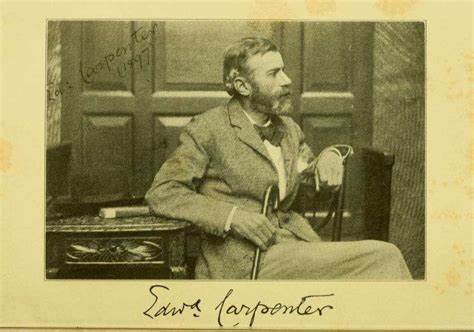

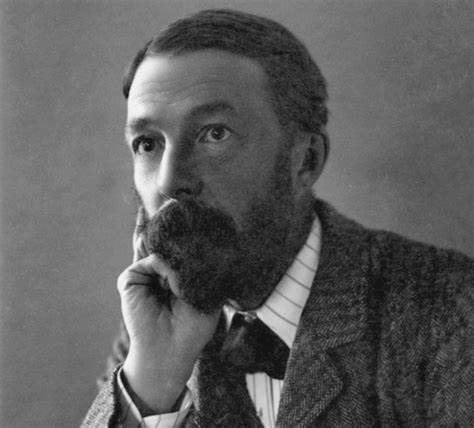
In 1914 English philosopher Edward Carpenter wrote:
“The fact is well known, (sic! If it was well known then what happened to that knowledge?) of course, that in the temples and cults of antiquity and of primitive races it has been a widespread practice to educate and cultivate certain youths in an effeminate manner, and that these youths in general become the priests or medicine-men of the tribe; but this fact has hardly been taken seriously, as indicating any necessary connection between the two functions, or any relation in general between homosexuality and psychic powers. Some such relation or connection, however, I think we must admit as being obviously indicated by the following facts; and the admission leads us on to the further enquiry of what the relation may exactly be, and what its rationale and explanation.”
HOWEVER, in the 20th century that exploration of the connections between homoerotic love, gender-fluidity and the sacred stalled. The gradual emancipation of LGBTQ+ people has come in the secular western world, but the old religiously based homophobia is still rife in more religiously focussed cultures, and still feeding prejudice in the west too. The LGBTQ+ community has yet to respond properly to the call of John Addington Symonds in 1891, in his work A Problem in Modern Ethics, to realise that:
“…it is of the highest importance to obtain a correct conception of the steps whereby the Christian nations, separating themselves from ancient paganism, introduced a new and stringent morality into their opinion on this topic, and enforced their ethical views by legal prohibitions of a very formidable kind.”
“Christ uttered no opinion upon what we now call sexual inversion. Neither light nor leading comes from Him, except such as may be indirectly derived from his treatment of the woman taken in adultery. When the Empire adopted Christianity, it had therefore the traditions of the Mosaic law and the first chapter of the Epistle to the Romans to guide its legislators on this topic. The Emperors felt obscurely that the main pulses of human energy were slackening; population all tended to dwindle; the territory of the empire shrank slowly year by year before their eyes. As the depositaries of a higher religion and a nobler morality, they felt it their duty to stamp out pagan customs, and to unfurl the banner of social purity.”
Let’s talk about sex:
“…the ritual worship of sex and nature was once the case throughout the world, and still is in the societies that industrialized academics call “primitive.” In these societies, as in the case of the witches, women and Gay men generally enjoyed a high status, Gay people of both sexes were looked upon with religious awe, and sexual acts of every possible kind were associated with the most holy forms of religious expression. Admittedly, there were also great diversities and variations in the beliefs and practices of these societies, but there was one great common feature that set them off in sharp distinction to the Christian/industrial tradition: their love of sexuality…
“All the evidence indicates that nature people fucked for pleasure. Their purpose was to celebrate sex. Their orgies were acts of sexual worship to the power of sex they felt in themselves and in nature around them. Their religious feasts were characteristically joyous: dancing, feasting, fucking together. The Indians who have been observed in the Americas; the myths that have survived in Europe; the artifacts that exist from all over the world – all attest to the pleasure of what the celebrants were doing…” Arthur Evans, Witchcraft and the Gay Counter-Culture, 1978
Westermarck recorded in 1906 that “In Morocco, supernatural benefits are expected not only from heterosexual but also from homosexual intercourse with a holy person.”

Let’s talk about shamans:
Shamans of tribal peoples the world over connected the people of the tribe to worlds below and above, through both individual and collective journeys. A person would visit the shaman to have a conversation with and bring healing energy through from the unseen worlds. One method the shaman used for this involved raising sexual energy connected to open heart and trained mind. The erotic was known as the doorway to the spiritual portals in the body and the shaman was trained to work with these.
We have these amazing words from African teachers Malidoma Some and Sobonfu Some, who brought the wisdom of the Dagara tribe of Burkino Faso to the West. They both spoke and wrote about lesbians as witches and gay men as gatekeepers, whose role is to keep open the ecstatic gates to the Otherworlds – through the way they connect sexual energy to spirit and the Earth itself – and thereby reveal that African understanding of homosexuality was once profound, pointing to the evil legacy that Christian homophobia has given that continent:
Malidoma: “Among the Dagara people, gender has very little to do with anatomy. It is purely energetic. In that context, a male who is physically male can vibrate female energy, and vice versa. That is where the real gender is. Anatomic differences are simply there to determine who contributes what for the continuity of the tribe. It does not mean, necessarily, that there is a kind of line that divides people on that basis. And this is something that also touches on what has become known here as the “gay” or “homosexual” issue. Again, in the culture that I come from, this is not the issue. These people are looked on, essentially, as people. The whole notion of “gay” does not exist in the indigenous world. That does not mean that there are not people there who feel the way that certain people feel in this culture, that has led to them being referred to as “gay.”
“The reason why I’m saying there are no such people is because the gay person is very well integrated into the community, with the functions that delete this whole sexual differentiation of him or her. The gay person is looked at primarily as a “gatekeeper.” The Earth is looked at, from my tribal perspective, as a very, very delicate machine or consciousness, with high vibrational points, which certain people must be guardians of in order for the tribe to keep its continuity with the gods and with the spirits that dwell there. Spirits of this world and spirits of the other worlds. Any person who is at this link between this world and the other world experiences a state of vibrational consciousness which is far higher, and far different, from the one that a normal person would experience. This is what makes a gay person gay.”
“I think this is again victimization by a Christian establishment that is looking at a gay person as a disempowered person, a person who has lost his job from birth onward, and now society just wants to fire him out of life. This is not justice. It’s not justice. It is a terrible harm done to an energy that could save the world, that could save us. If, today, we are suffering from a gradual ecological waste, this is simply because the gatekeepers have been fired from their job…
“Christianity stresses postponing living on earth, as of we are only here to pack up our baggage and prepare for a life somewhere else “out there.” Jesus Christ is right here, man! And of course anyone else who knows more, who knows better, will be suppressed.
And you start with the gatekeepers. You take the gatekeeper and you confuse his mind. You threaten him and you throw him in the middle of nowhere. Then nobody knows where the gate is. As soon as you lose the whereabouts of the gate, then you have a culture going downhill. What keeps a village together is a handful of “gays and lesbians,” as they call them in the modern world. In my village, lesbians are called witches, and gay men are known as the gatekeepers.”
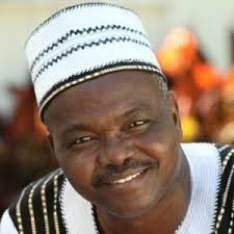
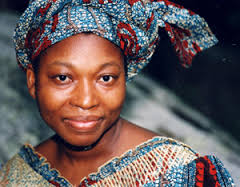
Sobonfu: “In the village homosexuality is seen very differently that it is seen in the West, in part because all sexuality is spiritually based. Taken away from its spiritual context, it becomes a source of controversy, and can be exploited. In the village, you never see gatekeepers, or anybody for that matter, displaying their sexuality or commenting on the sexuality of others.
“Gatekeepers hold keys to other dimensions. They maintain a certain alignment between the spirit world and the world of the village. Without them, the gates to the other world would be shut.
On the other side of these gates lies the spirit world or other dimensions. Gatekeepers re in constant communication with beings who live there, who have the ability to teach us how to deal with ritual. And gatekeepers have the capacity to take other people to those places.
“A gatekeeper’s knowledge is different from the knowledge of mentors and elders. This is because elders do not necessarily have access to all the gateways. The gatekeepers on the other hand, have access to all the dimensions. They can open any gate. Although their knowledge is very broad, elders will call upon gatekeepers to help them open a particular gate or help them better understand what the spirit world is about.
“Gays and lesbians in the West are often very spiritual, but they have been taken away from their connection with spirit. My feeling is that without that outlet or that role in the culture, they have to find other ways of defining themselves. This could be one of the reasons why they would want to get married or make themselves look as though they do not have a unique purpose.”
LET’S TALK ABOUT HIV:
In the 1980/90s HIV/AIDS hit hardest amongst African people and Gay men. It was confusing to see what the commonality was, but when the connection between sexuality and spirit is embraced, the light begins to shine: African cultures and the ‘gay’ priests of the ancient European had in common a deep connection to the spirit realms inhabited by elemental and ancestral spirits. AIDS became for me an awakening to the multidimensional nature of reality, to the presence of ancestors and angels around me.
I was diagnosed with HIV in 1990, aged 25, and told I had seven years to live. Sure enough, by 1997 I had full blown AIDS, a CD4 count of 3, and was hovering between the worlds. I took a good look through the veils while I was there, feeding my mind with religious and spiritual teachings as a way to transcend the physical pain and the fear of dying. In 1998 new medication turned my health around and I started a slow journey back to health and re-engagement with life, feeling transformed as a person, aware of a much bigger picture of human nature and evolution, and sensing that gay sexuality had a significant part to play in my own evolution, and that of the species. Since 2000 I have been exploring the sexual-spiritual connection among Queer Pagans, Radical Faeries and as organiser of Queer Spirit Festival in the UK. Queerspirit.net
As Stanislav Grof wrote in The Cosmic Game (1997) “After we have had direct experiences of the spiritual dimensions of reality, the idea that the universe, life and consciousness could have developed without the participation of superior creative intelligence appears to us absurd, naïve and untenable.”
The AIDS epidemic brought many gay men to the edge of life, most passed over it but some of us stayed behind, conscious forever of the link we have to those guys in spirit. But of course in a culture that does not recognise the spirit as real, we will only deepen and discover the power in that connection if we choose to pursue self-knowledge ourselves. Some may feel drawn to religion to do that, but of course most of us are quite understandably repulsed by the misogynstic, homophobic attitudes of religious institutions. Frankly, our own natural spirituality is older than religion, it is nature-based, it honours the feminine, the erotic and the ecstatic, it is shamanic.
Nowadays, HIV infection is not a death sentence. The medications suppress the virus to such an extent that HIV+ people with undetectable viral loads do not pass the virus on to others. Prep medication can be used by the HIV negative to prevent infection. Yet infections have not stopped, the story is certainly not over. I have two younger friends recently diagnosed positive and dealing with that – including the experience of ‘sero-conversion’ illness. A friend recently told me that although HIV itself is not pushing him to reflect on his mortality, the severe 3-week sero-conversion illness surely did. At the same time I get bug-chasers on Grindr wanting to be ‘converted’ by taking a toxic load in hot sex ritual. I ask them what is attracting them to being HIV+ and they cannot explain beyond they find HIV+ men and the idea of being HIV+ to be really HOT.
The shamanic rituals of tribal peoples and the ecstatic, bacchanalian, sexual rites of the ancient Goddess priests in their temples and in the streets at raucous public festivals, brought worshippers into a state of union with the chosen deity. Revellers experienced their oneness with the god, with nature, with each other.
As Malidoma said, heaven – jesus – is right here! Human consciousness extends from the lower to the upper worlds, but the portals to those worlds came under the control of patriarchal religions, who usurped the spiritual power that had long belonged to women, transgender people and gay men. Through the suppression of sexual pleasure, and the spread of the belief that sex was only for reproduction and every thing else a sin, humanity was cut off from the sacred power house in our own bodily temples, cut off from experiencing the sacred, erotic energy pulsing through life. We became disconnected, we got lost – using religions to try to reconnect while suppressing and killing the natural born shamans amongst us.
Yet, as Malidoma put it:
“…the thing about it is that humans are going to be begetting gatekeepers, no matter what. This is the chance that we’ve got. So maybe that means that sooner or later we’re going to wake up to the horror of our own errors, and we’re going to reconsecrate our chosen people so that they can do their priestly work as they should. Otherwise, I just don’t understand. I just don’t understand. My position about it is not so much that gays be just forgiven. That’s just tokenism. But that they serve as an example of the wrong, or the illness, that modernity has brought to us, and that we use that to begin working at healing ourselves and our society from the bottom up. That way, by the time we reach a certain level, all the gatekeepers are going to find their positions again. We cannot tell them where the gates are. They know. If we start to heal ourselves, they will remember. It will kick in. But as long as we continue in arrogance, in egotism, in God-knows-what form of violence on ourselves, no, there’s that veil of confusion that’s going to continue to prevail, and as a result it’s going to prevent great things from happening. That’s all I can say about that.”
The role of shamans has always been to open the gates to the Otherworlds. Once a few shamans existed in each tribe, in each temple, working for the whole. Patriarchy and Christianity formed a deadly contract to eradicate the power of these shamans, which they did by pouring shame on their gender-bending ways and erotic habits, and by killing them. Then laws were enacted to try to prevent their return. This suppression lasted so long that now the gay shamans are born in cultures that do not recognise them, and do not tell them their own history. But as a global queer community finds its self-confidence there is potential for a huge shift in understanding of gay nature and a massive reclaiming of the spiritual gifts hidden in our gender-fluidity and sexuality.
For all these reasons I believe Gay Men, Lesbians, Bi and Trans people belong together. Our cosmic goal is not to separate from each other, but to celebrate together the transcendent liberation that queerness offers us – the chance to show everyone in the whole world that it is OK TO BE WHO YOU ARE, to be your unique manifestation of the divine spirit in all, to love whom u naturally drawn to love, and to celebrate the erotic body as the temple of the ecstatic, free and holy soul!
It is time to reunite the worlds. The Gatekeepers are Called.


