

As ‘the love that dare not speak its name’ began to be find new labels attached to it in the late 19th century, such as Uranian, Invert, Intermediate Type – and the one that stuck, Homosexual – there were gay men in Europe and America who could see the limitations of the terms that the new sciences of psychology and sociology were coming up with. There were some who saw that same sex love and gender-fluidity could not be fully understood in the modern world without a return of some pagan spirit to human consciousness: Religion had made the body and sexuality taboo, but these gay men were aware of an earlier time in history when sex, when queerness was intimately intertwined with the spiritual, magical life of the community. They dreamed of a return to nature worship, when all of life was honoured and respected, and queer people free to fulfil the roles, often spiritual ones, that nature created us for.
We can spot signs of this flowering in the American Transcendentalist movement.

Poet Henry David Thoreau: “I went to the woods because I wished to live deliberately, to front only the essential facts of life, and see if I could not learn what it had to teach, and not, when I came to die, discover that I had not lived. I did not wish to live what was not life, living is so dear; nor did I wish to practise resignation, unless it was quite necessary. I wanted to live deep and suck out all the marrow of life, to live so sturdily and Spartan-like as to put to rout all that was not life, to cut a broad swath and shave close, to drive life into a corner, and reduce it to its lowest terms, and, if it proved to be mean, why then to get the whole and genuine meanness of it, and publish its meanness to the world; or if it were sublime, to know it by experience, and be able to give a true account of it in my next excursion.” From Walden (1854)
He reported back: “I took a walk in the woods and came out taller than the trees.”

Nature mysticism weaved through Walt Whitman’s Leaves of Grass (1855):
“I believe in you my soul, . . . the other I am must not abase itself to you, And you must not be abased to the other. Loaf with me on the grass, . . . loose the stop from your throat, Not words, not music or rhyme I want, . . . not custom or lecture, not even the best, Only the lull I like, the hum of your valved voice. I mind how we lay in June, such a transparent summer morning; You settled your head athwart my hips and gently turned over upon me, And parted the shirt from my bosom-bone, and plunged your tongue to my bare-stript heart. And reached till you felt my beard, and reached till you held my feet. Swiftly arose and spread around me the peace and joy and knowledge that pass all the art and argument of the earth; And I know that the hand of God is the elder hand of my own, And I know that the spirit of God is the eldest brother of my own, And that all the men ever born are also my brothers, . . . and the women my sisters and lovers, And that a kelson of creation is love.”
But 19th century society was far from ready to embrace this transcendental vision.
Edward Carpenter, Love’s Coming of Age (1896):
“Our public opinion, our literature, our customs, our laws, are saturated with the notion of the uncleanness of Sex, and are so making the conditions of its cleanness more and more difficult. Our children, as said, have to pick up their intelligence on the subject in the gutter. Little boys bathing on the outskirts of our towns are hunted down by idiotic policemen, apparently infuriated by the sight of the naked body, even of childhood. Lately in one of our northern towns, the boys and men bathing in a public pool set apart by the corporation for the purpose, were-though forced to wear some kind of covering–kept till nine o’clock at night before they were allowed to go into the water–lest in the full daylight Mrs. Grundy should behold any portion of their bodies! and as for women and girls their disabilities in the matter are most serious.
“Till this dirty and dismal sentiment with regard to the human body is removed there can be little hope of anything like a free and gracious public life. With the regeneration of our social ideas the whole conception of Sex as a thing covert and to be ashamed of, marketable and unclean, will have to be regenerated. That inestimable freedom and pride which is the basis of all true manhood and womanhood will have to enter into this most intimate relation to preserve it frank and pure–pure from the damnable commercialism which buys and sells all human things, and from the religious hypocrisy which covers and conceals; and a healthy delight in and cultivation of the body and all its natural functions, and a determination to keep them pure and beautiful, open and sane and free, will have to become a recognised part of national life.”

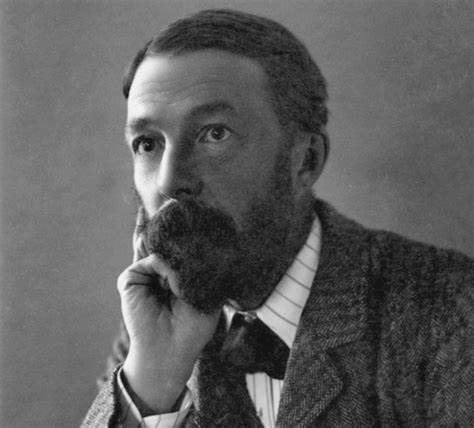
English writer John Addington Symonds wrote that “…it is of the highest importance to obtain a correct conception of the steps whereby the Christian nations, separating themselves from ancient paganism, introduced a new and stringent morality into their opinion on this topic, and enforced their ethical views by legal prohibitions of a very formidable kind.” (A Problem in Modern Ethics, published 1896).
Symonds was a gay man who had an experience of what was coming to be termed ‘cosmic consciousness’, while under chloroform: “I seemed at first in a state of utter blankness; then came flashes of intense light, alternating with blankness and with a keen vision of what was going on in the room round me, but no sensation of touch. I thought that I was near death, when suddenly my soul became aware of God, who was manifestly dealing with me, handling me, so to speak, in an intense personal present reality. I felt Him streaming in like light upon me and heard Him saying in no language, but as hands touch hands and communicate sensations: ‘I led thee; I guided thee; you will never sin and weep and wail in madness any more; for now you have seen Me.’ My whole consciousness seemed brought into one point of absolute conviction; the independence of my mind from my body was proved by the phenomena of this acute sensibility to spiritual facts, this utter deadness of the senses. Life and death seemed mere names… I cannot describe the ecstasy I felt.”
Symond’s story was recorded in a book called Cosmic Consciousness by Richard Bucke (1905), in which he told of his own awakening to the paradigm of love and oneness like this:
“It was in the early spring, at the beginning of his thirty-sixth year. He and two friends had spent the evening reading Wordsworth, Shelley, Keats, Browning, and especially Whitman. They parted at midnight, and he had a long drive in a hansom (it was in an English city). His mind, deeply under the influence of the ideas, images and emotions called up by the reading and talk of the evening, was calm and peaceful. He was in a state of quiet, almost passive enjoyment. All at once, without warning of any kind, he found himself wrapped around as it were by a flame-colored cloud. For an instant he thought of fire, some sudden conflagration in the great city; the next, he knew that the light was within himself. Directly afterwards came upon him a sense of exultation, of immense joyousness accompanied or immediately followed by an intellectual illumination quite impossible to describe. Into his brain streamed one momentary lightning-flash of the Brahmic Splendor which has ever since lightened his life; upon his heart fell one drop of Brahmic Bliss, leaving thenceforward for always an aftertaste of heaven. Among other things he did not come to believe, he saw and knew that the Cosmos is not dead matter but a living Presence, that the soul of man is immortal, that the universe is so built and ordered that without any peradventure all things work together for the good of each and all, that the foundation principle of the world is what we call love and that the happiness of every one is in the long run absolutely certain.”

Richard Maurice Bucke was born March 18, 1837, in Methwold, a village on the edge of the Norfolk fens, and lived most of his life in Canada. In his book ‘Cosmic Consciousness: A Study in the Evolution of the Human Mind’ he described three stages in the development of consciousness: the ‘simple consciousness’ of animals, the ‘self-consciousness’ of the vast majority of humans (the development of reason, self awareness, imagination, etc.), and, achieved by some only, ‘cosmic consciousness’; a mystical state of being beyond ‘self consciousness’ that is the awaiting, next stage of human development.
In his work, Bucke gives high praise to Walt Whitman’s book ‘Leaves of Grass’ (describing how it helped open his mind to the cosmic visionary experience) and his mentions how “personal intercourse” with Edward Carpenter helped him deepen his understanding of it. He says that in Whitman’s poetry he found the “best, most perfect, example the world has so far had of the Cosmic Sense, first because he is the man in whom the new faculty has been, probably, most perfectly developed, and especially because he is, par excellence, the man who in modern times has written distinctly and at large from the point of view of Cosmic Consciousness, and who also has referred to its facts and phenomena more plainly and fully than any other writer either ancient or modern.”
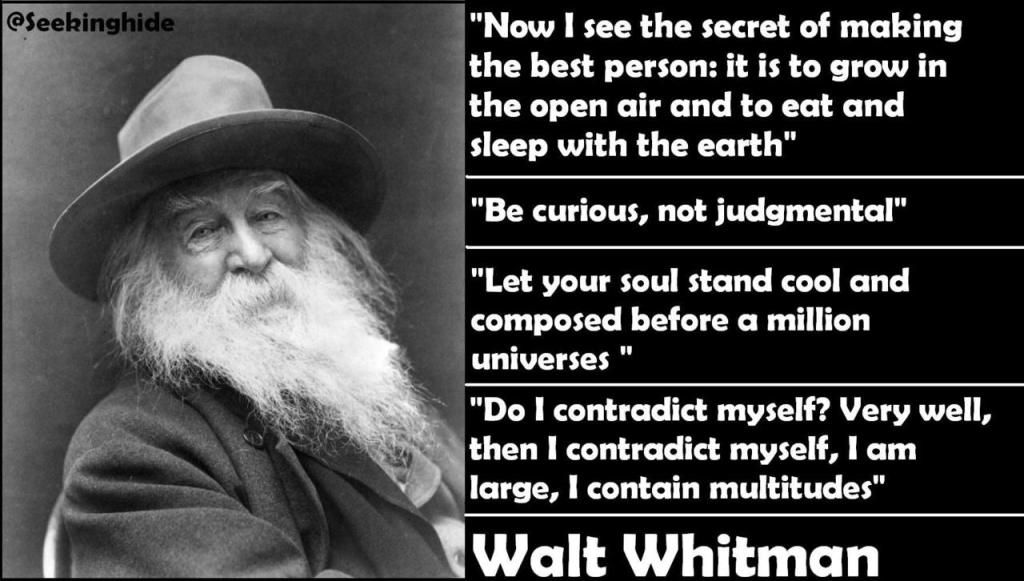
Whitman:
I am the poet of the Body and I am the poet of the Soul, The pleasures of heaven are with me and the pains of hell are with me, The first I graft and increase upon myself, the latter I translate into new tongue.
I am the poet of the woman the same as the man, And I say it is as great to be a woman as to be a man, And I say there is nothing greater than the mother of men.
I chant the chant of dilation or pride, We have had ducking and deprecating about enough, I show that size is only development.
Have you outstript the rest? are you the President? It is a trifle, they will more than arrive there every one, and still pass on.
I am he that walks with the tender and growing night, I call to the earth and sea half-held by the night.
Press close bare-bosom’d night–press close magnetic nourishing night! Night of south winds–night of the large few stars! Still nodding night–mad naked summer night.
Smile O voluptuous cool-breath’d earth! Earth of the slumbering and liquid trees! Earth of departed sunset–earth of the mountains misty-topt! Earth of the vitreous pour of the full moon just tinged with blue! Earth of shine and dark mottling the tide of the river! Earth of the limpid gray of clouds brighter and clearer for my sake! Far-swooping elbow’d earth–rich apple-blossom’d earth! Smile, for your lover comes.
Prodigal, you have given me love–therefore I to you give love! O unspeakable passionate love.
In his classic 1902 study of mysticism, ‘Varieties of Religious Experience,’ William James has a high view of ‘Whitmanism’, seeing it as part of “the everlasting and triumphant mystical tradition” on the same level as Hinduism, Neoplatonism, Sufism and Christian mysticism, paths that can lead us to “both become one with the Absolute and … become aware of our oneness.”
Edward Carpenter, Towards Democracy (1881):
The sun shines, as of old; the stars look down from heaven; the
moon, crescent, sails in the twilight; on bushy tops in the warm
nights, naked, with mad dance and song, the earth-children address
themselves to love;
Civilisation sinks and swims, but the old facts remain – the sun
smiles, knowing well its strength….
Tears and lamentations are no more. Life and death lie stretched
below me. I breathe the sweet aether blowing of the breath of God.
Deep as the universe is my life – and I know it; nothing can
dislodge the knowledge of it; nothing can destroy, nothing can
harm me.
Joy, joy arises – I arise. The sun darts overpowering piercing
rays of joy through me, the night radiates it from me.
I take wings through the night and pass through all the wildernesses
of the worlds, and the old dark holds of tears and death –
and return with laughter, laughter, laughter:
Sailing through the starlit spaces on outspread wings, we two –
0 laughter! laughter! Laughter!
Freedom! the deep breath! the word heard centuries and
centuries beforehand; the soul singing low and passionate to itself:
Joy! Joy!
Not as in a dream. The earth remains and daily life remains, and
the scrubbing of doorsteps, and the house and the care of the
house remains; but Joy fills it, fills the house full and swells to
the sky and reaches the stars: all Joy!
0 freed soul! soul that has completed its relation to the body!
0 soaring, happy beyond words, into other realms passing,
salutations to you, freed, redeemed soul!
If I am not level with the lowest I am nothing; and if I did not
know for a certainty that the craziest sot in the village is my equal,
and were not proud to have him walk with me as my friend, I
would not write another word – for in this is my strength.
Bucke writes that Carpenter: “As a direct result of the oncoming of the Cosmic Sense he practically resigned his social rank and became a laborer; that is to say, he procured a few acres of land not many miles from Dronfield, in Derbyshire, built upon it a small house and lived there with the family of a working man as one of themselves.” He also became partnered with George Merrill in 1891, their relationship lasting until Carpenter’s death in 1928.
Edward Carpenter, Civilisation: Its Cause and Cure (1889) : “The meaning of the old religions will come back to him. On the high tops once more gathering he will celebrate with naked dances the glory of the human form and the great processions of the stars, or greet the bright horn of the young moon which now after a hundred centuries comes back laden with such wondrous associations – all the yearnings and the dreams and the wonderment of the generations of mankind – the worship of Astarte and of Diana, of Isis or the Virgin Mary; once more in sacred groves will he reunite the passion and the delight of human love with his deepest feelings of the sanctity and beauty of Nature; or in the open, standing uncovered to the Sun, will adore the emblem of the everlasting splendour which shines within.”

French poet Arthur Rimbaud (1854-1891) believed poetry and sorcery went together. He saw the modern human as a soulless robot and believed a revival of paganism would restore our passion. He believed men needed to return to the goddess to find healing, plus incorporate both Pan and the androdyne into their psyches in order to be whole:
“ I yearn for the days of Cybele
When they spoke of her riding, gigantically beautiful
In a bronze chariot, through splendid cities
Her breasts spilling into the vastness…
I believe in you, I believe in you, divine mother
Sea born Aphrodite! O the way is bitter;
Since that other god has nailed us to his cross.
Flesh, marble, flower, Venus, it is in you I believe!”
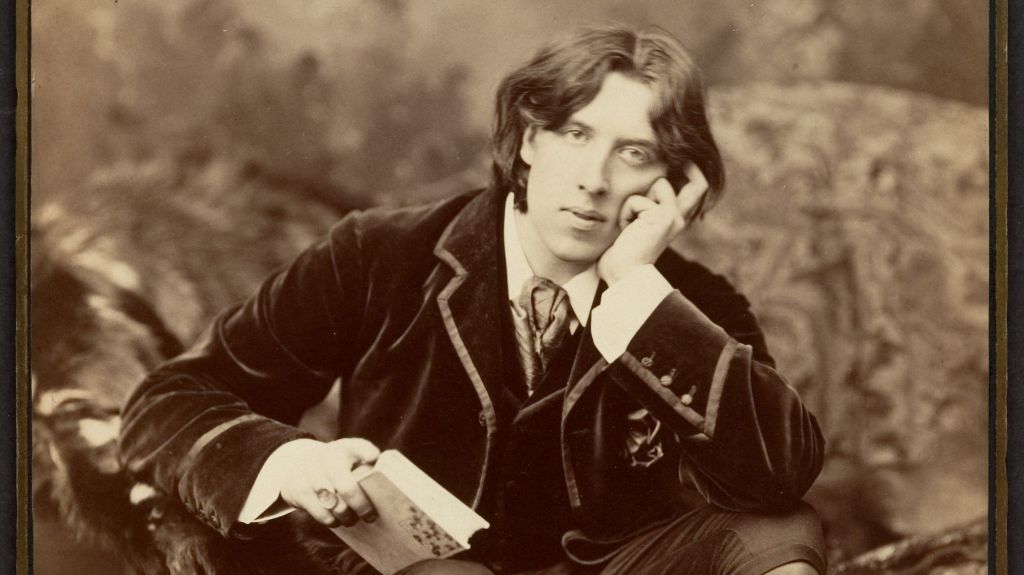
OSCAR WILDE lamented:
“The Gods are dead: no longer do we bring
To grey eyed Pallas crowns of olive leaves! …
Great Pan is dead, and Mary’s son is King”
But reflected also:
“I am conscious.. that behind all this artistic beauty.. there is some spirit hidden of which the painted forms and shapes are but modes of manifestation, and it is with this spirit that I desire to become in harmony…. We have forgotten that water can cleanse, and fire purify, and the earth is Mother to us all… I feel sure that in elemental forces there is purification, and I want to go back to them and live in their presence…”
“It will be a marvellous thing – the true personality of man – when we see it. It will grow naturally and simply, flowerlike, or as a tree grows. It will not be at discord. It will never argue or dispute. It will not prove things. It will know everything. And yet it will not busy itself about knowledge. It will have wisdom. Its value will not be measured by material things….. “‘Know thyself’ was written over the portal of the antique world. Over the portal of the new world, ‘Be thyself’ shall be written.” From the Soul of Man under Socialism (1891)
 rainbow messenger