
“Just as a river has a source, so the river of consciousness has a source. It descends from Cosmic Consciousness, the consciousness of God that is beyond all creation.” Yogananda
“Abandoning the quest and the glorification of the separate isolated self we have to return to the cosmic universal life. It is the blossoming indeed of this ‘new’ life in the deeps of our minds which is salvation…it is this presence which all down the ages has been hailed as Savior and Liberator: the daybreak of a consciousness so much vaster, so much more glorious, than all that has gone before that the little candle of the local self is swallowed up in its rays. It is the return home, the return into direct touch with Nature and Man-the liberation from the long exile of separation, from the painful sense of isolation and the odious nightmare of guilt and ‘sin.’ Can we doubt that this new birth-this third stage of consciousness, if we like to call it so has to come, that it is in-deed not merely a pious hope or a tentative theory, but a fact testified to already by a cloud of witnesses in the past-witnesses shining in their own easily recognizable and authentic light, yet for the most part isolated from each other among the arid and unfruitful wastes of Civilization, like glow-worms in the dry grass of a summer night?” Edward Carpenter, Pagan and Christian Creeds, 1920
The understanding “…that all things are interconnected in a great, encompassing, living unity – is what is meant by the term ‘cosmic consciousness.’ It’s ‘consciousness’ because it results from reflections on our experiences. It’s ‘cosmic’ because it expands more and more into the larger world as we ourselves become more interconnected. It involves a ‘living unity’ because the universe constantly transforms and perpetuates itself with stunning creativity, like a great living organism, and because the universe is one.
“Cosmic Consciousness stimulates creativity among the individuals who cultivate it. Because of its emphasis on connectedness, it motivates people to integrate the tactile, conceptual, and emotional parts of their lives into an experiential whole…
“Here is where we find the font of the magic of life, for that font is people themselves when self integrated, flowing with expressive creativity, and connected in body and spirit to each other and the cosmos. Here the boundaries of the self expand, and its windows open outward to the goodness and beauty of the whole, which it takes in with exuberance. From this place onward, life becomes a transformative and magical journey on an ever-opening road.”
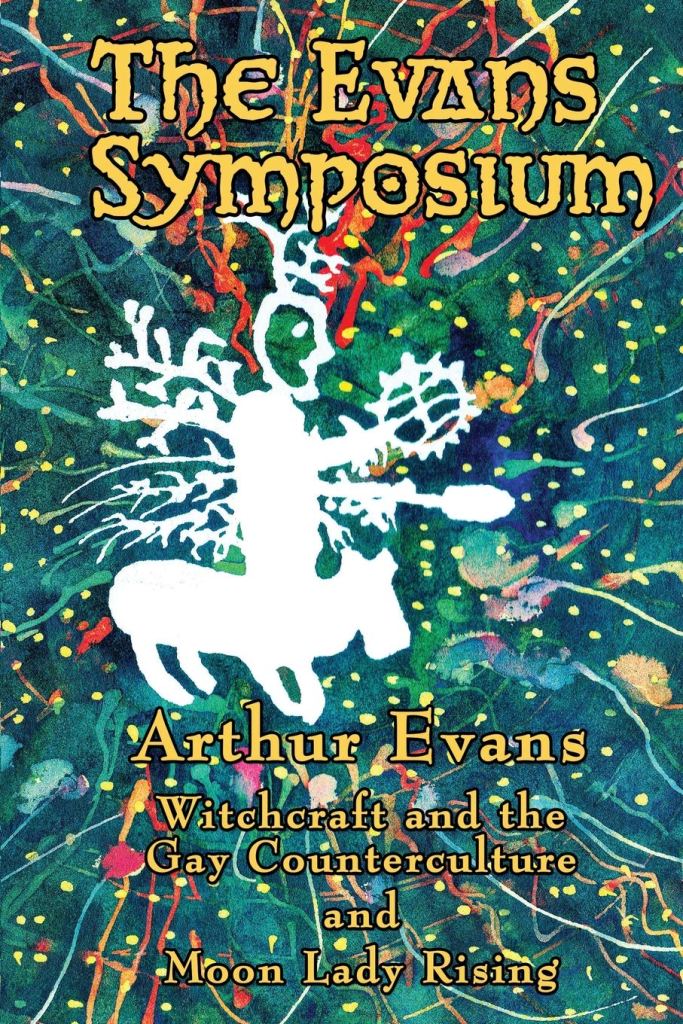
This is how Arthur Evans, author of 1978 book Witchcraft and the Gay Counter Culture described cosmic consciousness in his later work Lady Moon Rising, a book that spotlights the loss of meaning in people’s lives as a prime source of dis-ease and discontent. He calls the work of coming together with other people to collectively birth a new era of enlightened awareness The Great Reconnect.
“Making the Great Reconnect necessarily deepens and expands the lives of the people doing the reconnecting. They become more open to learning from other people’s personal experiences, the cultural richness of humanity, and the wonder of the natural world. If they invest enough of themselves in the world, they will no longer experience it as an alien presence of external, lifeless objects, disconnected from their own inner needs, feelings and identity. Instead, they will come to experience both themselves and the world as mutually engaging parts of a larger, organic whole…”
The work of the Great Reconnect goes on in groups and communities, at heart opened gatherings of friends, seekers and celebrants. It is happening everywhere, but while it goes on most consciously in spiritual gatherings, it is not the reserve of the spiritually minded. All beings are equally destined to achieve, evolve into, wake up to cosmic consciousness – because it is our fundamental nature. The unified field of spirit/light/awareness that is at the root of who we are, is the core of creation. Spiritual communities can act like they have the keys to the kingdom, but, as a certain crucified messiah taught, the kindgom of heaven is within all of us. A kind, generous heart and an open mind are keys to the kingdom, love is the nature of the divine, compassion and kindness are love in action. Seeing all beings as worthy of love, as divine and whole in themselves – as another version of ourselves – trains the mind to see connection, oneness, love rather than division, difference, discord.
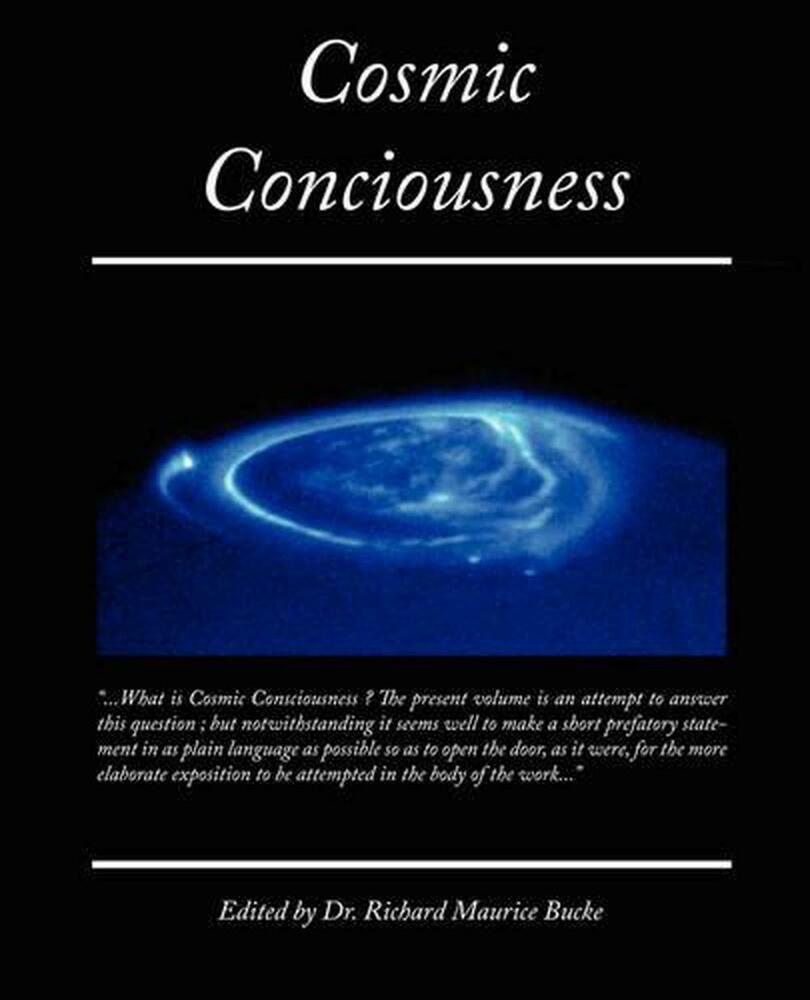
120 years ago Richard Maurice Bucke, who was born in the village of Methwold in Norfolk in 1837 and lived most of his life in Canada, published a book called ‘Cosmic Consciousness: A Study in the Evolution of the Human Mind’ in which he described three stages in the development of consciousness: the ‘simple consciousness’ of animals, the ‘self-consciousness’ of the vast majority of humans (the development of reason, self awareness, imagination, etc.), and, achieved by some only, ‘cosmic consciousness’; a mystical state of being beyond ‘self consciousness’ that is the awaiting, next stage of human development.
Bucke described cosmic consciousness, which he considered to have been experienced by mystics throughout history but the eventual destiny for all people, as bringing complete freedom from fear of sin or death:
“a state of moral exaltation, an indescribable feeling of elevation, elation, and joyousness… a sense of immortality, a consciousness of eternal life, not a conviction that he shall have this, but the consciousness that he has it already.”
He believed that he himself attained Cosmic Consciousness early in the spring of 1873 while reading the works of William Wordsworth, Percy Bysshe Shelley, John Keats, Robert Browning, and especially Walt Whitman and in his work Bucke gives high praise to Walt Whitman’s poetic work ‘Leaves of Grass’, describing how it helped open his mind to the cosmic visionary experience. He writes about too his “personal intercourse” with Edward Carpenter, which “assisted greatly in the broadening and clearing up of his speculations, in the extension and co-ordination of his thought” (he writes of himself in the 3rd person in the book).
Whitman’s poetry, written from the mid 19th century and revised and expanded over the decades, was a key source of inspiration for many men who were erotically and romantically attracted to other males. Whitman was however not speaking to an existing community of gay men, and he believed himself to be writing for all men – invoking the ability in all men to love other men, as part of which overcoming shame about the body and intimacy was key. Whitman saw this joyful project as an essential step towards creating a true, modern democracy – for, until men learn to love and trust each other, any political system will always be corruptible and conflict-driven.
“I confidently expect a time when there will be seen, running like a half-hid warp through all the myriad audible and visible worldly interests of America, threads of manly friendship, fond and loving, pure and sweet, strong and life-long, carried to degrees hitherto unknown…” From Democratic Vistas
“COME, I will make the continent indissoluble;
I will make the most splendid race the sun ever yet
shone upon; I will make divine magnetic lands,
With the love of comrades,
With the life-long love of comrades.
I will plant companionship thick as trees along all the
rivers of America, and along the shores of the
great lakes, and all over the prairies;
I will make inseparable cities, with their arms about
each other’s necks;
By the love of comrades,
By the manly love of comrades.
…O Democracy, to serve you, ma femme! For you, for you I am trilling these songs.”
From Leaves of Grass, Calamus

Bucke points to ‘As in a Swoon’ as an example of a poem in which Whitman records his inner eyes opening to the cosmic reality:
“As in a swoon, one instant,
Another sun, ineffable, full-dazzles me,
And all the orbs I knew, with brighter, unknown orbs, ten thousand fold,
One instant of the future land—
Heaven’s land.”
Whitman’s vision, inspired by love of other men, was absolutely non-dual:
“I celebrate myself, and sing myself,
And what I assume you shall assume,
For every atom belonging to me as good belongs to you.”
Bucke summarised Whitman’s spiritual philosophy as an a appreciation:
“that the commonplace is the grandest of all things; that the exceptional in any line is no finer, better or more beautiful than the usual, and that what is really wanting is not that we should possess something we have not at present, but that our eyes should be opened to see and our hearts to feel what we all have.”
In his classic 1902 study of mysticism, ‘Varieties of Religious Experience,’ William James also expressed a high view of ‘Whitmanism’, seeing it as part of “the everlasting and triumphant mystical tradition” on the same level as Hinduism, Neoplatonism, Sufism and Christian mysticism, paths that can lead us to “both become one with the Absolute and … become aware of our oneness.”
In the late 19th century as the psychological profession started to adopt homosexual as a term for men who loved men, and classifying it as a problem, a sickness, certain men, all inspired by Whitman, including Bucke, John Addington-Symonds and Edward Carpenter were proposing a very different understanding of queer nature.
These few writers of the 19th century dared to speak up about the ancient pagan associations of same sex erotic love, and of gender fluid people, with priestcraft, shamanism and the divine realms, a history that had been suppressed by the centuries of Christian hegemony.
Edward Carpenter, who also had an appreciation of the ‘common place’ (he left his Cambridge career and lived for many years in a smallholding near Sheffield with his partner, George Merrill), ran with Whitman’s vision of love between men coming from their recognition of their spiritual oneness each other, and the positive effect this might have on all aspects of life, producing his own set of inspired mystical poems which he called Towards Democracy:
“I saw a vision of Earth’s multitudes going up and down over the
Earth – and I saw the great earth itself wheeling and careering
onward through space.
And behold! here and there to one among the multitude a
change came;
And to whomsoever it came continued onward apparently as
before, yet as from the larva springs the perfect image,
So (as it appeared to me) from that mortal form a new being,
long long long in preparation, glided silently up unobserved into
the breathless pure height of the sky.”
Carpenter described in a letter to Richard Bucke his belief,
“…that there is in man a divine consciousness as well as a foot consciousness. For as we saw that the sense of taste may pass from being a mere local thing on the tip of the tongue to pervading and becoming synonymous with the health of the whole body; or as the blue of the sky may be to one person a mere superficial impression of color, and to another the inspiration of a poem or picture, and to a third, as to the “God-intoxicated” Arab of the desert, a living presence like the ancient Dyaus or Zeus–so may not the whole of human consciousness gradually lift itself from a mere local and temporary consciousness to a divine and universal? There is in every man a local consciousness connected with his quite external body; that we know. Are there not also in every man the making of a universal consciousness?”

In his 1902 book Love’s Coming of Age, Carpenter described his vision of how a shift in attitudes towards sex, sexuality and love would push forward society’s evolution:
“Our public opinion, our literature, our customs, our laws, are saturated with the notion of the uncleanness of Sex, and are so making the conditions of its cleanness more and more difficult … The body itself is kept religiously covered, smothered away from the rush of the great purifying life of Nature, infected with dirt and disease, and a subject for prurient thought and exaggerated lust such as in its naked state it would never provoke.
“Till this dirty and dismal sentiment with regard to the human body is removed there can be little hope of anything like a free and gracious public life. With the regeneration of our social ideas the whole conception of Sex as a thing covert and to be ashamed of, marketable and unclean, will have to be regenerated. That inestimable freedom and pride which is the basis of all true manhood and womanhood will have to enter into this most intimate relation to preserve it frank and pure–pure from the damnable commercialism which buys and sells all human things, and from the religious hypocrisy which covers and conceals; and a healthy delight in and cultivation of the body and all its natural functions, and a determination to keep them pure and beautiful, open and sane and free, will have to become a recognised part of national life.
“Taking all together I think it may fairly be said that the prime object of Sex is union, the physical union as the allegory and expression of the real union, and that generation is a secondary object or result of this union. If we go to the lowest material expressions of Sex–as among the protozoic cells–we find that they, the cells, unite together, two into one; and that, as a result of the nutrition that ensues, this joint cell after a time (but not always) breaks up by fission into a number of progeny cells; or if on the other hand we go to the very highest expression of Sex, in the sentiment of Love, we find the latter takes the form chiefly and before all else of a desire for union, and only in lesser degree of a desire for race-propagation.”
Union, for Carpenter, was a spiritual experience – sexuality as a doorway to a higher level of consciousness, to a sense of interconnected oneness, to the divine power of love. To love that leads us to deep understanding:
“Tears and lamentations are no more. Life and death lie stretched
below me. I breathe the sweet aether blowing of the breath of God.
Deep as the universe is my life – and I know it; nothing can
dislodge the knowledge of it; nothing can destroy, nothing can
harm me…
“Freedom! the deep breath! the word heard centuries and
centuries beforehand; the soul singing low and passionate to itself:
Joy! Joy!
Not as in a dream. The earth remains and daily life remains, and
the scrubbing of doorsteps, and the house and the care of the
house remains; but Joy fills it, fills the house full and swells to
the sky and reaches the stars: all Joy!
0 freed soul! soul that has completed its relation to the body!
0 soaring, happy beyond words, into other realms passing,
salutations to you, freed, redeemed soul!”
Carpenter made a connection between people who embody masculine and feminine in themselves, ‘intermediate types’ (in which he included same sex-attracted men and women as well as transgender people), in whom,
“This interaction in fact between the masculine and the feminine, this mutual illumination of logic and meditation, may not only raise and increase the power of each of these faculties, but it may give the mind a new quality, and a new power of perception corresponding to the blending of subject and object in consciousness. It may possibly lead to the development of that third order of perception which has been called the cosmic consciousness and which may also be termed divination.” Intermediate types among primitive folks, 1913
He connected this gender-blended consciousness to a cosmic evolutionary leap coming for humanity:
“We are arriving at one of the most fruitful and important turning points in the history of the race. the Self is entering into relation with the Body. for, that the individual should conceive and know himself, not a toy and a chance-product of his own bodily heredity, but as identified and continuous with the Eternal Self of which his body is a manifestation, is indeed to begin a new life and to enter a hitherto undreamed world of possibilities….this transformation, whilst the greatest and most wonderful, is also of course the most difficult in Man’s evolution, for him to effect. it may roughly be said that the whole of the civilisation-period in Man’s history is the preparation for it.”
John Addington Symonds had his own glimpse of cosmic consciousness while under chloroform:
“I seemed at first in a state of utter blankness; then came flashes of intense light, alternating with blankness and with a keen vision of what was going on in the room round me, but no sensation of touch. I thought that I was near death, when suddenly my soul became aware of God, who was manifestly dealing with me, handling me, so to speak, in an intense personal present reality. I felt Him streaming in like light upon me and heard Him saying in no language, but as hands touch hands and communicate sensations: ‘I led thee; I guided thee; you will never sin and weep and wail in madness any more; for now you have seen Me.’ My whole consciousness seemed brought into one point of absolute conviction; the independence of my mind from my body was proved by the phenomena of this acute sensibility to spiritual facts, this utter deadness of the senses. Life and death seemed mere names… I cannot describe the ecstasy I felt.”

The 20th century brought more queer poets and prophets of cosmic consciousness, including lesbian poet Elsa Gidlow (1898-1986). Born in Hull, Yorkshire, Elsa went on to live in Canada and the USA. Her writing circle in 1918 created the first gay magazine in North America… Les Mouches Fantastiques. From 1954 she lived in California. naming her ranch Druid Heights. Among her companions there was philosopher Alan Watts, with whom she found the Society for Comparative Philosophy, and her friends included Maya Angelou, James Broughton, Allen Ginsberg, Neil Young and Ram Dass.
Her love for other woman became a portal to the cosmic oneness of existence, experienced as the presence of the Goddess:
“Here on this bed, holding you. So human in your need (and knowing mine).Miraculous, the human veil is rent. Lover-beloved, WomanSmall and strong in my arms. I know in you The Goddesss, Mystery, fecund Emptiness From which all fullness comes And universes flower.”
Love revealed as the true path of consciousness, Elsa asked:
“What if we smashed the mirrors
And saw our true face?
What if we left the Sacred Books to the worms
And found our True Mind?
What if we burned the wooden Buddhas?
Ga ve the stone Buddhas back to the mountains?
Dispersed the gurus with a great laugh
And discovered the path we had always been on?”
Whitman and Carpenter dreamed of an awakening of cosmic consciousness among men — in the 1970s spiritual feminists were calling for an awakening of cosmic Goddess consciousness in women, calling for women to reclaim the natural female way of seeing life as an interconnected whole, in contrast to the dominant patriarchal belief systems, which are attuned to difference, division and male superiority.
Monica Sjoo, in the Great Cosmic Mother (1987) wrote “True religion is the original umbilical cord that binds our individual selves back to our larger, universal source. That source… is the Great Mother, who is the great cosmic weaver, the divine potter, the carrier of the heavenly water jar; we participate in her substance, her nature, her processes, her play and her work….
“The reality implicit in the Universe – in each one of us, in the self at the heart of being – is her way. It is very ancient, and has no time. …. Ecstasy is the only way through which the soul can lose itself in union with her…. Some male mystics have also understood this…
“Ecstasy is the dance of the individual with the All.”
Spiritual feminists from the mid 70s, such as Starhawk, Zsuzsanna Budapest, Carol Christ emphasised that a shift in consciousness will be the only way to bring about equality – a shift to a recognition of the interconnectedness of all things leads to recognition of the importance of environmental action and social justice, and honuring the diversity of spiritual traditions while emphasising goddess spirituality, witchcraft and ecofeminism as the means to bring the human spirit back into alignment and harmony with the planet.
“Feminist spirituality must be intersectional, recognizing the multiple and intersecting forms of oppression that women face. This means acknowledging the ways in which racism, classism, homophobia, and transphobia intersect with sexism to create unique experiences of oppression.” – Riane Eisler, The Chalice and the Blade
STARHAWK: “I don’t like it when people assume that the Goddess, the great female principle, is just God in skirts. The Goddess means that the sacred is imminent – it’s present right here and now, in nature and in ourselves. And by sacred what I mean is not a great something that you bow down to, but what determines your values, what you would take a stand for. If the forest is sacred, we can’t chop it down. It water is sacred, we can’t pollute it, even a little bit. If there is sacred authority in the human body, then no external authority can tell people what to do with it- how to love, whether or not to end a pregnancy.” quoted in Visionaries : people & ideas to change your life by Jay Walljasper, 2001
In a manifesto declaration from Zsuzsanna Budapest’s women’s coven in San Franscisco, they declared: “We believe that we are part of a changing universal consciousness that has long been feared and prophesied by the patriarchs.“
MARION WOODMAN (1928-2018), Canadian mythopoetic author, poet, analytical psychologist and women’s movement figure, from her work Conscious Femininity, published 1993:
“… the goddess energy is trying to save us. If we go on with our power tactics, we’re going to destroy the earth. That’s why we haven’t got a long time to evolve. We’re either going to make a leap in consciousness or we aren’t going to be here. Sophia, Shakti, by whatever name we call her, is that wisdom deep down in all matter, pushing her way into consciousness, one way or another.
“The further you go in understanding yourself, the more you realise the kingdom of God is within…. So that in finding the ‘I’, you’re also finding the ‘I’ that is the God within. And in finding that, you are find the God in other people, in plants, in animals – that animating soul to which we all belong.“

“STARTING IN THE LATE 1970s, alongside the enormous and continuing growth of women’s spirituality, there sprung up, in almost parallel fashion, a small spiritual movement among men. This movement was connected with the feminist critique of patriarchal notions of religion and authority, and with the attempt of both gay and straight men to create a new definition of maleness.
“One important impulse behind the notion of radical faeries was the idea that there had to be something beyond assimilation. Just as radical feminists wanted to go beyond women attaining equal rights in a man’s world, toward a notion that feminism implied a totally different reality, a different language, a different attitude toward power and authority, this group of gay men saw their own movement as implying a totally different view of the world, with different goals and different spiritual values than the “straight” world…
“In an article in RFD called “A Sprinkling of Radical Faerie Dust,” Don Kilhefner wrote that the dilemma facing gay men is “our assimilation into the mainstream versus our enspiritment as a people” … “We are the equivalent of Shamans in modern culture,” said Peter Soderberg, during an interview at the 1985 Pagan Spirit Gathering. “Many gay men want to be middle-class Americans. They want to be respected as human beings and they want their sexuality to be ignored. But radical faeries are willing to live on the edge. We feel there is a power in our sexuality. You know there is a power there because our culture is so afraid of us. And there is a lot of queer energy in the men and women most cultures consider magical. It’s practically a requirement for certain kinds of medicine and magic…” Margot Adler, Drawing Down the Moon 1986
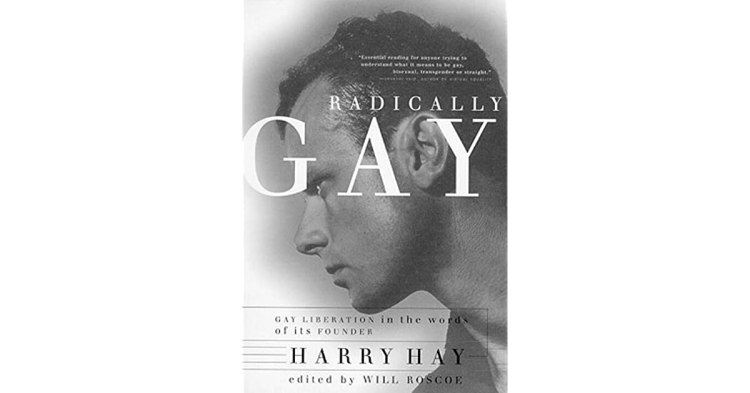
Harry Hay was a both pioneer in the 1950s of gay activism with the Mattachine Society and from the 1970s of gay spiritual liberation as a founder of the now global Radical Faerie community, a continuously evolving group that has been described as “having a pro-humanist, pro-environment, pro-sex vision of the world that contrasts sharply with the mainstream Western religious traditions.” (Michael Lloyd, a founding member of the Green Faerie Grove, Ohio).Faeries meet in circle and build community from the heart, embracing both sexuality and spirituality, connecting the two through ritual, drumming, dance, drag and play, and pursuing subject:SUBJECT consciousness – seeing people not as others, but as self, and so desiring the best for them as we do for ourselves. This is cosmic consciousness in action…. and you don’t need to already be cosmically conscious to do it – taking this mental attitude cultivates the experience of cosmic consciousness within us.
Historian Will Roscoe:
“For Hay, the transcendence of the individual, the discovery that one is part of an interconnected whole, is the truth of life itself and the essence of spirituality, as well as the source of political ideals… The vision of society that emerges from this interconnection of spirituality and politics is multicultural, cooperative, and decentralized. Rather than objectifying diverse communities as ‘Other’, subject-SUBJECT consciousness fosters the extension of common humanity to all. Affirming the other who affirms you does not require the erasure or denial of difference.
“For Hay, activism informed by spiritual values is the modern version of the community service traditionally performed by third-gender figures like the Native American Two-Spirit. But Hay stresses that his visions and ideals are a ‘call’ – for those who hear the message in their hearts as well as their minds. A spirit quest can never be imposed, require, legislated or prescribed, nor can matters of the spirit be reduced to political discourse. But, of course, taking ourselves seriously, inquiring into the nature of our sexuality and its deepest meaning, and loving ourselves and each other for being Gay remain crucial first steps towards liberation. Gay politics thus begins in the realm of the human spirit, and while politics can never take the place of spirituality they eventually lead us back to that realm, as we seek to find the language to express our visions of a better world.”
Queer people are arguably born to embody cosmic consciousness, ready to take that evolutionary leap from ego mind into cosmic Self awareness (which embraces the ego as its child, it doesn’t destroy it.) Lesbian writer Judy Grahn described in her 1982 book Another Mother Tongue, that
“The position that gay people take in society, the function we so often choose, is that of mediator between worlds….. In a tribal environment, this means shape shifting into wolves, birds, stones, wind and translating their wisdoms for the benefit of the people of the tribe… in the long patriarchal history that has gradually enveloped the world’s people, the gay function has been to make crossover journeys between gender-worlds, translating, identifying and bringing back the information ……..gay culture is always on the cusp of each intersecting world or way of life, on the path between one world and another…
“The tribal attitude said, and continues to say, that Gay people are especially empowered because we are able to identify with both sexes and can see into more than one world at once, having the capacity to see from more than one point of view at a time.”
Let’s remember too that 2000 years ago the Gnostic gospel of Thomas recorded Jesus saying that humanity will enter heaven (his word for cosmic consciousness):
“When you make the two one, and when (if) you make the inner like the outer and the outer like the inner, and the upper like the lower, and so that you make male and female into the single one, so that the male not be male nor the female female …”
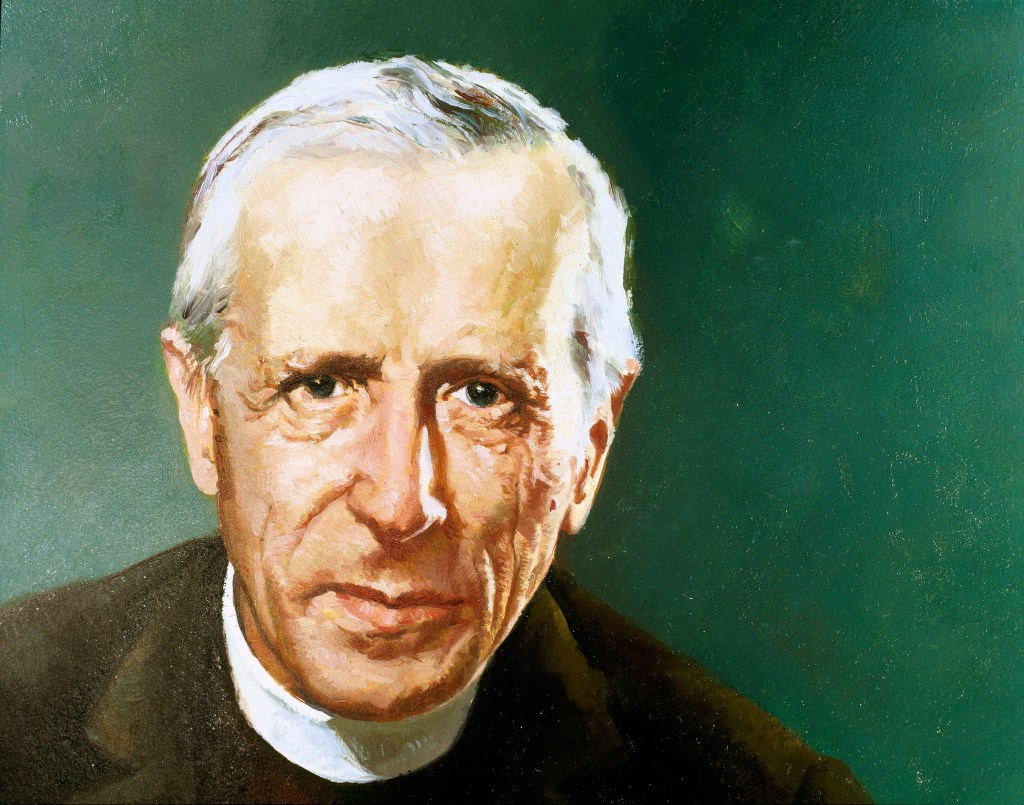
French philosopher Teilhard de Chardin (1881-1955), who was a Jesuit priest and so never married, wrote in The Heart of the Matter:
“REVELATION OF THE UNIVERSE (COSMOS)
Under the constant pressure of my mind, which endeavoured to extract from Things a soul made up of consistence and the Absolute, the Universe was ultimately revealed to me as a Reality with an extraordinarily insistent claim for recognition.
As I write now, I can see, in what has become my most habitual outlook on the world, in my normal day-to-day life:
1. First, the Universe as a certain eminently great and precious Entity. I am habitually conscious (in some way) of its Totality, of its ‘Becoming’, of the countless potentialities (virtutes et potentiae) it contains. And in the presence of this majesty, I must confess that many restless human activities seem to me singularly unworthy of notice.
2. Secondly, I see the Universe as supremely inclusive and dominant. I feel that I am involved in it, locked into it, contained within it. I feel that I cannot take full possession of my own self except by extending my self into a certain perfection which runs through all things so that my own fulfilment must be in, and with, the universality of Creation.
3. This means that I believe I can distinguish in the Universe a profound, essential Unity, a unity burdened with imperfections, a unity still sadly ‘pulverulent’, but a real unity within which every ‘chosen’ substance gains increasing solidity.”
de Chardin wrote as a Christian waking up and seeing the western mind’s long denial of the oneness of creation – so he described the cosmic sense as bringing us into unity with Christ – while other modern cosmic prophets such as Aurobindo and Yogananda were from Hindu culture in which, unlike with Christianity, cosmic oneness is not hidden – it is heralded and celebrated as both the starting point and end point of existence. Hinduism is the natural home of cosmic consciousness, India’s many gurus all bringing their unique styles to how awareness and experience of it is taught. In them we see Christ’s own teachings reflected – that heaven is to be found within the heart and mind, he never suggested it should be found through worshipping a crucified messiah.

YOGANANDA
Just as a river has a source, so the river of consciousness has a source. It descends from Cosmic Consciousness, the consciousness of God that is beyond all creation
When you begin to feel the sensations of others as though they were happening in your own body, you are developing that Christ Consciousness. When you cultivate this consciousness and therein understand that everything is yours, you will have no prejudices about race or color. In that consciousness you feel the love of a million mothers in your heart, not just for a few but for everyone. You do not imagine it, you feel it—this love that Jesus, Krishna, all of the great ones manifested—this universal intelligence and love which is called Christ Consciousness.
Man’s mind, operating as a part of Nature’s twenty-four elements, is engrossed in the material manifestations wrought by the five elements of earth, water, fire, air, and ether, which are subject to the law of relativity and time—the divisions of the timeless, eternal now into the progression of past, present, and future. To escape the flux of time, the devotee must rise to the Spirit beyond Nature’s compartments of relativity. The Absolutness of Cosmic Consciounsness is the only cure for the relativity of mortal consciousness.
The man of cosmic consciousness, never feeling himself as limited to a body or as reaching only to the brain, or only to the cerebral-lotus light of a thousand rays, instead feels by true intuitive power the ever-bubbling Bliss that dances in every particle of his little body, and in his big Cosmic Body of the universe, and in his absolute nature as one with the Eternal Spirit beyond manifested forms. The man into whose pure hand his divine bodily kingdom has been wholly delivered is no longer a human being with limited ego consciousness. In reality, he is the soul, individualized ever-existent, ever-conscious, ever-new Bliss, the pure reflection of Spirit, endowed with cosmic consciousness.
Having conquered the touch-sense of material-comfort desires of the body, the divine man feels the sensations of all matter as expressions of God’s creative cosmic energy playing upon his cosmic body, in a bliss unmatched by any physical pleasure of touch. He feels the smooth glide of the river over the breast of the earth. He feels the home of his Being in the ocean of space, and perceives the swimming waves of island universes on his own sea bosom. He knows the softness of the petals of blossoms, and the tenderness of the love in all hearts, the aliveness of youth in all bodies. His own youthfulness, as the ageless soul, is everlasting. The superman knows births and deaths only as changes dancing on the Sea of Life—even as waves of the ocean rise, fall, and rise again. He cognizes all past and future, but lives in the eternal present. For him, the conundrum of the why of being is resolved in the singular realization: “From Joy we have come. In Joy we live and move and have our being. And in that sacred perennial Joy we melt again.”
You are, and ever will be, a perfect reflection of Spirit. You were Spirit; now you imagine yourself to be mortal; but by meditation on your true Self, and by performing God-reminding actions constantly, you can remember your forgotten Spirit-nature and remain in that consciousness through all futurity.
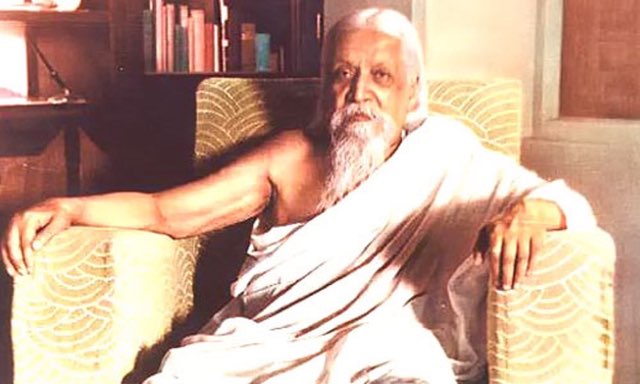
AUROBINDO
“The possibility of a cosmic consciousness in humanity coming slowly to be admitted in modern Psychology, like the possibility of more elastic instruments of knowledge, although still classified, even when its value and power are admitted, as hallucination. In the psychology of the East it has always be recognised as a reality and the aim of our subjective progress The essence of the passage over to this goal is the exceeding of the limits imposed on us by the ego-sense and at least a partaking, at most an identification with the self-knowledge which brood secret in all life and in all that seems to us inanimate.
“Entering into that Consciousness, we may continue to dwell, like It, upon universal existence. Then we become aware-for all our terms of consciousness and even our sensational experience begin to change,- of Matter as one existence and of bodies a its formations in which the one existence separates itself physically in the single body from itself in all others and again by physical means establishes communication between these multitudinous points of its being. Mind we experience similarly, an Life also, as the same existence one in its multiplicity, separating and reuniting itself in each domain by means appropriate to that movement. And, if we choose, we can proceed farther and after passing through many linking stages, become aware of supermind whose universal operation is the key to all lesser activities. Nor do we become merely conscious of this cosmic existence, but likewise conscious in it, receiving it in sensation but also entering into it in awareness. In it we live as we lived before in the ego-sense, active, more and more in contact, even unified more and more with other minds, other lives, other bodies than the organism we call ourselves, producing effects not only on our own moral and mental being and on the subjective being of others, but even on the physical world and its events by means nearer to the divine than those possible to our egoistic capacity.
“Real then to the man who has had contact with it or lives in it, is this cosmic consciousness, with a greater than the physical reality; real in itself, real in its effects and works. And as it is thus real to the world which is its own total expression, so is the world real to it; but not as an independent existence. For in that higher and less hampered experience we perceive that consciousness and being are not different from each other, but all being is supreme consciousness, all consciousness is self-existence eternal in itself, real in its works and neither a dream nor an evolution.”
“Attaining to the cosmic consciousness Mind, illuminated by a knowledge that perceives at once the truth of Unity and the truth of Multiplicity and seizes on the formulas of their interaction, finds its own discords at once explained and reconciled by the divine Harmony; satisfied, it consents to become the agent of that supreme union between God and Life towards which we tend. Matter reveals itself to the realising thought and to the subtilised senses as the figure and body of Spirit -Spirit in its self-formative extension. Spirit reveals itself through the same consenting agents as the soul, the truth, the essence of Matter. Both admit and confess each other as divine, real and essentially one.”
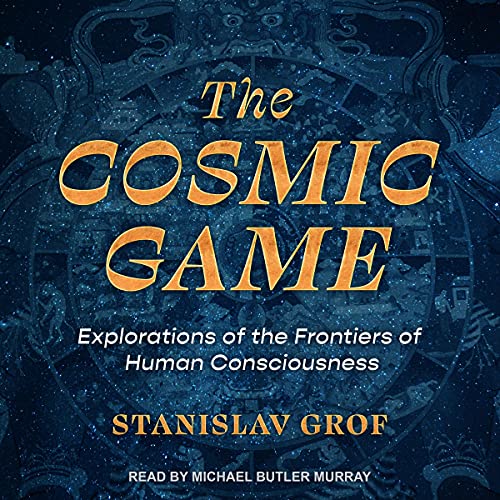
Examples of western psychology embracing the unified field of consciousness include the work of Joseph Campbell and Stanislav Grof.
Joseph Campbell’s work on archetypes described the role of the divine feminine in our awakening to the spiritual nature of existence –
“Here is a principal mythological role of the feminine principle: She gives birth to us physically, but She is the mother too of our second birth—our birth as spiritual entities. This is the basic meaning of the motif of the virgin birth, that our bodies are born naturally, but at a certain time there awakens in us our spiritual nature, which is the higher human nature, not that which simply duplicates the world of the animal urges, of erotic and power drives and sleep. Instead, there awakens in us the notion of a spiritual aim, a spiritual life: an essentially human, mystical life to be lived above the level of food, of sex, of economics, politics, and sociology. In this sphere of the mystery dimension the woman represents the awakener, the giver of birth in that sense.”
Stanislave Grof wrote in The Cosmic Game (1998):
“After we have had direct experiences of the spiritual dimensions of reality, the idea that the universe, life, and consciousness could have developed without the participation of superior creative intelligence appears to us absurd, naïve, and untenable.
“Careful study of the perinatal and transpersonal experiences shows that the boundaries between the individual human psyche and the rest of the cosmos are ultimately arbitrary and can be transcended….. strong evidence suggesting that, in the last analysis, each of us is commensurate with the totality of existence.
“The experiences of the immanent Divine reveal the sacred nature of everyday reality and the unity underlying the world of matter, which for a naïve observer appears to be made of separate objects. By disclosing that all boundaries within the material world are arbitrary, these experiences make it clear that each of us is essentially identical with the entire field of space-time and ultimately with the cosmic creative energy itself. By comparison, the experiences of the transcendent Divine do not just show us new ways of understanding and perceiving the familiar world of our everyday life. They reveal the existence of dimensions of reality that are ordinarily invisible, or “transphenomenal,” particularly those abounding in primordial cosmic forms and patterns that C. G. Jung called archetypes…
“The archetypal domain thus represents a bridge between the world of matter and the undifferentiated field of Cosmic Consciousness. For this reason, the experience of the transcendent divine is more than just the experience of another ‘cosmic channel’. It also provides insights into the process by which material reality is created; it gives us a ‘glimpse into the cosmic kitchen,’ as one of my clients in Prague called it.
“The cosmic play offers many opportunities for experiences that make it possible for us to temporarily step out of the role we are playing in the universal script, recognize the illusory nature of everyday reality, and discover the possibility of reunion with the source.”
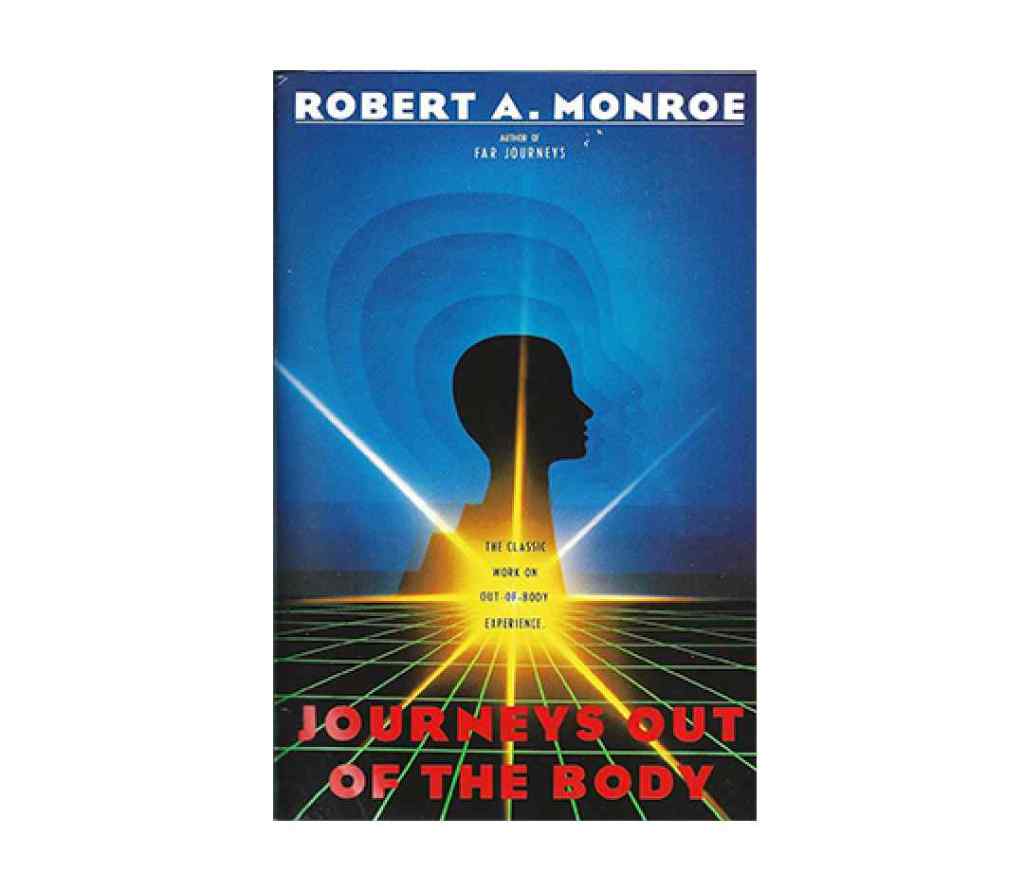
Robert Monroe, American author of 1971 book Journeys Out of the Body described his own experience of cosmic consciousness:
“Now I am moving back…. back to the Whole, where I belong… what joy to return…. Yes, now I know what I am, what I have been from the beginning, what I always will be…. a part of the Whole, the restless part that desires to return, yet lives to seek expression in doing. creating, building, giving, growing, leaving more than it takes, and above all desires to bring back gifts of love to the Whole… the paradox of total unity and the continuity of the part. I know the Whole…. I am the Whole… even as a part I am the totality.”
Mystic philosopher ALAN WATTS in Out of Your Mind said that
“And so we impose our will upon the world, as if it were something completely alien to us—something that exists on the outside.” However, if we open ourselves up to ecstatic experience, we’ll find that we’re “as continuous with the physical universe as a wave is continuous with the ocean,” for just as the “ocean waves, the universe peoples.”
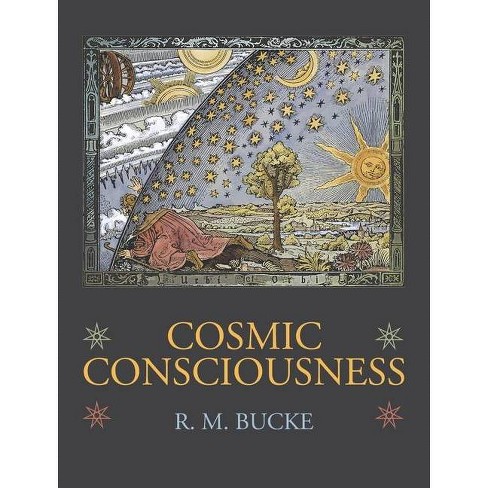
Richard Bucke wrote in his 1905 book Cosmic Consciousness:
“The simple truth is, that there has lived on the earth, “appearing at intervals,” for thousands of years among ordinary men, the first faint beginnings of another race; walking the earth and breathing the air with us, but at the same time walking another earth and breathing another air of which we know little or nothing, but which is, all the same, our spiritual life, as its absence would be our spiritual death. This new race is in act of being born from us, and in the near future it will occupy and possess the earth.”
Last word from Edward Carpenter:
“So thin a veil divides
Us from such joy, past words.
Walking in daily life the business of the hour, each detail seen to;
Yet carried, rapt away, on what sweet floods of other Being:
Swift streams of music flowing, light far back through all
Creation shining,
Loved faces looking-
Ah! from the true, the mortal self
So thin a veil divides!”
 rainbow messenger
Shokti, your dedication and determination to research and present the results to your readers are admirable and much appreciated ! My experience with my man of 38 years is that our sexual union is indeed a portal to the divine. Today’s post is especially resonant with my own research, reading and experience.
LikeLiked by 3 people
I love the idea of cosmic consciousness as a source, like a river – do you think that’s something we can tap into in everyday life? 🌊
LikeLike