

For many centuries before the ‘morning/evening star’ became named after the Roman Goddess Venus, our closest planetary neighbour was called Inanna, the ancient Goddess of the lands of Mesopotamia. Known as the Queen of Heaven, Inanna’s priests were well known for their queerness and celebrated for rescuing the Goddess from her imprisonment in the Underworld.
Venus/Inanna, in retrograde motion in the deeply transformational sign of Scorpio since October 13th 2026, disappears below the western horizon around October 19th, and will emerge in the east as the morning star around October 29th. Many astrologers across the Internet are making the connection between this and the ancient myth of Inanna’s entrapment in the Underworld, but I’m seeing almost NONE of them talking about how the Goddess was actually rescued – one of the most powerful queer stories of (the many) queer myths of the ancient world.
Every two years the planet Venus/Inanna descends below the horizon in the west, emerging 10 days later as the ‘morning star’ in the east. Many legends around the world reflect this journey, including the Aztec myth of Quetzalcoatl – their god identified with Venus – who throws himself into a fire, and after days in the underworld, his heart rises again as the morning star. From the empires of Mesopotamia, the ancient myth of Inanna’s time in the Underworld describes how she became trapped by her dark sister Ereshkigel, and her absence causing climate chaos across the Earth. No man nor woman could enter the Underworld so the god Enki created a being ‘neither male nor female’, who undertook a rescue. Enchanted by the beautiful androgynous epicene, Ereshkigel gets drunk and offers them anything they want – so the rescuer asks for the water of life, which, when the dark sister falls asleep, they use to release Inanna from her chains and bring her back to the upper world.
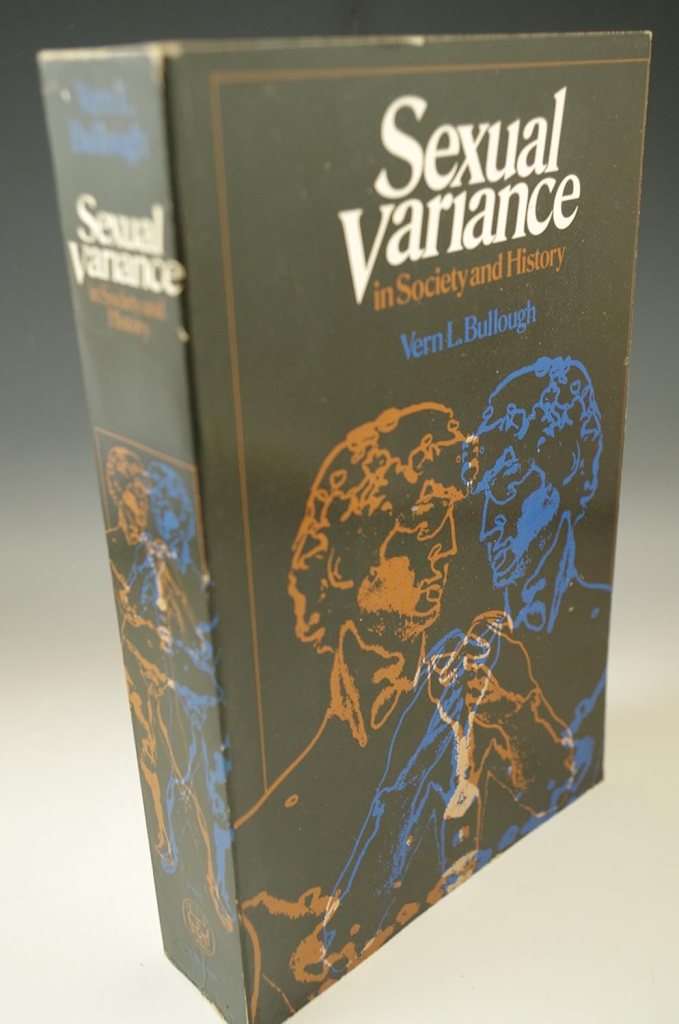
“…the creation of the epicene appears in an early Babylonian story recounting the descent of Ishtar (or Inanna) into the nether world. The story tells how Ishtar was rescued from her sister Ereskigal, queen of the underworld, by Asushunamir (Asushu-Namir), whose sexless or effeminate nature made him immune to the “great enchantment” of Queen Ereskigal. Ereskigal thereupon cursed him with a fate,
“not to be forgotten through eternity.
The food of the city’s gutters shall be thy food, The sewers of the city shall be thy drink.
The shadow of the wall shall be thy station, The threshold shall be thy habitation, The besotted and thirsty shall smite thy cheek.” Vern Bullough, Sexual Variance in Society and History, 1976.
While this myth might be seen as reflecting the prejudice that developed against queer people during the millennia since this story was told, it also points to the reason that gender-variant, ‘queer’ priest/esses became the sacred servants of the Goddess throughout the temples of the ancient world (not only Inanna, but Aphrodite, Cybele, Isis, Hecate, Demeter, Ashtoreth – all Goddesses were served in their temples by both women and queer, gender-variant beings) – and even to a liberated queer future that could arrive when queer people rediscover and reclaim their innate connection to the spiritual realms, particularly to the divine feminine. In the modern world the Goddess is once more trapped in the Underworld, and despite the emergence of a Goddess movement in recent decades, her liberating, peace-bringing, teachings, her reality, are still invisible to the mainstream culture. I think it is the job of the queers to rescue her from the dark depths again. This time we will not end up cursed, we will instead be free.
“When Ishtar learned of the curse placed upon the man-woman, She wept and spoke so that no one might hear, “The power of Ereshkigal is great. No one dares defy Her. But I may soften Her curse upon you. For many ages you will suffer. Those who are like you, lovers of men, kin, my sacred women, shall be strangers in their homes. Their families will keep them in the shadows and will leave them nothing. The drunken shall smite their faces, and the mighty shall imprison them.
“But if you will remember Me, how you were born from the light of the stars to save Me from death to rid the earth of winter, I shall harbor you and your kind. You shall be My children, and I shall make you my priests. I shall give you the gift of prophecy, the wisdom of the earth and moon. You shall banish illness from My children, as you have stolen Me from the clutches of Ereshkigal.
“And when you robe yourselves in My robes I shall dance in your feet and sing in your throats, and no one shall be able to resist your enchantments.
“When the earthen jug is brought forth from the 7 gates, lions shall leap in the deserts and you shall be freed from the spell of Ereshkigal. Once more you shall be called Asushunamir. Being clothed in light. Your kind shall be called Those Whose Faces Are Brilliant. Those Who Have Come to Renew the Light, the blessed ones of Ishtar.”
[Excerpt from an adaptation of the Inanna myth by Storm Faerywolf & Claudia Lorie made from the cuneiform translations interpreted in Blossom of Bone by Randy Connor, Inanna, Queen of Heaven and Earth by Diane Wolkstein and Samuel Kramer, and The Greatness that was Babylon by H.W.F. Saggs.]
More on the sacred queer servants of Inanna –
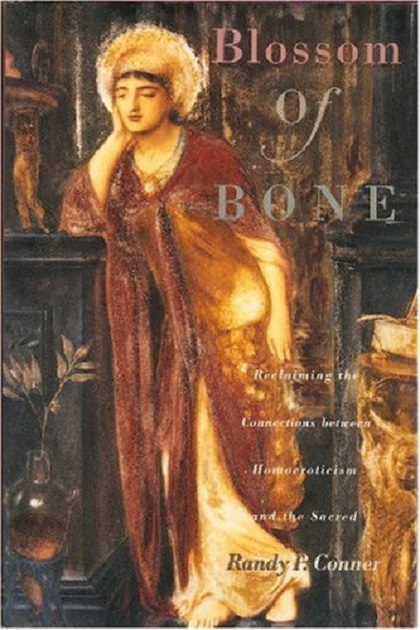
From Blossom of Bone, by Randy P Conner, 1993:
“Inanna/Ishtar… was served by gender-variant male priests who were divided into several groups, including the assinnu, kurgarru, kulu’u, and kalu[m]… In later times, they all may have been generally referred to as kalbu, a Babylonian term for a servant of the Goddess. The term kalbu is related to the Semitic kalebh, which may signify either a dog or a gender-variant person who serves the Goddess. As a faithful companion, the dog was a common symbol for the male worshiper of the Goddess, and the Sumerian goddess Gula was pictured accompanied by a dog. Male priests of the Goddess were also generally referred to as sal-zikrum, “women-men.” As such, they were considered as being essentially different from other men, their collective identity a gift of the gods…
“Evidence suggests that the gender-variant priests of Inanna dressed in a combination of feminine, masculine, and sacred garments. They also let their hair grow long and wore colorful necklaces. A hymn to Inanna indicates that they may have worn a bifurcated costume, with masculine articles making up the left side of the costume and feminine articles the right. The priestesses of Inanna apparently wore a complementary costume, with the masculine and feminine articles reversed. What a spectacle of androgyny this must have seemed to the Mesopotamian audience of the third millennium B.C.E.! In terms of gender variance, certain texts indicate that at least some of the priests may have been eunuchs.
“Gender-variant priests, like priestesses, were considered the mortal representatives of the Goddess. The priests were also seen as human reflections of certain spirit-companions of Inanna. In a myth concerning the Goddess’s descent to the Underworld, an androgynous being named Asushunamir, or “He Whose Face Is Light, is created to rescue Inanna from the grip of her sister Ereshkigal, the Queen of the Underworld. In another myth of Inanna’s descent, two such beings, the kalaturru (or galatur) and the kurgarra, are created to rescue Inanna. In an ancient text we read of the god Enki’s creation of these beings:
He fashioned the dirt into a kurgarra, a creature neither male nor female.
He fashioned the dirt into a galatur, a creature neither male nor female.
He gave the food of life to the kurgarra,
He gave the food of life to the galatur.
“While these beings are referred to as “neither male nor female,” Samuel Kramer and other Sumeriologists agree that they are meant to represent gender-variant males rather than hermaphrodites or gender-variant women. Not surprisingly, they were blessed by Inanna, while they were cursed by her sister Ereshkigal, who wished to see Inanna remain in the Underworld. “The shadow of the wall shall be thy station,” she told them, “the threshold shall be thy habitation. The besotted and thirsty shall smite thy cheek…”
“Although the priests of Inanna occasionally suffered ridicule, they nevertheless held respected positions in the worship of the Goddess, being employed as magicians, ritual artists, and hierodules (or sacred prostitutes). As magicians, they were said to excel in making talismans and amulets to protect the wearer from destructive magic and other dangers.
“As ritual artists, they functioned as singers, musicians, composers, dancers, and actors. The kurgarru played various instruments, including the lyre, the two-stringed lute (zinnutu or sinnatu), the flute, and metal clappers. The kalum priests were known as composers of hymns, lamentations, and incantations, which they chanted in the Emesal dialect. Among the types of compositions composed by the assinnu was the inhu, a lament concerning the life of Ishtar. The term inhu refers to the sorrowful, melancholy song of the ursanu bird. “You seat the assinnu,” an ancient text reads, “and he will sing his inhus.” Of such laments, another text reads, “In-hi-ia sunuhuti Istar ismema, Ishtar (Inanna) heard my sorrowful inhu songs.”
“As ritual actors, the kurgarru, led by the rabi kurgarri, performed in dramas de-picting epic struggles. The kurgurru and the assinnu also took part in a ritual drama honoring both Inanna and the goddess Narudu, in which the priests dressed in the garments of the goddesses. Gender-variant priests also played a role in the ritual of the hieros gamos, or “sacred marriage,” of Inanna and her consort Dumuzi, embodied by the high priestess and the king. This rite was celebrated each year in order to promote fertility. In a hymn dating from the third millennium B.C.E… we read that in this ritual, gender-variant priests and priestesses wearing bifurcated costumes, the men carrying mirrors and combing their hair, joined in a procession, chanting, “Hail, Inanna!”
“Foremost among their tasks, however, was that of making love with, in most cases, traditionally masculine worshipers in order to bring the latter into intimate contact with the Goddess. In this respect, the gender-variant priests dedicated their bodies, including their anuses, to the Goddess. Like the priestesses of Inanna, they engaged in anal intercourse with male worshipers, usually taking the receptive role.”
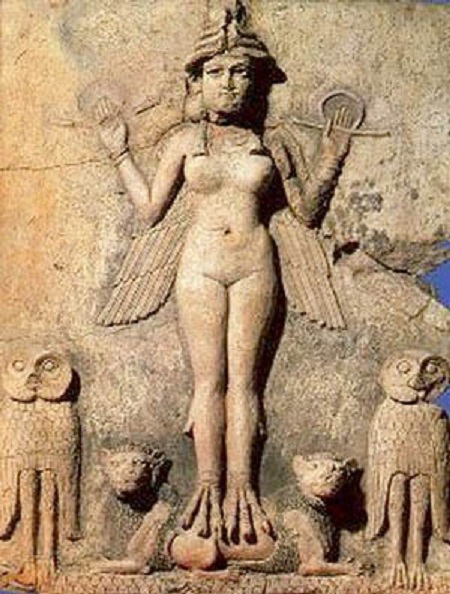
Excerpt from the poem, Passionate Inanna, by Enheduanna, High Priestess of the Moon in the Sumerian city of Ur. Written in the 23rd Century BCE. Enheduanna is the earliest known example of someone signing their name to a literary work:
“Without your consent, no destiny is determined, the most ingenious solution finds no favour.
To run fast, to slip away, to calm, to pacify are yours, Inanna,
To dart aimlessly, to go too fast, to fall, to get up, to sustain a comrade are yours, Inanna.
To open high road and byroad, safe lodging on the way, helping the worn-out along are yours, Inanna.
To make footpath and trail go in the right direction, to make the going good are yours, Inanna.
To destroy, to create, to tear out, to establish are yours, Inanna.
To turn a man into a woman and a woman into a man are yours, Inanna.”
http://notchesblog.com/2017/05/02/evidence-for-trans-lives-in-sumer/

