
At 420 rallies across the world people come together in the name of peace and, as Bob Marley sang, One Love — and to stand against racist laws that keep one of nature’s most versatile plants illegal. But at London’s Hyde Park 420 Cannabis Rally 2026 the police were intrusive, provocative and certainly out to spoil the fun. They conducted searches and made arrests — when doing so a number of them formed a wall around the person being grappled and held down. One such man loudly declared over and over that he was being arrested for possessing one joint — on 4 20!. The impassive looks on the faces in the police wall was disturbing, though occasionally I spotted one thinking ‘wtf we doing here?’…
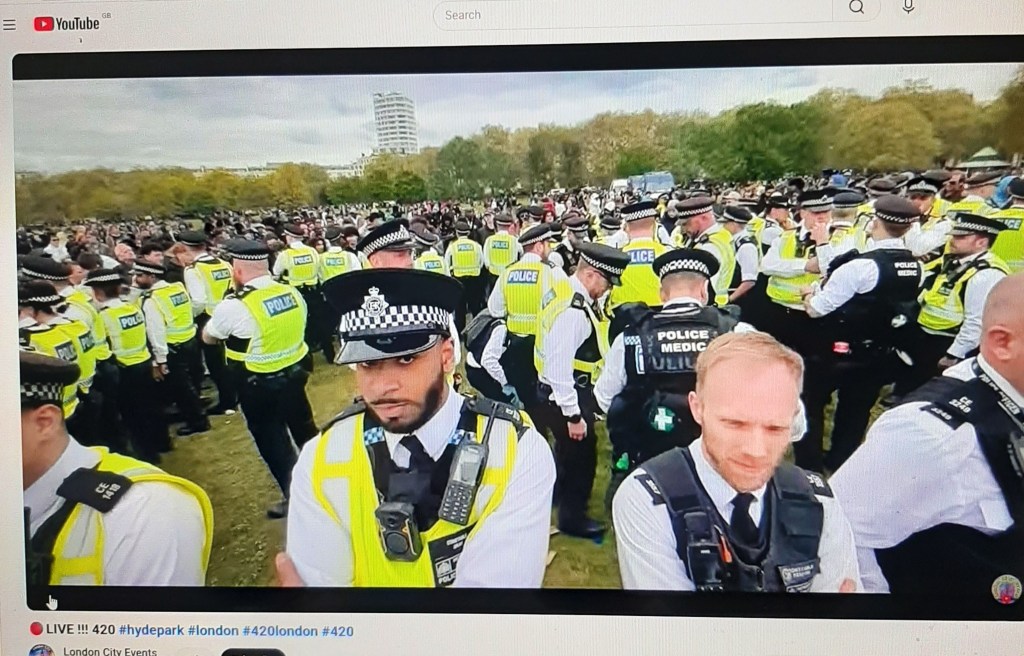
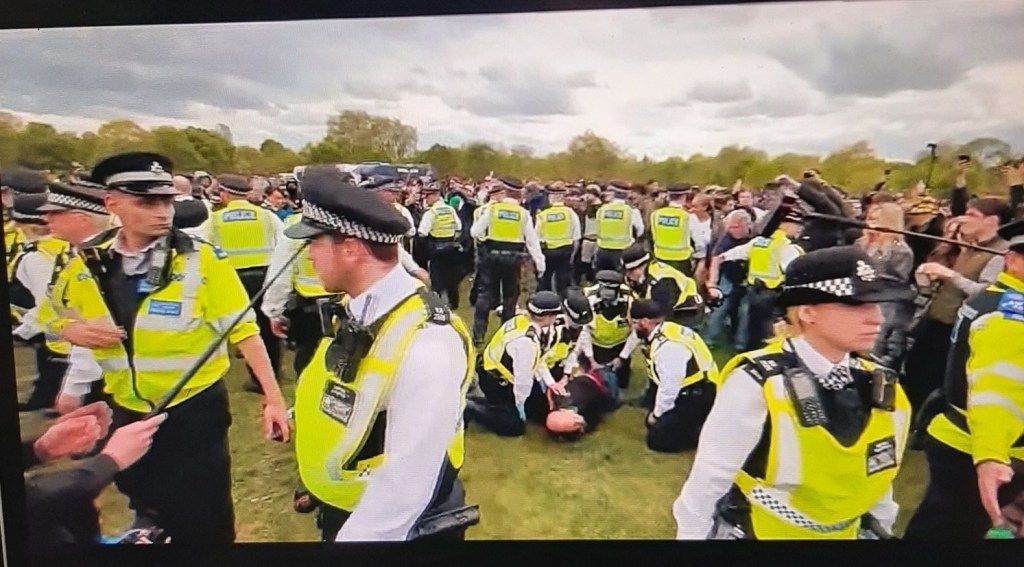
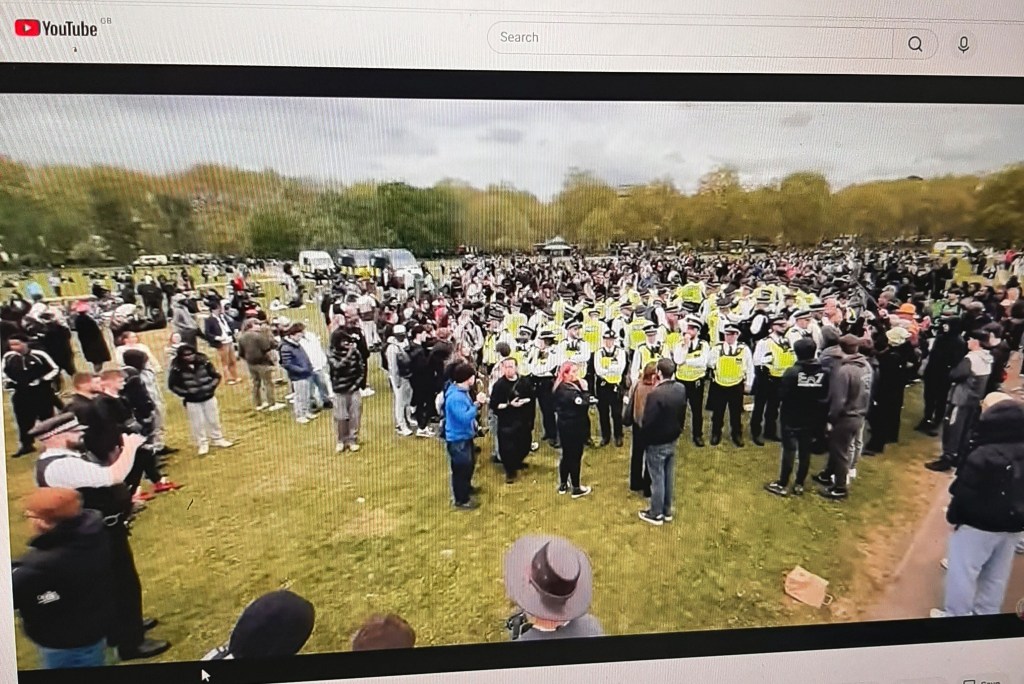
Heavy handed police at London 420 Hyde Park video from London City Events here
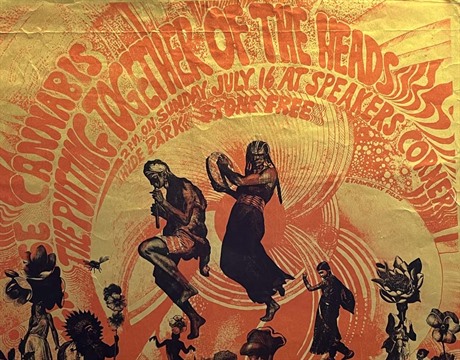
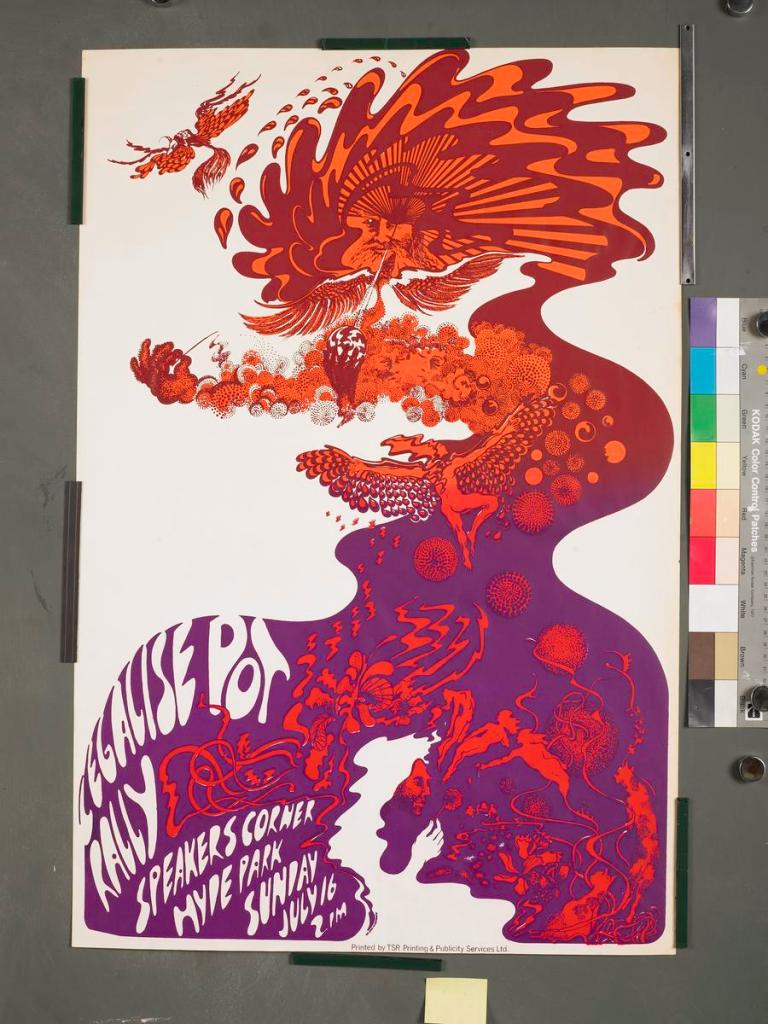
Next year will be the 60th anniversary of the first Legalise Pot Rally in London’s Hyde Park, in July 1967. Organised by parapsychologist, Steve Abrams, 3000 people gathered in the name of flower power, and the rally featured a speech from beat poet Allen Ginsberg, which can be seen in the video clip below. The following week on July 24th 1967 a full page advert appeared in The Times proclaiming that ‘The law against marijuana is immoral in principle and unworkable in practice’. Arranged by Abrams and paid for in large part by Paul McCartney, the signatories on the ad included author Graham Greene, and scientists Jonathan Miller and Francis Crick.
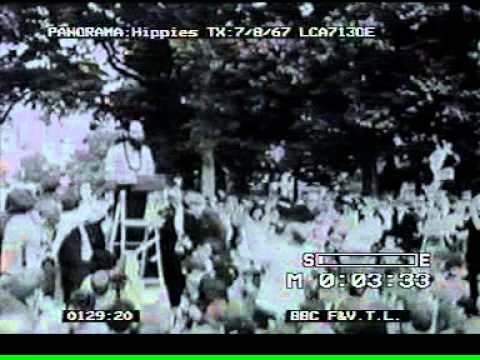
Allen Ginsberg and Steve Abrams at Legalise Pot Rally 1967 — YouTube
The 1967 video reveals that harassment of smokers by the police and the struggle with the campaigners over the use of amplification at the rally has been going on since the beginning. When a policeman steps through the crowd to stop Ginsberg speaking the poet presents him a smile and a flower. The law prohibits amplified music in royal parks – however, Hyde Park hosts massive concerts all summer, so this policy absolutely stinks.
Also at the rally, and captured in a pictured with Ginsberg, was Lee Harris – a South African actor/playwright recently moved to London, who would in 1972 open the city’s first head shop, Alchemy in Portobello Road, which he ran until he retired in the mid 2010s, having first stood in 2015 as a London mayoral candidate on a ‘Cannabis is Safer than Alcohol’ platform. Lee stayed true to the cause for the whole of his life. During the 2015 election campaign he said that, in the 1960s, “divorce, gay rights, women’s rights, everyone, everything changed except cannabis and we think it’s time that this country gets rid of its archaic laws and becomes part of the 21st century.”
Although certainly outdated and unjust, those laws against cannabis sale and possession have actually only been around since 1928 – whereas archaeological and historical records indicate the use of hemp in Britain since truly archaic times, ie the Bronze Age. In the mediaeval period cannabis was an important medical and therapeutic tool, and was used as an anaesthetic and to treat conditions including gout, weight loss, urinary infections and childbirth issues. Areas in Scotland, particularly monastic communities, grew cannabis for both fibre and medicinal purposes. The famous German Abbess Hildegard von Bingen (1098 to 1179 AD) wrote extensively about the positive (and negative) physical and mental effects of cannabis in her work “Physica”.
In the 1650s the medical uses of cannabis, including as an antiseptic, anti-inflammatory and antispasmodic, were included in a version of the London College of Physicians’ Pharmacopoeia published by botanist, herbalist and physicist Nicholas Culpeper. In the late 19th century cannabis was commonly used as a medicine in Britain, while in India, the India Hemp Drugs Commission recommended that cannabis should be taxed and regulated rather than prohibited, recognising its use in religious ritual and citing ‘how little injury society has hitherto sustained from hemp drugs’ and concluded that use of cannabis has a number of positive medical, emotional and social benefits.
In 1899 British pharmacologist Walter Ernest Dixon published a paper on ‘the pharmacology of Cannabis indica’, in which he wrote: “In cases where an immediate effect is desired the drug should be smoked, the fumes being drawn through water. In fits of depression, mental fatigue, nervous headache, and exhaustion a few inhalations produce an almost immediate effect, the sense of depression, headache, feeling of fatigue disappear and the subject is enabled to continue his work, feeling refreshed and soothed.”
Despite this medical enthusiasm, cannabis was not widely used in the 19th century and gradually a prejudice against it formed, that has been linked to racism and colonial prejudices against how native populations were perceived to consume or use the plant. In 1923 the League of Nations called for tighter regulation of cannabis in the UK, which the British government at first resisted due to the findings of the Indian Hemp Drugs Commission – but in 1928 the Dangerous Drugs Act made possession a criminal offence.
The first ‘cannabis bust’ in the UK took place at the Number 11 Club in Soho in 1952. Famously in 1967, the same year as the first Hyde Park rally, Mick Jagger and Keith Richards of the Rolling Stones received a prison sentence for possession.
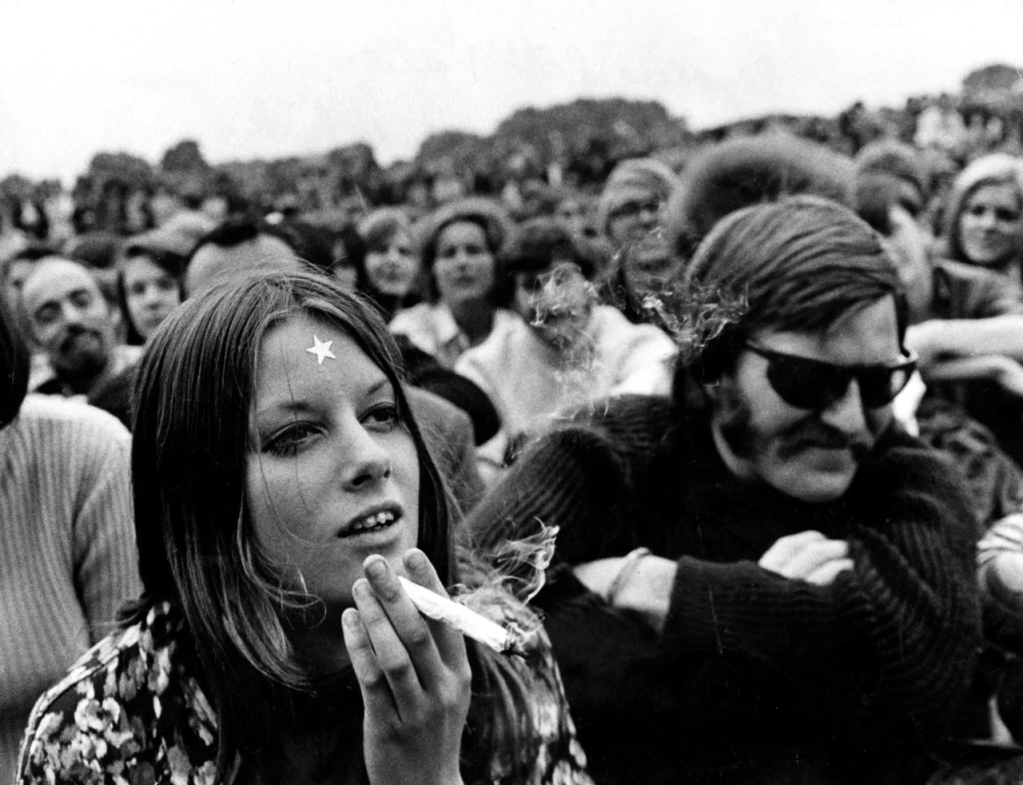
40 years after the 1928 criminalisation of cannabis the Legalise Pot Cannabis Rallies were underway. We are now 60 years further on – for 6 decades cannabis campaigners have kept the flame alive and the authorities have tried to spoil the fun. The behaviour of the police at the 2026 Hyde Park rally was seriously disturbing. Why do the powers that be persist in criminalising one of nature’s most versatile, healing plants?
The campaign for decriminalisation has had few peak moments where optimism was high that the laws might change, such as the early 2000s when the Labour government reduced the classification of cannabis from class B to C – but they soon reversed this and things went quiet again.
The rallies continued annually, sometimes becoming Freedom Marches through the streets, and included speakers, poets, stalls, campaigning groups. However, since Covid the authorities have made life even harder for the campaigners, and none of those featured at the 2026 event.
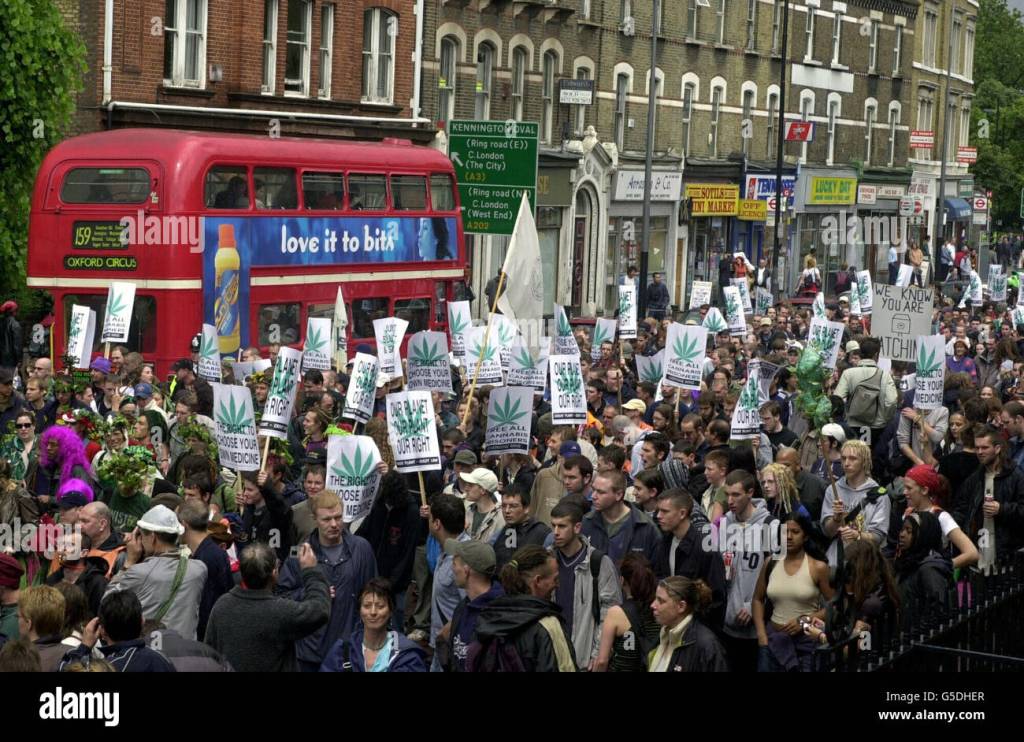
The 2019 rally saw the largest ever attendance at Hyde Park, as hopes for change rose due to legal medical marijuana entering the frame, as a result of high profile media campaigns centred around children with life-threatening epileptic seizures who had experienced significant improvements from cannabis. Medical cannabis is now big business in the UK. Many of the people at the Hyde Park rally this year would have had cannabis prescriptions, making some of the people there criminals while others are not. It’s getting crazier!
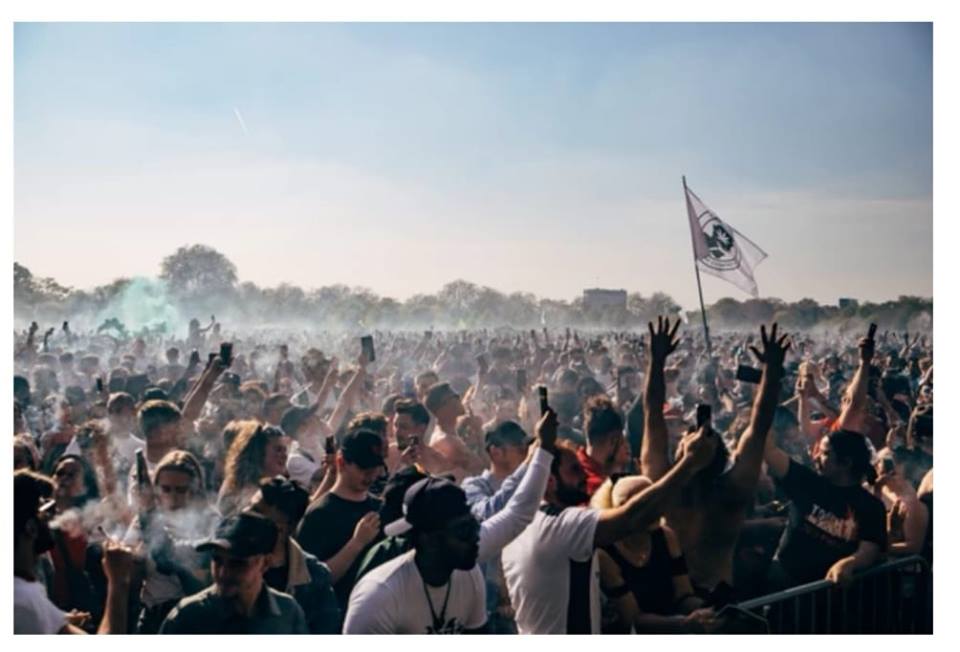
🔞420 HYDE Park London it crazy Love it at 4:20 in the afternoon and there was so much smoke 2019
The Labour government in the 2000s ignored the advice of its own ‘drug tsars’ who considered the evidence and all of whom proposed changes to the law. This was nothing new – in 1969 a committee set up by the Home Office concluded that cannabis is no more harmful than alcohol or tobacco and recommended that restrictions on use should be lifted. They were not. Instead, the 1969 Misuse of Drugs Act in England instated a maximum of five years’ imprisonment for cannabis possession.
Again, in 1979, an Advisory Council on the Misuse of Drugs [ACMD], created to guide government policy. suggested lowering the classification of cannabis to class C under the Misuse of Drugs Act. The government did not agree: In 1980 more than 20,000 cannabis convictions were handed out in the UK – the number more than doubled by 1991, reaching 42,209.
Government statistics show that in 2023/24, the police and border forces in England and Wales made 152,660 seizures of cannabis, the most of any drug. Statista.com reports that 28 percent of UK citizens surveyed in 2025 thought that the drug should be legal, with a further 27 percent supporting its decriminalization – and that recent surveys also indicate that almost one in three people in England and Wales had used Cannabis at some point in their lives, despite it being illegal. England and Wales drug offences 2025| Statista
Has everyone noticed that across the UK every newsagent, supermarket and local shop sells large rolling papers for making joints? Several brands usually. We are a nation of smokers. We resonated with Bob Marley’s marijuana soaked 1970s message of ‘One Love’ — like the Jamaicans and the hemp smoking holy men of India the Brits found the weed struck a chord with our pagan heart — the Brits in fact received back from our colonies not only the use of cannabis but the knowledge that cannabis is sacred.
Criminalisation came from a racist mindset. Decriminalisation would be a powerful way of honouring the multi-cultural land Britain has become. Look at the cannabis rallies — people of all races are there, united by the healing herb. People seeking peace, unity, friendship. The things Britain should be about, should be celebrating as our post-imperial contribution to a peaceful global future.
Made using references from A (brief) history of cannabis in the UK

