
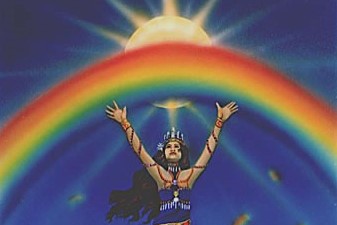
Why do benders love divas?… was the question posed at a highly enjoyable Sunday afternoon Duckie event at London’s Royal Festival Hall (20/9/2026)… but unfortunately while the question was posed it was not really addressed and definitely not answered!
The afternoon was good entertainment – a panel discussion about the adoration of powerful women (and some men) who inspire the queer community and also have long spoken to the sensibilities of queer kids growing up in conventional families, hosted by author Rupert Smith with singer David McAlmont, artist Sadie Lee, performers Travis Alabanza and Neil Bartlett alongside. Each shared the names of the divas who had inspired them early in life – I was delighted that Sadie included Marc Almond as one of hers (he and Debbie Harry have been my life-long diva inspirations), and interesting anecdotes galore rolled forth from all, some hilarious to the point of making the audience feel privileged to share in their personal stories.
But why do benders love divas? We certainly affirmed that they do – Maria Callas, Shirley Bassey, Whitney Houston, Beyonce Madonna of course were amongst those getting a look in. There was a reference at the start to the fact that DIVA comes from Latin, a word for divine female, a Goddess, which got me excited, but at no point did the discussion come round to actually speaking to the question originally posed!
I was hoping for a dive into the ancient world, where Goddesses great and venerable were regarded as equally powerful, or more powerful, than the male Gods, and were served in their temples and rituals by many queer priesthoods. That era lasted for literally thousands of years all around the Mediterranean Sea until Christianity became the official religion of the Empire in the 4th century – in the ancient world, spirituality was largely in the hands of women and queers who worked together in Goddess temples across the Empire. Examples include the Gallae priestesses of Cybele, the Great Mother (Magna Mater) of the Roman Empire. She and her very queer devotees had been invited and brought to Rome from Anatolia (modern Turkey) around 200 BCE with great fanfare and celebration. She was so ancient she was considered to be the Mother of the Greek and Roman deities. 2nd century Greek philosopher Sextus Empiricus wrote that: “The Mother of the Gods also admits effeminates, and the Goddess would not judge so, if by nature unmanliness were a trivial thing.” Her worship became the official religion of the Empire and remained so until replaced by Christianity. The loud, colourful, queer Gallae priests were much hated by Christian writers (and were considered extreme by some of the Roman pagans too):
Around 340 CE, Christian Firmicus Maternus wrote about Cybele worship: “In their very temples can be seen deplorable mockery before a moaning crowd, men taking the part of women, revealing with boastful ostentation this ignominy of impure and unchaste bodies. They broadcast their crimes and confess with superlative delight the stain of their polluted bodies”. We know less of the practices of the all-female Amazon warrior women of ancient Scythia, but they too were Cybele devotees: classicist Walter Tyrell wrote that “their rites were orgiastic, attended by frenzied dancing and music, their votaries were women and eunuchs.”
The Gallae’s most public ritual, the Day of the Blood, when new initiates were welcomed into the priesthood, was described by pagan writer Lucian in the 2nd century:
“As the Gallae sing and celebrate their orgies, frenzy falls on many of them and many who had come as mere spectators afterwards are found to have committed the great act. I will narrate what they do. Any young man who has resolved on this action, strips off his clothes, and with a loud shout bursts into the midst of the crowd, and picks up a sword from a number of swords which I suppose have been kept ready for many years for this purpose. He takes it and castrates himself and then runs wild through the city, bearing in his hands what he has cut off. He casts it into any house at will, and from this house he receives women’s raiment and ornaments. Thus they act during their ceremonies of castration.” Lucian, De Dea Syria.
“They wear effeminately nursed hair,” complained Firmicus Maternus (4th century) “and dress in soft clothes. They can barely hold their heads up on their limp necks. Then, having made themselves alien to masculinity, swept up by playing flutes, they call their Goddess to fill them with an unholy spirit so as to seemingly predict the future to idle men.”
Queer beings in service to the Goddess was not limited to Cybele. The earliest we know of are the priests of Inanna/Ishtar in Mesopotamia. As historian Will Roscoe has put it:
“At the time of the birth of Christ, cults of men devoted to a goddess flourished throughout the broad region extending from the Mediterranean to south Asia. While galli were missionizing the Roman Empire, kalu, kurgarru, and assinnu continued to carry out ancient rites in the temples of Mesopotamia, and the third-gender predecessors of the hijra were clearly evident in lndia. To complete the picture we should also mention the megabyzoi, or eunuch priests of Artemis at Ephesus; the western Semitic qedesha, the male “temple prostitutes” known from the Hebrew Bible and Ugaritic texts of the late second millennium; and the keleb, priests of Astarte at Kition and elsewhere… These roles share the traits of devotion to a goddess, gender transgression and homosexuality, ecstatic ritual techniques (for healing, in the case of galli and Mesopotamian priests, and fertility, in the case of hijra), and actual (or symbolic] castration. Most, at, some point in their history, were based in temples and, therefore, part of the religious-economic administration of their respective city-states.”
Sacred sexual services in the Goddess temples were condemned as prostitution by both the Hebrew and Christian Fathers: Both male and female sexworkers were present in the traditional temples of the Canaanites: the Old Testament tells us it took four centuries of persecution for those Hebrew Fathers to stop Canaanite women setting up phallic poles in praise of the Goddess, known to them as Asherah, and stamp out the tradition of the QEDESHA – the sodomizing male or trans priests who served Her. The Old Testament prohibitions against cross dressing and sex between men were designed to stop this ancient religious practice.
Qedesha was a term for holy men anointed to serve the Goddess, but was translated into the King James English bible as ‘sodomites’ and in modern bibles is usually rendered ‘male shrine prostitutes’. A medieval English translation, by John Wycliffe of the Lollard heretical movement, translated qedesha as ‘womanish-men who committed all the abominations of the heathens.’
I have been part of the global Radical Faerie community for 25 years: The modern gay liberation movement was born in a secular age, but back in the 1970s Harry Hay, Mitch Walker, Don Kilhefner and others were feeling a deeper call to uncover the cosmic in our queer consciousness, to reclaim the shamanic gifts our queer ancestors once held in earth-honouring, goddess-worshipping cultures around the whole world. The first Faerie gathering was in Arizona in 1979, and from there the tribe has spread around the world, a queer counter-culture. Meeting in Europe since 1995, and in the UK since 2006, radical faerie gatherings take place far away from the commercial culture of mainstream gay life. In our sacred groves we have been reconnecting to the Goddess, to the Diva of all Divas, and exploring the spiritual levels of queer consciousness. We are ready to share our discoveries – and one place we are doing that is at Queer Spirit Festival, which just had its 10th anniversary event in Devon with 800 fabulous queers attending. Radical Faeries from around the world came to join with our local tribe and with pagan, yogic, spiritual queers from the UK to co-create a celebration of the spiritual, creative and healing gifts of LGBTQ+ people from all races and cultures. Festival features include the Temple of Sacred Sexuality, along with performance, djs and 100+ workshops. The Glastonbury Goddess Temple appears at the festival, helping us rediscover our deep, ancient connection with the divine feminine.
I feel it might be important to point out to atheistic queer folk that, as witch and activist Starhawk has put it, “The symbolism of the Goddess is not a parallel structure to the symbolism of God the Father. The Goddess does not rule the world; She is the world. Manifest in each of us, She can be known internally by every individual, in all Her magnificent diversity.” She goes on to say: “Sexuality is a sacrament. Religion is a matter of relinking, with the divine within and with Her outer manifestations in all of the human and natural world… In the Craft, all people are manifest gods, and differences in color, race, and customs are welcomed as signs of the myriad beauty of the Goddess.”
That’s why benders love divas. Rad Fae founder Harry Hay said of queers: “We have been a SEPARATE PEOPLE…. Drifting together in a parallel existence, not always conscious of each other.. yet recognising one another by eyelock when we did meet… here and there as outcasts… Spirit people… in service to the Great Mother.. Shamans.. mimes and rhapsodes, poets and playwrights, healers and nurturers… VISIONARIES… REBELS.”
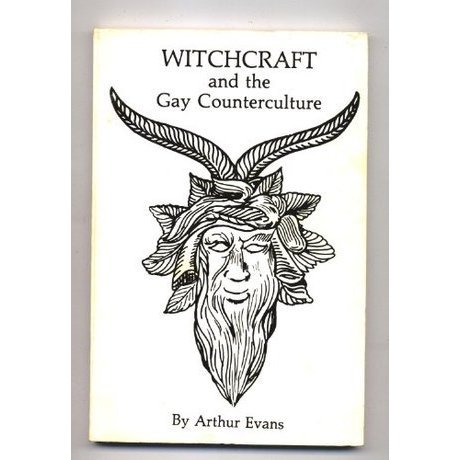
Gay writer Arthur Evans summed up it in his 1978 book Witchcraft and the Gay Counter-Culture: “The Christian oppression of women and Gay people was no accident. Their freedom and high status in the old religion made them prime targets for the new religion, which was profoundly anti-sexual.”
Once the Goddess temples were destroyed, queer kind who had once served in them went instead into the churches, convents and monasteries. When the monasteries were shut down some moved into cities and created theatre. which led to the bars and queer culture we have today. We came together in a South Bank theatre to speculate, why do queer people love to worshipfully adore a diva on stage – well i was hoping somebody might say, it’s because that is what we have always done – through celebrating the Divine Feminine, one of queer nature’s roles is to bring connection, glamour, magic, laugher, freedom, joy, delight, healing and holiness to the people of the world.
Benders love Divas because Divas reflect something in us. That something is for sure raw emotion but is also the consciousness of the divine feminine, the consciousness in us that sees love and interconnection rather than separation and division. And as the great diva Dionne Warwick put it back in the day but applies even more urgently today, what the world needs now – is LOVE.
And in my opinion that’s what Gay Liberation was in the first place and must always be: a stand for the right of all people to love whom they naturally are drawn to love, whatever the gender of the people involved. All forms of love are recognised and honoured by the Goddess, only the Father God judges (well actually his followers do that, not him!), and when love is truly free to flow, massive changes may occur on our planet. French philosopher Teilhard de Chardin wrote that, “Someday, after mastering the winds, the waves, the tides and gravity, we shall harness for God the energies of love, and then, for a second time in the history of the world, man will have discovered fire.”
Why do Benders Love Divas – because we are, and always have been, the people of love, the people of the Goddess, nature’s children born to reflect her gaiety.

