

IN THE ANCIENT TEMPLES OF ISHTAR, that stretched across the lands of Mesopotamia, which we nowadays call Iraq, Kuwait, Syria and the border lands of Turkey and Iran, from at least 10000 BC, the Goddess, often known as Ishtar, was served by gay and transgendered priest/priestesses.
They were called ASSINNU, KURGARRU, KULU’U, legends told of their role in rescuing the Goddess from her imprisonment in the Underworld. The worship of Ishtar is deeply associated with eroticism and sacred prostitution – sex used to create spiritual connection.
Empires rose and fell in the region but the worship of Ishtar stayed strong. Eventually as we know times changed and the goddess worshippers of the ancient world became persecuted lowlife, though in some corners of the planet… such as amongst the hijra of India, some connection to the past has been kept alive through the centuries.
Those ancient gendervariant priests even get a mention in the Old Testament… as the QEDESHA (‘The Holy Ones’), servants of the Canaanite goddess ASHERAH, who were condemned by the Israelites for the same sex eroticism and cross dressing in their ritual practice. Qedesha was translated into ‘sodomites’ in the King James Bible, and is often rendered as ‘male shrine prostitutes’ in modern versions. A medieval English translation by John Wycliffe gave Qedesha as ‘woman-ish men who committed all the abominations of the heathens.’
As the centre of power shifted over time into Europe, the genderfluid goddess worshippers came too. The Galli were ritual celebrants who were known for acts of public castration in ritual, which the priests undertook to be closer to their Goddess, Cybele. This worship spread into the Roman Empire. read more here
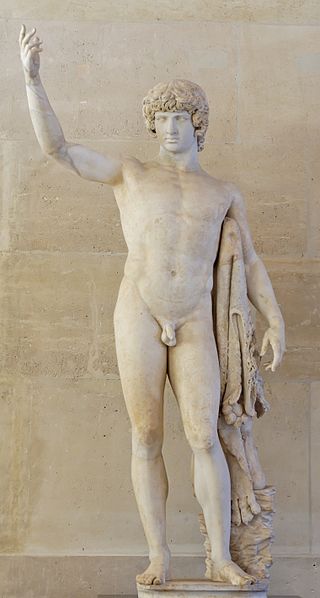
Sexual practices and homosexual priests and priestesses were normal in the pagan religion of the ancient world. Pan, Dionysis, Aphrodite were among the deities worshipped sometimes in single sex cults. When Roman Emperor Hadrian’s young lover Antinous died mysteriously while sailing on the Nile, the spirit of Osiris was invoked and Antinous raised to the level of a god. His cult was so popular it spread throughout the empire within a decade and was an attempt to revive the power of the old religion in the face of the competition of the more rigorous new faith, Christianity.
English poet Rev. Samuel Cottam (1863-1943) thought that the official cult of Emperor Hadrian’s drowned lover, ‘the everglorious lad’ Antinous, was the religion that might have been: “Antinous was within an ace of becoming the god of the modern world. We may say it was only the divinity of Christ which prevented this.” (quoted in Strangers: Homosexual Love in the 19th century, Graham Robb (2004)
Christianity was also based on the love of men for each other, but it took the turn of making the body into something dark, and sex into a sin. So the old ways of knowing god through sexual connection were lost, and those that involved knowing god through sexual connection between same gendered people became totally taboo. Rival religious groups throughout the middle ages – eg the Manicheans, the Cathars, the Bogomils – had a more relaxed approach to all sexual relations (note that we get the word BUGGERY from the Bulgarian Bogomils, its original meaning was heresy) but over the centuries the Catholic Church tightened its grip on people’s morality and behaviour, often associating heresy and same sex activity together.
The remaining male and female witches, druids and healers of the old religion were persecuted until the old ways were pretty well eradicated during the witch hunts of the 15-17th centuries. Those born with inclination to love members of the same sex were forced to hide their nature, and the spiritual connection that goes with that love was largely lost, although, ironically, channelled also into the monasteries, convents, churches and art of the Christians, and from the Renaissance era also into theatreland. The Middle Ages saw a flowering of love culture in the single sex monasteries, and earned them a reputation as beds of homosexual activity, which made it all the easier for Henry VIII to use his new anti-sodomy law (the Buggery Act of 1533) and to turn the population against them when he decided to kick the Roman church out of England in the 16th century.
From that time the link between same sex love/gender fluidity and the sacred dimension was thoroughly destroyed in Europe. Gay life would reemerge in the 17th century in the growing cities, in molly houses and cruising spots and in the dreams of the Romantic period, when the long lost playful arcadian days of the pagan past were missed. But having finally, after about 1000 years, achieved the eradication of the link between god and queerness at home, when the European explorers set out to conquer the world they found the same link going on strong just about everywhere they went.
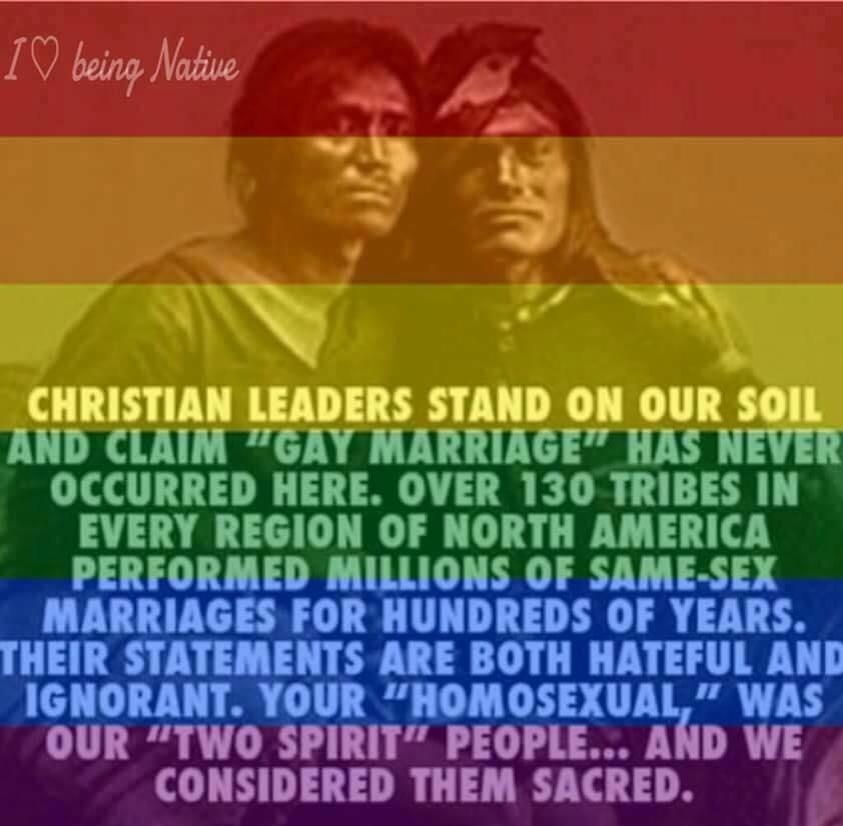
Most peoples of the world had no big hang ups about different kinds of sex until the Europeans came along. Temples in India showed all kinds of sex acts in their stone carvings, just as had been the case in ancient Middle Eastern and Far East lands. In fact many cultures recognised that tribe members who carried both male and female spirit in themselves were in touch with the invisible realms and were honoured for that. The Two Spirits of the native Americans are the most famous example Each tribe had its own special name for the shamans – The Navaho called them the nadle, the Oglala call them Winkte, Absaroke of Montana used Bo-te, which means not-man, not-woman. Zuni say Ko’thlama… Sources as late as the 1930s from the Navaho tribe reported that the nadle (a term that could apply to men and women shamans) were sacred and that without them the tribe would perish.
The Europeans set about destroying the power of the shamans – they called the american shamans berdache, a Persian word and common slang for a passive homosexual. This name stuck until the 1990s, when the efforts of the native American two spirits to reclaim the nobility of their role took off.
The Europeans went around the world in early modern times being shocked at the blatant enjoyment – and holy associations – of same sex relationships that they came across. In Japan and China homosexuality was seen as a privilege enjoyed particularly in the monasteries, and people laughed when the Jesuits suggested it was sinful. In Angola, Quimbanda was the name given to men who dressed as women and had sex with each other – they were held in esteem by the tribefolk as wizards. (Antonio Oliveira de Cardonega 1681 )

One tribe on this planet by some miracle never lost its knowledge of the spiritual nature of its queer children. The Dagara of western Africa call gay men ‘gatekeepers’ and lesbian women ‘witches’. They see us as holding certain vibrations that connect the earth to the spirit, and see our sexual rituals as necessary for the well being of all. Malidoma Some and Sobonfu Some, two teachers the Dagara have sent into the West to share their wisdom, have both testified to the crucial need of gay people to be acknowledged for our spirit, and not reduced to our sexuality, for our spirit makes us into healers, shamans and gateways for important energies into the world.
We have always been this. The reason there are such high rates of mental illness, drug use, suicide amongst gay people is because we are living in a world that does not see who we are – but in fact do WE properly see who we are yet? The spiritual challenge of being queer is to embrace our gender fluidity or our queer sexuality as a call from the soul, to know ourselves fully and completely, to search for our own truths, for the keys that unlock who we are, all our unique talents and gifts – as spirits in a human experience, as healers, as connectors of the spiritual dimensions. There is so much more to us than our sexual expression. Gay life has so much crisis going on because crisis makes us sit up and face ourselves. AIDS was the crisis that woke me up to the deeper reality of my soul.
Today I co-create queer spiritual spaces where our natural, playful, divine spirit can emerge, but I am aware that most queers in the world do not see who we are. Luckily some of us, more and more of us in fact, have noticed, our eyes are opening, we are pulling together to amplify our voices – and everything you once believed about being gay/queer may be close to changing.
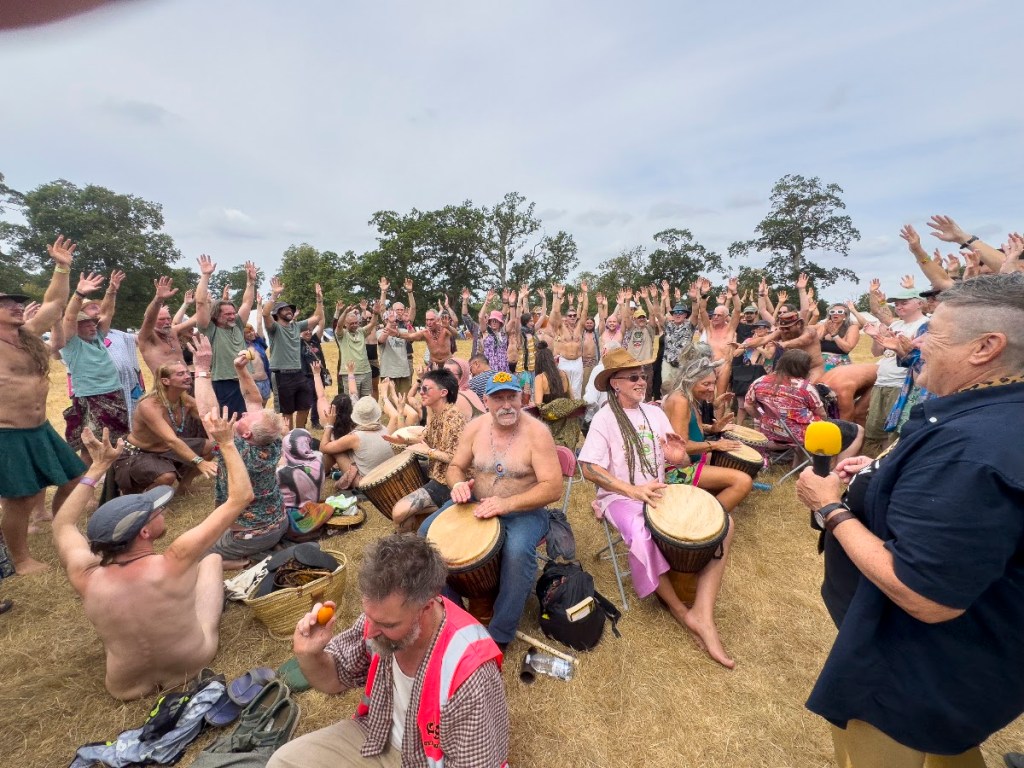
At Queer Spirit Festival in the UK (which held its 10th anniversary event, attended by 800 fabulous queers in Devon in August 2026) we have created a space in which the spirituality of LGBTQ+ people is honoured, explored and celebrated. This element of our queer nature, so prominent in our history across the planet, has been little addressed by the modern political movement, which was born in a secular age. Many queers still ignore spiritual matters because of the history of religious homophobia. Well I hope this article goes some way to reveal why that homophobia is so twisted, reveal that it was always in fact a power grab by males who sought to eradicate the ancient cultures of the Goddess, in which queerness played a crucial, sacred part – and reveal why the time is ripe for us to collectively, globally, reclaim the queer sacred powers.
“The Christian oppression of women and Gay people was no accident. Their freedom and high status in the old religion made them prime targets for the new religion, which was profoundly anti-sexual.” Arthur Evans, Witchcraft and the Gay Counter-Culture (1979)
“Many shamans were homosexual; many of the worshippers of the Goddess under her various names and in her various cults all over the world … openly avowed their homosexuality and were accepted and even specially revered as priests, oracles, healers and diviners. Homosexuals, far from being rejected, were seen as sacred — people who, by virtue of a mysterious fusion of feminine and masculine traits, participated with particular intensity in the life of the Source. The Source of Godhead is, after all, both masculine and feminine, and exists in a unity that transcends both…” Gay Mystics, Andrew Harvey (1997)
“It’s tragic that many in the LGBTQ community struggle with issues around spirituality. We confuse it with religion and, no wonder, given the treatment we have received at the hands of most religions… But what’s ironic about that is that before the patriarchal cultures and religions, people that we today refer to as LGBTQ were not only spiritually inclined, but were honored for the roles of spiritual service and leadership they played all over the world.” Christian de la Huerta, author of Coming Out Spiritually. (1999)

