When conflicts that arise between the various identities in the LGBTIQ+ spectrum it suits the patriarchal control system well — divide and rule has long been its way. How about we blast away that old pattern, and seek for the deeper reason that we find ourselves walking with Pride under one rainbow.
I have been sickened recently seeing posts from the LGB Alliance crowing about their exclusionary conference coming up in London, and videos from the likes of Julie Burchill still pushing a hateful, twisted view of trans people. These queers — or non-queers more like as they rarely appreciate ‘queer’ as an umbrella term for our alphabet community — need a reality check. The persecution of gay men, women and gender-fluid/trans/nb people has gone hand in hand for 2000 years. It is only the relative social and legal freedom, so recently gained, that has made possible this highly visible emergence of queerness in all its diversity. Pride has always been about celebrating each other — because it is about celebrating LIFE itself, and claiming the freedom to be who we are. The rainbow is the perfect symbol for that.
Mythologically, the rainbow was the bridge to Asgard, the realm of the Gods, to the Norse people. For the Greeks, Iris was the rainbow messenger connecting the worlds. Oxumare is the intersex rainbow serpent God in Yoruba religion. Ancient Japanese myth saw the rainbow as the path ancestors took to visit the planet. The Irish have long sought the pot of gold, guarded by a leprechaun, at the rainbow’s end. Bulgarians believed that walking under the rainbow would change your internal gender. For the Buddhists rainbow consciousness is the highest state attainable. In the Bible the rainbow is God’s sign to humanity that all shall be well.
The role of myth is to remind us of the potential in the human soul. From whatever culture we view it, the rainbow has long been seen as a reminder that we are part of a bigger picture. Call it spirit, consciousness or nature — the rainbow reminds us we are all part of the picture.
“As Native Americans, we believe the Rainbow is a sign from the Spirit in all things. It is a sign of the union of all people, like one big family. The unity of all humanity, many tribes and peoples, is essential,” Late Thomas Banyacya, Spokesman, Hopi traditional elders
There are two rainbow movements in the world today. One of them is the global movement for LGBTQ+ rights, the other is an ongoing development of the counter-culture effort to give birth to a new human consciousness that began in the 1960s, and takes the form of ‘neo-pagan’ rainbow gatherings around the world. Both movements have the rainbow as their symbol because both are serve the ultimate liberation of human consciousness from oppressive belief structures. The two movements have the potential to learn a lot from and share with each other.
The Rainbow has seven colours that merge and dissolve into each other — reflecting the nature of the peoples of the earth, who do the same. Rainbow Consciousness sees all humans as part of the rich and diverse, colourful and creative manifestation of Spirit on planet Earth. We live at the time of destiny — as expanded networks of information and communication make the world one, long established institutions and systems of control are breaking down. How we engage with each other, with the planet, and with the spiritual dimensions is going through a profound shift, a shift of the ages. The breaking down of barriers around faith, gender and sexuality are producing new experiments in human community, where some are learning to live from a place of expanding awareness, heart centred communication and openness to the many planes of consciousness. All over the world people who believe in peace, in the unity of humankind, in non-dual awareness, who see love as the way forward for the species, are growing in numbers and confidence. Independent thinkers whose free spirit wakes up those around them.
The increasing visibility and acceptance of Lesbian, Gay, Bisexual and Transgender people in recent decades is part of a fundamental shift in human attitudes. Natural human traits that were long suppressed by patriarchal religious attitudes are finding their way back. It shows that patriarchal systems of control are starting to break down. This development challenges religions to live up to their philosophies of love or be exposed for their hypocrisy. It shows how societies are evolving, and exposes those that are not. A brighter world of peace and tolerance, creativity and love, will only arrive when enough people want it.
The LGBT movement uses the Rainbow Flag as its banner. Some in the other Rainbow movement are confused by this but the underlying point is that we’re all seeking freedom to be ourselves to live in harmony with our deepest nature. Eventually perhaps all labels around sexuality will fall away, but for now the labels help some of us to advance on the path of self discovery.
Prominent spiritual feminist Zsuzsanna Budapest, in her 1991 book Grandmother Moon, wrote: “One of nature’s most pleasant ways of coping with overpopulation is to increase the number of homosexuals in the community. Rather than producing children, gays provide support for those in the community who do have children. The gay uncles and aunts are the legendary fun relatives we remember as adults. Their productivity is directed into other areas. They have enriched our culture with outstanding works in the arts-theater, dance, music, and so on. They are the emotional and cultural caretakers of the population.”
The RAINBOW TRIBE “is a loose, international affiliation of individuals who have a stated goal of trying to achieve peace and love on Earth. Participants make the claim that they are the “largest non-organization of non-members in the world.” In addition to referring to itself as a non-organization, the group’s “non-members” also even playfully call the group a “disorganization.” There are no official leaders or structure, no official spokespersons, and no formalized membership. Strictly speaking, the only goals are set by each individual, as no individual can claim to represent all Rainbows in word or deed. Also contained within the philosophy are the ideals of creating an intentional community, embodying spirituality and conscious evolution, and practicing non-commercialism.” (Wikipedia)
This sounds a lot like Radical Faeries (a nature and community focused counter-culture to the gay commercial mainstream that’s been going since 1979 and I been part of since 2001) to me. Much of it could actually apply to the global LGBTQ community too — loose, international affiliations, non organisation, no official leaders, no membership. The global Queer community could, however, embrace much more intentionality, explore its spiritual history and even become a beacon of conscious evolution. The other Rainbow tribe could help us get there. Spirituality is the big area of life that has, via some religions, been used to beat queer people down, and it is the big area that the LGBTQ movement has not worked out how to address. The clue to that however is in the rainbow — and visible in the Rainbow Tribe’s spiritual reclamation of pre-Christian, pagan practices that unite people with each other and spirit, that open up the inner universe of consciousness, and their openness to wisdom teachings from Native Americans, Hinduism, Buddhism.
The Rainbow reminds us that all colours and kinds of humanity all come from one unified source.
Since the 1960s a new consciousness has been emerging on planet Earth as we transition into the astrological age of Aquarius, a rapid spiritual awakening is occurring – a shift happening for many people which science, organized religions, media, governments, academia are not at all tuned into or aware of. I awoke to the consciousness shift as I experienced it happening within myself in the mid 1990s. At the time I had a sense that the 2020s would see the fulfilment of this global awakening, and that I, born in the 1960s and ‘waking up’ to multidimensional reality in the 90s, was in some here to be a bridge between the 60s hippies and the cosmic kids to come in the 2020s.
To put it simply, I would descrive the nature of this shift as being about coming to see, feel and understand that life is an interconnected Oneness, arising in consciousness – not consciousness arising in life as materialist science sees it – that we are part of a unified whole, never separate, never not existing. We have within us both an individual self, but we are also part of a collective Self. What we do to one we do to all, what we do to others we do to ourselves. This realisation changes everything.
Great Aquarian Conjunction February 4-5, 1962
In early February 1962, the Sun, Moon and all five visible planets—Mercury, Venus, Mars, Jupiter, and Saturn—aligned in the sign of Aquarius, creating a rare celestial event that captured global attention. For some, fears of doomsday were stoked – they were “stocking up bomb shelters in the United States, and holding nonstop prayer vigils attended by millions in Bombay, India. One group of believers moved en masse to the town of Cleator, Arizona, which the group thought was one of only 12 spots in the world safe from the imminent disaster. Others claimed that the alignment was responsible for the assassination the following year of U.S. President John F. Kennedy.” Benchmarks: February 4, 1962: Five planets align – but no end of the world
For others this was the kickstart of a new age for humanity – an age of spiritual enlightenment, equality, humanitarianism – the new astrological Age of Aquarius. Many astrologers view the 1962 alignment as the sign in the heavens that the Aquarian game was underway. And indeed, the 60s brought the spread of alternative spiritualities and counter-culture experimentation with clothes, music and psychedelics, the Summer of Love. All very Aquarian. 1962 was also the year of the Cuban missile crisis, bringing global fear of nuclear war, there was a lot of excitement about the space programme and the Beatles arrived on the world stage. A global consciousness was being born.
Astrologer Daniel Giamario, founder of the Turning Point Mystery Schoolregards the February 1962 Great Aquarian Conjunction as the start of a period lasting until 2034 which he calls ‘The Great Turning.’Founders Corner – Turning of the Ages Mystery School
This 72 year period 1962-2034 contains several major astrological events that can be interpreted as each nudging humanity further along the transitional path through the time of turning from Piscean collective dream-mind to Aquarian ‘cosmic consciousness’. In these years the causes of racial and sexual equality, of gay rights, of humanitarian aid, and the spread of spiritual practices and teachings – this thanks to the very Aquarian manifestation of the Internet enabling astrologers, healers, spiritual teachers to reach audiences they could not previously – have grown alongside a transforming human understanding, an expanding human appreciation that we are all connected.
The Harmonic Convergence (August 16–17, 1987)
Widely considered a major turning point, this event involved a rare, synchronized global meditation, with many gathering at sacred ‘power spots’ around the planet, timed to coincide with a grand fire trine in the sky involving the Sun, Mercury, Venus, Mars all in Leo, Jupiter in Aries, Saturn and Uranus in Sagittarius. The alignment was considered to be a potentially powerful energetic gateway, bringing spiritual activation, evolutionary acceleration and a collective desire for harmony. The intention was to create a wave of harmonic resonance across the Earth, anchoring higher vibrational frequencies into the planetary grid.
Some believed this point to mark the end of “hell cycles” and a shift in Earth’s collective karma, ushering in a new age of peace. The fall of communism did follow soon after and a new era of global peace did seem possible, for a while.
Culturally, the late 1980s brought house music which would go on to conquer the world! It wasn’t long before ravers across the globe were experiencing loved-up states of consciousness that many considered their weekly dose of holy communion.
“This is my church This is where I heal my hurts
It’s a natural grace Of watching young life shape It’s in minor keys Solutions and remedies Enemies becoming friends When bitterness ends…” Faithless, God is A DJ.
American New Age writer José Argüelles connected the Harmonic Convergence to the Tzolkin, the sacred Mayan calendar, claiming that it marked the beginning of the final 25-year countdown to December 21, 2012, a key date much associated with the end of a cycle and the emergence of a new consciousness paradigm.
“The Harmonic Convergence of 1987 was a pivotal moment in the modern spiritual movement, symbolizing a shift in consciousness, planetary awakening, and the call for humanity to align with higher vibrational states.
Uranus, considered the ruling planet of Aquarius, was in his home sign during these years of millennial fervour. This was the period when the World Wide Web came into general use, birthing a communications revolution and ever deepening sense of global interconnection. In the UK a new Labour government brought optimism and change, which included equal rights for gay people at long last. Successful treatments brought an end to the devastation of the AIDS epidemic. These points are crucial – a little discussed aspect of the Aquarian energy is its queerness – Aquarius is the sign of gay love (personified in myth as the the love between Zeus and Ganymede) and Aquarius is at the same time the most androgynous sign of the zodiac – hence we can also regard increasing numbers of visible trans people as part of the new age birthing. (Ultimately we are all a Self that is beyond gender, and we are all a mix of ‘masculine’ and ‘feminine’ traits, both physically and psychologically. Look at anyone’s astrological chart and we can see how so called male and female energies are present and activating within them. Aquarius gets this, and wonders why some others don’t.)
Aquarius is a sign of paradox – another example is that of being the sign of maximum individuation (Aquarian energy insists we be our unique selves) at the same time as the sign of the group, of collective consciousness. Get your head round it – we can’t have one without the other. The Aquarian glyph can be seen as symbolizing the dichotomies of the sign – two parallel horizontal lines indicating the two levels of mind, individual and collective. Aquarius unites them, and the Aquarian age will teach us how to evolve into the fullness and experience of both.
Winter Solstice 2012
The big moment heralded by many as a turning point into a new form of human consciousness. Those who expected it to happen overnight were disappointed.
I made an in-depth study of the Mayan calendar, exploring the work of Carl Johan Calleman, a Swedish biochemist.
Having had my own revelations of the cyclical and directional qualities of consciousness in the Spring of 1995 while preparing myself for predicted death from AIDS, I felt complete resonance with Calleman’s interpretation of the calendar as a chart of the evolution of consciousness on our planet, consisting of 9 creation cycles which run alongside each other, each one shorter and more rapid than the previous. All 9 reach the end of their cycles at the same point, with many scholars considering date in western terms for this point was December 21st, 2012.
Each creation cycle of the calendar is 20 times shorter than the previous, and the pace of evolution – the rate of change happening on earth (ie in life as a whole, in the overall consciousness that we are part of) – moves 20 times faster at each level. We feel this acceleration and it causes many people to feel ‘time is speeding up’, but it is the rate of change, the accumulation of new experiences that is accelerating. In economics, politics, culture – and in our families and social lives – in recent decades things have been developing and changing at a pace like never before. Calleman, and others, believed the last stages of the calendar would bring interaction with other planets, the birth of a galactic consciousness. My own journey with spirit led me to see things differently – during my underworld journey (three years living as PWA, person with AIDS) I experienced an opening to the inner realms, which revealed much to me about the multi-dimensional nature of consciousness. I regarded the end of the Mayan calendar as signifying that all levels of spirit/consciousness/light are now fully in place on the planet, all accessible – including all the ‘lower’ levels of unconscious projection and behaviour – but the higher levels are here to be experienced within oneself and developed through shared high vibrational experience with others. It is literally in humanity’s hands now – we each have to make the choice to evolve our minds into the next levels that are available to us. The multiverse of light-love-bliss is here but we have to choose to engage it.
At the 2012 Winter Solstice Queer Spirit Circle (a meet-up I have run in London since 2005) we made ritual to symbolise the transition from the old world paradigm of division and discord into a new paradigm of love, consciousness and unity. We didn’t expect immediate results, but we understood that that evolution is a step, a choice, the whole world needs to make, and after the first step come others.
The Great Conjunction of Jupiter and Saturn December 21, 2020 at 0 degrees of Aquarius.
This event was highly significant because it began a new 200-year cycle of Jupiter-Saturn conjunctions in air signs (rather than earth signs), with the first in the series falling in Aquarius, signalling a shift toward community, innovation, and technological advances. During the 200 years of Jupiter-Saturn conjunctions in earth signs humanity’s material knowledge, wealth, standards of living have massively increased. So has our ability to destroy life on earth. We badly need wisdom to match our material strength but we’ve been so materially focussed as a species that we can not yet even imagine the many revolutions in the realm of air – the realm of the human mind – that are to come.
Saturn in Aquarius (2020–2023)
Saturn’s transit through Aquarius brought a three-year period of intense focus on collective responsibility, the regulation of technology, and the restructuring of social institutions, reinforcing the shift away from the Piscean, top-down structures. Before departing Capricorn, Saturn made a conjunction with the lord of the Underworld, Pluto, on Jan 12th 2020 – and shortly after the Covid 19 pandemic hit hard. When Saturn, the planet of restrictions and lessons, entered Aquarius, the sign of the collective, we were hit by by global lockdowns. Freedom of movement and association gone, but Saturn does things for a reason, he’s teaching us all the time. Life changed, people changed. A much longer trajectory was playing out.
Pluto’s Entry into Aquarius (2023–2024)
Pluto entered Aquarius for a short stint in 2023 and began its long-term, 20-year transit through the sign in late 2024. This is regarded as a massive, long-term structural transformation toward digital advancement, the dismantling of old systems, and societal reordering. Pluto mirrors the deepest parts of our collective consciousness, while in Capricorn he has been shaking the institutions that underpin society, structurally, politically, economically. In Aquarius his energy will rock, shake and rebirth our understanding of who we are, individually and collectively, a 20 year process now underway.
Aquarius New Moon Solar Eclipse February 17th, 2026
Coming alongside the epoch-making shift of Saturn and Neptune into Aries and conjunction on February 20th at 0 degrees of the zodiac, this new moon, which opened the year of the Fire Horse in the Chinese calendar, and was the powerful night of Shivaratri in the Hindu world, was a signal, for those that can see it, that a new stage of the Turning is here. Once Uranus shifts from Taurus to Gemini in April, all the outer planets will have completed their transition from water/earth energies to fire/air energy. The background energy of our collective consciousness, from so many perspectives, is shifting into very different frequency fields from where it has been for almost two decades. Humanity will follow, kicking, screaming or celebrating and rejoicing?
In April 2026 we will experience the Sun, Mercury, Venus, Mars, Saturn, Neptune and (for 2 days – 15 to 17th) also the Moon, all in the first sign of the zodiac, fire sign Aries, at once. This is unprecedented and affirms that the shift away from the material to the spiritual paradigm is happening apace – and will be felt personally: It’s not just happening in the astrological background. Each step into the energies of the Aquarian Age is a step towards embodiment – because although Aquarius is an air sign, a mentally attuned energy – it is through manifestation, through creativity, through tangible joy shared with others, through living fully as we we really are, that the mind finds its fulfilment.
The Great Turning, as described by Daniel Giamario, has another eight years to run.
The 1960s brought the dawning
but now it’s almost morning
of the Age of Awakened Humanity:
Wake Up the Sleepy Heads
From the dream of the Living Dead,
time to rise and be the Cosmic Conscious Human, instead.
I first held a drum in my hands while in a field in Dorset in 1999 at the second ever Queer Pagan Camp. I felt the power, magic and potential straight away. I am forever grateful to Lou Hart for introducing me to the djembe and teaching me technique and rhythms.
Since 2005 I have hosted the Queer Spirit Circle in London, where we meet, usually at full moon, to drum, dance, make moon ceremony and build community. Dozens come along for a few hours of energy raising, emotional release and spiritual connections.
Drumming has been recognised by science as a practice that supports good mental and emotional health and that builds community bonds….
I’d like to share this excerpt from from a book by Arthur Hull – ‘Drum Circle Facilitation: Building Community Through Rhythm‘
“During a rhythm-based event, community consciousness is built among the participants and it carries into their daily life. A facilitated drum circle event is a natural community builder. With community metaphors delivered during the windows of communication, a good facilitator can reinforce the natural community-building experience. Comparing differences is a separation trap. Sharing differences is a community celebration. People call it ―team building – in the business environment, or ―synergizing – in the personal growth world, but the bottom line is that a rhythm-based event, in its most basic form, is a powerful tool for community building. At the end of a facilitated drum circle, strangers seem less strange to each other. There is more camaraderie in the population as they have created a group consciousness together. The players have been in constant collaboration for one or two hours, cooperating with each other to create beautiful rhythms and music together. In the process of playing together, participants put into action the basic elements that make a community or team function successfully to achieve any goal. As Babatunde Olatunji always said, ―Drumming is the simplest thing that we can do to bring us together.
“This melting of the ―physiology of separatenes – is a phenomena that happens in every drum circle event regardless of the group‘s age, culture or intention. Where the body goes, the mind and heart soon follow. Once this melting happens, the concept of separateness in the minds of the players also melts and dissolves. Instead of looking for and thinking about the things that separate them, they look for and think about the things that connect them. In a drum circle those connecting elements are easy to find. They are in the music and rhythm.
“Those involved in this grass-roots rhythmical expression movement can testify to the power of drumming and its ability to relieve stress and anxiety, calm the mind and create an expressive channel to release pent-up emotions. The exercise aspects of drumming alone make it a healthy activity. Drumming is one of many disciplines that can enhance the wellness factor in your life.
“Barry Bittman, MD, a researcher and neurologist, is head of the Mind-Body Wellness Center, in Meadville, Pennsylvania. His research has shown that certain group drumming protocols can positively affect the immune system in your body. He has broken the AMA ―sound barrier – by proving that drumming can have a measurable, reproducible, positive impact on many aspects of biology, psychology and social interaction.”
“The sense of gayness as a Spirit path is growing. As we break out of straight mind-bindings we naturally recoil from seeing ourselves and each as either mono-sided homo-sexualists or homo-oriented straights… for many of us come revelations of feminist thought/ practice: we discover women exposing, breaking free of sado-slavery into whirling fiery gyn-ecstacies of loving magickal sister-Selves. …We discover anarcho-sissydom, life-loving faggotry and more. We begin to suspect the existence of hidden universes beyond the pale of straight space/time delusions,
“Our straight socio-cultural enculturations have blinded us. We must turn to the freer world of our imagination, fantasy, dreams, myths…. Let us build fairy mythologies – gay ways of thinking and doing – to realise and protect our loving soulful brotherhood, to reclaim our Selves, recreate our culture, regain our heritage, remember our fates as beings of Spirit, wisdom, power compassion, truthfulness, light.”
So wrote Mitch Walker in the 1970s, this was published in Visionary Love, 1980. Back in the first decade of Gay Liberation there were some men who felt that the movement was quickly assimilating into hetero-normative societal standards: “The homophile movement is a dead thing: dead to the gay vision, anti-magickal, counter-revolutionary. Its spokespeople and theorists shun the roots (the radical, source of nurturance and understanding) in favour of surface values: the social norm, success, integration, acceptance, assimilation. Its shallow reality suffocates the vision in us, co-opting gay people and vitiating the creativity and potential of the Gay Movement.” Mitch was to become one of the founders of the Radical Faerie community, which held its first gathering in Arizona in 1979, advertised with a goal of “exploring breakthroughs in gay consciousness” and “the spiritual dimensions of gayness.” Parallel to pagan lesbian feminists, such as Starhawk and Zsuzsanna Budapest, who were leading a surge of ‘spiritual feminism’ at the time, the Faeries sought to embody a new way of seeing and interacting with the world – by embracing all beings as part of a living wholeness. “All faggots are feminists, and militant ones at that. To cultivate your woman-energy, your feminism, is to increase your ability to see and walk through the great portal. In fact it’s essential.” wrote Mitch.
Harry Hay, the most well known founder of the Radical Faeries, believed that gay men were born with what he called ‘subject:SUBJECT consciousness’ – the ability to meet and treat other as self. “We must not suppose that we share subject-SUBJECT vision only in the spheres of Love and personal relations. Actually, almost at once, we also begin to become aware that we have been accumulating bits and pieces of subject-SUBJECT perceptions and insights all our lives – talking to trees and birds and rocks and Teddy Bears… For the world we inherit, the total Hetero-Male-oriented-and-dominated world of Tradition and of daily environment, the summum bonum of our history, our philosophy, our psychology, our culture, and very languages of communication – all are totally subject – OBJECT in concept, in definition, in evolution, in self-serving orientation. Men and Women are – sexually, emotionally, and spiritually – objects to one another.”
The AIDS years from the early 1980s shifted the focus of gay activism from consciousness expansion to survival. The plague removed many men born in the 1950s and 60s from the picture – and although the Radical Faerie community has grown and spread across the globe in recent decades, the magical/spiritual insights that the Faeries, following in the footsteps of Mitch, continue to discover about gay/queer nature have remained largely hidden from the rest of LGBTQ+ culture.
The focus of Radical Faerie magic was originally male oriented, but its essence is not at all separatist. Faerie is an androgynous gateway, opening “the doors through which gay vision can take us,” doors which lead to uncovering and celebrating the polarities (receptive/active, yin/yang, female/male) of the divine Self. Faerie spirituality also focuses on the importance of harmony between the Earth and all of Her creatures and the ultimate necessity of healing our relationship with the Earth.
“Faerie is a see-ing through polarity. In straight consciousness Bi-Polar Thought is king: male and female are opposites, win-or-lose is the game, reality and dream are separate, immutable and contradictory. But there are Fairies, who look on in gentle mocking laughter at such childishness, for they know that everyone is now ‘female’, now ‘male’, that no one ever wins when anybody loses, that reality and dream flip into each other at the flick of a glittering wand…
“Being a crazy faggot is part of our radio-reception equipment for the signals across the Bridge. Our no-role emptiness provides the tuner to receive the spirits. That’s why we’re called fairies, faerie being the name of the spirit-land in Celtic mythology…
“Think of Fairy as a symbol, representing or triggering experience of joyful freedom from the myth of One Highest, liberation of be-ings and conscious forms from the bondage of oneself, opening up to the kosmopolitan nature of Self-universe, to the multivarious unitary truth of the matter.” Mitch Walker was calling gays to wake up to and embrace multi-dimensional, cosmic, consciousness, and so open up our natural gifts as healers, mediums and shamans.
“Modern western society is so disconnected from the “supernatural”energies which exist in the kosmos that it denies them. However, basic growth can happen to a person only as they reawaken to this level of reality. To do so is not to give up logic or reason, but to reopen to the roots of life and energy. The spirit-beings exist inside us in potentiality, and we can shape them and work with them for the higher good of ourselves and humanity.”
Mitch believed queers to “manifest a mutation in consciousness, for which we have been persecuted and exploited. It’s time to stop this stupidity. It’s time to enter our maturity. It’s time… Darkness grows in the falseself lands. This is not a coincidence. Those of use who live there live in a time-bomb, in a monstrously cli- maxing karmic behemoth, live in a violent dinosaurian genetic fate. Tyrannosaur Rex is thrashing in ecstatic S & M pain, is the ultra-victim in a self-induced snuff movie involving the entire Earth, enacting his last act and ringing down the curtain on World 4.”
By falseself, Mitch was referring to the “the living myths that define the people, that are sex roles, work roles, sexual behavior roles, collective standards of moral belief, politics, religion and so on…
“The falseself system as a human institution is itself the source of all hierarchies involving status and power. Since falseself mythology originates from outside the individual, a person must be taught their falseself identity, and for this to happen a person must submerge their autonomy, allowing themself to be led by others who ‘know’.”
Mitch and the early Faeries were pursuing the cause of expanding consciousness that had kicked off the in 1960s – these men were taking the sexual revolution to its spiritual climax. They believed in “A new age, a complete change in all current forms of society, a complete change in what it means to be human,” and that “…gay people have been put in an important place on humanity’s path towards this goal. Edward Carpenter, the great gay visionary, was one of the first to notice this publicly when he wrote in 1919 that gay people “point to a further degree of evolution than usually attained, and a higher order of consciousness.” (in Intermediate Types Among Primitive Folk)
Writing in the mid 70s, with no idea what was coming in the next decade, Mitch prophetically proclaimed: “Gay shamanism is work in such times, work in the mode of death, work with the dying, death of oneself. Delightful communal Self realization is the instantly real resurrection. Sorcerous faggot fighter is a menace to society, is a dangerous flaming phoenix, a glowingly rounded function, an extra-ordinary healing-tool, a Rainbow-bridging eros-tool. Gay realization is sorely needed life-light now. Concentrated eros, focused will, activated anger, celebrated magick, shared love, are tactics to guard and guide our questing, to trans-form vision, trans-port worlds, trans-vest Self.”
The AIDS years changed the conversation.
We had to survive. From both radical and conventional angles, gay activism stepped up. A global LGBTQ+ community was born. We took on governments, pharmaceutical companies and society’s prejudice. We won.
And during those years some of us, well at least me, went through the gay shamanic transformation, facing death of my body but instead experiencing death of my false self. And since those years I have been pursuing ‘delightful communal Self realization’ amongst the Radical Faeries, and now as an organiser of Queer Spirit Festival in the UK.
As the fear of AIDS slipped gradually away, and HIV ceased to be a death sentence, the big gay party that had begun in the 1970s and so quickly stalled, erupted back into life. The advent of Prep medications that prevent HIV infection taking hold, of undetectable viral loads meaning positive men on meds are not infectious, plus dating apps and a surge in usage of certain drugs have all whisked gay life into a hedonistic cauldron like the world has never seen before. There’s generally little room for spirituality until addiction or breakdowns force people to embrace it. But just as AIDS was a catalyst for my spiritual awakening, I am aware that addiction can be also lead us there – and quite simply we do have to go through the dark to get to the light. ‘The road of excess leads to the palace of wisdom.’
As Mitch would put it, the tyranny of the falseself system does not want us to wake up to our god-given creative powers and inner liberation, it would rather keep us as drug-addicted, promiscuous outsiders. The most radical ‘sorcerous faggot fighters’ left us in the aids years and the more conventional queers led the way into the campaign for equal marriage rights. Gay culture has been bought off, it is no longer a menace to society – assimilation in action– except when it blurs and challenges the gender norms. Trans people are now the advance guard, challenging hetero-patriarchal society’s – and some gay men and lesbians’ – understanding of the mythological consensus.
The Gay Spirit teaches us that we are all human and spirit, female and male. Fluidity is the key to freedom.
“Gay spirit is profoundest love and knowing. A magnificent liberation is possible now for those who remember their true nature as reality-channeling as faerie Selves…
“Imagine that Visionary Love is first seeing, then recognising, and finally joining a vital, mythic, on-going struggle for the universe of free being, for the universe of your true gay being, for worldwide justice for all beings on all levels, a deeply revolutionary com/passionate karmic work with pattern and purpose involving evolution, consciousness, creatures of false and true self, of straightman’s societies and anarcho-communual Spirit utopias, forms of living zombie death and magickal spiralling kozmic ecstasy, reality-forms of a multi-level, multi-sexual political melodrama.
“NEW AGE FAGGOT BECOMES SORCERER
“At this time and place we have access to much wise knowledge. Sometimes we have to dig for it, sometimes it comes right at us, unbidden. This knowledge is available to aid you on your path. Much of it relates to spirit energies, to enhancing rapport in their realms. … All kinds offairy tales cultural myths, religious objects such as statues and paintings, are highly symbolic. All spiritual and religious holidays, rituals, dances and orgies are methods to summon the energies. If you see them in this light, they can help you on your way.”
Once we’ve accepted god/goddess/heaven is found within
no more need for arguments over customs and beliefs
gnosis is the blessed release
from other people’s projections of sin
and judgemental deities up in the sky,
who punish us when we die.
Accepting Oneness is the crucial first step:
One Love. One Life. One World. One Spirit.
Whether we choose to look at life this way
or are forced to this realisation, this awakening
by some crisis in our lives
once we make this step
everything changes.
Believing is just the beginning
then comes feeling it, seeing it, smelling it, hearing it, tasting it
knowing it
becoming it, becoming One with That:
The Lord of the Dance, Shiva.
The Cosmic Mother. Shakti.
Embodied as Buddha, Quan Yin, Jesus, Mohammed,
and every mystic since time began,
time for its embodiment
in every conscious loving human.
.
The challenge is to meet the world with love
compassion, kindness, charity
recognising cosmic Self in all.
.
Get ready CONSCIOUSNESS IS COMING Planetary ascension to the 4th and 5th dimensions. Light of Awareness descending Our forms revealed as divine blueprint Awakening activated by collective crisis Returning, retuning to the great mother Isis.
Everything is connected Consciousness is a unity we are all sharing Awareness is God, the only I Am, The light of revelation will burn through the illusions, The love divine will destroy the confusion.
Get ready. The shift will shock. We are not material beings We’re made of divine light Consciousness is coming Tis the end of the fight.
The day is coming when we will see We’re all made of divinity Those ready to accept this Are ready to be free. Those who cannot make the leap Will leave
“Roughly speaking we may say that the worship of Sex and Life characterised the Pagan races of Europe and Asia Minor anterior to Christianity, while the worship of Death and the Unseen has characterised Christianity.” Edward Carpenter.
The Gods were always present in the pagan past, not hidden away in an invisible heaven in the sky. They were present in nature, in bodies, in sex… present in temples and sacred groves, in sculptures and paintings. There was no separation between people and the gods. Tacitus recorded that the Germanic peoples “consecrate woods and groves and they apply the name of gods to that mysterious presence which they see only with the eye of devotion.”
The adoption of an instrument of torture, on which hangs a dying god, as the symbol of the Christian religion was a strange idea to many, and for centuries many resisted the symbol, even though dying and resurrecting deities were nothing new – the Jesus story echoes those of Adonis, Dionysus, Attis… The cross became the prime symbol in the 4th century after the conversion of Emperor Constantine and the rise to power of the Church. Medieval heretical groups had several issues with the dogma and dominance of the Roman Catholic Church, which included their rejection of the symbol of a tortured messiah as the holy symbol of the faith.
From the start of the union of Church and State in the 4th century, Christianity spread its influence, extended its power, through use of the sword. Over many centuries, people in many lands – from Europe to the Americas and beyond – were ‘encouraged’ to adopt the new faith and put to death if they refused. I could give many examples (and may come back to add some) but for now I wish to focus on one particularly deadly focus of Christianity – the fascination of the religion with what we now call gay sexuality or queer gender expression. One of the first actions against pagan practices after Constantine’s conversion was when he sent an army to wipe out a goddess temple (in the area we know as Syria), described at the time by Eusebius as a place, “where men unworthy of the name forgot the dignity of their sex and propitiated the demon by the their effeminate conduct.” The Emperor ordered the army sent in, “that this building with its contents should be utterly destroyed.” Eusebius recorded that:
“inasmuch as the Egyptians, especially those of Alexandria, had been accustomed to honour their river through a priesthood composed of effeminate men, a further law was passed commanding the extermination of the whole class as vicious, that no one might thenceforward be found tainted with the like impurity.”
The persecution stepped up under Constantine’s successors. Roman senator Firmicus Maternus wrote a polemic called ‘The Error of the Pagan Religions’ in 346 which firmly associated pagan cults with sexual immorality and especially homosexuality.
Later in the century, as pagan practices were gradually eradicated, the emperors started turning their attention on non-religious manifestations of gay sexuality, issuing laws that threatened the effeminate males working in brothels, then eventually laws that punished both the penetrator as well as the penetrated in male on male sex, calling for men who have sex with men to be killed in the “avenging flames in the sight of the people,” and associating such sexual activity firmly with the destruction of Sodom and Gomorrah, and natural disasters of all kinds: In 538 CE, a law issued under Justinian in the eastern empire warned that gay acts “incur the just anger of God, and bring about the destruction of cities along with their inhabitants… crimes of this description cause famine, earthquake and pestilence.”
In medieval Europe Justinian’s law codes became the basis for legal jurisdiction. The sin of gay sex became a crime punished by the state (this was, as under Henry VIII, a result of the political state taking for itself responsibility to punish things that had previously been under the church’s jurisdiction). Homosexuality was seen as heresy because it was regarded as being against god’s laws, and the Inquisition was given powers to hunt down and punish homosexuals.
One of the biggest shocks for European explorers arriving in the New World across the Atlantic was the prevalence, and acceptance of, same sex relationships and gender-bending shamans, whom they labelled ‘berdache’ – a Persian word for a gay bottom. One famously awful story is that of Vasco Núñez de Balboa, en route to discover the Pacific Ocean in 1513, who fed forty ‘‘sodomites’’ to his dogs. Peter Martyr recorded the spectacle in Decades (1516):
‘‘[Balboa] founde the house of this kynge infected with most abhominable and unnaturall lechery. For he found the kynges brother and many other younge men in womens apparell, smooth & effeminately decked, which by the report of such as dwelte abowte hym, he abused with preposterous venus. Of these abowte the number of fortie, he commanded bee gyven for a pray to his dogges’’ (quoted in Goldberg, ‘Sodomy in the New World’)
VASCO NUNEZ de BALBOA
(1475-1519). Spanish explorer. Balboa ordering native Indians to be torn to pieces by dogs. Copper engraving, 16th century.
Malidoma Some, a wisdom teacher from the Dagara people of West Africa, understood that the queerness we now label ‘sexual’ was previously considered more a ‘spiritual’ quality in traditional cultures in Africa as in the Americas. He said in a 1993 interview:
““Why is it that, everywhere else in the world, gay people are a blessing, and in the modern world they are a curse? It is self-evident.The modern world was built by Christianity. They have taken the gods out of the earth and sent them to heaven, wherever that is. And everyone who aspires to the gods must then negotiate with Christianity, so that the real priests and priestesses [gatekeepers] are out of a job. This is the worst thing that can happen to a culture that calls itself modern.”https://rainbowmessenger.blog/2023/05/17/gay-love-could-save-humanity/
In his 2022 book, Cult of the Dead: A Brief History of Christianity, Kyle Smithputs the case for “how Christianity became (and how it still remains) a cult of the dead.” He highlights the emphasis on martyrdom in the religion: “Smith accepts the conventional contemporary view that the evangelist Luke created the image of the martyr in his portrayal of Jesus’ death based on the Greco-Roman model of “Noble Death,” and then, in his depiction of Stephen’s death by stoning, set in motion a tradition (a “genre”) that persisted for centuries. Smith quotes approvingly Candida Moss’s “inescapable but repugnant conclusion” that “dying for Christ may be a central, rather than peripheral, part of the Christian experience.” (from review by Luke Timothy Johnson) Is Christianity a Cult of the Dead? | Commonweal Magazine
Many Christians, even to this day, believe their faith is the only true path, their version of God the only real deity, and are prepared to enforce that view with laws and violence (the anti-gay laws in many African countries are a clear example). Holy Wars have long been part of the Christian story- such as the medieval Crusades to the Holy Land, in which historians estimate 1 to 3 million people were killed. The early modern witch trials in Europe are believed to have led to up to 60,000 (mainly women) being executed. Nor are Christians beyond murdering each other over questions of belief. The competition between Catholicism and Protestantism from the 16th century was accompanied by executions of fellow Christians because they believed the ‘wrong’ things, plus holy wars between Christian nations. This conflict still echoed well into the late 20th century in Northern Ireland. The attitudes of so-called ‘Christian Nationalists’ today threaten to continue the conflict and destruction through the 21st century.
Christianity worships an unseen God and his crucified human avatar. True spirituality reveals that God is the divine spark of consciousness that resides within us and all things, and that his ‘son’ was sent to reveal that there is a second birth – to the spirit, to our divinity – available, in fact coming, to us all.
Christianity has been used as justification to wipe out entire populations, to suppress traditional faiths and to punish and murder queer people. This has been going on for centuries.
“Just as a river has a source, so the river of consciousness has a source. It descends from Cosmic Consciousness, the consciousness of God that is beyond all creation.” Yogananda
“Abandoning the quest and the glorification of the separate isolated self we have to return to the cosmic universal life. It is the blossoming indeed of this ‘new’ life in the deeps of our minds which is salvation…it is this presence which all down the ages has been hailed as Savior and Liberator: the daybreak of a consciousness so much vaster, so much more glorious, than all that has gone before that the little candle of the local self is swallowed up in its rays. It is the return home, the return into direct touch with Nature and Man-the liberation from the long exile of separation, from the painful sense of isolation and the odious nightmare of guilt and ‘sin.’ Can we doubt that this new birth-this third stage of consciousness, if we like to call it so has to come, that it is in-deed not merely a pious hope or a tentative theory, but a fact testified to already by a cloud of witnesses in the past-witnesses shining in their own easily recognizable and authentic light, yet for the most part isolated from each other among the arid and unfruitful wastes of Civilization, like glow-worms in the dry grass of a summer night?” Edward Carpenter, Pagan and Christian Creeds, 1920
The understanding “…that all things are interconnected in a great, encompassing, living unity – is what is meant by the term ‘cosmic consciousness.’ It’s ‘consciousness’ because it results from reflections on our experiences. It’s ‘cosmic’ because it expands more and more into the larger world as we ourselves become more interconnected. It involves a ‘living unity’ because the universe constantly transforms and perpetuates itself with stunning creativity, like a great living organism, and because the universe is one.
“Cosmic Consciousness stimulates creativity among the individuals who cultivate it. Because of its emphasis on connectedness, it motivates people to integrate the tactile, conceptual, and emotional parts of their lives into an experiential whole…
“Here is where we find the font of the magic of life, for that font is people themselves when self integrated, flowing with expressive creativity, and connected in body and spirit to each other and the cosmos. Here the boundaries of the self expand, and its windows open outward to the goodness and beauty of the whole, which it takes in with exuberance. From this place onward, life becomes a transformative and magical journey on an ever-opening road.”
This is how Arthur Evans, author of 1978 book Witchcraft and the Gay Counter Culture described cosmic consciousness in his later work Lady Moon Rising, a book that spotlights the loss of meaning in people’s lives as a prime source of dis-ease and discontent. He calls the work of coming together with other people to collectively birth a new era of enlightened awareness The Great Reconnect.
“Making the Great Reconnect necessarily deepens and expands the lives of the people doing the reconnecting. They become more open to learning from other people’s personal experiences, the cultural richness of humanity, and the wonder of the natural world. If they invest enough of themselves in the world, they will no longer experience it as an alien presence of external, lifeless objects, disconnected from their own inner needs, feelings and identity. Instead, they will come to experience both themselves and the world as mutually engaging parts of a larger, organic whole…”
The work of the Great Reconnect goes on in groups and communities, at heart opened gatherings of friends, seekers and celebrants. It is happening everywhere, but while it goes on most consciously in spiritual gatherings, it is not the reserve of the spiritually minded. All beings are equally destined to achieve, evolve into, wake up to cosmic consciousness – because it is our fundamental nature. The unified field of spirit/light/awareness that is at the root of who we are, is the core of creation. Spiritual communities can act like they have the keys to the kingdom, but, as a certain crucified messiah taught, the kindgom of heaven is within all of us. A kind, generous heart and an open mind are keys to the kingdom, love is the nature of the divine, compassion and kindness are love in action. Seeing all beings as worthy of love, as divine and whole in themselves – as another version of ourselves – trains the mind to see connection, oneness, love rather than division, difference, discord.
120 years ago Richard Maurice Bucke, who was born in the village of Methwold in Norfolk in 1837 and lived most of his life in Canada, published a book called ‘Cosmic Consciousness: A Study in the Evolution of the Human Mind’ in which he described three stages in the development of consciousness: the ‘simple consciousness’ of animals, the ‘self-consciousness’ of the vast majority of humans (the development of reason, self awareness, imagination, etc.), and, achieved by some only, ‘cosmic consciousness’; a mystical state of being beyond ‘self consciousness’ that is the awaiting, next stage of human development.
Bucke described cosmic consciousness, which he considered to have been experienced by mystics throughout history but the eventual destiny for all people, as bringing complete freedom from fear of sin or death:
“a state of moral exaltation, an indescribable feeling of elevation, elation, and joyousness… a sense of immortality, a consciousness of eternal life, not a conviction that he shall have this, but the consciousness that he has it already.”
He believed that he himself attained Cosmic Consciousness early in the spring of 1873 while reading the works of William Wordsworth, Percy Bysshe Shelley, John Keats, Robert Browning, and especially Walt Whitman and in his work Bucke gives high praise to Walt Whitman’s poetic work ‘Leaves of Grass’, describing how it helped open his mind to the cosmic visionary experience. He writes about too his “personal intercourse” with Edward Carpenter, which “assisted greatly in the broadening and clearing up of his speculations, in the extension and co-ordination of his thought” (he writes of himself in the 3rd person in the book).
Whitman’s poetry, written from the mid 19th century and revised and expanded over the decades, was a key source of inspiration for many men who were erotically and romantically attracted to other males. Whitman was however not speaking to an existing community of gay men, and he believed himself to be writing for all men – invoking the ability in all men to love other men, as part of which overcoming shame about the body and intimacy was key. Whitman saw this joyful project as an essential step towards creating a true, modern democracy – for, until men learn to love and trust each other, any political system will always be corruptible and conflict-driven.
“I confidently expect a time when there will be seen, running like a half-hid warp through all the myriad audible and visible worldly interests of America, threads of manly friendship, fond and loving, pure and sweet, strong and life-long, carried to degrees hitherto unknown…” From Democratic Vistas
“COME, I will make the continent indissoluble;
I will make the most splendid race the sun ever yet shone upon; I will make divine magnetic lands, With the love of comrades,
With the life-long love of comrades.
I will plant companionship thick as trees along all the rivers of America, and along the shores of the great lakes, and all over the prairies;
I will make inseparable cities, with their arms about each other’s necks;
By the love of comrades, By the manly love of comrades.
…O Democracy, to serve you, ma femme! For you, for you I am trilling these songs.”
From Leaves of Grass, Calamus
Bucke points to ‘As in a Swoon’ as an example of a poem in which Whitman records his inner eyes opening to the cosmic reality:
“As in a swoon, one instant,
Another sun, ineffable, full-dazzles me,
And all the orbs I knew, with brighter, unknown orbs, ten thousand fold,
One instant of the future land— Heaven’s land.”
Whitman’s vision, inspired by love of other men, was absolutely non-dual:
“I celebrate myself, and sing myself, And what I assume you shall assume, For every atom belonging to me as good belongs to you.”
Bucke summarised Whitman’s spiritual philosophy as an a appreciation:
“that the commonplace is the grandest of all things; that the exceptional in any line is no finer, better or more beautiful than the usual, and that what is really wanting is not that we should possess something we have not at present, but that our eyes should be opened to see and our hearts to feel what we all have.”
In his classic 1902 study of mysticism, ‘Varieties of Religious Experience,’ William James also expressed a high view of ‘Whitmanism’, seeing it as part of “the everlasting and triumphant mystical tradition” on the same level as Hinduism, Neoplatonism, Sufism and Christian mysticism, paths that can lead us to “both become one with the Absolute and … become aware of our oneness.”
In the late 19th century as the psychological profession started to adopt homosexual as a term for men who loved men, and classifying it as a problem, a sickness, certain men, all inspired by Whitman, including Bucke, John Addington-Symonds and Edward Carpenter were proposing a very different understanding of queer nature.
These few writers of the 19th century dared to speak up about the ancient pagan associations of same sex erotic love, and of gender fluid people, with priestcraft, shamanism and the divine realms, a history that had been suppressed by the centuries of Christian hegemony.
Edward Carpenter, who also had an appreciation of the ‘common place’ (he left his Cambridge career and lived for many years in a smallholding near Sheffield with his partner, George Merrill), ran with Whitman’s vision of love between men coming from their recognition of their spiritual oneness each other, and the positive effect this might have on all aspects of life, producing his own set of inspired mystical poems which he called Towards Democracy:
“I saw a vision of Earth’s multitudes going up and down over the Earth – and I saw the great earth itself wheeling and careering onward through space. And behold! here and there to one among the multitude a change came; And to whomsoever it came continued onward apparently as before, yet as from the larva springs the perfect image, So (as it appeared to me) from that mortal form a new being, long long long in preparation, glided silently up unobserved into the breathless pure height of the sky.”
Carpenter described in a letter to Richard Bucke his belief,
“…that there is in man a divine consciousness as well as a foot consciousness. For as we saw that the sense of taste may pass from being a mere local thing on the tip of the tongue to pervading and becoming synonymous with the health of the whole body; or as the blue of the sky may be to one person a mere superficial impression of color, and to another the inspiration of a poem or picture, and to a third, as to the “God-intoxicated” Arab of the desert, a living presence like the ancient Dyaus or Zeus–so may not the whole of human consciousness gradually lift itself from a mere local and temporary consciousness to a divine and universal? There is in every man a local consciousness connected with his quite external body; that we know. Are there not also in every man the making of a universal consciousness?”
In his 1902 book Love’s Coming of Age, Carpenter described his vision of how a shift in attitudes towards sex, sexuality and love would push forward society’s evolution:
“Our public opinion, our literature, our customs, our laws, are saturated with the notion of the uncleanness of Sex, and are so making the conditions of its cleanness more and more difficult … The body itself is kept religiously covered, smothered away from the rush of the great purifying life of Nature, infected with dirt and disease, and a subject for prurient thought and exaggerated lust such as in its naked state it would never provoke.
“Till this dirty and dismal sentiment with regard to the human body is removed there can be little hope of anything like a free and gracious public life. With the regeneration of our social ideas the whole conception of Sex as a thing covert and to be ashamed of, marketable and unclean, will have to be regenerated. That inestimable freedom and pride which is the basis of all true manhood and womanhood will have to enter into this most intimate relation to preserve it frank and pure–pure from the damnable commercialism which buys and sells all human things, and from the religious hypocrisy which covers and conceals; and a healthy delight in and cultivation of the body and all its natural functions, and a determination to keep them pure and beautiful, open and sane and free, will have to become a recognised part of national life.
“Taking all together I think it may fairly be said that the prime object of Sex is union, the physical union as the allegory and expression of the real union, and that generation is a secondary object or result of this union. If we go to the lowest material expressions of Sex–as among the protozoic cells–we find that they, the cells, unite together, two into one; and that, as a result of the nutrition that ensues, this joint cell after a time (but not always) breaks up by fission into a number of progeny cells; or if on the other hand we go to the very highest expression of Sex, in the sentiment of Love, we find the latter takes the form chiefly and before all else of a desire for union, and only in lesser degree of a desire for race-propagation.”
Union, for Carpenter, was a spiritual experience – sexuality as a doorway to a higher level of consciousness, to a sense of interconnected oneness, to the divine power of love. To love that leads us to deep understanding:
“Tears and lamentations are no more. Life and death lie stretched below me. I breathe the sweet aether blowing of the breath of God. Deep as the universe is my life – and I know it; nothing can dislodge the knowledge of it; nothing can destroy, nothing can harm me…
“Freedom! the deep breath! the word heard centuries and centuries beforehand; the soul singing low and passionate to itself: Joy! Joy! Not as in a dream. The earth remains and daily life remains, and the scrubbing of doorsteps, and the house and the care of the house remains; but Joy fills it, fills the house full and swells to the sky and reaches the stars: all Joy! 0 freed soul! soul that has completed its relation to the body! 0 soaring, happy beyond words, into other realms passing, salutations to you, freed, redeemed soul!”
Carpenter made a connection between people who embody masculine and feminine in themselves, ‘intermediate types’ (in which he included same sex-attracted men and women as well as transgender people), in whom,
“This interaction in fact between the masculine and the feminine, this mutual illumination of logic and meditation, may not only raise and increase the power of each of these faculties, but it may give the mind a new quality, and a new power of perception corresponding to the blending of subject and object in consciousness. It may possibly lead to the development of that third order of perception which has been called the cosmic consciousness and which may also be termed divination.” Intermediate types among primitive folks, 1913
He connected this gender-blended consciousness to a cosmic evolutionary leap coming for humanity:
“We are arriving at one of the most fruitful and important turning points in the history of the race. the Self is entering into relation with the Body. for, that the individual should conceive and know himself, not a toy and a chance-product of his own bodily heredity, but as identified and continuous with the Eternal Self of which his body is a manifestation, is indeed to begin a new life and to enter a hitherto undreamed world of possibilities….this transformation, whilst the greatest and most wonderful, is also of course the most difficult in Man’s evolution, for him to effect. it may roughly be said that the whole of the civilisation-period in Man’s history is the preparation for it.”
John Addington Symonds had his own glimpse of cosmic consciousness while under chloroform:
“I seemed at first in a state of utter blankness; then came flashes of intense light, alternating with blankness and with a keen vision of what was going on in the room round me, but no sensation of touch. I thought that I was near death, when suddenly my soul became aware of God, who was manifestly dealing with me, handling me, so to speak, in an intense personal present reality. I felt Him streaming in like light upon me and heard Him saying in no language, but as hands touch hands and communicate sensations: ‘I led thee; I guided thee; you will never sin and weep and wail in madness any more; for now you have seen Me.’ My whole consciousness seemed brought into one point of absolute conviction; the independence of my mind from my body was proved by the phenomena of this acute sensibility to spiritual facts, this utter deadness of the senses. Life and death seemed mere names… I cannot describe the ecstasy I felt.”
The 20th century brought more queer poets and prophets of cosmic consciousness, including lesbian poet Elsa Gidlow (1898-1986). Born in Hull, Yorkshire, Elsa went on to live in Canada and the USA. Her writing circle in 1918 created the first gay magazine in North America… Les Mouches Fantastiques. From 1954 she lived in California. naming her ranch Druid Heights. Among her companions there was philosopher Alan Watts, with whom she found the Society for Comparative Philosophy, and her friends included Maya Angelou, James Broughton, Allen Ginsberg, Neil Young and Ram Dass.
Her love for other woman became a portal to the cosmic oneness of existence, experienced as the presence of the Goddess:
“Here on this bed, holding you. So human in your need (and knowing mine).Miraculous, the human veil is rent. Lover-beloved, WomanSmall and strong in my arms. I know in you The Goddesss, Mystery, fecund Emptiness From which all fullness comesAnd universes flower.”
Love revealed as the true path of consciousness, Elsa asked:
“What if we smashed the mirrors
And saw our true face?
What if we left the Sacred Books to the worms
And found our True Mind?
What if we burned the wooden Buddhas?
Ga ve the stone Buddhas back to the mountains?
Dispersed the gurus with a great laugh
And discovered the path we had always been on?”
Whitman and Carpenter dreamed of an awakening of cosmic consciousness among men — in the 1970s spiritual feminists were calling for an awakening of cosmic Goddess consciousness in women, calling for women to reclaim the natural female way of seeing life as an interconnected whole, in contrast to the dominant patriarchal belief systems, which are attuned to difference, division and male superiority.
Monica Sjoo, in the Great Cosmic Mother (1987) wrote “True religion is the original umbilical cord that binds our individual selves back to our larger, universal source. That source… is the Great Mother, who is the great cosmic weaver, the divine potter, the carrier of the heavenly water jar; we participate in her substance, her nature, her processes, her play and her work….
“The reality implicit in the Universe – in each one of us, in the self at the heart of being – is her way. It is very ancient, and has no time. …. Ecstasy is the only way through which the soul can lose itself in union with her…. Some male mystics have also understood this…
“Ecstasy is the dance of the individual with the All.”
Spiritual feminists from the mid 70s, such as Starhawk, Zsuzsanna Budapest, Carol Christ emphasised that a shift in consciousness will be the only way to bring about equality – a shift to a recognition of the interconnectedness of all things leads to recognition of the importance of environmental action and social justice, and honuring the diversity of spiritual traditions while emphasising goddess spirituality, witchcraft and ecofeminism as the means to bring the human spirit back into alignment and harmony with the planet.
“Feminist spirituality must be intersectional, recognizing the multiple and intersecting forms of oppression that women face. This means acknowledging the ways in which racism, classism, homophobia, and transphobia intersect with sexism to create unique experiences of oppression.” – Riane Eisler, The Chalice and the Blade
STARHAWK: “I don’t like it when people assume that the Goddess, the great female principle, is just God in skirts. The Goddess means that the sacred is imminent – it’s present right here and now, in nature and in ourselves. And by sacred what I mean is not a great something that you bow down to, but what determines your values, what you would take a stand for. If the forest is sacred, we can’t chop it down. It water is sacred, we can’t pollute it, even a little bit. If there is sacred authority in the human body, then no external authority can tell people what to do with it- how to love, whether or not to end a pregnancy.” quoted in Visionaries : people & ideas to change your life by Jay Walljasper, 2001
In a manifesto declaration from Zsuzsanna Budapest’s women’s coven in San Franscisco, they declared: “We believe that we are part of a changing universal consciousness that has long been feared and prophesied by the patriarchs.“
MARION WOODMAN (1928-2018), Canadian mythopoetic author, poet, analytical psychologist and women’s movement figure, from her work Conscious Femininity, published 1993:
“… the goddess energy is trying to save us. If we go on with our power tactics, we’re going to destroy the earth. That’s why we haven’t got a long time to evolve. We’re either going to make a leap in consciousness or we aren’t going to be here. Sophia, Shakti, by whatever name we call her, is that wisdom deep down in all matter, pushing her way into consciousness, one way or another.
“The further you go in understanding yourself, the more you realise the kingdom of God is within…. So that in finding the ‘I’, you’re also finding the ‘I’ that is the God within. And in finding that, you are find the God in other people, in plants, in animals – that animating soul to which we all belong.“
“STARTING IN THE LATE 1970s, alongside the enormous and continuing growth of women’s spirituality, there sprung up, in almost parallel fashion, a small spiritual movement among men. This movement was connected with the feminist critique of patriarchal notions of religion and authority, and with the attempt of both gay and straight men to create a new definition of maleness.
“One important impulse behind the notion of radical faeries was the idea that there had to be something beyond assimilation. Just as radical feminists wanted to go beyond women attaining equal rights in a man’s world, toward a notion that feminism implied a totally different reality, a different language, a different attitude toward power and authority, this group of gay men saw their own movement as implying a totally different view of the world, with different goals and different spiritual values than the “straight” world…
“In an article in RFD called “A Sprinkling of Radical Faerie Dust,” Don Kilhefner wrote that the dilemma facing gay men is “our assimilation into the mainstream versus our enspiritment as a people” … “We are the equivalent of Shamans in modern culture,” said Peter Soderberg, during an interview at the 1985 Pagan Spirit Gathering. “Many gay men want to be middle-class Americans. They want to be respected as human beings and they want their sexuality to be ignored. But radical faeries are willing to live on the edge. We feel there is a power in our sexuality. You know there is a power there because our culture is so afraid of us. And there is a lot of queer energy in the men and women most cultures consider magical. It’s practically a requirement for certain kinds of medicine and magic…” Margot Adler, Drawing Down the Moon 1986
Harry Hay was a both pioneer in the 1950s of gay activism with the Mattachine Society and from the 1970s of gay spiritual liberation as a founder of the now global Radical Faerie community, a continuously evolving group that has been described as “having a pro-humanist, pro-environment, pro-sex vision of the world that contrasts sharply with the mainstream Western religious traditions.” (Michael Lloyd, a founding member of the Green Faerie Grove, Ohio).Faeries meet in circle and build community from the heart, embracing both sexuality and spirituality, connecting the two through ritual, drumming, dance, drag and play, and pursuing subject:SUBJECT consciousness – seeing people not as others, but as self, and so desiring the best for them as we do for ourselves. This is cosmic consciousness in action…. and you don’t need to already be cosmically conscious to do it – taking this mental attitude cultivates the experience of cosmic consciousness within us.
Historian Will Roscoe:
“For Hay, the transcendence of the individual, the discovery that one is part of an interconnected whole, is the truth of life itself and the essence of spirituality, as well as the source of political ideals… The vision of society that emerges from this interconnection of spirituality and politics is multicultural, cooperative, and decentralized. Rather than objectifying diverse communities as ‘Other’, subject-SUBJECT consciousness fosters the extension of common humanity to all. Affirming the other who affirms you does not require the erasure or denial of difference.
“For Hay, activism informed by spiritual values is the modern version of the community service traditionally performed by third-gender figures like the Native American Two-Spirit. But Hay stresses that his visions and ideals are a ‘call’ – for those who hear the message in their hearts as well as their minds. A spirit quest can never be imposed, require, legislated or prescribed, nor can matters of the spirit be reduced to political discourse. But, of course, taking ourselves seriously, inquiring into the nature of our sexuality and its deepest meaning, and loving ourselves and each other for being Gay remain crucial first steps towards liberation. Gay politics thus begins in the realm of the human spirit, and while politics can never take the place of spirituality they eventually lead us back to that realm, as we seek to find the language to express our visions of a better world.”
Queer people are arguably born to embody cosmic consciousness, ready to take that evolutionary leap from ego mind into cosmic Self awareness (which embraces the ego as its child, it doesn’t destroy it.) Lesbian writer Judy Grahn described in her 1982 book Another Mother Tongue, that
“The position that gay people take in society, the function we so often choose, is that of mediator between worlds….. In a tribal environment, this means shape shifting into wolves, birds, stones, wind and translating their wisdoms for the benefit of the people of the tribe… in the long patriarchal history that has gradually enveloped the world’s people, the gay function has been to make crossover journeys between gender-worlds, translating, identifying and bringing back the information ……..gay culture is always on the cusp of each intersecting world or way of life, on the path between one world and another…
“The tribal attitude said, and continues to say, that Gay people are especially empowered because we are able to identify with both sexes and can see into more than one world at once, having the capacity to see from more than one point of view at a time.”
Let’s remember too that 2000 years ago the Gnostic gospel of Thomas recorded Jesus saying that humanity will enter heaven (his word for cosmic consciousness):
“When you make the two one, and when (if) you make the inner like the outer and the outer like the inner, and the upper like the lower, and so that you make male and female into the single one, so that the male not be male nor the female female …”
Teilhard de Chardin, Pierre (1881-1955), Jesuit philosopher and paleontologist. (Photo by Prisma/UIG/Getty Images)
French philosopher Teilhard de Chardin (1881-1955), who was a Jesuit priest and so never married, wrote in The Heart of the Matter:
“REVELATION OF THE UNIVERSE (COSMOS)
Under the constant pressure of my mind, which endeavoured to extract from Things a soul made up of consistence and the Absolute, the Universe was ultimately revealed to me as a Reality with an extraordinarily insistent claim for recognition.
As I write now, I can see, in what has become my most habitual outlook on the world, in my normal day-to-day life:
1. First, the Universe as a certain eminently great and precious Entity. I am habitually conscious (in some way) of its Totality, of its ‘Becoming’, of the countless potentialities (virtutes et potentiae) it contains. And in the presence of this majesty, I must confess that many restless human activities seem to me singularly unworthy of notice.
2. Secondly, I see the Universe as supremely inclusive and dominant. I feel that I am involved in it, locked into it, contained within it. I feel that I cannot take full possession of my own self except by extending my self into a certain perfection which runs through all things so that my own fulfilment must be in, and with, the universality of Creation.
3. This means that I believe I can distinguish in the Universe a profound, essential Unity, a unity burdened with imperfections, a unity still sadly ‘pulverulent’, but a real unity within which every ‘chosen’ substance gains increasing solidity.”
de Chardin wrote as a Christian waking up and seeing the western mind’s long denial of the oneness of creation – so he described the cosmic sense as bringing us into unity with Christ – while other modern cosmic prophets such as Aurobindo and Yogananda were from Hindu culture in which, unlike with Christianity, cosmic oneness is not hidden – it is heralded and celebrated as both the starting point and end point of existence. Hinduism is the natural home of cosmic consciousness, India’s many gurus all bringing their unique styles to how awareness and experience of it is taught. In them we see Christ’s own teachings reflected – that heaven is to be found within the heart and mind, he never suggested it should be found through worshipping a crucified messiah.
YOGANANDA
Just as a river has a source, so the river of consciousness has a source. It descends from Cosmic Consciousness, the consciousness of God that is beyond all creation
When you begin to feel the sensations of others as though they were happening in your own body, you are developing that Christ Consciousness. When you cultivate this consciousness and therein understand that everything is yours, you will have no prejudices about race or color. In that consciousness you feel the love of a million mothers in your heart, not just for a few but for everyone. You do not imagine it, you feel it—this love that Jesus, Krishna, all of the great ones manifested—this universal intelligence and love which is called Christ Consciousness.
Man’s mind, operating as a part of Nature’s twenty-four elements, is engrossed in the material manifestations wrought by the five elements of earth, water, fire, air, and ether, which are subject to the law of relativity and time—the divisions of the timeless, eternal now into the progression of past, present, and future. To escape the flux of time, the devotee must rise to the Spirit beyond Nature’s compartments of relativity. The Absolutness of Cosmic Consciounsness is the only cure for the relativity of mortal consciousness.
The man of cosmic consciousness, never feeling himself as limited to a body or as reaching only to the brain, or only to the cerebral-lotus light of a thousand rays, instead feels by true intuitive power the ever-bubbling Bliss that dances in every particle of his little body, and in his big Cosmic Body of the universe, and in his absolute nature as one with the Eternal Spirit beyond manifested forms. The man into whose pure hand his divine bodily kingdom has been wholly delivered is no longer a human being with limited ego consciousness. In reality, he is the soul, individualized ever-existent, ever-conscious, ever-new Bliss, the pure reflection of Spirit, endowed with cosmic consciousness.
Having conquered the touch-sense of material-comfort desires of the body, the divine man feels the sensations of all matter as expressions of God’s creative cosmic energy playing upon his cosmic body, in a bliss unmatched by any physical pleasure of touch. He feels the smooth glide of the river over the breast of the earth. He feels the home of his Being in the ocean of space, and perceives the swimming waves of island universes on his own sea bosom. He knows the softness of the petals of blossoms, and the tenderness of the love in all hearts, the aliveness of youth in all bodies. His own youthfulness, as the ageless soul, is everlasting. The superman knows births and deaths only as changes dancing on the Sea of Life—even as waves of the ocean rise, fall, and rise again. He cognizes all past and future, but lives in the eternal present. For him, the conundrum of the why of being is resolved in the singular realization: “From Joy we have come. In Joy we live and move and have our being. And in that sacred perennial Joy we melt again.”
You are, and ever will be, a perfect reflection of Spirit. You were Spirit; now you imagine yourself to be mortal; but by meditation on your true Self, and by performing God-reminding actions constantly, you can remember your forgotten Spirit-nature and remain in that consciousness through all futurity.
AUROBINDO
“The possibility of a cosmic consciousness in humanity coming slowly to be admitted in modern Psychology, like the possibility of more elastic instruments of knowledge, although still classified, even when its value and power are admitted, as hallucination. In the psychology of the East it has always be recognised as a reality and the aim of our subjective progress The essence of the passage over to this goal is the exceeding of the limits imposed on us by the ego-sense and at least a partaking, at most an identification with the self-knowledge which brood secret in all life and in all that seems to us inanimate.
“Entering into that Consciousness, we may continue to dwell, like It, upon universal existence. Then we become aware-for all our terms of consciousness and even our sensational experience begin to change,- of Matter as one existence and of bodies a its formations in which the one existence separates itself physically in the single body from itself in all others and again by physical means establishes communication between these multitudinous points of its being. Mind we experience similarly, an Life also, as the same existence one in its multiplicity, separating and reuniting itself in each domain by means appropriate to that movement. And, if we choose, we can proceed farther and after passing through many linking stages, become aware of supermind whose universal operation is the key to all lesser activities. Nor do we become merely conscious of this cosmic existence, but likewise conscious in it, receiving it in sensation but also entering into it in awareness. In it we live as we lived before in the ego-sense, active, more and more in contact, even unified more and more with other minds, other lives, other bodies than the organism we call ourselves, producing effects not only on our own moral and mental being and on the subjective being of others, but even on the physical world and its events by means nearer to the divine than those possible to our egoistic capacity.
“Real then to the man who has had contact with it or lives in it, is this cosmic consciousness, with a greater than the physical reality; real in itself, real in its effects and works. And as it is thus real to the world which is its own total expression, so is the world real to it; but not as an independent existence. For in that higher and less hampered experience we perceive that consciousness and being are not different from each other, but all being is supreme consciousness, all consciousness is self-existence eternal in itself, real in its works and neither a dream nor an evolution.”
“Attaining to the cosmic consciousness Mind, illuminated by a knowledge that perceives at once the truth of Unity and the truth of Multiplicity and seizes on the formulas of their interaction, finds its own discords at once explained and reconciled by the divine Harmony; satisfied, it consents to become the agent of that supreme union between God and Life towards which we tend. Matter reveals itself to the realising thought and to the subtilised senses as the figure and body of Spirit -Spirit in its self-formative extension. Spirit reveals itself through the same consenting agents as the soul, the truth, the essence of Matter. Both admit and confess each other as divine, real and essentially one.”
Examples of western psychology embracing the unified field of consciousness include the work of Joseph Campbell and Stanislav Grof.
Joseph Campbell’s work on archetypes described the role of the divine feminine in our awakening to the spiritual nature of existence –
“Here is a principal mythological role of the feminine principle: She gives birth to us physically, but She is the mother too of our second birth—our birth as spiritual entities. This is the basic meaning of the motif of the virgin birth, that our bodies are born naturally, but at a certain time there awakens in us our spiritual nature, which is the higher human nature, not that which simply duplicates the world of the animal urges, of erotic and power drives and sleep. Instead, there awakens in us the notion of a spiritual aim, a spiritual life: an essentially human, mystical life to be lived above the level of food, of sex, of economics, politics, and sociology. In this sphere of the mystery dimension the woman represents the awakener, the giver of birth in that sense.”
Stanislave Grof wrote in The Cosmic Game (1998):
“After we have had direct experiences of the spiritual dimensions of reality, the idea that the universe, life, and consciousness could have developed without the participation of superior creative intelligence appears to us absurd, naïve, and untenable.
“Careful study of the perinatal and transpersonal experiences shows that the boundaries between the individual human psyche and the rest of the cosmos are ultimately arbitrary and can be transcended….. strong evidence suggesting that, in the last analysis, each of us is commensurate with the totality of existence.
“The experiences of the immanent Divine reveal the sacred nature of everyday reality and the unity underlying the world of matter, which for a naïve observer appears to be made of separate objects. By disclosing that all boundaries within the material world are arbitrary, these experiences make it clear that each of us is essentially identical with the entire field of space-time and ultimately with the cosmic creative energy itself. By comparison, the experiences of the transcendent Divine do not just show us new ways of understanding and perceiving the familiar world of our everyday life. They reveal the existence of dimensions of reality that are ordinarily invisible, or “transphenomenal,” particularly those abounding in primordial cosmic forms and patterns that C. G. Jung called archetypes…
“The archetypal domain thus represents a bridge between the world of matter and the undifferentiated field of Cosmic Consciousness. For this reason, the experience of the transcendent divine is more than just the experience of another ‘cosmic channel’. It also provides insights into the process by which material reality is created; it gives us a ‘glimpse into the cosmic kitchen,’ as one of my clients in Prague called it.
“The cosmic play offers many opportunities for experiences that make it possible for us to temporarily step out of the role we are playing in the universal script, recognize the illusory nature of everyday reality, and discover the possibility of reunion with the source.”
Robert Monroe, American author of 1971 book Journeys Out of the Body described his own experience of cosmic consciousness:
“Now I am moving back…. back to the Whole, where I belong… what joy to return…. Yes, now I know what I am, what I have been from the beginning, what I always will be…. a part of the Whole, the restless part that desires to return, yet lives to seek expression in doing. creating, building, giving, growing, leaving more than it takes, and above all desires to bring back gifts of love to the Whole… the paradox of total unity and the continuity of the part. I know the Whole…. I am the Whole… even as a part I am the totality.”
Mystic philosopher ALAN WATTS in Out of Your Mind said that
“And so we impose our will upon the world, as if it were something completely alien to us—something that exists on the outside.” However, if we open ourselves up to ecstatic experience, we’ll find that we’re “as continuous with the physical universe as a wave is continuous with the ocean,” for just as the “ocean waves, the universe peoples.”
Richard Bucke wrote in his 1905 book Cosmic Consciousness:
“The simple truth is, that there has lived on the earth, “appearing at intervals,” for thousands of years among ordinary men, the first faint beginnings of another race; walking the earth and breathing the air with us, but at the same time walking another earth and breathing another air of which we know little or nothing, but which is, all the same, our spiritual life, as its absence would be our spiritual death. This new race is in act of being born from us, and in the near future it will occupy and possess the earth.”
Last word from Edward Carpenter:
“So thin a veil divides Us from such joy, past words. Walking in daily life the business of the hour, each detail seen to; Yet carried, rapt away, on what sweet floods of other Being: Swift streams of music flowing, light far back through all Creation shining, Loved faces looking- Ah! from the true, the mortal self So thin a veil divides!”
February 2026 is an important anniversary in Britain’s gay history – 300 years since the raid of Mother Clap’s Molly House in Holborn, which brought molly culture into public view. This anniversary reveals that a gay subculture existed in London 300 years ago, which drives home how long it took to finally gain acceptance and rights in this country.
The molly houses had first come to public attention earlier in the century, with writings about them indicating a well formed culture in which groups of men met regularly at their ‘clubs’, using ‘maiden’ nicknames for one another, dancing together, camping it up, sometimes dressing in drag on special ‘festival nights’, and using a specialized molly slang.
London’s molly houses were subjected to police raids in February 1726, at Mother Clap’s 40 men were arrested. Several were prosecuted and on May 3 were executed at a public spectacle, an example and warning to other men who might be tempted by gender-bending behaviour or erotic play with members of the same sex.
Historian Rictor Norton has written about the molly house raids and 18th century gay subculture in a 1992 book and on his website, and I think it’s worth sharing the story in some depth:
“On a Sunday night in February, 1726, a squadron of police constables converged upon the molly house kept by Mother Clap in Field Lane, Holborn, tucked away between an arch on one side and the Bunch o’Grapes tavern on the other. All the avenues of escape being blocked, by the early morning hours the rooms had been emptied of forty homosexual men – ‘mollies’ or ‘notorious Sodomites’ in the language of the day – who were rounded up and hauled off to Newgate prison to await trial. By the end of the month several more molly houses had been similarly raided, and more mollies imprisoned. None of the men were actually caught in flagrante delicto – though a few were discovered with their breeches unbuttoned – and eventually most of them were set free due to lack of evidence. A number of them, however, were fined, imprisoned, and exhibited in the pillory, and three men were subsequently hanged at Tyburn…
“Mother Clap and her company would have gone unmolested were it not for the jealousy of an embittered homosexual turned informant named Mark Partridge…Sometime during October 1724, Partridge had a quarrel with his lover Mr Harrington (whose first name doesn’t seem to be recorded). What we can piece together from confusing court testimony (which is scattered throughout several trials since neither Partridge nor Harrington were themselves tried) is that Harrington revealed to someone that Partridge was his lover, and that Partridge when he heard of this betrayal was angry at being revealed as a sodomite, so he proceeded to revenge himself by spreading the (true) rumour that Harrington was an habitue of a number of molly houses. The rumour got out of hand – that is, it spread outside the confines of the molly subculture – and soon Partridge was contacted by the police. He was probably coerced by them into becoming an informer in order to avoid being prosecuted himself. by late 1725, Partridge was leading various constables to all of the London molly houses that he knew of, and introducing one or the other of them as his ‘husband’ so they could be admitted as bona fide members of each group. On Wednesday, 17 November for example, Partridge took constables Joseph Sellers and William Davison to another molly house, one kept by Thomas Wright in Beech Lane, where there was a very big row because the others had heard that they had been informed upon. They called Partridge a ‘Treacherous, blowing-up, mollying-Bitch’, and threatened to kill anyone who would betray them. Partridge, however, was able to mollify them by arguing that it was Harrington who let out the secret in the first place. So they forgave him and kissed him – and kissed the constables too, little suspecting who they were, and little knowing how treacherous Partridge indeed was…
“Samuel Stevens, a Reforming constable (i.e. a member of the Society for the Reformation of Manners) who became a member of her club by pretending to be the ‘husband’ of a homosexual informant, reports a visit he made on Sunday, 14 November 1725:
I found between 40 and 50 Men making Love to one another, as they call’d it. Sometimes they would sit on one another’s Laps, kissing in a lewd Manner, and using their Hands indecently. Then they would get up, Dance and make Curtsies, and mimick the voices of Women. O, Fie, Sir! – Pray, Sir. – Dear Sir. Lord, how can you serve me so? – I swear I’ll cry out. – You’re a wicked Devil. – And you’re a bold Face. – Eh ye little dear Toad! Come, buss! – Then they’d hug, and play, and toy, and go out by Couples into another Room on the same Floor, to be marry’d, as they call’d it.
“In April 1726 five men were brought to trial. The first to be tried was Gabriel Lawrence, 43 years old, indicted on charges of having sodomised Thomas Newton on 20 July 1725, and of having sodomised Partridge on 10 November 1725… William Griffin, a 43-year-old furniture upholsterer, was tried in April on charges of having also sodomised Thomas Newton… Thomas Wright, a 32-year-old wool-comber, was charged with having sodomised Thomas Newton as well. According to Newton, Wright had been in the business of selling ale to various molly houses before he set up his own molly house in Beech Lane… Constable Sellers testified that he went to Wright’s house on 17 November 1725, ‘and there I found a Company of Men fiddling, and dancing, and singing bawdy Songs, kissing, and using their Hands in a very unseemly Manner’. At Sellers’ departure, Wright ‘kiss’d me with open Mouth’. Constable William Davison, who went there the night the mollies threatened Partridge, reported that ‘in a large room there, we found one a fiddling, and eight more a dancing Country-Dances, making vile Motions, and singing, Come let us [bugger] finely’. (Unfortunately this ditty has been censored by the court reports, and the full text is lost). ‘Then they sat in one another’s Laps, talked Bawdy, and practised a great many indecencies. There was a Door in the great Room, which opened into a little Room, where there was a Bed, and into this little Room several of the Company went; sometimes they shut the Door after them, but sometimes they left it open, and then we could see part of their Actions’.”
Gabriel Lawrence, William Griffin and Thomas Wright were all found guilty, sentenced to death then hanged together at Tyburn on Monday 9th May.
“At the same time, three other felons arrived in another cart to be hanged, and the notorious Catherine Hayes was brought in a cart to be burned for the murder of her husband. (She become the subject of Thackeray’s novel Catherine.) Before the hangman – Richard Arnett – could strangle her with a rope (as was customary), the flames reached his hands and he had to let go of the rope. The spectators were horrified by her screams as she struggled to kick away the burning faggots; she failed, and people watched in dismay as the eyes in her sockets melted from the heat; it required three hours for her body to be reduced to ashes… Such mass executions as these were quite popular, and the wealthier spectators could afford to sit in the viewing stands specially erected to accommodate them. On this particular occasion, the stands collapsed under the weight of 150 spectators, six of whom were killed”
More trials followed in July, Martin Mackintosh was sentenced to a year’s imprisonment, a fine and time in the pillory in Bloomsbury Square, which was also the fate of Mother Clap, who was found guilty of keeping a disorderly house, given two years imprisonment and forced to stand in the pillory at Smithfield: “She was treated so severely by the mob that she fainted and fell off the pillory several times, and was carried back to the prison having convulsive fits; the newspapers suggested that she would not survive the ordeal. No more is heard of her.”
“By August 1726, three men had been hanged at Tyburn, two men and one woman had been pilloried, fined and imprisoned, one man had died in prison, one had been acquitted, one had been reprieved, and several were forced to go into hiding. The court may have sensed a witch-hunt atmosphere in the proceedings, not so much because the victims were innocent, but because the accusations came almost solely from only two men, both of whom were participes crimen in every instance, and both of whom were demonstrable rogues of dubious credibility. Whether or not the judges fully appreciated the disrepute into which they may have precipitated the administration of British justice, the trials ceased, there were no more convictions (although in December 1726 Samuel Roper, alias Plump Nelly, died in prison while awaiting trial for keeping a molly house in Giltspur Street,) and this particular episode of homosexual history came to an end.”
The London Journal on 7 May 1726 contained a letter, signed by ‘Philogynus’ (Latin for ‘woman-lover’):
“According to him, the mollies commonly refer to each other as ‘Madam’ and ‘Miss Betty’, and in a quarrelling mood will say such things as ‘Oh you bold Pullet, I’ll break all your eggs’. (In the heterosexual underworld, a Game Pullet was a young whore-to-be.) He cites another slang phrase, ‘bit a Blow’, which is equivalent to the modern gay slang ‘score a trick’. Although Philogynus graciously acknowledges that the mollies ‘are really very good Customers where they frequent’, he denounces their ‘effeminacy’, suggests that they ‘despise the Fair Sex’, and concludes this uncomplimentary personality profile by suggesting that they are ‘brutish People … harden’d in Iniquity’.”
The same edition of the paper expressed horror about the molly trials, then proceeded to expose the major cruising grounds in London: “ ‘besides the nocturnal Assemblies of great Numbers of the like vile Persons at what they call the Markets, which are the Royal-Exchange, Moorfields, Lincolns-Inn Bog-houses [privies], the South Side of St James’s Park and the Piazza’s of Covent-Garden, where they make their Bargains, and then with draw into some dark Corners to indorse, as they call it, but in plain English to commit Sodomy’. This term comes directly from contemporary boxing slang, meaning ‘to cudgel upon the back’ or ‘to knock down one’s opponent upon the back’; ultimately it is derived from the Latin dorsus, the back.”
The Society for the Reformation of Manners had been going after ‘sodomites’ since the turn of the century, resulting in earlier trials in 1707 and 1709, the same year a journalist, Ned Ward, produced a pamphlet about the Mollies:
“There are a particular Gang of Sodomitical Wretches, in this Town, who call themselves the Mollies, and are so far degenerated from all masculine Deportment, or manly Exercises, that they rather fancy themselves Women, imitating all the little Vanities that Custom has reconcil’d to the Female Sex, affecting to Speak, Walk, Tattle, Cursy [i.e. curtsey], Cry, Scold, and to mimick all Manner of Effeminacy, that ever has fallen within their several Observations; not omitting the Indecencies of Lewd Women, that they may tempt one another by such immodest Freedoms to commit those odious Bestialities, that ought for ever to be without a Name.
“At a certain Tavern in the City, whose Sign I shall not mention, because I am unwilling to fix an Odium upon the House; where they have settl’d a constant Meeting every Evening in the Week, that they may have the better Opportunity of drawing unwary Youth into the like Corruption. When they are met together, it is their usual Practice to mimick a Female Gossipping, and fall into all the impertinent Tittle Tattle, that a merry Society of good Wives can be subject to, when they have laid aside their modesty for the Delights of the Bottle.
“Not long since, upon one of their Festival Nights, they had cusheon’d up the Belly of one of their Sodomitical Brethren, or rather Sisters, as they commonly call’d themselves, disguising him in a Womans Night-Gown, Sarsnet-Hood, and Nightrale, who, when the Company were met, was to mimick the wry Faces of a groaning Woman, to be deliver’d of a joynted Babie they had provided for that Purpose, and to undergo all the Formalities of a Lying in. The Wooden Off-spring to be afterwards Christen’d, and the holy Sacrament of Baptism to be impudently Prophan’d, for the Diversion of the Profligates, who, when their infamous Society were assembl’d in a Body, put their wicked Contrivance accordingly into practice.
“One in a high Crown’d Hat, and an old Beldams Pinner representing a Country Midwife, another busy Ape, dizen’d up in a Hussife’s Coif, taking upon himself the Duty of a very officious Nurse, and the rest, as Gossips, apply’d themselves to the Travelling Woman, according to the Midwife’s Direction, all being as intent upon the Business in hand, as if they had been Women, the Occasion real, and their Attendance necessary.”
A merry, gossipy, feast follows and then,
“No sooner had they ended their Feast, and run thro’ all the Ceremonies of their Theatrical way of Gossiping, but, having wash’d away, with Wine, all fear of Shame, as well as the Checks of Modesty, then they began to enter upon their Beastly Oscenities, and to take those infamous Liberties with one another, that no Man, who is not sunk into a State of Devilism, can think on without Blushing, or mention without a Christian Abhorrence of all such Heathenish Brutalities.”
The pamphlet then states that this culture had been going on for many years until the Society for the Reformation of Manners exposed it.
The 1726 persecution was a witch-hunt – and it may be that the authorities realised that. The persecution ended, but as a result of it the molly scene for sure went further underground – and the news coming in of horrific persecutions of sodomites in the Netherlands in the 1730s must have added to keeping things discrete. Yet when mollies hit the newspapers again in 1810 following a police raid on the White Swan in Vere Street, the same cultural characteristics, including the birth ritual, were still present. At the White Swan raid 27 men were arrested. 8 were taken to trial and 6 ended up in the pillory, where they were subjected to virulent rage from the local population, especially the women. 200 special constables were brought in to control the crowd and prevent further harm to the men.
I have shared at some length from Rictor Norton’s fascinating research, but there is much more detail on his site, including the trial records of the executed mollies. Rictor Norton’s book Mother Clap’s Molly House: Gay Subculture in England 1700 – 1830 was published in 1992 and is not in print, but fortunately Rictor provides us with a fantastic online resource of his essays and a massive collection of source documents at rictornorton.co.uk
Queer Georgians by Anthony Delaney is a recently published work that also visits the Molly history, in deeply descriptive as well as informative style. He evokes the atmosphere of the city and takes us into the smells, sights and sounds of Field Lane, where Mother Clap’s house was situated and takes us into the drama of the February raid:
“On that Sunday night, as Gabriel Lawrence settled jovially amongst his friends, Stephens and Sellers watched on, preparing to spring their trap. Outside, acting on their intelligence, two reforming constables, Messrs Williams and Willis, had positioned themselves on Field Lane. A squadron of other constables and numerous key members of the Society used the shadows to provide cover. These invisible adversaries had been arranged to cut off all possible escape routes when the mollies inside were ambushed. Whether Stephens and Sellers within or Williams and Willis without made the first move in the early hours of the next morning is undocumented. Either way, upon realizing they had been betrayed the mollies ran for their lives. Although the accomplices of the Society hidden along Field Lane attempted to block their escape, some of the luckier men managed to evade capture and absconded across the cobbles. Nonetheless, approximately forty men, including the milkman Gabriel Lawrence, were rounded up that night, alongside the dynamic Mother Clap. The captured men will no doubt have been concerned for their mothers, their fathers, their wives, their children and the consequences their discovery would have for them, as well as thinking on which of their friends present that night had escaped to safety. They themselves would now be delivered to London’s notorious ‘prototype of hell’, as magistrate and novelist Henry Fielding called Newgate Prison. There they would await their fate.”
Delaney’s descriptive account takes us into the horrors of Newgate, the details of the trials and the turbulent atmosphere of the executions – due to the celebrity status of the murderess Catherine Hayes this death day was very well attended.
“Executions were public events, meant to be attended by all sections of society, high and low. As Dr Johnson observed to Boswell, the self-confessed gallows connoisseur, ‘Sir, executions are intended to draw spectators. If they do not draw spectators they do not answer their purpose’.”
Anthony Delaney’s conversational writing style takes us emotionally into the 18th century experience, and he concludes:
“To be a molly in the eighteenth century was a perilous thing, as Gabriel Lawrence and his friends knew only too well; but it was also a life worth pursuing, even in the face of such danger. In that way, their defiance is greater than their demise. That is our inheritance.”
August 2026 brings the tenth anniversary of Queer Spirit Festival, of which I am one of the founders: 10 years of LGBTQ+ people collectively connecting through the heart to community, nature and spirit; breaking the chains of religious bigotry and reclaiming queer nature as part of the cosmic order is a ground-breaking step in LGBTQ+ history. At Queer Spirit Festival we build on the work of queer spiritual pioneers as hundreds come together in the south west of England. QS is an intersectional meeting point for queer people from many races, faiths, ages and backgrounds, all together celebrating the sacred in nature and in each other. I am excited as we prepare for our 3rd festival in the stunning setting of Bridwell Park in Devon, UK.
“Our beautiful lovely sexuality is the gateway to spirit. Under all organised religions of the past, Judaism, Christianity, Islam, there has been a separation of carnality, or shall we say of flesh or earth or sex, and spirituality. As far as I am concerned they are all the same thing, and what we need to do as faeries is to tie it all back together again.” Harry Hay, 1912–2002, pioneering gay rights and Radical Faerie activist.
Throughout time and across the globe queerness has been associated with magic, divination, ritual, spirit. The modern LGBTQ+ liberation movement hasn’t addressed this part of our history, but at Queer Spirit Festival hundreds of queers gather to reclaim and explore this part of our nature…
To be ‘cosmic’ — from the ancient Greek kosmos — a word used by Pythagorus to refer to the order of the Universe — is to be a conscious, creative part of Nature, connected to rhythms and patterns of the planet, the solar system and the stars — it is to know and feel ourselves connected to the Earth and the field of Oneness, to the eternal existence of Spirit.
At Queer Spirit when we chant
We’re Here, We’re Queer, We’re Cosmic
we are celebrating that HERE BE QUEERS REMEMBERING AND RECLAIMING OUR NATURAL ROLES AS CONNECTORS OF THE MATERIALWORLD AND THE SUBTLE REALMS OF SPIRIT
My own discovery and awakening to Spirit came in the mid 90s while I was living with AIDS, my Accelerated Individual Discovery of Self: As I surrendered myself to expected death, the cosmos came alive for me, I woke up to the interconnectedness of existence and the multiverse of consciousness. I believe the cosmos calls to all queers to know that we are cosmic beings – and self-discovery, Self-Realisation, is the best game around! Coming out about our sexuality or gender identity can be a step on the way to a deeper liberation — or for some the spiritual calling comes first, then the sexuality later demands to be explored! Uniting the sexual and spiritual is what Harry Hay was calling us to do, and I believe the world is waiting for us rainbow people to embrace the spiritual element of our history and nature! The rainbow is after all a spiritual symbol, representing integration and wholeness!
I am also a Cambridge educated historian and I am keen to share some of the vast, rich history of connection between homoeroticism, gender-fluidity and the sacred that is there for us to uncover and celebrate as we liberate ourselves from religious doctrines and discover our own spiritual paths.
I invite you to take a deep dive with me…
Uncovering the Gay Spirit
In ancient pagan rituals the community celebrated the erotic charge of spirit vibrating and buzzing in all existence, entering collective states of ecstatic consciousness through drumming, dancing, chanting, through erotic energies raised and shared shamelessly, through them feeling united with nature, with spirit, with each other. The priests leading these rites, and the deities they invoked in the process – such as Dionysis, Attis, Artemis, Cybele in the Greco-Roman world – were very queer.
Throughout human history, gender-fluid and same-sex attracted people, until the rise of patriarchal monotheistic religions, were often seen as having spiritual qualities and gifts that were there to benefit the whole community. This was the case in nature-focused cultures across the globe, in societies that honoured the wholeness of life, that recognised balance between masculine and feminine polarities, and never imagined that anything created could be ‘against nature’ – as became the Christian view of queer people and queer expression. Under the Christian God the masculine became elevated above the feminine, but in earlier cultures spiritual power was regarded as primarily feminine and balance was regarded as holy. Many ancient depictions of deity are androgynous, and people who were born with a balance of the genders were seen as closer to Source.
“It’s tragic that many in the LGBTQ community struggle with issues around spirituality. We confuse it with religion and, no wonder, given the treatment we have received at the hands of most religions… But what’s ironic about that is that before the patriarchal cultures and religions, people that we today refer to as LGBTQ were not only spiritually inclined, but were honored for the roles of spiritual service and leadership they played all over the world.” Christian de la Huerta, author of Coming Out Spiritually.
“The Christian oppression of women and Gay people was no accident. Their freedom and high status in the old religion made them prime targets for the new religion, which was profoundly anti-sexual.” Arthur Evans, Witchcraft and the Gay Counter-Culture.
On the sidelines of mainstream LGBTQ+ life, some queers have been talking about their spirituality for decades:
At the first-ever Gay Spirituality Conference, held in Berkeley, California, January 1986, participants were recorded as saying: ‘“Gay people hold the key to the next stage of human evolution—a world in which it is possible to cooperate without competing,” said a teacher of meditation. “We stress that gay people are different and that if we deny this we become second-class nongay people—that is, homosexuals,” declared a Buddhist priest. “We’re different, a germ of an androgynous tradition,” explained an Anglican scholar. “Being gay is about being in the world in a different and essential way. Androgyny permits all things,” said a lesbian psychic. “There’s something about gay people that goes beyond sexual orientation. All throughout history we’ve been very different from heterosexual people. I believe there is something about gay people that is profoundly religious,” said a shaman. “A gay person cannot live an unexamined life,” concluded a poet.’
These quotations come from Gay Spirit, a book of essays edited by Mark Thompson, published in 1987 as the AIDS crisis was reaching its peak. That existential threat pushed many gay men to seek for deeper understanding of life. I am one of those men, and unlike most of those whom AIDS brought that Accelerated Individual Discovery of Spirit, I am still here to tell the tale. The roots of this tale, this search to understand the spiritual nature of men attracted to other men, and of all queer beings, goes back to the late 19th century – and during the Gay Liberation era of the 1970s the quest was already calling those who felt there was more to being queer than assimilating into heterosexual culture.
With the adoption in the late 19th century of the word ‘homosexuality’ by the psychology profession, what had for centuries been regarded as a sin, and then a crime (in England since the 16th century with death penalty until 1861), now became seen as a sickness in the mind. But there were gay men at the time who were presenting their own understanding of queer nature, one inspired by an appreciation of the creative, romantic and spiritual qualities that it produced in themselves and their friends. They read the ancient writings of of Plato, who praised same sex love as mystical, as connecting the heavens – in the Symposium we learn that same sex love came under the patronage of Aphrodite Urania – heavenly Aphrodite – while reproductive sex and lustful sex without love belonged to the more mundane Aphrodite Pandemos – of the people.
Following the lead of Karl-Heinrich Ulrichs in Germany, British writers such as John Addington Symonds, Edward Carpenter and Oscar Wilde preferred the term Uranian over homosexual for queer men, women and ‘intermediate types’. They believed that queer people represented an evolution of the species into new ways of relating and being.
“I believe it is true that the Uranian men are superior to the normal men in this respect – in respect of their love-feeling – which is gentler, more sympathetic, more considerate, more a matter of the heart and less one of mere physical satisfaction than that of ordinary men. All this flows naturally from the presence of the feminine element in them, and its blending with the rest of their nature…If it be once allowed that the love-nature of the Uranian is of a sincere and essentially humane and kindly type then the importance of the Uranian’s place in Society, and of the social work he may be able to do, must certainly also be acknowledged.”Edward Carpenter, The Intermediate Sex
“The instinctive artistic nature of the male of this class, his sensitive spirit, his wavelike emotional temperament, combined with hardihood of intellect and body; and the frank, free nature of the female, her masculine independence and strength wedded to thoroughly feminine grace of form and manner; may be said to give them both, through their double nature, command of life in all its phases, and a certain freemasonry of the secrets of the two sexes which may well favour their function as reconcilers and interpreters. Certainly it is remarkable that some of the world’s greatest leaders and artists have been dowered either wholly or in part with the Uranian temperament–as in the cases of Michel Angelo, Shakespeare, Marlowe, Alexander the Great, Julius Caesar, or, among women, Christine of Sweden, Sappho the poetess, and others.” Edward Carpenter, Love’s Coming of Age
“This interaction in fact between the masculine and the feminine, this mutual illumination of logic and meditation, may not only raise and increase the power of each of these faculties, but it may give the mind a new quality, and a new power of perception corresponding to the blending of subject and object in consciousness. It may possibly lead to the development of that third order of perception which has been called the cosmic consciousness.” Edward Carpenter, Intermediate types among primitive folks
The ‘double nature’ that Carpenter refers to was recognised by traditional cultures around the world. Named berdache (a Persian word for a young gay bottom) by European explorers, the gender-bending shamans of the Native American tribes, have, since 1990, been calling themselves ‘Two-Spirit’, a term reflecting that they were seen by their own people as bearing both male and female spirit in one body, giving them spiritual gifts. This reclamation of queer spiritual identity by the Native Americans is a model for us all around the world, though we have to dig back into European history to find that story here – back to the pre-Christian Roman Empire when Goddess temples around the Mediterranean were run by women and queers. Christian writers railed against the flamboyant and erotic behaviours of the Gallae priests of the Great Mother Cybele…
“They wear effeminately nursed hair,” wrote Firmicus Maternus,“and dress in soft clothes. They can barely hold their heads up on their limp necks. Then, having made themselves alien to masculinity, swept up by playing flutes, they call their Goddess to fill them with an unholy spirit so as to seemingly predict the future to idle men. What sort of monstrous and unnatural thing is this?”
Of these Galli priests Church Father Augustine said, “They are the sons of the earth. The Earth is their mother”, but he also complained virulently about their habits, calling them “castrated perverts….. madmen…. foully unmanned and corrupted”.
Leslie Feinberg, wrote from a transgender person’s eye-view, that: “Many Mediterranean, Middle Eastern and near Eastern goddesses were served by transsexual priestesses, including the Syrian Astarte and Dea Syria at Hierapolis, Artemis, Atargatis, Ashtoreth or Ishtar, Hecate at Laguire, and Artemis (Diana) at Ephesus.” Transgender Warriors, 1996
Meanwhile, from a gay man’s perspective at the same time, Andrew Harvey, was writing:
“Many shamans were and are homosexual; many of the worshipers of the Goddess under her various names and in her various cults all over the world – from the Mediterranean to the Near East to the Celtic parts of northern Europe – openly avowed their homosexuality and were accepted and even specially revered as priests, oracles, healers, and diviners. Homosexuals, far from being rejected, were seen as sacred – people who, by virtue of a mysterious fusion of feminine and masculine traits, participated with particular intensity in the life of the Source. The Source of Godhead is, after all, both masculine and feminine, and exists in a unity that includes but transcends both. The homosexual was thought to mirror this unity and its enigmatic fertility and power in a special way. The tribe or culture gave to him or her specific duties that were highly important and sacred, acknowledging this intimacy with divine truth and the clairvoyant help it could bring to the whole society.” Gay Mystics, 1997
In other parts of the world we do not have to go back so far into history to find the association between homoeroticism, gender-fluidity and the sacred. Third-gender individuals were recognised for their spiritual qualities in Asian and Pacific cultures. In Japan homosexuality was regarded as natural for the monks because they were not allowed to have sex with women. In the 19th-early 20th centuries anthropologists reported on the presence of cross-dressing shamans in cultures from Borneo to Siberia and Alaska. Finnish anthropologist Edward Westermarck wrote in 1906 about the Chukchi shamans in Siberia: “The change of sex was usually accompanied by future shamanship; indeed nearly all shamans were former delinquents of their sex. Among the Chukchi male shamans who are clothed in woman’s attire and are believed to be transformed physically into woman are still quite common.”
In distinct contrast to the negativity around queerness spreading today in many African countries, traditional African understanding was, until recently, very different. Instead of focusing on the sexual aspect, queer nature was understood spiritually:
Two wisdom teachers from the Dagara people of Burkino Faso, Malidoma and Sobonfu Some came to the west in the 1990s bearing African wisdom. They taught that in their culture gender was defined by a person’s inner vibrations, not their outer physical form, and that nobody was defined by their sexuality. In fact to the Dagara ‘gay’ people were known as Gatekeepers. Sobonfu wrote in her book The Spirit of Intimacy, that, “Gatekeepers hold keys to other dimensions. They maintain a certain alignment between the spirit world and the world of the village…. Most people in the West define themselves and others by sexual orientation. This way of looking at gatekeepers will kill the spirit of the gatekeeper.”
Malidoma said in a 1992 interview: “My knowledge of indigenous medicine, ritual, comes from gatekeepers, it’s hard for me to take this position that gay people are the negative breed of a society. No! In a society that is profoundly dysfunctional, what happens is that peoples’ life purposes are taken away, and what is left is this kind of sexual orientation which, in turn, is disturbing to the very society that created it.”
Liberating the Queer Spirit
One of the early activists in the American Gay Liberation Movement was a western ‘gatekeeper’ – Leo Martello was a witch initiated in his family’s Sicilian tradition. He left the GLF after a while to focus on teaching paganism because he realised most in the gay movement were not interested in queer spiritual roots or potential. Other queers in the late 70s felt that gay rights was quickly becoming an assimilationist cause. The Radical Faerie community was born of the desire among some queers who wanted to dig deeper for the truth of who we are and what nature makes us for – and, on the sidelines of the LGBTQ+ cosmos, thousands of queers have been exploring community and magical communion in Rad Fae nature gatherings and sanctuaries around the world ever since.
In 1970s San Francisco a group of gay men met in the Faery Circle, led by Arthur Evans, to explore the pagan history of queerness. His book Witchcraft and the Gay Counter-Culture was a ground-breaking exploration of the political and spiritual reasons for the Christian suppression of same sex love and gender-variance. At the same time queer women, such as Starhawk and Zsusanna Budapest were leading the exploration of spirituality within the feminist movement, proclaiming witchcraft as women’s religion and the acceptance of all forms of love in Goddess honouring cultures. Judy Grahn‘s 1982 book Another Mother Tongue also explored the magical, pagan, spiritual associations of queer nature in pre-Christian, traditional cultures.
Radical Faerie founder Mitch Walker declared in in Visionary Love (1980):
“The Homophile Movement is a dead thing: dead to the gay vision, anti-magickal, counter-revolutionary. Its spokespeople and theorists shun the roots (the radical, source of nurturance and understanding) in favour of surface values: the social norm, success, integration, acceptance, assimilation. Its shallow reality suffocates the vision in us, co-opting gay people and vitiating the creativity and potential of the Gay Movement.”
He was one of a number of queers who were feeling there is much more to who we are than society recognises:
“I look into my heart and hear messages from beyond, beyond that phoney who-I-thought-I-was, beyond straight society, beyond western culture, beyond time and space. I see an ancient, ancient wise being in my Self, I see new forms of evolving conscious beings, new forms of society, culture, reality. I feel the strong presence of a great wheel turning, the wheel of death/rebirth.
“I see visions that the life-source is changing, so that whatever is not of this Changing but is old and prior to it will be cut off, will run out of life and drop into extinction. I see gayness as very much a part of, caused by, leading into and through this Changing. I see gayness as a door, a source, a spirit, a lover, a teacher, or rather as sourcing, enspiriting, loving, teaching. It spirits me away somewhere magickal, strange, profound. I meet teaching wierdness, opening/expanding/dropping me into lights. I feel ecstasy, wonder, delight. I feel SPIRIT.”
Connection to nature – recognising ourselves as part of nature – even as her ‘faerie’ children – is at the core of the queer spiritual search, as we uproot centuries of Christian propaganda claiming that the way we make love is ‘against nature’. At Queer Spirit Festival hundreds of us gather to commune with the earth, air, fire water and spirit, reclaiming queer nature as we celebrate and come home to ourselves and the planet.
At QUEER SPIRIT FESTIVAL we are proud to be walking in the footsteps of so many incredible queer spirited ancestors, proud to be making space where the spiritual conversation can be continued and expanded…
From my 30 year journey with Spirit I would say that our spiritual challenge as queers is to break free of both materialist and dogmatic religious conditioning, and to embrace a direct mystical relationship with life itself. Our gender fluidity or our queer sexuality can be known as a call from the soul to know ourselves fully, being outsiders gives us perspective and the ability to find our own truths, find the keys that unlock who we are, discover all our unique talents and gifts — to realise the heaven within and become a conscious part of the collective evolution — to embrace our inner divinity as we recognise the divine beauty in others — by these means we together become Liberated. Enlightened. Realised. Cosmic.
Oscar Wilde: “‘Know thyself’ was written over the portal of the antique world. Over the portal of the new world, ‘Be thyself’ shall be written.”
There is so much more to queer folk than our sexual and gender expression. Feminist pioneer Zsuzsanna Budapest called gay people “the emotional and cultural caretakers of the population.” Modern LGBTQ life would benefit a lot from becoming a ‘Know Thyself’ culture that encourages us to go further in self awareness than our sex drive and taste in fashion! Queer life has so much crisis and challenge going on but crisis makes us sit up and face ourselves. AIDS was the crisis that catalysed me to wake me up to the deeper reality of my soul. Thirty years later I have an amazing life co-creating queer spiritual spaces where we can explore and reclaim our roles as healers and magic makers, where our natural, playful, divine connection to spirit, to subtle and collective levels of consciousness, can emerge… but I am well aware that most queers in the world do not see this version of who and what we are.
And yet some of us, more and more of us in fact, have noticed, our eyes are opening, and at Queer Spirit Festival hundreds of us come together to share our gifts and stories, to celebrate and heal and grow together, to be in love and joy. At Queer Spirit Festival we celebrate the diversity of queer spiritual expression and its potential to bring healing, joy, love, laughter and reconnection to the world. As more queers step into our magic and power, as the history of queer people in spiritual roles in pre-Christian cultures becomes more widely known, everything the western world has long believed about being gay/queer may be about to change.
“The Uranian people may be destined to form the advance guard of that great movement which will one day transform the common life by substituting the bond of personal affection and compassion for the monetary, legal and other external ties which now control and confine society.” Edward Carpenter
I am a Long Term AIDS Survivor and these are my thoughts at World AIDS Day 2025, 30 years after my Accelerated Individual Discovery of Self:
Sooner or later the people of the world will wake up to the fact that spirit is what we are, not matter. We are blind to this because in modern society our consciousness is in general operating within a limited frequency range, held in place by collective beliefs and, arguably, mass mind control via the media and other institutions, such as religion and academia. But possibly the collectively held limiting beliefs are the complete cause of the delusion, no dark players required. We’re all in this together.
Sooner or later we will all get that life is a manifestation of consciousness, not consciousness a manifestation of physical life. Why do I predict this? Because that is what happened to me.
Educated in the 1970s, I believe my generation was basically forced to make a choice between religion and reason, faith and science. We were not told about the rich British history of mysticism, paganism, magical paths and spiritual teachers, we were only taught about Christianity and science. No wonder most of us became atheists. I closed my mind to the big questions of life, and got on with enjoying it. I believed life was a meaningless, random event so why would I obey rules put on me that went against my nature? I came out at 21, dropped out of the career trajectory after university, went to London to learn about love and life itself.
At 25 I was told I was HIV+ and had probably 7 years left to live. I took this in my stride, resolving to keep living and loving to the maximum of my ability. Five years later, as my health deteriorated, I suddenly wanted to know why we are alive in the first place — and was death real? I picked up books on meditation, witchcraft and the tao — and surrendered my mind to the possibility of a Higher Self as the trials of AIDS set in; my body was getting sick but my spirit and mind came alive as never before. I dropped atheistic beliefs and opened to possibility — immediately the light came in. The revelation was immense. The realisation was instant. This is a sample of what I wrote as my perspective on life lifted to places I’d not known existed.
Chatting With The Spirits
Spirits meet in the ether, the dimension of their own
They do not need to be in bodies, to know themselves at home.
Our rational brains, our imperfect forms
trap our spirits in problems, set up false norms,
but the memory lives within us, we know what it’s like
to live in eternity, to love and not fight.
.
There is space for us all, enough light to go round
we can all know the secret, we’re not stuck to the ground.
I take hold of my life, choose its direction
I leave behind me, thoughts of pain and dejection.
As I move through the world may I offer the feeling of love
that exists in us all, not just in a heaven above.
We are Creation, we are Water and Earth
We are Fire and Air, from the moment of birth.
When our bodies grow old, or sick with despair
their spirits must leave, return to the air.
They leave behind substance, take up their true form
they dance in higher dimensions, back to their norm.
It will happen to all of us, everyone is the same –
We are all made of star stuff, and life on earth is our game.
Game played by spirits, fulfilling an ultimate plan,
we are all in the game, plant, animal and human.
When we return to the cosmos, all will become clear
but if we look into our minds, we’ll find the truth here.
.
Nothing exists without everything else:
So never see only objects.
Feel how everything fits together
and keep all beings as subjects.
.
Open out those memories
When it’s time to spring clean
no skeletons in closets
let them all be seen.
Know you’ve been here before
and may not come again
as we find liberation
we’ll know now and then.
.
Know that we were of One Spirit
many centuries before the madness
we had knowledge and power
but not understanding.
Now we complete the journey
on which living death was essential
we slowly awake to immortality
and realise our potential.
.
.
I CAME TO SEE HIV AS A CALLING TO KNOW OUR SOULS
TO FACE MORTALITY
AND BREAK THROUGH THE ILLUSIONS, CONFUSION AND LIES OF OUR TIME
REGARDING THE NATURE OF SELF AND SPIRIT.
HIV IS A CALL TO TURN INWARDS
TO FACE THE SELF
FIND ITS MOTIVATIONS, BLISS, DEEPEST DESIRES AND BRING THEM FORTH.
HIV IS A WAKE UP CALL— for individuals but also for humanity –
TO SEE WE NEED NOURISHING IN SOUL
AS WELL AS BODY.
WE CAN BE OPEN TO THE POSSIBILITY THAT THERE IS NO DEATH
ONLY A SHIFT IN PERSPECTIVE
OVERCOME FEAR AND FACE THE SHADOW
EMBRACE THE LIGHT AND GROW
HEALING IS VITAL
“Let he who would be free from the bonds of darkness first divine the material from the immaterial, the fire from the earth. For know ye that as earth descends to earth so also fire ascends to fire and becomes one with fire. He who knows the fire within himself shall ascend into the eternal fire and dwell in it eternally. Fire, the inner fire, is the most potent of all force, for it overcometh all things and penetrates into all things of the earth….
“Man is a fire burning bright through the night, never is quenched through the veil of darkness, never is quenched by the veil of night. ….. Man is a star bound to a body, until he is freed through his strife…only by struggling and toiling to the utmost shall the star within thee bloom out in new life. He who knows the commencement of all things shall free his star from the realms of night.”
I attended the book launch of Adrian Harris’s Nature Connection: Remembering Wholeness.
It was inspirational, I was truly buzzing on the energy, even through an online event.
I loved the combination of down to earth practical language along with an intense light of excitement in Adrian’s eyes.
I thrilled at how we started from talking about slowing down to appreciate nature but quickly reach the experience of our oneness with everything via engaging the magic of our bodily senses.
I think this book is going to be a crucial contribution to the paradigm shift the human species is currently negotiating – a shift that will get much less stressful once we collectively get with the programme. The shift from a materialist view of reality to a multidimensional, spiritual perspective. The shift from being identified with our individuated self to the magic, wonder and power of cosmic consciousness. There have been many spiritual teachers guiding this process since over 100 years, Adrian’s book is groundbreaking as it bridges the worlds of spirituality and science:
It’s so exciting that Adrian, an ecopscychologist, is are waking up scientific minded people to spirit and consciousness via direct experience of the undeniable feeling of AWE. His work stands alongside the cosmic poetic visions of Walt Whitman in the 19th century – who was calling for men to become loving comrades to each other and through that love come home to nature – and that of the spiritual feminists of the 1970s, who offered the same kind of vision directed at women. But Adrian speaks to everyone, coming at a time when feminism and gay rights have done much to create a more equal society – could it be we finally are ready for a vision that speaks to all of us? Ready to embrace the simplicity and also impact of knowledge of the awesomeness of our true nature as humans?
It might be argued that we’ve been pushed to this point where there is no choice but to seek the basic truth of our existence by the immense chaos in our minds and in the world,
but we’ve also reached this point by pursuing equality and embracing embodiment
ie overturning centuries of shame around sexuality and the body –
reclaiming those parts of us as natural, as sacred.
In the 21st century we are becoming more embodied.
Walt Whitman sang of the Body Electric in the 19th century
celebrating “that every atom that belongs to me as good belongs to you”
he sang of the return to nature…
“We two, how long we were fool’d,
Now transmuted, we swiftly escape as Nature escapes,
We are Nature, long have we been absent, but now we return”
and of the union of the self with the cosmic soul:
“And as to you death, and you bitter hug of mortality.. it is idle to try to alarm me……
And as to you corpse, i think you are good manure, but that does not offend me…..
And as to you life, i reckon you are the leavings of many deaths,
No doubt i have died myself ten thousand times before.
I hear you whispering there O stars of heaven…..”
Edward Carpenter heard the song
but also understood that the taboos around the body, around sex
were preventing the full embodiment of the cosmic Self…
“There is in every man a local consciousness connected with his quite external body; that we know. Are there not also in every man the making of a universal consciousness.”
“I conceive a millennium on earth – a millennium not of riches, nor of mechanical facilities, nor of intellectual facilities, nor absolutely of immunity from disease, nor absolutely of immunity from pain; but a time when men and women all over the earth shall ascend and enter into relation with their bodies – shall attain freedom and joy; “And the men and women of that time looking back with something like envy to the life of to-day, that they too might have borne a part in its travail and throes of birth.
Carpenter prophesied that:
“The meaning of the old religions will come back to him. On the high tops once more gathering he will celebrate with naked dances the glory of the human form and the great processions of the stars, or greet the bright horn of the young moon which now after a hundred centuries comes back laden with such wondrous associations – all the yearnings and the dreams and the wonderment of the generations of mankind – the worship of Astarte and of Diana, of Isis or the Virgin Mary; once more in sacred groves will he reunite the passion and the delight of human love with his deepest feelings of the sanctity and beauty of Nature; or in the open, standing uncovered to the Sun, will adore the emblem of the everlasting splendour which shines within.” Edward Carpenter, Civilisation: Its Cause and Cure (1889)
From Three Seers by Edith Ellis 1910
In early 1900s some believed cosmic consciousness was coming soon:
“The human soul will be revolutionized. Religion will absolutely dominate the race. Itwill not depend on tradition. It will not be believed and disbelieved. It will not be a part of life, belonging to certain hours, times, occasions. It will not be in sacred books nor in the mouths ofpriests. It will not dwell in churches and meetings and forms and days. Its life will not be in prayers, hymns nor discourses. It will not depend on special revelations, on the words of gods who came down to teach, nor on any bible or bibles. It will have no mission to save men from their sins or to secure them entrance to heaven. It will not teach a future immortality nor future glories, for immortality and all glory will exist in the here and now. The evidence of immortality will live in every heart as sight in every eye. Doubt of God and of eternal life will be as impossible as is nowdoubt of existence; the evidence of each will be the same. Religion will govern every minute of every day of all life. Churches, priests, forms, creeds, prayers, all agents, all intermediaries between the individual man and God will be permanently replaced by direct unmistakable intercourse. Sin will no longer exist nor will salvation be desired. Men will not worry about death or a future, about the kingdom of heaven, about what may come with and after the cessation of the life of the present body. Each soul will feel and know itself to be immortal, will feel and know that the entire universe with all its good and with all its beauty is for it and belongs to it forever. The world peopled by men possessing cosmic consciousness will be as far removed from the world of today as this is from the world as it was before the advent of self consciousness.” Richard Bucke, Cosmic Consciousness 1905
But then came World War 1 and World War 2…
Conscious evolution was delayed, but the world was changed,
purged through the most extreme of pain,
ready to release the past and step through the veils,
with no need to go through that pain again… if we can make the change.
In the 60s some believed ‘all you need is love’
but turned out we also need to be free of patriarchal conditioning –
so the way to liberation was led by those who needed it most
women and queers…
Women’s Liberation, Gay Liberation were born,
both with a spiritual vision of unity
but both soon caught in division and discord,
those ever present tools of patriarchy
deeply embedded in our minds.
StarhawkAudre LordeZsuzsanna Budapest
Whitman and Carpenter had called to men
to become a loving brotherhood of comrades.
In the 1970s feminist witches gave out the call
to women to return to nature, become a sisterhood,
to remember their ancient witchy oneness with the Goddess,
and awaken the heart to empathy through celebration of diversity,
to overturn the separation and division in society
imposed by the masculine mind
bring about the end of patriarchy!
the first Radical Faerie Call
Some gay men were hearing the call too
Radical Faeries from the late 1970s gathering in nature
embracing the masculine, celebrating the feminine
and discovering sexuality is a divine tool of transcendence,
the Faeries brought the return of ancient holy genderbenders.
But then AIDS culled the pack
and it’s taking decades to get back to the track…
Mitch Walker, writing in Visionary Love, believed in the late 1970s that:
“We gay men are at a key time in the evolution of our gay consciousness. We’ve been struggling to reach a great vision buried in us, which we first sensed only in the vaguest ways. … In the modern Gay Liberation Movement, the history of men’s struggles has been the history of groping towards our vision, sensing it in the values of androgyny, in revolution, in free sexuality. It has led us to Stonewall, to genderfuck, to the birth of a new gay culture.
But during the past few years, it appeared that our movement ran out of steam; many militant groups faded, as did the brassy colourful rebels and our flagrant joyous celebrations. The seemed to be replaced by a new movement, the vocal gay Normals: fighting in the courts, the churches, the mental health professions, gaining advocate after advocate, victory after victory. It was as if the Homophile Movement for Equal Rights, taking new freedom from our radical flowering, thrust towards its goal of mainstream assimilation leading the mass of gays with them and deflowering our movement, the movement toward our vision.
“The Homophile Movement is a dead thing: dead to the gay vision, anti-magickal, counter-revolutionary. Its spokespeople and theorists shun the roots (the radical, source of nurturance and understanding) in favour of surface values: the social norm, success, integration, acceptance, assimilation. Its shallow reality suffocates the vision in us, co-opting gay people and vitiating the creativity and potential of the Gay Movement.”
I am inclined to say the same happened to the feminist movement. It became blind to its own potential. Many women, like many gays, have assimilated into the patriarchal game.
While the gay community channelled its energy into facing the massive shock and challenge of AIDS, in the 1980s-90s spiritual feminists, who were mostly pagan, often openly declaring themselves to be witches and proclaiming witchcraft as women’s religion (as had prominent witches of First Wave Feminism in the late 19th century), and often openly lesbian or bisexual, faced a backlash, much of it coming within the sisterhood from Marxist or materialist, atheistic minded, women, who criticised spiritual feminists for celebrating traditional feminine roles.
Third Wave feminists since the 1990s are less about a spiritual sisterhood and more about individuality and identity – they are often ‘spiritual’ in their outlook but spirituality is no longer the defining centre of their identity, it is more a sideline that informs their outlook – but does not see them declaring that that the female consciousness is fundamentally different to that of male, in that it sees oneness, interconnectedness and oneness versus what separation and difference. It sees what we have in common over what makes us stand apart, and celebrates diversity as the manifestation of cosmic unity.
So far away is modern feminism from this original vision of the movement’s pioneers – of people like Starhawk, Audre Lorde, Zsuzsanna Budapest who are regarded as Mothers of the cause – that the world now suffers the existence of Trans Exclusionary Radical Feminists – women who are perpetuating the masculine perspective of separation rather than engaging with the oneness of the divine feminine, women who base their beliefs on biology (another patriarchal belief system that keeps us dumb to the true consciousness, the spirit, the cosmic Self within) rather than a sense that women’s power comes through their spirituality.
At Adrian’s book launch over 90% of attendees were women – apart from Adrian there were only two men. I am not surprised that women feel his call, but so can men who are not afraid to embrace the feminine within themselves, who are prepared to accept the ego is not who they really are! The TERFS are ridiculous in their inability to see that a man embracing wholeness, a truly REAL man, has to embrace the feminine aspect of himself. Amongst the TERFS I see women who are embodying their egocentric, aggressive masculine aspect – but calling it feminine!
For so long the spiritual alternative to the predominant scientific worldview of the western world has felt so splintered, often weird. The esoteric seen as a sideline, the exoteric is where it’s at in our modern society. Often it is crisis in our lives that brings us to the realisation we are approaching life with unskilful attitudes, then many go seeking teaching from religious or spiritual sources. Adrian is putting into words something that some of us work out for ourselves, but which relatively few up til now have been open to believe – that nature can bring us home: if we can open our minds, hearts and bodies, nature is all we need.
Adrian’s book shows that humanity is getting ready to make the leap. To simply reconnect – physically, emotionally, mentally and, when we’re ready, spiritually – with nature. Ready to come home to the interconnected oneness of life and consciousness, and also to know, deeply and eternally, that we are part of a loving, beneficent, conscious Cosmos. Often known to the peoples of the planet, for tens of thousands of years, as Mother.
Whitman dreamed of the divine love of male comrades
Feminist mothers spoke of women’s spiritual consciousness
Adrian Harris removes the gender focus and speaks to everyone.
Aphrodite, Greek Goddess of Love – Venus to the Romans – is one of the most ancient manifestations of the divine feminine. She was associated with the much older Mesopotamian Goddess Ishtar, Inanna to the Sumerians, and like her considered to appear in the sky as the planet Venus, and the Phoenician Goddess Astarte. She had two prime aspects – Urania, the heavenly Aphrodite who was regarded, in Plato’s Symposium, as the inspirer of same-sex love, and Pandemos – of the people – inspiration for procreative desire and promiscuity.
Being a Goddess of Love and Sexuality it’s no surprise Aphrodite had many lovers (both male and female) and children. Three prime gods stand out amongst her offspring, the three that Apollo, the sky God, mentions in Lucien of Samosata’s Dialogues of the Gods (written in the 2nd century CE), while conversing with Dionysus. Apollo marvels at the differences between these three sons of Aphrodite, Dionysus associates these differences with their Fathers.
EROS is a described as a stunningly beautiful man with his archer’s bow,
HERMAPHRODITUS as a blend of both masculinity and femininity, and
PRIAPUS as very unattractive, but endowed with an enormous, permanently erect penis.
Eros is here seen as one of several sons of Aphrodite and Ares (the Olympian God of war and courage and son of Zeus and Hera, Mars to the Romans), but in the earliest Greek sources Eros appears as one of the primordial gods bringing the cosmos into being, after Chaos, Gaia and Tartarus (an Underworld realm where the dead are judged). Aristophanes described Eros as emerging from the depths of darkness “graceful… with his glittering golden wings, swift as the whirlwinds of the tempest.” Hesiod’s Theogony describes Eros as coming into the world with Aphrodite at her birth in the Ocean.
In the classical myths Eros is the god of erotic love and his power is such that his influence is held responsible for causing many of the lustful urges of other divine beings, and humans too. His cult was prominent in Athens – Plato’s Symposium can be read as a homage to the love god. Eros was seen as responsible equally for sexual attraction between men as between men and women. Love between women was more the territory of Aphrodite but also Athena, who was not interested in relationships with men. Eros can also inspire our passions in non-sexual, non-romantic directions – for example Eros can inspire us to fall in love with our creativity, with projects and places as well as people.
Lucien’s Dialogues no 23:
APHRODITE Eros, dear, you have had your victories over most of the Gods—Zeus, Posidon, Rhea, Apollo, nay, your own mother; how is it you make an exception for Athene? against her your torch has no fire, your quiver no arrows, your right hand no cunning.
EROS I am afraid of her, mother; those awful flashing eyes! she is like a man, only worse. When I go against her with my arrow on the string, a toss of her plume frightens me; my hand shakes so that it drops the bow.
APHRODITE I should have thought Ares was more terrible still; but you disarmed and conquered him.
EROS Ah, he is only too glad to have me; he calls me to him. Athene always eyes me so! once when I flew close past her, quite by accident, with my torch, `If you come near me,’ she called out, `I swear by my father, I will run you through with my spear, or take you by the foot and drop you into Tartarus, or tear you in pieces with my own hands’—and more such dreadful things. And she has such a sour look; and then on her breast she wears that horrid face with the snaky hair; that frightens me worst of all; the nasty bogy—I run away directly I see it.
Hermaphroditus is the child of Aphrodite and Hermes, the messenger of the Gods who is able to move swiftly between mortal and divine worlds. Hermes also had male lovers, as Aphrodite had female, making both of them excellent icons for same sex relationships at the time, and today. Together they brought the world Transness…
In the Dialogues, Lucien tells us that Hermaphroditus was born a remarkably beautiful boy, whom the naiad Salmacis attempted to seduce. The 15 year old boy blushed – “He did not know what love was,” and he pushed her away. Thinking her gone Hermaphroditus strips bare and goes to swim in her pool, but she dives in after him: “She held him to her, struggling, snatching kisses from the fight, putting her hands beneath him, touching his unwilling breast, overwhelming the youth from this side and that. At last, she entwines herself face to face with his beauty, like a snake, lifted by the king of birds and caught up into the air, as Hermaphroditus tries to slip away. Hanging there she twines round his head and feet and entangles his spreading wings in her coils.” He still resists sexual union with her, but she calls to the gods who assist her in her goal: “Now the entwined bodies of the two were joined together, and one form covered both. Just as when someone grafts a twig into the bark, they see both grow joined together, and develop as one, so when they were mated together in a close embrace, they were not two, but a two-fold form, so that they could not be called male or female, and seemed neither or either.” Hermaphroditus saw that the pool’s waters had made him “a creature of both sexes and his limbs had been softened there.” He calls to the Gods: “Father and mother, grant this gift to your son, who bears both your names: whoever comes to these fountains as a man, let him leave them half a man, and weaken suddenly at the touch of these waters!”
In Greco-Roman art Hermaphroditus is shown as a female figure with male genitals. He was associated with marriage as his embodiment of both male and female qualities was seen to symbolise men and women forming sacred unions. 1st century BCE Greek historian Diodorus Sicilus wrote that “Hermaphroditus, as he has been called, who was born of Hermes and Aphrodite and received a name which is a combination of those of both his parents. Some say that this Hermaphroditus is a god and appears at certain times among men, and that he is born with a physical body which is a combination of that of a man and that of a woman, in that he has a body which is beautiful and delicate like that of a woman, but has the masculine quality and vigour of a man. But there are some who declare that such creatures of two sexes are monstrosities, and coming rarely into the world as they do they have the quality of presaging the future, sometimes for evil and sometimes for good.” Oh yes, the sad truth is that some people have been debating the validity of transgender people for a very long time.
Priapus is the son of Aphrodite and Dionysus himself. The two had a brief affair, for which Hera cursed Aphrodite and caused her to give birth to an ugly child with a permanent and huge erection – Priapus. The Gods refused to allow him to live on Mount Olympus so he was thrown to the earth where shepherds raised him. Although endowed with a constant erection, its size meant having actual sex was pretty impossible, causing Priapus much frustration.
The Priapeia, from the 1st century BCE, is a collection of 80 short poems, mostly featuring Priapus congratulating and praising himself for the size and virility of his sexual parts, while also issuing fearful warnings to those who would trespass upon his garden or attempt to steal its fruits, threatening such miscreants with various punishments of a sexual nature, including anal penetration.
Diodorus Sicilus wrote that, “the ancients record in their myths that Priapus was the son of Dionysus and Aphroditê and they present a plausible argument for this linage; for men when under the influence of wine find the members of their bodies tense and inclined to the pleasures of love.” He also relates a “myth about the birth of Priapus and the honour paid to him, as it is given by the ancient Egyptians,” giving the story of the dismemberment of Osiris by the Titans and the search by Isis for his body – “the only member she was unable to recover was the organ of sex she commanded them to pay to it the honours of a god and to set it up in their temples in an erect position.”
Diodorus tells that honour is given to Priapus “not only in the city, in the temples, but also throughout the countryside, where men set up his statue to watch over their vineyards and gardens, and introduce him as one who punishes any who cast a spell over some fair thing which they possess. And in the sacred rites, not only of Dionysus but of practically all other gods as well, this god receives honour to some extent, being introduced in the sacrifices to the accompaniment of laughter and sport.”
Three sons of Aphrodite – three sons of Love
one the sexy, mischievous, playful Eros, beloved of men and women (but not Athena!), son of Ares, God of War (Athena’s brother), the only ‘heterosexual’ of the 3 fathers
one a blend of male and female, Hermaphroditus, who blessed the marriages of women with men – son of Hermes, bisexual Olympian messenger
one a fierce, lustful, ithyphallic beast, Priapus – son of the genderfluid God of Ecstasy, Dionysus
I think it’s easy to see the energies of these three sons of love in our world today:
those who are inspired by Eros are focussed on union with other, be that same sex or other sex.
those who are inspired by Hermaphroditus are called to union of male and female within themselves
those who are inspired by Priapus are led by the sexual drive alone
We do not have to define ourselves by who we are attracted to. That is a very recent development in human thinking (since the 19th century).
Gay men and lesbians who question the inclusion of trans people in our global community, often saying that trans is not a sexual orientation and so doesn’t belong with homosexuality, are sadly suffering from a very limited sense of who they are. The increased visibility of Trans people is a wake up call – to us all – challenging the illusions of the scientific-materialist paradigm, in which biology is somehow supposed to tell us who we are. The challenge is to realise that there is more to us than we’ve likely been told, and the ancient myths are clues and signposts to help us discover our deep divine nature.
Gay people and straight people are the same in the sense that we can be driven by Eros or Priapus. Meanwhile those inspired by Hermaphroditus are here to suggest to us all that wholeness will not be found in either of those two routes – wholeness comes via the union of male and female inside us (which opens the mystical doorway to the path that leads to union of our mortal human self with our eternal, divine, aspect).
“The history of feminism tends to be written as a secular movement, one indifferent at best to the spiritual side of life, if not actively hostile. And while that might be true of some individual figures,most of feminist history has emerged from—and alongside—esoteric developments like Spiritualism, Theosophy, and Paganism.”Jessa Crispin, author of The Dead Ladies Project, columnist for the Guardian US and host of the podcast Public Intellectual. jessacrispin.com
“Spiritual feminism is characterised by a spirituality that is grounded in the earth and acknowledges that we are all a part of a larger community that is interrelated… it is based on the principles of kindness, compassion, and nonviolence.’’ Carol P. Christ
“The so called division between cultural feminism and political feminism is a debilitating result of our oppression. It comes from the patriarchal view that the spiritual and the intellectual operate in separate realms. To deny the spiritual while doing political work or to cultivate the spiritual at the expense of another’s political and economic well being, is continuing the patriarchal game.” Judy Davis and Juanita Weaver, Dimensions of Spirituality in Spretnak’s The Politics of Women’s Spirituality.
First wave feminism is regarded as beginning at the Seneca Falls Convention in New York in 1848, where 300 women and a few men gathered for the first ever Women’s Rights Convention, led by Elizabeth Cady Stanton and Lucretia Mott.
Elizabeth Cady Stanton (1815-1902) was also engaged in mediumship in the Spiritualist movement and led a group of women in a rewrite of the Scriptures to produce the ‘Women’s Bible’. She believed the Bible and the Church to be “the greatest stumbling blocks in the way of women’s emancipation.” Prominent American social reformer and women’s rights activist, Susan B Anthony, who played a pivotal role in the women’s suffrage movement, called the Women’s Bible ‘gospel truth.’
Lucretia MottElizabeth Cady Stanton
Lucretia Mott (1793-1880) was a Quaker preacher in her 20s whose sermons emphasised the presence of the divine in every individual. She became an advocate for black people as well as women to get the right to vote and has been called the “foremost white female abolitionist in the United States.” In her book, Discourse on Women, Mott argued that a true reading of the Scriptures shows that male and female are in an equal position to one another, and that hierarchy is a man-made concept: “‘Male and female created he them, and blessed them, and called their name Adam.’ He gave dominion to both over the lower animals, but not to one over the other . . .. The laws given on Mount Sinai for the government of man and woman were equal, the precepts of Jesus made no distinction.”
The women at the 1848 Convention penned the Declaration of Sentiments following the format of the Declaration of Independence:“We hold these truths to be self-evident: that all men and women are created equal; that they are endowed by their Creator with certain unalienable rights; that among these are life, liberty and the pursuit of happiness . . .. The history of mankind is a history of repeated injuries and usurpations on the part of man toward woman . . . ” The list of such injuries included religious and theological as well social topics: “He allows her in Church, as well as State, but a subordinate position, claiming Apostolic authority for her exclusion from the ministry… He has usurped the prerogative of Jehovah himself, claiming it as his right to assign for her a sphere of action, when that belongs to her conscience and to her God.”
Another prominent first wave feminist, Matilda Joslyn Gage (1826-1898), who also campaigned for Native American rights, was a vocal critic and opponent of the Christian Church which she considered to be central to the process of men subjugating women through its doctrine which was used to portray women as morally inferior and inherently sinful. Her 1893 book, ‘Woman, Church and State’ outlined the ways in which Christianity had oppressed women and reinforced male dominance. She campaigned for the secularisation of the state, but also became a Theosophist and “In the closing years of her life Mrs Gage was much interested in the occult mysteries of Theosophy and other Eastern speculations as to reincarnation and the illimitable creative power of man.” This quotation is from an obituary, written by Elizabeth Cady Stanton, in Free Thought magazine. Gage had contributed an astrological commentary on the Book of Revelation to the Women’s Bible which Stanton wrote served to “mitigate, in a measure, the terrible pictures as they appear in plain English to the ordinary mind.”
Suffragette Victoria Woodhull (1838-1927) was involved in the Spiritualist movement, and branded a witch by the misogynistic press. In 1872, when she became the first woman candidate to stand for the American Presidency – her campaign platform included universal gender and racial equality under the law – she was depicted in a political cartoon as Mrs. Satan in Harper’s Weekly.
Mary Jo Weaver (an American Roman Catholic theologian) wrote about the religious views of the First Wave feminists, in Journal of Feminist Studies 1989, stating:
“I am convinced that their iconoclastic religious writing helped to make the current revivial of Goddess religion possible. Stanton and Gage particularly, in urging women to reject the authority of the Bible and the institutional church, raise a challenge that, although ignored or condemned in their own time, has been taken up by neopagan feminists.”
Second wave feminism
The surge of feminism in the 1960s and 70s, with its emphasis of the deconstruction of gender roles, was closely entwined with developments in women’s spirituality, but by the 1980s a clear divide opened up between feminist activism and the Goddess movement.
A key development in the 1970s was the emergence of women-led witchcraft, who combined feminine spirituality with an activist, political drive. Major figures in the development of feminist witchcraft include Starhawk, Zsuzsanna Budapest, Carol Christ, Naomi Goldberg.
Zsuzsanna Budapest (born 1940 in Hungary), is surely the Grandmother of modern Feminist Spirituality. She fled to Austria at the start of the Hungarian Revolution in 1956 with her mother, Masika Szilagyi, a medium, witch and sculptress, and emigrated to the USA in 1959, where she married and had two sons, then divorced and came out as lesbian. (She said that she chose to avoid the “duality” between man and woman.) She is credited as founding the first women-only witch coven in 1971, which was named after the first wave feminist campaigner Susan B Anthony. She lives with her partner Bobbie Grennier in the San Francisco Bay Area and has organised Goddess Festivals since 1991.
In 1975, Zsuzsanna Budapest came to be widely known after she was arrested for “fortune telling” at her candle and book store in Venice, California following a “sting” by an undercover policewoman who received a tarot reading from her. Budapest was charged with violating a municipal by-law which made fortune telling unlawful. Budapest and her defense team described her as “the first witch prosecuted since Salem,” and the ensuing trial became a focus for media and pagan protesters. Budapest was found guilty. In response, Budapest and her legal counsel set out to establish Wicca, and more specifically Dianic Wicca, as a bona fide religion. She engaged in a 9 year process of appeals against the conviction on the grounds that reading the tarot was an example of women spiritually counselling women within the context of their religion. The state’s Supreme Court reversed the guilty verdict as unconstitutional and in violation of the Freedom of Religion Act and laws against “fortune telling” were repealed.
Naomi Goldenberg, who would in 1979 writea book called ‘Changing of the gods: feminism and the end of traditional religions’ heard Zsuzsanna Budapest speak about witchcraft as women’s religion at a conference in Boston, which led during the winter of 1975-6 to her taking along her friend Carol Christ to an Open University class on witchcraft taught by a young woman named Starhawk. Naomi and Carol had been active feminists for several years, Naomi an atheist, Carol a nonpractising Christian who was turned off the faith by its male dominance.
Carol Christ: “What I discovered in Starhawk’s class was a spirituality that named Goddess as female, affirmed the body and its connection to nature as spiritual, recognized death as a part of life, and worked with energy. I remember discussing the first class with Naomi and another friend in the car as we crossed back over the San Francisco Bay Bridge. They were questioning some of the things Starhawk had said, but I felt I had ‘come home.’”
In the autumn of 1977 Carol plus Starhawk, Zsuzsunna Budapest and Naomi Goldenberg gave presentations about the Goddess in a discreet corner of a small seminar on Women and Religion. This was the quiet conception of a new feminist-goddess movement with these 4 women its Mothers – a few months later in the Spring 1978 Carol delivered the keynote address, called ‘Why Women Need the Goddess,’ at The Great Goddess Re-emerging Conference at theUniversity of California in Santa Cruz, to an excited audience of more than 500 women and a few men. Spiritual feminism was born.
Carol Christ’s address, “Why Women Need the Goddess”, which went on to be printed in many publications, critiqued male-dominated religious structures and emphasised the importance of feminine-focussed spirituality, especially the need for women to reconnect with the Goddess as a symbol of empowerment and identity. In it she asked, “Is the spiritual dimension of feminism a passing diversion, an escape from difficult but necessary political work? Or does the emergence of the symbol of Goddess among women have significant political and psychological ramifications for the feminist movement?”
“Because religion has such a compelling hold on the deep psyches of so many people, feminists cannot afford to leave it in the hands of the fathers. Even people who no longer “believe in God” or participate in the institutional structure of patriarchal religion still may not be free of the power of the symbolism of God the Father…
“Religious symbol systems focused around exclusively male images of divinity create the impression that female power can never be fully legitimate or wholly beneficent…”
“The symbol of Goddess has much to offer women who are struggling to be rid of the “powerful, pervasive, and long-lasting moods and motivations” of devaluation of female power, denigration of the female body, distrust of female will, and denial of the women’s bonds and heritage that have been engendered by patriarchal religion. As women struggle to create a new culture in which women’s power, bodies, will, and bonds are celebrated, it is natural that the Goddess would reemerge as symbol of the newfound beauty, strength, and power of women.”
35 years after the original piece, in an article called Why Women, Men and Other Living Things Still Need the Goddess, Carol Christ reflected back and summed up her intentions:
‘In ‘Why Women Need the Goddess’ I discussed four ways the symbol of the Goddess could transform women and culture: 1) the symbol of the Goddess affirms the legitimacy of female power as beneficent and independent; 2) it affirms the female body and its cycles; 3) it affirms female will; and 4) it affirms women’s bonds and heritage.’
“More than anything else the Goddess symbolizes a new and fierce love of women for ourselves that has the power to change the world. Because I did not mention men or God in the essay, it is sometimes assumed that I was saying that the divine power should only and always be imaged as female, that both men and women should pray exclusively to Goddess, or that there is no need for liberating male images of God. This reading suggests that I am simply reversing the status quo as found in Judaism and Christianity. ‘Why Women Need the Goddess’ was addressed to women and situated in the context of women’s space. The fact that I did not address the question of men and God should not be read to mean that I was suggesting that divine power is only or ontologically female. As I wrote in Rebirth of the Goddess, men can also benefit from imaging divine power as Goddess; doing so can help them to respect and honor women, nature, the female body, and all bodies.”
Naomi Goldenberg gave expression to the enthusiasm felt by the women at the birth of spiritual feminism. In her book Changing of the gods : feminism and the end of traditional religions, she predicted “The women’s movement will bring about religious changes on a massive scale. These changes will not be restricted to small numbers of individuals practicing nonsexist religions within a sexist society. Society itself will be transformed to the point that it will no longer be a patriarchy.” But already in 1979 she could see that “Many of today’s feminists are not yet willing to reject Jewish and Christian tradition at such a basic level. Instead, they turn to exegesis to preserve Jewish and Christian religious systems. They prefer revision to revolution.”
For those ready to reclaim women’s spirituality from the male hands of religion, the work of Budapest and Starhawk illuminated the way.
Zsuzsanna Goldenberg, in her work ‘The Holy Book of Women’s Mysteries’, first published 1980, which came out of her years with the women of the Susan B Anthony coven, made the case that“What people believe (faith-religion) is political because it influences their actions and because it is the vehicle by which a religion perpetuates a social system. Politics and religion are interdependent.”
“Women’s spirituality is rooted in Paganism, where women’s values are dominant. The Goddess worship, the core of Paganism, was once universal. Paganism is pleasure-oriented, joy- and feasting-prone, celebrating life with dancing and lovemaking. Working in harmony with Mother Nature, we discover and recover the All-Creatrix, the female power without whom nothing is born or glad…
“Male energy pretends to have power by disclaiming the female force. Today, given the patriarchal society within which we live, witchcraft with a feminist (Dianic) politic says clearly that the real enemy is the internalized and externalized policing tool that keeps us in fear and psychic clutter.”
In the book she presents the:
Manifesto of the Susan B. Anthony Coven No. l
We believe that feminist witches are women who search within themselves for the female principle of the universe and who relate as daughters to the Creatrix.
We believe that, just as it is time to fight for the right to control our bodies, it is also time to fight for our sweet woman souls.
We believe that in order to fight and win a revolution that will stretch for generations into the future, we must find reliable ways to replenish our energies.
We believe that without a secure grounding in womens spiritual strength there will be no victory for us. We believe that we are part of a changing universal consciousness that has long been feared and prophesied by the patriarchs.
Starhawk (born 1951), like Carol Christ and Zsuzsanna Budapest, emphasises in her teachings the living reality of the Goddess, found in nature and in ourselves, versus the distant God:
“I don’t like it when people assume that the Goddess, the great female principle, is just God in skirts. The Goddess means that the sacred is imminent – it’s present right here and now, in nature and in ourselves. And by sacred what I mean is not a great something that you bow down to, but what determines your values, what you would take a stand for. If the forest is sacred, we can’t chop it down. It water is sacred, we can’t pollute it, even a little bit. If there is sacred authority in the human body, then no external authority can tell people what to do with it- how to love, whether or not to end a pregnancy.” Starhawk quoted in Visionaries : people & ideas to change your life, 2001
Starhawk’s books The Spiral Dance: A Rebirth of the Ancient Religion of the Great Goddess (1979) and Dreaming the Dark: Magic, Sex, and Politics (1982) are key texts of the modern pagan movement. Since their publication Starhawk has been central to the revival of earth-based spirituality and Goddess religion – she is a leading voice of the neo-pagan movement. But fear and lack of understanding of witchcraft, perhaps with a touch of homophobia added in (Zsuzsanna Budapest is lesbian and Starhawk is open about her bisexuality), is likely a reason that a backlash against the spiritual feminists came pretty quickly, and from other feminists.
In The Spiral Dance Starhawk “outlines the three pillars of her thealogy (a feminist approach to theism), which are that Goddess is immanent in the world; what affects one of us affects all of us; and Goddess religion is lived in community. Together, these thealogical imperatives require compassion, continuous striving for justice, and focus on common struggles rather than individual salvation.
“In subsequent work, Starhawk has emphasized the role of social change in Wicca with a particular emphasis on feminist transformation of patriarchal power over individuals, institutions, and policies. Consistent with many feminist theorists, Starhawk decries ‘power over’ and urges the embrace of ‘power-with.’ Ultimately, she calls for a transformative understanding of the social constructions ‘male’ and ‘female’.” From Encyclopedia of Women in Today’s World.
“STARTING IN THE LATE 1970s, alongside the enormous and continuing growth of women’s spirituality, there sprung up, in almost parallel fashion, a small spiritual movement among men. This movement was connected with the feminist critique of patriarchal notions of religion and authority, and with the attempt of both gay and straight men to create a new definition of maleness.
“One important impulse behind the notion of radical faeries was the idea that there had to be something beyond assimilation. Just as radical feminists wanted to go beyond women attaining equal rights in a man’s world, toward a notion that feminism implied a totally different reality, a different language, a different attitude toward power and authority, this group of gay men saw their own movement as implying a totally different view of the world, with different goals and different spiritual values than the “straight” world…” Margot Adler, Drawing Down the Moon, 1986
The Radical Faerie community continues to grow to this day, but in the 1980s and 90s the challenge of AIDS absorbed all the energy of queer activism, and took many creative, talented, magical men out of life’s game, mostly ones born in the 1950s and 60s, who might have united with the spiritual feminists to form a conscious coalition to lead the world into the Age of Aquarius. I am an AIDS survivor, my spiritual awakening came with that trial – it became my Accelerated Individual Discovery of Spirit – but as I offer my spiritual learnings that stem from that time I am aware that many of my brothers are just the other side of the veil that lifted for me, and our mission is to work together open the portal to the spiritual reality.
One of the founder Faeries, Mitch Walker, declared in his 1980 book Visionary Love: “All faggots are feminists, and militant ones at that. To cultivate your woman-energy, your feminism, is to increase your ability to see and walk through the great portal. In fact it’s essential.” The portal is the entrance to cosmic consciousness in ourselves, the consciousness of unity, love, bliss — of the immanent Goddess.
Charlene Spretnak’s 1982 book The Politics of Women’s Spirituality featured 50 essays by ‘Founding Mothers of the Movement’, including three by Starhawk. In the introduction Spretnak describes Goddess as “the intrinsic unity of all forms of being, the ‘life force’ or ‘life energy.’ Experiences of union with the One are accessible to everyone here and now; the truth of oneness is expressed in the consciousness of everyday existence.”
Spretnak honours the spirituality of the first wave feminists, explaining how “Analysts in both the first and second waves of feminism have exposed the sexism behind Judeo-Christian symbolism, ideology, structure, and ministry, but such revelations have often been dismissed by the feminist movement at large as wastes of energy that would better be spent on real political work. The message, however, that was voiced initially by Matilda Joslyn Gage in Woman, Church and State (1893) and by Elizabeth Cady Stanton and the Revising Committee in The Woman’s Bible (1895) is not that patriarchal religion is merely “unfair” in itself: The lies about the nature and function of woman that are intrinsic to patriarchal religion have informed the legal, educational, political, economic, and medical/psychiatric systems of our society and are accepted as “natural truths” by even the most modern and/or atheistic citizens.”
“Many women are fighting valiantly to become Judeo-Christian clergy and are attempting to reform the sexist language and concepts of that tradition. Others of us, however, have concluded that Judeo-Christian spirituality is too relentlessly patriarchal – in origin, content, form, and implication -to be redeemed. Although it has certainly been successful as an arm of patriarchal politics, we feel that patriarchal religion has failed, and failed with disastrous effects on hu mans and on the Earth, at perceiving and communing with “the higher powers” in a constructive and life-affirming way. We are committed to the evolution of postpatriarchal spirituality.”
“The worldview inherent in feminist spirituality is, like the female mind, holistic and integrative. We see connectedness where the patriarchal mentality insists on seeing only separations.”
Starhawk in Politics of Women’s Spirituality:
“Mary Daly, author of Beyond God the Father, points out that the model of the universe in which a male god rules the cosmos from out-side serves to legitimize male control of social institutions: “The symbol of the Father God, spawned in the human imagination and sustained as plausible by patriarchy, has, in turn, rendered service to this type of society by making its mechanisms for the oppression of women appear right and fitting.” The unconscious model continues to shape the perceptions even of those who have consciously rejected religious teachings. The details of one dogma are rejected, but the underlying structure of belief is imbibed at so deep a level it is rarely questioned. Instead, a new dogma, a parallel structure, replaces the old. For example, many people have rejected the “revealed truth” of Christianity without ever questioning the underlying concept that truth is a set of beliefs revealed through the agency of a “Great Man,”
“The symbolism of the Goddess is not a parallel structure to the symbolism of God the Father. The Goddess does not rule the world; She is the world. Manifest in each of us, She can be known internally by every individual, in all Her magnificent diversity. She does not legitimize the rule of either sex by the other and lends no authority to rulers of temporal hierarchies. In Witchcraft, each of us must reveal our own truth. Deity is seen in our own forms, whether female or male, because the Goddess has Her male aspect. Sexuality is a sacrament. Religion is a matter of relinking, with the divine within and with Her outer manifestations in all of the human and natural world… In the Craft, all people are manifest gods, and differences in color, race, and customs are welcomed as signs of the myriad beauty of the Goddess.”
The book, and spiritual feminism in general, were heavily critiqued for raging against ‘masculism’ and yearning for an Eden run by women. In the book, Hallie Iglehart wrote: “Objections to womanspirit seem to fall into three main categories: all spiritualities and religions are oppressive; spirituality is escapist; and it is a wasteful use of womantime and womanenergy. These attitude reflect a shallow view of history, and of spirituality and its relationship to political power. The oppression associated with religion and spirituality is real in a patriarchy. The oppression of political power is real -in a patriarchy. To dismiss all spirituality as oppressive, however is akin to dismissing all politics as oppressive. Refusal to recognize an deal with both oppressions is self-destructive. Moreover, we cannot build a strong movement without recognizing the value of all of work, and without communicating and working together.”
From the 1980s and right up until today many feminists did not want to hear about the spiritual side of things. In 1985, Caught in the Web: A Critique of Spiritual Feminism by Suzanna Danuta Walters accused feminine spiritualities of being separatist and old-fashioned forms of cultural feminism promoting biological essentialism and universalised conceptions of womanhood. She described spiritual feminism as different from radical feminism “in both its theoretical project (the development and articulation of a specifically woman-centered spirituality) as well as its explicit political agenda (the creation of alternative and self sustaining women’s community),” in contrast to the Marxist/leftist (and of course atheistic) agenda of the radical feminists – but concluded that spiritual feminism “presents no fundamental challenge to the status quo.” She and more recent writers such as Chris Bobel, in New Blood: Third Wave Feminism and the Politics of Menstruation, 2010, object to the way that spiritual feminism finds values in women’s traditional roles and dreams of a mythical age of matriarchal peace. Suzanna Danuta Walters, however, did not entirely dismiss the message of the spiritual women, whose views she describes in great detail, and calls for the left to regard the rise of spiritual feminism as a call to create a culture that honours the human need for a sense of connectedness, just one without the myth and mystery. She concludes, “Political culture should celebrate difference, instead of attempting to place all that is different into a category of OTHER.” (A message some modern feminists have completely lost sight of).
Cynthia Eller, in Relativizing the Patriarchy: The Sacred History of the Feminist Spirituality Movement, 1991, was scornful of the spiritual feminists, accusing them of an apocalyptic view of things. She wrote that it’s “not so much the specific characteristics of feminist spirituality’s future utopia but the fact that what is sought is a radical transformation of society as we have known it for several millennia. While more politically minded feminists have pursued wide-ranging social reforms, they have still maintained a stake in the present order and have been reluctant to trade it in for the hope of a future matriarchy. In contrast, feminist spirituality is apocalyptic in tone, envisioning the dramatic conclusion to society as we know it, and the birth of a society beautiful and new.” And with that damning conclusion, the self-realisation that went along with this vision of a transformed society, the connection to non-dual Goddess consciousness and appreciation of the interconnected unity of life, was dropped from the conversation.
Writing in 2013, American feminist Sally Kempton (1943-2023) reflected: “To my generation, feminism was not only a movement for woman’s economic and political equality. It also involved a deep and fearless self-exploration, a commitment to looking beyond our conditioned assumptions about masculine and feminine. That exploration got lost in a kind of backlash in the 1980s and 1990s.” But for her that exploration became central, and spiritual: following an enlightening LSD trip she was inspired to explore eastern spirituality and in 1982 became a Siddha Yoga swami. Later in life she travelled and taught meditation and non-dual philosophy, putting the blissful experience of Goddess consciousness at the centre of her message. Goddess Worship Is The Path to Bliss: Sally Kempton – YouTube
Sally Kempton
Third wave feminism, from the early 1990s turned the spotlight away from the deconstruction of gender roles and towards individualism, diversity and intersectionality. The unity of sisterhood – and attuning to the spiritual unity of life through Goddess consciousness fell off the feminist agenda, that energy instead channelling into the New Age, holistic spirituality movement, in which many women play prominent roles, a fact which many radical feminists find challenging. They feel spiritual feminism supports traditional female roles which they wish to eradicate. Meanwhile some accuse third-wave feminists of concentrating on sex, culture and identity at the expense of important structural issues that still uphold the patriarchal system, including religion.
Ella Poutiainen, of the Department of Gender Studies, University of Turku, Finland wrote in a 2024 study that while “second-wave cultural feminism was historically connected to the rise of alternative, women-centred spiritualities celebrating feminine divinity, contemporary feminine spirituality is rarely explicitly feminist. In addition, spiritual women frequently view feminism in negative terms. The ambivalent feminism within contemporary feminine spiritualities is captured in Kempton’s illustration of women’s interest in spirituality as a new phase of feminism – a feminism of the soul.” Sally Kempton, mentioned above, saw “goddess practice as a form of sacred feminism – not political feminism but feminism of the soul.” She left the political field and focussed on spirituality for the rest of her life.
And yet there is certainly some interest in spirituality within the contemporary feminist movement. Kristen Aune presented a study, in 2011, in a Feminist Review article called “Much less religious, a little more spiritual: the religious and spiritual views of third-wave feminists in the UK”. Among a wide sample of British feminists, found in local groups, national organizations, conferences, festivals, single-issue campaigns and web-based forums – who were mostly women in their 20s and 30s – she found the most popular response to the question ‘Do you particularly identify with any of the following types of feminism (tick all that apply)?’ was ‘Just identify with feminism generally.’ After this came ‘socialist’, ‘academic’, ‘liberal’ and ‘radical’. ‘Spiritual/religious’ was the fifth least popular, ahead of ‘womanist’, ‘trans’, ‘black’ and ‘separatist’. 39% declared themselves atheists. 11.2 per cent were part of a major religion and only 4.4 per cent of respondents placed themselves in the ‘spiritual but not religious’ grouping. The Goddess, and witchcraft – hailed in the 70s as women’s religion – did not get a mention.
Kristen Aune and Catherine Redfern, inReclaiming the F Word: The New Feminist Movement, 2010, set out to reinvigorate feminism at a time when many young women were not embracing it. Redfern found that some “spiritualities that are perhaps less specific than New Age or neo-paganism have also found favour with feminists. For instance, the spiritual activism of Gloria Anzaldua, the spiritual rituals of Canadian anti-capitalist activists and the Gather the Women global network. Seeing spirituality as ‘a transcendent sense of interconnection that moves beyond the knowable, visible material world’, these feminists believe that spirituality enables them to approach activism with joy rather than anger, giving them energy to heal the world through transforming the self and relationship with others.”
CONCLUSION
“Feminist spirituality must be intersectional, recognizing the multiple and intersecting forms of oppression that women face. This means acknowledging the ways in which racism, classism, homophobia, and transphobia intersect with sexism to create unique experiences of oppression.” wrote Riane Eisler in The Chalice and the Blade, 1987, the clarion call for third wave feminism. But feminist spirituality was slipping away from the conversation. Feminism might be said to have made it possible for some women to play the games that men invented, it has changed society but it has not led to liberation from all patriarchal norms, it has not led to the ‘massive scale’ religious changes and the transformation of patriarchy that the 1970s witches dreamed of – not yet.
Feminism without spirituality may produce successful women, but some of them seem to behave more like men, spreading ignorance and division in the world. JK Rowling being a prime example. Feminism without knowledge and experience of the Goddess has made possible the recent upsurge of transphobic separatism in the feminist movement – the emergence of TERFS, Trans Exclusionary Radical Feminists, who quote biology, not spirituality, as a basis for their beliefs. Spiritual feminists, who see the Goddess alive in all beings, recognise that trans people are part of the divine design, and they also likely know that ‘gender-variant’ individuals have always existed, historically often fulfilling spiritual roles in pre-Christian communities around the world. While some modern, so-called, feminists seem to be pulling us back to a time of defined gender roles – or taking for themselves the right to be as aggressive and elitist as men can be – it would help to recall the basics, to listen again to the Mothers.
Audre Lorde
Charlene Spretnak: “Efforts to radically transform society must fall short if the deepest informing assumptions and core values are not challenged.” (States of Grace, 1991)
Audre Lorde: “For the master’s tools will never dismantle the master’s house. They may allow us to temporarily beat him at his own game, but they will never enable us to bring about genuine change. Racism and homophobia are real conditions of all our lives in this place and time. I urge each one of us here to reach down into that deep place of knowledge inside herself and touch that terror and loathing of any difference that lives here. See whose face it wears. Then the personal as the political can begin to illuminate all our choices.”
Starhawk has written that in spiritual feminism, ‘there are no fixed gender roles; women and men are equally capable of being warriors or healers.’’ She has said: “Too often we have seen the movement for trans and nonbinary rights as separate from the movement for women’s rights that arose from the second wave of feminism. That division only serves to reinforce the structures of authoritarian male rule. Our issues are not separate, and our interests are far more common than they are divided.”
Zsuzsanna Budapestunderstood and advised back in the early 80s that: “By accepting all elements in nature, we make whole the collective and individual Soul.” She wrote about queer people in Grandmother Moon, 1991: “One of nature’s most pleasant ways of coping with overpopulation is to increase the number of homosexuals in the community. Rather than producing children, gays provide support for those in the community who do have children. The gay uncles and aunts are the legendary fun relatives we remember as adults. Their productivity is directed into other areas. They have enriched our culture with outstanding works in the arts-theater, dance, music, and so on. They are the emotional and cultural caretakers of the population.” This equally applies to trans as well as gay people – we are all created by nature, we have gifts to share.
Carol Christ: “…identifying as queer means no longer having to try to fit in, to be like the others, to be normal. Identifying as queer means that it is fine to be different, eccentric, not like the others. It means telling the gender police to “go jump in a lake and swallow a snake and come out with a belly ache.”
TERFs are particularly disturbed by people who were born men wanting to live as, wanting to be, women – but a spiritually aware, consciously evolved, feminist would surely see this desire as a huge compliment to the divine feminine – because YES, the Goddess presence is in everyone, and – as many mystics have been saying for some decades – She is coming back strongly into human awareness. The thing is, in a culture that denies the Goddess, that does not understand how her shakti (the Hindu term for Her presence) exists within us, a person in western society born male yet with a strong connection to the divine feminine has to work out what to do with that part of themselves, without a coherent metaphysical framework.
Pagan spirituality can provide such a framework, which, whether a person decides to undergo physical transition or not, addresses the multi-layered nature of gender expression and sensation in all parts of our being – body, mind, soul and spirit, and gives us tools to elevate the exploration of gender, if that is a journey we feel called to take, into a spiritual quest of liberation and fulfilment.
**
Philosopher Simone de Beauvoir (1908-1986) wrote that: “Man enjoys the great advantage of having a god endorse the code he writes; and since man exercises a sovereign authority over women it is especially fortunate that this authority has been vested in him by the Supreme Being. For the Jew, Mohammedans, and Christians, among others, man is Master by divine right; the fear of God will therefore repress any impulse to revolt in the downtrodden female.” Until the world’s feminists grapple with this, patriarchy will continue to hang on to its deep, religious, roots, will continue to divide us and rule over us. Science is of course patriarchy’s latest way of perpetuating itself – once more it found a way to impose a collective belief system, and when ‘feminists’ espouse biology as a justification for harrassing and darkening the lives of other people, I think they have been blinded by the male gaze – that keeps us all turned outward, seeing separation, difference and division – and are failing to embrace the female vision, the Goddess sight that illuminates our inner worlds and which sees unity through diversity, sees the interconnectedness of all things and feels the love – the force that ties it all together.
**
WHEN WE LIVE FROM LOVE WE ARE WITH THE GODDESS, OUR MINDS OPEN TO THE ONENESS GOING ON ALL AROUND US.
Feminism turned away from the spiritual quest.
But the spirit is the realm of the feminine. The DIVINE feminine.
We are all part of Her. She is part of Us.
Be we woman, man, transgender. Be we gay, straight, bisexual.
The Goddess is in everything.
And when humanity finally wakes up to this, everything WILL change, for the better.
***
In Spretnak’s 1982 book, Hallie Iglehart, wrote an essay called ‘The Unnatural Divorce of Spirituality and Politics.’
“An unnecessary and destructive chasm exists between “spiritual” and “political” feminists. It is unnecessary because we are saying the same things about the abuse of power-over relationships, the right to physical and mental health, the destruction of the environment, the importance of the personal and the political, the individual and the collective, and the necessity of the overthrow of the patriarchy on all levels. We have the same goals and values, but sometimes use different words to de-scribe them or tools to actualize them. The split between us is created and maintained by patriarchal dualistic concepts of “spirituality” and “politics.” It is destructive because it prevents the synthesis of the “spiritual” and “political” approaches necessary to establish the kind of world we want to see. When we do make this synthesis within our-selves and within the feminist movement, we will have more power than we ever imagined possible...
“Ultimately, the goals of spirituality and of revolutionary politics are the same: to create a world in which love, equality, freedom, and fulfillment of individual and collective potential is possible. If we unite the two approaches to these common goals, we will experience this fulfillment.”
POSTSCRIPT
From Zsuzsanna Budapest’s Holy Book of Women’s Mysteries:
“What a beautiful spaceship we have to live on! As the Blue Planet in space, we have the only water in the entire solar system. Without water, there is no organic life. Aphrodite still lives here. Our Mother, Earth, Gaia, Demeter, Kore, Tara, Ceres, has dictated all seasons and changes into a calendar of life. Food is life. Knowing how to plant and reap is the core of every culture’s reservoir of knowledge. That is one cycle of change.
“Then there is the other-changes of the spirit, management of feelings, relationships, and personal well-being. Love is the food of the spirit. The communal events that bind communities together around spiritual issues make up our lives and are the highlights in our humanities.
“Having celebrations of all sorts-calling, summoning the people to rejoice, parading, gathering together, feasting, purifying togeth- er, making oaths together, producing culture together, worshipping together-were stock and trade of the most important concerns of the life-oriented society that women created. It is true these festivals and holy days were observed by both sexes for the most part, but they were “priestessed” by women.
“Although diverse in function, the celebrations all had to do with the theme of the communal spirit of the year. Following the simple observance of these festivals, holy days and Sabbats would give rich exposure to the other people in one’s community, and isolation of any one person (unless chosen) was virtually impossible. Hence, there was no loneliness as we know it today, that gnawing awareness that nobody cares. No one had to experience any deep degree of lovelessness, because the attitude toward love was such that, at least ritualistically, everybody had a chance to participate in communal sex as well as communal nurturing. Even the priestesses of Aphro- dite vowed to distribute their favors evenly.
“Today’s calendar, with the meaningless and artificial days of so- called “celebration,” which is usually synonymous with drinking and time off from work, pales in comparison with the genile Path of Old. Therefore, try to celebrate the many holy days of this ancient calendar as often as you can, choosing at least one or two from each end of the wheel, and making the celebration of these sacred days a tradition for your family from now on.
“Do not allow your soul to grow without tending to the spirits of old-our ancestors. You are part of a never-ending continuation and it is perfectly all right to take heart and sustenance from the past.
“When you allow the spirits to awaken in you, difficulties will be clarified and unseen powers suddenly revealed. Do not forget that the Goddess is re-emerging in the public consciousness today, but She has been with you from the beginning, and She is all that is attained at the end of desire.
“Tread lightly into the soul’s hidden desires. The hunger of the spirit will be satisfied by the motherly hands of the Goddess. The cost humanity will have to pay for ignoring and denying the Female Principle of the Universe is soaring. It is through this Female Prin- ciple that the Way will be found. Let this spaceship find home in the Mother’s harbor-paradise restored, at least spiritually. By accepting all elements in nature, we make whole the collective and individual Soul.”
I came across this beautiful description of the divine masculine, in the form of the Horned God Pan, written by Zsuzsanna Budapest, it’s from her 1981 book The Aquarian Holy Book of Women’s Mysteries.
WHO IS THE GENTLE GOD PAN? Why is he endowed with hoofs? Why does he wear horns? Why is he naked? Why?
In a society where the male is totally socialized, made antiseptic with clothes, deodorants, designer hairdos, cosmetics, and designer smells, it’s hard to visualize the Male Principle of the Universe.
What does manhood mean without violence or competition? We pondered these heady questions, and more, in my workshops from the Midwest to Alaska to the Bay Area. There was a time when the great god Pan was pronounced dead.
In the Mediterranean countries, where worshipping him was at its most vigorous, the last of his altar’s fires went out. However, today I think he is being reborn again, returning to a more understanding world that’s missed his presence. Pan (meaning all that is male in the universe) wore many names:
Bacchus, Dionysus, Zagreus, Jove, Dios, Satyr, to list a few. He is the essence of manhood; he is wild, he has a glint in his eye. Today we would label him crazy. He is utterly free. He is not, however, dangerous to women. He is not a rapist, not a violent male. He likes to party, he enjoys sex, and is ever ready for it. He is not possessive (his women are free, too). He wears horns not because he is cuckholded, which is silly, but because he represents the animal kingdom as well, hoofs, hairiness, nakedness, and all. Pan loves solitude, too. I talked to modern men who have seen him around lakes, in the Rocky Mountains, in the deserts. The great god Pan is here.
Pan appears to groups who call him. His power, a sexual love of life, permeates us all when we feel good. Women contain him; he is within us just as he is within men. Pan is a dancer, a magician, a healer, a priest. He is the son of the Earth Mother. He has total communication with all that is natural. As Dionysus, he could make water spring from rocks. As Pan, he could dance wildly for five days and nights without stopping to rest. As Jove, he initiated young men into men’s mysteries, wielded thunder, became the fire god.
Pan is bisexual or pan-sexual. Shame had to be invented in order to get rid of all this freedom he bestowed on his followers. Guilt had to be invented and his people threatened with eternal fires to make them give up their wildness, their freedoms. Pan, finally, is the divine artist, Bacchus, who attends festivals and plays the Pan pipes, which makes all who hear glad.
Christians took one look at him and decided this was going to be the bad guy, their devil, to offset their good guy, Jesus, in his long white nightgown. Jesus only related to his mother, Mary, and to Mary Magdalene. The Virgin and the whore, because of Jesus, became archetypes for women to emulate. Women still suffer from this stifling, unnatural demand.
Pan, on the other hand, related to women as women. As full, complete, sexual human beings, in all walks of life, including the priestesshoods. Chastity didn’t have any particular merit with Pan since he didn’t seek to control women’s sexuality. He paid a high price for his feminism. His image was stolen and made into that of the devil incarnate.
God was taken from the earth and put up in the sky:
The body was called shameful and the Goddess was denied.
Salvation became a matter of the after-life
and man was told he had to live with wife.
Women were told they had to obey their men
and sex was said to be only for procreation.
Heretics, queers and witches were punished, burned or hung.
Some unhappy old men wanted to pretend sex for pleasure was a sin
so had to oppress those who couldn’t be persuaded to believe that –
those who knew better from their personal experience – knew sex as a gateway to heaven,
that is to say, the women, the gender-fluid, the gay men!
Ancient rites were banned,
fine cultures destroyed around the world in the name of a Father God –
religion used to subjugate and dominate
the human soul has been thoroughly abused.
“The cost humanity will have to pay for ignoring and denying the Female Principle of the Universe is soaring. It is through this Female Principle that the Way will be found. Let this spaceship find home in the Mother’s harbor – paradise restored, at least spiritually. By accepting all elements in nature, we make whole the collective and individual Soul.” from The Holy Book of Women’s Mysteries by Zsuzsanna Emese Budapest, 1981
Yet the Oneness is only ever a breath away,
when we embrace the female and male inside –
Our true eternal nature will never fade
and the spirit is here to be our guide.
To know the spirit get out of your mind –
meditate, drum, dance – be compassionate and kind.
To honour the Mother God, respect all life,
working together to renew ourselves and thrive.
Look for the Oneness in every moment and situation
perceive its presence as light, love or peace.
Know that the Oneness is What We All Really Are
and that the Age of Division will cease.
Dismantling the edifice of the materialistic, patriarchal belief system
will take some time
but the work starts inside
each of us.
It’s as simple as embracing the two parts of the mind –
the warrior and the lover, the adult and child, the human and divine.
Consciousness is Cosmic – it’s part of nature
through the breath, through the heart, through the flesh
when we reconnect nature to nature, being to being –
the body knows best.
Surrender fears, attachments and phobias
Believe in your own inner Utopia.
This will not mean the end of darkness and trial
but it will align us with the teachings of the wise.
When it comes to Oneness, to entering and embracing Non-Dual Consciousness:
The mind considers (and creates hopes and fears, of gods, hells and heavens)
the spirit acts (actions take us into union or away from it, we learn by experience)
the soul feels (through emotions we experience our connection to life and consequences of our actions)
the body knows. (It worries not).
The gates to the mystery are in our minds, hearts, emotions and bodies
the Kingdom of Heaven is truly within.
When we accept that we are a part of an eternal, infinite, cosmic consciousness
Samhain is the pivotal turning point of the year – once regarded as the new year point by the ancient Celtic people. It is the point of death and rebirth, of release and renewal, achieved through remembrance of union with the ancestors and all of the spirit world – with the acceptance that in order to rise high on that energy we must be prepared to take the inward, healing journey through the darker winter months before the light of spring dawns.
This makes it a perfect moment to recognise and commit to renewal and rebirth within ourselves, to consciously align ourselves with the cosmic flow of the planetary cycles, recognising that our bodies, minds, hearts and spirits are part of that flow, not separate from it. By attuning to the solar and cycles we foster healing, well-being and personal growth within ourselves.
There are certain key texts that have provided much of the foundation for the expansion of pagan practice and wisdom in the last few decades. One of the most important of these is The Spiral Dance by Starhawk, first published in 1979 with updated editions coming out since. Below are some excerpts from the book about the nature of pagan witchcraft and about being part of a coven, which is the most powerful and effective way to explore the craft with others via rituals around the Wheel of the Year.
There is no scripture or dogma in paganism, and there are in fact many different traditions, but all stem from the same basic point of connection to the elements via the elements, the cosmos, the ancestors and deities that appeal to us. Starhawk trained in the Faerie Tradition, developed from British Celtic witchcraft – and has become one of the prominent leaders in the revival of earth-based spirituality and Goddess religion in the world. She is a co-founder of Reclaiming, an activist branch of modern Paganism.
In the Spiral Dance, Starhawk give us her understanding of:
WITCHCRAFT:
The world view of Witchcraft is, above all, one that values life. The cosmos is a polarized field of forces that are constantly in the process of swirling into form and dissolving back into pure energy. Polarity, which we call Goddess and God, creates the cycle that underlies the movements of the stars and the changing of the seasons, the harmony of the natural world and the evolution within our human lives. We perceive the interplay of forces in two basic modes, the holistic, intuitive “starlight” mode of the right hemisphere and the unconscious; and the linear, analytic, conscious mode of the left hemisphere. Communication between conscious and unconscious, between Talking Self and Younger Self, and through the latter to the Deep Self, the spirit, depends on an openness to both modes of awareness. Verbal concepts must be translated into symbols and images; unconscious images must be brought to the light of consciousness. Through open communication, we can become attuned to the cycles of nature, to the primal, ecstatic union that is the force of creation. Attunement requires sacrifice, the willingness to change, to let go of any point on the Wheel and move on. But sacrifice is not suffering, and life in all its aspects, light and dark, growing and decaying, is a great gift. In a world where the endlessly transforming, erotic dance of God and Goddess weaves radiant through all things, we who step to their rhythm are enraptured with the wonder and mystery of being.
Ecstasy is at the heart of Witchcraft—in ritual, we turn paradox inside out and become the Goddess, sharing in the primal, throbbing joy of union. “The fundamental characteristic of shamanism is ecstasy,” according to Mircea Eliade, and although he interprets the state somewhat narrowly as “the soul forsaking the body,” he admits that “in all probability the ecstatic experience in its many aspects, is coexistent with the human condition, in the sense that it is an integral part of what is called man’s gaining consciousness of his specific mode of being in the world. Shamanism is not only a technique of ecstasy; its theology and its philosophy finally depend on the spiritual value that is accorded to ecstasy.”18 Witchcraft is a shamanistic religion, and the spiritual value placed on ecstasy is a high one. It is the source of union, healing, creative inspiration, and communion with the divine—whether it is found in the center of a coven circle, in bed with one’s beloved, or in the midst of the forest, in awe and wonder at the beauty of the natural world. Ecstasy brings about harmony, the “music of the spheres.” Music is a symbolic expression of the vibration that is a quality of all beings. Physicists inform us that the atoms and molecules of all things, from an unstable gas to the Rock of Gibraltar, are in constant motion. Underlying that motion is an order, a harmony that is inherent in being. Matter sings, by its very nature.
Witchcraft does not maintain, like the First Truth of Buddhism, that “All life is suffering.” On the contrary, life is a thing of wonder. The Buddha is said to have gained this insight after his encounter with old age, disease, and death. In the Craft, old age is a natural and highly valued part of the cycle of life, the time of greatest wisdom and understanding. Disease, of course, causes misery, but it is not something to be inevitably suffered: The practice of the Craft was always connected with the healing arts, with herbalism and midwifery. Nor is death fearful: It is simply the dissolution of the physical form that allows the spirit to prepare for a new life. Suffering certainly exists in life—it is a part of learning. But escape from the Wheel of Birth and Death is not the optimal cure, any more than hara-kiri is the best cure for menstrual cramps. When suffering is the result of the social order or human injustice, the Craft encourages active work to relieve it. Where suffering is a natural part of the cycle of birth and decay, it is relieved by understanding and acceptance, by a willing giving-over to both the dark and the light in turn.
The polarity of the Female and Male Principles should not be taken as a general pattern for individual female and human beings. We each contain both principles; we are female and male both. To be whole is to be in touch with both forces—creation and dissolution, growth and limitation. The energy created by the push-pull of forces flows within each of us. It can be tapped individually in rituals or meditations, and it can be attuned to resonate with others. Sex, for instance, is far more than a physical act; it is a polarized flow of power between two people. The Male Principle is first seen as a nearly androgynous figure: the Child, the flute-playing Blue God of love. His image is connected with that of the personal Blue God, the Deep Self, which is also androgynous. Gentle youth, beloved son, He is never sacrificed. The Green aspect is the vegetation God—the corn spirit, the grain that is cut and then replanted; the seed that dies with every harvest and is eternally reborn each spring. The Horned God, the most “male” in the conventional sense, of the Goddess’s projections, is the eternal Hunter, and also the animal who is hunted. He is the beast who is sacrificed that human life may go on, as well as the sacrificer, the one who sheds blood. He is also seen as the sun, eternally hunting the moon across the sky. The waxing and waning of the sun throughout the seasons manifest the cycle of birth and death, creation and dissolution, separation and return. Goddess and God, Female and Male, Moon and Sun, Birth and Death swing in their orbits—eternal, yet ever changing. Polarity, the force that holds the cosmos together, is love, erotic, transcendent, and individual. Creation did not happen once in a fixed point in time; it goes on eternally, occurring in each moment, revealed in the cycle of the year.
THE COVEN:
Witchcraft is not a religion of masses—of any sort. Its structure is cellular, based on covens, small groups of up to thirteen members that allow for both communal sharing and individual independence. “Solitaries,” Witches who prefer to worship alone, are the exception. Covens are autonomous, free to use whatever rituals, chants and invocations they prefer. There is no set prayer book or liturgy. Elements may change, but Craft rituals inevitably follow the same underlying patterns. The techniques of magic, which has been termed by occultist Dion Fortune “the art of changing consciousness at will,” are used to create states of ecstasy, of union with the divine. They may also be used to achieve material results, such as healings, since in the Craft there is no split between spirit and matter.
The coven is a Witch’s support group, consciousness-raising group, psychic study center, clergy-training program, College of Mysteries, surrogate clan, and religious congregation all rolled into one. In a strong coven, the bond is, by tradition, “closer than family”: a sharing of spirits, emotions, imaginations. “Perfect love and perfect trust” are the goal.
the coven becomes an entity in itself, with a personality of its own. It generates a raith form,† an energy swirl that exists over and beyond its membership. There is a quality of synergy about a strong coven. It is more than the sum of its parts; it is an energy pool on which its members can draw.
Covens usually develop a specific orientation and focus. There are covens that concentrate on healing or teaching; others may lean toward psychic work, trance states, social action, or creativity and inspiration. Some simply seem to throw good parties; after all, “all acts of love and pleasure” are rituals of the Goddess.
A coven is a group of peers, but it is not a “leaderless group.” Authority and power, however, are based on a very different principle from that which holds sway in the world at large. Power, in a coven, is never power over another. It is the power that comes from within. In Witchcraft, power is another word for energy, the subtle current of forces that shape reality. A powerful person is one who draws energy into the group. The ability to channel power depends on personal integrity, courage, and wholeness. It cannot be assumed, inherited, appointed, or taken for granted, and it does not confer the right to control another. Power-from-within develops from the ability to control ourselves, to face our own fears and limitations, to keep commitments, and to be honest. The sources of inner power are unlimited. One person’s power does not diminish another’s; instead, as each covener comes into her own power, the power of the group grows stronger. Ideally, a coven serves as the training ground in which each member develops her or his personal power. The support and security of the group reinforce each member’s belief in herself. Psychic training opens new awarenesses and abilities, and feedback from the group becomes the ever-present mirror in which we “see ourselves as others see us.” The goal of a coven is not to do away with leaders, but to train every Witch to be a leader, a Priestess, or a Priest.
When we participate in a ritual or ceremony, we know that we belong to something larger than ourselves, and we achieve that sense of belonging without making some other group the ‘other’, those who don’t belong. We feel a sense of common purpose and support that is tangible, and we are moved by the beauty and inspiration that comes from our community and from those great forces of birth, growth, death and regeneration that move through the world. We draw strength from the struggles of the ancestors and hope for the world of our descendants.
Each ritual begins with the creation of a sacred space, the “casting of a circle,” which establishes a temple in the heart of the forest or the center of a covener’s living room. Goddess and God are then invoked or awakened within each participant and are considered to be physically present within the circle and the bodies of the worshippers. Power, the subtle force that shapes reality, is raised through chanting or dancing and may be directed through a symbol or visualization. With the raising of the cone of power comes ecstasy, which may then lead to a trance state in which visions are seen and insights gained. Food and drink are shared, and coveners “earth the power” and relax, enjoying a time of socializing. At the end, the powers invoked are dismissed, the circle is opened, and a formal return to ordinary consciousness is made.** Entrance to a coven is through an initiation, a ritual experience in which teachings are transmitted and personal growth takes place. Every initiate is considered a priestess or priest; Witchcraft is a religion of clergy.
LOVE FOR LIFE:
Love for life in all its forms is the basic ethic of Witchcraft. Witches are bound to honor and respect all living things, and to serve the life force. While the Craft recognizes that life feeds on life and that we must kill in order to survive, life is never taken needlessly, never squandered or wasted. Serving the life force means working to preserve the diversity of natural life, to prevent the poisoning of the environment and the destruction of species. The world is the manifestation of the Goddess, but nothing in that concept need foster passivity. Many Eastern religions encourage quietism not because they believe the divine is truly immanent, but because they believe she/he is not. For them, the world is Maya, Illusion, masking the perfection of the Divine Reality. What happens in such a world is not really important; it is only a shadow play obscuring the Infinite Light. In Witchcraft, however, what happens in the world is vitally important. The Goddess is immanent, but she needs human help to realize her fullest beauty. The harmonious balance of plant/animal/human/divine awareness is not automatic; it must constantly be renewed, and this is the true function of Craft rituals. Inner work, spiritual work, is most effective when it proceeds hand in hand with outer work. Meditation on the balance of nature might be considered a spiritual act in Witchcraft, but not as much as would cleaning up garbage left at a campsite or marching to protest an unsafe nuclear plant. Witches do not see justice as administered by some external authority, based on a written code or set of rules imposed from without. Instead, justice is an inner sense that each act brings about consequences that must be faced responsibly. The Craft does not foster guilt, the stern, admonishing, self-hating inner voice that cripples action. Instead, it demands responsibility. “What you send, returns three times over” is the saying—an amplified version of “Do unto others as you would have them do unto you.” For example, a Witch does not steal, not because of an admonition in a sacred book, but because the threefold harm far outweighs any small material gain. Stealing diminishes the thief’s self-respect and sense of honor; it is an admission that one is incapable of providing honestly for one’s own needs and desires. Stealing creates a climate of suspicion and fear, in which even thieves have to live. And, because we are all linked in the same social fabric, those who steal also pay higher prices for groceries, insurance, taxes. Witchcraft strongly imbues the view that all things are interdependent and interrelated and therefore mutually responsible. An act that harms anyone harms us all. Honor is a guiding principle in the Craft. This is not a need to take offense at imagined slights against one’s virility—it is an inner sense of pride and self-respect. The Goddess is honored in oneself, and in others. Women, who embody the Goddess, are respected, not placed on pedestals or etherealized but valued for all their human qualities. The self, one’s individuality and unique way of being in the world, is highly valued. The Goddess, like nature, loves diversity. Oneness is attained not through losing the self, but through realizing it fully. “Honor the Goddess in yourself, celebrate your self, and you will see that Self is everywhere,” says Faery priest Victor Anderson. In Witchcraft, “All acts of love and pleasure are My rituals.”
Sexuality, as a direct expression of the life force, is seen as numinous and sacred. It can be expressed freely, so long as the guiding principle is love. Marriage is a deep commitment, a magical, spiritual, and psychic bond. But it is only one possibility out of many for loving, sexual expression. Misuse of sexuality, however, is heinous. Rape, for example, is an intolerable crime because it dishonors the life force by turning sexuality to the expression of violence and hostility instead of love. A woman has the sacred right to control her own body, as does a man. No one has the right to force or coerce another. Life is valued in Witchcraft, and it is approached with an attitude of joy and wonder, as well as a sense of humor. Life is seen as the gift of the Goddess. If suffering exists, it is not our task to reconcile ourselves to it, but to work for change. Magic, the art of sensing and shaping the subtle, unseen forces that flow through the world, of awakening deeper levels of consciousness beyond the rational, is an element common to all traditions of Witchcraft. Craft rituals are magical rites: they stimulate an awareness of the hidden side of reality, and awaken long-forgotten powers of the human mind.
just a few decades after the dissolution of the monasteries.
In the 1530s, Henry VIII had found the cloisters full of buggers, catamites and concubines –
ejected from the holy pathways, the buggers had to make their own communities –
they saw what was happening in the the homoerotic culture of the Italian Renaissance
and they brought a bit of it to London…
Theatre land was born, with boys playing the female roles,
and the darkness providing spaces for quiet communion with fellows.
At the end of every play, according to the Puritan Philip Stubbes (1555-1610) “every mate sorts to his mate… to play the sodomites, or worse.”
Henry VIII’s Buggery Act of 1533 was part of the King’s efforts to reduce the power of the Church, in this case by claiming powers of trial over sodomy, which the ecclesiastical courts had previously dealt with. He used the act primarily against the monastic communities, with a rare other example being that of Nicholas Udall, headmaster of Eton College, who in 1541 was charged for for sexually abusing his pupils. His sentence was commuted from execution to imprisonment and he was released in less than a year, going on to become headmaster of Westminster School. Repealed under Queen Mary, the law, renamed the Sodomy Act was brought back under Elizabeth in 1862. Prosecutions however were rare – historian Rictor Norton has identified less than a dozen cases prior to 1660 – and during the late 16th-early 17th century the atmosphere was tolerant enough for a gay subculture to start to flower.
By the 1590s the buggers were finding their voices:
Three plays of that decade by Christopher Marlowe strongly feature same sex love between males:
Edward II, in which a character says of the king’s relationship with his favourite, Piers Gaveston:
The mightiest kings have had their minions;
Great Alexander loved Hephestion,
The conquering Hercules for Hylas wept,
And for Patroclus stern Achilles drooped;
And not kings only, but the wisest men:
The Roman Tully loved Octavuis,
Grave Socrates, wild Alcibiades.
Dido, which starts with a homoerotic interaction between Zeus and Ganymede that bears no relevance to the rest of the plot. In the opening line, Jupiter says “Come, gentle Ganymede, and play with me. I love thee well, say Juno what she will.” He calls Ganymede “the darling of my thoughts,” and presents him with jewels which Jupiter has stolen from his wife Juno. Ganymede says: “I would have a jewel for mine ear, And a fine brooch to put in my hat, And then I’ll hug with you an hundred times.” Jupiter affirms: “And shall have, Ganymede, if thou wilt be my love.”
Jupiter cannot understand why the other Gods are not celebrating Ganymede:
“Why, are not all the gods at thy command And heaven and earth the bounds of thy delight? Vulcan shall dance to make thee laughing sport, And my nine daughters sing when thou art sad. From Juno’s bird I’ll pluck her spotted pride To make thee fans wherewith to cool thy face, And Venus’ swans shall shed their silver down To sweeten out the slumbers of thy bed. Hermes no more shall show the world his wings, If that thy fancy in his feathers dwell, But, as this one, I’ll tear them all from him, Do thou but say, “their colour pleaseth me.”
However, Venus comes along describing Ganymede as a “female wanton boy,” and is furious with Jupiter for dallying with Ganymede – blaming the relationship with the young Ganymede for the downfall of Troy, since Juno, in her jealousy, caused the Trojan war to take her revenge for the affair.
Massacre at Paris, a play about the religious and political turmoil around the St Batholomew’s Day Massacre of protestants that took place in Paris in 1572, features French king Henri III who was famous for his young male ‘mignons.’ The Queen Mother, Catherine says of her son, “His mind, you see, runs on his minions, And all his heaven is to delight himself…”
Marlowe is famous for saying ‘all that love not tobacco and boys are fools.’
Murdered in May 1593, various accounts of Marlowe’s death circulated. In Palladis Tamia, published in 1598, Francis Meres said Marlowe was “stabbed to death by a bawdy serving-man, a rival of his in his lewd love” as punishment for his “epicurism and atheism”.
Male-male love features in the most acclaimed poetry of the era:
Michael Drayton‘sPiers Gaveston is poem written from the perspective of 14th century King Edward II’s male favourite –
This daintie Bait I layd for EDWARDS Love, Which soone upon Him got so sure a Tye, As no misfortune e’r could it remove, When She the utmost of Her force did trye, Nor death it selfe had after power to sunder, O seld-seene Friendship, in the World a Wonder!
Love, on this Earth, the only Meane thou art, Whereby we hold Intelligence with Heaven, And it is thou that only do’st impart, The good that to Mortalitie is given O, Sacred Bond, by Time that art not broken! O thing Divine, by Angels to be spoken!
Thus with young EDWARD , bath’d in worldly Blisse, Whilst Tutors care His wandring Yeeres did guide, I liv’d, enjoying whatsoe’r was His: Who ne’r my Pleasure any thing deny’d. Whose watchfull Eye so duly Me attended, As on my safetie, if His life depended.
Written in 1593 Shakespeare’s poem Venus and Adonis celebrates the beauty of a boy who is indifferent to feminine charms.
Richard Barnefield‘s 1594 poem, ‘The Affectionate Shepherd sicke for Love: or, the Complaint of Daphnis for the Love of Ganymede,’ written when he was 20 years old, is an outspoken statement of the love of an older man for a younger, following a poetic tradition born in ancient Greece and carried through the Middle Ages by monastics from all three Abrahamic faiths (eg Hilary the Englishman).
If it be sin to love a sweet-fac’d Boy,
(Whose amber locks trussed up in golden tramels
Dangle adowne his lovely cheekes with joy,
When pearls and flowers his faire haire enamels)-
If it be sin to love a lovely lad,
Oh then sinne I, for whom my soul is sad.
Sonnets were all the rage in the 1590s, the peak decade of the Elizabethan cultural Renaissance. Barnefield’s Sonnet XI, 1595:
Sighing, and sadly sitting by my Love,
He ask’d the cause of my heart’s sorrowing,
Conjuring my by heaven’s eternall King
To tell the cause which me so much did move.
“Compell’d” (quoth I) “to thee will I confesse,
“Love is the cause, and only love it is
“That doth deprive me and of my heavenly blisse.
“Love is the paine that doth my heart oppresse,”
“And what is she” (quoth he) “whom thou dost love?”
“Looke in this glasse” (quoth I) “there shalt thou see
“The prefect forme of my felicitie.”
When thinking it would strange Magick prove,
He open’d it: and taking off the cover,
He straight perceiv’d himself to be my Lover.
Christopher Marlowe’s poem Hero and Leander contains elaborate descriptions of male beauty:
“His dangling tresses were never shorn,
Had they been cut, and unto Colchos borne,
Would have allured the vent’rous youth of Greece,
To hazard for more than the Golden Fleece…
“Had wild Hippolytus Leander seen,
Enamour’d of his beauty had he been;
His presence made the rudest peasant melt,
That in the vast uplandish country dwelt..
For in his looks were all that men desire.”
Sea god Neptune is entranced by Leander’s beauty:
“The lusty God embrac’d him, call’d him love…
“Leander made reply, ‘You are deceiv’d. I am no woman, I.’
Thereat smil’d Neptune.”
Aged 18, Francis Beaumont wrote Salmacis and Hermaphroditus, a ‘a voluptuous and voluminous expansion of the Ovidian legend,’ the poem praising a boy’s beauty and celebrating an androgynous ideal of beauty. This poem appeared in 1602, the year before James VI of Scotland became King James I of England – when this happened the English populace, quite aware and at ease with the queer goings on in the Court, quipped: Rex fuit Elizabeth: nunc est regina Jacobus – Elizabeth was King, now James is Queen.
Like Edward II, his predecessor on the throne three centuries prior, James would be well known for his male favourites. When criticised for his intimate relationship with the Duke of Buckingham, King James spoke up in Parliament (in 1617), citing the Bible to demonstrate its validity, saying, “I wish to speak in my own behalf and not to have it thought to be a defect, for Jesus Christ did the same, and therefore I cannot be blamed. Christ had his John, and I have my George.”
The two Jacobean decades saw a flowering of theatre culture in London, this was the peak of Shakespeare’s output, plays in which young men played female parts and became celebrities for it. Some of Shakespeare’s work, such as As You Like It, was criticized for inciting male spectator desire on boy-to-female characters in his plays where boys played highly sexualized female characters.
Shakespeare’s Sonnets, published in 1609, explore themes of same sex love and desire- 120 of the 154 sonnets are addressed to the ‘Fair Youth’, such as sonnet 20:
A woman’s face with Nature’s own hand painted Hast thou, the master-mistress of my passion; A woman’s gentle heart, but not acquainted With shifting change, as is false women’s fashion; An eye more bright than theirs, less false in rolling, Gilding the object whereupon it gazeth; A man in hue, all “hues” in his controlling, Which steals men’s eyes and women’s souls amazeth. And for a woman wert thou first created; Till Nature, as she wrought thee, fell a-doting, And by addition me of thee defeated, By adding one thing to my purpose nothing. But since she prick’d thee out for women’s pleasure, Mine be thy love and thy love’s use their treasure.
There was no censorship of this queer artistic output until the Puritan revolution brought in by the English Civil War of the 1640s. 18 years of Puritan ‘terror’ saw the closure of theatres, bars and other entertainments, the end of Maypole dances in every town and village – this was an attempt to suppress any lasting pagan festivities, which same sex love was definitely seen as, not least due to the goings on in the mythologies of ancient Greece.
The suppression of same sex erotic relationships, alongside the repression of gender-variant expression, was part of the effort, firstly by the Hebrew Fathers, then the Christian Fathers of the Church, to eradicate practices associated with the Goddess worshipping pagan folk all around them. In the Middle Ages same sex love was seen as heresy – because of its pagan associations – and the word BUGGER was born, at first referring to a Bogomil heretic from Bulgaria, but by the time of Henry VIII the word was associated with anal sex. Heretical groups were well known for not sharing the Church’s abhorrence of sex for pleasure. The Bogomils translated means God’s Beloveds. Therefore Gods Beloveds = Buggers.
The gay flowering of the second half of the 16th century and first decades of the 17th was gone by the 1650s, and although queer cultural phenomena would slowly return, it now had much more vocal and active enemies. Theatre land returned to London after the Restoration of of King Charles II in 1660 – and queerness soon shows up. The ‘Farce of Sodom’ in 1684 was a lampoon on the effeminacy common in the court of James I. Described as “One of the most flagrantly outrageous works in the English language” the play is about what happens when the King of Sodom, Bolloxinian, authorises sodomy as a legal practice. General Buggeranthos reports that this policy is welcomed by the soldiers, who spend less on prostitutes as a consequence, but has deleterious effects on women of the kingdom who have recourse to “dildoes and dogs”. With the court and country reduced to erotic madness, the court physician counsels: “Fuck women, and let Bugg’ry be no more”. The king himself, however is unconvinced, while the Queen dies of venereal disease. Amid the appearance of demons, fire, and brimstone, Bolloxinion declares his intention to retire to a cavern and die in the act of sodomising his favourite – Pockenello.
During the decades following the Restoration, the Molly House culture emerged, which we know about largely due to the activities of the Society for the Reformation of Manners (founded in 1691 with the aim of suppression of profanity, immorality, and especially of prostitution). The Society flourished until the 1730s and was responsible for the exposure of Molly Houses and the prosecution of Molly House landlady Mother Clap, who was indicted for keeping a disorderly house and for encouraging her customers to commit sodomy.
Ned Ward’s The Secret History of London Clubs, published in 1709, described The Mollies’ Club as a place where a “curious band of fellows,” who called each other sister and used feminine pronouns, met and held parties. The mollies, he said, “rather fancy themselves women, imitated all the little vanities that custom has reconcil’d to the female sex, affecting to speak, walk, tattle, curtsy, cry, scold, and mimick all manner of effeminacy”.
Throughout the 18th, 19th, and ¾ of the 20th century gay culture had to find its way between the cracks, had to struggle against massive resistance from the state, the church and the people too –for the long term effect of the Puritan era was to poison people’s minds against same-sex love. The Molly subculture may have existed in some corners, but so did the public executions for sodomy, so did the stocks – where many gay men ended up for punishment. The authorities would happily encourage the local population to take their frustrations and rage out on the prisoners in the stocks, some of whom did not survive. Punishing the queers for the problems of the world – same old story…
When the First Flowering of Gay Culture in Britain came about in the late 16/early 17th centuries, there was comment and complaint from some sources for sure, but nothing like the level of homophobic discourse and activity that would come from the 18th century onwards. The Buggery, then Sodomy Acts of the mid 16th century were little used until the 18th, but then became fiercely wielded weapons in an effort to control public morality and behaviour.
As with Marlowe’s reference to historical queers in his play Edward II, and the words from James I in Parliament comparing his relationship with the Duke of Buckingham to that between Jesus and his beloved disciple John, reveal to us that for some people there was an awareness of same sex love as having a noble and ancient lineage. That’s never been what the religious- the legal – the ‘straight’ world has said about it, but the likelihood is that, in every time and place, there were some queer folk who got it. And whenever there was a window of safety and opportunity, those queers created community – and culture.
In 19th century America, Walt Whitman dreamed of unlocking the potential in every man’s heart to love other men. He did not envision male same-sex attraction as a minority phenomenon.
“Whitman knew that capacity for same-sex love lies in every man’s heart. He had seen it and experienced it firsthand in the war hospitals. It was only what he saw as anachronistic social impositions, fear and lack of knowledge, that prevented men from freely expressing what was in their hearts. He set himself to free American young men from those fears and repressive structures.” Juan A. Herrero-Brasas. ‘Whitman’s Church of Comradeship Same-Sex Love, Religion, and the Marginality of Friendship.’ in QUEER RELIGION VOL 1
Whitman certainly didn’t hide his affection for his male companions:
When I saw the full moon in the west grow pale and disappear in the morning light,
When I wandered alone over the beach, and, undressing, bathed, laughing with the cool waters, and saw the sun rise,
And when I thought how my dear friend, my lover, was on his way coming,
O then I was happy;
O then each breath tasted sweeter—and all that day my food nourished me more—
And the beautiful day passed well,
And the next came with equal joy—And with the next, at evening, came my friend;
And that night, while all was still, I heard the waters roll slowly continually up the shores,I heard the hissing rustle of the liquid and sands, as directed to me, whispering, to congratulate me,
For the one I love most lay sleeping by me under the same cover in the cool night,
In the stillness, in the autumn moonbeams, his face was inclined toward me,
And his arm lay lightly around my breast—And that night I was happy.
(From When I Heard at the Close of the Day)
But he emphasised also how this love brought him transcendent feelings and a vision to match:
From Song of Myself:
I mind how once we lay, such a transparent summer morning,
How you settled your head athwart my hips and gently turned over upon me,
And parted the shirt from my bosom-bone, and plunged your tongue to my bare-stript heart,
And reached till you felt my beard, and reached till you held my feet.
Swiftly rose and spread around me the peace and knowledge that pass all the argument of the earth,
And I know that the hand of God is the promise of my own,
And I know that the spirit of God is the brother of my own,
And that all the men every born are also my brothers, and the women my sisters and lovers,
And that a kelson of creation is love.
From the Calamus poems:
The most dauntless and rude shall touch face to face lightly,
The dependence of Liberty shall be lovers,
The continuance of Equality shall be comrades.
These shall tie and band stronger than hoops of iron,
I, extatic, O partners! O lands! henceforth with the love of lovers tie you.
I will make the continent indissoluble,
I will make the most splendid race the sun ever yet shone upon,
I will make divine magnetic lands.
With the love of comrades,
With the life-long love of comrades.
I will plant companionship thick as trees along all the rivers of America,
and along the shores of the great lakes, and all over the prairies,
I will make inseparable cities, with their arms about each other’s necks.
By the love of comrades,
By the manly love of comrades.
For you these, from me, O Democracy, to serve you, ma femme!
For you! for you, I am trilling these songs.
Writer Paul Zweig, in Walt Whitman: The Making of the Poet (1984) was of the opinion that, “At times Whitman’s attraction to men seemed to rule his character and his thinking. The “Calamus” poems are lucid rhapsodies of love and loss. They are among the finest love poems in our language, and they are addressed to a man. With “Song of Myself,” “Calamus” became a cornerstone for all the future editions of Leaves of Grass. It is a culminating moment, when Whitman’s ineradicable feelings were reinforced and clarified by a political theme. In “Calamus,” Whitman saw “Democracy” as a fluid, lawless, yet orderly exchange of feelings among “comrades,” a network of intimacies on a vast scale. “Democracy” could succeed only as an unimpeded flow of love, of which he, Walt Whitman, would give the first example, with the open-toned utterance of his truest feelings. The poems of “Calamus” grounded Whitman’s vision and gave it a wholeness. Intense love between men became, for Whitman, the fundamental bond.”
David Kuebrich stated, in his 1989 book Minor Prophecy: Walt Whitman’s New American Religion, that Whitman’s work is “not a gospel of homosexuality but of mystical love.”I would like to point out that, actually, homosexuality is mystical love — a fact some queer men have known since at least the 4th century BCE when Plato wrote about it in the Symposium.
English writer John Addington Symonds attempted in correspondence with Whitman to get the poet to expressly declare that his poetry celebrates erotic relationships between men. Whitman refused, claiming that he had fathered several children. Whitman was bisexual, as the conversation below between Gavin Arthur (lived 1900-1972), a San Francisco astrologer, author of 1966 book The Circle of Sex, and English philosopher Edward Carpenter reveals. Carpenter had spent time with Whitman in the US and knew him intimately. Gavin recorded this conversation, which had taken place in 1924, at the request of Allen Ginsberg, in 1967. It was published in the Gay Sunshine Journal in 1978.
Gavin Arthur: I was 23 and came up the garden path with the letter of introduction awkwardly in my hand. He seemed to know I was coming for he opened the door and held out his arms. “Welcome my son” he growled affectionately as if he had known me for ever. He did not read the letter but drew me into the cozy study by the fire and introduced me to his comrade George [Merrill] and George’s comrade Ted. George was about 60 and was pouring tea. Ted was about 40 and was sticking flowers in a vase. Both were warm in their welcome. I was about 20 and Carpenter about 80…
I asked him if he had ever been to bed with a woman and he said no–that he liked and admired women but that he had never felt any need to copulate with them. “But that wasn’t true of Walt, was it?” I asked.
“No, Walt was ambigenic,” he said. “His contact with women was far less than his contact with men. But he did engender several children and his greatest female contact was that Creole in New Orleans. I don’t think he ever loved any of them as much as he loved Peter Doyle.” “I suppose you slept with him?” I blurted out half scared to ask. “Oh yes–once in a while–he regarded it as the best way to get together with another man. He thought that people should ‘know’ each other on the physical and emotional plane as well as the mental. And that the best part of comrade love was that there was no limit to the number of comrades one could have–whereas the very fact of engendering children made the man-woman relationship more singular.” “Had he no interest in bringing up his own children–in the husband-father relationship?”
“No. He said his women had been married to men of wealth and social standing who could not engender children of their own, but who wanted the children Walt engendered to regard them as father. He said he felt that his mission as Answerer did not require specific paternity and that all the young men of America were his spiritual sons and all the young women his spiritual daughters.” “How did he make love?” I forced myself to ask. “I will show you,” he smiled. “Let us go to bed.”
If you would like to read what happens next: Gay Sunshine
‘Comradeship was, for Whitman, a complex and multifaceted theme in both his life and his poetry. He conceived of it as a crucial form of religious experience which provided humans with an existential sense of God’s presence in this world and living proof of a transcendent spiritual realm and the soul’s immortal destiny. On a political level, comradeship was to elevate the male personality and refine its coarser elements, creating an unprecedented male intimacy and bonding that would unify the United States citizenry (for Whitman, politics remained largely a male preserve) and create new forms of international solidarity.
‘Whitman always conceived of comradeship as an essential feature of his religious vision. In “Starting from Paumanok,” written in conjunction with “Calamus,” he describes “two greatnesses,” love and democracy, which are informed by a “third one rising inclusive and more resplendent,” that is, the “greatness of Religion.” In “Calamus” itself, Whitman gives primary emphasis to the spiritual meaning of “manly love.” It is the love of comrades, he announces in the opening poem, rather than “pleasures, profits and conformities,” which he needs to “feed” his “soul” (“In Paths Untrodden”). This theme is further established in the second poem as Whitman affirms that the experience of loving comradeship raises his soul to a heightened state (“how calm, how solemn it grows to ascend to the atmosphere of lovers”) and instills in him a sense of integration into a more real spiritual order: the “real reality” which transcends the natural world, making it, in comparison, seem but a mere “mask of materials” or “show of appearance” (“Scented Herbage of My Breast”). Elsewhere in the sequence he also calls attention to how friendship culminates in a spiritual love that is part of a higher spiritual reality, referring, for example, to how it liberates his soul so that, becoming “disembodied” and “[e]thereal,” it “float[s] in the regions” of spiritual love (“Fast Anchor’d Eternal O Love!”).’
Whitman’s vision, inspired by love of other men, was absolutely non-dual:
“I celebrate myself, and sing myself, And what I assume you shall assume, For every atom belonging to me as good belongs to you.”
Whitman’s vision of love between men, of comradeship, as a force for peace in the world, as a necessity if we hare to have true democracy, could change the world. He was calling to men to open their hearts and minds and bodies to each other, not to the exclusion of women, not to create a separate social group, but in order that they might open their eyes to the greater divine reality, and so bring peace and prosperity, harmony and hope to the world.
It was while as a nurse working with wounded soldiers in the American Civil War that Whitman’s heart opened and vision formed.
“In the extreme emotional intensity (thus, in the dense marginality) provided by the war hospitals, Whitman came to believe that the desire for physical and romantic male-to-male affection lies in every man’s heart even though most men may be themselves unconscious of it.”Juan A. Herrero-Brasas
How many more must die before men refuse to kill each other and choose to love each other instead? When we will see brother instead of other?
When Europeans arrived in the Americas they found communities that accepted and respected gender diversity and same sex relationships. As with every other continent that the Europeans invaded, they imported their Christian homophobia and eradicated the memory of what once was – especially of the sacred roles that genderfluid people had long played in tribal ceremonies. Of that, artist George Catlin said in the 19th century, “I should wish that it might be extinguished before it be more fully recorded.” His wish almost came true.
Extracted from the Gay/Lesbian Almanac, by Jonathan Ned Katz 1983
After their first look at the New World, Spanish and French military men, missionaries, and surveyors of the earliest period of American exploration often brought back astonished reports. Among the native population were males who dressed and worked as women, and who participated in “sodomy” with other men, the latter of apparently unremarkable appearance and demeanor.
Spanish and French accounts dating from the early 1500s refer to cross-dressing, cross-working, and same-sex erotic activities among Native Americans, in particular the Indians of Florida and Illinois. During this period, representatives of Spain and France traveled to these areas of proprietary interest, propelled by acquisitive desire and reforming zeal, the eager agents of imperial states and proselytizing churches. As military and spiritual servants of colonial powers, these Europeans arrived on the American continent with the aim of converting the heathen, possessing their land, its rumored metals and animal pelts-motives scarcely calculated to make these foreigners empathetic, accurate observers of the natives sexual behavior and emotional lives. But these early reports, vague and ambiguous as they are, do suggest the existence of institutionalized “sodomy” (the Europeans name for it), and several other forms of male-male intimacy. among the natives of what are now Florida, Illinois, California, and Louisiana.
The greatest number and most striking of these reports refer to males whom the Spaniards and French called, variously, amarionados, bardaches, effeminés, hermaphrodites, and mariones. These terms referred, it seems, not to males of anomalous physiology, but to those who lived as females, persons now usually described as “homosexual transvestites” -although it is not clear to what extent cross-dressing and cross-working existed apart from, or in association with, same-sex erotic activity. Sometimes educated from youth to adopt the work and dress customary for females, these males also sometimes adopted women’s customary sexual role with other men.
Some time between 1528 and 1536, Cabeza de Vaca observed Indian men of Florida who were “married” to each other, and described cross-dressing. cross-working amarionados (effeminate men) who “carry great burdens.”
Between 1562 and 1567, Laudonniere saw “hermaphrodites” who carried provisions when the Florida Indians went to war.
In 1564, Le Movne also observed that in Florida “hermaphrodites” were common; these, he said, worked hard and were “considered odious” by their fellow Indians. Spanish reports of the murder, in Florida, in 1566, of Guillermo, a Frenchman accused of being a “sodomite,” also indicated, in passing, that Guillermo lived with a local Indian, who loved the Frenchman “very much” -suggesting the possible existence of an early interracial affectional relationship between men.
About 1609, Torquemada wrote of mariones (effeminate men) among the natives of Florida, who cross-dressed, cross-worked, and married other men.
In 1613, Pareja, a missionary with the Florida Indians, posed confessional questions about “sodomy” between men, between boys, and about sex acts between women.
In the late 1600s, Coreal explored North America, later writing that, among the Florida Indians, the men were much inclined to sodomy, that effeminate boys also “abandon themselves” to it, did women’s work, performed various servile functions, and were held in great contempt. Coreal thought these effeminate boys were confused by other observers with hermaphrodites.
Another group of early Spanish and French reports referred to the Indians of the Illinois area. Between 1673 and 1677, Marquette was mystified by cross-dressing Illinois men who “do everything that the women do,” who played important political and ceremonial roles, and who “pass for Manitous, of Consequence.”
Gregory D Smithers, Reclaiming Two Spirits: ‘Manitou. It intrigued Europeans; it worried missionaries. What was it? Men like Marquette speculated that Manitou were spirits that inhabited the supernatural world. But they couldn’t be certain… European invaders heard stories about Manitou, of tricksters and powerful grandmothers, of dances performed in masquerade, and tales of spirit beings springing from the forest wilderness… Manitou was spiritual power. It filled all things but could appear most visibly and powerfully in specific forms, like animals… Summoning Manitou wasn’t an individual pursuit… When shamans and priests summoned its power, they relied on ceremonies involving dreams, dances, chanting and tobacco smoking. In some Native communities, gender-fluid people led these communal efforts. People filled with Manitou were sources of great wonder and power. Their kin viewed them as special people – people powerful enough to mediate their own community’s beliefs with those of outsiders.’
About 1678, in the Mississippi Valley area, Hennepin observed the teenage boy who dreamed that he was a girl, then dressed and worked as a woman. Hennepin also noted that “Hermaphrodites” were common. and that Indian men, guilty of “Sodomy,” kept boys dressed as women for this activity.
About 1680, Membré observed that “Hermaphrodites are numerous” among the Illinois, and mentioned cross-working Indian boys dressed as women, used for “infamous purposes.”
In the late 1600s, Lahonton traveled in North America, his report describing two groups of Illinois Indians: “Bachelors” and “Hermaphrodites.” each group manifesting different characteristic behaviors. Lahonton also reported that the Illinois and other Indians who lived near the Mississippi were all “strangely given to Sodomy.”
In 1687, Barcia casually mentioned a “hermaphrodite” traveling on the Mississippi with La Salle’s party. In 1697, a report attributed to Tonti spoke of the Illinois and described cross-dressing, cross-working boys, looked upon by the natives with contempt. These boys were apparently the sexual objects of other males-a vice said to be out-lawed by the natives, even though apparently indulged in. The report added that “Hermaphrodites” were “common” among the Indians.
In 1699, St. Cosme reported seeing an Illinois Indian, “one of those wretches who from their youth dress as girls and pander to the shameful of all vices.” And in 1702, after spending four years in the area now known as Chicago, Liette reported that there “sodomy prevails,” with males being “bred for this purpose from childhood.”
The cross-dressing, cross-working, and same-sex erotic activity reported by Spaniards and Frenchmen was spoken of by them as “sinful,” “abominable,” “beastly,” “dissolute,” “infamous,” “lewd,” “loathsome,” “shameful,” and “un-natural.” These observers unabashedly judged Native American practices according to the tenets of Christian morality. The Europeans’ reports thus clearly reveal at least as much about Spanish and French values as about Native American customs. In these reports it is, in fact, often difficult to separate the European observers judgments from the evaluations ascribed to the Indians themselves, so that the actual status and character of “sodomy” within native groups remains ambiguous.
On the one hand. Marquette, in 1673, said that cross-dressing Illinois Indians performed important religious functions and “pass for persons of Consequence.” On the other hand, the report of 1697, attributed to Tonti, said that cross-dressing, cross-working Illinois boys were looked upon by their fellow natives with contempt. It is impossible to know from such reports whether Native American or European values were reflected in Marquette’s contradictory statement that cross-dressing males “glory in demeaning themselves.”
Extracted from Gregory D Smithers, Reclaiming Two Spirits, 2022:
Joseph-Francois Lafitau, born Bordeaux in 1681, was a Jesuit missionary who spent time with the Iroquois and Mohawk tribes. In his work, Customs of the American Indians, compared with the customs of primitive times, published in 1724, he condemned the ‘special friendships’ between male natives, some of whom dressed as women. He wrote that these men “transvest” their gender identity and “believe they are honoured by debasing themselves to all of women’s occupations.” He wrote they “participate in all the religious ceremonies” and declared “this profession of an extraordinary life causes them to be regarded as people of a higher order, and above the common man.” He compared them to the ancient priests of Goddesses Aprhrodite Urania and Cybele in pre-Christian Europe.
On a 1775 expedition to what is now California, Franciscan missionary Pedro Font recorded seeing “men dressed like women.” He wrote that the expedition “commander called them americados, perhaps because the Yumas call effeminate men maricas.“
The Yuma, or Quechan, people “nurtured blended gender identities and formed intimate relationships that sometimes breached the heteronormative ideals that the Europeans brought with them to the Americas… Male bodies Quechans who took on women’s social roles and wore female clothing were known as kwe’rhame. Female-bodied people who assumed male social roles and dressed like men were known as elxa’. For both kwe’rhame and elxa’ people, the adoption of these identities… was as much a spiritual as a physical experience.
“Font claimed that he saw men who constantly stroked their penises in front of other men. He reprimanded them. They ignored Font and continued engaging in mutual masturbation… Perhaps this was an act of anticolonial resistance.”
New York born Charles C Trowbridge, an amateur ethnologist, wrote in the 1840s about reports of the Cherokee people from the 1820s that revealed “there were among them formerly, men who assumed the dress and performed all the duties of women and who lived whole lives in this manner.”
John Tanner, born Tennessee 1780, was, aged 9 years old, abducted by Shawnee warriors who struck his family farm. They sold him to the Saulteaux people, part of the Ojibwe tribe living near the Great Lakes, who took him into their community and initiated him into the roles and responsibilities of being a member of the clan. He eventually married and fathered at least 8 children. In 1817 he returned for a period to settler society in Kentucky and wrote a memoir about his experiences in which he told about an agokwa – which translates as ‘man-woman.’ He wrote that “This man was one of those who make themselves women.” This agokwa, Ozawwendib (Yellow-Head) was the son of a chief, but referred to by the community as a woman. Tanner estimated Ozawwendib was about 50 years old, recorded that heshe “had lived with many husbands,” and made overtures to Tanner to get married. The Ojibwes were highly amused by his refusal. Ozawwendib later married another man – there was much festivity and Tanner recorded that the relationship “was attended with less uneasiness and quarreling than would have been the bringing in of a new wife of the female sex.”
“In traditional Ojibwe communities, people possessing Ozawwendib’s identity united men and women. Known as ikwekaazo, ‘one who endeavours to be like a woman,’ these people possessed powerful spiritual qualities. Women who performed the roles of men, konwn as ininiikaazo, were similarly honoured. The powers that the Ojibwe believed people like Ozawwendib possessed meant that they played leading roles in ceremonies, bringing Anishinaabe men and women together in dance and prayer… it also meant they transcended male and female roles.”
“Across the western half of North America, gender fluidity remained part of daily life in most Native communities during the nineteenth century…”
Dance of the Berdache
George Catlin, born 1796 in Pennsylvania, painted pictures of 19th century Native peoples – Smithers writes that “His paintings froze Indigenous people in time. The images presented audiences with a visual catalog that fed into the trope of white supremacy, which was buttressed by the short narratives that accompanied Catlin’s work.” In his work, The Dance of the Berdache, from the 1830s, he depicted a tribal ceremony honouring what he said was “a man dressed in woman’s clothes.” He said that the Dance “is one of the most unaccountable and disgusting ceremonies I have ever met in Indian country,” and declared “I should wish that it might be extinguished before it be more fully recorded.”
berdache – the word, given by the first Europeans explorers in the Americas to the genderfluid shamans of the native tribes, has Persian roots and refers to a young bottom in gay sex, a catamite. This word became the standard anthropological term until the late 1980s, when a meeting of ‘berdaches’ from many tribes set out to reclaim their true spiritual identity, and started by replacing that word with Two-Spirit, a term considered to point to and reflect the many original native terms for the shamans.
The nineteenth century aim of the European settlers to eradicate all memory of the sacred queer shamans almost came true in the 20th century, but in the 21st the Two Spirits are back. And their example could waken the spirit of queer people across the world, inspire us to break the chains of religious lies, of imposed shame and guilt, and reclaim our healing, bonding, creative powers.
“Rather than the physical body, Native Americans emphasised a person’s “spirit”, or character, as being most important. Instead of seeing two-spirit persons as transsexuals who try to make themselves into “the opposite sex”, it is more accurate to understand them as individuals who take on a gender status that is different from both men and women. This alternative gender status offers a range of possibilities, from slightly effeminate males or masculine females, to androgynous or transgender persons, to those who completely cross-dress and act as the other gender. The emphasis of Native Americans is not to force every person into one box, but to allow for the reality of diversity in gender and sexual identities.” The ‘Two-Spirit’ people of indigenous North Americans (firstpeople.us)
“Contrary to today’s bio-belief, the heterosexual/homosexual binary is not in nature, but is socially constructed, therefore deconstructable.” Jonathan Ned Katz
“The myths, fantasies, and narratives of heterosexual love are among the most powerful Western society has ever produced. Anyone who grew up watching Disney fairy tales or reading the novels of Jane Austen can be excused for thinking that heterosexuality is and always has been a fundamental fact of human interaction…. While scholars have spilled no small amount of ink tracing the origins of homosexuality and various other sexual “unorthodoxies,” heterosexuality has largely escaped such close scrutiny.” Ryan Linkoff, University of South California
“Heterosexual” and “heterosexuality” are creations of a particular, distinct, well-documented time and place. They are words, and ideas, developed by people whose names are known to us and whose handwritten letters we can still read. Their adoption and integration into Western culture was a remarkable process that historian Jonathan Ned Katz, the first to chronicle it, has aptly called “the invention of heterosexuality.” Hanne Blank
The Invention of Heterosexuality by Jonathan Ned Katz was published in 1995, and was celebrated in Hanne Blank’s 2012 work Straight: The Surprisingly Short History of Heterosexuality. Their conclusions deserve to be widely known!
The division of people into sexual categories came with the scientific mindset of the late 19th century. Homosexuality was named first and heterosexuality followed. We are often told (following the ideas of Foucault) that until that time gay sex was something people did, not how they self-identified. What’s more it was taken for granted that anybody might be tempted by same sex erotic attractions – hence the many centuries of church decrees and state enacted laws to try to control the sex lives of the population. It was not assumed that men would be exclusively attracted to women – and history shows that bi-sexuality has been the norm for many men in all cultures (but in fact, challenging Foucault’s conclusion, through the centuries we find many comments about men who are only attracted to other men.
Karl Maria Kertbeny, a Hungarian writer and bookseller born in 1824, first coined the terms. He intended them to be used as neutral descriptive words in arguments for civil rights, but homosexuality, and for a time also heterosexuality, became associated with pathologies and negative stereotypes.
Jonathan Ned Katz:
“Kertbeny first publicly used his new term homosexuality in the fall of 1869, in an anonymous leaflet against the adoption of the “unnatural fornication” law throughout a united Gen many. The public proclamation of the homosexual’s existence preceded the public unveiling of the heterosexual. The first public use of Kertbeny’s word heterosexual occurred in Germany in 1880, in a published defense of homosexuality, in a book by a zoologist on The Discovery of the Soul. Heterosexual next made four public appearances in 1889, all in the fourth German edition of Krafft-Ebing’s Psychopathia Sexualis. Via Krafft-Ebing, heterosexual passed in three years into English… first reaching America in 1892. That year, Dr. Kiernan’s article on “Sexual Perversion” spoke of Krafft-Ebing’s “heterosexuals,” associating them with nonprocreative perversion.
“In the last decades of the nineteenth century, the new term heterosexual moved into the world, sometimes linked with nonprocreative “perversion,” sometimes with “normal,” pro-creative, different-sex eroticism. The theorizing of Sigmund Freud played an influential role in stabilizing, publicizing, and normalizing the new heterosexual ideal.”
However, “Freud’s idea that heterosexuals are made, not born, is still one of his most provocative and, potentially, his most subversive theories.”
“In the first years of the twentieth century, with Freud’s and other medical men’s help, the nineteenth century’s tentative, ambiguous heterosexual concept was stabilized, fixed, and widely distributed as the ruling sexual orthodoxy -The Heterosexual Mystique- the idea of an essential, eternal, normal heterosexuality. As the term heterosexual moved out of the small world of medical discourse into the big world of the American mass media, the heterosexual idea moved from abnormal to normal, and from normal to normative… Only slowly was heterosexuality established as a stable sign of normal sex. In 1923, “heterosexuality” made its debut in Merriam-Webster’s authoritative New International Dictionary. “Homo sexuality” had, surprisingly, made its debut fourteen years earlier, defined as “sexual passion for one of the same sex.” The Merriam-Webster dictionary defined “heterosexuality” as a “Med.” term meaning “morbid sexual passion for one of the opposite sex.” Only in 1934 does “heterosexuality” first appear in Webster’s hefty Second Edition Unabridged defined in what is still the dominant modern mode. There, heterosexuality is finally a “manifestation of sexual passion for one of the opposite sex; normal sexuality.” Heterosexuality had finally attained the status of norm.
“In the same 1934 Webster’s, “homosexuality” had changed as well. It’s simply “eroticism for one of the same sex.” Both terms’ medical origins are no longer cited. Heterosexuality and homosexuality had settled into standard American.”
Hanne Blank:
“With the help of good old-fashioned scientific taxonomy, a model for sexual desire and activity between men and women had not only been legitimized; it had been made emblematic of an inherent physical and psychological normalcy that suited both respectable middle-class families and the well-regulated secular state. The modern heterosexual had officially been born.”
“…it took less than a century for “heterosexual” and “heterosexuality” to leap out of the honestly rather obscure medical and legal backwaters where they were born and become part of a vast and opaque umbrella sheltering an enormous amount of social, economic, scientific, legal, political, and cultural activity…
“There is, biomedically speaking, nothing about what human beings do sexually that requires that something like what we now think of as “sexual orientation” exists. If there were, and the attribute we now call “heterosexuality” were a prerequisite for people to engage in sex acts or procreate, chances are excellent that we would not have waited until the late nineteenth century to figure out that it was there.
“Heterosexual” became a success, in other words, not because it represented a new scientific verity or capital-T Truth. It succeeded because it was useful. At a time when moral authority was shifting from religion to the secular society at a precipitous pace, “heterosexual offered a way to dress old religious priorities in immaculate white coats that looked just like the ones worn among the new power hierarchy of scientists. At a historical moment when the waters of anxiety about family, nation, class, gender, and empire were at a rather hysterical high, “heterosexual” seemed to offer a dry, firm place for authority to stand. This new concept, gussied up in a mangled mix of impressive-sounding dead languages, gave old orthodoxies a new and vibrant lease on life by suggesting, in authoritative tones, that science had effectively pronounced them natural, inevitable, and innate…”
Lesbian feminist Adrienne Rich had already argued in a 1980 essay “Compulsory Heterosexuality and Lesbian Existence,” that heterosexuality has been constructed by men historically and culturally to further the male agenda, that it is not a “natural” human instinct, but an institution imposed upon many cultures and societies that keeps women in a subordinate position. “…heterosexuality as institution has been organized and maintained through the female wage scale, the enforcement of middle-class women’s ‘leisure,’ the glamorization of so-called sexual liberation, the withholding of education from women, the imagery of “high art’ and popular culture, the mystification of the “personal” sphere, and much else.” After Adrienne, it took a few years before Katz and more until Blank published their books, and it’s taking time for the rest of the world to notice! Conservative types who stand for ‘traditional’ ways have really no idea what they are talking about!
Hanne Blank: “Heterosexual privilege is the result of an enormous cultural machine. Parts of the apparatus existed long before the concept of “heterosexual” was so much as a twinkle in Karl-Maria Kertbeny’s eye; parts were machined by the urban industrialist nine-teenth century, and still other parts have been cobbled together over time by psychiatrists and statisticians, ad executives, lawyers, and a veritable army of moony, June-y songwriters. It is a complex and frankly monumental cultural inheritance, accreted over decades, filtering in from every direction and thus seemingly none at all. Our art is steeped in it; our media are driven by it. We remember our most classic stories through its tunnel vision-Antony and Cleopatra’s tale is a political thriller and a bloodbath, not a swoony romance. Regardless of whom we desire or have sex with, no matter whom we form our households or raise our children with, heterosexuality influences how we keep house, how we spend our money, and how we build our families. The models we have, and the standards we are expected to maintain, come to us via heterosexuality as a normative state. Heterosexuality-whatever the current version of that concept happens to be-is unremarkable because it is the standard by which everything else is measured. That is heterosexual privilege.
“Heterosexuality seems to be bigger than we are, independent, more powerful. It is not. In reality, we are the ones whose imaginations created the heterosexual/homosexual scheme, and we are also the ones whose multitudes that scheme ultimately cannot contain. Eventually as a culture we will imagine our way into some different grand explanation, some other scheme for explaining our emotions and our desires and our passionate entanglements. For now, we believe in heterosexual. And this, too, shall pass.”
From review of Straight: The Surprisingly Short History of Heterosexuality on OutHistory:
“Straight concludes by returning to the opening problem, of how to talk about sexual orientation when it involves a person who is neither a textbook male or female, with an extended look at the various points at which the hetero/homo scheme breaks down. Intersexed individuals, transsexuals, new reproductive technologies that allow for conception without penis-in-vagina intercourse, and even the simple (yet vast) array of sexual behaviors in which humans engage all challenge the ability of “heterosexual” to rule the day. In the end, it is clear, “heterosexual” is not an inevitable answer but a temporary one, an idea and a term we developed because it was useful to us, and an idea and term whose usefulness we will eventually outgrow.”
Jonathan Ned Katz in Gay/Lesbian Almanac, 1983: “The invention of a creature whose feelings were legitimately “hetero” and “sexual” was something new in the late Victorian night, a creature quite as unique as the “homosexual” under the late Victorian moon. The elaborating and detailing of the hetero’s character was one epochal, historically specific mission of the Dr. Frankensteins of early twentieth century sexology. The medical manufacture of “the heterosexual” as name, concept, feeling, act, and relation, was quite a profound in effect as the invention of “the homosexual.” That newly invented “heterosexual” was no more “natural” than the “homosexual” was “unnatural.” To paraphrase Mae West, nature had nothing to do with it.”
In the 1960s when the Labour government was in power the country had an air of modernizing newness going on, there was hope and excitement for the future…
It was the same in the late 90s/early 2000s after eighteen dark, depressing Tory years.
But this time round, after 14 even darker Tory years, there has been no bounce back to joy. The damage is so very deep.
Labour played it safe to get elected. But safe is not working. Britain needs radical renewal.
In my opinion,
Labour needs to commit to being a party of progressive politics –
it started as the party of the working people
with principles influenced by christian/spiritual values,
basically –
cooperation over competition
creating community of equals, not class divisions –
but the modern Labour party is not following these goals.
The socialists sold out, they had little choice to be fair, in our corrupt money-led society,
but surely the dream didn’t die…
Labour should live up to its aim to be the party of the people
and cooperate with the people, not boss them around:
For example, don’t make tobacco illegal, that just creates another black market,
let people decide for themselves what they do with their bodies!
It would make sense, socially and economically, to
legalise cannabis, psychedelics and other low risk drugs –
the UK is so far behind other countries on this.
Recreational use of drugs is ok, enough generations have realised this now
and it goes on any way – so make it safer, and get taxes,
by decriminalising what people do for pleasure anyway.
I think the gay community should be campaigning for drug decriminalisation,
many of us get to see up close what abusive use of drugs can do:
criminalisation achieves nothing but casualties of the drugs and the law’s judgments –
the lawmakers should liberate nature’s shamans to teach the world how to fly safely,
and how to liberate our creativity…
Creativity – Culture has long been Britain’s greatest export
we could put resources into promoting creative skills and expression. Cannabis decriminalisation would help boost this immensely!
Community – is Britain’s natural way of being
community with the land, with the sea, with the animals as well as the people –
promote awareness of our Celtic, Anglo-Saxon and Viking pagan heritage as well as our Christian,
and celebrate how Britain has thrived as a multi-cultural hub of the world for past 2000 years.
Care – Carework is king! We all have parents or relations who need care. Most of us will need it too. We should elevate caring for others to the top of the tree. Everyone should try it – schemes for young people to get care experience. So much to learn, gain as well as to give. We should be proud of all the care going on in this country for elderly and disabled people. We need to embrace our capacity for compassion, celebrate the caregivers, and make looking after each other life’s highest goal
Co-operation – a new economic model is required! English polymath John Ruskin, 1819-1900, who was a pioneer of intentional community, setting up “a communitarian protest against nineteenth-century industrial capitalism” (wiki) called, incidentally, The Guild of St George. He wrote, “Government and cooperation are in all things and eternally the laws of life. Anarchy and competition, eternally, and in all things, the laws of death.”
‘Ruskin hoped to establish communities to challenge the profit-motive driving modern industry, and to provide alternatives to mass production…. His utopian ideal was to stimulate greater happiness and improved health by promoting sound and responsible personal conduct, and by reconnecting society with the ennobling beauty of nature.’ Someone should tell the St George flagwavers…
But instead of ‘government and cooperation’ the 20th century brought us government and competition. Quite simply we are breaking the laws of nature and that is why our ecology and society are in danger of collapse. it is Capitalism that must fall. Cooperation is the only way to restore the eco-system and for society to thrive.
Consciousness – there is more to the history of Britain than empire, industrialisation, magna carta and capitalism. Home once to the powerful Druids, then to Roman, Norse and Saxon gods, Britain embraced Christianity and became a sacred land of pilgrimage, it has produced great mystics, poets, playwrights, authors, artists , musicians and given birth to the neo-pagan revival of the 20th century , through the formulations of Wicca, now a global faith. If our structures and institutions are falling apart, astrologers have been telling us that would happen with the passage of Pluto through Capricorn since 2008, mystics can explain that things have to fall apart in order to be reborn. That applies to countries as much as to people. Something perhaps in the physical nature of Britain, an island surrounded by restless seas, that experiences the four season distinctly, hastens the evolution of the people here, makes the people of this land pioneers – or pricks. Take your choice.
But it seem that what we need to become now is pioneers in reclaiming common sense consciousness as much as anything enlightened or elevated. We need to stop fighting. Stop blaming. Start respecting again. Get conscious. Get creative. It’s our greatest asset.
A key result of our island nature was the British conquest of the seas – Britannia ruled the waves, spreading her culture and language around the world. For all the problems with this, the British played a key role in creating the globally connected world we have today. As a result of our imperial ambitions on this island today we have people from all over the world, we could be celebrating what we can learn from each other as we create the new humanity of the 21st century, inheritors of all that has gone before, and get conscious enough to not recreate the violence and division of the 20th.
Great Indian mystic saint Ramakrishna (1836-1896) said:
“The fanatic sincerely believes that his path alone is true and the others are no paths at all. He feels it his duty to attack other religions. But this attitude is born of ignorance. The fanatic helps neither himself nor others. He deals out nothing but evil. Contrary to this, same-sightedness and acceptance of all religions are born of enlightenment. This enlightenment comes as a result of one’s comparing notes with paths that have not been one’s own till now. It is all right for a baby to commence its life exclusively in the domain of its mother. But subsequently as the child grows it must contact others so that its outlook may expand. Acquaintance with others does not come into conflict with attachment to mother. A religious person has, in like manner, to create in him an attitude of devotional inquiry into faiths other than his own. If he does not piously seek to study the other paths, he brings on himself the misfortune of shrinking into the shell of his own religion.”
I’d say this applies equally to nationalism.
I love our multicultural society, I love its multi faith nature. But I don’t love seeing racism and calls for Christian nationalism on my city’s streets, by ignorant, drunken thugs chanting Who the Fuck is Allah. Some wearing medieval Knight costumes. I felt like these guys were exactly like the thuggish English crusaders who brought destruction to the Holy Land – but did you know those crusaders were criticised for bringing back homosexual habits from their travels, so not all bad lol.
Exposure to other cultures broadens the mind. The knucklehead nationalism appearing in the UK at the moment is a direct consequence of Brexit. We put up the walls, tragically removing from our young people the chance to work and live anywhere in Europe. We removed the free flow of people across the Channel, but then found we needed more people to keep our economy going. So inward migration has soared. Take back control said the Brexiteers, ignoring the reality of a globalised world. And now, with the borders up but constantly breached by people seeking sanctuary in our land, a Little-Britain island mentality is emerging.
Brexit happened. The country is still reeling from the shock, from the economic loss, from the lies and chaos. But this is also a chance to rip up the rule book and start again. The right wing is already well set on such an agenda, the left badly needs to find a new vision for a new era.
there’s more to being queer than our gender or sexuality
the reason why the LGBTQ belong together is because of our spiritual nature
which is what monotheism was really trying to suppress…
“And if the vulgar and malignant crowd Misunderstand the love with which we’re blessed, Its worth is not affected in the least; Our faith and honest love can still feel proud.” Michelangelo
“The fact is well known, (sic! If it was well known then what happened to that knowledge?) of course, that in the temples and cults of antiquity and of primitive races it has been a widespread practice to educate and cultivate certain youths in an effeminate manner, and that these youths in general become the priests or medicine-men of the tribe; but this fact has hardly been taken seriously, as indicating any necessary connection between the two functions, or any relation in general between homosexuality and psychic powers.”
“The foundational occupations of human life – such as fighting, hunting, child-rearing, and agriculture having been laid down by the normal sex types, it was largely the intermediate types who developed the superstructure. The priest or medicineman or shaman was at first the sole representative of this new class, and … he was almost invariably, in some degree or other, of Uranian temperament.
“His work, to begin with, was prophetic or divinatory; but this soon branched out on the one hand into rude poetry, drama, dance and song – what we should call Art – and on the other into elementary observation of the stars and the seasons, medicine and the herbs – what we should call Science. The temples became centres of learning and of the development of the arts and crafts. And a god who combined in some degree the attributes of both male and female was commonly worshipped in their courts.”
– Edward Carpenter, Intermediate Types Among Primitive Folk 1914
“The treatment of sexual inversion by society and legislation follows the view taken of its origin and nature. Ever since the age of Justinian, it has been regarded as an unqualified crime against God, the order of the world, and the State. This opinion, which has been incorporated in the codes of all the Occidental races, sprang originally from the conviction that sterile passions are injurious to the tribe by checking propagation. Religion adopted this view, and, through the legend of Sodom and Gomorrah, taught that God was ready to punish whole nations with violent destruction if they practised the “unmentionable vice.” Advancing civilisation, at the same time, sought in every way to limit and regulate the sexual appetite; and while doing so, it naturally excluded those forms which were not agreeable to the majority, which possessed no obvious utility, and which prima facie seemed to violate the cardinal laws of human nature.”
– John Addington Symonds, A Problem in Modern Ethics 1896
“There were two brief moments, once at Athens and once at Florence, when amorous enthusiasms of an abnormal type presented themselves to natures of the noblest stamp as indispensible conditions of the progress of the soul upon the pathway toward perfection.”
–John Addington Symonds ‘The Dantesque and Platonic Ideals of Love’
“There are men in every walk of life whose sensitivity varies from the so-called Don Juan, to the normal, and in the direction of femininity. Men of amazing virility, great thinkers, athletes, organizers, writers, kings, philosophers, priests, soldiers, and poets-men powerful in brain stuff and muscle-have arranged their love relations toward each other as man does toward woman. The varieties and the emotions of the human being are endless, and cannot be despatched in sweeping generalizations as to whether such relations be normal or abnormal, except in accordance with dominant current mores.
“The study of primitive religions shows that there has always been a connection between the hermaphroditic, the epicene, and the priestly castes, and it was the priestly caste which was trained in the gift of divination. In Mediterranean cultures one can suppose that this element of femininity was intimately connected with the matriarchal nature of that society and the worship of the female principle. However that may be, evidence comes to us from all parts of the world, and from primitive cultures as far apart as Patagonia, Borneo, and the Congo, that what has been called the Uranian temperament has always been identified with prophetic utterance. Among the Eskimos and the North American Indians prophecy and priesthood were the duties of the youths of womanly appearance and bodily grace. Therefore, it is not perhaps wildly imaginative to assume that the male medium of today may have a stronger component of what is commonly called feminine intuition than does his seemingly more virile brother.”
Eileen J Garrett, The sense and nonsense of prophecy, Chap 18 You meet such interesting people 1950
“…all of us are bisexual in both our physical and mental constitution. When this bi-sexuality is highly developed, at least on the psychic plane, you have the makings of a mystic.
“Anthropologists have shown that in every society, from the aborigines of Australia to the Eskimos of Alaska, bi-sexuality and homosexuality have existed. In Tahiti_men who dressed and lived as women were, called Mahoos. The Sakalaves of Madagascar choose young boys who are pretty, delicate and effeminate to be brought up as girls. They are called sekatra. The Aleuts of Alaska called theirs schopan, meaning girl-like. All of the American Indian tribes had girl-boys and many of them were selected as such when they were children. The Montana called the deviate a bote, meaning “not man, not woman.” The Washington Indians called him a word meaning half-man, half-woman. All of these wore female clothing, lived and acted as women, and were tribally accepted, respected, or at the least tolerated. What is of special note here is that the majority of priests, witch-doctors and shamans were of bisexual temperament, if not openly homosexual.”
Please note that the author here, gay witch Leo Martello who was an activist in the Gay Liberation Front (but left it to focus on teaching paganism as he found the gay activist world too blind to spirit) is using the term bi-sexual here to mean both male and female in one person. Quote from The Weird Ways of Witchcraft, 1970
“Throughout the ancient world, both male and female prostitution was associated with religion. Such was the case in the worship of Baal-Peor, Moloch and Astarte (Syria); Osiris and Isis (Egypt); Venus (Greece and Rome); Mithra (Persia); Myllita (Assyria); Alitta (Arabia); Dilephat (Chaldea); Salambo (Babylonia); and Diana Anaitis (Armenia)…
‘The religious prostitute seems simply to be a historical extension of the practice of having ritual sex with the shaman, either male or female. In tribal societies (where cities, temples, and money are unknown), we have seen the common practice of ritual sex with the shaman, individually or in orgies. As early Mediterranean societies fell victim to urbanism and a money economy, the function of shaman in the countryside was transformed into that of priest in the temple, and money then entered in as a form of religious donation. So we see how Gay history, the history of prostitution, and the religious history of non-industrialized societies are all tied together…
“The Christian oppression of women and Gay people was no accident. Their freedom and high status in the old religion made them prime targets for the new religion, which was profoundly anti-sexual.”
Arthur Evans, Witchraft and the Gay Counter-Culture, 1978
“Out of the mists of our long oppression,
We bring love for ourselves and each other,
And love for the gifts we bear,
So heavy and so painful the fashioning of them,
So long the road given us to travel them. A separate people,
We bring a gift to celebrate each other,
‘Tis a gift to be gay!
Feel the pride of it!”
“Our beautiful lovely sexuality is the gateway to spirit. Under all organised religions of the past, Judaism, Christianity, Islam, there has been a separation of carnality, or shall we say of flesh or earth or sex, and spirituality. As far as I am concerned they are all the same thing, and what we need to do as faeries is to tie it all back together again.”
– Harry Hay, 1912-2002, gay rights activist and one of the founders of the global Radical Faerie Community.
At the first-ever conference on Gay Spirituality held in Berkeley, California, January 1986, participants were recorded as saying:
“Gay people hold the key to the next stage of human evolution — a world in which it is possible to cooperate without competing,” said a teacher of meditation.
“We stress that gay people are different and that if we deny this we become second-class nongay people — that is, homosexuals,” declared a Buddhist priest.
“We’re different, a germ of an androgynous tradition,” explained an Anglican scholar.
“Being gay is about being in the world in a different and essential way. Androgyny permits all things,” said a lesbian psychic.
“There’s something about gay people that goes beyond sexual orientation. All throughout history we’ve been very different from heterosexual people. I believe there is something about gay people that is profoundly religious,” said a shaman.
“A gay person cannot live an unexamined life,” concluded a poet.”
These quotations come from Gay Spirit, a book of essays edited by Mark Thompson, published in1987 as the AIDS crisis was reaching its peak.
The conversation about the spiritual qualities and gifts of queer people needs to expand and fast, but it is already happening…
Where to find queer people embracing our spiritual history, nature and destiny?
“The rainbow is a sign from Him who is in all things,” said the old, wise one. “It is a sign of the union of all peoples like one big family. Go to the mountaintop, child of my flesh, and learn to be a Warrior of the Rainbow, for it is only by spreading love and joy to others that hate in this world can be changed to understanding and kindness, and war and destruction shall end!”
-A grandmother to a young Native American who asked her for an explanation of why Great Spirit had permitted the white people to destroy their culture, as quoted in Warriors of the Rainbow by William Willoya and Vinson Brown 1962
Since the 1970s the Rainbow has been used as a symbol of community by both the counter-culture movement known as the Rainbow Family or Rainbow Circle and by the Gay Liberation movement – which has grown into the LGBTQ+ movement, evolving the flag’s design as it did so to reflect the diversity of race and identity within the broad ‘queer’ community, even including a black stripe for those who died of AIDS, the first time the dead have been included in a rainbow flag.
Both the Rainbow Family and Gay Liberation grew directly out of the sexual liberation movements of the late 1960s and both use the rainbow to symbolise community and the unity of all peoples. Both are movements that seek freedom for people to simply be themselves, free of imposed, moralistic, laws that attempt to control our personal behaviours and choices. Among the Radical Faerie community (the nature-loving counter-culture to the gay mainstream that first met in 1979 and now has sanctuaries and gatherings around the world) the commonality of the two movements becomes crystal clear.
Like Rainbow folk we Radical Fae meet in nature for heart centred, earth honouring, community building, spirit connecting gatherings, gaining strength and inspiration from our fellow kin which empowers our lives, and our activism, in the outer world. We are an intergenerational community, a space where elders have a respected place as they do in the Rainbow Family, and of course Rad Fae fiercely celebrate diversity of personal creativity and gender expression. Both communities are strongly influenced by both Native American and Celtic Pagan paths and practices, and both are about bringing us into harmony with the Earth’s cycles, in order that we might grow, thrive and prosper.
The Rainbow Family is a loose, international affiliation of individuals who have a stated goal of trying to achieve peace and love on Earth. Participants make the claim that they are the “largest non-organization of non-members in the world.” There are no official leaders or set structure, no official spokespersons, and no formalized membership. Strictly speaking, the only goals are set by each individual, as no individual can claim to represent all Rainbows in word or deed. Also contained within the philosophy are the ideals of creating an intentional community, embodying spirituality and conscious evolution, and practicing non-commercialism.
This description also fits the Radical Faerie tribe well, and while the LGBTQ rainbows may not be exactly on that spiritual or conscious page, this is largely because this aspect of queer people’s nature has been denied and hidden. Yet spiritual service to the community is one of the key roles that same-sex attracted and gender-fluid/nonbinary people have played throughout history in every culture.
“It’s tragic that many in the LGBTQ community struggle with issues around spirituality. We confuse it with religion and, no wonder, given the treatment we have received at the hands of most religions… But what’s ironic about that is that before the patriarchal cultures and religions, people that we today refer to as LGBTQ were not only spiritually inclined, but were honored for the roles of spiritual service and leadership they played all over the world.”
Christian de la Huerta, author of Coming Out Spiritually and Awakening the Soul of Power.
Queer Spirit at Rainbow Camp
I have just spent some time at a Rainbow Camp in the Forest of Dean in the UK, where I hosted a Queer Spirit space and spoke about the spiritual nature of LGBTQ people. This was well received and while there were maybe not many queer identified people on site, there were several parents of queer or trans children who were pleased to hear what I had to say, and many straight identified people who could entirely relate to the notion that, psychologically, biologically and spiritually, everyone is a mix of masculine and feminine energies, and that the inner marriage is a doorway to spiritual growth and knowledge. From a spiritual perspective, transgender people are those souls who are ready to embody the sacred power of androgynous spirit, but born into a culture that has long aimed to suppress any deviation from socially sanctioned gender roles, and one that has long lost touch with spirit, lost any sense of human com-munity with the earth itself. The destruction and chaos that is resulting from our disconnection from our unity with the planet and each other is reaching extreme levels. The future could be bleak, but this is where the Rainbow people come in…
***
“There will come a day when people of all races, colors, and creeds will put aside their differences. They will come together in love, joining hands in unification, to heal the Earth and all Her children. They will move over the Earth like a great Whirling Rainbow, bringing peace, understanding and healing everywhere they go. Many creatures thought to be extinct or mythical will resurface at this time; the great trees that perished will return almost overnight. All living things will flourish, drawing sustenance from the breast of our Mother, the Earth.
“The great spiritual Teachers who walked the Earth and taught the basics of the truths of the Whirling Rainbow Prophecy will return and walk amongst us once more, sharing their power and understanding with all. We will learn how to see and hear in a sacred manner. Men and women will be equals in the way Creator intended them to be; all children will be safe anywhere they want to go. Elders will be respected and valued for their contributions to life. Their wisdom will be sought out. The whole Human race will be called The People and there will be no more war, sickness or hunger forever.”
~Navaho/Hopi Whirling Rainbow Prophecy as quoted on Wikipedia
A book published in 1962 – Warriors of the Rainbow by William Willoya and Vinson Brown – recorded many prophecies and visions from both Native American and Asian Indian sources that relate to the coming of a time of peace and love following serious trials for humanity. It has been claimed that this book was written by Christian evangelicals who sought to assimilate Native teachings and has been said to be the source of the ‘Rainbow Prophecy’ that has become very well known in recent decades.
The prophecy has been condemned as ‘fakelore’ by scholar Michael Niman, who said of the book, “If anything, it was an attack on Native culture. It was an attempt to evangelize within the Native American community.” I disagree – the two authors (one the son of a white doctor who lived and worked in a Sioux community in the 1890s, the other an Eskimo native) are extremely critical of Christianity – Willoya writes of “Christian churches hopelessly divided and separated by walls of narrow thought and doctrine that caused them to be pushed back by the waves of materialism and hate and prejudice that beset the world,” and calls for Rainbow Warriors to arise, specifically from the Native tribes, who “Like the great Indians of old, they will teach unity, love and understanding among all people.”
The Rainbow Prophecy is often simply quoted thus –
When the earth is ravaged and the animals are dying, a new tribe of people shall come unto the earth from many colors, classes, creeds, and who by their actions and deeds shall make the earth green again. They will be known as the warriors of the Rainbow.
These lines do not appear anywhere in the Warriors book – in fact Rainbows actually only appear twice in the book, firstly in what is described as an archetypal story, that of the Grandmother and child, and then in the story related by author Vinson of his own dreams after being given an Sioux pipe bag as a young boy. He tells of flying over the land seeing Native people unhappy, suffering below, then seeing a white dove with “a feeling about it of immense power, as if all that was in the sky centered upon it.
“As the dove came near the top of one of the hills, a strange and remarkable thing happened. The Indians there suddenly sprang to their feet, gazing up at the dove. The white men’s rags fell from their bodies and disappeared. Instead they now lifted their heads proudly under handsome headdresses and their bodies were covered with clean buckskin that glittered with beads and with buckles of shell. Their faces glowed with happiness and joy. Their bodies arched like bows drawn back to send forth humming arrows. Then, to my amazement, they began to march up into the sky after the dove, marching with the springing steps of conquerors, like lords of the world.
“As the dove dipped low again and again, other dark-skinned peoples rose joyously from hill after hill and marched up into the sky, following the beautiful white bird. I saw many costumes in my dream, but I did not know what they meant or what tribes they represented, only that feathers were waving, beads of many colors glittered, and brown arms gleamed with bronze and gold. Drums began to mutter, lifting and rolling into thunder, and pipes shrilled with triumph. Voices chant-ed ancient songs and shouted age-long cries of the peoples.
“Slowly a bow formed in the sky, a rainbow of people marching to glory, a rainbow of unity and a vision so marvelous in its sense of beauty and joy that I can never forget it nor hope to see anything its equal. Slowly, at the end of each dream, this vision of glory would fade away, but the promise of it always remained, the promise of a wonderful change coming.”
The other stories in the Warriors of the Rainbow book follow similar trajectories to this summary of the vision of Black Elk of the Sioux tribe, which he had in 1872:
“The central meaning of Black Elk’s dream is very clear, for it is repeated over and over in different ways. The people of the world shall go through a very bad time, a time of wars and troubles, a black road time. Then they shall be awakened; their hearts will be enlightened and they will work to bring a good time to the whole earth, a time when all men learn to gather power and goodness from God. Here indeed is a wonderful vision of the future in which all the people will be gathered into the one fold and the one shepherd’s flock, when all the many religions will become one big religion, with nothing narrow about it, big enough for all, and there will be no war any more.”
***
The rainbow was a very important symbol in many ancient cultures. Native America Indians regarded the rainbow as a sign of the great mystery and the future.
“As Native Americans, we believe the Rainbow is a sign from the Spirit in all things. It is a sign of the union of all people, like one big family. The unity of all humanity, many tribes and peoples, is essential,” Late Thomas Banyacya, Spokesman, Hopi traditional elders, Hotevilla said
“We have the opportunity to build a Rainbow bridge into the Golden Age. But to do this, we must do it together with all the colors of the Rainbow, with all the peoples, all the beings of the world. We who are alive on Earth today are the Rainbow Warriors who face the challenge of building this bridge,” Brooke Medicine Eagle, Daughter of the Rainbow, Crow and Lakota said.
“There is truth in the prophecies of the Rainbow and the Rainbow people. People from all of the Americas will unite with people from all the other nations, and they will realize that we are all Family, brothers and sisters. This is not my personal vision, but the cosmic vision presented by all the elders, a vision that we all share,” Don Alejandro Cirilo Perez, Maya Elders Council, Guatemala said.
The rainbow flag has a longer history than the 1970s though, and all of us, whatever kind of rainbow person we are, can be proud to walk in the footsteps of those who have flown it before. Drawing on the biblical story of the flood, it has been a symbol of freedom and progressive thinking for centuries.
German Peasants War Flag
The rainbow held a political significance, appealing to those seeking a better life, seeking the end of oppression, since the early 16th century, when German preacher Thomas Muntzer adopted a rainbow banner as his symbol of resistance to the Catholic Church, as well as to the teachings of Martin Luther and the whole feudal system. He became a prominent figure in the German Peasants War of 1525, in which the rainbow was used as the sign of a new era, of hope for social change.
In the 18th Century, the English-American revolutionary and author of the influential political tract Rights of Man, Thomas Paine, advocated for the adoption of the rainbow flag as a universal symbol for identifying neutral ships at sea.
Formed in the 1890s in London, the Rainbow Circle was a political group consisting of Liberals, Fabians and socialists who met to try to bring together the various progressive forces of the time. They first met at the Rainbow Tavern in Fleet Street, keeping the Rainbow Circle name when they moved to Bloomsbury Square. Among its leading figures were Charles Trevelyan and Ramsay MacDonald, and the Circle was one of the key roots of the modern Labour party.
The rainbow flag has been the cooperative emblem since 1921 when the International Co-operative Congress of World Co-op Leaders met in Basel, Switzerland to identify and define the growing cooperative movement’s common values and ideals to help unite co-ops around the world.
In Essen, Germany in 1922, the International Co-operative Alliance (ICA) designed an international co-op symbol and a flag for the first “Co-operators’ Day,” which was held in July 1923. After some experiments with different designs, a famous French cooperator, Charles Gide, suggested using the seven colours of the rainbow for the flag. He pointed out that the rainbow symbolized unity in diversity and the power of light, enlightenment and progress. The first co-op rainbow flag was completed in 1924 and was adopted as an official symbol of the international cooperative movement in 1925.
The Rainbow flag as a peace symbol was first used in Italy at a peace march in 1961. The flag was inspired by similar multi-coloured flags used in demonstrations against nuclear weapons. A previous version had featured a dove drawn by Pablo Picasso.
The most common variety of the Peace flag has seven colours—purple, blue, azure, green, yellow, orange, and red—and is emblazoned in bold with the Italian word PACE, meaning “peace”. It became popular with the Pace da tutti i balconi (“peace from every balcony”) campaign in 2002, starting as a protest against the impending invasion of Iraq the rainbow peace flag soon spread around the world.
Greenpeace boat Rainbow Warrior took its name from the Native American legends. During the late 1970s and early 1980s Rainbow Warrior was active in several anti-whaling, anti-seal hunting, anti-nuclear testing and anti-nuclear waste dumping campaigns. Since early 1985, the ship was based in the southern Pacific Ocean, where its crew campaigned against nuclear testing. After relocating 300 Marshall Islanders from Rongelap Atoll, which had been polluted by radioactive fallout by past American nuclear tests, it travelled to New Zealand to lead a flotilla of yachts protesting French nuclear testing at the Mururoa Atoll. Here it was blown up by French agents in Operation Satanique, an act of state terrorism.
The Gay Liberation flag was designed by Gilbert Baker in 1978, having been urged by Harvey Milk, one of the first openly gay elected officials in the U.S., to create a symbol of pride for the gay community. Baker said in an interview, “Our job as gay people was to come out, to be visible, to live in the truth, as I say, to get off the lie. A flag really fit that mission, because that’s a way of proclaiming your visibility or saying, ‘This is who I am!” He saw the rainbow as a natural flag from the sky, so he adopted eight colors for the stripes, each color with its own meaning (hot pink for sex, red for life, orange for healing, yellow for sunlight, green for nature, turquoise for art, indigo for harmony, and violet for spirit). Production issues, once the demand for flags exploded, led to the loss of pink and turquoise, and during the 1980s rainbows exploded around the gay world, due to both activist and capitalist motivations, the rainbow becoming the official symbol of the global LGBT community in 1994.
Baker wrote that,“A Rainbow Flag was a conscious choice, natural and necessary. The rainbow came from earliest recorded history as a symbol of hope. In the Book of Genesis, it appeared as proof of a covenant between God and all living creatures. It was also found in Chinese, Egyptian and Native American history. A Rainbow Flag would be our modern alternative to the pink triangle. Now the rioters who claimed their freedom at the Stonewall Bar in 1969 would have their own symbol of liberation.”
Since its adoption as a global emblem the LGBTQ rainbow flag has evolved into the Progress Pride version, complete with pink, blue and white stripes for trans people, brown for racial diversity and black for our beloveds who died of AIDS. Most recently also adding a purple circle on a yellow background for people born intersex. The Progress Pride flag emphasises the diversity of racial experience as well as of gender and sexuality in the quest for equality between all peoples, and I celebrate that it includes the men who died of AIDS – I survived three years with full blown AIDS, but lost friends to it, friends who I experience as still being very close to us, still with our tribe guiding us towards our ultimate liberation.
That ultimate liberation is not the end of the journey, it’s the end of the game of separation and delusion. It doesn’t end the game – it changes it, forever. That ultimate liberation is the realisation that we humans are on an eternal journey, that the spirit is right here with us awaiting our reconnection to it, waiting for our awakening and return to Oneness. The Great Spirit, also known in the ancient world as the Great Mother, pulses through nature, through the cosmos and through us.
The rainbow is the symbol of liberation through reunion with nature and spirit, it represents our ‘wholeness’. This reunion is the realm of ‘magic’, this is the mystic awakening in us, this is the cosmic conscious future, and whether we camp with rainbows or march with them, it is this liberated future we are calling into being, where all people are free and safe to live and love as their nature calls them to be, where we recognise the divine in each other and in nature, and change how we live on planet earth accordingly.
“The world is sick today because it has turned away from The Great Spirit. When men turn once more to the Ancient Being with love and world understanding, the earth will become beautiful again.” – From Warriors of the Rainbow
On the occasion of the 7th London Trans Pride march I would like to present a guide to a millennium of gender-bending in the British Isles.
Trans roots are deep! They go way back into ancient times – as demonstrated by the gender fluidity of certain deities and the existence of genderqueer priesthoods who had been serving the Goddess for millennia – but for now I am keeping to the anglo-saxon culture…
In 1192 Chronicler Richard of Devizes wrote a description of London which listed ‘effeminate sodomites’ and ‘ganymedes’ (young men looking for sex) among its deviant characters. Was there already a queer subculture in London nearly a thousand years ago? Very much so!
The royal court was notoriously ‘gay’ during the reign of William II 1087-1100. The young men in his court wore fashionable pointed shoes and grew their hair long, and he was said to promote these men on the basis of their performance in bed, rather than their talent. The year after his death a Church Council in London proposed that it be declared by every priest in every pulpit that sodomy is the worst possible sin. The Archbishop of Canterbury, Anselm, prevented this measure going forward, writing in a letter:“This sin has hitherto been so public that hardly anyone is embarrassed by it, and many have therefore fallen into it because they were unaware of its seriousness”.
The court was rather gay again under King Richard I (1189-99), who was rarely present in England due to his military activities, and who was known to have a close relationship with Philip II of France – an observer noted that they ate from the same plate and their beds were not separated. Edward II (1307-1327) is probably the most famously gay monarch of the Middle Ages, known for his relationship with his favourite Piers Gaveston, but later in the 14th century Richard II (1377-1400) also got in trouble with the nobles because of his gay manners and behaviours.
These royal courts didn’t just fill up with effeminates and favourites out of nowhere! It was during Richard’s reign that John/Eleanor Rykener was arrested in 1395, while dressed in women’s clothing, for sodomy His interrogation documents reveal that he/she had lived and worked as Eleanor in London and Oxford, doing needlecraft and barwork as well as selling sex. Rykener told of sex with men and women, with monks and nuns, but there is no record of a prosecution taking place.
American historian Judith Bennett considers that the frequency with which hermaphroditism is mentioned in medieval texts indicates an acceptance of the condition. “Hermaphrodite” is a truly ancient term, historically used to describe someone possessing both male and female anatomical characteristics from birth. This was even recognised in law – 13th century jurist Henry de Bracton discussed it in his Laws and Customs of England, saying: “Mankind may also be classified in another way: male, female, or hermaphrodite.” English historian Ruth Evans, in a book on Chaucer’s era, described London as “a place of unrivalled sexual and economic opportunities” and Judith Bennett suggested “Rykener’s repeated forays into the space between ‘male’ and ‘female’ might have been as unremarkable in the streets of fourteenth-century London as they would be in Soho today.”
Bennett, J. M. (2003). “England: Women and Gender”. In Rigby, S. H. (ed), A Companion to Britain in the Later Middle Ages.
Evans, R. (2006). “Production of Space in Chaucer’s London”. In Butterfield, A. (ed), Chaucer and the City
The first English translation of the Bible, by Lollard heretic John Wycliffe in the late 14th century, has a different translation of the word in Leviticus that became ‘sodomites’ in the King James Bible of the 17th. The original word, Qedesha, which referred to male priests serving the Goddess Asherah, who were considered holy and part of an ancient tradition, was translated by Wycliffe as ‘womanish-men’, pointing to his awareness of such people in society. During the reigns of Elizabeth I and James I the royal court once again filled with gay vibrations, but the focus was more on men with male lovers rather than gender-bending, though that was certainly going on too:
In the Middle Ages and Early Modern times when women were forbidden from becoming actors, men taking female roles in mystery plays and stage performances was the norm. Historian Katie Normington in a book on Gender and Medieval Drama demonstrates that even in the era before the rise of the Renaissance theatre, Christian mystery plays provided an occasion “where gender identity could be tested or disrupted.” Young male actors playing female parts became celebrities in Shakespeare’s early 17th century England.
The most well-known manifestation of men-behaving-as-women in early modern times are the Mollies of 18th century London. Journalist Ned Ward’s The Secret History of London Clubs, published in 1709, described The Mollies’ Club as a place where a “curious band of fellows,” who called each other sister and used feminine pronouns, met and held parties. The mollies, he said, “rather fancy themselves women, imitated all the little vanities that custom has reconcil’d to the female sex, affecting to speak, walk, tattle, curtsy, cry, scold, and mimick all manner of effeminacy”. Police raids on Molly houses began in the 1720s, most famously on Mother Clap’s business in Holborn, resulting in prosecutions and executions but the culture survived underground into the 19th century. In 1810 a police raid led to twenty-seven men being arrested at the White Swan in Vere Street, Covent Garden
A description of the White Swan by Robert Holloway can be found in ‘The Phoenix of Sodom or the Vere Street Coterie’, published 1813, which relates the story of the conviction of James Cook for permitting his pub to become a queer rendezvous. He writes of the mollies: “It seems the greater part of these reptiles assume feigned names, though not very appropriate to their calling in life: for instance, Kitty Cambric is a Coal Merchant; Miss Selina, a Runner at a Police office; Black-eyed Leonora, a Drummer; Pretty Harriet, a Butcher; Lady Godina, a Waiter; the Duchess of Gloucester, a gentleman’s servant; Duchess of Devonshire, a Blacksmith; and Miss Sweet Lips, a Country Grocer.” The author seeks to correct the “generally received opinion, and a very natural one, that the prevalence of this passion has for its object effeminate delicate beings only” with examples of masculine types also found in the molly mix. “Fanny Murry, Lucy Cooper, and Kitty Fisher, are now personified by an athletic Bargeman, an Herculean Coal-heaver, and a deaf tyre Smith: the latter of these monsters has two sons, both very handsome young men, whom he boasts are full as depraved as himself.” He also points out, “these odious practices are not confined to one, two, or three houses, either public or private; for there are many about town: one in the vicinity of the Strand; one in Blackman-street in the Borough; one near the Obelisk, St. George’s-fields; one in the neighbourhood of Bishopsgate-street, kept by a fellow known by the title of the Countess of Camomile…”
The late 18th century was also the time of the Macaroni, a high class queer, a fop or dandy with an extravagant hairstyle and affected mannerisms. More literally, a ‘macaroni’ was a small tricorn hat placed on top of a high wig. (Hence, when Yankee Doodle ‘stuck a feather in his cap, and called it macaroni’, it was the entire cap, not just the feather, that constituted a ‘macaroni’, and which symbolized him as a Dandy and a bit of a buffoon.)
The earliest reference to the Macaroni Club occurs in Horace Walpole’s letter of 6 February 1764 to the Earl of Hertford. He mentions: ‘The Maccaroni Club (which is composed of all the travelled young men who wear long curls and spying-glasses).’ Satires about macaronis appear in the 1770s and 80s, with lines such as,
But Macaronies are a sex Which do philosophers perplex; Tho’ all the priests of Venus’s rites Agree they are Hermaphrodites. (‘The Vauxhall Affray’, a 1770s print)
In the 1850s, a publication called ‘The Yokel’s preceptor: or, More sprees in London! Being a … show-up of all the rigs and doings of the flash cribs in this great metropolis’ reveals the fear was now directed at ‘marjories’ and ‘pouffs’:
“The increase of these monsters in the shape of men, commonly designated Margeries, Pooffs, etc., of late years, in the great metropolis, renders it necessary for the safety of the public, that they should be made known. The punishment generally awarded to such miscreants is not half severe enough, and till the law is more frequently carried to the fullest extent against them, there can be no hopes of crushing the bestiality…Will the reader credit it, but such is nevertheless the fact, that these monsters actually walk the streets the same as the whores, looking out for a chance!
“Yes, the Quadrant, Fleet-street, Holborn,the Strand, etc., are actualy thronged with them! Nay, it is not long since, in the neighbourhood of Charing Cross, they posted bills in the window of several respectable public houses cautioning the public to “Beware of Sods!”
“They generally congregate around the picture shops, and are to be known by their effeminate air, their fashionable dress, etc. When they see what they imagine to be a chance, they place their fingers in a peculiar manner underneath the tails of their coats, and wag them about – their method of giving the office. A great many of them flock the saloons and boxes of the theatres, coffee-houses, etc.”
Late 19th century brings along Fanny and Stella, two young upper-middle-class gay men socialising around the city in female attire. Thomas Ernest Boulton and Frederick William Park were indiscreet in their public appearances and came under police surveillance and were eventually arrested and prosecuted for conspiracy to commit sodomy, but the case did not succeed and the judge was critical of the way the police treated the suspects on their arrest. Without doubt there was a blossoming queer subculture in London through the 19th and early 20th centuries, but the effect of the Labouchere Amendment in 1885, criminalising all sexual acts between men, and the Oscar Wilde (and other) trials was to keep that culture subdued, unlike in Germany where queer people enjoyed a greater degree of visibility and freedom until the 1930s. In Britain, Edward Carpenter was one of the few voices advocating for acceptance of same sex loving and gender-variant people – he called them ‘intermediate types’ – in his writings.
But from 1918 we also have The Autobiography of an Androgyne by Ralph Werther aka Earl Lind,, female name Jennie June, detailing his life in New York City. The book charts his emerging self-understanding as a member of the “third sex” and documents his explorations of queer underworlds in turn-of-the-century New York. Starting from a youthful realization of his difference from other boys, he concludes with a decision to undergo castration. Along the way, he recounts intimate stories of adolescent sexual encounters with adult men and women, escapades as a reckless “fairie” who trolled Brooklyn and the Bowery in search of working-class Irish and Italian immigrants, and an immersion into the subculture of male “inverts.”
The Autobiography includes a historical overview and an important perspective on the term hermaphrodite:
“An “ hermaphrodite,” according to the original Greek signification of this term, was not an individual — in the modern sense — having both the male and the female organs of reproduction in whole or in part, or a curious fusion of the two, but only those of the male. In other respects, however, the bodily form was that of a female. The hermaphrodite was thus, according to the Greeks a female with male genitals. Because modern usage has diverted the term “ hermaphrodite ” to a different signification, the word “ androgyne” has come into use to denote an individual with male genitals, but whose physical structure otherwise, whose psychical constitution, and vita sexualis approach the female type.
“Androgynes have of course existed in all ages of history and among all races. In Greek and Latin authors there are many references to them…About the middle of the 16th century, the celebrated theologian Beza… wrote : “ What shall I say of these vile and stinking androgynes, that is to say, these men-women, with their curled locks, their crisped and frizzled hair?” As is evident in this passage, these men-women, because misunderstood, have been held in great abomination both in the middle ages and in modern times, but the prejudice against them was not so extreme in antiquity, and a cultured citizen having this nature did not then lose caste on this account.
“The “ fairie ” is a youthful androgyne or other passive invert (for they are perhaps not all members of the extreme class of androgynes) whom natural predestination or other circumstances led to adopt the profession of the fille de joie. The term “fairie” is widely used in the United States by those who are in touch with the underworld. It probably originated on sailing vessels of olden times when voyages often lasted for months. While the crew was either actually or prospectively suffering acutely from the absence of the female of the species, one of their number would unexpectedly betray an inclination to supply her place. Looked upon as a fairy gift or godsend, such individual would be referred to as “ the fairy.
“Contrary to the ordinary view, there exists, in the human race, no sharp dividing line between the sexes, just as there exists none between the vegetable and the animal kingdoms. The two sexes gradually merge into each other. Between the complete physical and psychical man and the similarly complete woman, there are innumerable stages of transitional individuals. As there are organisms which the novice would be puzzled to classify as animal or vegetable, so there are human beings who have a just claim to be classed with the sex other than that with which they are commonly classed. Some examples of these transitional individuals are the psychical hermaphrodite, the pseudo-hermaphrodite, the mujerado of the Mexican Indians, the man-woman of East India, and the virago or amazon, as well as the fairie, already mentioned.
“Besides the fact of the existence of the decidedly hermaphroditic or androgynous types named, there exists a continuous scale of mental sexuality along which all human beings might be arranged, the poles of which are thorough masculinity and thorough femininity, respectively.
“…the participation of the transitional individuals in the characters of the two sexes varies in all degrees. There may be simply a union of the perfect body of one sex with the susceptibility to such sexual charms as ordinarily attract the other sex alone, or with the mental traits of the other sex. Or the individual may possess the male genitals, but be beardless, or else possess mammary glands, broad pelvis, and sacral dimples ; or possessing the female genitals, have a rudimentary moustache, or else meagrely developed breasts, narrow pelvis, etc…
“As to my own feminine characteristics, I have been told by intimate associates from boyhood down to my middle forties — when this book goes to press — that I markedly resemble a female physically, besides having instinctive gestures, poses, and habits that are characteristically feminine. My schoolmates said that I would make a good-looking girl and that kissing me was “ as good as kissing a girl…”
In the 20th century the emergence of hormone treatment and surgery made it possible for people who wish to change their gender presentation to do so more thoroughly than ever before. The explosion in transgender and non-binary identities is human consciousness playing catch up : we’ve evolved a high tech civilization but our understanding of our spiritual nature is limited by the materialist, scientific paradigm that has deluded the world into believing that gender is a fixed and binary thing, emerging as it did in Christian cultures that had been trying to suppress gender-fluidity, and same sex love as an inversion of gender norms, for centuries.
Wisdom traditions of the world, for thousands of years, have recognised a third gender and taught that the soul reaches wisdom through marriage of the inner genders, through achieving a state of androgyny. Edward Carpenter was pointing out over a century ago that ‘intermediate types’ had often performed spiritual roles in tribal settings. In Native American cultures, also African, Asian and Oceanic cultures, ‘third-gender’ people were seen as part of the great diversity of life, born with special gifts and purpose. This understanding has been long lost in white cultures, but people ‘born that way’ have always been born, always been around, and will continue to be.
Uranus is sitting at the 29th degree of Taurus, taking a deep breath before he moves from the conservative, fixed earth sign into the buzzing, mutable air spirit of Gemini on July 7th 2025. The 29th degree of a sign is the ‘anaretic’ degree in astrology, derived from the Greek word for ‘destroyer’. It signifies the end of a cycle, where we see the culmination of the sign’s energy. This final degree can bring collective chaos and internal anxiety as the planet prepares for a new beginning in the next sign. While rebellious Uranus has been travelling though conservative Taurus since 2018 the world has been shaken by financial and political crises, climate chaos and a pandemic, we’ve seen the rise of right wing politics that appeal to a mythical, simpler age and seeks to reign in liberal progressive thinking. A manifestation of this is the rise of prejudice and persecution of LGBTQ+ people, with our community on the receiving end of a backlash after two decades of continuous progress in the cause of equal rights.
Uranus moves into Gemini on July 7th – this summer we will be getting our first taste of the Geminian-Uranian energy coming for the next seven years once he settles into the sign for the long haul from April 2026. But first he has to finish up a very tough seven year journey through earth sign Taurus, and this will take a little time – Uranus will be returning to 29 degrees Taurus from November 7th – December 1st this year and again April 5-25th, 2026.
In the Sabian astrological symbol system, the energy of the 29th degree of Taurus is said to be about ‘Respecting other ways of being and doing‘ – and after the rocky Uranian ride through Taurus since 2018 the world desperately needs some of that! It is about understanding someone else’s way of being and accepting that life requires objectivity about our own opinions and beliefs. At a time when the queer community is divided as never before – with some gay men and lesbians seeking to separate the TQ+ from the LGB – this arrival of Uranus at the last degree of Taurus, is timely – it coincides with Pride celebrations around the world, a time when all parts of our rainbow tribe come together to declare our proud right to love, life and liberty. Hopefully this moment will help us see through our differences, and in any case the astrology shows we will be returning to this energy later in the year, so there’s still some time to bring home this feeling of belonging to each other before the queer guide Uranus reaches the lighter, more open skies of Gemini.
And hopefully this applies to all the terrible conflicts currently blighting our beautiful world. It’s time to put down the weapons and learn to respect each other:
The Sabian symbol for 29 degrees of Taurus is TWO COBBLERS WORKING AT A TABLE.
“Mature understanding arises out of seeing the other point of view, and the deepening of wisdom moves towards having less staunch opinions on matters. New experiences test our maturity of wisdom; do we react in a knee-jerk manner and take up a posture, or can we work collaboratively with another to deepen our knowledge?”
Uranus was not at home in Taurus, the sign of its ‘detriment’. Taurus represents stability and tradition, an uncomfortable place for the sparky, spontaneous and rebellious Uranian spirit, which is associated astrologically with revolution, sudden change, innovation, technology, intelligence, eccentricity and earthquakes! The last time Uranus was in Taurus was 1934-42, a period which saw the rise of repressive regimes and suppression of gay life in the USA and Russia as well as in Germany where that effort reached its peak of destructiveness. The current passage through Taurus has seen the rise of authoritarian political figures and the rights of queer people, especially trans people, come under fierce attack again – the world has become less safe for us, the general population less accepting, and even our own community divided and arguing with itself.
In my opinion there’s really much more to Uranus than most astrologers seem to consider. The planet’s name points to this – Ouranus was the Greek word for the primordial energy of ‘heaven’. Uranus represents ‘higher’, ‘divine’ states of consciousness. When Uranus was identified as a planet by William Herschel in 1781 (it had been previously mistaken for a star), it took some time for the name to be settled but Uranus became the obvious candidate, he being the Father of Saturn, which planet had until then been the outermost limit of the known solar system.
The discovery of Uranus coincided with an expansion in human consciousness – the European ‘Enlightenment’ plus revolutions in America and France opened a new era in human society. I see Uranus as guiding the expansion of our consciousness – as we grow in understanding of who we are and what we are doing here on the earth, Uranus guides our quest for individual and collective liberation, which can only really come through knowing our part in the whole. I see Uranus as connecting and uniting the individual’s mind with the collective divine mind (then Neptune connects us to the collective ocean of divine emotion, and Pluto to the emptiness, the void, the primordial darkness that gave rise to all existence).
The passage of Uranus through the signs can be viewed as a guide to our collective journey of re-connection to the unity of consciousness/spirit – and also to the journey that spirit’s ‘natural priests’ are on as we rediscover and reclaim what we are here for– many of those natural priests are among the modern gay, lesbian, bi and trans community but were once known by many others names in pre-Christian cultures. Among our queer ancestors around the planet there were those who once fulfilled the roles of gatekeepers, witches and shamans, keeping the community in touch with the healing energies of the earth and the unseen worlds, with the ‘gods’. The deep spiritual nature of people who are gender-variant, non-binary of same-sex erotically attracted has become invisible in modern culture due to centuries of repression, but it’s still there, waiting to re-ignite, as teachings such as those from the Dagara people of west Africa, the experience of the Two Spirit Native Americans and the wisdom of eastern cultures can reveal.
The suppression of gender-variance and same sex love has been nothing less than a spiritual crime that disconnects humanity from its own source, by making these natural – even holy – traits into something abominable in the minds of the people, religion cut us off from the freedom in our own human souls.
Uranus is considered to be the ruling planet of Aquarius, the sign of Ganymede the beloved cup-bearer to Jupiter – the sign shows an aspect of how same sex love fits into the big picture of human consciousness and evolution: the ancients understood something that the modern world has little notion of: that same sex love connects the physical and spiritual realms. Many ancient deities had same sex love affairs, revealing that these were considered entirely natural. Some of the most popular gods worshiped in the ancient world, such as Dionysus, Attis and the Great Mother herself, were considered gender-fluid. Apollo the sun god was depicted as an effeminate man who had many male lovers, while his sister Artemis/Diana of the Moon did not have sex with men, nor did her priestesses.
In the mythology of Uranus, the primordial god of the slow paced, peaceful, eternity of the Bronze Age, was castrated by his own son, Chronos/Saturn – his testicles fell into the Ocean (from which then arose Aphrodite, the Goddess of Love), and time, conflict and confusion began in the world. Uranus retired to the heavens to dedicate his life to artistic pursuits, and there he hid until the 18th century, but soon after the planet was discovered a spirit of liberty took a strong hold of some people’s minds (manifesting in the American and French revolutions), and a collective journey to liberty – political, social, sexual and spiritual – which we are still undertaking – and which in the 2020s is reaching a peak point of crisis and transformation – began.
The French revolution is significant as a huge turning point in the history of men who love men. The new order in France, influenced by the emerging philosophies of the European Enlightenment, dropped all the laws which had been around since the Middle Ages against same sex relations. It took the UK another two centuries to achieve this.
Uranus was in the early degrees of the sign of Cancer when Herschel identified it in 1781. Cancer is the sign ruled by the Moon, the sign most associated with divine feminine love; he was in the proud fire sign Leo at the time of the French revolution. He reached Cancer again in the 1860s, which is when the death penalty for sodomy was finally repealed in the UK – then for a couple of decades, despite harsh legal penalties still in place, there was a period where a ‘gay’ sensibility started to find its voice – in the plays of Oscar Wilde, the writings of John Addington Symonds, and books such as ‘The Sins of the Cities of the Plain’, which purported to be the memoirs of Jack Saul, a young rentboy or “Mary-Ann”, and which revealed the not insubstantial queer erotic underworld of the time. The late 19th century saw some intellectual gay men choosing to call themselves ‘Uranians’ in reference to Plato’s Symposium, in order to emphasise the spiritual and creative aspect of their queer nature, as opposed to the erotic aspect emphasised by the new term ‘homosexual’ that ‘science’, in the form of psychiatrists and sociologists was adopting. In the Symposium, Aphrodite Urania is named as the Goddess of same-sex ‘heavenly’ love and her more down-to-earth aspect Aphrodite Pandemos (‘of the people’) as the patron of the more mundane experiences of lust and reproductive sex,.
The 1885 Criminal Law Amendment Act, declaring its goal was ‘the Protection of Women and Girls’, raised the age of consent from 13 to 16, but also used this justification to close down brothels and to criminalise, for the first time in legal history, all sexual contact between males, not simply anal sex. The Labouchere Amendment, slipped into the act without proper debate, introduced the crime of gross indecency and led to the arrest of many more men during the next 100 years than had happened under the sodomy laws. The law and the Oscar Wilde trials in the 1890s seriously held back any emerging English gay subculture of the likes that was emerging in Berlin in the late 19th-early 20th century, and which flourished during the 1920s Weimar Republic. But that flourishing was crushed in the 1930s Nazi period – the last time that Uranus was struggling through the sign of his ‘detriment’, Taurus. Not only in Germany but also in the USA, Russia and elsewhere a rising suspicion of queerness was leading to more control and repression – which eventually led to the emergence of gay groups speaking up for themselves and starting to demand their rights.
The first campaigning group for gay rights in the USA, the Mattachine Society, was created in 1950, while Uranus was once more visiting the Divine Mother’s sign Cancer. My feeling is that after the beating gay culture took while Uranus was in Taurus in the 1930s, his passage through Gemini 1942-48 brought many men close together in extreme conflict situations that produced deep bonding and love and set the scene for a self-conscious gay campaigning group to arise.
When the spark moment for gay rights came with the Stonewall Riots, June 28- July 1st, 1969, Uranus had just completed its journey through Virgo four days earlier and was settling into its long stay in Libra, the sign of balance and justice. The revolutionary Uranian energy burst forth, anger manifesting and the modern LGBTQ+ liberation movement was born.
1975-81 Uranus in Scorpio brought a period of liberated gay sexual exploration that the west had never known before, the legal shackles were off and the religious ones were falling away – but there was a sting in the scorpionic tale – HIV/AIDS, a manifestation it might be said of the dark shadow that had been cast on gay sex for centuries, and which was still sitting within the men at play.
1981-88 Uranus in Sagittarius saw the queer community find strength in numbers as the AIDS crisis forced us to get organised. Suddenly gay people had more visibility in the world, numbers at Pride events grew. 1988-96 in Capricorn saw gay campaigning and community spirit reach new levels of cohesion and achievement.
1996-2003 Uranus in Aquarius, its home sign brought major advances in gay liberation, with fairer laws enacted, sodomy laws repealed, civil partnerships approved. When Uranus was in Pisces 2003-11 this trend continued, with gay marriage spreading through the western world.
Uranus is Aries 2011-18 saw a surge of desire for liberation – the Occupy movement, the Arab Spring, and brought a revolution in the Aries theme of identity. Uranus began a new cycle of the zodiac, bringing his revolutionary energies to the very question of who we are. And of course this affected the queer community the deepest. The idea that gender is a construct took off, the queer alphabet expanded, queer flags exploded. Queerness seemed to be rising high, with the goal of liberation for all, the right for everyone to simply be who they are.
But some people felt that queers were trying to impose their ‘alternative’ lifestyles, their values, their sexuality, their gender-fluidity on the whole world, and they started to resist. Uranus in Taurus brought the fightback from the conservatives, exactly the same pattern as had happened in the 1930s. At that time the largely hidden but actually quite flourishing queer scenes of the early 20th century were, by the end of the second world war, wiped out, and after the war a new conservative conventionality was imposed on society by the education system and mass media. It took a few decades for queer life to find its feet again.
As Uranus reaches Gemini in 2025-6 the situation for queer people looks more precarious than it has for decades. I haven’t even mentioned the atrocious anti-gay policies going on in some African countries, which have spread during the Taurus transit. The stories from there are heartbreaking. But suddenly things in the west don’t look so sweet either. Where we can live openly our scenes are still vibrant and our presence in the world is obviously much stronger than in the 1930s, but this visibility also leads to the attacks on us becoming more pronounced too. The US government has tried to limit the definition of gender to male or female, to eradicate trans identity – the British attempted to do the same in late 19th century India when they outlawed the hijra community, a group that is now once again being recognised for its spiritual qualities. The British Supreme Court recently declared that only ‘biological women are women’ but shortly afterward the Indian Court decreed that transgender women are indeed, legally and socially, women.
*** Gemini is the sign of communication, I believe the conversation men had with each other during and after the second world war when Uranus was last in Gemini led to the birth of the gay rights movement when he reached Cancer. As this pattern repeats, the next seven years can be a time when the LGBTQ+ movement talks to itself about its history, nature and purpose, much more than it has taken the time to do so far. We have been so busy celebrating our freedom, and negotiating the horrific challenges of AIDS and more recently an epidemic of drug addiction among gay men, that we have hardly had time to stop and think clearly. The result is some of us are shouting about who is in the movement and who isn’t – a sure sign that we need to reflect collectively about what the movement actually is. Uranus at 29 degrees of Taurus is inviting us, or even telling us, to listen to each other and respect each other’s points of view, each other’s ways of being and doing.
Uranus at 29 degrees of Taurus is also telling us to take a breath. To slow down and get some perspective, to process and release the tiring battles of the last 7 years, as we prepare for a much more promising transit through Gemini, through to 2032, after which Uranus will come home again to the Mother spirit of Cancer, so let’s set the goal that the Uranian people — the LGBTQ+ community — and all people everywhere, finally be able to live safely and feel free and at home on planet Earth.
I visited Budapest in 1990 very soon after the fall of the Iron Curtain, when the first glimmers of open gay life were just starting to show – nervous glimmers indeed compared to the astounding turnout of an estimated 200,000 people at the LGBTQ+ Pride march in the Hungarian capital on the 28th June 2025, the march expanding from a previous peak of 35,000 people as people came together in defiance of a ban put on the assembly by the Prime Minister, Viktor Orban.
In 1990 the gays in Budapest were not visible. There was a bar or two in the fashionable city centre where Spartacus, the gay guide to the world that every gay traveler kept in their backpack in those days, said gays were welcome. They were in no way gay bars – and the only club in town was in a discrete backstreet location some distance from the centre, had no signage to indicate its presence – but once inside I found a fledgling gay scene taking its first, nervous, steps. People were shy and guarded, but the music was good and we danced. I remember meeting a Russian ballet dancer. That was it. Gays were definitely not in the news. The big story in Budapest at the time was the opening of their first MacDonalds.
28th June this year was the 56th anniversary of the start of the Stonewall Riots in New York, the moment that is regarded as the kicking off point for the Gay Pride movement that emerged in the 1970s. As a direct consequence of the Hungarian government’s vindictive attack on the LGBTQ+ community, the world now sees how far the Hungarian people have come in accepting their queer brothers, sisters and children – this anniversary year may stand out in history as something like Hungary’s own Stonewall moment.
But no riot in Budapest. Despite threats to use facial recognition software and fine attendees, in the end the government directed the police to not harass participants and although they also gave permission to right wing groups to stage counter protests, nothing of any significance emerged from that. Instead a massive parade celebrating love in all its forms with attendees from 40 countries, stretched through the city. The photos and videos are incredible.
The beauty, harmony, love, peacefulness and joy on display revealed how utterly phobic and toxic the homophobic attitude of the ruling party is. The official ban was justified on the grounds of Pride being a danger to children – which simply reveals the dark minds of those proposing the ban, who are actually projecting their own dark thoughts onto gay people when they see us as sexual deviants and predators. Pride is not about sex, it’s about freedom – and knowing that, many heterosexuals walked in the march too.
Hungary is not the only eastern European country in which right wing politicians are stoking public debate about gay and trans people to fire up their base and to distract from anti-democratic legislation which they are pushing through their parliaments. It’s happening in Slovenia too. And some might say there’s signs of the same in the UK.
I have been going to Gay Pride events since the mid 1980s, seen Pride grow in size, seen the emphasis shift from protest to party to diverse and inclusive community parade; seen the spread of Pride events to cites and towns around the UK. I’ve often been on the London march and went for years to the Park parties across the city in Jubilee Gardens, Kennington Park, Clapham Common, Brockwell Park, Finsbury Park and Victoria Park. I’ve been involved in the debates about the presence of the military, police and corporations at Pride and was part of the D-I-Y ‘La-Di-Dah’ alternative prides held in response to the over-hyped commercial nature of the ridiculously titled Pride Mardi Gras in London in the mid 2000s.
In recent years I have held back and observed Pride – and been utterly impressed by the atmosphere of celebration, playful free expression alongside important political statements and a stunning, smiling manifestation of the incredible racial, sexual and generational diversity of our global community. The streets of central London are filled with colour and joy – and feel SAFE – the positivity is palpable – so is the energetic shift when one leaves the Pride zone into the more usual monochromatic, edgy, guarded cultural vibrations of the age.
What I see is we are doing much more than celebrate queer liberation when we march, we are offering a vision of freedom for everybody on planet earth. We represent he possibility of a world where women can love women and men can love men with the same safety and liberties that opposite sex couples enjoy. We do this not to replace heterosexual coupling – and not to recruit the children of heterosexual couples. We know from our own experience of coming out that sexuality is innate – after all, the hetero propaganda of the past did not make us straight! Yet some straights distrust our motives. They see us sexually driven – but we know that to be gay or lesbian or trans is not really about how we have sex. It is about the nature of our souls, about what is in our hearts and how our minds work.
PRIDE COULD BECOME A CELEBRATION OF LOVE IN ALL ITS FORMS
AND INCLUDE A CELEBRATION OF OUR HETERO ALLIES
Yet in 2025 we march at Pride at a time when our queer tribe is under attack in ways not seen in decades – the venom directed towards the Trans community reminds me of the vilification directed at gay men when I was coming out in the 1980s. And within our broad and diverse community there is a division, a crisis unlike any our community has ever faced: unlike during the AIDS epidemic, or during our response to Section 28 gay propaganda law in the UK, this challenge is splitting us.
Brewing up for a few years now, the movement among some lesbians and gay men to split away from our trans siblings, whom they see as having different social and political goals to same sex attracted people, has recently gained wings in the aftermath of the UK Supreme Court judgment on the definition of woman in the 2010 Equality Act.
I see this attitude as utterly blinkered and uneducated. Gender non-conforming people have always been part of the Pride movement since it began in the early 1970s, as well as trans women such as Marsha Johnson being prominent in the Stonewall Riots of 1969 that are seen as kicking off the modern gay rights movement.
To those G, L and Bs who would split away from the Ts, I offer this quotation from gay rights pioneer Harry Hay: “Assimilation is the way you excuse yourself. It absolutely never worked at all. You may not think you are noticeable. But they know who you are. They know you’re a degenerate, and they’ve never forgotten that.”
Historically, the persecution of same-sex attracted men and women has always been related to our threat to the established patriarchal order of society, which seeks to limit the gender non-conforming nature of gay sexual activities, and the expression of the quite-apparent-to-most mix of both masculine and feminine traits in us, (more apparent in some than others and most clearly expressed in the androgynous ones we nowadays call transgender). History has had many words for genderqueer people since ancient times– such as androgyne, epicene, hermaphrodite and in more recent centuries womanish-men, mollies, tommies and intermediate types.
The historical, religiously inspired origins of both homophobia and transphobia come from the efforts of the ancient Hebrews and then the Christian establishment from the 4th century to control the sexuality and gender expression of the population. Genderfluidity and same sex eroticism were both prominent and normal features of the ancient pagan faiths. “The Christian oppression of women and Gay people was no accident. Their freedom and high status in the old religion made them prime targets for the new religion, which was profoundly anti-sexual.” (Arthur Evans, Witchcraft and the Gay Counter-Culture, 1977)
For centuries the Church issued decrees forbidding cross-dressing on feast days, and in the 15th century Joan of Arc was executed because her cross-dressing was seen as sign of heresy, of pagan magic. The Church’s attitude towards sex between men became laws against it as political states sought to take over powers held by the Church – the death penalty for sodomy was first decreed in the last century of the western Roman Empire, this then adopted by western European nation states during the Middle Ages. England took longer than other nations to adopt the death penalty – it was first decreed here under Henry VIII in 1533 – and it was another couple of centuries before persecution of gay men really took hold, but after a slow start the English laws persisted much longer than on most of the European mainland and were spread around the world via the Empire, the British becoming responsible for importing homophobia into parts of the world where it had been previously unknown. In India the British tried to eradicate the transgender Hijra community in the late 19th century by making their very nature illegal, at the same time as they were enacting laws against homosexuality. These natural human traits had never been seen as negative in Indian culture. The ancient Kama Sutra text includes mention of third gender and same sex attracted people – as in all Asian cultures these qualities were seen as giving certain spiritual gifts, as they had been in pre-Christian Europe and the Middle East, as they were in the Americas, Africa and Oceania too.
***
I am so disturbed when i see gay men or lesbians declaring that they consider the LGB to be separate from the TQ+. For me as a gay man it’s not that I dropped G and became Q – I added Q, seeing Queer as a term of solidarity with my lesbian, bi and trans comrades in our collective liberation journey. As a spiritual person I see that gender-fluidity is a potential in everybody – for we are all a mix of male and female in our nature – It’s maybe the denial of this obvious, basic truth that is causing nature to birth so many people seeking to embody the other gender to that they were assigned.
I think we could drop the alphabet and become simply Rainbow People, whose mission is love and liberation (from oppressive religious, sexual, social and political norms). We can invite straight people who believe in everyone’s right to live with respect, to express their identity as they wish and love whomever they choose, to join us and become a global force for peace on earth. (So finding unity with the counter culture Rainbow movement that is out there seeking ways to change the world). Our big gay parades could celebrate love in all its forms – and the safety, creativity and community spirit that open minds and open hearts create. We could celebrate the potential in all men to love other men and in women to love other women, celebrate the sacred history of third/trans gender people and wake up people to the possibility of knowing the masculine, feminine and transcendent aspects of themselves.
Gay men, Lesbians, Bisexuals and Trans People belong together because in all our variety we represent freedom from prescribed, normative gender and relationship norms and roles, from societal and religious control over our romantic, erotic and creative self-expression; from hate; from domination of one part of society over another.
As we march with Pride we show the ability of humanity to give each other respect, love and the freedom and safety to be ourselves. Let’s make sure we are doing that for each other!
Uranus is the queerest planet in the Solar System.
I am not the first astrologically-inclined person to spot this, and I have written previously about both its unusual astronomical features and its transits through the signs, relating those to the liberation journey of the Lesbian, Gay, Bi and Trans movement.
What is missing it seems is anyone currently connecting the harsher climate that queer people are enduring in some western countries in recent years to the passage of Uranus through Taurus, where it is in its ‘detriment’. The revolutionary, speedy, quirky Uranian spirit is experiencing its time of greatest challenge as the planet moves through the most earthy, stability and tradition-loving of the astrological signs – and after a couple of decades of major progress in terms of LGBTQ+ rights and societal acceptance, the queer community has been experiencing a period of sustained, and increasing, hostility. This is most visibly happening in the USA and UK, and I am less aware of how this time is playing out in other European and American countries. Its impact is probably the most devastating however in parts of Africa.
Uranus is unique as the only planet in our solar system that rotates on its horizontal axis. He literally rolls through the universe, and at an amazing speed – for while the planet is 47 times the size of the earth, a day lasts only 10 earth hours. The first Uranian moons that were discovered were named after the faeries of Midsummer Nights Dream – Titania, Oberon, Umbriel, Miranda, and Puck. It’s easy to see that Uranus seems to be the queerest planet!
Oxfordastrologer asks ,“Is there a gay planet? Not really, but perhaps for obvious reasons, the planet of revolution, eccentricity and difference, Uranus, often makes itself powerfully felt in the natal charts of gay people. Some famous singing examples are Elton John with Uranus in the seventh house of marriage; KD Lang with Uranus conjunct Moon; Neil Tennant, Sun-Uranus conjunction.
But a strong Uranus is probably more about being out and proud, about breaking the rules than an expression of sexual preferences.”
Astrofundamento on Medium writes: “Nowadays, astrologers give great importance to Uranus when they are interested in the parameters relating to homosexuality in a star chart. Uranus in modern astrology is associated with characteristics such as unpredictability, rebellion, innovation, and progressiveness. It is considered an eccentric planet that rules over the future-forward zodiac sign, Aquarius. Uranus pushes individuals to stretch their minds and see beyond the ordinary.
“This is why Uranus is often associated with the concept of queerness and homosexuality in astrology. Uranus aligns with the role of bringing human equality to the forefront and embracing diverse traits, including same-sex love and non-binary gender variance.”
***
I offer below a review of the parallels between the passage of Uranus through the zodiac and developments in the liberation journey of LGBTQ+ people – and a message of HOPE as we anticipate the entry of Uranus into Gemini. Uranus departs the fixed earth energy of Taurus and moves into the mutable air of Gemini firstly from July 7th, 2025 until November 8th, when the planet retrograde motion will take it back into Taurus. On April 26, 2026, Uranus returns to Gemini and will be in the sign until August 2032.
Uranus is usually described by astrologers as the revolutionary or the awakener. The planet’s energy is associated with science, technology, humanitarianism, revolution, natural disasters and personal freedom! Quite a mix- but rarely do I see much mention of the fact that Uranus means ‘heaven’ and its role is to connect our individual minds to the collective, cosmic, unified field of consciousness.
Mythologically, Uranus the Sky-Father was a primordial god who united with Gaia, the Earth-Mother. But that was his only venture into male-female pairing – usurped and castrated by his own son, Chronos (Saturn to the Romans), his testicles dropping into the ocean and giving birth to Aphrodite, the Goddess of Love, Uranus dedicated the rest of his existence to the creation of art and beauty. Aphrodite Urania was the aspect of the Goddess who was patron of love that was spiritual and heavenly – which for the ancient Greeks meant same-sex love. Sexual love between men and women was ruled over by Aphrodite Pandemos – meaning of the people.
It was during a previous transit of Uranus in Gemini, in the 1860s, that German gay activist Karl-Heinrich Ulrichs, inspired by the conversation about Aphrodite Urania in Plato’s Symposium, proposed Urning – URANIAN in English – as a term for men who loved men. This term was adopted enthusiastically by gay intellectuals and poets in England, including Edward Carpenter and Oscar Wilde, who preferred it to the clinical and reductive word ‘homosexual’ that was first used in 1868 in a letter from Austrian novelist Karl-Maria Kertbeny to Ulrichs, and which first appeared in print in the 1880s in a German book called Psychopathia Sexualis by Richard von Kraft-Ebbing (translated into English in 1892, this book proposed that most homosexuals suffer from a mental illness caused by degenerate heredity).
Perhaps this next transit of Uranus, the queerest of the planets, through Gemini from 2025-2032 the URANIAN spirit will come home – and association of queer people with sexuality will be replaced gradually by an understanding that queerness (as both same sex love and gender fluidity) is in fact a spiritual quality, a sign of our soul nature, and not simply about sexual acts.
***
Sister Boom Boom
Seeking online for astrologers making the connection between Uranus and the Gay Liberation movement I found a piece written in 2003 by Jack Fertig (1955-2012), gay activist and one of the first Sisters of Perpetual Indulgence – Sister Boom Boom, in which he says, “Uranus is also a good indicator for queer community historical development.”
“From its first sighting it was as disruptive as a drag queen in an NFL locker room. And it continues to be. The anti-authoritarian nature of Uranus makes it extremely difficult for leaders to emerge in the gay community…
“Uranus rules astrology so few astrologers have anything bad to say about Uranus, but he can be so stubborn. Y’know that politically correct business of “I’m right about everything, and it’s for your own good”? Yes, there’s a lot of that in the gay community!
“Uranus’ willfulness and tendency to go off half cocked are part of why Uranian/Aquarian people do best in groups. Such people generally have 100 crazy ideas a minute and three of them are brilliant. They need their friends to help sift through the crazy ideas and help figure out which ones really are great. (Ever been to a gay political meeting?)”
As far as I can tell, Jack is the only previous astrologer to write in detail about the association of Gay Liberation and the movements of Uranus, until me! Jack goes on to trace the connections between gay liberation and the queerest planet, pointing out that Ulrichs proposed the term Uranian for queer people in 1862 while Uranus was in communicative Gemini, and spotting progress during the early 20th century as it moved towards and through its home sign Aquarius. In his brief comment on Hitler’s suppression of the queer movement in Germany Jack does not mention that Uranus was at that time in its detriment in Taurus – from 1934-1942 – and he dives into his sign by sign analysis starting with Uranus in Gemini in the 1940s.
In fact while Uranus was in Pisces and Aries from 1919 to 1934 there was an explosion of queer culture and visibility, especially associated with Berlin nightlife and also the ground breaking work of Magnus Hirschfeld in the Institute for Sexual Research – which was then followed by serious repression in the 1930s (not only in Germany but in Russia and USA also), from which it took the queer community decades to recover. When Uranus is in Taurus the queer freedom comes under attack.
WE ARE GOING THROUGH THE SAME ENERGY PATTERN NOW: While Uranus made its transit through Aquarius (1997-2003), Pisces (2003-2011) and Aries (2011-2018) life was looking up for LGBTQ+ people. While Uranus was in Pisces equal marriage became established in western countries – legislation coming surprisingly from a Conservative government in the UK. Uranus in Aries, the sign of individualism, brought a revolution in identity, as suddenly lots of people adopted non-binary, transgender, asexual, pansexual and other labels. The backlash started around 2018, both in Trump’s USA and in the UK as Trans Exclusionary Radical Feminists (TERFS) and even some in the broad LGB community reacted harshly to the higher profile and activism of trans people. Uranus entered Taurus and the big gay party – faltered.
For seven years of the current Uranian transit of Taurus the queers of the west have been put under pressure. In the name of free speech the right wing of politics now claims the right to discriminate against us as it revels in its prejudice. Trans people are in the firing line from politicians and the media in ways akin to how gay men were treated until the 1990s – accused of criminal behaviours, mental illness, and of being a danger to children. As we come towards the end of the tough Taurus transit, the American administration’s attempt to erase trans people from government discourse, from passports, from the military, and then the UK Supreme Court decision around the definition of ‘woman’ in the Equality Act, have all come as blows to trans people and to most gay, lesbian and bi people too. We know the whole community is under attack, as we have often been in the past, this time are first in the firing line are trans people.
***
URANUS THROUGH THE SIGNS
In Taurus 1934-42
Repression of emerging queer subcultures in Germany, Russia, USA, reversing the cultural gains and social progress made since the late 19th century.
In Gemini 1942- 48
Jack Fertig wrote that “During the War American men were pulled out of their homes and sent abroad as never before. Opportunities for homoplay abounded and a lot of enlisted men found very enjoyable layovers in the big port cities where they would return after the war.”
In Cancer 1948 – 55
The gay rights movement, in the form of the Mattachine Society, was born while Uranus was in the nurturing, mother energy of Cancer.
“Cancer is about home, clans, community, patriotism, and group identification. In 1950 Hay started The Mattachine Society became the first gay rights organization in America. Lesbians were also coming together then in similar groups including the Daughters of Bilitis.” (Fertig)
In Leo 1956 – 62
“The new communities that had grown tremendously since the end of WW II fed a new gay culture.” (Fertig)
In the UK the 1958 Wolfenden Report recommended the decriminalisation of sex between men in private, but it would take another 9 years before legislation was passed.
In Virgo 1963 – 69
“A new wave of critique and analysis opened up as homophobic shrinks like Socarides and Bieber were railing against homosexuality while Evelyn Hooker and other progressive shrinks took our side.” (Fertig)
In the UK the 1967 act decriminalised sex between men over the age of 21, in private.
In Libra 1969 – 75
When the spark moment for gay rights came with the Stonewall Riots, June 28- July 1st, 1969, Uranus had just completed its journey through Virgo four days earlier and was settling into its long stay in Libra, the sign of balance and justice. The revolutionary Uranian energy burst forth, anger manifesting. The conciliatory, assimilationist, approach of the Mattachine Society was not producing results, but from 1969 onwards gay visibility, activism and pride spread through the western world.
“Uranus had just gone into Libra. There was a full moon. It was a hot Saturday night June 28, of 1969 and Judy Garland had been buried that day. What was supposed to be a then-routine bust of a gay bar, the Stonewall Inn, exploded into a riot when the bar patrons struck back. Riots and demonstrations filled the weekend and that marked an explosion of gay activism…
“The balance shifted radically when we saw queers coming together, forming societies, political groups, clubs as never before in history. The Stonewall era of gay liberation turned everything around for us. America’s closet door started blasting off its hinges. Gaymen and Lesbians had come together in the Libra period, but sexism quickly drove us apart when Uranus entered Scorpio.” (Fertig)
In Scorpio 1975 – 81
“Scorpio is about sex, death, and transformation. This was a time of incredible sexual eruption and transformative challenges. For men, backrooms in bars and bathhouses became erotic playgrounds that would have scandalized Imperial Rome, and forced the ancient Greeks to invent new words. Lesbians were perceived as a threat in the women’s movement — the Lavender Menace! Scorpio is about transformative challenges: Anita Bryant managed to overturn a gay rights ordinance in Dade County Florida but in the process she galvanized the movement she opposed and made us stronger than before. John Briggs’ Proposition 6 (to keep Gays out of public school systems) went down to defeat, but these challenges brought us into the mainstream of political discourse. Also in this time we had our first elected officials, one of whom became our first martyr. And Harvey Milk’s death also transformed the community.
“Scorpio also rules viruses. This is then an astrologically appropriate time for a new kind of virus to start appearing. At the very end of this period, we started noticing KS and PCP in startling numbers.” (Fertig)
In Sagittarius 1981 – 88
“The Sagittarian themes of religion, broadcasting, teaching, and internationalism became dominant in the eighties. The so-called “Moral Majority” was leading a religious campaign against queers when psychiatry had given up the fight and laws against us were falling. Gay religious groups proliferated. This was the heyday of the Sisters of Perpetual Indulgence. The Pope declared that homosexual orientation was not in itself sinful, and for the Catholic Church that is a radical step forward! This time also saw tremendous growth in queer publications and bookstores.” (Fertig)
While Uranus was in Sagittarius (1981-88) the search for ways to treat HIV was underway, as was the rise of a politicised and self-conscious queer community. Those of us coming out in the 80s entered a gay scene in which a sense of community, of the need to work together for our very survival, was strong. This community sense was catalysed through adversity – AIDS deaths and political apathy or outright hostility. The UK Conservative government’s introduction of Clause 28 in 1988, outlawing the ‘promotion’ of homosexuality in education, galvanised us further. Gay Pride events swelled in numbers and determination and continued to do so while Uranus was…
In Capricorn 1988 – 96
“When Uranus went into Capricorn we started seeing queers in prominent positions of power. Four congressmen came out, though not of their own volition…. Uranus is not always co-operative and graceful. Some of the largest and most established companies have started offering Domestic Partners’ Benefits and for the very first time America got a chief executive who articulated queer concerns. We also saw the rise of Gay conservatives and Gay Republicans gaining visibility in their party.” (Fertig)
In Aquarius 1996 – 2003
In the UK, an equal age of consent was finally enacted in 2001, while Uranus was in Aquarius, the sign it rules.
“With Uranus in his own sign, in many respects gays and lesbians have come home. There has been a remarkable spread of acceptance – and it’s still far from universal, I’m not suggesting that it’s all done and over, but gay people and gay issues have moved from invisibility to common awareness.” (Fertig)
Writing in 2003, this is as far as Jack Sister Boom Boom got, but he did see the signs of what was to come visible during this Aquarian transit: “I see more and more transsexuals coming out openly. Not just male to female, but especially now female-to-males. The literature and experiences of transsexual men is going to challenge a lot of ideas about sex and gender.” (Fertig)
Croatian astrologer Branko Zivotin wrote: “The entry of Uranus in the sign of Aquarius led to an increase in the same sex love and bisexuality among young people. Uranus impact gave full force with a strong radical changes because Uranus is the ruling planet of Aquarius. In 1996 Uranus entered Aquarius and than started an active story about gay population, as something completely normal. Uranus cycle of seven years brought turnarounds among young people to find sexual partners more freely and easily through electronics, the Internet, at parties, to organize gay parties.” He also pointed out that Neptune’s presence in Aquarius from 1998-2011 brought a powerful escapist energy into the picture, indicating likelihood of vast expansion of alcohol and drug use, which certainly happened for the gay scene at that time. In fact for gay men, during that period sex became more thoroughly associated with heavy drug use, with associated casualties lost to addiction or overdose. Neptune moved into its home sign Pisces, which energy is related to both intoxication and spirituality, and has only recently moved on into Aries. Drug use among gay men has spread widely, despite the horror stories of dependency, delirium and death we’ve been hearing for some years now. The message of Neptune in Pisces for gay men was that spirituality is the solution to addiction, and that in fact spirituality can lead us to all the heights and blissful experiences we seek through drug use. Spirituality is about opening the doors to bliss, and keeping them open – while drugs just give us a temporary, ultimately destructive, experience. The transit of Neptune in Aries may be when this message comes home as more and more of us individually learn it.
In Pisces 2003 – 11
The moves to recognise same sex relationships, through civil partnerships and marriage, spread around the world while Uranus was in the emotional energy of Pisces 2003-2010.
In Aries 2011 – 18
The planet of revolution in the sign of the individual brought a huge shake up in how some people identify. Explosion in trans and non-binary visibility and expression.
In Taurus 2018 – 25
Uranus in its detriment – queer people under attack, rights lost, safety reduced. Anti-gay laws in Uganda and other African countries, political and legal attacks in USA and UK. As Uranus comes to the end of this transit, due to recent legal developments, UK has fallen six places to 22nd place on ILGA-Europe’s Rainbow Map, which ranks European countries for their levels of LGBTQ-friendliness. Rainbow Map
Uranus in Gemini 2025 – 32
During the Uranian progress through Taurus the onslaught against queer people has been nasty, but not as deadly as that of the 1930s, so we might hope that our recovery in the Gemini era may be fast and striking. There is hope that a significant proportion of the population do not agree with the transphobic and homophobic voices currently so loud and celebratory of their triumphs. The signs are that most people see the decision of the UK Supreme Court to be way out of line, out of touch with reality, both social and scientific. Gemini loves to talk so I don’t think queer people will be leaving the headlines any time soon, but the conversation about who we are in the world will evolve and expand.
Trump used the twisted line “Kamala is for They/Them, We are for You” in the American election, but how many of his supporters still believe that, just a few months into his presidency? Pendulums swing – and any reasonable, intelligent person can see that the conservative forces trying to uphold ‘traditional’ ways and values are surely fighting a losing battle. Those forces rail against trans people, as once they did against gays, to deflect from their own hypocrisy and malpractice. They pick on minorities in order to benefit from the fear their ranting rouses in the masses.
But Uranus in Gemini gives an opportunity for conversation about queerness to open up to new territories – and I believe that involves an embrace of the spiritual aspects of who we are, including better understanding of the history of our kind – and the spiritual associations between queerness and the sacred throughout the world’s pre-monotheistic cultures. Homosexual as a label was forced upon us, this coming period could be when we talk more to each other about our history, our roles in the world – and then redefine ourselves- taking this opportunity to tell the world who we really are, from our own perspective, not theirs.
DAEDALUS & ICARUS – by Jack Fertig.
Daedalus and Icarus show two sides of a Uranian coin. They are generally described as father and son, but mythological relationships are often vague, convoluted, even incestuous. They are instructive as well as the classical Greek pair of mentor and protégé, or in today’s parlance, “Daddy and Boy”.
Daedalus was a brilliant inventor, a truly Uranian figure who designed the labyrinth to trap the Minotaur, but he and his boy were trapped by King Minos inside that maze. Most modern gays, having had to spend at least part of life in a closet of subterfuge, can easily identify with being hidden away in a maze. To escape this trap Daedalus devised wings for the two of them to fly out, free of earth’s entrapments, through Uranus’ realm to safety.
Wise, old Daedalus warned his boy of the dangers of flying too high, but the lad was impetuous, and once aloft forgot the warning. I skydive and can assure you that there is nothing more exhilarating than soaring in the open air! But caution is of utmost importance, and poor Icarus was dazzled by the brilliance of the sun, and the glory of flight. Elevated above Saturnian constraints he became entranced with the Sun – his ego – and sought to rise higher and higher until his wing melted and he crashed to Earth. Daedalus flew on to Cumae where he landed safely, but grieved for the rest of his life.
Those of us who have survived the AIDS crisis can identify with Daedalus’ grief. We’ve seen our loved ones through a glorious arc of indulgent flight, the unrestrained passions of the 1970’s and ‘80’s, when we were just coming out and building a new sense of freedom. We’ve somehow survived and on some safe shore will ever be haunted by the death of our beloved ones, knowing how we participated constructing the wings that led them to death. But the Uranian impulse reminds us that without taking that risk we would have remained trapped in the labyrinth, a living death with its own dangers.
We should all have learned form the experience, but Uranus has no memory. There are still many bright and beautiful young boys, young men we may yet love, but they are seduced by Apollonian dazzle, by appeals to ego and vanity. Too many boys struggle to “perfect” themselves in gyms and fly off to circuit parties, indulging in drugs and unsafe sex, soaring into the shining Sun.
In the 1970s Michel Foucault wrote these lines that have influenced the discussion of same-sex love and culture ever since, with many accepting today the notion that same-sex lovers and gender-variant people did not begin to self-identify as a sub-group of the wider culture until the late 19th century:
“Homosexuality appeared as one of the forms of sexuality when it was transposed from the practice of sodomy into a kind of interior androgyny, a hermaphroditism of the soul. The sodomite had been a temporary aberration; the homosexual was now a species.”
Foucault’s statement has been accepted by many, but since the 70s some historians have searched for evidence of self-aware gay subcultures further back in time, and I believe we now have enough unearthed material to make the case that that men who desired other men were indeed recognised, and given names – such as cinaedi, ganymedes, mollis, pathics... and of course sodomites… throughout european history – and that they recognised themselves as something of a species apart, as different from the mass of humanity. This recognition went largely underground from the 4th century CE until the 19th, but those who carried knowledge of the history through those dark centuries left signs along the way.
Homosexual, like sodomite are words applied to ‘queer’ people from the outside. There have been other terms preferred by same-sex lovers themselves over the centuries, and I propose that the reason that ‘homosexual’ did not appear until so late in history is that no educated gay/queer person would have defined themselves in a way that limited their nature to something simply sexual.To be gay, lesbian or gender-fluid is to be a whole person – our sexuality or gender identity is a doorway to our soul, it is a spiritual quality, it does not define who we are, though it may be a sign pointing to other aspects of our nature…
19th century intellectuals such as Edward Carpenter and John Addington Symonds were aware of the reductive nature of ‘homosexual’ and preferred the term Uranian, which was first used by Karl Heinrich Ulrichs in Germany, making reference to the Goddess Aphrodite Urania, the patron of same sex love mentioned in Plato’s Symposium. Same sex love had been one of the pillars of the golden age of Greek civilisation, where philosophy, art, physical fitness and love between men were highly regarded, and the educated men of Europe in the Middle Ages, especially after the 15th century Renaissance, were well aware of the many references to same sex love in classical literature and mythology.
[The shoots of the virulent homophobia that was to infect Europe from the late Middle Ages were also present in the time of Plato’s works of the 5th century BCE. “Taking a male lover,” Plato wrote, “is regarded as shameful by barbarians and by those who live under despotic governments just as philosophy is regarded as shameful by them, because it is apparently not in the interest of such rulers to have great ideas engendered in their subjects, or powerful friendships or passionate love-all of which male-male love is particularly apt to produce.”]
Eunuchs: the modern mind has fallen for the idea that the large number of eunuchs in the ancient world were all castrated men. This is incorrect – Greek and Latin texts distinguish between ‘natural eunuchs’ and ‘man-made eunuchs’, with the former referring to men who did not want to have sex with women. Jesus refers to three kinds of eunuchs in Matthew 19 verse 12: “For there are eunuchs who have been so from birth, and there are eunuchs who have been made eunuchs by others, and there are eunuchs who have made themselves eunuchs for the sake of the kingdom of heaven. Let anyone accept this who can.” Basilides, a Gnostic Christian in Alexandria sometime between 125 and 150, claimed that Jesus was referring to three types of male celibates: those with a natural revulsion to women; those who practice asceticism out of a desire for glory from their peers; and those who remain unmarried to better do the work of the kingdom. Eunuchs were seen as a kind of third gender until the Middle Ages.
Over many centuries what we now might call a hetero-centric model of life on earth has tried to wipe out genderfluid and same sex attracted people, and when this ultmately proved impossible it attempted to co-opt gay men and lesbians into the ‘family’ model by hiding our history from the new generations. Most queer people think our history is simply a modern one because the attempt to wipe out the memory of our place in the ancient world has been so fierce. In fact, Mr Foucault, nobody’s sexuality was defined until the scientific 19th century – sexuality was probably for many or most people a rather fluid thing, and we should remember that the term heterosexual was actually invented after homosexual! Ancient languages had no term for people who were only inclined to the opposite sex, those we now call heterosexual, but had plenty of terms for men and women who engaged in same sex erotic activities!
From The Man Who Would Be Queen: the Science of Gender-Bending and Transsexualism by Michael Bailey (2003):
“…the record we have shows that some Greeks recognized that at least some people had a homosexual preference. For example, Aristophanes portrayed Agathon as a feminine man who en-joyed receptive anal sex. In Plato’s Symposium, Aristophanes related a creation myth in which originally there were three sexes: men, women, and a combination of the two. Zeus cut each sex in half, and from that point, each person was driven to find the missing half. Thus, the man created by cleaving a complete man in half was homosexual, whereas heterosexual men and women were created by cutting the original androgyne in half…
“The Romans, just a few centuries later, had a word to describe feminine, exclusively homosexual men: cinaedi. These men were so common that the Apostle Paul offered homosexual behavior as his chief example of the capital’s decadence. They appear to have shared a flamboyant style of distinctive dress, hairstyles, and mannerisms, as well as regular cruising grounds, and typical occupations.”
4th century Church Father John Chrysostom recorded that gay sex was rampant in the Christian society of 4th century Antioch (in modern Turkey): “There is some danger that womenkind will become unnecessary in the future with young men instead fulfilling all the needs women used to… No-one is ashamed, no one blushes, but rather they take pride in their little game”.
A dialogue called “Affairs of the Heart” from the early 4th century, like others at the time, debated the pleasures of gay versus straight love affairs, starting from a equanimous place that viewed “women at their fairest and young men in the flower of manhood” as two sides of the same coin, but concluding that the love of boys is preferable! This work heralds same sex love as having “a hallowed and lawful heritage”. It argues that:
“Marriages are devised as a means of ensuring succession, which was necessary, but only the love of men is a noble undertaking of the philosopher’s soul” and that “Human wisdom coupled with knowledge has after frequent experiments chosen what is best, and has formed the opinion that male-male love is the most stable of loves”.
However, times were already changing – the author of Affairs of the Heart describes lovers of the same gender as “strangers cut off in a foreign land”, but declares: “We shall not, all the same, be overcome by fear and betray the truth”.
Baudri of Bourgeuil (1050-1130) an abbot then later archbishop, wrote many affectionate verses, such as to Ralph the Monk whom he called his “Other self, or myself, if two spirits may be one, And if two bodies may actually become one”. His words reveal that he was aware of the dangers but did not believe the official line:
“What we are is a crime, if it is a crime to love,
For the God who made me live made me love”.
12th century Benedictine monk Bernard of Cluny in France wrote that same sex lovers “are as numerous as grains of barley, as many as the shells of the sea, or the sand of the shore”, complaining that cities were “awash” with gay sexuality – the terms he used were Sodomes and Ganymedes.
Chronicler Richard of Devizes wrote a description of London in 1192 which listed Ganymedes and ‘effeminate sodomites’ among its deviant characters.
One of the most popular poems of the 12th century – the ‘Debate between Ganymede and Helen‘, survives in manuscripts from England to Italy. Unlike the similar Greek debates a millennium earlier, the fertility of heterosexuality wins out over the gay “waste of seed”, but we learn from the poem that gayness was very common amongst important, influential people, and that the very people who call it a sin also are engaged in it. “Some are drawn by Helen, others by Ganymede” says the poem.
A similar debate between Ganymede and Hebe claims that the boy’s beauty eclipses Hebe “as the sun outshines the moon”. Ganymede’s lines in the poem strongly suggest that gay people of the time saw their sexual and romantic preferences as innate and natural. A copy of this debate from Leiden has these words written into it:
“The indiscriminate Venus grasps at any remedy,
But the wise one rejoices with the tender Ganymede.
I have heard it said that he plays Venus more than she,
But Venus is happy, since he stuffs only boys…
Venus kindles all fires, but the greatest heat
Is in sex with males, whoever has tried it knows it.”
“Fifteenth-century Florence had a reputation as a bastion of “sodomites.” (This is why “Florenzer” in German meant “sodomite.”) In 1432 the city created a commission, “the Office of the Night,” to solicit and investigate charges of sodomy. For example, boxes were placed so that people could make anonymous accusations. The population of Florence was 40,000, and the Office of the Night lasted 70 years. During that time, 17,000 men were implicated. Assuming there were 20,000 men in Florence at any one time, and that 70 years means two complete generations, 17,000 is nearly half of the men of Florence during that time. Florentines generally accepted sodomy as a common misdemeanor, to be punished with a fine, rather than as a serious crime. Fewer than 3,000 of the 17,000 accused men were convicted.
“The primary historian of homosexuality in fifteenth-century Florence, Michael Rocke, emphasized the social constructionist line, that these men were not considered “homosexual.” However, at least some clearly were. One man confessed to his acquaintance, Machiavelli, that had his father “known my natural inclinations and ways, [he] would never have tied me to a wife.” There was a core minority of “notorious sodomites” who committed a disproportionate number of offences. And accused men were more likely to be bachelors than married men. All this argues that some men preferred men to women.” From The Man Who Would Be Queen: the Science of Gender-Bending and Transsexualism by Michael Bailey (2003)
Also in Italy, Antonio Vignali’s La Cazzaria, sometimes anachronistically referred to as ‘the first gay novel’, written in 1525 and circulated in manuscript in a limited form, was composed in the form of a Platonic dialogue. It focuses plenty on the pleasure of anal penetration vs vaginal and makes the case that “if nature had wanted men not to engage in buggery, she would not have made the experience so enjoyable; or she would have made it physiologically impossible”.
Renaissance genius Michelangelo (1475-1564) wrote in a poem,
And if the vulgar and malignant crowd Misunderstand the love with which we’re blessed, Its worth is not affected in the least; Our faith and honest love can still feel proud.
English King James I (reigned 1603-1625) spoke up in Parliament in response to criticism of his intimate relationship with his ‘Favourite’, the Duke of Buckingham, citing the Bible to demonstrate its validity, saying, “I wish to speak in my own behalf and not to have it thought to be a defect, for Jesus Christ did the same, and therefore I cannot be blamed. Christ had his John, and I have my George.”
David Greenberg in his influential book The Construction of Homosexuality (1988) proposed that, as a consequence of the materialist philosophy of the Enlightenment of the 17-18th centuries, sodomites began to think that if all actions are governed by natural laws, could be nothing unnatural about their conduct. Then, if we go along with Foucault, in the late 19th century the homosexual identity emerged – but the examples above tell a different story – that self-conscious same-sex oriented people have always around.
Greenberg writes that Paris police records of arrests for same sex activities in the 1720s record people saying things like “He had this taste all his life,” “…from an early age he did not do anything else but amuse himself with men; these pleasures were in his blood,” which shows there was recognition of stable homosexual orientation.
In 1739 Ombre de Deschaug-fours, an anonymous homophile play, features characters discussing causes of homosexual tastes: “In nature everyone has his own inclination”. One speaker contends that the direction of this inclination is formed at birth. But as we have seen, classical and medieval texts had already said the same.
Writing in 1749, in a book called Ancient and Modern Pederasty Investigated and Exemplify’d/A Contradiction in Terms, author Thomas Cannon dared to question the prejudice of his age (and was arrested for it, released on bail he fled abroad for 3 years until his mother successfully petitioned the Duke of Newcastle for a pardon). The book’s printer was fined, put in jail for a month and in the pillory to be subjected to public humiliation.
“Among the many Unspeakable Benefits which redound to the World from the Christian Religion, no one makes a more conspicuous Figure than the Demolition of Pederasty. That celebrated Passion, Seal’d by Sensualists, espoused by Philosophers, enshrin’d by Kings, is now exploded with one Accord and Disown’d by the meanest Beggar.”
Cannon asked,
“What Charm then held so many Sages and Emperors, clear Heads and hale Hearts? Inform me, what was that which like a chrystal expanded Lake drew all Mankind to bathe entranc’d in Joys, too mighty every one for our poor Utterance? Not the Flavour of forbidden Fruit: Every Dabbler knows by his Classics, that it was pursu’d and prais’d with the Heighth of Liberty… Let the Adepts in the Abominable Practice pronounce. With wond’rous Boast curst Pederasts advance, that Boy-love ever was the top Refinement of most enlighten’d Ages… When polish’d Greece bow’d her once laurell’d Head to all-subduing Rome, frequent Journeys to and fro wore a capacious Channel, thro’ which to the great Victrix roll’d the proud Streams of Learning, Taste, and Pederasty. The Theology of the Ancients plainly Shews, they preferr’d the horrible Passion to the Love of Women; blooming Hebe resigns to dazzling Ganymede, who ever after enjoys the Place of Cup-bearer to Jupiter.”
In the book Cannon gave voice to a man he describes as “an abhorred, and too polish’d Pederast”, who makes the case that same sex desire is simply part of nature:
“Unnatural Desire is a Contradiction in Terms; downright Nonsense. Desire is an amatory Impulse of the inmost human Parts: Are not they, however constructed, and consequently impelling, Nature? Whatever Modes of Thinking the Mind from Objects receives, whatever Sensations pervade the Body, are not the Mind and Body Parcels of Nature, necessarily receiving those Thoughts, necessarily pervaded by these Sensations? Nature sometimes assumes an unusual Appearance; But the extraordinary Pederast seeking Fru-t-on, is as naturally acted as the ordinary Woman’s Man in that Pursuit.”
His arguments went further, and reveal knowledge of the widespread acceptance of same sex relationships in Asia:
“Licens’d Pederasty, you say, would at least defeat Nature’s manifest Design of continuing Mankind. This is the scarce specious Rant of those, who, by Reflection, know not themselves; nor by Observation the wide World. Man’s ruling Passion is the Love of Variety; you might safely trust this single Principle with peopling the Globe. But are we not Self-Admirers? Then we shou’d covet to see our sweet Faces reflected in little Pratlers. Further, are we not insatiable Hoarders? Upon that Account we must rejoice to keep griping the useless Accumulate by its vesting in our second Selves. That these Reasons do in Fact influence Man, all China swarming with Inhabitants, yet warmly pursuing uncontroul’d Pederasty, beyond contradiction demonstrates.”
(Jesuit Matteo Ricci had visited Peking 1583 and 1609, where he found male prostitution to be lawful and open, “there are public streets full of boys got up like prostitutes. And there are people who buy these boys and teach them to play music, sing and dance.” To his dismay no-one thought anything wrong with this. Several hundred years later, European travellers still reported that no-one was ashamed of homosexuality and that male brothels were common.)
An essay by the Marquis De Sade in 1795 defends the normalcy of all nature’s works and denounces the savagery of punishing same sex relations:
“It makes absolutely no difference whether one enjoys a boy or a girl… no inclinations can exist in us save the ones we have from Nature… she is too wise and too consistent to have given us any which could ever offend her…. Regardless of how it is viewed, it is her work, and in every instance, what she inspires in us must be respected by men.”
“Heinrich Hössli (6 August 1784 in Glarus – 24 December 1864 in Winterthur), sometimes written as Hößli, was a Swiss hatter and author. His book Eros Die Männerliebe der Griechen (2 vols., 1836, 1838) surveyed references to same-sex love in ancient Greek literature and more recent research, and was one of the first works in the 19th century that defended love between men. ‘Eros. Die Männerliebe der Griechen’ might seem an obscure and chaotic work, but it had a lively effect on later developments. It was an inspiration to Karl Heinrich Ulrichs and a major source for Albert Moll’s influential study of 1891. Hössli, whose second son was homosexual, had been horrified by the torture and execution of a lawyer in Berne in 1817. Franz Desgouttes had murdered his young secretary, but the court’s unusual cruelty was clearly motivated by Desgouttes’s homosexual passion for his victim. Hössli asked the popular writer Heinrich Zschokke to write a novella on the subject but was disappointed with the result: Der Eros, ‘a conversation about love’, was a disquisition rather than a defence. Hössli decided to write his own Eros. His main ideas were that human laws were not the same as Nature’s laws, that ‘Greek love’ had been maligned by Christian propagandists, and that ‘sexual nature’ is not a matter of choice. But the real force of his book lay in the anthology of texts which presented homosexuality as something civilized and beautiful: Aristotle, Socrates, Horace, Saadi, etc. Hössli’s shopful of texts must have been a revelation to his readers. From a historical point of view, the book itself is probably less significant than the fact that a man who made hats for a living and had no obvious talent for writing spent several years and a lot of money trying to write and publish it.” From http://www.elisarolle.com/
English philosopher and social reformer Jeremy Bentham (1748-1832) applied his utilitarian view to same sex love and wrote his conclusions in a work on Pederasty in 1795, which was not published because he knew the predictable hostile reaction to it would hinder his other reform efforts. He wrote that in the sayings of Jesus no “mark of reprobation towards the mode of sexuality in question been found as may be seen in such abundance in the epistles of Paul.”
Bentham made the “case for sexual liberty on the grounds that the gratification of the sexual appetite constituted the purest form of pleasure, in opposition to the traditional Christian view that the only morally acceptable form of sexual activity was between one man and one woman, within the confines of marriage, for the purpose of procreation. Bentham offers classical Greece and Rome, where certain male same-sex relationships were regarded as normal, as alternative models of sexual morality, condemns the hostile portrayal of homosexuals in eighteenth-century literature, and calls for the removal of sanctions, whether imposed by religion, law, or public opinion, from all forms of consensual sexual activity, at least in so far as practised in private. Bentham was, moreover, persuaded by Malthus’s argument that population growth tended to outstrip food supply. In these circumstances, non-procreative sexual activity had the additional benefit of not contributing to an increase in the size of the population.” Kris Gint on Bentham Project website.
Unlike in France, where laws against sexual relations between men were repealed in 1791, repression of male-male relations continue throughout 19th century Britain– in 1861 the death penalty was removed, but imprisonment and harsh punishments remained. After 1885 any sexual act between men, not simply sodomy, could be prosecuted as gross indecency. When in 1883 English writer John Addington Symonds compiled materials on ancient Greece to try to show homosexuality could be noble and dignified when valued by society rather than repressed, his work was published in very limited editions.
In the early 20th century Edward Carpenter published more openly, books on themes such as ‘The Intermediate Sex’. He collected reports by travelers and anthropologists about homosexuality around world, claimed homosexuals tended to have exceptional mental and spiritual abilities, forseeing an important future role for them in the uplifting of humanity to a new age of sexual and spiritual liberation.
I believe that history shows very clearly that there have always been people attracted to the same sex, self-aware and proud to be made that way and recognised for that by others. And it shows that the true potential, the deepest qualities, of gay nature, may have hardly been tapped.

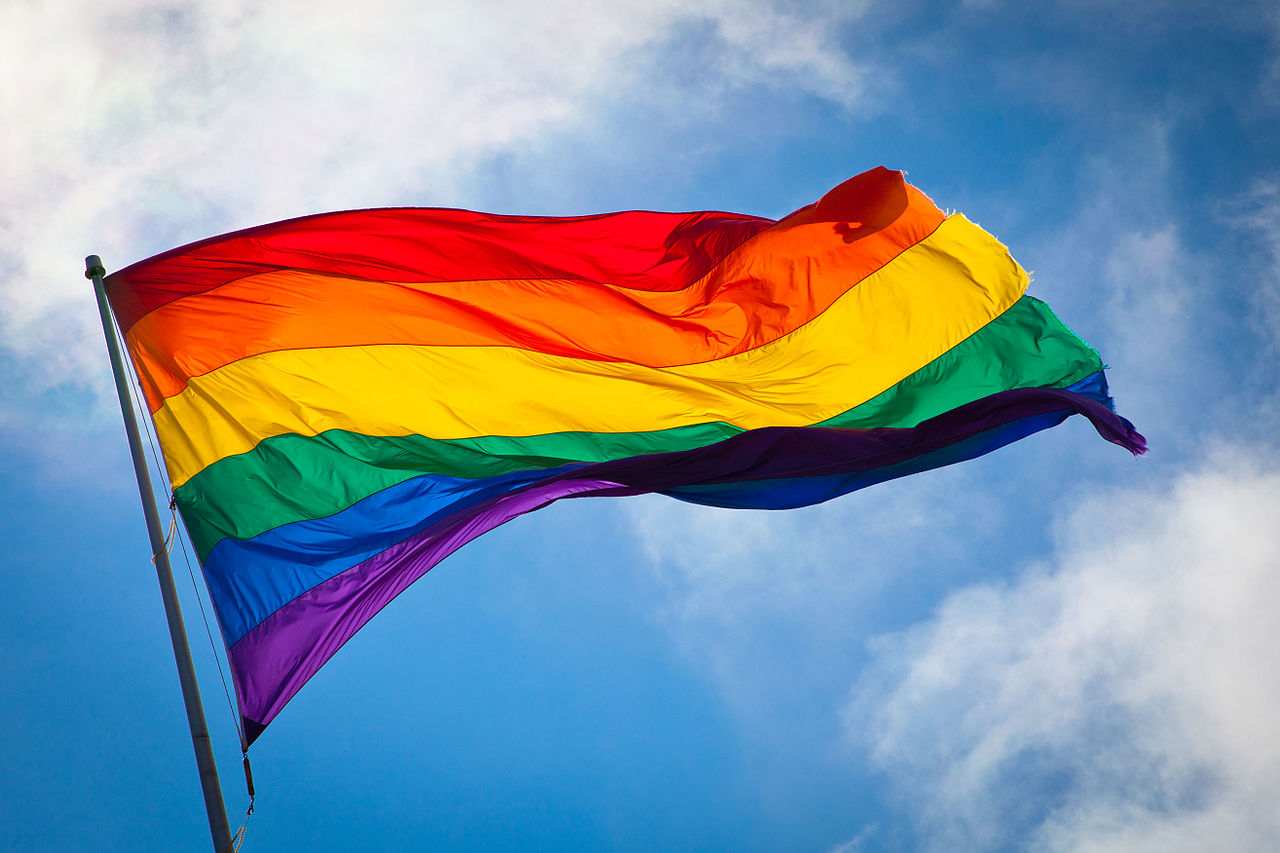
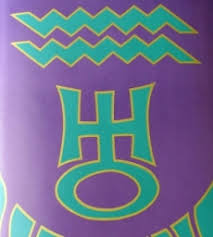
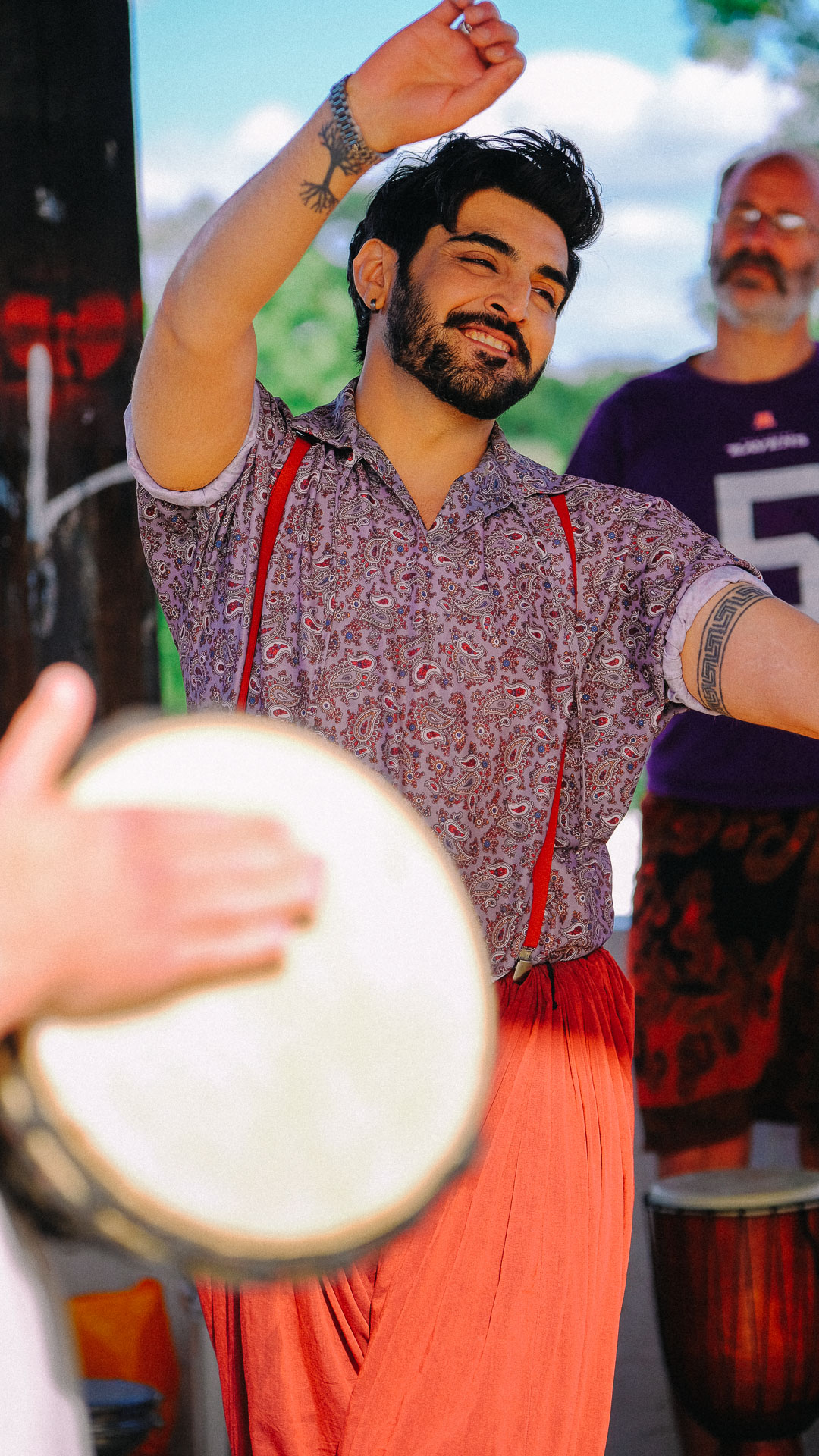

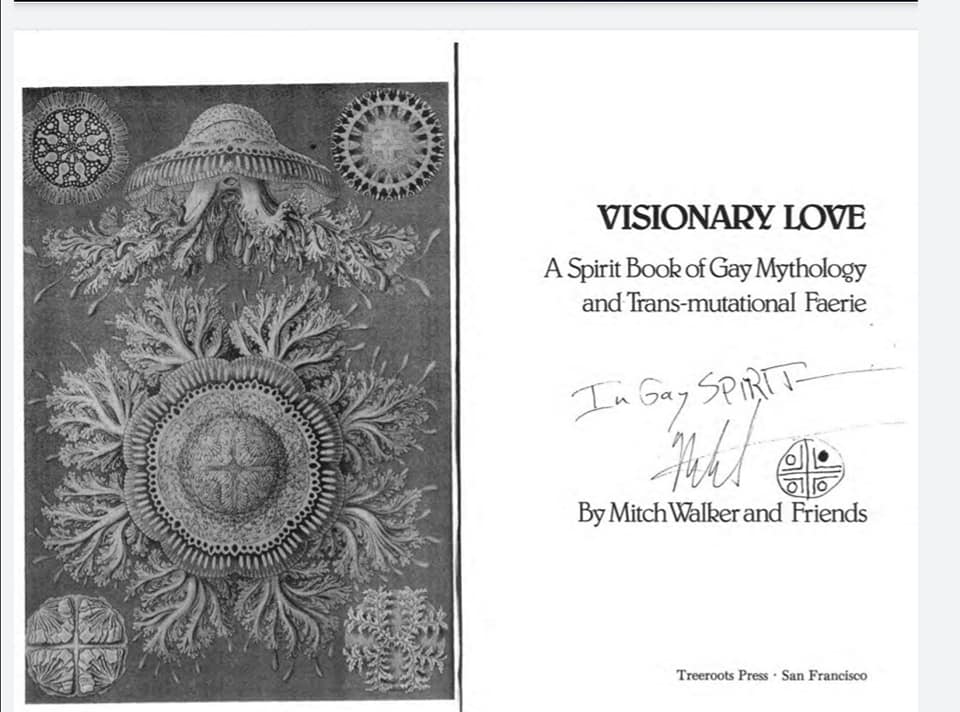
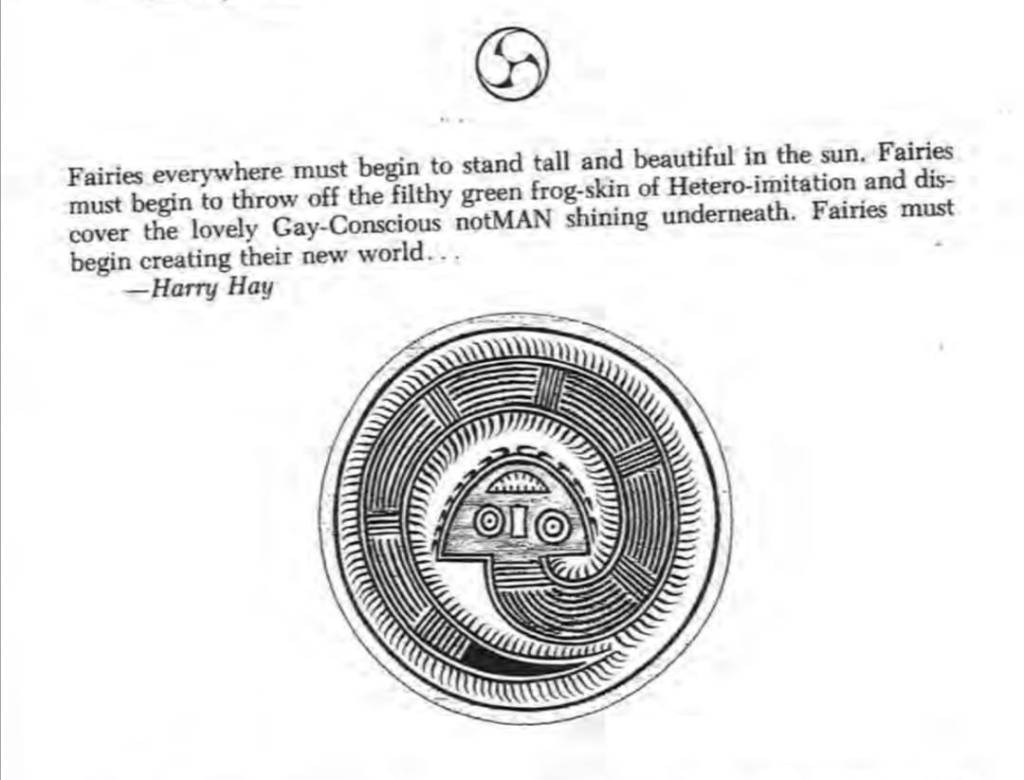
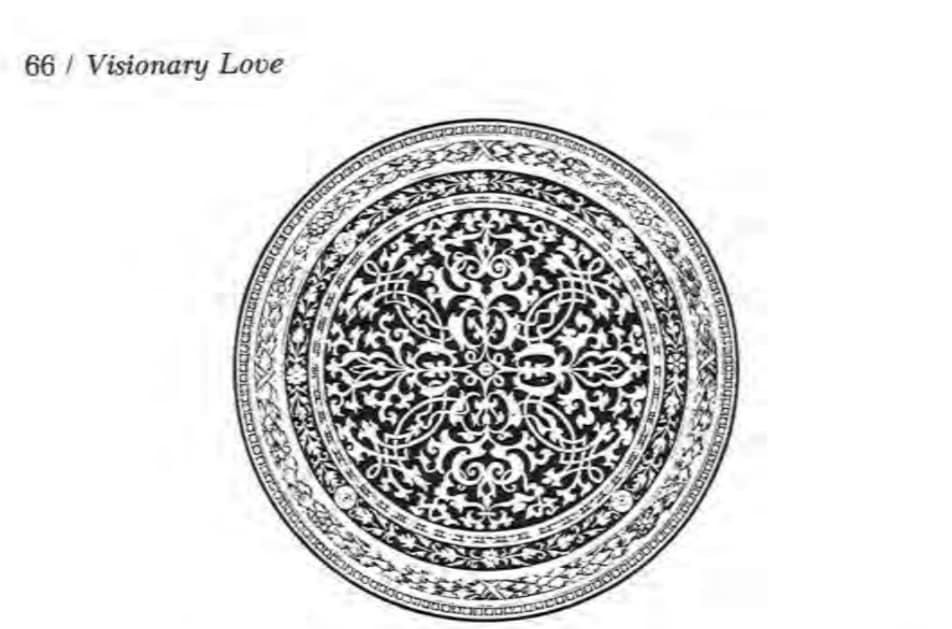

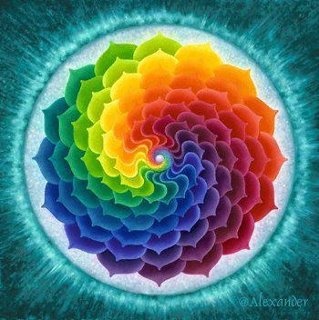

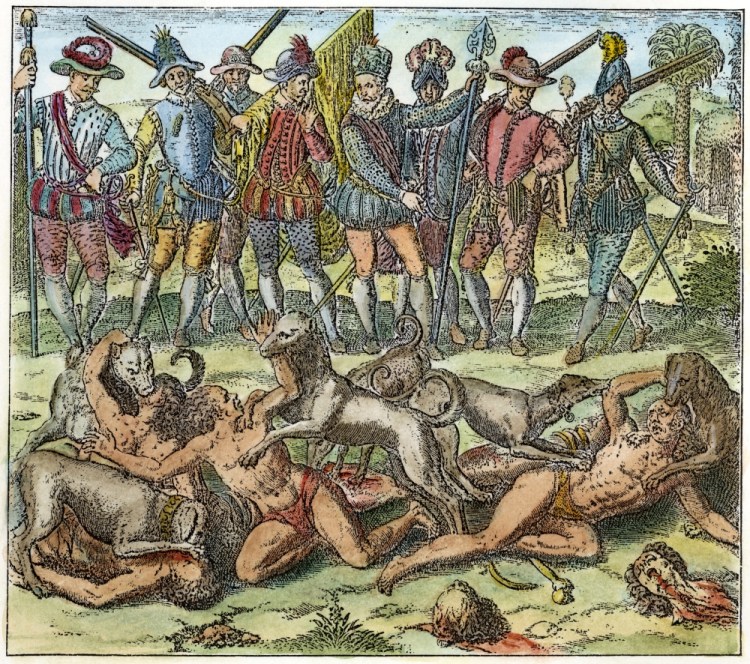
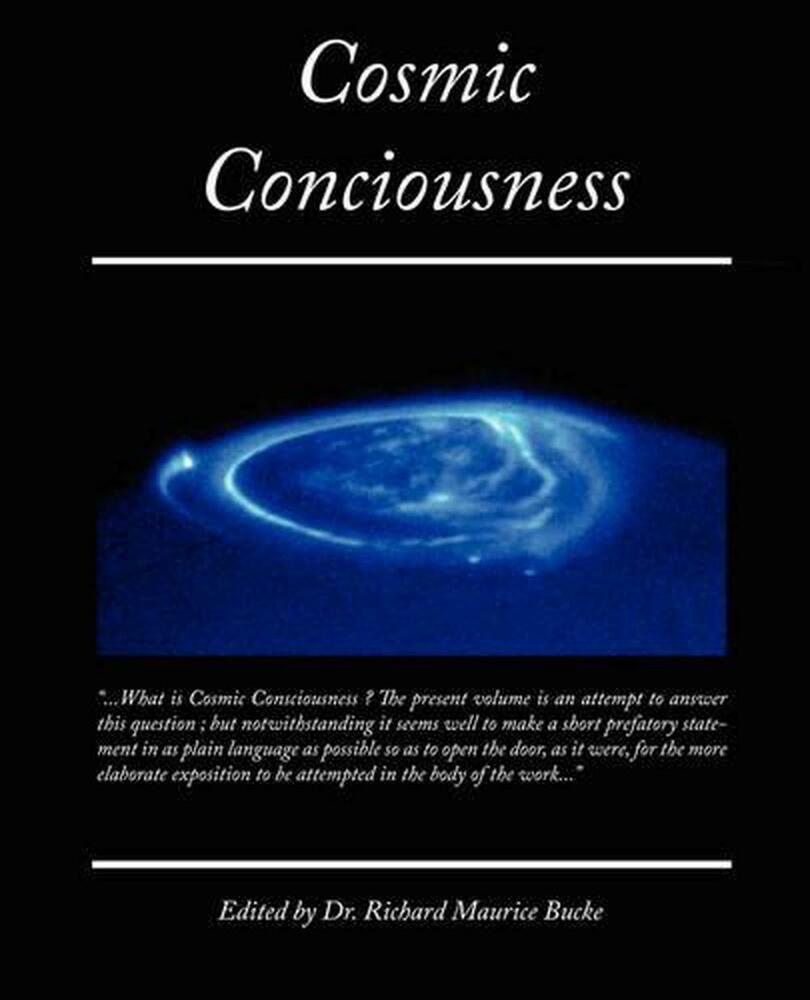
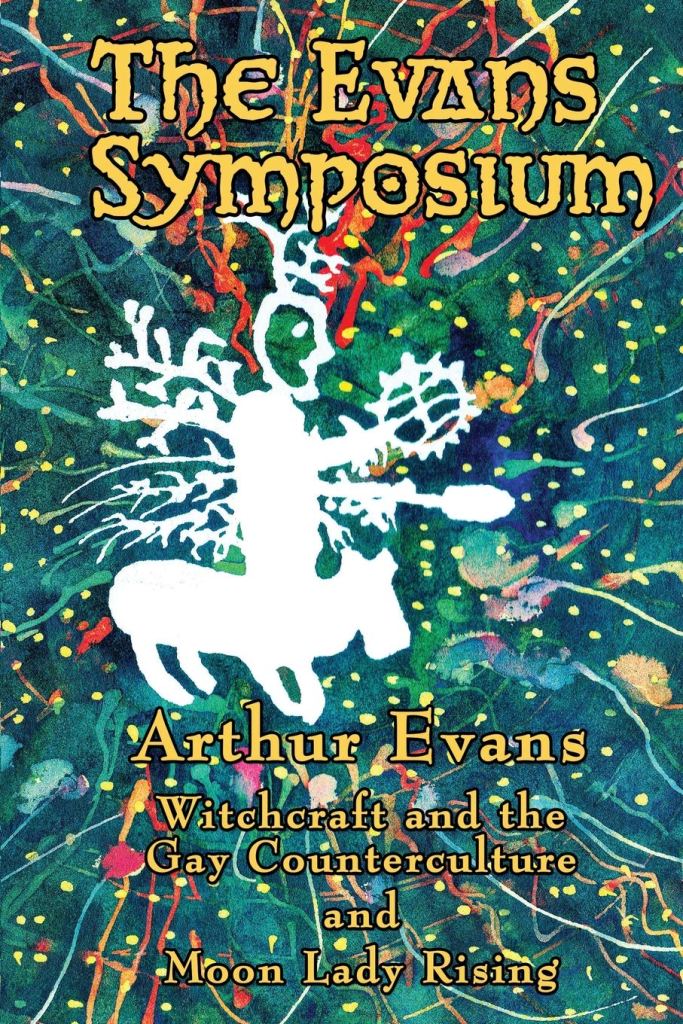



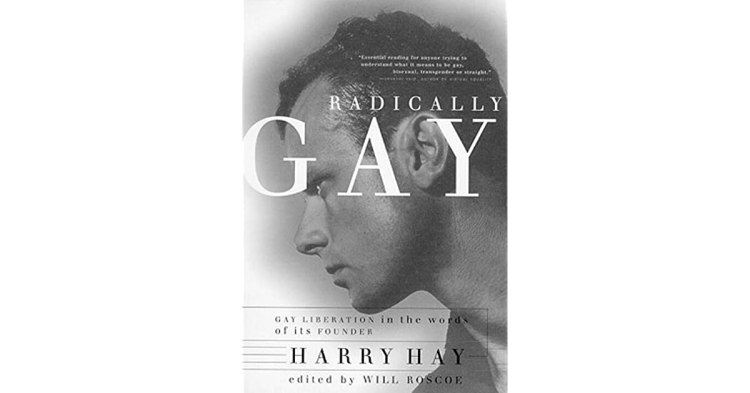
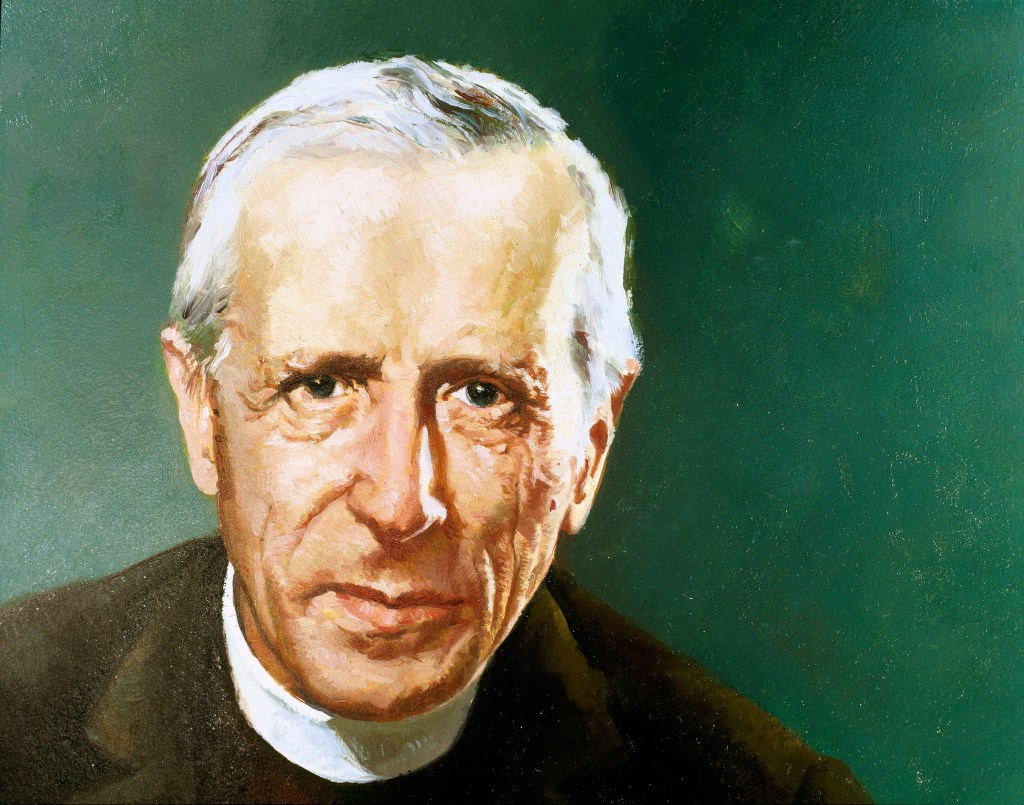

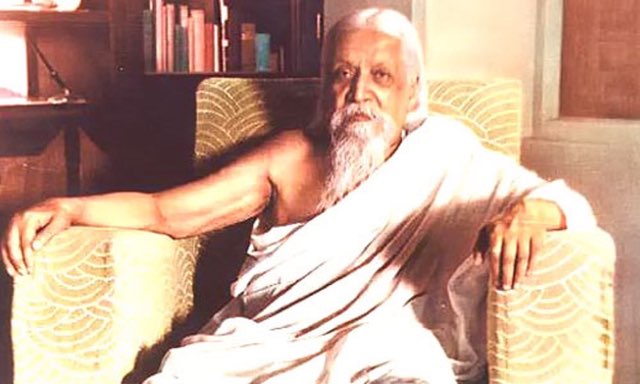
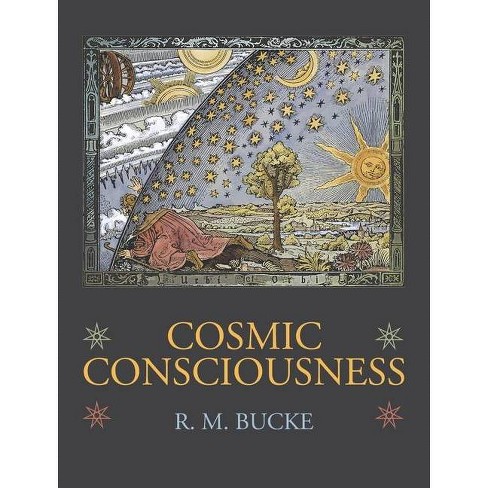

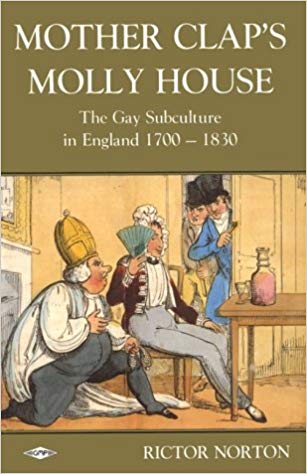
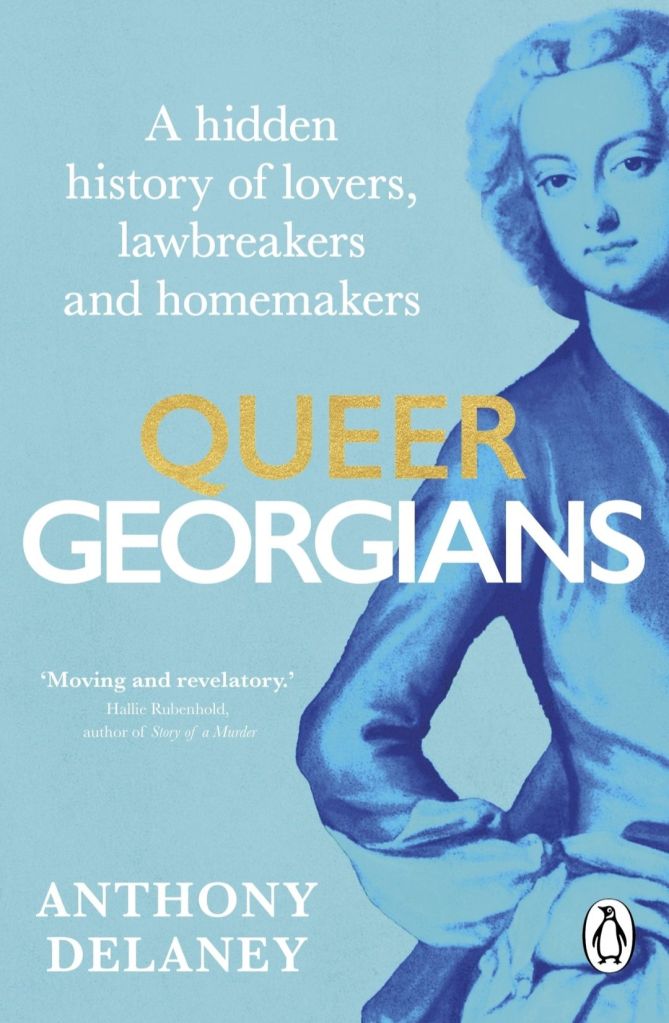


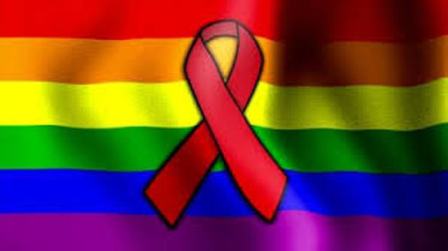

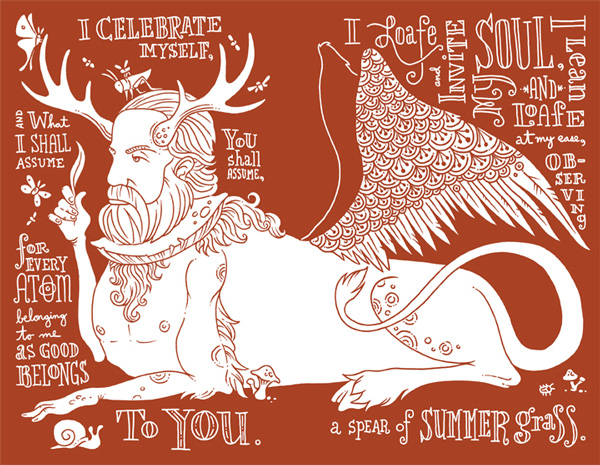


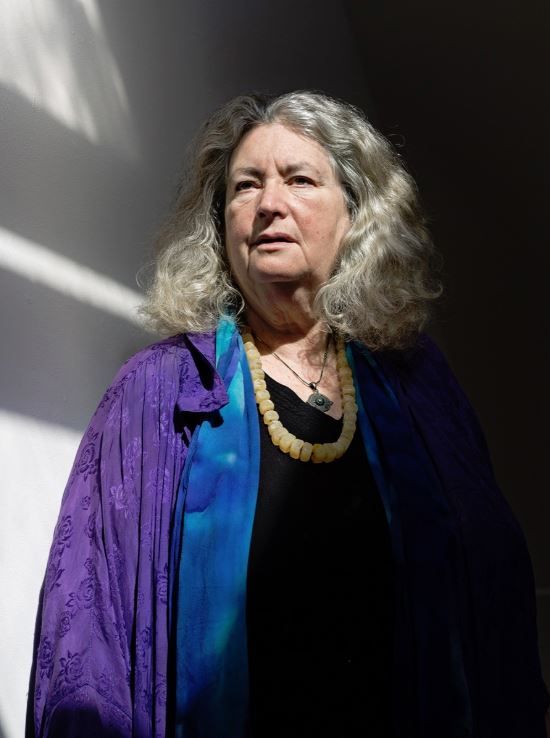
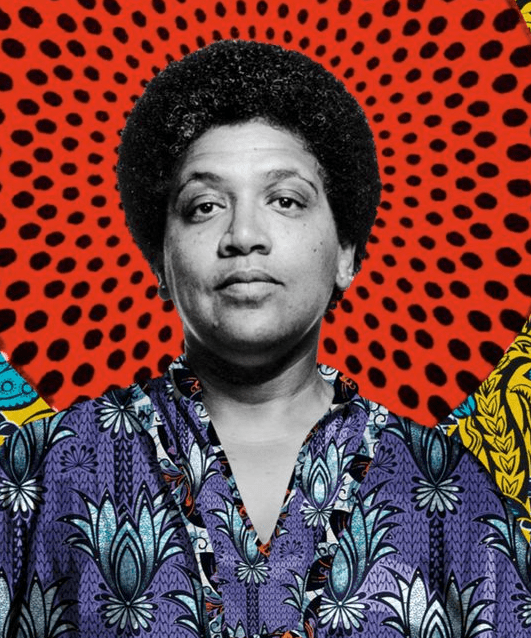
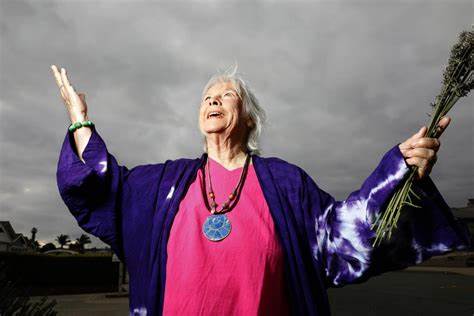

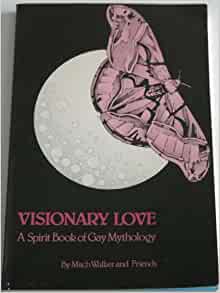

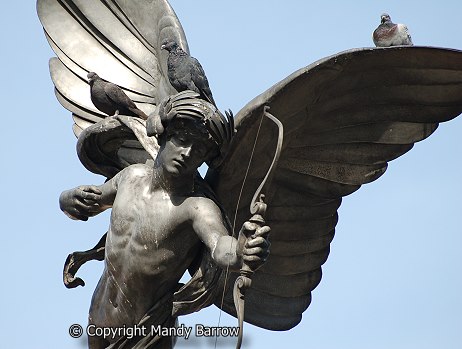
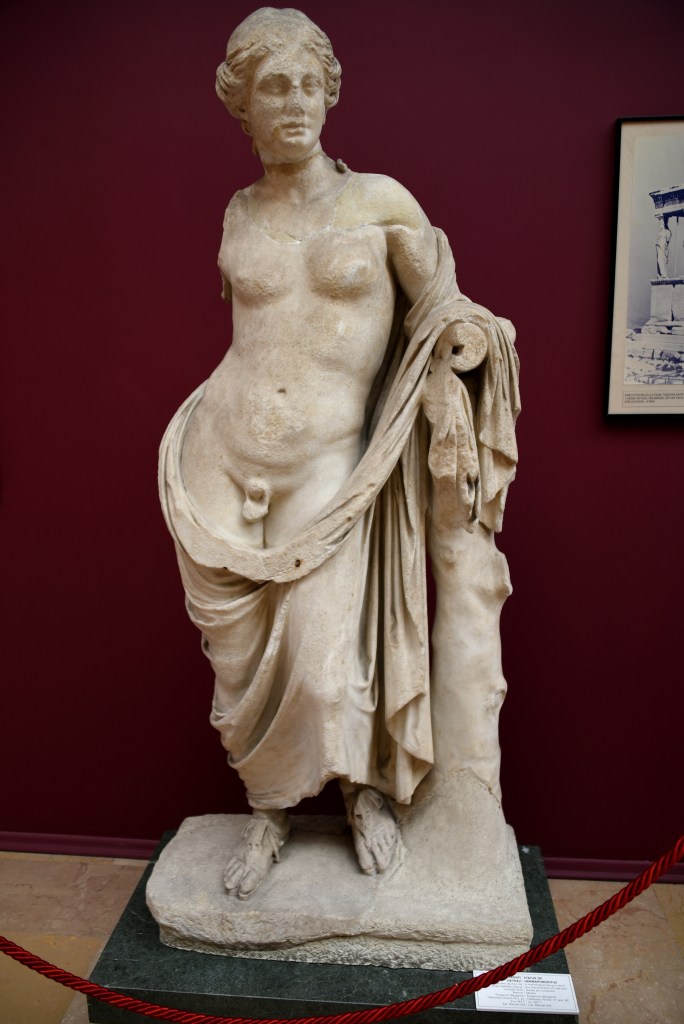


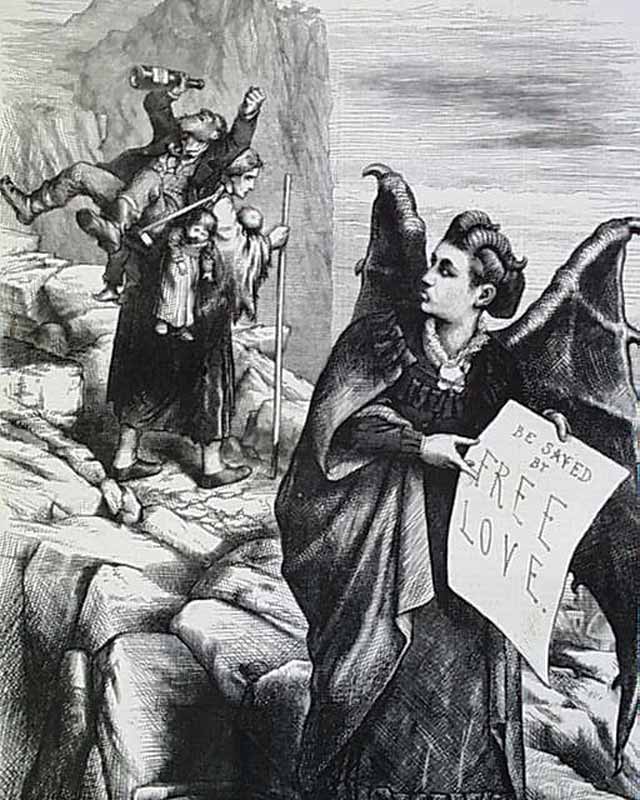






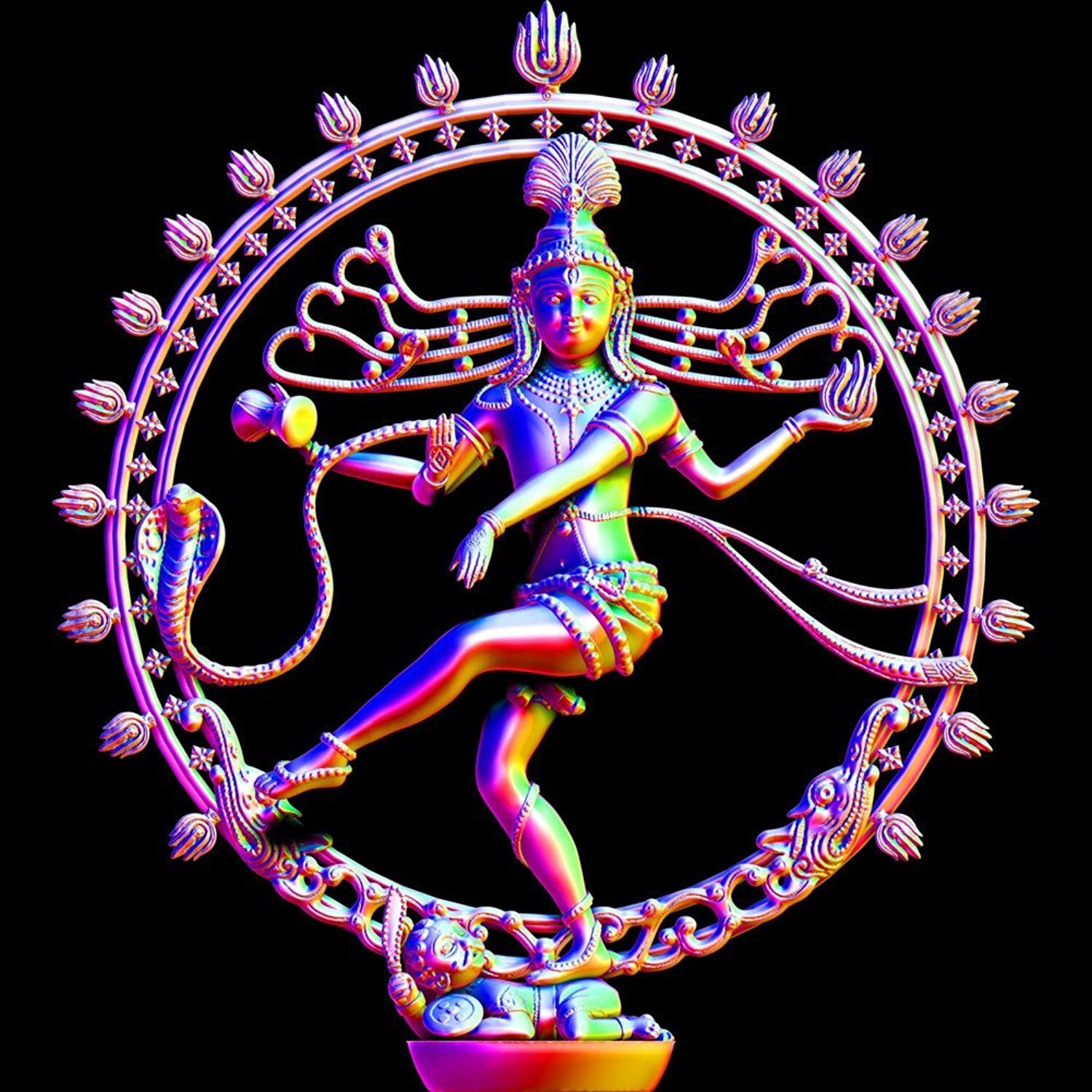

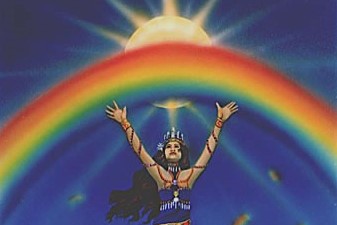

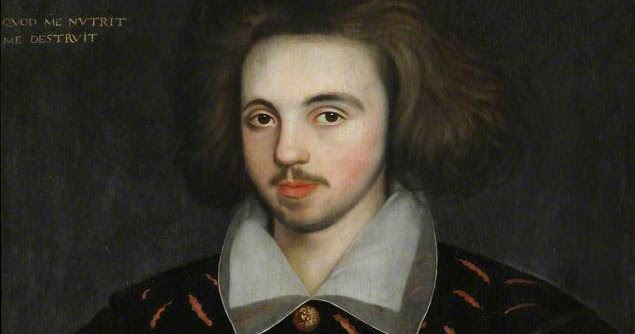

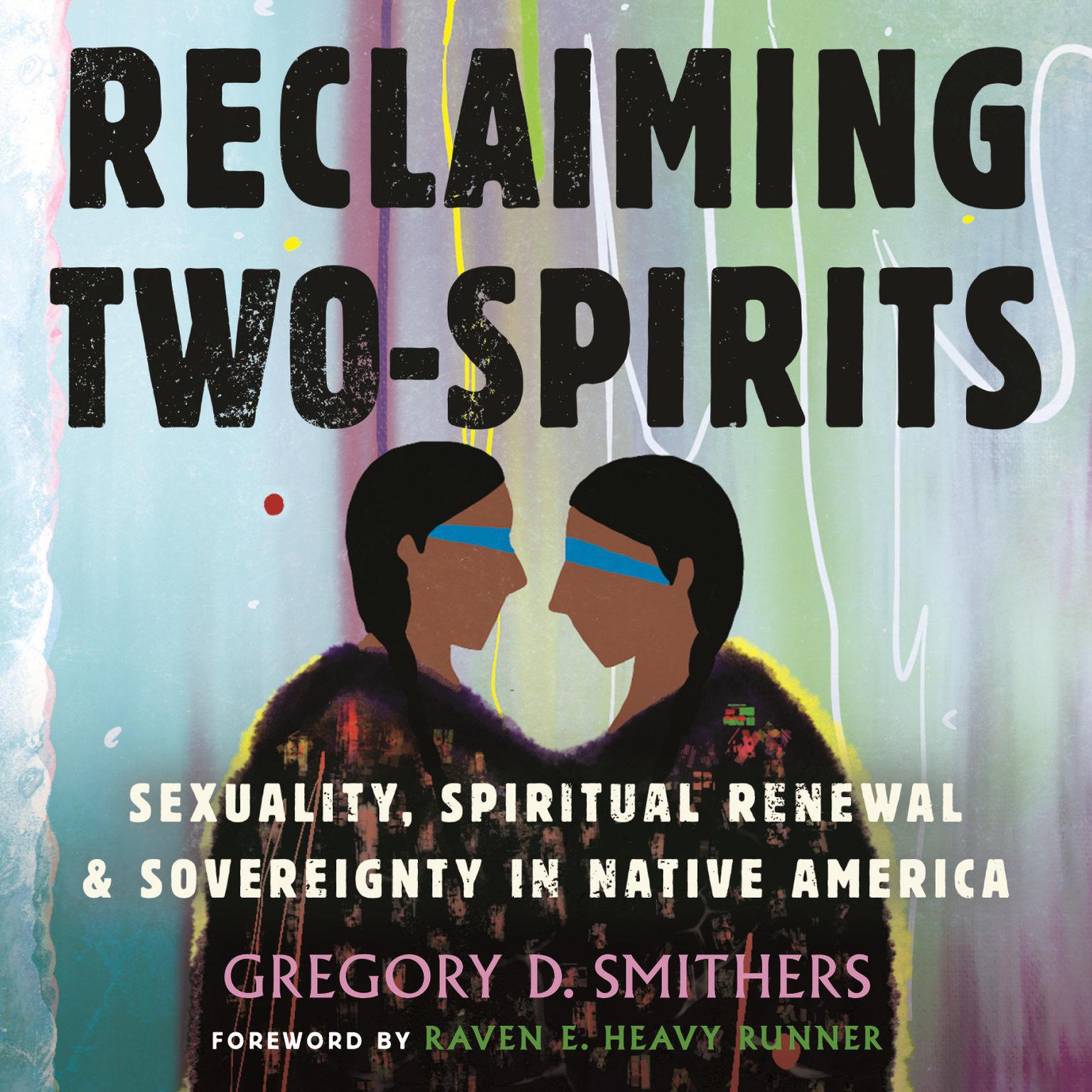






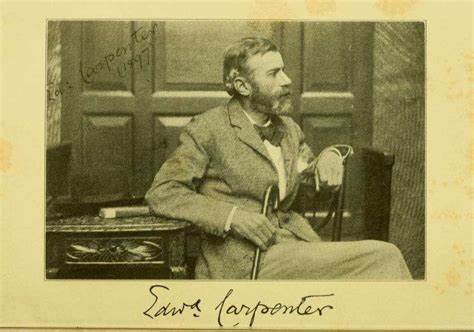
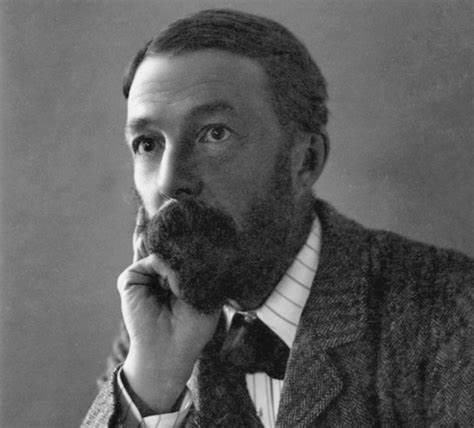
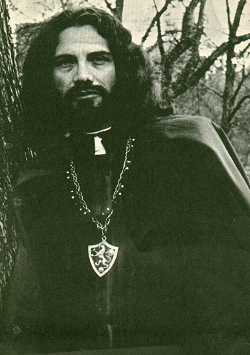
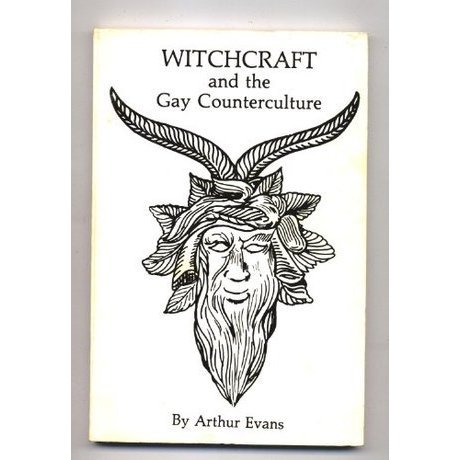

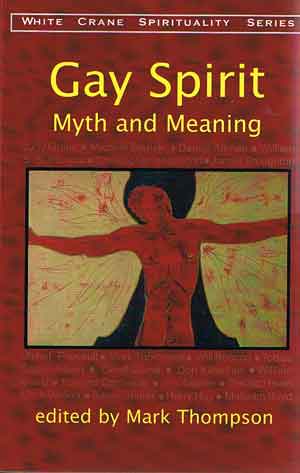
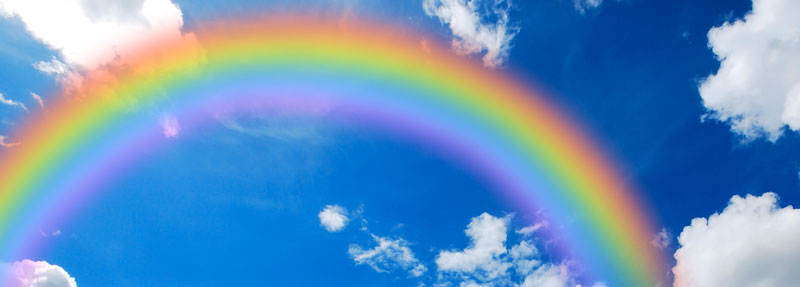

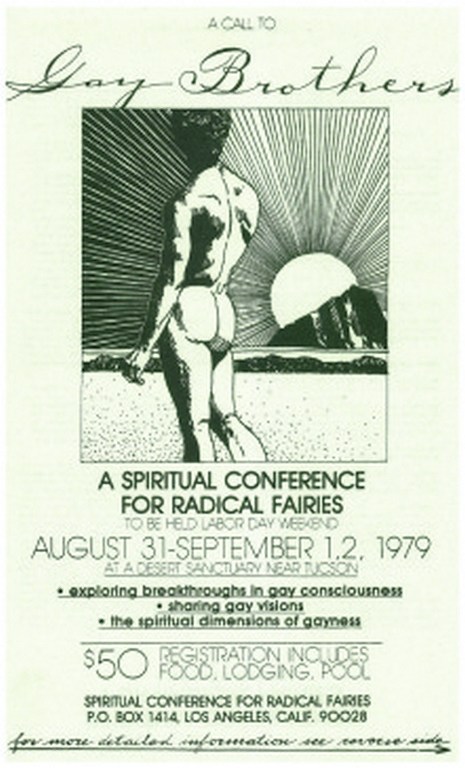


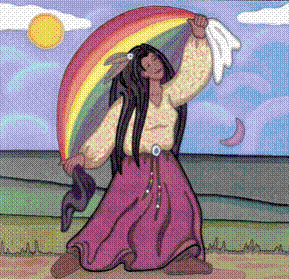
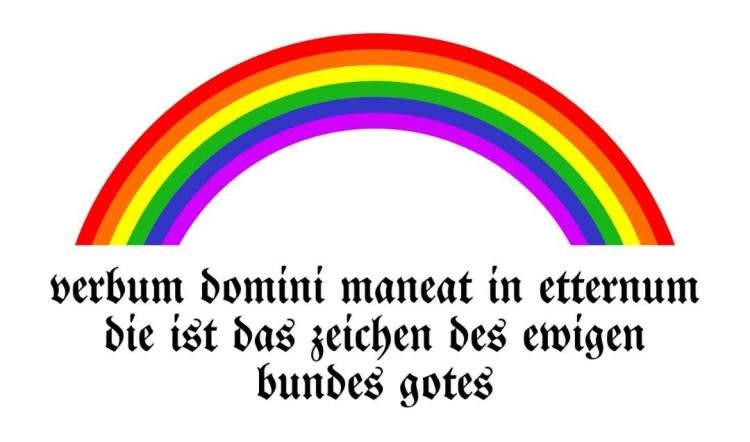

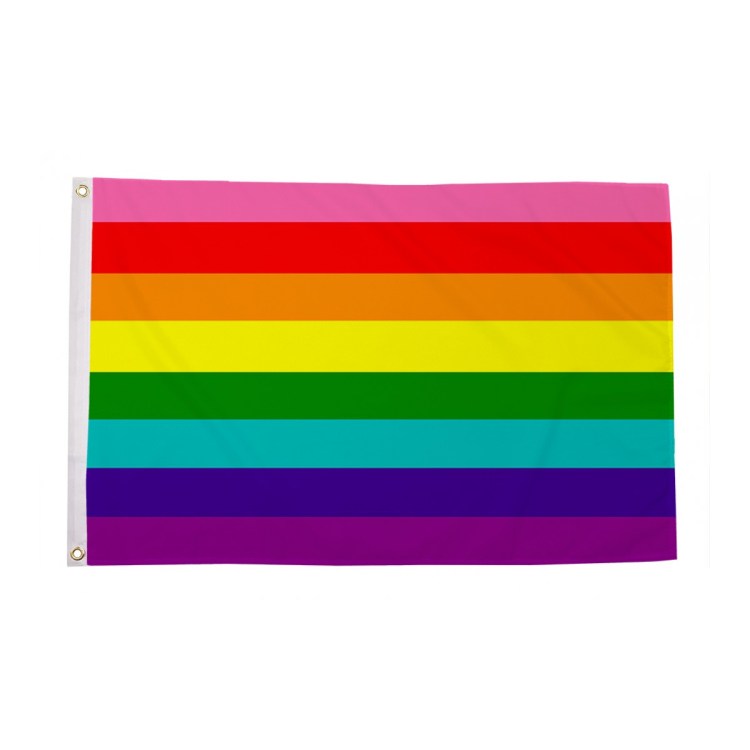
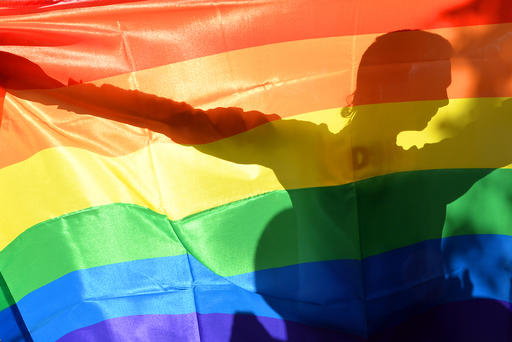


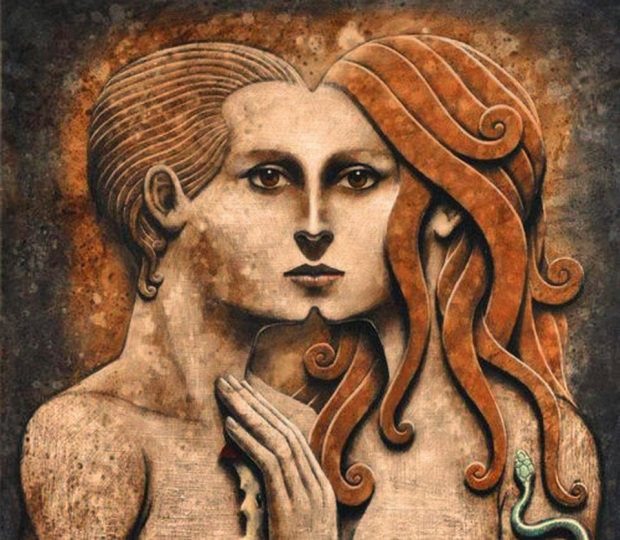

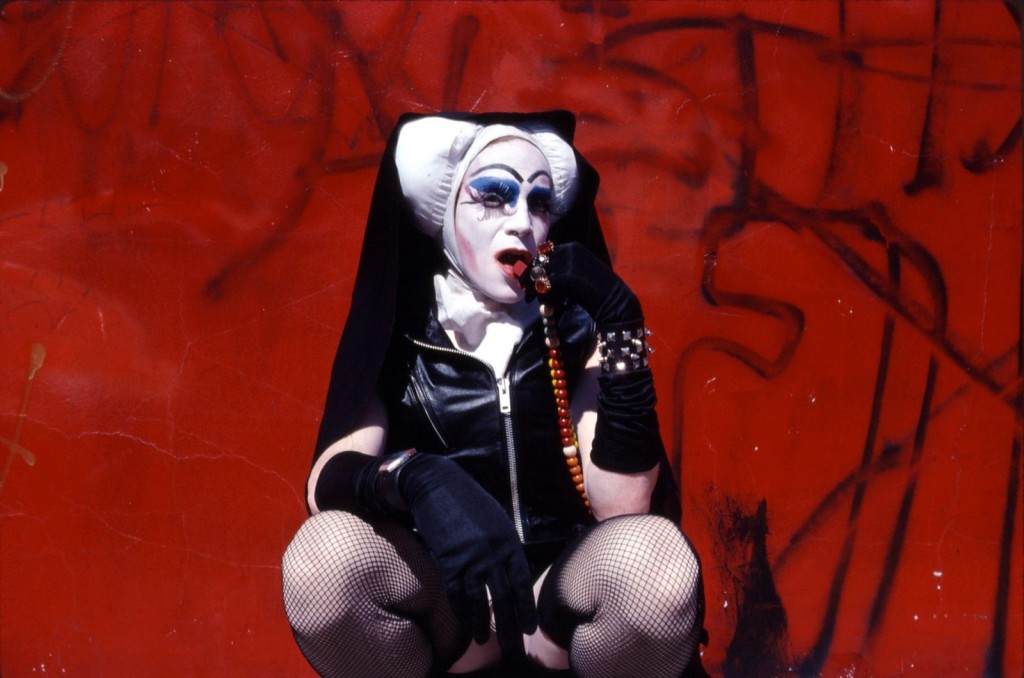
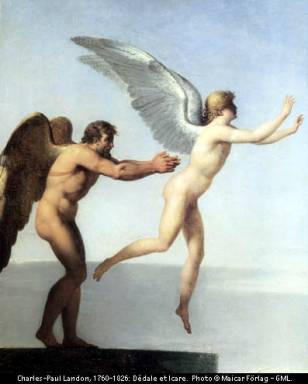

 rainbow messenger