When Western explorers visited the West African kingdom of Dahomey in the 19th century they discovered that the King’s military was made up of female as well as male troops – in the 1860s British explorer Richard Burton wrote an entire chapter about the ‘so-called Amazon’ troops of King Gelele. Alfred Ellis, a British army office and ethnographer, wrote that the women were “called the amazons by Europeans and known in Dahomi by the titles of The Kings Wives and Our Mothers.”
Some of these fierce women went as far as to declare they had ceased to be women and become men.
In Boy-wives and female husbands : studies in African homosexualities (1998) historians Will Roscoe and Stephen O Murray report:
In his account of his 1863-64 mission, Burton devoted a chapter to “the so-called Amazon” troops o King Gelele. In Burton’s view, “the origin of the somewhat exceptional organisation” of the women troops, which he estimated to number about 2.500, was “the masculine physique of the women, enabling them to compete with men in enduring toil, hard- ship and privations” . He also offered an historical explanation- the female troops were organized after the early eighteenth-century King Agaja depleted the ranks of male soldiers.
Ellis, noting that Dahomean women “endured all the toil and performed all the hard labour,” elaborated on the historical evolution of the Amazon institution:
The female corps, to use the common expression, the Amazons, was raised about the year 1729, when a body of women who had been armed and furnished with banners, merely as a stratagem to make the attacking forces appear larger, behaved with such unexpected gallantry as to lead to a permanent corps of women being embodied [by King Trudo]. Up to the reign of Gezo, who came to the stool in 1811, the Amazon force was composed chiefly of criminals, that is criminals in the Dahomi sense of the word. Wives detected in adultery, and termagants and scolds were drafted into its ranks and the great majority of the women “given to the king” by the provincial chiefs, that is, sent to him as being worthy of death for misdemeanours or crimes, were, instead of being sacrificed at the Annual Custom, made women soldiers. Gezo, who largely made use of the Amazons to keep his own subjects in check and to promote military rivalry, increased and improved the force; He directed every head of a family to send his daughters to Agbomi for inspection: the most suitable were enlisted, and the corps thus placed on a new footing. This course was also followed by Gelele, his successor, who had every girl brought to him before marriage, and enrolled those who pleased him.
Burton reported nothing, and Ellis next to nothing, about the sexuality of these “Amazons.” They were distinguished from the king’s numerous wives, and “two-thirds are said to be maidens”. In his “Terminal Essay” to his translation of the Arabian Nights, Burton wrote, “In the Empire of Dahomey I noted a corps of prostitutes kept for the use of the Amazon-soldieresses”. In his 1864 account he merely noted, “All the passions are sisters. I believe that bloodshed causes these women to remember, not to forget LOVE” (2:73).
Commander Frederick Forbes’s journals of his 1849-50 missions to King Gezo of Dahomey(published in 1851) also fail to describe the sexual behavior of the “Amazons,” but they are clearer than Burton about the “Amazons masculine gender identification:
The amazons are not supposed to marry, and, by their own statement, they have changed their sex. “We are men,” say they, “not women.” All dress alike, diet alike, and male and female emulate each other what the males do, the amazons will endeavour to surpass. They all take great care of their arms, polish the barrels. and, except when on duty, keep them in covers. There is no duty at the palace except when the king is in public, then a guard of amazons protects the royal person, and, on review, he is guarded by the males… The amazons are in barracks within the palace enclosure, and under the care of eunuchs and the camboodee or treasurer.
Indeed, in a parade on July 13, 1850, amazon troops sang about the effeminacy of the male soldiers they had defeated:
We marched against Attahpahms as against men. We came and found them women.
What we catch in the bush we never divide.
Some 2.400 amazons joined the parade, pledging to conquer Abeah- keutah (a British ally in Sierra Leone) or to die trying. An amazon chief then began a speech by referring to their gender transformation: “As the blacksmith takes an iron bar and by fire changes its fashion, so we have changed our nature. We are no longer women, we are ‘men”.
MORE FROM ALFRED ELLIS, The Eʻwe-speaking peoples of the Slave Coast of West Africa : their religion, manners, customs, laws, languages, &c. (1890):
The women of Dahomi, having for many generations past endured all the toil and performed all the hard labour of the country, have, for the weaker sex, an exceptional physique, which enables them to bear hardships and privations as well as, if not better than, the men; and this fact no doubt was an important factor in the causes which led to the formation of the corps. As Captain Burton noted, the women are generally tall, muscular, and broad, and the men “smooth, full-breasted, round-limbed, and effeminate-looking.”
By state policy the Amazons are considered the king’s wives, and cannot be touched without danger of death. They are sworn to celibacy, a necessary restriction in the case of a female corps, but the king has the privilege of taking any of their number to wife. A peculiar võ-sesa, placed over the palace-gate, is supposed to cause certain pregnancy in the Amazon who has been frail; and it is said that the dread of impending discovery has often led the woman to confess, and doom herself and her paramour to a dreadful death. Nature, however, will assert itself, and when Captain Burton visited Agbomi, 150 Amazons were found to be pregnant, and were brought to trial. Such offenders are always put to death in secret within the palace, with cruelties that are only whispered of outside.
In peace time one of the duties of the Amazons is to escort the palace-women when they go to the wells outside Agbomi to fetch water. They, in common with the real wives of the king, never leave their quarters without being preceded by a bell, which is the signal for men to leave the road. The Amazons only meet the opposite sex when on the march or in the field; for when the two corps of the standing army parade at the palace, the sexes are kept apart by pieces of bamboo laid along the ground, which barrier no one may pass.
The Amazon corps is divided into three bodies, called the Right Wing, the Left Wing, and the King’s Body-guards. The male corps is divided into Right and Left Wings only, except when the male population, or reserve, is called out, when it also, with the latter, is divided into three bodies like the Amazons. The wings are named right and left, from the positions they take up before the king on ceremonial occasions.
When I came to London aged 21 in 1986 I discovered that men cruised for sex in public toilets across the city. From Wood Green, Highbury, Finsbury Park to Clapham, Brixton and Balham, via Hyde Park Corner, Green Park, Oxford Circus and Soho I discovered men were lining up against the porcelain and masturbating together. The atmosphere could be electric, wild, fuelled by lust and fear. The danger of arrest or gay-bashing on top of the erotic charge kept the adrenalin pumping. This meant most of the action was simply standing and wanking, until the opportunity and the courage arose to reach out to touch, maybe suck or even signal an invitation into a cubicle.
Cottaging, as it is known in the UK – a reference to Victorian, self-contained, toilet blocks that resembled countryside cottages – had become common gay slang by the 1960s. But the act of cruising and masturbating together in lavatories in London goes back way before Victorian times- at least as far as the 13th century! And of course it does – masturbating together is one of the most basic, instinctual, enjoyable acts that men can do together. It not only feels good, it brings bonds of trust and camaraderie between the guys involved. The instinct to have a Circle Jerk is inbuilt in us. The suppression of erotic relationships between men has always been about keeping men divided and in conflict and thereby control and dominate society. Plato spotted that back in the 5th century BC when he recorded in the Symposium that, “Taking a male lover is regarded as shameful by barbarians and by those who live under despotic governments just as philosophy is regarded as shameful by them, because it is apparently not in the interest of such rulers to have great ideas engendered in their subjects, or powerful friendships or passionate love-all of which male-male love is particularly apt to produce.”
***
Among the most ancient cave paintings on the planet are pictures of groups of men with erections.
“In Egyptian myth, the god Atum created the universe by masturbating, and every year the pharaoh ritually masturbated into the Nile. The Greeks regarded masturbation as entirely normal, if more the province of the common man, since the elites had a duty to further the family line, and, beyond that, had slaves for their relief. But the Church took a very different view, rooted in an obscure passage of Genesis. When God killed Er, Er’s father Judah ordered his second son Onan to marry Er’s widow Tamar and ‘raise up seed’ to his brother. But when he lied with Tamar, Onan spilt his semen on the ground—in the knowledge that fathering a son in his brother’s line would deprive him of the larger part of his inheritance. This displeased God, ‘wherefore he slew him also.’” Neel Burton, A Brief History of Masturbation | Psychology Today
When European Christians went out exploring the world from the 15th century, with a millennium of anti-sexual conditioning firmly in place they were shocked and horrified by the common acceptance and approval of same sex relations they found on every continent. The Japanese and Chinese found the European attitude barbaric, the Native Americans laughed at them:
Franciscan missionary Pedro Font, on a 1775 mission to what is now California, recorded in his journal encounters with groups of Native American Quechan men who “constantly stroked their penises in front of other men. He reprimanded these men. They ignored Font and continued engaging in mutual masturbation. At other times, the kwe’rhame laughed at Font’s astonishment as they continued stroking their penises.” Kwe’rhame was the Quechan name for male-bodied Quechans who wore female clothes and took women’s roles in the community. Female-bodied people who took male roles were called elxa‘. Source: Reclaiming Two-Spirits by Gregory D. Smithers (2022).
***
From Peter Ackroyd’s 2017 book Queer London we learn that the oldest cruising toilet in London that we know about is one built in the recesses of London Bridge in 1209. He mentions the public loos of Lincoln’s Inn Fields, Moorfields and Green Park as prominent spots in the 17th century, though “the latrines of any park would do; trees, grass and bushes stirred the blood.” In the 18th the bog-houses of Savoy, the Temple and Lincoln’s Inn were popular. “The London Post of 20 June 1701 reported that ‘on Thursday, between 10 and 11 at night, a person sitting in Lincoln’s Inn house of office, a youjng man happened to go into the same box, whom the other welcomed, and afterwards entered into a discourse with him, pretending great kindness for him etcetera. But at last discovered his intention, to commit the filthy sin of sodomy with him, and made an attempt to force him. But the young man crying out, some of the porters and watchmen of the Inn, as well as some of the young gentlemen, came to his assistance and soon cooled the spark’s courage, by ducking him in said house of office.” (Queer London)
In the late 19th century two scandals focused public attention on London’s queer underground. First the Cleveland Street Scandal in the 1870s (when young men working for the post office were discovered to be raking in money as rent boys as they went about town), then the Oscar Wilde trial in the 1890s fascinated the public which encouraged newspapers to feature many similar stories. Public toilets sometimes featured in those. Matt Cook writes in London and the Culture of Homosexuality 1885-1914 (published 2003) that in the Victorian era “casual encounters were facilitated by the new iron urinals which appeared across [London] from the 1860s. Those at Great Castle Street and Woodstock Street, near Oxford Circus, and in Danbury Place off Wardour Street in Soho, had a particular reputation, and the new public toilets which came with the expansion of Piccadilly Circus also appear to have been in frequent use.”
Ackroyd: “Some urinals had a worldwide reputation. ‘Clarkson’s Cottage’ was known for its proximity to Willie Clarkson’s theatrical costume shop and it was purchased after the Second World War by a rich American who erected it, in memory of happy days, within the grounds of his New York estate. The toilets in Down Street underground station, off Piccadilly, were deservedly popular. It was reported that urinals have a certain odour… a staleness [which]… excites [queer men] as if they were so many dogs on heat’. Another favourite was a three-stall urinal down a flight of steps beside the Yorkshire Stingo on the Marylebone Road. The toilet beside the Lyric Theatre in Hammersmith was ‘chock a block from dusk to dawn’. Some preferred of course the relative warmth of the theatres themselves, especially in the rear areas labelled ‘standing room only’. One theatregoer standing at the back of the Islington Music Hall noted that ‘someone undone my flies and started pulling me out… while they were doing it someone pushed themselves up against me expecting me to do it to them’. ‘It was no uncommon sight,’ a contemporary remarked, ‘to see literally hundreds of young men… walking about, talking in high pitched voices, recognising one another.’”
Ackroyd says that in the first half of the twentieth century entrapment, imprisonment and police raids were “familiar characteristics of London life” for gay men. Yet even so, “public lavatories were still at the top of the list for furtive encounters. They were sometimes known as ‘tin chapels’, as if sacred rituals were conducted within. One client might be informally chose as ‘watch-out’ for the visiting stranger or policeman. The urinals round the back of Jermyn Street were well known to the acting profession, and the public lavatory at Waterloo station was positively cornucopian. The toilet at Hill Place was a magnet for ‘toffs’ or anyone in evening dress.”
For Your Convenience was an account of the lavatories of London published in 1937, written as if by a sanitary expert, this was a secret guide for cottaging pilgrims seeking those sacred rituals. A young man guides the narrator around London, mentioning outdoor cruising spots as well as toilets. The lad says “When for instance, I have been at a loss in Dalston, in Streatham, in Clerkenwell, in Bermondsey, knowledge acquired on previous journeys has always been a blessing… In the section between Oxford Circus and Tottenham Court Road, places may be found at the bottom of Argyll Street.” South London by the bridges and Borough High Street are highlighted, along with St Pauls and Covent Garden.
The 1958 Wolfenden Report on homosexuality and prostitution in the UK recorded that in London and a few other large towns the gay action was “concentrated on certain public conveniences. We have been surprised to find how widely known among homosexuals, even those who come from distant parts of the world, the location of these conveniences has proved to be.” The report admitted that some police went into toilets as agents provocateurs to entrap men.
I walked into a public toilet on Jesus Common in Cambridge one day in summer 1985 and discovered it full of men standing at the urinals with erections. My entire body shook with shock and adrenalin, I quickly left, but hours later, after dark, plucked up the courage to go back. So when I reached London the next year seeking excitement and adventure, I knew where to look.
Cottaging was still going strong in 1980s London. At that time police would stake out a cottage or visit them in plain clothes to catch men pleasuring each other, rather than be directly agent provocative. I was caught in just such an action in Soho’s Marlborough Street toilets in 1987, caught red-handed mutually masturbating with an Italian lad. The police took great delight in announcing loudly at the station, in a room full of freshly arrested thieves and thugs, why I had been arrested, and in leaving me to be the last person processed that day because I, furious that the law would lock me up for sharing pleasure with another male, was lippy with them, wanting to know my rights, demanding my phone call.
now demolished, this was one of 4 cottages at the corners of Clapham Common, one with low footfall of passing pedestrians so often an active play space for cruising men
The cottages were mostly closed down during the AIDS years. Video cameras were installed to watch comings and goings. Council cutbacks meant there were fewer and fewer toilets. Single person automatic toilets arrived. Cottaging does still happen – I hear Canary Wharf is a hot spot – but now it’s been replaced by Grindr, Scruff and similar cruising apps. Where once every high street in London had a public lavatory where men would lurk, loiter and lust, turned on by each other’s presence, excited and terrified at the same time, now every street has men in their homes and offices using the apps to cruise each other and fantasise. The urge will obviously never go away.
Masturbating together has also gone online in the form of webcam sites where straight, gay and bi men perform for and watch each other wanking. Some straight guys will kick out men who tune into their broadcast, but most don’t. It’s very noticeable that many guys put bicurious as their sexual identity. Wanking together is built in to our human nature.
The imposition of shame onto same-sex erotic relations was a way of suppressing affection and love between men, making them afraid of each other, and so stoking conflict, anger and aggression. It was all about domination and control. Calling male-male sex ‘unnatural’ took humanity on a long dark, twisted journey into division and violence, plus of course overpopulation!
Men who can joyfully express their erotic desires with each other make much better lovers of women, better fathers, better leaders, kinder and calmer beings. Sexual frustration is probably lurking at the root of much of humanity’s violent history.
In Plato’s Symposium Aristophanes proclaims: “Those who love men and rejoice to lie with, be embraced by men, are also the finest boys and young men, being naturally the most manly. The people who accuse them of shamelessness lie; they do this not from shamelessness but from courage, manliness and virility, embracing what is like them.”
– the androgyne is the sacred divine child in us all,
the non-binary soul reality is the sacred door.
Suppression of transgender and all queer expression is suppression of the human spirit.
It has been going on for centuries – after the rise of Christianity brought suppression of trans Goddess priestesses and same sex relationships the Roman Empire collapsed! In medieval Europe heretical groups that opposed the oppressive power of the church were so known for their acceptance of gay sex that buggery, a term referring to Bogomil heretics from Bulgaria whose faith spread west, entered the language. The Catholic Church ensured such groups, including the Knights Templar, were wiped out.
In the Americas, the Pacific, Africa and Asia the invading Europeans found gender-variant people and same sex relationships were accepted and common. To destroy the spirit of the people the Europeans attacked the Native American gender-bending shamans – calling them ‘berdache’, a Persian word common in early modern Europe meaning a gay bottom. Do I need to mention 1930s Germany, or what is happening in the USA now?
Plato said back in the 4th century BCE:
“Taking a male lover is regarded as shameful by barbarians and by those who live under despotic governments just as philosophy is regarded as shameful by them, because it is apparently not in the interest of such rulers to have great ideas engendered in their subjects, or powerful friendships or passionate love-all of which male-male love is particularly apt to produce.”
all forms of love are sacred
gender expression is a personal thing
why do people care so much about what other people do with their bodies?
straight people been trying to punish same sex attracted people for many centuries
and some binary people can’t bear that others experience the world differently to them.
The tribal attitude said, and continues to say, that Gay people are especially empowered because we are able to identify with both sexes and can see into more than one world at once, having the capacity to see from more than one point of view at a time.
David Greenberg, The Construction of Homosexuality, 1988:
The archaeological record suggests that shamanism dates back at least to the Upper Paleolithic period… Men wearing animal skins appear in cave paintings in Spain and France beginning about 35,000 years ago, and later in Scandinavian and North African rock carvings. These figures are usually interpreted as shamans engaged in sympathetic hunting or to increase magic, though it is also possible that they represent the “spirit of the animals.” Rock carvings of men with erections (or conceivably wearing penis sheaths) suggest that Stone Age dances or rituals may have had a sexual component.
Edward Westermarck, The Origin and Development of the Moral Ideas 1906:
Homosexual practices are, or have been, very prominent among the peoples in the neighbourhood of the Behring Sea… Dr Bogoras gives the following account of a … practice prevalent among the Chukchi: “It happens frequently that, under a supernatural influence of one of their shamans, or priests, a Chukchi lad at sixteen years of age will suddenly relinquish his sex and imagine himself to be a woman. He adopts a woman’s sex and imagine himself to be a woman. He adopts a woman’s attire, lets his hair grow, and devotes himself altogether to female occupation. Furthermore, this disowner of his sex takes a husband into the Yurt and does all the work which is usually incumbent on the wife… These abnormal changes of sex imply the most abject immorality in the community, and appear to be strongly encouraged by the shamans who interpret such cases as an injunction of their individual deity.
The change of sex was usually accompanied by future shamanship; indeed nearly all shamans were former delinquents of their sex. Among the Chukchi male shamans who are clothed in woman’s attire and are believed to be transformed physically into woman are still quite common; and traces of the change of a shaman’s sex into that of a woman may be found among many other Siberian tribes….
M.A. Czaplicka, Shamanism in Siberia, 1914:
Taking into account the present prominent position of female shamans among many Siberian tribes and their place in traditions, together with certain feminine attributes of the male shaman (such as dress, habits, privileges) and certain linguistic similarities between the names for male and female shamans, many scientists (Troshchanski, Bogoras, Stadling) have been led to express the opinion that in former days, only female shamans existed, and that the male. shaman is a later development which has to some extent supplanted them.
Effeminate sorcerers and priests are [also] found among the Sea-Dyak of Borneo (Capt. Brooke, Schwaner); the Bugis of South Celebes (Capt. Mundy); Patagonians of South America (Falkner); the Aleutians, and many Indian tribes of North America (Dall, Langsdorff, Powers, and Bancroft) …Similar changes of sex were observed by Dr. Karsch (Uranismus oder Päderastie mid Tribadie bei den Naturvölkern, 1901) all over the American continent from Alaska to Patagonia.
Thomas Falkner, in his ‘Description of Patagonia’ (1775), said that among the south Americans:
The wizards are of both sexes. The male wizards are obliged (as it were) to leave their sex, and to dress themselves in female apparel, and are not permitted to marry, though the female ones or witches may. They are generally chosen for this office when they are children, and a preference is always shown to those who at that early time of life discover an effeminate disposition. They are clothed very early in female attire, and presented with the drum and rattles belonging to the profession they are to follow.
Sir James George Frazer, The Golden Bough, 1890:
In the volume ‘Adonis, Attis, Osiris: Studies in the History of Oriental Religion’ Frazer attributed the adoption by south Pacific island priests of female attire to the fact that:
…it often happens that a goddess chooses a man, not a woman, for her minister and inspired mouthpiece. When that is so, the favoured man is thenceforth regarded and treated as a woman…
These unsexed creatures often, perhaps generally, profess the arts of sorcery and healing, they communicate with spirits and are regarded sometimes with awe and sometimes with contempt, as beings of a higher or lower order than common folk.
19th century British explorer Richard Francis Burton found homosexual and cross-dressing practices common around world, and recorded they had “been adopted by the priestly castes from Mesopotamia to Peru.”
In 1724 Jesuit Father Joseph-Francois Lafitau published, in French, a massive work named ‘The Customs of American Savages Compared to the Earliest Times’ in which he drew comparison between the native shamans and the traditions of the ancient Mediterranean world:
…among the Illinois, among the Sioux, in Louisiana, in Florida, and in Yucatan, there are young men who adopt the garb of women, and keep it all their lives. They believe they are honored by debasing themselves to all of women’s occupations; they never marry, they participate in all religious ceremonies, and this profession of an extraordinary life causes them to be regarded as people of a higher order, and above the common man. Would these not be the same peoples as the Asiatic adorers of Cybele, or the Orientals of whom Julius Fermicus speaks, who consecrated priests dressed as women to the Goddess of Phrygia or to Venus Urania, who had an effeminate appearance, painted their faces, and hid their true sex under garments borrowed from the sex whom they wished to counterfeit?
For this queer shamanic phenomenon was once common in Europe too:
2nd century Greek philosopher Sextus Empiricus wrote that: “The Mother of the Gods also admits effeminates, and the Goddess would not judge so, if by nature unmanliness were a trivial thing.”
Historian Will Roscoe:
At the time of the birth of Christ, cults of men devoted to a goddess flourished throughout the broad region extending from the Mediterranean to south Asia. While galli were missionizing the Roman Empire, kalu, kurgarru, and assinnu continued to carry out ancient rites in the temples of Mesopotamia, and the third-gender predecessors of the hijra were clearly evident in lndia. To complete the picture we should also mention the megabyzoi, or eunuch priests of Artemis at Ephesus; the western Semitic qedesha, the male “temple prostitutes” known from the Hebrew Bible and Ugaritic texts of the late second millennium; and the keleb, priests of Astarte at Kition and elsewhere… These roles share the traits of devotion to a goddess, gender transgression and homosexuality, ecstatic ritual techniques (for healing, in the case of galli and Mesopotamian priests, and fertility, in the case of hijra), and actual (or symbolic] castration. Most, at, some point in their history, were based in temples and, therefore, part of the religious-economic administration of their respective city-states.
Were these ancient priests gay or transgender? Where does the line lie? Masculine men who were attracted to other men could blend into regular society, or join the army, effeminate men went to the temple to serve alongside women and androgynes:
In 1914 English philosopher Edward Carpenter wrote:
The fact is well known, (sic! If it was well known then what happened to that knowledge?) of course, that in the temples and cults of antiquity and of primitive races it has been a widespread practice to educate and cultivate certain youths in an effeminate manner, and that these youths in general become the priests or medicine-men of the tribe; but this fact has hardly been taken seriously, as indicating any necessary connection between the two functions, or any relation in general between homosexuality and psychic powers.
Andrew Harvey, Gay Mystics, 1997:
Many shamans were and are homosexual; many of the worshipers of the Goddess under her various names and in her various cults all over the world – from the Mediterranean to the Near East to the Celtic parts of northern Europe – openly avowed their homosexuality and were accepted and even specially revered as priests, oracles, healers, and diviners. Homosexuals, far from being rejected, were seen as sacred – people who, by virtue of a mysterious fusion of feminine and masculine traits, participated with particular intensity in the life of the Source. The Source of Godhead is, after all, both masculine and feminine, and exists in a unity that includes but transcends both. The homosexual was thought to mirror this unity and its enigmatic fertility and power in a special way. The tribe or culture gave to him or her specific duties that were highly important and sacred, acknowledging this intimacy with divine truth and the clairvoyant help it could bring to the whole society.
Leslie Feinberg, Transgender Warriors, 1996, highlighted the presence of those who crossed sex and gender boundaries throughout history:
She wrote that she … discovered abundant evidence of male-to-female transsexual women priestesses who played an important role in the worship of the Great Mother… The Great Mother was emblematic of pre-class communalism… While it’s impossible today to interpret precisely how people who lived millennia ago viewed this goddess, Roman historian Plutarch described the Great Mother as an intersexual (hermaphroditic) deity in whom the sexes had not yet been split… Many Mediterranean, Middle Eastern and near Eastern goddesses were served by transsexual priestesses, including the Syrian Astarte and Dea Syria at Hierapolis, Artemis, Atargatis, Ashtoreth or Ishtar, Hecate at Laguire, and Artemis (Diana) at Ephesus.
Raven Kaldera, Hermaphrodeities, 2002:
Transgendered people have long been robbed of their own spiritual history, not knowing that there were once times and places where ours was considered a spiritual path in and of itself.
“The words gay and lesbian do not exist in the village, but there is the word gatekeeper. Gatekeepers are people who live a life at the edge between the worlds – the world of the village and the world of spirit.”
In-Between People
are born to live at the threshold
between the polarities of gender, spirit and soul;
when honoured in society
they keep the tribe connected to the whole
they bring remembrance of the unity
channel the wisdom of the mystery
but the attempt to eradicate the guardians
has been the play of history.
“The gatekeepers stand on the threshold of the gender line. They are mediators between the two genders. They make sure there is peace and balance between women and men. If the two genders are in conflict and the whole village is caught in it, the gatekeepers are the ones to bring peace. Gatekeepers do not take sides. They simply act as ‘the sword of truth and integrity.’
“In the village, gatekeepers have an eye of both genders. They can help the genders to understand each other better than usual in their daily life. That’s why a group of women, for example, might gather and bring a male gatekeeper to help them understand certain village issues. The same things happens on the other side, with a female gatekeeper coming into the middle of the men’s circle.”
When the in-betweeners are not free
the grace is cut off from everybody,
the gods separated from humanity
and nature treated with profanity.
god was placed in the sky –
a new myth of a dominator up on high
replaced the tales of nature spirits
and goddesses whose presence is always with us.
“Gatekeepers hold keys to other dimensions. They maintain a certain alignment between the spirit world and the world of the village. Without them, the gates to the other world would be shut.
“On the other side of these gates lies the spirit world or other dimensions. Gatekeepers are in constant communication with beings who live there, who have the ability to teach us how to deal with ritual. And gatekeepers have the capacity to take other people to those places.”
Led by the myth of one highest
humanity became separated from the rivers and forests.
nature’s priests were condemned as filthy beasts
and nature herself became a resource;
in time atheism became the natural course
for free thinking people who saw through the lie
of a dominator god living up in the sky
but the western world had forgotten it’s ancestral ways
and lost touch with the sacred powers of androgynes, dykes and gays.
“Now what would happen if you’re dealing with a culture that doesn’t care about these gateways? What happens is that a gay person cannot do his job. Gatekeepers are left unable to accomplish their purpose. This is one of the most distinguishing factors about gays in the village. Now, as to their sexual orientation, nobody cares about this questions: they care only about their performance as gatekeepers. I figure if they want people in the village to know about their sexuality, they will share it with them. I once heard that one of the reasons why gatekeepers are able to open gates to other dimensions is in the way they use their sexual energy. Their ability to focus their sexual energy is a particular way allows them to open and close different gates.”
Science is the new religion:
the belief that existence is material and categories are fixed
has now blinded our inner eyes –
but life is much more than biological
it is also emotional, magical, spiritual –
and as the veils of illusion fall away
as the in-betweeners recdiscover their place
the world’s in for a big surprise.
“Gays and lesbians in the West are often very spiritual, but they have been taken away from their connection with spirit. My feeling is that without that outlet or that role in the culture, they have to find other ways of defining themselves. This could be one of the reasons why they would want to get married or make themselves look as though they do not have a unique purpose.
“In the village homosexuality is seen very differently that it is seen in the West, in part because all sexuality is spiritually based. Taken away from its spiritual context, it becomes a source of controversy, and can be exploited.”
There are many books out there discussing the various references to homosexuality in the Bible – Sodom & Gomorrah gay rapists, prohibitions in Leviticus, queer temple priests in Kings, love between David & Jonathon and Ruth & Naomi, Jesus on eunuchs, Jesus and the Centurion’s Boy, the Beloved Disciple, Paul wailing about pagan sex rites –
but I have never seen Lamentations 5:13 included in those texts.
Lamentations is a collection of poetic writings mourning the destruction of Jerusalem in 586BCE; chapter 5 verse 13 is in a section describing the many sufferings of Jews who were forcibly relocated during the 70 years of the ‘Babylonian Captivity’ – I discovered that modern Bibles have downplayed what was orginally a reference to gay sex, turning it into a story about grinding grain!
“They abused the young men indecently: and the children fell under the wood” says the Douay-Rheims 1899 American Bible but no other English translation gives this – instead we get
“Young men are forced to do the work of slaves; boys must carry heavy loads of wood” (Contemporary English)
“They took the young men to grind, and the children fell under the wood.” (King James)
—– o wait a minute, they took the young men to grind??? ——
is this where the gay cruising app gets its name from???
Modern Biblical commentators miss this particular queer-related verse, but in medieval times several scriptural commentaries were aware that Lamentations 5:13 referred to the sodomisation of the Jewish youth by their oppressors, and in the most influential of these, the Glossa Ordinaria by Anselm of Laon (died 1119) accused the Roman oppressors in Judea, 500 years later, of the same behaviour.
***
We can learn more from this 12th century Gloss –
Anselm’s comments on Leviticus 20:13 and 18:22, which demand the death penalty for acts of sodomy between men, are VERY SIGNIFICANT as they reveal his knowledge of the ancient and intimate association between same sex eroticism and the spiritual dimensions of life – a key aspect of queer nature that the modern, secular, LGBTQ+ movement has not yet grasped.
“Anselm associates the sins against nature with idolatry and interprets Leviticus 18:22 as a prohibition against idol-worship and the introduction of pagan philosophy into the church. This identification is extended in the gloss to Exodus 22:19, where sodomy is associated with the practice of the arts of magic, dabbling with the devil’s work, and heresy, all of which lead to excommunication and death,” says Michael Goodich in The unmentionable vice : Homosexuality in the Later Medieval Period
Modern queers have been led to believe that the Leviticus prohibitions against a man lying with another man is a simply statement of God’s law and are not aware that the word translated as ‘abomination’ actually referred to a forbidden ritual act that belonged to other cultures. Similarly there are references in the Book of Kings to ‘sodomites’ in the temple – as King James’ version translated Qedesha (modern translations tend to put ‘male shrine prostitutes’) – the word referred to men anointed in sacred service to the Goddess, holy men. The late medieval English translation by Lollard heretic John Wycliffe gave Qedesha as ‘womanish-men who committed all the abominations of the heathens.’
Gay intellectuals of the early 20th century were aware of the ancient historical associations of sexuality and spirit, and had understanding the roots of the religious prejudice against gay and gender-fluid people, more so than most queer people today. English philosopher Edward Carpenter explained: “The Jewish peoples — perhaps by way of protest and reaction against the excesses of the surrounding Syrian tribes — insisted on a complete divorce between sex and religion; and that alienation of the two has lasted on down the Christian centuries. But in much of the old pagan world it was just the contrary. Sexual rituals were an intimate part of religion; and the wonder and glory of sex were a recognised manifestation of divinity.”
Iwan Bloch (1872-1922) stated that ethnological evidence “shows in what odour of sanctity homosexual individuals have often stood among Nature-folk – for which reason they frequently played an important part in religious rituals and festivals.”
In the 19th century, explorer Richard Frances Burton explained the origin of the Old Testament prohibition against cross-dressing, a key root of the transphobia still in the world today. He wrote:
“The Hebrews entering Syria, found it religionised by Assyria and Babylonia, when the Accadian Ishtar had passed West, and had become Ashtoreth, Ashtaroth, or Ashirah, the Anaitis of Armenia, the Phœnician Astarte, and the Greek Aphrodite, the great Moon-goddess who is queen of Heaven and Love. . . . She was worshipped by men habited as women, and vice versâ; for which reason, in the Torah (Deut. xxii. 5), the sexes are forbidden to change dress.”
A more recent gay voice calling us to reclaim our lost queer sacred history was that of Arthur Evans, who wrote in Witchcraft and the Gay Counter-Culture (1978), –
“…the ritual worship of sex and nature was once the case throughout the world… In these societies, as in the case of the witches, women and Gay men generally enjoyed a high status, Gay people of both sexes were looked upon with religious awe, and sexual acts of every possible kind were associated with the most holy forms of religious expression. Admittedly, there were also great diversities and variations in the beliefs and practices of these societies, but there was one great common feature that set them off in sharp distinction to the Christian/industrial tradition: their love of sexuality…”
So when the Jewish people were abducted to Babylon it seems their young men got a taste of the ancient pagan love of sexuality.
Today I see the mass of LGBTQ people seem to have been abducted by the Babylonic, military-industrial, scientific-atheist mindset of the dominant hetero culture. Our long history as outcasts is little spoke about, our ancient history as sacred servants unknown. The result is a drug fuelled mental health crisis among gay men and division in our community as Trans people come under sustained attack from the conservative forces in society, who are using culture war against trans people, as they have long done against gays in the past, to distract society from their abusive actions.
Queer cultures have risen in history previously then disappeared under a crush of prejudice. It could happen again. To sustain the freedoms it has taken so long to acquire, what Gay, Lesbian, Trans people need to do in the world today, now that our ancient sexuality is once more free to manifest joyfully, is to reconnect our sexuality to spirituality and regain our connection to spirit. Discover this hidden part of our history and REGAIN OUR SACRED POWERS: Powers that can defend us against the attacks of the ignorant, fearful and hateful. Powers that reveal our gifts as healers, shamans, artists -bridges between the worlds of matter and spirit.
“We look forward to creating a genuine Gay culture, one that is free from exploitation by bars, baths, and gay business owners. We look forward to re-establishing women’s mysteries and men’s mysteries as the highest expression of collective Gay culture and sexuality. We look forward to regaining our ancient historical roles as medicine people, healers, prophets, shamans and sorcerers. We look forward to an endless and fathomless process of coming out – as gay people, as animals, as humans, as mysterious and powerful spirits that move through the life cycle of the cosmos….. Like butterflies we are emerging from the shells of our past restricted existence. We are re-discovering the ancient magic that was once the birth right of all human beings. We are re-learning how to talk to the worms and the stars. We are taking flight on the wings of self-determination. Come, blessed Lady of the Flowers, Queen of Heaven, creator and destroyer, Kali – we are dancing the dance of your coming.” Arthur Evans.
I attended Over the Rainbow, an LGBTQ+ History Month conversation between Simon Fanshawe and Mark Simpson hosted at Verdurin, a cultural project space in east London, by art curator and critic Pierre d’Alancaisez.
Simon FanshaweMark Simpson
Simon and Mark are veterans of the Gay Liberation movement – Mark was part of the grassroots Lesbians and Gays Support the Miners group in the mid 1980s, went on in the ’90s to establish himself as a commentator on gay life with his controversial book Anti-Gay, a collection of essays by authors including Peter Tatchell that strongly critiqued the way that the gay community was developing. Simon Fanshawe, comedian and commentator, a hero of the gay movement having been a co-founder of Stonewall, and famous for being critical of the organisation for its recent ‘ideological’ campaigns. After leaving Stonewall Simon was one of the founders of the LGB Alliance, a group that is condemned by many queer people as transphobic and divisive. Simon has since left the Alliance, and in his comments tonight I certainly did not sense any transphobic attitudes. On the contrary he strikes me as a well-intentioned champion of diversity.
When Mark spoke about his book Anti-Gay it was clear he and the other authors in it were being deliberately provocative with a good intention – to make gay people think more deeply about who they are. But the year that book was published I was reading a book on that very subject written with a rather different approach, also featuring contributions from a number of gay thinkers. Gay Soul by Mark Thompson features interviews with queer pioneers including Joseph Kramer, Harry Hay, James Broughton, Andrew Harvey, Clyde Hall and Ram Dass, presenting positive views of gay nature and the spiritual potential queer people carry. This set my path clearly for me, and for the past 2 decades since recovering from AIDS I have been creating spaces for queer people to meet and explore that side of who we are. I am a Radical Faerie activist,and an organiser of Queer Spirit Festival. I host a monthly Full Moon night of drumming and dancing, the Queer Spirit Circle, in Vauxhall.
When Gay Soul and Anti-Gay came out I was living with full-blown AIDS and mentally preparing myself to leave this lifetime. Having been a firm atheist since teenage years I suddenly found myself pulled into a spiritual quest (after a decade on a sexual and romantic quest), wanting to know why I existed in the first place, and on that journey my sexuality suddenly revealed itself to be a doorway to my soul, for it is through erotic love with men that I find ecstatic connection, joy and artistic, divine inspiration. The conversations in Gay Soul enlivened my spirit and set me on a path to discover the spiritual secrets of my queer nature. AIDS brought many of us to place of transformation – I call it my Accelerated Individual Discovery of Self. I became a walker-between-the-worlds, which history shows us queer people have always been. In its critique of gay culture, Anti-Gay seemed to not consider the incredible pain and loss people had experienced in the past decade, and blind to the incredible growth of community spirit, compassion, and self-consciousness that the AIDS years had engendered, the spiritual energy it released in us.
The two veteran campaigners, now aged 68 and 59, spoke of their frustrations with recent LGBTQ+ campaigning. Simon explained his view that queer activism has shifted away from its roots, which were about gaining equal rights and acceptance in society, into an ideologically motivated attempt to ‘educate’ society about gender and diversity, an education society was not seeking. This has brought a new wave of hostility towards LGBTQ people, and opened up conflict within our own community.
Mark expressed his bewilderment with the situation by highlighting the evolution of the rainbow flag from Gilbert Baker’s 1978 design into the plethora of modern variations and the sensory-overload of the multi-coloured ‘Progress Pride’ flag. Gilbert’s original design had included pink – apparently for sex, but surely that’s red, pink is actually the colour of love and compassion, qualities queer people have in abundance. Equal marriage could be said to be a recognition of our loving relationships, but our compassionate nature is massively unacknowledged, yet was powerfully visible during the AIDS crisis; and also turquoise, representing magic and art. Mark shared this observing that Gilbert was ‘a bit of a hippy’, to a predictable, pre-programmed chortle from most of the audience (unaware this new age pagan hippy was waiting in the audience for his moment to drop an unexpected URANIAN comment into the proceedings!).
In the six band rainbow flag that became our united symbol for decades we lost the references to compassion and magic, but we had a united, simple symbol that already included everyone, that’s the point of the rainbow! Spirit – violet – was still in it, but little discussed amongst us! (But we know we got spirit! That’s why our parties, our scenes are so vibrant, why we make great art and music, why we dress so well!)
In the past decade there has been an explosion in flag designs, possibly encouraging the sense that we are separate groups that do not belong under one rainbow. Mark highlighted and puzzled over the ‘abrosexual flag’, which has green, white and pink stripes (it’s a very recent design). An abrosexual experiences their sexual identity fluctuating over time, often very rapidly between different desires. Mark scratched his head. His horror at the sci-fi, almost totalitarian look of the Progress Pride flag was apparent.
I appreciated their points but with reservations. In conversation with Simon before the evening kicked off I was surprised to discover he seemed to know nothing of the global history and tradition of ‘3rd-gender’ people being respected in their cultures for their spiritual gifts. So long repressed in western world, people think gender fluidity is a recent development. Simon is a big fan of biology, and mistakenly believes that biology proves the gender binary is ‘reality’. Simon, we are not simply physical creatures, we are also emotional, mental and spiritual beings. We are actually each a mix of masculine and feminine, physically and psychologically. Every fetus actually starts out female, ie everyone is part feminine! When free to be ourselves, queer men can be an example of the divine masculine in society – men deeply in touch with their feminine side! Some people are a truly balanced blend of male and female – the androgyne is an innate, constant, trait in humanity, that can re-emerge now because of the safer atmosphere that Gay Liberation has created. We can learn from pre-Christian cultures around the world that androgynous, hermaphroditic and ‘3rd-gender’ people have always existed. There is simply no need to limit everyone to two identities, on that front biological determinacy is as closed minded and authoritarian as medieval Christianity.
In ancient and medieval Europe medical text books wrote of 3 genders, male, female and hermaphrodite. Edward Carpenter, over a century ago, used the term ‘intermediate types’ and wrote of their spiritual role in ancient cultures and around the world. He and others wrote back then that the reason the Hebrews and later the Christian culture turned against gender-variant and same-sex loving people was because we had held prominent positions in the pagan cultures. The modern Gay Liberation movement, riding on the secular wave of consciousness that gave us the opportunity for liberation to happen, has avoided tackling the religious roots of homophobia. But our Liberation journey will not be complete until we take it all the way home to our souls – spiritual liberation from the after effects of centuries of religious condemnation is the next step for our global community.
Surely trans people today are simply asking for the same thing that gay men and lesbians demanded in the 1970s – recognition of our validity as people, our right to live in safety, free to express ourselves authentically and to love whomever we wish to. If some trans campaigners seem to be asking for more than this, let’s remember that in the early days of the Gay Liberation Front there were some who sought the annihilation of the traditional family, thereby totally frightening the straights. Those fierce activists were projecting their personal wounds onto the whole movement, and some queers do that today. I would like to see queer elders lightening up about what how the new generations are steering the ship. It’s too easy to fall into the grumpy old man archetype. Let’s ask the question – why is there a massive surge of questioning around gender going on? What is there to learn from it?
The answers are not biological.
What is our movement if not one of self-discovery, liberation and realisation? It’s really not about LGB being sexual identities and T being a gender identity – it’s about the fact that all us have been persecuted, our nature suppressed, by the Christian establishment for centuries. Psychology from the late C19 followed the established pattern, labelling all queer people as sick until very recent times. We’ve had to fight hard for the freedoms we’ve gained but there’s further to go.
There’s a surge of gender fluidity in the world because a long suppressed trait is able to re-emerge in a world made safer thanks to the work of pioneers of gay liberation.
The result of the lack of awareness of this in the wider LGBTQ+ community is that some gay men and lesbians feel no kinship with trans people and prepared to kick them under the bus, forgetting that it is exactly the subversion of gender roles that underlies homophobia as much as it does transphobia.
History shows us that ‘third gender ‘ people have existed in all cultures of the world, often associated with creativity, healing and magic – the turquoise band, and with spirit – the violet band of the rainbow flag, one that is still there. The Native Americans understood that a person who was born both female and male was also a bridge between people and spirit. In ancient Europe it was the same. The trans priestesses and gay priests served in the pagan temples until the Christian armies wiped them out. Not long after that they started burning gay men, because same sex love was associated with the pagan past and because rulers were determined to suppress ‘feminine’ traits in men as patriarchal cultures were established that wiped out the old cultures of the Goddess and fiercely dominated and controlled women.
Gay liberation needs to study its history. We’re a much older people than almost anyone on the planet realises. We’ve always had our part to play.
As Over The Rainbow was drawing to a close, I got my moment to be the suprise Uranian bolt out of the blue, injecting the idea that spiritual liberation is the next step for our movement. The natural, authentic, gender, sexual and spiritual expressions of LGBTQ+ people have been attacked for centuries — but our ancestors have often made massive impacts of culture, and we’re such a powerful people that in just 4 decades we have gained sexual, social, political freedoms, the change is massive and we need to reflect on that, as Mark Simpson was trying to get us to do in the mid 90s, rather than get lost arguing over what are really just ideas and opinions, then get ready for the next step.
Liberation is ultimately a spiritual concept and experience, and our collective spirit is damaged – our gentle queer hearts minds and spirits are damaged and still polluted by centuries of religious (and legal, social and scientific) homophobia. This is patently visible in the drug fuelled mental health crisis going on in the gay male sexual underworld right now – with addiction destroying lives and overdoses removing people from the game in a way reminiscent of the AIDS years – but this harsh, sad, painful fact of gay life at the moment GOT NO MENTION at this evening of discussion about the state of LGBTQ+ activism.
Due to past religious conditioning, some queers think spirituality means depriving themselves of pleasure, so they veer away. Quite the opposite is true, spirituality teaches us how to get more out of pleasure, and I would love gay men to be discussing this sage, spiritual advice that Edward Carpenter left us in his 1908 book The Intermediate Sex:
“Sex-pleasures afford a kind of type of all pleasure. The dissatisfaction which at times follows on them is the same as follows on all pleasure which is sought, and which does not come unsought. The dissatisfaction is not in the nature of pleasure itself but in the nature of seeking. In going off in pursuit of things external, the “I” (since it really has everything and needs nothing) deceives itself, goes out from its true home, tears itself asunder, and admits a gap or rent in its own being. This, it must be supposed, is what is meant by sin–the separation or sundering of one’s being-and all the pain that goes therewith. It all consists in seeking those external things and pleasures; not (a thousand times be it said) in the external things or pleasures themselves. They are all fair and gracious enough; their place is to stand round the throne and offer their homage-rank behind rank in their multitudes-if so be we will accept it. But for us to go out of ourselves to run after them, to allow ourselves to be divided and rent in twain by their attraction, that is an inversion of the order of heaven.”
Busy focussed on some apparent radical gender ideology infiltrating and dividing our rainbow community, are activists today ignoring the harsh truth that gay men are still suffering -and dying- from the after effects of centuries of homophobic attitudes – and avoiding questions like why are lesbians barely visible in the community and have so few social spaces? If we elders feel the new kids are pushing the boat out in the wrong direction we need to find a way to gently explain that to them while at the same time making the effort to listen to them, meet them where they’re at, to understand their perspective. But also remember to look at ourselves!
Gay, lesbian, bi and trans people could be taking the liberation journey we began in the 1970s all the way home to our souls, instead of getting caught up in battles with each other over identity and privilege. Liberation has sexual, political, social – and spiritual aspects, but in the end the point is surely everybody’s right to have the freedom to be themselves, to remove stigma around same-sex relationships and gender-fluidity, and LET LOVE FLOW.
Simon’s feathers seemed slightly ruffled by my input, he had declared himself an atheist to me in our earlier chat (ah how I remember those simple days! LOL – Then while living through AIDS I saw that I had actually just been avoiding the subject), but Mark I noticed referred twice to ‘soul’. Mark, please read Mark Thompson’s Gay Soul, if you haven’t by now!
As far as I can see the new ideology that we’re all supposed to bow to today is Biology. When it comes to ‘gender ideology’, I can’t relate to the idea that the current queer community is pushing some divisive ‘gender ideology’ on the world as that just isn’t my personal lived experience. It may be where the media pulls our focus, but my very queer life involves connection with literally thousands of LBGTQ+ people exploring life spiritually, shaking off religious chains and discovering the path of awakening and Self realisation. (I meet these people at Radical Faerie Gatherings around the world, Queer Spirit Festival in the UK and as admin of Gay Spiritual Men group on Facebook which has 24K members). Spiritual growth is the next step of our liberation journey and it starts with the freedom for all of us to be who we are… Gay Liberation paved the way, and its message is still vital.
But I get people’s resistance to connecting queerness and the divine – God has long been used against us. I was a hardcore atheist in my teens and twenties. AIDS pushed me into the journey of self discovery – the secular brainwashing, oops I mean education, I received as a child had convinced me not to ask questions about the meaning of life.
AIDS became my Accelerated Individual Discovery of Self, the cosmic being inside all of us. HIV for me = Healing Is Vital, healing from the human condition of separation and alienation from our source, spirit. When we understand this, queer people will be able to step fully into their natural roles as healers, shamans, ritual magicians and transformational artists. We’re here to reconnect human minds and hearts to the realms of the spirit.
Edward Carpenter wrote “…as the blue of the sky may be to one person a mere superficial impression of color, and to another the inspiration of a poem or picture, and to a third, as to the “God-intoxicated” Arab of the desert, a living presence like the ancient Dyaus or Zeus–so may not the whole of human consciousness gradually lift itself from a mere local and temporary consciousness to a divine and universal? There is in every man a local consciousness connected with his quite external body; that we know. Are there not also in every man the making of a universal consciousness?”
Carpenter was a Uranian – the word many educated late 19th century gay men preferred over the new ‘homosexual term’, because Uranian evokes our connection to the spirit, to creativity, to Heaven! Aphrodite Urania was the Goddess of Same Sex Love in the ancient world.
For those of you attuned to life’s cosmic perspective let me point out that the planet Uranus was squaring the full moon on this evening – I got to manifest a touch of revolutionary Uranian spirit at this LGBTQ history month discussion on gay activism, where the two speakers on stage were shining full moons proud of their achievements over the decades and looking down critically at the current state of LGBTQ activism. I got to be the unexpected lighning bolt coming from further out in the solar system – coming from a deeper place in our collective consciousness (which AIDS was the catalyst leading me to discover) – I noticed as I spoke that a few in the room recoiled in horror or even shook in fear as the foundations of their materialist world view trembled.
In this time of decolonisation and liberation from patriarchal attitudes there is so much wisdom about queerness to be found in non-white, pre-Christian cultures. It’s time we listened. How many queer activists know that Dagara teacher from West Africa Malidoma Some said in the 1990s:
“Why is it that, everywhere else in the world, gay people are a blessing, and in the modern world they are a curse? It is self-evident. The modern world was built by Christianity. They have taken the gods out of the earth sent them to heaven, wherever that is. And everyone who aspires to the gods must then negotiate with Christianity, so that the real priests and priestesses are out of a job. This is the worst thing that can happen to a culture that calls itself modern.”
His wife, Sobonfu Some wrote:
“The words gay and lesbian do not exist in the village, but there is the word gatekeeper. Gatekeepers are people who live a life at the edge between the worlds – the world of the village and the world of spirit… Most people in the West define themselves and others by sexual orientation. This way of looking at gatekeepers will kill the spirit of the gatekeeper…The gatekeepers stand on the threshold of the gender line. They are mediators between the two genders. They make sure there is peace and balance between women and men…
“Gays and lesbians in the West are often very spiritual, but they have been taken away from their connection with spirit. My feeling is that without that outlet or that role in the culture, they have to find other ways of defining themselves. This could be one of the reasons why they would want to get married or make themselves look as though they do not have a unique purpose…”
Malidoma:
“…the thing about it is that humans are going to be begetting gatekeepers, no matter what. This is the chance that we’ve got. So maybe that means that sooner or later we’re going to wake up to the horror of our own errors, and we’re going to reconsecrate our chosen people so that they can do their priestly work as they should. Otherwise, I just don’t understand. I just don’t understand. My position about it is not so much that gays be just forgiven. That’s just tokenism. But that they serve as an example of the wrong, or the illness, that modernity has brought to us, and that we use that to begin working at healing ourselves and our society from the bottom up.” read more: https://rainbowmessenger.blog/2018/06/23/gatekeepers-gays-in-the-dagara-tribe/
The next goal of LGBTQ+ activism, in my view, should be our collective spiritual healing – for, from the indigenous, pagan and spiritual perspective, queer people are healers for the rest of the human family. A huge task huh! Fortunately, on the sidelines of the gay mainstream, groups such as Radical Faeries have been exploring the healing path of the Gay Spirit since the 1970s and have much to share. In the UK we have held 5 Queer Spirit Festivals since 2016, where, at our 5th festival in 2024, 750 people came together to enjoy nature, dive into workshops and rituals, flirt, play and celebrate our free spirited queer qualities of Love Laughter Liberty Light, and to engage and expand our healing, magical, powers.
LGBTQ activists are more than welcome to come join the fun, come back to nature with us queer ‘hippies’, come for a dose of earthy, cosmic, Uranian magic that CHANGES EVERYTHING.
I believe the next step for the LGBTQ+ movement is surely to move on from PRIDE (which we’ve always known comes before a fall) into POWER, a time of liberating our souls from religious oppression, reclaiming our spiritual gifts and learning how to use them in the world today.
I was born on the last day of the year of the Wood Dragon in January 1965 and I am writing this on the final day of the Wood Dragon year 2024-5. With Sun in Aquarius and my Moon in Capricorn, my lunar return is happening as I write and my 60th solar return just 3 days away.
The Chinese zodiac depicts creation’s subtle cosmic energies through elemental and animal imagery. There are five elements and twelve zodiac signs – Wood is associated with life force energy, vitality, flexibility and steady, patient growth. I feel those words describe my life very well – despite contracting HIV in my early 20s and given a prognosis of 7 years to live, I survived the ordeal of full blown AIDS and have forged a unique path during the past 25 years, as a soul healer, spirit connector and community creator. My growth has been steady and cyclical, like the spirit of wood – I do feel like a tree, blossoming and radiating a little bit more each summer, withdrawing into my roots during winter.
The 60 year cycle of the Chinese zodiac aligns with the astrological phenomenon known as our Saturn Return – as we approach 60 years of age Saturn revisits his position in our birth chart for the second time in our lives. My first Saturn Return, aged 30, brought massive life change – my body got weak as it entered its AIDS journey, but my mind and spirit came alight with inspiration and passion. As I prepared for death and opened my mind to the possibility of a spiritual reality (I had defined myself as atheist since the age of 12), as I released attachment to the body – the inner lights came on. I can remember at the time perceiving that I was entering a period of transformation, but still assumed that it would likely end with my death. But as low and weak as my body went, the life force (plus my loving partner and the medicinal power of cannabis) sustained me and in 1998 the story turned around. New medication had rapid positive effects on my health, and within a few months I was getting my head around the fact that I was in fact going to survive. But part of me had died – the ego in me that believed our individuality is all that we are.
My grasp of reality had completely transformed. My materialist, athestic mindset had dissolved. I knew now that the root of reality is not physical matter, it is consciousness – experienced as awareness and feelings – that gives rise to existence, to the material realm and to everything that we are. As the Hindus say You Are That. The Bible quotation ‘I am That I am’ now made sense. The sense of Self is the divine spark. The Atman is Brahman – the individual self is the Supreme Self. As a kid I remember being called ‘one of them’. But people had forgotten what the Them is. Now we in the age of They/Them and we’re ready to remember. The Thems are the Thats – through the union of male and female in one person, we become vessels for the sacred powers of the soul.
The priests of the materialist, scientific paradigm have got humanity brainwashed, subservient and powerless. But the fact is simple – We are not matter. We are the union of mind-body-emotion-spirit, divine creators designed to attune to and channel the power, the joy and bliss that gives rise to existence. We each have individual self-awareness but also the potential within us to experience and develop unitive, collective, cosmic consciousness, through which we experience the interconnectedness of all things. The doorway to unitive awareness is to embrace both genders within ourselves, and to regard nothing as separate. Once we know, we don’t have to look back. But we do have to find ways to grow in this new awareness. I learned to do this by living in alignment with nature, honouring the planet’s seasonal shifts, conscious of moon phases and astrological transits, using language that affirms our wholeness and choosing to see all beings as divine.
“After we have had direct experiences of the spiritual dimensions of reality, the idea that the universe, life and consciousness could have developed without the participation of superior creative intelligence appears to us absurd, naïve and untenable.” Stanislav Grof, The Cosmic Game (1997)
The point is – that superior creative intelligence is also in us, is what unites us, is us, but religion took it away from us and made of it a dominating father in the sky, made heaven something to aspire to after death. For me my youthful atheism was me rejecting this daddy notion, and my spiritual awakening was when I found another way of seeing things – from the inside. I experienced AIDS as an Accelerated Individual Discovery of Self, and have been preparing ever since for the coming collective awakening. In the mid 2020s we are entering the time of the Great Reconnect, where the portals to Oneness are once more engaged within ourselves, when heaven is understood as a state of being that exists right here, and a gradual, collective, paradigm shift will change how we experience life on earth.
My 60th year on the planet, my Wood Dragon year has seen me walking in my wisdom, opening my wings and speaking my truth – especially at the Queer Spirit Full Moon Drum Circles I have been running most months in London since 2005 and the incredible 5th outing of Queer Spirit Festival at Bridwell Park in Devon in August, and also around the world.
My dragon wings have been open – in the Spring I visited Radical Faeries in Oregon and California, where I gave a talk on faerie history and the role of queer people in the Great Reconnect, went to a Beltane gathering at Shimmerback Ranch and visited Wolf Creek sanctuary. Then from mid November to mid January I went for my first ever visit to the beautiful Rad Fae communities in Australia and New Zealand, including an amazing solstice at the Faerieland sanctuary: my first ever December solstice in the southern hemisphere, followed by my first ever Christmas day naked on a beach! At Faerieland I spoke again about Faerie history and cosmic destiny, and saw the impact of my words on the assembled community.
AIDS removed so many evolving queer men from the world, so there is a shortage of elders in our Faerie tribe – we have elders, respected and adored, but way fewer than there might have been. There has been a shortage of voices passing on our stories and our discoveries, but still the magic works and our tribe gradually feels its way forwards, learning to listen deeply to each other and to the land and spirit. I am excited to bring my global Aquarian vision of our purpose, plus my knowledge of our history and 3 decades of magical experience to the tribe, but I certainly feel quite a lone voice, a rare survivor of the plague, even rarer that I came out of the ordeal strengthened and emboldened. Yet I also sense all those departed brothers right alongside me, which explains my strength and the sparkle you might see in my eye. On my dragon travels I have felt respected for my experience and knowledge and now as I enter my seventh decade of this lifetime, I seem to have got my head around taking on the ‘elder’ mantle! I’ll do it with LOVE and JOY.
As I turn 60, having spent 30 years exploring the medicine of cosmic alignment and community consciousness, my second Saturn return alongside my Wood Dragon return has me walking in my power with my wings more open than ever before, but I do feel like to share that I cannot stand for any more non-sense! Even among my spiritual and faerie friends I see so much suffering stemming from attachment to belief in physical reality and fear of the unknown. I will bang my drum – it’s time to reprogramme beliefs into ones that support our growth as divine beings, to face the fears, the shadows and the hurts and realise our cosmic destiny. To embrace that darkness exists as a catalyst for more light and become fully embodied, light-filled warriors of a new age. (My goddess I see so many queer folk hungry for psychedelic experience in every part of the world I visit, I’m like – come on! Get the point and bring the magic into life! Substances may open doors of perception but it’s personal commitment to self-knowledge and manifestation that brings us home.)
Life is an absorbing drama. There is on the one hand a rapid expansion of consciousness and a mass awakening underway on planet Earth yet on the other it seems that the dark visions of Aldous Huxley’s Brave New World or George Orwell’s 1984 have come true.
Consumer culture and information overload keeps people locked and confused in a limited frequency range, with thoughts and feelings constantly bombarded by the exterior world. Yet also there is a huge movement of self-discovery, self-realisation underway around the whole planet. Since the year 2000 I have been exploring various manifestations of that movement around the world and found my home among the global Radical Faerie tribe.
Radical Faeries are queer beings who co-create liberating spaces of self-expression and communal joy – in the UK Faeries get together with other LGBTQ+ activists to produce Queer Spirit Festival, where hundreds gather to celebrate the natural, earthy, cosmic, healing spirituality of lesbians, gay men, bi and trans people, and are proud to be part of changing the story of what it means to be a queer person – reclaiming the spiritual roots of our nature. We are uncovering the history of queer souls in spiritual service to their communities around the world and discovering what that might mean for us in the world today as we make the leap from a world of division and disease into a new, healing, paradigm that recognises our innate Oneness with nature and the cosmos, and realises that through love, compassion and joy.
If you would like to receive email notices of London drum circles, Queer Spirit events and UK Radical Faerie gatherings you can sign up at Queerspirit.net and Radical Faeries of Albion
I list the Full Moon Drum Circles on aQueer Spirit London MeetUp group – this group has over 1100 members and could be used much more. If anyone is interested to run any events – such as talking circles, meditations, socials – for the group please get in touch.
I also administer Spiritual Gay Men Facebook group, which has 23700 members and reveals that gay men are becoming more conscious across the world and many are active as healers, facilitators, community builders and creatives.
“Certainly, the most controversial same-sex couple in the Christian tradition comprised Jesus and… the beloved disciple. The relationship between them was often depicted in subsequent art and literature as intimate, if not erotic.” John Boswell, historian
“For centuries, the beloved disciple has remained a powerful metaphor for homoerotic friendship and love, and even today gay men intuit an identifiable love relationship between Jesus and the beloved disciple.” Robert E Goss ‘The Beloved Disciple’ in Take back the Word : a queer reading of the Bible
Eusebius, writing in the fourth century, recorded in his Church History, a letter which he believed to have been written by Polycrates of Ephesus (c. 130s–196) in the second century. Polycrates believed that John was the one “who reclined upon the bosom of the Lord”, suggesting an identification with the beloved disciple.
Augustine of Hippo (354–430 AD), in his Tractates on the Gospel of John, also believed that John was the beloved disciple,
Saint Aelred of Rievaulx, in his work 12th century work De Spiritali Amicitia (“ On Spiritual Friendship”), referred to the relationship of Jesus and John the Apostle as a “marriage” and held it out as an example sanctioning friendships between clerics.
Francesco Calcagno, a friar of Venice was tried and executed in 1550 for claiming that “St. John was Christ’s catamite”.
In his 1593 trial for blasphemy English playwright Christopher Marlowe was accused of claiming that “St. John the Evangelist was bedfellow to Christ and leaned always in his bosom, that he used him as the sinners of Sodoma.”
English King James I responded in Parliament to criticisms of his relationship with his favourite, George Villiers, Duke of Buckingham, saying “I wish to speak in my own behalf and not to have it thought to be a defect, for Jesus Christ did the same, and therefore I cannot be blamed. Christ had his son John, and I have my George.”
Frederick the Great of Prussia 1749 poem Palladium includes the lines: “This good Jesus, how do you think He got John to sleep in his bed? Can’t you see he was his Ganymede?”
The disciple whom Jesus loved is mentioned six times in the Gospel of John:
He is the disciple who, while reclining beside Jesus at the Last Supper, asks Jesus who it is that will betray him, after being requested by Peter to do so
“Near the cross of Jesus stood His mother and her sister, as well as Mary the wife of Clopas and Mary Magdalene. When Jesus saw His mother and the disciple whom He loved standing nearby, He said to His mother, “Woman, here is your son.” Then He said to the disciple, “Here is your mother.” So from that hour, this disciple took her into his home.” John 25–27
When Mary Magdalene discovers the empty tomb, she runs to tell the beloved disciple and Peter. The two men rush to the empty tomb and the beloved disciple is the first to reach it.
In John 21, the last chapter of the Gospel of John, the beloved disciple is one of seven fishermen involved in the miraculous catch of 153 fish and is the first to recognise Jesus on the beach.
Also in the book’s final chapter, after Jesus implies the manner in which Peter will die, Peter sees the beloved disciple following them and asks, “What about him?” Jesus answers, “If I want him to remain until I come, what is that to you?”
In the Gospel’s last chapter, it states that the very book itself is based on the written testimony of the disciple whom Jesus loved.
Jesus had a boyfriend, a beloved male friend — nothing shocking there — it’s what educated men did in the ancient world. Marriages with women were seen as functional, not passionate — it was love of man for man that was viewed as reaching to the heavens. The greatest love stories of the ancient world were those of Zeus and Ganymede, Apollo and Hyacinth, David and Jonathon, Hadrian and Antinous.
In the Gnostic text, the Book of Thomas the Contender, Jesus is even quoted as saying, “Woe to you who love intimacy with womankind and polluted intercourse with them.”
English Utilitarian philosopher Jeremy Bentham wrote, around 1785, an essay on “Paederasty.” The essay, which runs to over 60 manuscript pages, is the first known argument for homosexual law reform in England, but he did not publish it because of the virulence of the prevailing attitude towards sex between men. In the essay Bentham advocates the decriminalization of sodomy, which in his day was punished by hanging. He argues that homosexual acts do not “weaken” men, or threaten population or marriage, and documents their prevalence in ancient Greece and Rome. Bentham opposes punishment on utilitarian grounds and attacks ascetic sexual morality.
Regarding Jesus and the Beloved Disciple, Bentham wrote:
“If the love which in these passages Jesus was intended to be represented as bearing towards this John was not the same sort of love as that which appears to have had place between David and Jonathan, the son of Saul, it seems not easy to conceive what can have been the object in bringing it to view in so pointed a manner accompanied with such circumstances of fondness. That the sort of love of which in the bosom of Jesus Saint John is here meant to be represented as the object was of a different sort from any of which any of the other of the Apostles was the object is altogether out of dispute. For of this sort of love, whatever sort it was, he and he alone is in these so frequently recurring terms maintained as being the object.” Jeremy Bentham (1748–1832)
“Bentham points out that Jesus nowhere condemns relations between men. He adumbrates modern criticism by dismissing Christ’s frequent references to the fate of Sodom and Gomorrah as irrelevant; in none of these gospel passages “is any the slightest allusion made by him to the propensity in question [as] the sin by which the calamity is produced… Jesus seems instead to identify the sin of Sodom with inhospitality and the mistreatment of strangers; repeatedly he compares cities that reject his apostles with the cities of the plain. In doing this, Bentham thinks he is merely following the true emphasis in the original story in Genesis 19. There the relations referred to are not consensual homosexuality but a mass rape whose threatened enormity was compounded by its gross violation of the laws of hospitality so important in primitive societies.” Louis Crompton, Homosexuality and Civilisation
“In the acts and sayings of Jesus, had any such mark of reprobation towards the mode of sexuality in question been found as may be seen in such abundance in the epistles of Paul-in a word, had any decided marks of reprobation been found pronounced upon it by Jesus, in the eyes [of a] believer in Jesus could any such body of evidence as here presents itself be con- sidered as worth regarding? But when the utter absence of all such marks of reprobation is considered, coupled with the urgency of the demand for the most pointed and decided marks of reprobation in a new system of religion promulgated by supernatural authority and by supernatural means, the practice in question being universally spread not only over the vast region of the East in which Judaea formed a part, but in the metropolis of the empire and on and about the throne.” Bentham.
Also, Jeremy Bentham “thought the naked youth in a ‘linen cloth’ who alone stood by Jesus when the other disciples fled as he was seized by soldiers at Gethsemane (Mark 14:51) was a boy prostitute and that his devotion was a consequence of Jesus’ sympathy for his outcast status.” Louis Crompton, Homosexuality and Civilisation. Bentham called the young man a ‘stripling clad in loose attire’.
In 1958 American historian Morton Smith discovered what has become known as the Secret Gospel of Mark in ancient monastery near Jerusalem. This text, the authenticity of which has been disputed, depicts Jesus spending the night with a young man he’d raised from the dead:
“The youth, looking upon [Jesus], loved him and began to beseech him that he might be with him…And after six days Jesus told him what to do and in the evening the youth comes to him, wearing a linen cloth over his naked body. And he remained with him that night, for Jesus taught him the mystery of the kingdom of God.”
Smith theorized that “Secret Mark” portrayed a private baptism that Jesus reserved for his closest disciples: One by one and at night, he contended, Jesus may have initiated these men through a sexual act — a “completion of the spiritual union by physical union.”
Right Reverend Hugh Montefiore
Hugh William Montefiore (12 May 1920 – 13 May 2005) was an English Anglican bishop and academic, who served as Bishop of Kingston from 1970 to 1978 and Bishop of Birmingham from 1978 to 1987.
In a paper read at the Conference of Modern Churchmen in 1967 titled “Jesus, the Revelation of God,” Montefiore suggested that Jesus’ celibacy was due to his homosexuality: he argued that Jesus was not aware of his vocation as Messiah until approximately age thirty, therefore this vocation cannot explain his celibacy. Apart from the Essenes, celibacy was not a common practice in Jewish life. Montefiore suggest we might need to look for a non-religious reason to explain the celibacy of Jesus:
Men usually remain unmarried for three reasons: either because they cannot afford to marry or there are no girls to marry (neither of these factors need have deterred Jesus); or because it is inexpedient for them to marry in the light of their vocation (we have already ruled this out during the ‘hidden years’ of Jesus’ life); or because they are homosexual in nature, in as much as women hold no special attraction for them. The homosexual explanation is one which we must not ignore.
Montefiore finds the explanation that Jesus was homosexual consistent with his identification with the poor and oppressed:
All the synoptic gospels show Jesus in close relationship with the ‘outsiders’ and the unloved. Publicans and sinners, prostitutes and criminals are among his acquaintances and companions. If Jesus were homosexual in nature (and this is the true explanation of his celibate state) then this would be further evidence of God’s self-identification with those who are unacceptable to the upholders of ‘The Establishment’ and social conventions.
Quoted from Intermediate Types Among Primitive Peoples (published 1914), Edward Carpenter points out that ancient traditions around the world viewed the creator God, and the first humans created, as uniting both male and femaleness in one being:
“…the reason or reasons for this tendency must be accounted quite deep-rooted and anything but fanciful. One reason, it seems to me, is the psychological fact that in the deeps of human nature (as represented by Brahm and Siva in the Hindu philosophy, by Zeus in the Orphic Hymns, by Mithra in the Zend-avesta, etc.) the sex-temperament is undifferentiated; and it is only in its later and more external and partial manifestations that it branches decidedly into male and female; and that, therefore, in endeavoring through religion to represent the root facts of life, there was always a tendency to cultivate and honor hermaphroditism, and to ascribe some degree of this quality to heroes and divinities.”
“Brahm, in the Hindu mythology, is often represented as two-sexed. Originally he was the sole Being. But,
“delighting not to be alone he wished for the existence of another, and at once he became such, as male and female embraced (united). He caused this his one self to fall in twain.”
[Quoted from the Yajur-Veda. See Bible Folk-lore: a study in Comp. Mythology (London, 1884), p. 104.]
“Siva, also, the most popular of the Hindu divinities, is originally bi-sexual. In the interior of the great rockhewn Temple at Elephanta the career of Siva is carved in successive panels. And on the first he appears as a complete full-length human being conjoining the two sexes in one – the left side of the figure (which represents the female portion) projecting into a huge breast and hip, while the right side is man-like in outline, and in the centre (though now much defaced) the organs of both sexes. In the second panel, however, his evolution or differentiation is complete, and he is portrayed as complete male with his consort Sakti or Parvati standing as perfect female beside him. There are many such illustrations in Hindu literature and art, representing the gods in their double or bi-sexual role – e.g., as Brahma Ardhanarisa, Siva Ardhanarisa (half male and half female). And these again are interesting in connection with the account of Elohim in the 1st chapter of Genesis, and the supposition that he was such an androgynous deity. For we find (v. 27) that
“Elohim created man in his own image, in the image of Elohim created he him, male and female created he them.”
“And many commentators have maintained that this not only meant that the first man was hermaphrodite, but that the Creator also was of that nature. In the Midrasch we find that Rabbi Samuel-bar-Nachman said that
“Adam, when God had created him, was a man-woman (androgyne);”
“and the great and learned Maimonides supported this, saying that
“Adam and Eve were created together, conjoined by their backs, but God divided this double being, and taking one half (Eve), gave her to the other half (Adam) for a mate.”
“And the Rabbi Manasseh-ben-Israel, following this up, explained that when
“God took one of Adam’s ribs to make Eve with,”
“it should rather be rendered
“one of his sides”
“that is, that he divided the double Adam, and one half was Eve.“
“In the Brihadaranyaka Upanishad (I Adhyaya, 4th Brahmana) the evolution of Brahm is thus described :-
“In the beginning of this (world) was Self alone, in the shape of a person. . . . But he felt no delight. . . . He wished for a second. He was so large as man and wife together (i.e., he included male and female). He then made this his Self to fall in two; and thence arose husband and wife. Therefore, Yagnavalkya said: We two are thus (each of us) like half a shell (or as some translate, like a split pea).”
[Sacred Books of the East, vol. xv., p. 85.]
“The singular resemblance of this account to what has been said above about the creation of Adam certainly suggests the idea that Jehovah, like Brahm (and like Baal and other Syrian gods), was conceived of as double-sexed, and that primitive man was also conceived as of like nature. The author (Ralston Skinner) of The Source of Measures says (p. 159)
“The two words of which Jehovah is composed make up the original idea of male-female of the birth-originator. For the Hebrew letter Jod (or J) was the membrum virile, and Hovah was Eve, the mother of all living, or the procreatrix Earth and Nature.”
[See H. P. Blavatsky, Secret Doctrine, vol. ii., p. 132, quoted in vol. v., Jahrbuch fur S. Z., p. 76.
“The tradition that mankind was anciently hermaphrodite is world-old. It is referred to in Plato’s Banquet, where Aristophanes says:-
“Anciently the nature of mankind was not the same as now, but different. For at first there were three sexes of human beings, not two only, namely male and female, as at present, but a third besides, common to both the others – of which the name remains, though the sex itself has vanished. For the androgynous sex then existed, both male and female; but now it only exists as a name of reproach.”
“He then describes how all these three sorts of human beings were originally double, and conjoined (as above) back to back; until Jupiter, jealous of his supremacy, divided them vertically
“as people cut apples before they preserve them, or as they cut eggs with hairs”
“after which, of course, these divided and imperfect folk ran about over the earth, ever seeking their lost halves, to be joined to them again.
“I have mentioned the Syrian Baal as being sometimes represented as double-sexed (apparently in combination with Astarte). In the Septuagint (Hos. ii. 8, and Zeph. i. 4) he is called ii Baal (feminine) and Arnobius tells us that his worshippers invoked him thus
“Hear us, Baal! whether thou be a god or goddess.”
[Inman’s Ancient Pagan and Modern Christian Symbolism (Trubner, 1874), p. 119.]
“Similarly Bel and other Babylonian gods were often represented as androgyne. Mithras among the Persians is spoken of by the Christian controversialist Firmicus as two-sexed, and by Herodotus (Bk. i., c. iii) as identified with a goddess, while there are innumerable Mithraic monuments on which appear the symbols of two deities, male and female combined. (ibid., p. 307) Even Venus or Aphrodite was sometimes worshipped in the double form.
“In Cyprus,”
“says Dr. Frazer in his Adonis, etc. (p. 432, note),
“there was a bearded and masculine image of Venus (probably Astarte) in female attire: according to Philochorus the deity thus represented was the moon, and sacrifices were offered to him or her by men clad as women, and by women clad as men (see Macrobius Saturn iii. 7, 2).”
“This bearded female deity is sometimes also spoken of as Aphroditus, or as Venus Mylitta. Richard Burton says:-
“The Phoenicians spread their androgynic worship over Greece. We find the consecrated servants and votaries of Corinthian Aphrodite called Hierodouloi (Strabo, viii. 6), who aided the 10,000 courtesans in gracing the Venus-temple. . . . One of the headquarters of the cult was Cyprus, where, as Servius relates (Ad. Aen. ii. 632), stood the simulacre of a bearded Aphrodite with feminine body and costume, sceptred and mitred like a man. The sexes when worshiping it exchanged habits, and here the virginity was offered in sacrifice.”
[The Thousand Nights and a Night (1886), vol. x., p. 231. 76]
“The worship of this bearded goddess was mainly in Syria and Cyprus. But in Egypt also a representation of a bearded Isis has been found, – with infant Horus in her lap; while again there are a number of representations (from papyri) of the goddess Neith in androgyne form, with a male member (erected). And again, curiously enough, the Norse Freya, or Friga, corresponding to Venus, was similarly figured. Dr. von Romer says:-
“Just as the Greeks had their Aphroditos as well as Aphrodite so the Scandinavians had their Friggo as well as their Friga. This divinity, too, was androgyne. Friga, to whom the sixth day of the week was dedicated, was sometimes thought of as hermaphrodite. She was represented as having the members of both sexes, standing by a column with a sword in her right hand, and in her left a bow.”
[See his study already quoted, Jahrbuch, pp. 735-744.]
“In the Orphic hymns we have
“Zeus was the first of all, Zeus last, the lord of The lightning; Zeus was the head, the middle, from him all things were created; Zeus was Man, and again Zeus was the Virgin Eternal.”
“And in another passage, speaking of Adonis
“Hear me, who pray to thee, hear me 0 many-named and best of deities, Thou, with thy gracious hair . . . both maiden and youth, Adonis.”
“Again, with regard to the latter, Ptolemaeus Hephaestius (according to Photius) writes:-
“They say that the androgyne Adonis fulfilled the part of a man for Aphrodite, but for Apollo the part of a wife.”
[See Jahrbuch, as above, pp. 806, 807 and 809.]
“Dionysus, one of the most remarkable figures in the Greek Mythology, is frequently represented as androgyne. Euripides in his Bacchae calls him “feminine-formed” or thelumorphos, and the Orphic hymns “double-sexed” or diphues; and Aristides in his discourse on Dionysus says:-
“Thus the God is both male and female. His form corresponds to his nature, since everywhere in himself he is like a double being; for among young men he is a maiden, and among maidens a young man, and among men a beardless youth overflowing with vitality.”
“In the museum at Naples there is a very fine sculptured head of Dionysus, which though bearded has a very feminine expression, and is remindful of the traditional head of Christ.
“In legend and art,”
“says Dr. Frazer,
“there are clear traces of an effeminate Dionysus, and in some of his rites and processions men wore female attire. Similar things are reported of Bacchus, who was, of course, another form of Dionysus. Even Hercules, that most masculine figure, was said to have dressed as a woman for three years, during which he was the slave of Omphale, queen of Lydia.”
[Adonis, etc., p. 432.]
“If we suppose,”
“says Dr. Frazer,
“that queen Omphale, like queen Semiramis, was nothing but the great Asiatic goddess, or one of her Avatars, it becomes probable that the story of the womanish Hercules of Lydia preserves a reminiscence of a line or college of effeminate priests who, like the eunuch priests of the Syrian goddess, dressed as women in imitation of their goddess, and were supposed to be inspired by her. The probability is increased by the practice of the priests of Heracles at Antimachia in Cos, who, as we have just seen, actually wore female attire when they were engaged in their sacred duties. Similarly at the vernal mysteries of Hercules in Rome the men were draped in the garments of women.”
[Ibid., p. 431.]
“Such instances could be rather indefinitely multiplied. Apollo is generally represented with a feminine – sometimes with an extremely feminine – bust and figure. The great hero Achilles passed his youth among women, and in female disguise. Every one knows the recumbent marble Hermaphrodite in the Louvre. There are also in the same collection two or three elegant bronzes of Aphrodite-like female figures in the standing position – but of masculine sex.”
A reading list of inspired and informative, liberating and enlightening texts about the spirituality of love between men.
C19 and more ancient roots:
Walt Whitman
Leaves of Grass (especially the sections Song of Myself and Calamus)
19th century poetic visions of love between men
Edward Carpenter
Iolaus (1902)
“…draws on and quotes from a panoply of impressive sources, from the Iliad and Tacitus’s military commentary to Saint Augustine and Herman Melville’s account of his 1841-5 journey through the Pacific Islands, to explore the idea of “friendship”-that is, male homosexuality-in cultures around the planet and throughout history.”
Intermediate Types among Primitive Folk (1914)
“…explores the role that intermediate types played amongst early civilisations as well as in religion and military situations. Whilst later civilisations tended to look down on those who did not fit into traditional gender roles, some early peoples saw intermediate types as important figures in their social organisation.”
1970s Gay Liberation also released the gay spirit…
Radically Gay: Harry Hay – Gay Liberation in the Words of Its Founder (1997)
Will Roscoe presents speeches and writing from Hay, a founder of the Mattachine Society in the 1950s and the Radical Faerie Community in the late 70s.
Arthur Evans
Witchcraft and the Gay Counter-Culture (1978)
“…uncovers the hidden mythic link between homosexuality and paganism in an elegy for the world of sex and magic vanquished by Christian civilization. From Joan of Arc to the Cathars and the underground worshippers of Diana, the author shows how every upwelling of gender transgression and sexual freedom was targeted by the authorities for total and often violent repression or appropriation.”
Larry Mitchell
Faggots and their Friends between Revolutions (1977)
“…a gay manifesto written by Larry Mitchell as a fable, with illustrations by Ned Asta. The book grew from the author’s experience of queer communal living in the 1970s, with particular emphasis on topics of sexual liberation and anti-assimilationism.”
Mitch Walker
Visionary Love: A Spirit Book of Gay Mythology and Transmutational Faerie (1980)
Has been described as the original manifesto of the Radical Faeries. A powerful and inspirational read.
Judy Grahn
Another Mother Tongue (1984)
“…weaves history with myth, tribal traditions with the occult, and interviews with personal experience to unfold the rich pattern of gay life that has existed from ancient times to the present.”
The AIDS Years brought deep searching:
Mark Thompson
Gay Spirit:Myth and Meaning (1987)
Gay Soul: Finding the Heart of Gay Spirit and Nature (1994)
Gay Body: A Journey through Shadow to Self (1999)
A trilogy of books exploring gay male spirituality, Gay Soul featuring interviews with queer pioneers including Will Roscoe, Joseph Kramer, Harry Hay, James Broughton, Andrew Harvey, Clyde Hall, Paul Monette, Malcolm Boyd, and Ram Dass.
Andrew Ramer
Two Flutes Playing: A Spiritual Journeybook for Gay Men (1997)
Written during the AIDS crisis… “When Two Flutes Playing was first published it was revolutionary: it offered gay men a spiritual mythology that gave deep meaning to their desire. For those of us who grew up with the shaming culture of Judeo-Christian teachings on same-sex love this book was profoundly healing. Now, more than twenty-five years later it is still revolutionary. In a time where gay marriage encourages assimilation, Two Flutes Playing celebrates what makes us different and honors the unique gifts gay men bring to humanity–gifts that are essential to the planet’s healing. It helps us recognize and recover the ancient wisdom of our hidden tradition.”
Randy P Connor
Blossom of Bone (1993)
“The first multi-cultural exploration of the sacred experience, roles, and rituals of gay and gender-bending men, from the ancient priests of the goddess to Oscar Wilde and pop music icon Sylvester–a rich tradition of men who have embodied the interrelationship between androgyny, homoeroticism, and the quest for the sacred.”
Cassell’s Encyclopedia of Queer Myth and Symbol (1997)
“Did you know that in medieval French folklore a person might change sex by passing under a rainbow? Or that same-sex unions have been celebrated by peoples of the ancient Mediterranean, Africa, China, and Indigenous America? Or that Sappho, da Vinci, Emily Dickinson, Nijinsky, Benjamin Britten, Mishima, Adrienne Rich, Audre Lorde, Keith Haring, Boy George, and Derek Jarman number among those who have explored the spiritual dimension of gender and sexuality in their works? While the terms many of us employ today to identify ourselves – ‘queer’, ‘lesbian’, ‘gay’, ‘bisexual’, ‘transgendered’ – differ markedly from those of peoples of other times and places, we are nevertheless the bearers of a rich spiritual history that has been ignored or suppressed, a history encoded in sacred texts as well as in works of art, music, dance and other media. Drawing upon religion, mythology, folklore, anthropology, history and the arts, the Encyclopedia is a cornucopia of queer spirituality, containing over 1,500 alphabetically arranged entries from Aakulujjuusi to Zeus.”
Will Roscoe
Queer Spirits: A Gay Men’s Myth Book (1995)
“Reclaiming unexpected myths and archetypes for gay men from origins as diverse as Greek mythology, Hans Christian Andersen, traditional African stories, and Walt Whitman, the author creates a sourcebook for gay men and recounts his own spiritual journey.”
Uranus in Aquarius 1996-2003: A SURGE OF QUEER LIBERATION
Andrew Harvey
Gay Mystics (1997)
“Poems and quotes by such notables as Sappho, Sophocles, Walt Whitman, Shakespeare, Emily Dickinson, Thoreau, Melville, Cocteau, Virginia Woolf and many more, attest to their same sex muses and partners and their brilliance in elucidating their feelings.”
Winston Leyland (editor)
Queer Dharma: Voices of Gay Buddhists (1998)
“Over 35 writers are featured in this pioneering book discussing how they integrate being gay and their spirituality as Buddhists.”
Christian de la Huerta
Coming Out Spiritually: The Next Step (1999)
Investigates the world’s traditions’ attitudes, teachings, and policies toward homosexuality and “synthesizes ten spiritual roles or archetypes people we now call gay or queer have often assumed and continue to enact today: creators of beauty, consciousness scouts, mediators, shamans, and healers, among others. Drawing on these models while acting as a guide to the queer community, the author shows how to look deeper inside; to reach higher than ever before; to step forth more fully into a rightful self. An impassioned call to action, Coming Out Spiritually alternatively touches, challenges, encourages, and supports the queer community to fully reclaim its spiritual heritage.”
Toby Johnson
Gay Spirituality: The Role of Gay Identity in the Transformation of Human Consciousness (2000)
“…offers a sensible, modern and enlightened understanding of spiritual consciousness for gay men who are so often faced with misunderstanding and conflict dealing with traditional religion. Acclaimed author Toby Johnson presents a bold perspective: being the outsider and consciousness scout allows cutting edge insight.”
Gay Perspective: Things Our Homosexuality Tells Us about the Nature of God and the Universe (2003)
“…further explicates his visionary stance that gay people’s nature as outsiders gives them a uniquely powerful perspective on the nature of God and religion. By living outside gender norms, gay people are more open to seeing across boundaries of gender and gain access to a less dualistic outlook on the nature of life.”
Finding Your Own True Myth (2017)
“From Joseph Campbell, the renowned comparative religions and mythology scholar, Toby Johnson derived his central insight that there is a “new myth” arising in human consciousness. This is the understanding of the nature of myth itself, a “meta-myth,” the “myth of myth,” according to which our lives are always giving us clues to the secret of our true and deepest nature, and our salvation comes from following our own unique clues.”
“…radically reinterprets gay men’s sexuality, intimate relationships and ethics by looking at seven patterns of behavior widely practiced by gay men but rarely acknowledged: non-violent public culture; high rates of altruism, service, and volunteerism; robust sexual caretaking; friendship patterns of diffuse intimacies; friendship with women; diverse forms of sexual union; and unique forms of bliss and pleasure seeking.”
Christopher Penczak
Gay Witchcraft: Empowering the Tribe (2003)
“… a complete book of theory and spiritual practices of Witchcraft for the gay community. Penczak’s writing will make it much easier for gay, lesbian, bisexual, and transgender people interested in practicing any form of Witchcraft. Exploring the history of Paganism and offering a compendium of spells, meditations, ceremonies, and affirmations.”
Michael Thomas Ford
The Path of the Green Man: Gay Men, Wicca, and Living a Magical Life (2005)
“…thought-provoking and engaging guide is filled with a wide range of practical information and step-by-step plans for beginning your study and personal practice.”
Crossing the Gender Frontier:
Raven Kaldera
Hermaphrodeities: The Transgender Spirituality Workbook (2010)
“…explores both our spiritual history and our modern predicaments, shaping the outline of a contemporary spiritual path for those of us who don’t fit into just one gender box… features third gender myths, deities, personal and group exercises, community service project suggestions, rituals, and interviews with people from all over both the transgender spectrum. We are all sacred and it is time that the world knew it.”
Arcane Perfection: An Anthology by Queer, Trans and Intersex Witches (2017)
“…mixes personal stories with mythology, spiritual and political visions, and actual witchcraft, including rituals and spells such as the “Queer Sovereignty Spell for Pride, Power and Protection,” and the “Deadname Decoy Spell.” Articles like “Queer Bears & Berserkers,” “Candles for Queer Magic,” “The Transgender Body as Holy and Liminal Witchcraft,” and “A Trans Positive Ritual Space” are some of the explorations of queer- and trans-centric magickal practice.”
The Path Goes Deeper:
G. Winston James & Lisa C. Moore
Spirited: Affirming the Soul and Black Gay/Lesbian Identity (2006)
“…more than 40 writers address the question of how we, as same-gender-loving black people, affirm ourselves as sexual and spiritual people. These sacred narratives are a canon for our survival—holy texts proclaiming the divinity of our lives, the righteousness of our love, and the sanctity of our being.”
Salvatore Sapienza
Gay Is A Gift (2009)
“…shares the spiritual wisdom of gay shamans throughout history, from the Native American “Two Spirits” to contemporaries like Ram Dass.”
Will Roscoe
Jesus and the Shamanic Tradition of Same Sex Love (2013)
“… a passionate exploration of the history of Western religion as seen through the queer eye of one of the most widely acclaimed authors in gay spirituality. Drawing on recently discovered ancient sources, Will Roscoe offers a striking new view of Jesus as a charismatic mystic, whose teachings on love and the kingdom of heaven were complemented by a secret rite that served to impart the experience of entering heaven.”
Gilles Herrada
The Missing Myth: A New Vision of Same Sex Love (2013)
“…tackles the many questions about the role and meaning of homosexuality in the evolution of our species and the development of civilization: what evolutionary edge same-sex relationships have provided to the human species; what biological mechanisms generate the sexual diversity that we observe; why homosexual behavior ended up being prohibited worldwide; why homophobia has persisted throughout history; why the homosexual community resurfaced after World War II; and others”.
Bruce P. Grether
The Secret of the Golden Phallus: Male Erotic Alchemy for the 21st Century (2016)
“Major taboos remain around male genitals and eroticism, taboos that you must dissolve in order to reclaim who and what you really are. It is time on our rapidly changing planet to merge the erotic with the sacred, and for you to reclaim your body as a temple. Revealed here as never before, is the authentic phallic wisdom of Male Erotic Alchemy for too long deliberately obscured by the dominant cultures. Ancient wisdom combines with cutting-edge practices that are simple, yet powerful tools you can actually use.”
Tomas Prower
Queer Magic: LGBT Culture and Spirituality from around the World (2018)
“Explore fascinating insights into queer relationships and spiritual practices from different historical eras and regions of the world. Discover inspiring contributions from contemporary LGBT+ Pagans, Catholics, Buddhists, Muslims, and others as they share personal stories of their experiences and queer-focused spells, prayers, and meditations. Learn about deities, heroes, and historical figures who embody the power of the queer spirit.”
Lee Harrington & Tai Fenix Kulystin
Queer Magic: Power Beyond Boundaries (2018)
“…a diverse and passionate collection of authors and artists who … explore how being LGBT+ is not just acceptable when exploring magic, but powerful.”
Ruth Hunt (editor)
The Book of Queer Prophets (2020)
“…contains modern-day epistles from … thinkers, writers and activists: Jeanette Winterson tackles religious dogma, Amrou Al-Kadhi writes about trying to make it as a Muslim drag queen in London, John Bell writes about his decision to come out later in life, Tamsin Omond remembers getting married in the middle of a protest and Kate Bottley explains her journey to becoming an LGBT ally.”
Shokti (Mark Whiting) – me!
From AIDS to Eternity (2021)
“From Smalltown Boy to Queer Spirit Warrior, from gay bars to Radical Faerie gatherings, here is a tale of awakening to a multi-dimensional reality and of discovering the hidden spiritual history of gay/lesbian/bi/trans/queer people and how that spirit is manifesting in the world today. AIDS took Shokti to the twilight world between life and death, a place where realities merged and spirit entered. HIV opened his mind to the fact that humanity needs to awaken and realise that we are cut off from our true source and nature, to understand that: Healing Is Vital – healing of our belief in separation. AIDS became his Accelerated Individual Discovery of Self.”
I hope you have enjoyed this journey through the library of Gay Spirituality and that you go on to have many enlightening reads!
I have been studying the historical relationship between queer people and the spirit realm for 30 years, plus exploring what that means for us today among the Radical Faeries, in the Edward Carpenter Community and as an organiser of Queer Spirit Festival.
As well as this website, I also blog about gay/queer/trans history and spirit at
I am attending the Cambridge University LGBT+ Alumni Association Annual Dinner at Girton College this weekend – and staying overnight at Churchill College, the first night I will have spent there since I graduated in 1986!
The LGBT+ Alumni Association “aims to provide a personal and professional network for LGBT+ alumni, to promote awareness around LGBT+ issues, to champion LGBT+ inclusive policies, and to forge links with other LGBT+ networks to share best practice and further any common objectives.” Cambridge LGBT+ Alumni | Alumni . I am looking forward to telling people there about the amazing healing work underway at Queer Spirit Festival.
I graduated with an Upper Second Honours Degree in History and raced off to London seeking to shake off academia and have some fun – having very recently ‘come out’ during my final year at Churchill, unlike most of my fellow graduates career was not big on my mind – finding myself was. Reflecting back 4 decades later I see that embracing my sexual and romantic attraction to men was just the first step on a very tranformative path of questioning and searching within myself. Within a few years that path was taking me towards death – I was diagnosed HIV+ in 1990 and told I had maybe seven years to live. I reasoned with myself that everyone dies so why get upset about it – I firmly believed at the time that we are merely biological creatures, living a lifetime then entering oblivion – and I decided that I had one goal to aim for before I died – to be deeply, fully in love. The tastes of love that I had experienced so far convinced me there was nothing greater in life.
I found that love and it saved my life. I met Pierre in Comptons of Soho in 1993 and we were soon living together in south London. Both HIV+, we nursed and supported each other through major sickness in the following years – but more than that, the powerful love between us became for me a catalyst for spiritual awakening. I felt drawn to seek for deeper understanding of love, and, for the first time in my life, to question why do we actually exist in the first place?
At this point my Cambridge degree became my greatest tool – I applied my historian’s training to the question of humanity’s search for understanding of life, and quickly realised this search has been our obsession for millennia – yet there I was, a product of the 20th century education system, simply accepting that existence is a material phenomenon, dismissing religion and not interested in any inner, spiritual, search, not really even aware of such an idea!
As I was preparing myself to die, I wasn’t only interested in the theory, and I had nothing to lose – I dived into the practice of spiritual transformation, taking on board the notion, singing loudly to me from the mystical voices of all the world’s holy paths, that we are each a manifestation of the One Spirit/Consciousness/Love that gives rise to and pervades all Creation. Meditation practices, Witchcraft and Hindu teachings came into my life – and quickly the veils fell away. I saw that western society was literally blinded by science – the rejection of the religious paradigm had produced an equally dogmatic system, one that sucked all meaning out of life. At the root of all religious, magical and spiritual paths I found the concept of Oneness – and learned from the mystical schools of thought that it is within our own consciousness that we can come into relationship with that Oneness, know it within our own hearts, minds and bodies.
I saw that the western mind is utterly hooked on left brain, rational thinking, and I had been brought up to dismiss the intuitive, emotional side of human nature as secondary – but as I prepared myself to drop all attachments to life the magical side of my mind opened up and took me on a journey of realisation – opening up in me the part of the mind that sees the world as a unity, that senses the subtle and causal energies underlying life’s drama. I now view humanity as being on a path to a glorious awakening, through the union of the individual with the collective field of unified consciousness: this is actually the knowledge, the place, that Hindu teachings, plus pagan wisdom cultures and magical paths all start from. They tell us we are That, and offer tools to become more aware of, identified with and embodied as the collective, eternal Self, alongside our individuality.
As I prepare for a night with Cantabrigans I’ve been reflecting on who I consider to be my Cambridge forerunners, who are the ancestors of this centre of academia in whose steps I humbly follow? Here are the four that stand out brightly:
FRANCIS BACON 1561-1626 (Trinity College) 1st Viscount of St Alban, Lord Chancellor and Attorney General for King James I. Bacon is known as the Father of Empiricism, a philosophy that emphasises sensory experience as well as empirical, scientific evidence. Bacon applied this idea as much to the internal landscapes of his own mind and spirit as to external scientific research, producing the Pyramid of Philosophy, a vision of the completion of the descension of the divine consciousness into human existence – the fulfilment of humanity’s journey of separation and a reunion with the invisible realms of spirit – a completion process he believed that would take another 400 years – ie until the 2020s.
EDWARD CARPENTER 1844-1929 (Trinity Hall) Philosopher, socialist, poet and early advocate for gay rights, Carpenter was appalled by the hypocrisy rife in Victorian society – he left the worlds of university and church to live on a small holding near Sheffield. He was greatly influenced by the Yogic philosophies from India, and also by the poetry of Walt Whitman, whom he visited in the United States in 1870. He lived openly with male lovers, meeting George Merrill in 1891, with whom he was partnered for the rest of his life. Carpenter’s work includes studies of the roles played by same-sex attracted and gender-fluid people, whom he called Uranians (a popular term among educated gay men at the time, unlike homosexual which they despised – Uranian invokes the assocation made in Plato’s Symposium between same sex lovers and the Godddss Aphrodite Urania), in the world’s cultures and history.
In The Intermediate Sex (1908) Carpenter set out spectrum of sexuality with Uranian being ‘an intermediate sex’ that unites masculine and feminine qualities in one person, who then becomes an natural intermediary between the classes and a natural counsellor between men and women. “I believe it is true that Uranian men are superior to normal men in this respect through their feminine element.”
In Intermediate Types Among Primitive Folks (1913): “This interaction in fact between the masculine and the feminine, this mutual illumination of logic and meditation, may not only raise and increase the power of each of these faculties, but it may give the mind a new quality, and a new power of perception corresponding to the blending of subject and object in consciousness. It may possibly lead to the development of that third order of perception which has been called the cosmic consciousness and which may also be termed divination.” (Note Jesus said much the same thing in the Gnostic Gospel of Thomas).
“There is in every man a local consciousness connected with his quite external body; that we know. Are there not also in every man the making of a universal consciousness?”
LUDWIG WITTGENSTEIN 1889-1951 (taught at Cambridge 1929-1947). Critical of and resistant to formal religion, Wittgenstein was equally critical of scientism. His spirituality was his personal relationship and service to the divine. He wrote “Is what I am doing [my work in philosophy] really worth the effort? Yes, but only if a light shines on it from above” (published postumously in Culture and Value).
“Death is not an event in life: We do not live to experience death. If we take eternity to mean not infinite temporal duration but timelessness, then eternal life belongs to those who live in the present. Our life has no end in the way in which our visual field has no limits.” from Tractatus
CHRISTOPHER ISHERWOOD 1904-1986 (Corpus Christi) novelist and playwright. Isherwood studied history but wrote jokes and limericks on his second year Tripos and was asked to leave without a degree in 1925. A few years later he moved to Berlin where he could live an openly gay life and connect to the growing queer community there – then fleeing Germany in 1932 with a young male lover. Settling in the USA in the late 1930s Isherwood studied Vedanta teachings with his friend Gerald Heard.
From Mark Thompson’s book Gay Spirit:
In My Guru and His Disciple, Isherwood explains his initial reticence: “My interpretation of the word God had been taken quite simplemindedly from left-wing antireligious propaganda. God had no existence except as a symbol of the capitalist superboss. He has been deified by the capitalist so that he can rule from on high in the sky over the working-class masses, doping them with the opium of the people, which is religion, and thus making them content with their long hours and starvation wages. “I soon had to admit, however, that Gerald’s ‘this thing’—leaving aside the question of its existence or nonexistence—was the very opposite of my ‘God.’ True, it was by definition everywhere, and therefore also up in the sky, but it was to be looked for first inside yourself. It wasn’t to be thought of as a boss to be obeyed but as a nature to be known—an extension of your own nature, with which you could become consciously united. The Sanskrit word yoga, ancestor of the English word yoke, means “union,” and hence the process of achieving union with the eternal omnipresent nature, of which everybody and everything is a part.”
Isherwood on Heard: “He felt that the homosexual temperament was potentially very, very, very important; way beyond the question of choosing a boy rather than a girl, rather than a camel. I don’t just mean the mere difference in sexual choice, but there was a real kind of potential in homosexuals—or at least in some homosexuals. In other words, a kind of homosexual genius, in the sense that there’s an Irish genius or a black genius. There is a kind of indwelling potentiality which might play a great role,”
“If gays were to live up to their deeper intuitions and their … flair for dealing with other people, they could perhaps really make a tremendous social contribution to life—a sort of sanity that came out of refusing to play the heterosexual role in this society; that they had something else to offer.”
And on Spirituality, Isherwood explained: “It’s maintaining a sense of clarity and purpose about your life.”
That I concur with, a fact of life I discovered at 30. My rational, materialist, academic upbringing had left me spiritually asleep. I believe that is why Life brought me to the journey with HIV/AIDS – I was dying, not because of gay sex, but because I was not living my potential. Spirituality is about becoming whole in ourselves and about coming into union with the world and cosmos, dropping all fear of death and living in the eternal presence of the One Sweet Self, experiencing our individuality and our unity with others, with nature, with LOVE.
For Consciousness is Fundamental – that is what I discovered, and as such I figured that it could only be a matter of time until some scientists discovered that for themselves! And I see that it is happening – in the field of Conscious Realism, as opened up by Daniel Hoffman. At last I see scientists saying the same thing as the gurus and mystics – that everything, including the physical plane, emerges from consciousness. And so as I return to Cambridge I wonder if a spiritual awakening in academia might be on the horizon, as scientists and artists alike choose to turn within to discover the miracle of their own Being. Academia keeps students and teachers focussed in the head, but I’d like to walk in the footsteps of Bacon, Carpenter, Wittgenstein and Isherwood and say LIVE IT, EMBODY IT, FEEL IT – don’t just think it.
“We are arriving at one of the most fruitful and important turning points in the history of the race. the Self is entering into relation with the Body. for, that the individual should conceive and know himself, not a toy and a chance-product of his own bodily heredity, but as identified and continuous with the Eternal Self of which his body is a manifestation, is indeed to begin a new life and to enter a hitherto undreamed world of possibilities….this transformation, whilst the greatest and most wonderful, is also of course the most difficult in Man’s evolution, for him to effect. It may roughly be said that the whole of the civilisation-period in Man’s history is the preparation for it.” Edward Carpenter
The long, wet Winter was followed by the chilly, wet Spring – but as we reach the Summer Solstice some heat and sunshine seems finally to be coming to Albion.
On life’s ever spinning journey it’s extremely helpful to remember that we humans are not separate from the seasons, the weather, we are not separate from the earth – our moods, our minds, our bodies are part of the cosmic dance, born of the love affair between the Sun and the Earth, born as conscious beings able to KNOW our innate oneness with the dance yet also able to experience ourselves as individual beings separate from it. We are the Dancer and the Dance. Our choices both reflect and create the dance as we go. Materialist culture misses the point – we are more than physical beings, we are all part of one spirit, one love, one consciousness – the great mystery, the great spirit – and it is our birthright to know and live that reality.
We are currently in an intense year of transformation that contains incredible potential for extremely positive shifts in the world. 2024 is the year of the Wood Dragon in the Chinese calender. The last Wood Dragon year was 1964, when the Labour party swept to power in the UK, the pill brought the sexual revolution and the seeds of the hippy culture were sown. Every dragon year has power – 1976 UK Heatwave, 1988 House music, 2000… 2012… In 2024 the Dragon is offering us, once again but perhaps more powerfully than ever before: COLLECTIVE EVOLUTION.
The planet’s movements through the cosmos give us the map through which we can attune ourselves to the dance, to life’s natural rhythms, and so bring health, harmony and joy into our lives, while we also grow in awareness of our place in the magnificent whole of Creation. Attuning ourselves consciously to the seasonal cycle is the way to heal and to grow.
Spring is the prime season of growth. Like nature, we humans emerge from the sleepy winter ready for action, undertaking which plunges us into situations and experiences that challenge us to express, grow, expand. At Beltane, May 1st, nature reaches her peak of rapid growth – and often takes over the reins of our lives too. From the start of May and through the Air month of Gemini life can spin out of control for some, and gets busy and demanding for most. In 2024 the cosmos has been giving us super charged Gemini energy as Jupiter arrived in the sign this Spring. That’s a very strong dose of AIR energy, that was useful for exploring new things, having adventures, but not so good for getting practical tasks done. The slow down into the emotionally focused WATER spirit of Cancer at the Summer Solstice is, every year, a turning point and welcome change from the highly charged energies of the period I like to think of as ‘High Spring’ that hits us after Beltane.
This year the Summer Solstice on 20th June, when the Sun enters Cancer, is followed two days later by the full moon in Capricorn. This is bringing us a huge shift in vibration – everyone should feel it – from intense social/mental/anxious/overload vibes we are moving into a calmer moment of balance between the water spirit, the Mother spirit, of Cancer and the powerful earth, Father energy, of Capricorn. For three days the sun stands still – rising on the horizon at the same point – at this time we may find ourselves doing the same, standing still in ourselves and seeing clearly who we are. In this portal it is possible for our souls to open wide to feel just how deeply and profoundly our existence is held in the loving, ecstatic embrace of the Divine Parents, by the loving Oneness that they are. We can stop stressing and worrying so much. Time to focus on self-care, on people we care about, on the causes we can do something about, on caring for the earth.
The scientific minded world doesn’t tell us we are Earth Creatures whose consciousness stretches out into space and through the dimensions – but that’s what we are.
This Solstice has potential to give us the chance to deeply feel That. And to understand our trials and tribulations as signs of growth and transformation – during the Summer we get the chance to Be Who We Currently Are and Enjoy It. Come the Autumn the transformation cycle starts again.
Solstice is the start of THREE MONTHS of Summer season, where the FIRE element rules the roost, first warming up the emotional energies of Cancer month, shining through Leo, when it’s time to let our inner light shine to the max, time to express ourselves, play, love – and concluding in the calmer but determined energies of Virgo. Live in the moment, live in presence, live in acceptance – joy will come.
As we adapt to Jupiter’s move into Gemini that becomes an extremely positive underlying vibration infusing all our interactions, it should make social life more interesting, it should bring fun up on the agenda, and lighten the loads we may have been carrying, possibly through much of the last year of Jupiter’s time with the Taurus bull.
Underlying the energy big time this year is Pluto’s recent shift into Aquarius, having traversed Capricorn since 2008, during which time the plutonic energies were shaking the foundations of the political, financial and patriarchal societal structure. Now in Aquarius Pluto’s frequencies are turned towards our entire collective paradigm – belief systems, group activities that do not serve the divine template will be challenged and pass away. Until 2040, Pluto in Aquarius is taking us on a ride into the collective nature of consciousness.
We are living through a time of rapid change on every level, including that of our human consciousness. There are many spiritual tools available to help us navigate this change, but at the root of all is the primary fact that we as humans are a union of physical, biological matter with the self-awareness, emotional complexity of the cosmic mind. We are matter and spirit united, the manifestation of the miracle of the divine creation, manifesting through the physical and also metaphysical forces of earth, air, fire and water – from this point of understanding all else follows. Without this understanding we are pawns in the play of creation, easily manipulated, defeated and depressed. But when we wake up to the miracle, and realise how damaged we are from the abuse dished out by the divisive, materialist, capitalist ‘conspiracy’ dominating the world, we realise how much healing is required, both personally and collectively, to bring humanity into harmony with creation, with itself.
But each of us can contribute a simply divine amount to this process, by awakening and living in relationship with, our own divinity, our own Oneness with Nature and the Cosmos.
This Summer Solstice 2024 is a supercharged, powerful, moment to commit to our own awakening.
And from which to take this process forward:
We can learn about our own unique balance of earth-air-fire-water within our own soul through our astrological birth charts,
We can balance our relationship with those elemental forces by communion with earth, air, fire and water in the outer world,
And by attuning to the seasonal sun cycle, the solstices and equinoxes
and the monthly moon cycles, to which our emotional and spiritual bodies are aligned,
By training our thoughts and feelings towards Oneness instead of Division and Separation
By seeing others as another version of our own selves,
meeting them subject to SUBJECT, not subject to OBJECT
As Spring approaches and a UK General Election looms, the debased and immoral Tories continue their cultural war against so-called ‘gender ideology’, with the vitriol directed mainly at born males who embody a strong feminine energy – transgender, effeminate, epicene, androgyne, mollie, intermediate type, woman-ish man: there have always been terms, in societies across the world, for people who blend or transcend the gender binary. In traditional cultures in the Americas, Africa, Asia, Australia – and also ancient Europe- genderfluid people were seen as being born with special powers, and were even revered for the spiritual gifts they brought to the community. But for at least a couple of millennia there have also been those who could not tolerate, understand or accept the existence of such beings and sought to remove them from the world.
American author Donald Webster Cory wrote in 1957, “have not the homosexuals been the priests in some societies, the pariahs in other, and both at the same time in still others?”
Roman writer Pliny wrote in the 1st century CE that, “there are even those who are born of both sexes, whom we call hermaphrodites, at one time androgyni.”
Spiritual teachings the world over appreciate and tell us that life is a dance of polarities, one of which is the gender binary, manifesting as the dance of masculine and feminine in all things, in all beings. Instead of being one or the other, we can grow more rapidly and holistically as a person by embracing both aspects within ourselves. This is ancient wisdom teaching, which the modern scientific, materialist worldview ignores – despite the fact that science affirms that all humans start out with XX chromosomes in our mother’s womb, some of us develop the XY alignment, and a minority have a more complex chromosomic make up. Every man started out female – and a fully mature man would surely be one with his inner feminine deeply embraced and nurtured. The modern world has long been encouraging women to act like men – be independent, have a career etc, but is surprised when nature suddenly produces a lot more men who want to be more like women. But this dark attitude is nothing new:
The western world has been persecuting feminine men since the late Roman Empire. Until that time camp, colourful, flambouyant, sensual men had long been a feature not only of the social sphere – the word cinaedi drifts through centuries of Greek and Latin literature (quite simply cinaedi meant a sensual man who was attracted to other men, usually as the bottom) – but also very much of the spiritual world too, the territory of temples, festivals, dance, chanting, divination and – in the pagan culture – of sexual rites.
As historian Will Roscoe puts it:
“At the time of the birth of Christ, cults of men devoted to a goddess flourished throughout the broad region extending from the Mediterranean to south Asia. While galli were missionizing the Roman Empire, kalu, kurgarru, and assinnu continued to carry out ancient rites in the temples of Mesopotamia, and the third-gender predecessors of the hijra were clearly evident in lndia. To complete the picture we should also mention the megabyzoi, or eunuch priests of Artemis at Ephesus; the western Semitic qedesha, the male “temple prostitutes” known from the Hebrew Bible and Ugaritic texts of the late second millennium; and the keleb, priests of Astarte at Kition and elsewhere… These roles share the traits of devotion to a goddess, gender transgression and homosexuality, ecstatic ritual techniques (for healing, in the case of galli and Mesopotamian priests, and fertility, in the case of hijra), and actual (or symbolic] castration. Most, at, some point in their history, were based in temples and, therefore, part of the religious-economic administration of their respective city-states.”
The centuries-long, dark Christian obsession with persecuting same sex relationships began as an attack on the effeminate males working in temples and brothels: after his conversion to Christianity in the early 4th century, Roman Emperor Constantine soon undertook the destruction of the effeminate goddess priests of a temple (in modern Syria) described at the time by Eusebius as a place, “where men unworthy of the name forgot the dignity of their sex and propitiated the demon by the their effeminate conduct.” The Emperor ordered the army sent in, “that this building with its contents should be utterly destroyed.” Eusebius recorded that:
“inasmuch as the Egyptians, especially those of Alexandria, had been accustomed to honour their river through a priesthood composed of effeminate men, a further law was passed commanding the extermination of the whole class as vicious, that no one might thenceforward be found tainted with the like impurity.”
The persecution stepped up under Constantine’s successors. Roman senator Firmicus Maternus wrote a polemic called ‘The Error of the Pagan Religions’ in 346 which firmly associated pagan cults with sexual immorality and especially homosexuality. He was particularly fired up about the effeminate priests – who were regarded by the population as holy men – writing that those of a Carthaginian love goddess:
“can minister to her only when they have feminised their faces, rubbed smooth their skin, and disgraced their manly sex by donning women’s regalia. In their very temples we see scandalous performances, accompanied by the moaning of the throng: men letting themselves be handled as women, and flaunting with boastful ostentatiousness this ignominy of their impure and unchaste bodies…. Next, being thus divorced from the masculine, they get intoxicated with the music of flutes and invoke the goddess with an unholy spirit so they an ostensibly predict the future to fools.”
And from there it all began – the suppression of Goddess priesthoods, of sex-positive versions of Christianity, and of homosexuality – all of which of course went hand in hand with the suppression of women’s sexuality and self-hood, of which the witch trials were the ultimate manifestation of using FEAR to keep women subservient, as had been used against gay men since the 4th century.
Edward Carpenter wrote back in 1914:
“Since the Christian era these intermediate types have been much persecuted in some periods and places…that they might possibly fulfil a positive and useful function of any kind in society is an idea which seems hardly if ever to have been seriously considered… In pre-Christian times and among the early civilisations… the intermediate people and their corresponding sex-relationships played a distinct part in the life of the tribe or nation, and were openly acknowledged and recognised as part of the general polity.” From Intermediate Types among Primitive Folk
In 390, the start of a decade that saw the desecration and destruction of pagan temples by rabid Christians across the Empire, a law focussed on male brothels attacked “the poison of shameful effeminacy”. In 438 this was expanded to call for all who engaged in gay sex to die “in avenging flames in the sight of the people.” The Law Code of Byzantine emperor Justinian, issued in 534, blamed same sex relations for ‘famines, earthquakes and pestilence,’ establishing a legal climate regarding homosexuality that would influence Europe until the 20th century, and his violent actions in 528 CE against men who loved men established a climate of fear that is still around. The Justinian Code expanded an old law from the time of Augustus against adultery to include the death penalty for ‘illicit sex with males’ (stuprum cum masculis).
Trans or effeminate males were the first target of the persecution, but soon all men who loved men were under attack. Same sex relationships had been regarded as entirely natural in the ancient world – Aristotle recorded in 200 BCE that the Celtic peoples of northern Europe, along with other races, ‘openly approved’ the synousia, passionate love, between men. Greek philosopher Posidonius, 1st century BC, traveled into Gaul to investigate the truth of the stories told about the Celtic tribes, and put it very simply: “The Gaulish men prefer to have sex with each other.”
The first attacks were against the trans people of the ancient world – the genderbending, colourful and queer priest/esses of the Goddess temples. But soon men who loved men were the target. The suppression of trans and homosexuality gradually became one of the fundamentals that all Christian denominations could agree on. Political states made laws to enforce the prejudice. Then in the 19th century psychologists and scientists carried it into their fields, calling queer people sick, mentally ill etc – this has only recently stopped, and in fact, as we see in the culture wars today, it is an attitude that still lurks and causes harm in our materialist, post-religious world.
To turn to an ancient spiritual culture – Hindu sages have long taught that the soul is genderless, but everything in creation results from the interplay of masculine and feminine energies, and everything material is in fact birthed by shakti, the feminine power of the universe, including gender itself. Hinduism views the mind and body as the energy of Prakriti, the female spirit, and the soul as Purusha, the male aspect. Deep inside, we are all seen to be the same indivisible, indistinguishable, imperishable and eternal Brahman, who is extolled in the Vedas as the One without a second. Hindu teachings recognise that gender is not permanent, that we all incarnate over time as male, female or transgender due to karmic and cosmic reasons.
The current Prime Minister of Britain is Hindu, yet, from his statements, clearly unaware of his own cultural wisdom. He ignorantly pushes his views that men are men and women and women, calling it ‘common sense’, urged on by other insufferable Conservative politicians such as Liz Truss.
One of India’s most prominent gurus, Mata Amritanandamayi, known as Amma, or the ‘hugging mother’ has said:
“Whether woman or man, one’s real humanity comes to light only when the feminine and masculine qualities within one are balanced.”
But this inner union is not what our modern materialist culture believes in, or prepares us for, instead the scientific mindset divides and separates us into groups by our differences, whereas a truly holistic culture celebrates diversity as the infinite expressive potential of unity. It’s up to those of who believe in it, who seek the union of spirituality and science, not the dominance of either one over the other, and who seek to heal and bring harmony to the world, to become the birthers of that holistic future. Through the inner union of the genders we become Creators, we give birth to our Divine Self.
If the Christians object, then point out to them that Jesus said this very thing in the gnostic Gospel of Thomas: “… when you make the male and the female into a solitary one, so that the male is not male nor the female female… then you will enter heaven.”
“Many mystics and psychics predict that the coming Age of Aquarius, the water bearer, spells an end to organized religion, especially Christianity, and that it will combine the best elements of a pagan past and modern thought culminating in the rise of various independent religious groups the world over.”Leo Martello, Gay Liberation Front Member, Founder of Gay Activists Alliance, in Witchcraft: the Old Religion 1973
The late 1960s-early ’70s was a heady, transformational time for both gay and pagan activism – Leo Martello was a gay witch who served causes: he was a founding member of the American Gay Liberation Front, and an outspoken witch, raised in a Sicilian family tradition, who understoood how intricately woven together gay liberation and the pagan revival really are. His fellow Gay Liberation Front members did not necessarily grasp this vision however, and, like the lesbians who separated from the GLF after a couple of years because of the conservative politics and misogynist, patriarchal attitudes of so many of the gay men, Leo left the cause, in his case to focus on teaching paganism and to stand up for the place of the gay community within the modern Pagan world.
Leo was born in Dudley, Massachusetts on September 26, 1930. His father Rocco Luigi Martello emigrated from Sicily to the United States, settling in New England to farm a small parcel of land
At a very young age, Leo was told that he carried the physical traits of this maternal grandmother, Maria Concetta of Enna, Sicily. According to Leo, he was also told that he carried the same psychic abilities of his Grandmother. He would retell this story in his 1973 book, Witchcraft: The Old Religion. Maria was renowned in her area as a cunning woman, using folk magic to heal (and curse), as well as being an able tarot card reader. She was apparently so well known that local Catholic priests held her both in awe and disdain.
Martello relates that when he was 16 years old, his father informed him that he had cousins in New York interested in his special talents. On meeting these cousins, he was made aware that his grandmother was a Strega Maga (Great Witch) practicing La Vecchia Religione (the Old Religion) of the Siculi (ancient Sicilians). His relatives watched him over the years and once they were sure that he indeed had the talents of his grandmother, initiated him on his 21st birthday.
The Wildhunt.orgquotes Leo’s friend Peter Levenda, an author of numerous books, including Unholy Alliance: A History of Nazi Involvement with the Occult saying: “As a gay man, Leo knew he had to live a closeted life […] or come out, but come out with an alternative lifestyle, and that meant an alternative religion, too…
“It was difficult for gay men and women to belong to covens that were largely straight due to the god and goddess motif that governed the rituals, which seemed based on a strict male/female polarity. A gay coven could still respect the idea of polarity and gender but in a more nuanced and sophisticated way… Leo knew that normative sexuality was not the universal that many in the movement thought it was…
“There is a long tradition in Pagan history of transvestism, of eunuchs, sacred prostitution, multiple genders, and of homosexuality in priesthoods from Asia to Mesopotamia to ancient Europe. Obviously, there were homosexuals in the world long before Christianity was born and in many areas of the planet where Christian missionaries were slow to arrive. Thus, there had been a place for homosexuals (and other LGBTQIA+ individuals) in religious rituals, religious organizations, oracles, shamans, and the like. Paganism – and especially Wicca, which allowed everyone to become a practitioner as well as a devotee or follower – was Leo’s natural element.”
From The Witches Almanac website:
Leo petitioned the Parks Department of New York City to hold a “festival” or as he was billing it, a “Witch In” to occur on October 31 in Central Park. The Parks Department initially approved the permit, subsequently revoking it on learning the focus of the celebration. Leo successfully sued and won the right to continue with his festival. His Witch In was immensely successful with over 1000 attendees. It was because of these victories that Leo would go on to found the Witches Anti-Defamation League, an advocacy group for Pagans and Witches.
Martello recognized the need for a Pagan tradition that would respect and empower gay men, so in the late 1970s he and his friend and fellow Witch, Eddie Buczynski, founded the Minoan Brotherhood, described on its website as “a men’s initiatory tradition of the Craft celebrating Life, Men Loving Men, and Magic in a primarily Cretan context, also including some Aegean and Ancient Near Eastern mythology.”
LEO MARTELLO IN HIS OWN WORDS:
From Witchcraft: The Old Religion 1973
Another belief [in the pagan past] was that the ancient Gods and Goddesses were androgynous, possessing the sex organs of both sexes, thus able to reproduce themselves. There are countless carvings, engravings, paintings, and statues depicting the ancient deities as hermaphroditic. Such figures have been discovered dating from the neolithic age in Spain, Yugoslavia, and elsewhere. A clay hermaphroditic idol was found in Yugoslavia and dated from the Bronze Age. The word itself is derived from Greek mythology: Hermaphroditus was a son of Hermes and Aphrodite, who while bathing became joined in one body with a nymph. There are many images of “bearded ladies,” including the Goddesses Diana and Isis as two examples: The Goddess Neith with a fully erect male organ, as was the Nordic Venus, Friga (or Freya); Venus, Aphrodite, Baal, Mithras Zeus, Adonis, Dionysius, and countless other deities were described and portrayed as androgynous.
In my book Black Magic, Satanism, and Voodoo, I wrote, “In the oldest records of India, China, Babylon, Egypt and Greece the first gods are represented as bisexual. The Greeks often depicted Apollo as both male and female. Bacchus was similarly described. Proclus, commenting on the Timaeus of Plato, says: ‘Jupiter (Zeus) is a man, Jupiter is an immortal maid.’ Citing further Orphic verse it mentions that all things are contained ‘in the womb of Jupiter.’
“In Cyprus, Venus, depicted as Aphrodite, some times had a beard! Diana or Artemis had characteristics of both sexes. Orpheus taught that since the gods possessed the generative powers to create all things, they were, of necessity, both male and female. A Babylonian tradition described the first men as having one body and two heads, one male and one female. A Hindu scholar drew a figure of Brahma, during the act of creation, making him bisexual. The Babylonian God Tammuz was consecrated a Qedesha (Kedesha) which is a sacred prostitute (Kings 19:24). Jahveh, the Hebrew God, is made up of Jah masculine and the second syllable from havvah, feminine. It comes from Yaw or Yah, the name of a prehistoric male-female moon-god venerated by South Arabian Semitic tribes The Jews tagged on the feminine root making it Yah-weh or Jahwah. The Christian Bible spells it as Jehovah because of an error in translation. The Books of Job and Isaiah depict Jahwah as having the characteristics of both sexes.”
From THE WIERD WAYS OF WITCHCRAFT 1970
Chapter 13 – The Borderline Bi-Sexuality Of Many Mystics
A Frequently Observed phenomena in the realm of ESP is that of bi-sexuality; The effeminacy of many male mediums and the masculinity of many female psychics. The truth-seeking public prefers not to consciously recognize this or it’s talked about in whispers. There is a repressed guilt-ridden awareness. “After all his personal life is his own business. If he can help me that’s all I care about.” And they’re right: The only criterion for judging any psychic is his merit. But for those who prefer intellectual honesty without conventional morality, or emotional discomfort, are objectively interested in this bisexual phenomena as a byproduct of ESP.
Transvestism, homosexuality, and bi-sexuality have an honored heritage in the history of mediumship and prophecy. In his book, Intermediate Types among Primitive 1914, Edward Carpenter has shown that there is a definite link between the homosexual temperament and unusual psychic or divinatory powers. The men were non-warlike and the women non-domesticated so that their energies sought different outlets from the general run of men and women. They became the initiators of new activities.
Havelock Ellis commenting on this in his Studies in the Psychology of Sex writes: “Thus it is that from among them would in some degree issue not only inventors and craftsmen and teachers, but sorcerers and diviners, medicine-men and wizards, prophets and priests. Such persons would be especially impelled to thought, because they would realize that they were different from other people; treated with reverence by some and with contempt by others. They would be compelled to face the problems of their own nature and, indirectly, the problems of the world generally. Moreover, Carpenter points out, persons in whom the masculine and feminine temperaments were combined would in many cases be persons of intuition and complex mind beyond their fellows, and so able to exercise divination and prophecy in a very real and natural sense.”
Now before the sensationalist jumps to conclusions that all psychics are either overt or latent homosexuals let’s get the facts straight. Medical science has proven that all men possess the secondary physical characteristics of women and the latter of men. That the so-called “normal” man is about 80% male and 20% female.
Psychiatrists have pointed out with monotonous regularity that there are many men who are predominantly feminine in their psychological make-up yet who are sexually normal. There are many passive, even “sissified” men who are not homosexual – to the dismay of their hecklers! And some of the most masculine of men, physically and psychologically, are homosexual. It’s the old cliche “All that glitters is not gold!” But all of us are bisexual in both our physical and mental constitution. When this bi-sexuality is highly developed, at least on the psychic plane, you have the makings of a mystic.
Anthropologists have shown that in every society, from the aborigines of Australia to the Eskimos of Alaska, bi-sexuality and homosexuality have existed. In Tahiti_men who dressed and lived as women were, called Mahoos. The Sakalaves of Madagascar choose young boys who are pretty, delicate and effeminate to be brought up as girls. They are called sekatra. The Aleuts of Alaska called theirs schopan, meaning girl-like. All of the American Indian tribes had girl-boys and many of them were selected as such when they were children. The Montana called the deviate a bote, meaning “not man, not woman.” The Washington Indians called him a burdash meaning half-man, half-woman. All of these wore female clothing, lived and acted as women, and were tribally accepted, respected, or at the least tolerated. What is of special note here is that the majority of priests, witch-doctors and shamans were of bisexual temperament, if not openly homosexual.
Without going into the whole complex realm of bi-sexuality and its causes but restricting it primarily in the areas of psychic significance we find a definite logic. The man who “possesses the soul of a woman in the body of a man” is inherently “one up” on his fellowmen. He can intuitively understand women much better than the average man, and at the same time identify with this same man. Without any sexual expression whatsoever the bisexual person elicits the most intimate of friendships from other men who cherish his understanding, tenderness, non-competitiveness. At the same time women sense a silent sympathy in him and intuitively can enjoy his male companionship without “having to play the part of a woman” and can confide in him without fear of betrayal.
Since it is generally agreed that a good psychic reading requires the silent co-operation of the client, the psychic must be attuned and in rapport with the deepest layers of the client’s feelings and thoughts. His predictive accuracy is based on this psychic rapport. The male medium who “thinks like a man” cannot give his best to troubled female clients. The female psychic who “thinks Just like a woman” can’t render a full service to her male clients. She is limited by her feminine feelings. And in all readings unconscious motives and emotions play a strong role. Far from being something picked out of the astral genuine psychism stems from the deepest reservoirs of man’s mind. To function effectively it must operate on a positive wavelength that is “in tune” with the client’s inner radar. When a psychic is bisexual in his mind (as opposed to physical expression with either his own sex or both) he is in a position to communicate with all clients, male or female.
Scientific investigations into the lives of men and women who pioneered new movements, cults and creeds reveal this dominant bi-sexuality, on both a physical and / or psychic level. Close scrutiny of the lives of prophets and mystics, of men and women of high intellectual attainment, support this. Creative visionaries, great painters and writers, philosophers, all who work closely with the inspirational-intuitive have this psychic bi-sexuality. From Biblical prophets to modern mediums this phenomena has been observed and recorded. Again I quote Edward Carpenter from his Intermediate Types Among Primitive Folk, pg. 83: “It becomes easy to suppose of those early figures – who once probably were men – those Apollos, Buddhas, Dionysus, Osiris and so forth – that they too were somewhat bisexual in temperament, and that it was really largely owing to that fact that they were endowed with far-reaching powers and became leaders of mankind.”
In 1885 ethnologist Elie Rechus published his Les Primitifs (English translation Primitive Folk) in which he clearly showed the connection with homosexuality and the priesthood, and especially noted the Eskimo schupans who were both homosexual transvestites, visionaries and priests. Religious transvestism, conventionally accepted, the wearing of robes, descends from the prehistoric bi-sexuality of African witchdoctors, shamans, pagan priests and ancient modes of dress.
Oscar Wilde: ‘Know thyself’ was written over the portal of the antique world. Over the portal of the new world, ‘Be thyself’ shall be written.
Harry Hay: Faeries everywhere must begin to stand tall and beautiful in the sun. Faeries must begin to throw off the filthy green frog-skin of Hetero-imitation and discover the lovely Gay-Conscious notMAN shining underneath. Faeries must begin creating their new world…
Mitch Walker: Think of Fairy as a symbol, representing or triggering experience of joyful freedom from the myth of One Highest, liberation of beings and conscious forms from the bondage of oneself, opening up to the kosmopolitan nature of Self-universe, to the multivarious unitary truth of the matter.
Queer Child of the Earth
Remember your roots!
Sapphic Love unites the worlds,
Androgynes give birth to heaven
Sodomites are sons – sods -of the earth.
Ancients knew the secrets of genderbending:
Once we all served the Great Earth Mother.
transvestism was the holy pathway
and gay love the celestial lubrication
pouring from Ganymede’s Cup.
KNOW YOUR SELF THEN BE YOURSELF
Materialist, rationalist, scientific theories have addled our minds
But by coming back to nature we can return to childlike Oneness Inside.
HONOUR THE SEASONAL TURNING POINTS, ATTUNE TO THE MONTHLY DANCE OF THE MOON (for they tell you of the dance of the Spirit in You)
Consciousness is the LIGHT, whose nature is LOVE, whose magic is THE MULITLAYERED DANCE OF REALITY. One Love, One LIGHT, One Spirit.
BELIEF IN SEPARATION FROM THE BLISSFUL WHOLE SIMPLY LEADS TO INSANITY, manifest in how humans are treating the Earth, our home…and how we sometimes treat each other…
TO KNOW OURSELVES, REMEMBER DAILY, HOURLY, ALL THE TIME…
WE ARE AIR
the mind – we become what we think, we create what we believe
WE ARE FIRE
the Spirit inside – passionate, wilful and born to fly high, burn bright, create and celebrate
WE ARE WATER
the emotions – they will ebb and flow, take us high and low, for through them we grow
WE ARE EARTH
the body – divine, occupying our portion of space and time
WE ARE THE DIVINE SPARK OF SELFHOOD – conscious, aware, desiring, needing, loving…
But this does not mean we are separate!
WE CANNOT EXIST IN ISOLATION
FOR THE SELF IN ME IS THE SELF IN YOU
THIS ANCIENT WISDOM IS THERE FOR US TO RENEW:
Subject to SUBJECT, conscious and compassionate, empathic, erotic and ecstatic.
Connection to Self, Connection to Tribe, Connection to Nature & Spirit
these are the components of Wholeness.
Don’t let the materialists fool you. Life is a Whole. A Holy Whole.
We are all one BIG DIVINE ME!
Allen Ginsberg: “Holy! Holy! Holy! Holy! Holy! Holy! The world is holy! The soul is holy! The skin is holy! The nose is holy! The tongue and cock and hand and asshole holy! Everything is holy! everybody’s holy! everywhere is holy! everyday is in eternity! Everyman’s an angel! The bum’s as holy as the seraphim! the madman is holy as you my soul are holy!”
THE MOTHER: “There is but One Way as there is but One Will. Life, Light and Love is ME, and this Me has chosen to incarnate without loss of Divine Identity. Act in accordance with this Knowledge and you act in the full power of God. The skin is the organ of connectedness with all around you. The cells act in obedience to your direction. Keep clean healthy and joyful, playful, abundance-full…. leap for joy and share your joyfulness! We are all connected with one another as the Divine Connection! SO BE IT NOW!
“DEAR Children of GOD, be of good cheer! Why not open yourselves to being aware of your place in the Divine Design? For today you are free to accept the full inheritance as Love. Light and Love pour into your hearts and make this day always a magical one. Explore your Divine, unsevered connection enwrapped in the skin of tangible, unconditional feeling of being loveable and loved.”
Edward Carpenter: “When the individual self, reaching union with the universal, becomes consciously and willingly the creator and inspirer of the body – that is indeed a Transfiguration. The individual is no longer under the domination of the body and its heredity, but rising out of this tomb becomes lord and master of the body’s powers, and identified with the immortal Self of the world.”
Andrew Ramer, Two Flutes Playing:“All of our addictions, to chemicals and to behaviours, mask our ancient shaman powers.”
We are here to open the inner doors
as well as explore life in the outer world.
We have to turn within,
to extricate the daggers, arrows and bullets of sin
that were shot in our direction.
Harry Hay: When we begin to love and respect Great Mother Nature’s gift to us of gayness, we’ll discover that the bondage of our childhood and adolescence in the trials and tribulations of neitherness was actually an apprenticeship for teaching her children new cutting edges of consciousness and social change. In stunning paradox, our neitherness is our talisman, our faerie wand, our gift we bring to the hetero world to….transform their pain into healings; …transform their tears to laughter: …transform their hand-me-downs to visions of loveliness.
SO FIND OUT WHO YOU ARE
otherwise desire may drag you far
DOWN THE DARK HOLE OF NEVER FULFILLED EMPTINESS
– because the real desire, beneath all others, is to be fully ourselves in cosmic union with everything (the trick to flip the trap – remember, constantly, that you already are THAT, the point of the mind is to have an illusory experience of separation – when you get this, it’s time to buckle up and enjoy the ride…). And once we know it… we can go about enjoying the many ways a human body can experience it.
Edward Carpenter and his life partner George Merrill
Edward Carpenter: In consciously surrendering oneself to the pursuit of things external, the “I” (since it really has everything and needs nothing) deceives itself, goes out from its true home, tears itself asunder, and admits a gap or rent in its own being. This is what is meant by sin—the separation or sundering (German Sünde) of one’s being—and all the pain that goes therewith. It all consists in seeking those external things and pleasures; not (a thousand times be it said) in those external things or pleasures themselves. They are all fair and gracious enough; their place is to stand round the throne and offer their homage—rank behind rank in their multitudes—if so be we will accept it. But for us to go out of ourselves to run after them, to allow ourselves to be divided and rent in twain by their attraction, that is an inversion of the order of heaven; and in so doing does sin and all suffering enter in.
Of all pleasures the sexual tempts most strongly to this desertion of one’s true self, and stands as the type of Maya and the world-illusion; yet the beauty of the loved one and the delight of corporeal union all turn to dust and ashes if bought at the price of disunion and disloyalty in the higher spheres—disloyalty even to the person whose mortal love is sought. The higher and more durable part of man, whirled along in the rapids and whirlpools of desire, experiences tortures the moment it comes to recognise that It is something other than physical. Then comes the struggle to regain its lost Paradise, and the frightful effort of co-ordination between the two natures, by which the centre of consciousness is gradually transferred from the fugitive to the more permanent part, and the mortal and changeable is assigned its due place in the outer chambers and forecourts of the temple.
Mitch Walker: We have been deceived! Caught in a mythological tyranny, in a web of falseself perversions, in a maze of deceptional violence, in a world of twisted words, cut off at the roots by shadows, trapped within spells of the word-masters. We have forgotten. We became thought-slaves.
Visionary Love starts here, in the bowels of falseself bondage.. a book of uppity queer metathought-liberation, of sissy-frying world-slipping survival tactics, of epic reincarnational trueself recovery ploys, of strategic evolutional consciousness flowering fairy tale. We manifest a mutation in consciousness, for which we have been persecuted and exploited. It’s time to stop this stupidity. It’s time to enter our maturity. It’s time.
Darkness grows in falseself lands. This is not a coincidence. Those of us who live there live in a time-bomb, in a monstrously climaxing karmic behemoth, live in a violent dinosaurian genetic fate. Tyrannosaur Rex is a thrashing in ecstatic S&M pain, is the ultra-victim in a self-induced snuff movie involving the entire Earth, enacting his last act and ringing down the curtain on World 4.
Gay shamanism is work in such times, work in the mode of death, work with the dying, death of oneself. Delightful communal Self realisation is the instantly real resurrection. Sorcerous faggot fighter is a menace to society, is a dangerous flaming phoenix, a glowingly rounded rebirth function, an extra-ordinary healing tool, a Rainbow-bridging eros-tool. Gay realisation is sorely needed life-light now. Concentrated eros, focussed will, activated anger, celebrated magick, shared love, are tactics to guard and guide our questing, to trans-form vision, trans-port worlds trans-vest Self.
Two Flutes Playing: We are the ones who still carry the knowledge that the body is holy, that sex is holy, that the only way we can heal the air, the water, the land, is by loving our own and each other’s bodes again, by loving the body of the planet we live on… by bringing love back to the places we live in – to our bodies and to the world.
Mitch Walker, Visionary Love: Let me tell you a story:
About types of beings generically called Fairies, about their characteristic consciousness, their strange awareness, called faerie. Faerie is a see-ing through polarity. In straight consciousness Bi-Polar Thought is king: male and female are opposites, win-or-lose is the game, reality and dream are separate, immutable and contradictory. But there are Fairies, who look on in gentle mocking laughter at such childishness, for they know that everyone is now ‘female’, now ‘male’, that no one ever wins when anybody loses, that reality and dream flip into each other at the flick of a glittering wand.
Fairies see polarities dancing, changing everywhere, constantly. So they know that any pole frozen by itself blocks the flow, becomes a dead weight, an illusion hiding true understanding. So they come to realise that every ‘objective’ thing is but a shadow.
Knowing this, the Fairies can’t take themselves too seriously, either, seeing as they are also an illusion. This creates a marvellous lightness! Fairies are truly blessed, truly free modes of being, for they can laugh at themselves in their deepest places, can transcend their ignorance from moment to moment, gliding out of each limit and restriction even as it manifests, emerging from hir own form like a butterfly or a moth.
This wonderful paradoxical freedom from form, this lightness, enable Fairies to fly. It grants them much deep wisdom.
Two Flutes Playing: There is something in our nature that is like the nature of the trees themselves, for the pattern of our love creates a ladder of energy, vertical, heaven and earth connecting, just as the tree-people do. And the first thing a tree presents to you is itself, not its gender, for most trees are androgynous, bearing male and female organs together. This balance of genders is an echo of our nature. This wholeness in one body is an echo of our purpose. Reach out to the trees. When you gather together in community, gather whenever you can in a sacred grove. As guardians of the trees, part of our work in the healing of the planet is to plant trees, join organizations that plant trees, and work to end the destruction of the planet’s forests… This work with the trees is one of our sacred functions. Each time we plant another tree, we make love to Old Man Earth again. Remember this. Remember him. Geb, Enlil, Pan, Dagda, Earth Father of a thousand long forgotten names. Remember that each tree that grows is Earth reaching out to you, with love.
Be Priests of Father Earth and Mother Sky, as gay men have been for ten thousand years. Love the Earth and work to heal it. Know that this work is a part of your gayness. Move freely in the world of plants and trees, finding friends there, comrades, allies. For your energy can be strong as a forest of deeply rooted trees, shimmering in the sunlight, whispering, sheltering, mighty. And remember the ancient/future ways in which God was also known once as the Mother. Feel her power and claim it as your own. Be loving mothers to each other, nurturing and comforting and strong. Let the world that is changing include you with its changers. Own the power to heal and the power to renew.
Arthur Evans, Witchcraft and the Gay Counter-Culture: “We look forward to creating a genuine Gay culture, one that is free from exploitation by bars, baths, and gay business owners. We look forward to re-establishing women’s mysteries and men’s mysteries as the highest expression of collective Gay culture and sexuality. We look forward to regaining our ancient historical roles as medicine people, healers, prophets, shamans and sorcerers. We look forward to an endless and fathomless process of coming out – as gay people, as animals, as humans, as mysterious and powerful spirits that move through the life cycle of the cosmos….. Like butterflies we are emerging from the shells of our past restricted existence. We are re-discovering the ancient magic that was once the birth right of all human beings. We are re-learning how to talk to the worms and the stars. We are taking flight on the wings of self-determination. Come, blessed Lady of the Flowers, Queen of Heaven, creator and destroyer, Kali – we are dancing the dance of your coming.”
Queer Spirit Is…
Calling to all souls
to remember the ancient ways…
that celebrate the Oneness of nature and consciousness
the dance of creation, the divine play,
in which the only thing that believes in separation
is the human mind.
The Sun and Moon and Planets
move through the heavens plotting the way
The Outer and Inner and Transcendent
all must have their day.
Autumn-Winter is the inner season
and Spring-Summer the outer.
Transcendence is always accessible,
We just have to get ourselves out of the way.
Liberating humanity from gender rules
and sexuality from centuries from repression
Revealing the power in the heart
Queer Spirit sings to Queers across planet Earth
to wake up and walk our path.
The Wheel turns and seasons change
It’s time for us to rise again
Once we held the keys to Spirit
Now once again time to live That,
To open the gates and bathe humanity
in a queer light of love that brings health and resurrected sanity.
In their book Lesbian peoples : material for a dictionary, joint authors Monique Wittig, and Sande Zeig, (the English translation of Brouillon Pour Un Dictionnaire Des Amantes, first published in 1976 – literal meaning Draft for a Dictionary of Lovers), look at historical and modern times from the perspective of a future ‘Glorious Age’ on planet Earth, a time when humanity has risen above its long dark ages of conflict, war and domination, a time when tribes of women lovers are well established around the world. Wittig and Zeig celebrate the history of women who love women through the long journey of human evolution.
The liberated lesbian women of the new Glorious Age live close to nature, don’t need and even reject science, have mysterious supernatural powers, organize their social lives mostly around love and sex (especially sex, as love seems to be mostly expressed through sexuality), relate themselves strongly to animals (or can be half animals in some tribes), and are eternal adolescents (contrarily to the “mothers” in the cities who give birth). They honour their ancestry and they claim the spiritual powers of their sexuality, while redefining what it means to be lovers: Dictionaries usually tell us “that a lover is a woman attached to a man by tender feelings; that in the plural, the term, which is therefore necessarily masculine (lovers), designates a couple who love each other with reciprocal love. Now, the lovers of Wittig and Zeig live not in couples, but in an immediately political (of peoples) and plural formations.” (Quote from the preface to the book by Anne Garréta).
In this vision, the French authors were seeing a female version of what emerged among gay men from the late 1970s as the Radical Faerie community, now a large global network of nature-loving, heart, community and creativity focused queers. The tribe is now multi-gendered (and always honoured gender-fluidity), but was for a long time seen as gay male space, a few still wish it was! I think this came about because during the 1980s-90s the horror of the AIDS epidemic catalysed and pushed many gay men to seek healing community. Their need was urgent. As the Radical Faerie community evolves through its 5th decade times have changed, but the need for queer community that connects heart and spirit is still absolutely vital – if the LGBTQ+ community is to grow into its proper place and assume its sacred roles in the human family, we need to find and celebrate our own ways of loving, of relationship, of honouring spirit, of community. Our healing talents and spiritual gifts belong to all of us. This vision of Lesbian Splendour can help us believe in our radical, r-evolutionary nature.
Monique Wittig (1935-2003) was a French author and feminist theorist particularly interested in overcoming gender and the heterosexual contract. She published her first novel, L’opoponax, in 1964. Her second novel, Les Guérillères (1969), is regarded as a landmark in lesbian feminism,
Reading articles written after Wittig died by people who knew her, it surfaced that a few years after having co-founded the MLF (movement for the liberation of women), she became somewhat disillusioned with the reception of her ideas and how lesbians were seen in the movement. Seemingly at that time she became more interested in lesbian separatism due to her pessimism, although she also made contrary declarations later about how that wasn’t for her. This dictionary seems to be an attempt to create an imaginary world for liberated lesbian sisterhood — it’s a thought experiment maybe, or a way to “universalize the point of view of the dominated”.
Excerpts from Lesbian peoples : material for a dictionary, by Monique Wittig and Sande Zeig
‘Speculative utopian psychedelic lesbian fiction told through a dictionary? Love it.’ Reviewer
AMAZONS
In the beginning, if there ever was such a time, all the companion lovers called themselves amazons. Living together, loving, celebrating one another, playing, in a time when work was still a game, the companion lovers in the terrestrial garden continued to call themselves amazons throughout the entire Golden Age. Then, with the settlement of the first cities, many companion lovers disrupted the original harmony and called themselves mothers. Thereafter, amazon meant, for them, daughter, eternal child, she who does not assume her destiny. Amazons were banished from the cities of the mothers. At that time they became the violent ones and fought to defend harmony. For them the ancient name amazon had retained its full meaning. From now on it signified something more, she who guards the harmony. From then on, there were amazons in every age, on every continent, island, ice bank. To the amazons of all these times, we owe having been able to enter the Glorious Age.
AGE
After harmony had been destroyed in the terrestrial garden, the end of the Golden Age followed. And things have gone from bad to worse. After the Golden Age came the Silver Age (some- times mistaken for the Golden Age), after the Silver Age came the Bronze Age, and after the Bronze Age came the most terrible of all, the origin of chaos, the Iron Age. With this last age, there came numerous dark ages to darken it even more, casting the greatest confusion over what for too long a time has been called history.
From the chaos of the Iron Age emerged such ages as the Soft Stone Age, the Steam Age, the Concrete Age, the High-Speed Steel Age (the same as the preceding one). The lesbian peoples do not hold themselves responsible for the confusions, contradictions, incoherences of that history.
We have now entered the Glorious Age. This was not achieved without difficulty.
ARTEMIS
The only known amazon goddess to whom all the lesbian peoples remained attached, after the time of the amazons, writing poems and celebrations in her name. Artemis had many temples and many consecrated places. Her last known temple in Ephesus was until its destruction one of the Seven Wonders of the World. Amazons habitu- ally brought their removed right breast to this temple, from which comes the famous statue of Artemis with multiple breasts.
AXE
The double-headed axe was the first known weapon of the ancient amazons. This axe, famous above all others, never left their side. After the time of the amazons, the double-headed axe in the form of a cross with equal arms was retained as a symbol for numerous goddesses. In the Glorious Age some companion lovers carry a double-headed axe strapped to the side of their boots.
CITY
Since the beginning of the Glorious Age, the lesbian peoples have left the cities to live in fields, mountains, forests, plains, hills, near rivers, streams, springs, on islands. The populating of warm regions has been done by the companion lovers mainly in tropical rain forests spared by the last ages of chaos. These zones are situated on either side of the equator, between the tropic of Cancer and the tropic of Capricorn.
DIE
Since the day when the lesbian peoples renounced the idea that it was absolutely necessary to die, no one has. “I am in the garden / where to die of delight / does not mean to end” (Bruni, Songs of Delight, Large Country, Second Continent, Glorious Age). It seems that Bruni was the first to depart from the original meaning of the term to die, which now means to have extreme pleasure.
DREAM
Dreams for idleness are one of the many activities of the companion lovers. After absorbing decoc- tions of herbs or dry macerated mushrooms, they enter into a state of total idleness. They are inha- bited, it is said, by all kinds of dreams. Though these practices provoke torpor they never fall asleep. It seems that at a given moment they are able to reach this state without further use of drugs. They enter at will into dreams for idle- ness. The lesbian peoples from the islands, living very close to the sea, are most fond of this sort of state. “In groups of two or more and even some- times alone, they may be seen wandering silently on the beaches. Some nest in the rocks several days in a row without moving” (Sseu Tchouan, The Book of Idleness, China, Glorious Age).
GOMORRHA
Before being destroyed by fire, by brimstone, before being changed into statues of salt, the lesbians of Gomorrha had long preserved harmony in their city. That city, one of the largest ever built, it is said, appears at times when the sun is particularly bright, with its golden roofs and its white marble terraces, in the bottom of the sea. At the end of the Concrete Age, Gomorrha had become, together with Lesbos, a strong figure of lesbianhood, of the rebirth of amazonian love for one’s companion, the last challenge to the destroyed culture of the mothers and its degenerate remnants.
LAW
The single law of the amazons was “do not steal, nor beg.” The companion lovers of the Glorious Age maintain the same “abysmal contempt” for statutory law as the ancient amazons. Some have adopted “do not beg” as a major suggestion. At the end of the Concrete Age, many small groups of companion lovers intensively practiced as a major suggestion “do not beg, but steal.”
NATION
The very last nation to exist before the beginning of the Glorious Age was the Lesbian Nation. (Jill Johnston, Lesbian Nation, Large Country, First Continent.) A group of lesbians living between the mouth of the Meuse and the point of Helder, in the expanse of land once called Netherlands, have adopted the name “lesbian nation” in remembrance of the former one.
ORGASM
The companion lovers of Taprobana say that on their island the blue lights produced by orgasms can illuminate the sky. Once this light or orgastic energy was measured by Whilemina Reich in the Large Country (First Continent). Since most of the companion lovers are unwilling to use this energy other than in its immediate consumption, these measurements are no longer in use.
OUTCRY
The companion lovers vociferate, they cry out at the top of their voices, they howl, they storm, they shout themselves hoarse, they split their lungs, they yell, they stridulate, they growl, they roar, they whistle, they hiss, they hoot, they whisper, they ney, they hum, they chirr, they crow, they coo, they ululate. All outcries exercised simply to pass the time in whatever occupation.
OVERPOPULATION
With the massive rising of the lesbian peoples in the Glorious Age, the problem of overpopulation has disappeared. “They live happily together and never have children” (Baala, Population Cen- sus, Africa, Glorious Age).
RAVE
This verb had varying meanings during the dark ages. It is now said to express an affection lived through jubilation, effervescence, ebullience, agitation, outburst, transport, explosion, rapture, exaltation, fever, frenzy, excitement, madness, trances, intoxication, rage, violence, ardour.
The companion lovers all rave one day or another on continents, islands, ice banks. The great rave designates a state that only some companion lovers reach when they let their eyes, their limbs, arms and legs, and their clitoris fall.
SCIENCE
“In truth I tell you, chaos, all has been systematic chaos, obscurantism, falsification, mystification, since the beginning of writing. My beloved friends, do not say that there have been chaotic periods. As if we have known other times. Dark age after dark age, such has been our history. It would have been better for each one of us had her mother put out her eyes at birth than to see what there is to see today under the sun. Lie has been added upon lie and it has been called science. My beloved friends, what is science? What are history, psychology, sociology, theology, ar- chaeology, biology, ethnology, etiology, zoology, philosophy, botany, physics, geography, medicine, numerology, economy, mythology, semiology? I tell you, all is a lie” (Marie Isar, Invectives, delivered during a large assembly of companion lovers at the end of the Concrete Age in Flanders). The bearers of fables say that Marie Isar said to conclude, “There have been lesbian peoples who have successfully lived on the fringe of society, but how, I do not know.”
TRIBE
A tribe can be created by mere decision. One person alone will do. She is the first cell of the new tribe. She may found a hermit tribe or it may multiply. It may happen that two companion lovers decide that they are the beginning of a tribe. The enlargement of a tribe is accomplished in diverse ways, through affinities or by this public announcement, “wind and willows / river which flows by Artemis’ arrows fast and fluid / the tribe will grow” (round, indetermined epoch). Lack of attachment to a particular locality, sense of adventure, taste for journeys, movement, physical exercises and life in the open air are the characteristics of a tribe.
WARS (OF LOVE)
The only wars that have any charm. When two companion lovers decide to undertake a love war, they give each other permission to develop all the cruelty and delicacy of which they are capable. The love wars proceed in the same way as an epic. The companion lovers must find points of confrontation, encounter, periods of truce or, on the contrary, assault, vigils. They have to find the procedure for their war, its intensity, its extent. The goal of the love wars seems to be to surprise, stun, hit, disconcert one’s companion lover, to strike an accurate blow. They allow the tension inherent in a love state to develop into play and entertainment. The cruelty of combat is comparable to the passion of little companion lovers at play. The games of the little companion lovers are never tragic, the same holds true for the love wars. It is why they are called the happy wars.
WITCH
The witches lived during the chaotic ages, such as the Iron Age and the Steam Age. Their impor tance as rebels was not understood until just be fore the Glorious Age. Life in the open air, taste for physical exercise, their attitude and their autonomy made them the last representatives of amazonian culture during the chaotic period which preceeded the Glorious Age. Witches were able to pass into animals bodies in a case of absolute necessity or in order to travel. Their favorite animals were cats, wolverines, does, lionesses. They also maintained an old botanical knowledge together with a physiological and anatomical science.
HISTORY
According to Julienne Bourge, the historian from Gaul, “the lesbian peoples who began our history if this history ever had a beginning – were gathering the fruit from trees, hunting, raising their infants together and moving in small groups all over the earth, which at that time was a garden. They were called amazons and they created harmony on earth. This was easy because their world was gentle and good to live in. Work, suffering, death did not yet exist in the terrestrial garden. They loved one another, it is said. It was the Golden Age. It has left diverse traces in our memories. One day an amazon thought of building a place in which everyone could live or return to at night. It was a good enough idea in itself, exactly like getting dressed to protect oneself from the cold. Other tribes imitated this first settlement. This was the origin of cities but also of the dissension among amazons on earth.
“Some amazons continued to wander because they liked to travel through diverse places. They did not want to settle. They said that an established amazon was no longer free. Others constructed larger and larger cities without defensive ramparts.
“In the beginning of this new state of things, all went well. The wanderers stopped from time to time in large and small cities to greet the amazons who lived there. They brought news. They served as a connection between cities as much as they could.
“Slowly the behavior of the settlers began to change. They were reluctant to leave their cities. They gave up violent physical exercise.
“Then the wanderers became less welcome. Their information was ignored for the most part..
Each city, each community, whether small or large, had its own problems and the problems of others became bothersome. They retreated behind their walls. Then they were struck with wonder over one of their physiological processes, childbearing. They stopped calling themselves amazons, and used that term thereafter, to designate the others, the foreigners. They called themselves mothers. They developed a whole ‘new’ culture in which nothing could escape analogy to their own engenderment. They were fascinated by myths about rotundity, germination, earth and fructification of trees. Then mothers began fabricating representations of themselves in dried mud, sculptured stone, or on flat surfaces with colors. This brought about the procession of pregnant goddesses that history has since known. Fascinated by these representations, the mothers multiplied them. Although bearing children at times, the amazons refused to go along with the mothers. At that time they were permanently banned from the mother cities. At that time, the most contemptuous term used to describe someone in the cities was amazon. Amazon finally signified, contrary to all evidence, she who does not bear children. The mothers considered amazons eternal infants, immature, those who have no destiny.
“The amazons began their wars. The mothers became reigning goddesses who demanded sacrifices. Confined to their cities the mothers were no longer separate, free, complete individuals and they fused into an anonymous collective consciousness. Their ideal drew nearer to the model of a hive with several queens hatching an egg every three minutes, which, fortunately, they never managed to do. The dissension that surged between mothers and amazons marked the end of harmony and of the Golden Age.
“There were still good moments in the Silver Age which followed. The great mothers had their festive occasions. The amazons, banned from the mother cities, built cities in turn.
“The terrestrial garden for one reason or another stopped being the horn of plenty. It became arid in many places. Then the mothers discovered how to turn over the soil and plant. They sorted out the most edible cereals between the gramineae. They realized that the earth was not uniform. Some soil was good to eat because of the various elements it contained, another was good to fire into the shapes needed for containers. They observed that among the wild plants and flowers most were good for the body because of their curative properties. They discovered that some plants could be spun. Once they had obtained the threads, they learned how to assemble them in different ways. They acknowledged that those animals fitted with spinnerets could, like some plants, produce a textile. After having tried to use spiders’ thread, they perfected the raising of silk worms. They chose hair and wool instead of animal skins for making clothes, carpets, tapestries, blankets. During the Silver Age the mothers domesticated large and small cattle and initiated milking. They milked cows, goats, and sheep. They did so after having noticed that ants milked a kind of greenfly in order to collect its sugared nectar.
“It was during the Silver Age that amazons passed through continents, islands and inhabited vast territories. They also built empires but on a different economic basis than those of the mothers. They were huntresses and riders. They kept their weapons and became the violent ones. They did not plant or cultivate or domesticate cattle. They domesticated mares instead. They did not milk animals, except for their mares, whose milk would feed their daughters. They invented different sorts of artcraft. Forging was necessary to them for their weapons. They also baked clay to fabricate bricks. They mainly used animal skins and leather for their clothing, tapestries and carpets. They did not give up the use of tents as habitations. They could sleep in the open for pleasure as well as for military reasons. They continued to develop music and through forging invented numerous instruments. They did not cook their food but ate it raw. They elaborated all kinds of war strategies at the same time that the mothers built cities without defensive walls. Defense, however, was not the area in which the amazons excelled. They were superior in attack. Above all, they perfected surprise operations, harassing the enemy and withdrawing, remaining very flexible in their maneuvers. They invented the bow, the arrow, the spear, the double-axe, the sword, the shield and different kinds of traps. They fabricated war machines with straps of leather to throw stones. They also used hemp and flax but only to fabricate bundles that they would set on fire and throw in battle. The amazons did not accept defeat, even after having lost empire after empire. All of them during various epochs tried to recover them in Libya, in India, in Africa. The last ones who fought to recover their empire were the Thermodontines. They successively attacked Athens, wave after wave, until the last treaty, celebrated for one thousand years after their withdrawal.
“It was also during the Silver Age that the languages diversified. After the amazons had stopped being a link between the mother cities, the mother language changed. The mothers modified the original tongue by introducing the sacred into the meaning, confusing the basic literal sense with their symbols. The amazons called the language of the mothers the ‘slow language’ because the pronunciation had also undergone a change. When during the following ages communication was restored between the mothers, they did not understand one another and would undertake infinite exegesis and decoding of meanings because even between them suspicion arose. The amazons, who were unconcerned with the new theatrical dimensions developed through the mother languages, kept the old language of letters and numbers.”
“During the following ages things continued to deteriorate. The mothers from then on, unaccustomed to wearing weapons, exercising and defending themselves, were defeated on a large scale. They fell into servitude and became those who belong to another. The amazons scattered, fighting fierce battles, in which they would die rather than fall into servitude. After their total disappearance there is nothing more to add except for the final defeat and enslavement of the mothers which led to the last chaotic period before the Glorious Age. The courage of the rebels who never bore with much patience the name ‘woman’ has survived.” (Julienne Bourge, Dialec tics, Gaul, Glorious Age).
Many companion lovers think that this interpretation of the past by Julienne Bourge is plausible. Some support the mothers and their first constructive civilizations. Others say that their inability to maintain civilization was at the origin of the first dark age. Others say that their dissension with the amazons destroyed paradisiac harmony. Some say that cities are vulnerable to being attacked, seized and sacked, and that the first city was the first mistake. Others say that it is impossible to know because there are too many gaps in our history.
The imagery of the Madonna and Child symbolises the deep relationship between the Great Mother Spirit and humanity. This symbol can be found way back into pre-Christian times, in the statues for example of Isis and Horus – the New Testament stories bring the ancient stories about the heavenly gods into the manifest, human realm, as a sign to the world that humanity is on the way to embracing its own true, divine, nature. To get to that place of liberation and exaltation, however, humanity needs to repair its relationship to the Great Goddess, who is not only manifest as the living earth but also holds and nurtures us on subtle, psychic and spiritual levels.
Humans have had a relationship with the Mother Goddess for thousands of years. The gradual removal of this part of our emotional and mental practices and processes during the Patriarchal Era has left humanity with a big gaping hole in our collective energy field. Our sense of psychic connection to the earth, moon and stars has been pretty much eradicated within the scientific mindset with which we have been edcuating our children for several decades. Our sense of community, of belonging, of meaning has been worn down. So much psychological and emotional dis-ease on our planet comes from being too locked within our own sense of individuality, our isolated thoughts and feelings: humans are by nature communal creatures, we need connection with other people to know and achieve wholeness in ourselves. And to be fully embodied and in our strength, we need to know/feel ourselves as part of the wholeness of creation too. God-worshipping religions put divinity out of reach in the sky, banned practices that brought ecstatic, direct experience of the divine oneness, which gave birth to life and exists in us all.
Spiritual and religious teachings have long described the Divine Feminine as the presence of the divine in creation, and that is why men as well as women have to unlock and embrace their feminine aspect, in order to know Her. The Goddess was venerated in the ancient world in many forms – as Earth Mother (Gaea, Demeter, Cybele), Love Goddess (Ishtar, Aphrodite, Venus, Freya), Underworld Goddess (Persephone, Hecate), Moon Goddess (Diana) etc. In her temples she was served by female priestesses and also feminine male priests, who wore female attire and were sometimes castrated. Mystery schools and sacred festivities engaged cross-dressing and same sex relationships as part of entry to the divine realms. Warriors would worship their war gods but they would also venerate the Goddess in Her temples, recognising Her as the older power. The Goddess was deeply involved in every aspect of community life.
Around the world the Mother appears in Creation stories and myths: In Japan it was a Goddess presiding over the course of the Sun; the Navajo of north America see the universe as spun into being by Great Spider Woman; the three Norns of Scandinavia also sat spinning the web of life, destiny and fate at the roots of the cosmic world tree, Ygg-drasill; In Egypt the Sky goddess Nut nourished the earth with her rain. The world now names the highest mountain in the world after a British explorer, but to the Tibetans it has always been Chomo-Lungma, Mother Mountain of the Universe. In South America veneration of the Goddess as Pachamama (Mother of Space and Time) has survived centuries of Christianity.
Carl Jung was of the opinion that the Great Mother archetype exists in everyone. She is our most ancient guide and companion. Zulu wisdom teacjher Credo Mutwa has described African wisdom that we each have inside us a warrior mind (which is the male god, the rational individualised sense of self), and the mother mind (which we all share as the portal to collective consciousness, which reveals our oneness with all life). He says, “We must awaken the mother mind within us. We must feel what is going on in the world. We mustn’t just listen to newspapers. We must ourselves, feel.”
During the past few decades a new Goddess movement has been emerging in the world. The Great Mother is returning to her place in human hearts and minds, gradually. Modern mystics such as Andrew Harvey spread teachings about her return. His book ‘The Return of the Mother’ (1995) traces how the divine feminine was hidden in the world’s male-led religions, and he presents the case for how a radical embrace of her all-encompassing transformative love will change humanity. Harvey says, “Coming to know the hidden and forgotten Mother and the marvellous wisdom of the sacred feminine as revealed from every side and angle by the different mystical traditions is not luxury; it is, I believe, a necessity for our survival as a species.”
We can reunite ourselves to the Feminine Divine through our feeling body – through devotional practices such as communal celebrations, particulary ones that align and attune us to the cycles of the seasons and the moon; through offerings, prayers, chants; through service to others and to the planet. We reunite ourselves to Her by remembering that everyone is her holy child, deserving of respect, safety and love, and treating all beings as part of her sacred unity.
The image of the Virgin Mother and the Christ child represents the second-birth that we can have in our lifetime. This is the birth to the Spirit, to cosmic consciousness, when we awaken to the divine child within us, becoming conscious that we are immortal consciousness realising itself physically. This second-birth does not require a Father, we are reborn and nurtured by the Mother Consciousness when the time is right for us. This happened for me aged 30 years old – as I surrendered my mind and body to the ravages of AIDS and prepared for death, my immortal soul came through – a strong, feminine presence that revealed to me that She loved everything about me, my sexuality, my character, my creativity, my joys. Suddenly every tree was speaking to me, as they had when I was very young, every flower was radiating presence as never before, birds and pets became angelic messengers, the land beneath my feet seemed to begin to reveal buried secrets. Everywhere I looked there were signs I had never noticed before – signs shouting at us all the time that we are in a magical reality full of spirit frequencies and multi-dimensional interactions. It had taken the surrender of my sense of ‘knowing’, of my disbelief, for my eyes to open to a fuller view of reality. That view was feminine.
Monica Sjoo, in the Great Cosmic Mother (1987) says“True religion is the original umbilical cord that binds our individual selves back to our larger, universal source. That source… is the Great Mother, who is the great cosmic weaver, the divine potter, the carrier of the heavenly water jar; we participate in her substance, her nature, her processes, her play and her work….
“The reality implicit in the Universe – in each one of us, in the self at the heart of being – is her way. It is very ancient, and has no time. …. Ecstasy is the only way through which the soul can lose itself in union with her…. Some male mystics have also understood this…
“Ecstasy is the dance of the individual with the All.”
The pagan peoples of old Europe considered the days around the Winter Solstice to be sacred, powerful times to celebrate their relationship with the Gods, nature spirits and ancestors. In the Roman Empire this was the season of Saturnalia, a time of feasting in celebration of Saturn, the supreme God of the ancient, peaceful, farming times of the Bronze Age. The Romans dropped their togas and dressed up in colourful drag, gave presents, drank a lot, gambled and partied hard, for days. Role reversal was a theme – not only cross-dressing, but also banquets were held where the masters served the slaves. A King of the Saturnalia was elected from the people to oversee the feasts and encourage everyone to get stuck in.
3rd century philosopher Porphyry said the liberation and liberties of the Saturnalia was symbolic of the “freeing of souls into immortality.” Like all good pagan celebrations, the goal, from the revellers’ point of view, was to achieve a state of blissful union with the gods and ancestors, and thereby have a remembrance of their own eternal nature.
In northern Europe our Norse and Germanic forebears celebrated their beloved Gods over the 12 days of Yule, continuing a mid-Winter tradition of ancestor veneration that dated back millennia into the Stone Age, when elaborate tombs and stone circles were built, some aligned to catch the rays of the Solstice sunrise. Odin was worshipped during Yule – one of his many names was Jólnir (‘the Yule one’). Note that, of all the Norse Gods, Odin was the only one associated with practice of ‘seidr’, the shamanic magic that was usually the province of women. In the fierce maleness of Viking culture male practitioners of this craft, at least since history was recorded, were looked down on, called argr, unmanly -noun ‘ergi’ – yet Odin, the strongest war God, was master of the craft.
On the 24th December the pre-Christian Anglo-Saxon culture in Britain and northern Europe celebrated the feminine – this was Modraniht, the Night of the Mothers, a time to celebrate and revere the nurturing, protective energy of the maternal gods and ancestors. Heartfelt homage was paid to deities such as Frigg, the mother of the gods, and Freyja, the goddess of love and fertility and to the Mother spirit in all her forms. It is believed that these deities, who had been worshipped for thousands of years, watched over and protected their people, offering love and guidance during the dark and challenging times of winter. In Germany the practice of lighting candles and fires to hold all-night ceremony died out with the advance of Christianity in the 5th century, but the Angles and Saxon tribes who moved to England at that time kept this holy night alive. The Venerable Bede wrote of it in the 8th century.
25th December, the date chosen by the Pope Julius I in the 4th century as Jesus’ birth celebration – probably to create a Christian alternative to the Saturnalia – was already a date when pagans celebrated the rebirth of the Sun, personified already as Sol Invictus (Invincible/Unconquerable Sun), the official Sun God of the late Roman Empire since the revival of his cult by the Emperor Aurelius in 274 CE. December 25th was known as Dies Natalis Solis Invicti (‘birthday of the Invincible Sun’). After 312 CE, when the Emperor Constantine converted to Christianity and made it an official religion, the worship of Sol Invictus waned. The last inscription to him dates to 387 CE, though the cult certainly persisted into the 5th century, as Augustine preached against the devotees.
James Frazer wrote in The Golden Bough, 1890, that Augustine exhorted his Christian brethren “not to celebrate that solemn day like the heathen on account of the sun, but on account of him who made the sun. In like manner Leo the Great rebuked the pestilent belief that Christmas was solemnized because of the birth of the new sun, as it was called, and not because of the nativity of Christ.
“Thus it appears that the Christian Church chose to celebrate the birthday of its Founder on the twenty-fifth of December in order to transfer the devotion of the heathen from the Sun to him who was called the Sun of Righteousness.”
As much as Christians tried to focus the December celebrations on Jesus, the more subversive and liberating elements of the old traditions hung on through the Middle Ages. The King of Saturnalia became the King of the Fools presiding over the New Year Feast. The Church repeatedly, for centuries, tried to ban the cross-dressing and animal masquerades associated with the January ‘Kalends’ celebrations in Europe. Peter Christologus, 5th century Bishop of Ravenna, complained about men turning themselves into women during the Kalends. In 6th century Gaul, Church leader Caesarius of Arles was also alarmed by the cross-dressing and particularly by the look of the bearded soldiers in drag!
Persisting into early modern times, the Saturnalian principle of Winter festivities that challenged society’s norms remained in the popular consciousness – records from the 13-16th centuries show that many towns in England continued to elect a Lord of Misrule, echoing the Roman King of Saturnalia, to preside over the Feast of Fools on January 1st. The Protestant reformation brought suppression of these festivities because of their pagan associations, with the Puritan government of England in the mid 17th century banning the Lord of Misrule, from which the tradition never recovered.
Christmas as we know it was invented in the 19th century, when elements from the past were mixed together to form our modern festival mixing holiness and consumerism. Christmas is in many ways the one grand feast of capitalism – when the coffers fill, and people everywhere continue the ancient Saturnalian habit of getting drunk for nearly two weeks, but now more for escapism than any sense of mystical wonder. Yet it is the only feast of the year that still retains any trace of ‘sacred’ significance for many people. So many feel the magical energy of the season that the atmosphere deepens and there is here a chance for everyone to touch the Infinite, and maybe feel the spark of divine light reborn within themselves.
Jesus perhaps wasn’t born in December. But the Jesus story is more than – questionable – history: it is an important, symbolic, mystical teaching. Jesus represents the Birth of the Divine Light – of God-on-Earth – which makes the Winter Solstice the absolutely right moment to celebrate, but instead of the light in ourselves, Christianity puts the emphasis on an external saviour, and keeps everyone subservient to the Father God and his manifestation on earth – the rules and demands of the patriarchy.
The story of the virgin birth actually points, as mythology expert Joseph Campbell describes in his book Goddessses, to the second birth – the spiritual birth – within ourselves. Jesus represents the birth of the divine, cosmic – christ’- consciousness within us, which comes through the grace of the Divine Mother, no Daddy God required. The birth that comes when we wake up and surrender to the miracle and majesty of Creation, to the wonder and magic of existence – if we ever do! Modern life keeps us focused on external details and dramas, and our scientific mythos does not even recognise the reality of the second birth. When people experience it they may get labelled sick and given medication. We are living in a time of intense frequency control – media, religion, laws, capitalism – all the patriarchal powerbases are keeping humanity locked into tales of conflict, disconnection, lack, suffering – and IGNORANCE that this is an inversion of the divine reality, THE OPPOSITE of the reality of the Mother’s Creation!
The Mother Spirit, revered for millennia by our ancestors, still holds us in unconditional love, in complete compassion, in unerring confidence in our goodness. She offers us nurturing, healing, inspiration. She simply asks we care for her Creation – all of it – and embody the compassion She wants for the world. When we remember her, when we honour and venerate Her again, She will come to us, for She is the shakti, She is the shekhinah, She is the sakina, She is the Holy Spirit, She is the Presence of the Divine on Earth. The Christmas story tells of the Divine Mother birthing the God in human form. The mythology is there to remind us we are that human form, and the Mother is always holding us. Other myths conveyed this message before the Christian one – Isis and Horus had been adored as the Mother and Divine Child archetype around the eastern Mediterranean for millennia, and other cultures of the world have the same imagery.
When we feel the comfort in the atmosphere at Christmas it is Her holding us, because you know darn well old Saturn is off getting drunk and laid somewhere……….
Let there be harmony between comrades, Let the real games begin – The old story wearing thin. Industrial military complex burning up the earth, Time for collective conscious rebirth. Solstice beckons, The light within renewed, Held by the Mother Spirit We are making it through The shift of the Ages, The Apogee of Rages. Apotheosis for the species, Fulfilment of the mysteries, Exists in love of Self for Self, The sandiest of beaches. Each of us has a paddle And the shore is in reach The divine love of comrades No longer fighting over daddy Gods But remembering the Mother, Will bring about the real revolution Where we see all as Self, no Others. Each friend, each lover has a part to play With gifts to share, a guide on the Way: Union is underneath The many things we seek. Union is where life began Harmony is the ultimate plan, When human mind surrenders To the presence of the One in All We will be reunited with nature Mended from the Fall. Each day this is true In all that we do, Let’s let the earth goddess dreams Come through.
The sacred androgyne is the archetype of the Divine Self within us, sitting there both as the eternal Magical Child of the Gods and as the Adult who has achieved maturity, peace, wisdom and lightness, through experience of both joy and pain, and through the inner union of their ‘feminine’ and ‘masculine’ components.
The sacred androgyne sits in every human being. The Holy Self. At One with the Earth. A Part of The Cosmos Connected to the Stars. A manifestation of Nature’s divine miracle. Not defined by gender, simply being the wholeness of one’s Self.
Sexuality is transformed here into pure Spirit, pure Consciousness, pure Creativity, pure Light. The purpose of sexuality becomes clear. It is to Unite.
The Sacred Androgyne is in everyone, yet is especially strongly present in Lesbians, Gay Men and Bisexuals, experienced by many of them internally, perhaps through intuitions, feelings, visions and inner voices. Gay Men have had to keep the secret of their inner feminine magic hidden for so long, that the spiritual power of their inner fluidity remains largely locked away, gay male culture has been largely absorbed into the patriarchal hierarchical nightmare of consumerism and greed. Only among the global tribe of Radical Faeries has the essential spiritual power of gay love and the inner gender fluidity of gay males been much explored and expressed.
A man who feels sexual attraction to other men has the gift of double pleasure. This sexual desire points to a deeper, inner nature – because we are attuned and able to both give and receive pleasure we embody the polarity of the universe, we carry both ‘masculine’ and ‘feminine’ sensibilities, as society tends to see them. This dance of the genders within us gifts many gay men with creative, spiritual and healing gifts. But because of the prejudice against feminine men that built up over the centuries, from ancient Greek and Roman cultures and which reached its murderous peak in the Christian era, men who love men long ago learned to keep this secret power hidden, to stay quiet about our own inner goddess. Today this manifests in some gay men who see no common ground between themselves and transgender people – they declare that gay is a sexual orientation and trans is about gender identity. History shows us, however, that we have all together been on the receiving end of the same prejudice, the western mind’s idea that God created gender norms of appearance and behaviour and anything that strayed from that was ‘against nature’. A warped idea that is still with us today in the form of ‘biological determinism’, the belief that male and female are two fixed sexes.
Among Transgender people the Androgyne is finding new expression, exterior expression, new presence in the world. As Trans shaman Raven Kaldera said: “Transgendered people have long been robbed of their own spiritual history, not knowing that there were once times and places where ours was considered a spiritual path in and of itself… We are all sacred and it is time that the world knew it.”
The Androgyne’s Time is Coming.
But only those who know the Sacred will be able to see what’s going on.
Oh yes, we’ve always been around: Roman writer Pliny wrote in the 1st century CE that, “there are even those who are born of both sexes, whom we call hermaphrodites, at one time androgyni.“
And we’ve always had a connection to the Great Spirit. Genderfluid, androgynous people were often serving in the ancient temples of the Goddess. “The Mother of the Gods also admits effeminates, and the Goddess would not judge so, if by nature unmanliness were a trivial thing,” wrote Greek philosopher Sextus Empiricus in the 2nd century. This was such a global phenomenon that British Victorian explorer Richard Francis Burton wrote that homosexual and cross-dressing practices had “been adopted by the priestly castes from Mesopotamia to Peru.”
The ancient teachings of the Hermetic Cult taught that on the physical plane each person has a male or female physical body, however on the spirit and mind planes each person is androgynous with male and female qualities.
In fact at least one ancient Greek translation of Genesis reads “male and female created He him” not “them.” (gnosis.org) Edward Carpenter speculated on the androgynous Adam in the Garden of Eden is his poem Child of Uranus:
“O child of Uranus, wanderer down all times, Darkling, from farthest ages of the Earth the same Strange tender figure, full of grace and pity, Yet outcast and misunderstood of men – Thy Woman-soul within a Man’s form dwelling, [Was Adam perchance like this, ere Eve from his side was drawn?] So gentle, gracious, dignified, complete, With man’s strength to perform, and pride to suffer without sign, And feminine sensitiveness to the last fibre of being; Strange twice-born, having entrance to both worlds- Loved, loved by either sex, And free of all their lore!..
“I see thee where for centuries thou hast walked, Lonely, the world of men Saving, redeeming, drawing all to thee, Yet outcast, slandered, pointed of the mob, Misjudged and crucified.
“Dear Son of heaven — long suffering wanderer through the wilderness of civilisation- The day draws nigh when from these mists of ages Thy form in glory clad shall reappear.”
“Mythological images imply that holiness is hermaphroditic, for holiness is wholeness – the complete human being is at once male and female – the man who has developed his feminine aspect, and the woman her masculine. In Buddhist icongraphy, therefore, the Bodhisvatta is very frequently a hermaphrodite… the Bodhisattva Avalokiteshvara, who, though masculine in name, is always feminine or near-feminine in form, especially in the Far East, where he appears as Kwan-yin, or Kannon – the ‘goddess’ of mercy…. it is not uncommon to find ardhanari or ‘half-woman’ images of Shiva, in which the body is female on the left and male on the right.” Alan Watts The Two Hands of God, ‘The Cosmic Dance’
Shiva Ardhanisvara, the Supreme Deity in Hinduism
Hindu sages have long taught that the soul is genderless, but everything in creation results from the interplay of masculine and feminine energies, and everything is in fact birthed by shakti, the feminine power of the universe, including gender itself. Hinduism views the mind and body as the energy of Prakriti, the female spirit, and the soul as Purusha, the male aspect. Deep inside, we are all seen to be the same indivisible, indistinguishable, imperishable and eternal Brahman, who is extolled in the Vedas as the One without a second. Hindu teachings recognise that gender is not permanent, that we all incarnate over time as male, female or transgender due to karmic and cosmic reasons.
In mid-18th century Germany, Count Nikolaus Ludwig von Zinzendorf, a founder of the Protestant movement known as the Moravian Brotherhood, taught the single brothers that they were only provisionally men and that they would become sisters in the afterlife – Zinzendorf theorized that men were actually “maidens in temporary male housing.” His son, Christian Renatus, had gone so far as to declare all single brothers to be sisters. This eruption of queer, androgynous Christianity was short-lived however, and was denounced in 1750 by Zinzendorf’s son-in-law, Johannes de Watteville, an important Moravian leader.
By James Broughton
There is a deep shift happening today in human consciousness. Parts of human nature that have been so long repressed are bursting forth:
“Transsexuality comes to us with all the power of a divine force who will not be denied. If we recognize it and accept it as a true vision of the self from the deepest part of the psyche, if we carry the Goddess with us …..then we may find it opens us to a life of spirituality and joy. If we try to deny or belittle it, or explain it away, it can destroy us.” Rachel Pollack, Archetypal Transsexuality, 1995
The Gnostic Gospel of Thomas contains the famous saying of Jesus that “… when you make the male and the female into a solitary one, so that the male is not male nor the female female… then you will enter the realm.” (Saying 22) Rachel Pollack’s statement above is an echo of this saying from the same Gospel, that: “When you give birth to the one within you, that one will save you. If you do not have that one within you, that one will kill you.” (Saying 70)
Also, “in the lost Gospel of the Egyptians, a Greek work mentioned in Patristic literature, Jesus reportedly says that seekers will enter the kingdom “when the two become one, and the male with the female is neither male nor female.”
“Paul too… recognized that in redemption “there is no longer male and female” (Galatians 3:28). Asexual admonitions of this kind warn that we need to move beyond gender categories in order to enter the kingdom. It is only when gender- based analogies of spirit are relinquished, and their shortcomings transcended, that the seeker will be able to marvel and reign overall.” From “Gender and gnosis: Making Mary male, making Jesus female,” by Lloyd D. Graham (2015) online at https://www.academia.edu/19327057/Gender_and_gnosis_Making_Mary_male_making_Jesus_female
We should be celebrating the awakening of the inner genders – especially the inner feminine waking up in MEN. Humans are not simply these bodies. We are the immortal, androgynous Self exploring and expanding in space and time. We are waking up to a queer multiverse of divine possibilities.
Zsuzsanna Emese Budapest was born in Budapest in 1940, into a family with a long heritage of female herbalists and healers. She escaped to the West after the Hungarian Revolution and won a scholarship to the University of Chicago. In her 30s she got involved in the world of American feminism, where she found an absence of spiritual understanding. She decided that the spiritual liberation of women would be her contribution to the cause and started the Susan B. Anthony Coven Number 1. The women who got involved soon found the Goddess, and many new covens sprang up all over the USA. The conceptof self-led, self-developed groups of women bonding as souls came to regarded as the beginning of the Third Wave of Feminism – Spiritualized Feminism.
Zsuasanna said: “When women change, everything changes. If we concentrate on changing women, we can turn the world around in her hour of near annihilation.”
In her work, The Holy Book of Women’s Mysteries, published in 1981, Zsuzsanna sought to educate, inform, inspire and motivate women to remember and reclaim their natural spirituality, long suppressed by the patriarchal forces with their militaristic religions. The book is credited with launching the Dianic Witchcraft Tradition and the Women’s Spirituality Movement. Her teachings reveal and drive home basic, essential, truths that, forty years later, are still not really reaching mass awareness. Timely then that this seminal book, full of wisdom and insights that assist us to live healthily and happily in body, mind and spirit, has recently been reprinted as The Holy Book of Women’s Mysteries: Aquarian Rituals and Spells for Present and Future Witches.
Excerpts from The Holy Book of Women’s Mysteries by Zsuzsanna Emese Budapest:
THE SACRED WHEEL
Study the Great Mandala of our lives – the Wheel of Karma, the Wheel of Life, the Way. All is encompassed by it. Nothing escapes the ordered, complicated, sensitive, and effective chain of events the Wheel of Change. All that is alive must change. That is the Law. That which does not change dies (and thus changes). All is subject to the Law of the Way.
The Goddess Dike is associated with the Wheel, a floating, angel- like, winged Goddess, Victory. Her names are many. As Themis’s daughter, She is sister to Truth, the Goddess Maat.
Contemplate the Great Mandala in terms of your internal life. Contemplate yourself as a part of the Great Design. You belong here. This is your spaceship. Nobody leaves to ascend to “heaven” or de- scend into “hell,” because they both exist simultaneously in the here and now. You can move into heaven now, if you wish; you’ve probably already visited hell. Redemption is like responsibility; you cannot pass it on. It is you, and it is us, makers of Divine Choices, makers of Karma, makers of Change and maintainers of the Wheel.
What a beautiful spaceship we have to live on! As the Blue Planet in space, we have the only water in the entire solar system. Without water, there is no organic life. Aphrodite still lives here. Our Mother, Earth, Gaia, Demeter, Kore, Tara, Ceres, has dictated all seasons and changes into a calendar of life. Food is life. Knowing how to plant and reap is the core of every culture’s reservoir of knowledge. That is one cycle of change.
Then there is the other-changes of the spirit, management of feelings, relationships, and personal well-being. Love is the food of the spirit. The communal events that bind communities together around spiritual issues make up our lives and are the highlights in our humanities.
Having celebrations of all sorts – calling, summoning the people to rejoice, parading, gathering together, feasting, purifying together, making oaths together, producing culture together, worshipping together – were stock and trade of the most important concerns of the life-oriented society that women created. It is true these festivals and holy days were observed by both sexes for the most part, but they were “priestessed” by women.
Although diverse in function, the celebrations all had to do with the theme of the communal spirit of the year. Following the simple observance of these festivals, holy days and Sabbats would give rich exposure to the other people in one’s community, and isolation of any one person (unless chosen) was virtually impossible. Hence, there was no loneliness as we know it today, that gnawing awareness that nobody cares. No one had to experience any deep degree of lovelessness, because the attitude toward love was such that, at least ritualistically, everybody had a chance to participate in communal sex as well as communal nurturing. Even the priestesses of Aphrodite vowed to distribute their favors evenly.
Today’s calendar, with the meaningless and artificial days of so-called “celebration,” which is usually synonymous with drinking and time off from work, pales in comparison with the genile Path of Old. Therefore, try to celebrate the many holy days of this ancient calendar as often as you can, choosing at least one or two from each end of the wheel, and making the celebration of these sacred days a tradition for your family from now on.
Do not allow your soul to grow without tending to the spirits of old – our ancestors. You are part of a never-ending continuation and it is perfectly all right to take heart and sustenance from the past. When you allow the spirits to awaken in you, difficulties will be clari- fied and unseen powers suddenly revealed. Do not forget that the Goddess is re-emerging in the public consciousness today, but She has been with you from the beginning, and She is all that is attained at the end of desire.
Tread lightly into the soul’s hidden desires. The hunger of the spirit will be satisfied by the motherly hands of the Goddess. The cost humanity will have to pay for ignoring and denying the Female Principle of the Universe is soaring. It is through this Female Principle that the Way will be found. Let this spaceship find home in the Mother’s harbor – paradise restored, at least spiritually. By accepting all elements in nature, we make whole the collective and individual Soul.
FEMINIST WITCHCRAFT
Wimmin’s Religion, As in Heaven, So on Earth
What people believe (faith-religion) is political because it influences their actions and because it is the vehicle by which a religion perpetuates a social system. Politics and religion are interdependent.
Every new social structure strives to come up with some kind of mythology of divine origin for its values and aims. The mythology is passed on for generations, and often its validity goes unquestioned for centuries. For example, a self-created male god who has no mother is a totally unsupportable concept. It is, to say the least, not supernatural, but merely unnatural. Nothing in nature parallels, let along substantiates, such an absurdity. Everything, even a star, originates somewhere every creature in the world has a mother force. Obviously, to deny motherhood is to deny wimmin.
Patriarchal religion is built on this denial, which is its only original thought, the rest of the edifice having been ripped off stone by stone from the Old Faith of Paganism. The Christian Trinity is a word-by-word reversal of the Fates, the Three-Fold Mother, the Three Graces. The Dove is the sacred bird of the Great Mother. The Great Mother was eventually incorporated into the new Christian religion in the form of the Virgin Mary, who is today worshipped in an “idolatrous” fashion in the Catholic church.
Who absorbs whose culture is a crucial issue on the cultural battlefield. Those who refused to accept this accommodation and continued to practice the ancient art were persecuted.
Wimmin’s spirituality is rooted in Paganism, where wimmin’s values are dominant. The Goddess worship, the core of Paganism, was once universal. Paganism is pleasure-oriented, joy and feasting prone, celebrating life with dancing and lovemaking. Working in harmony with Mother Nature, we discover and recover the All-Creatrix, the female power without whom nothing is born or glad.
Male energy pretends to have power by disclaiming the female force. Today, given the patriarchal society within which we live, witchcraft with a feminist politic (Dianic) says clearly that the real enemy is the internalized and externalized policing tool that keeps us in fear and psychic clutter.
The craft is not only a religion; it is also a lifestyle. In the time of the Matriarchies, the craft of wimmin was common knowledge. It was rich in information on how to live on this planet, on how to love and fight and stay healthy, and especially, on how to learn to learn. The remnants of that knowledge constitute the body of what we call “witchcraft” today. The massive remainder of that knowledge is buried within ourselves, in our deep minds, in our genes. In order to reclaim it, we have to open ourselves to psychic experiences in the safety of feminist witch covens.
A new kind of trust is the most important contribution that wimmin’s spirituality has to give to the wimmin’s movement. We learned we can trust our bodies when we learned we had the right to control them. We are learning we can trust our souls through learning that our right to have them is rooted in our recognition of the Goddess, of the female principle within the universe and ourselves. It is from this source that our independence comes.
MY VIEW IN 2023 – The sharing of this wisdom is now BEYOND URGENT. It has to spread through women and also through men who feel the call of the Goddess, a call I heard in 1995 at the age of 30. This wisdom is central to, but largely unknown by, the global Lesbian Gay Bi Trans Queer Movement – we need to hear that genderfluidity and same sex love were very much in the domain of the ancient Goddess religions: LGBTQ+ people embody ‘female principle within the universe and ourselves.’ The suppression of gendervariance and same sex love was part of the misogynistic drive of the patriarchy: the effect of suppressing women and queers was to suppress the whole community’s connection to Spirit – the embracing of the Goddess, of the feminine in all beings, including male bodied ones, takes us to the time of the GREAT RECONNECTION. Shokti
Mary Esther Harding (1888-1971) was a Jungian psychoanalyst, born in Shropshire, England, who lived for many years in New York with her long-time companion Kirstine Mann, and wrote books which Jung said, “sketched a picture of the feminine psyche which, in scope and thoroughness, far surpasses previous works in this field.”
In her book Women’s Mysteries, published 1935, Mary Esther Harding writes about the presence of both male and female servants of the Goddess in ancient times. Third-gender people, or those who embodied both male and female traits in themselves, were associated with spiritual gifts and powers in all historical earth-honouring, goddess-worshipping cultures of the planet. This history has not been claimed and understood by the modern, mainstream, LGBTQ+ movement yet – but has been explored in Radical Faerie sanctuaries, at Queer Spirit Festival in the UK and in other sacred queer enclaves, for several decades now. Those of us involved in that exploration are rediscovering and reclaiming those spiritual gifts. Knowing our history can hasten this manifestation of queer light, love and wisdom.
From Women’s Mysteries by Mary Esther Harding:
The Moon Goddess was attended primarily by priestesses, who were sacred prostitutes, pledged to a perpetual service of the Goddess, having dedicated their human love and feminine attractions to her forever. The ordinary woman worshipper, in contrast to this, sacrificed herself once in the temple and then, having performed the service that was required of her, was free to go her way and enter into a secular relation as wife and mother.
Thus the priestess had functions to perform which were different from the acts of worship of the women worshippers. The Moon Goddess also had priests attached to her temple. Like the priestesses they took upon themselves vows which were not required of the ordinary man, nor even of the initiate who was not a priest. The ordinary man resorted to the temple of the Goddess to take part in the hieros gamos, perhaps once in his life, at his initiation, or perhaps more than once. It was a sacrament of union with the divine feminine nature and was also a ritual for the renewal of his powers of fertility. But the priests, who were vowed to the service of the Goddess for life, had a characteristic which seems very strange in the devotees of a goddess of fertility and in a temple where the phallic emblem is so directly venerated. These priests were eunuchs, or they were treated in some way as women, for instance, they wore long hair or feminine clothes.
In certain primitive tribes the priests of the Moon wear feminine garb. Adolph Bastian gives the following interesting reason for this. He said that the men prayed to the active or masculine powers of nature, while the women invoked the feminine power, but that certain priests served both. These priests having learned “the idea of sex change from the moon” wore masculine garb when serving the male powers, and feminine dress when serving the female powers.
Phrygian Cybele is the outstanding example of the ancient Moon Goddesses who were served by eunuch priests. The emasculated men who were dedicated to her worship were considered to be incarnations of her son Attis. Attis was himself also a Moon God, wearing the crescent as a crown and he was, in typical fashion, Son and Lover of his Mother, the Moon Goddess Cybele.
The myth of Attis relates that he was about to wed the king’s daughter when his mother, or his grandmother, the divine hermaphrodite, who was in love with him, struck him mad. (It will be remembered that the Moon Goddess is frequently worshipped as both male and female, hermaphrodite.) Attis in his madness, or ecstasy, castrated himself before the Great Goddess. Annually in a worship dating from 900 B.C., on March the twenty-fourth Cybele’s grief for her son is celebrated. The lamentation for Attis resembles the grief of Ishtar for Tammuz and of Aphrodite for Adonis, of which mention has already been made. But in the worship of Cybele the element which was given greatest prominence was the dedication of the male worshippers who felt themselves to become identified with Attis, the dead son or lover of the Great Mother. The third day of the festival was called the Dies Sanguinis. In it the emotional expression of grief for Attis reached its height. Singing and wailing intermingled and the emotional abandon rose to orgiastic heights. Then in a religious frenzy young men began to wound themselves with knives, some even performed the final sacrifice, castrating themselves before the image of the Goddess and throwing the bloody parts upon her statue. Others ran bleeding through the streets and flung the severed organs into some house which they passed. This household was then obliged to supply the young man, now become a eunuch priest, with women’s clothes. These emasculated priests were called Galloi. The term has become fairly general and is used for the eunuch priests of other Moon Goddesses as well as Cybele. The Galloi after their castration wore long hair and dressed in female clothing.
A similar ceremony of castration took place in honour of Syrian Astarte of Hierapolis, of Ephesian Artemis, of Atargatis, of Ashtoreth or Ishtar, of Hecate at Laguire, and also of Diana whose statue was often represented with a necklace of testicles; sometimes the bloody organs of emasculated priests were hung about her neck. These goddesses were all served by eunuch or emasculated priests.
Other rites which were performed by men in service of the Moon Goddess included circumcision, a symbolic castration, and flagellation. This last rite was apparently never practised by women but in certain communities many boys submitted voluntarily to whipping in honour of the Goddess. The castigation was often so severe as to endanger the lives of the devotees.
Circumcision and flagellation are symbolic of a kind of mitigated castration. They are perhaps equivalent to the mitigated sacrifice of the women, the loss of whose hair was permitted instead of the sacrifice of their virginity, at the time of the dedication in the temple.
These are the sacrifices which the Moon Goddess demands, not, it is true, from every man, but from a few selected or representative men. To them she appears in her dark and terrible form, demanding mutilation or even death, for human sacrifice as we have already seen was included in her worship.
In these bloody rites the dark or under side of the great Goddess is clearly seen. She is in very truth the Destroyer. But strangely enough her destructive powers seem to be directed less against women than against men. The chosen man must sacrifice his virility completely and once for all, in a mad ecstasy where pain and emotion were inextricably mingled. The woman, on the other hand, must present the first fruits of her woman-hood. It was a sacrifice of a very different nature. For as the primitives say “The Moon is destructive to men but she is of one nature with women and is their patron and protector.”
“When we begin to love and respect Great Mother Nature’s gift to us of gayness, we’ll discover that the bondage of our childhood and adolescence in the trials and tribulations of neitherness was actually an apprenticeship for teaching her children new cutting edges of consciousness and social change. In stunning paradox, our neitherness is our talisman, our fairie wand, our gift we bring to the hetero world to….transform their pain into healings; …transform their tears to laughter: …transform their hand-me-downs to visions of loveliness.” Harry Hay.
Harry Hay posited that by empathizing with all people, relating to each other as equal-to-equal, society would change drastically and social injustices would be eradicated. He saw gay people as born with this natural ‘subject:SUBJECT’ consciousness in place.
In 1976, in a ‘position paper’ called “Gay Liberation: Chapter Two,” which he regarded as his most important piece of writing and as a central catalyst of the Radical Faerie movement, Harry Hay “used personal experiences to illustrate his points, and halfway through, recalled his peers in high school manipulating their opposite-sex dates like objects in order to “score.” This he contrasted to his secret fantasy of finding a lover who was “a wondrous being with whom I would always share as I shared with myself, not subject to object, but subject to subject.” As he wrote this, he realized he had made a breakthrough. “I was just beside myself with excitement,” he recalled.
This from ‘The Trouble with Harry Hay’, by Stuart Timmons (1990):
““Chapter Two” presents a new theory about gay people and politics. As background, Hay traced the development of models of modern thought, from the Cartesian-Newtonian model of a limited universe that man could control, to the Twentieth century view, which, though modified, still survives in most social sciences and refuses to allow for the existence of gay people.
“Add or subtract, Go or NO-GO, (if you’re not a man you’re a substitute woman—what else is there?)” was Hay’s characterization of the dominant mode of thinking, which he called binary, or subject-object, thinking. But the style Hay promoted, which he called analog thinking, factors in relativity and other expansive dimensions of comprehending the universe. He proposed that it had an attendant “subject-subject relationship” that was similarly more dimensional. He also posited that this was inherent to all gay people, arising from the egalitarian bond of love and sex between two similars, but it went on to pervade all the relationships of a gay person—even relationships with things not human, such as nature, craftsmanship or ideals.
From Chapter 2: “The way out of our comprehensional stalemate, the quagmire which the Binary inheritances of our brain-training and our cultural superstructure have hurled us would appear to be to find ways to activate the seven-eighths of our minds which up to now have not been made responsive to consciousness. Humanity must expand its experience from persons (subjects) thinking objectively thinking competitively in a nutshell, thinking opportunistically and nearly always in terms of self-advantage-to thinking subject-to-SUBJECT, equal to equal, sharer to sharer, to thinking in terms of loving-sharing. Humanity must expand its experience to thinking of another, that other, not as object-to be used, to be manipulated, to be mastered, to be consumed-but as subject, as another like him/her self, another self to be respected, to be appreciated, to be cherished.”
Timmons: “With Einstein’s famous warning in mind, that “the unleashed power of the atom has changed everything save for our modes of thinking, and we thus drift toward unparalleled catastrophes,” Hay then called for mass change in thinking. He proposed that the qualities of noncompetitiveness and creativity, characteristics often observed in gay people, made gays naturally suited to guide this change in thinking:
Chapter 2: “Natural selection, early on in human evolution, set into the evolving whirl a small percentage of beings that appeared to counterbalance a number of prevalent characteristics of the emerging human conformity. Humanity, thus, would be wise to finally give consideration to these deviants in their ranks … to begin to grant the GAYS the peace and growing space they will need to display and to further develop in communicable words and in models of activity, the “gift”—the singular mutation we GAYS have been carrying so unfalteringly and preserving so passionately, even over the not infrequent centuries of despair and persecution since the Great Mother Nature breathed the first incandescent spark into our primevals.”
Timmons: “To Harry, this “Gay gift” was a difference in consciousness that could introduce new ideas necessary for human survival…
“Harry’s ideas caught the imagination of many who found in the concept of subject-Subject consciousness a deeply felt yet unspoken truth. The argument that there existed a gay reservoir of untapped potential was refreshing to those for whom ghetto liberation had grown hollow. Continuing his tendency to take up the baton of such thinkers as Walt Whitman and Edward Carpenter, Harry posed that homosexuals carried an intermediary consciousness and that, once this was made clear, a new era would begin.”
Edward Carpenter had written, in ‘Intermediate types among primitive folks’ (1913) that the genderfluidity of homosexual, the “…interaction in fact between the masculine and the feminine, this mutual illumination of logic and meditation, may not only raise and increase the power of each of these faculties, but it may give the mind a new quality, and a new power of perception corresponding to the blending of subject and object in consciousness. It may possibly lead to the development of that third order of perception which has been called the cosmic consciousness and which may also be termed divination.”
In the global Radical Faerie Community, which came into being after a ‘Spiritual Conference’ in an Arizona desert, August 31-September 1, 1979, Hay’s philosophy of subject:SUBJECT consciousness is explored and expanded. At gatherings and in permanent sanctuaries, Radical Faeries meet to commune with nature and each other, build community through heart circle, get creative and “shake off the filthy green frog-skin of hetero-imitation,” as Hay put it, and become more conscious… From the start, Harry recalled, the Faeries experienced a “collective gear-shift of consciousness which galvanized us as a group. That consensus of shared consciousness subject-to-Subject was the doorway we went through, and once through it, you knew you had changed irrevocably.”
Will Roscoe, another of the original Rad Fae, wrote in his book‘Radically Gay’ that Harry was “long intrigued with he considers to be the untapped potentials of Gay sexual responsiveness. Why is sex so important for Gay men? For Hay, the answer relates to a “vision I’ve held since I was a boy: that the overwhelming urge to sexuality I’ve felt since perhaps the age of eight or nine (and which I had always recognized was far more powerful in me than in Hetero boys my age) had been always urging me that we are supposed to discover something about our sexuality collectively-some-thing it is supposed to accomplish when we invoke it as one voice collectively”. One thing sexuality does for us, Hay believes, is heal. Beginning in 1991, he has held yearly “sex magic” workshops to explore these potentials with other Gay men committed subject-SUBJECT relating.” The Sex Magic workshops still take place, two decades after Hay’s passing.
Following the first ever Radical Faerie meeting in 1979 Harry Hay wrote an article called ‘This New Planet of Faerie Vision…subject-SUBJECT consciousness’ in which he said:
“We must not suppose that we share subject-SUBJECT vision only in the spheres of Love and personal relations. Actually, almost at once, we also begin to become aware that we have been accumulating bits and pieces of subject-SUBJECT perceptions and insights all our lives – talking to trees and birds and rocks and Teddy Bears and remembering what all we had shared by putting it down in poetry, storing it all up for that wonderful day when we finally would flash on to what it all meant. The personal collecting and storing up of these secret treasures, these beautiful beckoning not-as-yet comprehensible secret sacra, is part of the hidden misery-cum-exaltation of growing up Gay. For the world we inherit, the total Hetero-Male-oriented-and-dominated world of Tradition and of daily environment, the summum bonum of our history, our philosophy, our psychology, our culture, and very languages of communication – all are totally subject – OBJECT in concept, in definition, in evolution, in self-serving orientation. Men and Women are – sexually, emotionally, and spiritually – objects to one another.
“Under the “fair-play-without-which-there-ain’t-no-game” rules of Hetero-Male aggressive territoriality, even the Hetero-Males- precisely because they conceive of themselves as in lifelong com- petition each with the others-engage themselves endlessly in tug-of-war games of Domination and Submission…
“To all of this we fairies should be, essentially, alien. Because those others with whom we seek to link, to engage, to slip into, to merge with are others like me, are SUBJECTS… like ME! I say “we fairies should be alien” to as many aspects of our Hetero-Male- dominated surroundings as we can be sensitive to, because we also know, all too glumly, just how easily and how often we fall prey to self-invited oppressions. How often do we allow ourselves, through fuzzy thinking, to accept or to identify with Hetero- originating definitions or misinterpretations of ourselves? The Hetero-male, incapable of conceiving that there could possibly be a window on the world other than his own, is equally incapable of perceiving that we Gay People might not fit in either of his Man/ Woman categories, that we might turn out to belong to quite other classifications. He might not be able to handle perceiving that the notion of all persons being only varying combinations of male and female is simply a Hetero-male-derived notion suitable only to Heteros and holding nothing of validity insofar as Gay people are concerned...
“Let us enter this brave new world of subject SUBJECT consciousness, this new planet of Fairy-vision…
“Of course, we haven’t as yet spoken because we haven’t as yet learned how to communicate subject-SUBJECT realities. Subject-SUBJECT is a multidimensional consciousness which may never be readily conveyable in the Hetero-male-evolved two-dimensional, or Binary, language to which we are presently confined. And we need more than mere words and phrases. We need what Scientists invent out of whole cloth when they attempt to describe and communicate new concepts. We need working models, a whole new mathematics, perhaps a new poetry-allegories-metaphors -a music-a new way of dancing. We must re-examine every system of thought heretofore developed, every Hetero-male-evolved subject-OBJECT philosophy, science, religion, mythology, political system, language-divesting them every one of their binary subject-OBJECT base and re-inserting a subject-SUBJECT relation. Confronted with the loving-sharing Consensus of subject-SUBJECT relationships all Authoritarianism must vanish. The Fairy Family Circle, co-joined in the shared vision of non- possessive love-which is the granting to any other and all others that total space wherein each may grow and soar to his own freely selected, full potential-reaching out to one another subject-to- SUBJECT, becomes for the first time in history the true working model of a Sharing Consensus!
“To even begin to prepare ourselves for a fuller participation in our Gay subject-SUBJECT inheritance, we must, both daily and hourly, practice throwing off all those Hetero-imitating habits, compulsions, and ways of misperceiving which we constantly breathe in from our environmental surround. For this practice we need the constant company of our Fairy Families. We need the spiritual and emotional support of that non-verbal empathy which Sociologists assure us comprises almost seven-eighths of communication in any culture, that empathy we now refer to as Body Language. We need the marvelous input of each other’s minute-by- minute new discoveries, as each of us begins to explore this vast new universe, this subject-SUBJECT frontier of human consciousness. As ours are the first deliberate feet upon this pristine shore, there are no guide-posts as yet erected, nor maps to be found in bottles, nor even the prospectuses of ancient visionary seers…
“In the meantime, Fairies everywhere must begin to stand tall and beautiful in the sun. Fairies must begin to throw off the filthy green frog-skin of Hetero-imitation and discover the lovely Gay- Conscious not-MAN (anandros, as the discerning early Greeks called us) shining underneath. Fairies must begin creating their new world through fashioning for themselves supportive Families of Conscious Choice within which they can explore, in the loving security of shared consensus, the endless depths and diversities of the newly revealed subject-SUBJECT inheritances of the Gay Vision!”
Let us gather therefore- in secure and consecrated places. To re-invoke from ancient ashes our Fairy Circle… To dance…
To meditate-not in the singular isolation of Hetero subject- OBJECT praxis, but rather in Fairy Circles reaching out to one another in subject-SUBJECT evocation.
To find new ways to cherish one another…
To invent new rhyme and reason and ritual replacing those obliterated in the long nightmare of our Oppression and so, in fact, re-invent ourselves.
To break through to ever more spiritually encompassing and Temotionally resurrective Gay Families and Fairy Family Collectives, who by the very mutuality of their subject- SUBJECT sharing are strengthened to reach out contributively to the Hetero community around them.
And so finally- To penetrate ever more comprehensively the essential nature of covenants needed to lay the groundwork of a new worldwide subject-SUBJECT Consciousness SHARABLE BY ALL!
The Androgyne Journal is James Broughton’s record of a few weeks in his life in 1960 when he experienced a soul awakening in nature, his inner female and male merging to take him through the gates of cosmic consciousness. The Journal was published in the late 70s and reprinted early 90s.
Here’s a few excerpts from this amazing record :
In Ecstasies. James Broughton’s collection of poetry written between 1975 and 1983, he returned to the theme of the Sacred Androgyne:
“In order to free homosexuality from being viewed through the lens of pathology and perversity, we may need to return it to the gods.” Christine Downing, Myths and Mysteries of Same Sex Love.
Greek historian Plutarch (lived 46-c119 CE), who was himself a priest of Apollo, wrote in his work Parallel Lives:
‘And there is some reason in supposing that Deity, who is not a lover of horses or birds, but a lover of men, should be willing to consort with men of superlative goodness, and should not dislike or disdain the company of a wise and holy man. But that an immortal god should take carnal pleasure in a mortal body and its beauty, this, surely, is hard to believe.
‘And yet the Aegyptians make a distinction here which is thought plausible, namely, that while a woman can be approached by a divine spirit and made pregnant, there is no such thing as carnal intercourse and communion between a man and a divinity. But they lose sight of a fact that intercourse is a reciprocal matter, and that both parties to it enter into a like communion. However, that a god should have affection for a man, and a so-called love which is based upon affection, and takes the form of solicitude for his character and his virtue, is fit and proper.
‘And therefore it is no mistake when the ancient poets tell their tales of the love Apollo bore Phorbas, Hyacinthus, and Admetus, as well as the Sicyonian Hippolytus also, of whom it is said, that, as often as he set out to sail from Sicyon to Cirrha, the Pythia, as though the god knew of his coming and rejoiced thereat, chanted this prophetic verse: “Lo, once more doth beloved Hippolytus hither make voyage.”
King Hippolytus of Sicyon, one of the most ancient Greek cities, was one of several royal lovers of the Sun God Apollo. Hippolytus was a great-grandson of Hercules, because of these reasons the conquering Prince Agamemnon kept Hippolytus on the throne when he took over the territory.
Apollo with the cattle of Admetus
Greek poet Callimachus wrote that Apollo was “fired with love” for Admetus, a King of the ancient city Pherae in Thessaly, who was famed for his justice and hospitality. Apollo was sent by the Gods to serve as the king’s herdsman as punishment for slaying the giant serpent threatening Delphi (in later accounts for killing the one-eyed Cyclopes). Ovid also wrote of Apollo’s great love for Admetus, and Roman poet Tibullus wrote that the God stayed on willingly after the sentence was completed.
Apollo was lover of Phorbas, a Thessalian prince who became a venerated hero of Rhodes when he cleared the island of invading snakes – for his achievement he won a place among the stars as the constellation Serpentarius or Ophiuchus.
Apollo loved Cinyras, King of Cyprus and priest of Aphrodite, who brought acts of ritual sex worship out of the darkness and into the sunshine. Christian theologian Clement of Alexandria, in his Protrepticus, recorded that “Cyprian Islander Cinyras dared to bring forth from night to the light of day the lewd orgies of Aphrodite in his eagerness to deify a strumpet of his own country.”
Adonis
And Apollo also loved the king’s son Adonis, which possibly led the god’s sister Artemis to kill the beautiful young man because she didn’t like her brother messing with mortals. Adonis was born of incest between Cypriot King Cinyras and his daughter princess Myrrha – Aphrodite had cursed Myrrha to be infatuated with her father after Myrrha’s mother had called her daughter more beautiful than the Goddess. When the King was drunk Myrrha disguised herself and became his lover. When discovered, Myrrha was banished – and became the myrrh tree. Adonis was brought up by Persephone in the underworld. When grown, Adonis became the lover of both Aphrodite and Apollo, but came to an unhappy end, killed by a boar while out hunting, most likely sent by jealous Artemis or (Aphrodite’s husband) Ares. “They say that the androgyne Adonis fulfilled the part of a man for Aphrodite, but for Apollo the part of a wife,” reported 9th century Patriarch of Constantinople, Photius.
Myrrha, Cinyras and Adonis
Apollo also loved other beautiful young men –
the Sun God loved Carnus, a seer from Arcanania in the west of Greece. Apollo taught him divination, and when King Hippotes of the Dorians killed Carnus with a spear (for giving obscure prophecies) the Sun God struck with a plague. The suffering people consulted an oracle, then banished Hippotes and established a cult of Apollo Carneius.
Apollo and Cyparissus
Apollo was erastes to his eremenos the young Cyparissus, a grandson of Hercules. This young man’s grief was so great when he accidently killed his favourite stag (a gift from Apollo) while out hunting, that his body transformed into the Cypress tree, possibly at Apollo’s instigation.
Apollo and Hyacinth
Apollo loved the gentle and divine hero Hyacinth, taught him the use of the bow and the lyre, the art of prophecy, exercises in the gymnasium – and also resurrected him to immortality after Hyacinth was killed during a game of quoit, when the discus was blown off course by the jealous Zephyr, God of the West Wind. The love of Apollo and Hyacinth was celebrated in Sparta annually in a 3 day summer festival – the first day mourning the death, the next two celebrating the resurrection of the young man.
Boreas
The Sun God and the God of the West Wind were certainly not friends, but Apollo was, according to his Argonaut sons, Zetes and Calais, “beloved of our sire,” Boreas, the God of the North Wind.
The Sun God also went for older human men too:
‘Branchus grew up to be the most handsome of men. One day, he came across Apollo in the woods and, being enchanted with the beauty of the god, kissed him. Apollo embraced him and returned his affections. Later Apollo gave him a crown and a magical staff, and breathed the gift of prophecy into him. Having received these gifts, Branchus became a prophet and a priest of Apollo. He established the cult of Apollo at Didyma. After Branchus suddenly disappeared, an altar was built on the place he kissed Apollo.’
Another version of the myth relates that:
‘One day, Apollo left Delos on a dolphin and reached a place called hiera hyle (sacred woods). It was there that he saw Branchus tending to his flocks and felt attracted to him. Wanting to seduce the mortal, Apollo appeared to him disguised as a goatherd. He first offered assistance in milking the goats, but the distracted god ended up milking a billy goat. Embarrassed, Apollo revealed his divine nature. In order to persuade Branchus to abandon the herding and accompany him instead, Apollo guaranteed the safety and promised a supply of good grazing to the flocks. After they became lovers, Apollo taught Branchus the mantic arts. Apollo also looked after the flocks while Branchus practiced the art…
‘Milesians built temples dedicated to Branchus and Apollo and named them Philesia, after the kiss of Branchus. There, the god was worshipped under the name Apollo Philesius (Apollo of the kiss). Temples dedicated to Branchus alone were called Branchiadon. The oracles given by him were said to be second only to Apollo’s oracles at Delphi. The Branchides, who claimed descent from Branchus, were an important clan of prophets.’ wikipedia
“All things pass, all things return; eternally turns the wheel of Being. All things die, all things blossom again, eternal is the year of Being. All things break, all things are joined anew; eternally the house of Being builds itself the same. All things part, all things welcome each other again; eternally the ring of Being abides by itself. In each Now, Being begins; round each Here turns the sphere of There. The center is everywhere. Bent is the path of eternity.” Friedrich Nietzsche
Excerpt from Herbert Marcuse Eros and Civilization, 1955:
“Eternity, long since the ultimate consolation of an alienated existence, had been made into an instrument of repression by its relegation to a transcendental world — unreal reward for real suffering. Here, eternity is reclaimed for the fair earth– as the eternal return of its children, of the lily and the rose, of the sun on the mountains and lakes, of the lover and the beloved, of the fear for their life, of pain and happiness. Death is; it is conquered only if it is followed by the real rebirth of everything that was before death here on earth — not as a mere repetition but as willed and wanted re-creation. The eternal return thus includes the return of suffering, but suffering as a means for more gratification, for the aggrandizement of joy.
“With the triumph of Christian morality, the life instincts were perverted and constrained; bad conscience was linked with a “guilt against God.” In the human instincts were implanted “hostility, rebellion, insurrection against the ‘master,’ ‘father,’ the primal ancestor and origin of the world.”
“Repression and deprivation were thus justified and affirmed; they were made into the masterful and aggressive forces which determined the human existence. With their growing social utilization, progress became of necessity progressive repression. On this road, there is no alternative, and no spiritual and transcendental freedom can compensate for the repressive foundations of culture. The “wounds of the spirit,” if they heal at all, do leave scars. The past becomes master over the present, and life a tribute to death: And now cloud upon cloud rolled over the Spirit, until at last madness preached: “all things pass away, therefore all things deserve to pass away! And this is justice itself, this law of Time, that it must devour its children: thus preached madness.”
“Nietzsche exposes the gigantic fallacy on which Western philosophy and morality were built – namely, the transformation of facts into essences, of historical into metaphysical conditions. The weakness and despondency of man, the inequality of power and wealth, injustice and suffering were attributed to some transcendental crime and guilt; rebellion became the original sin, disobedience against God; and the striving for gratification was concupiscence. Moreover, this whole series of fallacies culminated in the deification of time: because everything in the empirical world is passing, man is in his very essence a finite being, and death is in the very essence of life. Only the higher values are eternal, and therefore really real: the inner man, faith, and love which does not ask and does not desire. Nietzsche’s attempt to uncover the historical roots of these transformations elucidates their twofold function: to pacify, compensate, and justify the underprivileged of the earth, and to protect those who made and left them underprivileged. The achievement snowballed and enveloped the masters and the slaves, the rulers and the ruled, in that upsurge of productive repression which advanced Western civilization to ever higher levels of efficacy. However, growing efficacy involved growing degeneration of the life instincts — the decline of man.
“Man comes to himself only when the transcendence has been conquered – when eternity has become present in the here and now. Nietzsche’s conception terminates in the vision of the closed circle — not progress, but the “eternal return.”
“The closed circle has appeared before: in Aristotle and Hegel, as the symbol of being-as-end-in-itself… Nietzsche envisages the eternal return of the finite exactly as it is –in its full concreteness and finiteness. This is the total affirmation of the life instincts, repelling all escape and negation. The eternal return is the will and vision of an erotic attitude toward being for which necessity and fulfillment coincide.
“The horror of pain derives from the “instinct of weakness,” from the fact that pain overwhelms and becomes final and fatal. Suffering can be affirmed if man’s “power is sufficiently strong” to make pain a stimulus for affirmation – a link in the chain of joy. The doctrine of the eternal return obtains all its meaning from the central proposition that “joy wants eternity” – wants itself and all things to be everlasting.”
“Shield of necessity!
Star-summit of Being!
Not reached by any wish, not soiled by any No, eternal Yes of Being:
I affirm you eternally, for I love you, eternity.”
Eros and Civilization:
“the title expressed an optimistic, euphemistic, even positive thought, namely, that the achievements of advanced industrial society would enable man to reverse the direction of progress, to break the fatal union of productivity and destruction, liberty and repression — in other words, to learn the gay science (gaya sciencia) of how to use the social wealth for shaping man’s world in accordance with his Life Instincts, in the concerted struggle against the purveyors of Death. This optimism was based on the assumption that the rationale for the continued acceptance of domination no longer prevailed, that scarcity and the need for toil were only “artificially” perpetuated– in the interest of preserving the system of domination. I neglected or minimized the fact that this “obsolescent” rationale had been vastly strengthened (if not replaced) by even more efficient forms of social control. The very forces which rendered society capable of pacifying the struggle for existence served to repress in the individuals the need for such a liberation. Where the high standard of living does not suffice for reconciling the people with their life and their rulers, the “social engineering” of the soul and the “science of human relations” provide the necessary libidinal cathexis. In the affluent society, the authorities are hardly forced to justify their dominion. They deliver the goods; they satisfy the sexual and the aggressive energy of their subjects…
“Mass democracy provides the political paraphernalia for effectuating this introjection of the Reality Principle; it not only permits the people (up to a point) to chose their own masters and to participate (up to a point) in the government which governs them – it also allows the masters to disappear behind the technological veil of the productive and destructive apparatus which they control, and it conceals the human (and material) costs of the benefits and comforts which it bestows upon those who collaborate. The people, efficiently manipulated and organized, are free; ignorance and impotence, introjected heteronomy is the price of their freedom…
“Polymorphous sexuality” was the term which I used to indicate that the new direction of progress would depend completely on the opportunity to activate repressed or arrested organic, biological needs: to make the human body an instrument of pleasure rather than labor.”
In the late 19th century, as the new science of psychology grappled with the notion of same sex love, the new term ‘homosexual’ did not sit well with some gay men, who believed that nature created queer people for much more than sex. Uranian was a term for same-sex lovers and genderfluid people favoured by Edward Carpenter, John Addington Symonds, even Oscar Wilde. Uranian invoked a connection to the Goddess Aphrodite Urania, the patron of same sex love mentioned in Plato’s Symposium, and maybe also to the recently discovered planet Uranus. In contrast to most people in the later 20th century gay rights movement, these Victorian gay pioneers were well aware of the historical associations of queerness and shamanism, goddess worship and philosophy, and they even believed the presence of both male and female sensibilities in one body put Uranian people at the forefront of evolution.
“This interaction in fact between the masculine and the feminine, this mutual illumination of logic and meditation, may not only raise and increase the power of each of these faculties, but it may give the mind a new quality, and a new power of perception corresponding to the blending of subject and object in consciousness. It may possibly lead to the development of that third order of perception which has been called the cosmic consciousness and which may also be termed divination.” Edward Carpenter, Intermediate types among primitive folks, 1913
English advocates of homosexual emancipation such as Edward Carpenter and John Addington Symonds took to using the term “Uranian” to describe a comradely love that they believed would be a cornerstone of a healthy democracy, a vision that was greatly influenced and inspired by the poetry of Walt Whitman in north America, while the term itself was first used in Germany by Karl Heinrich Ulrichs, who was campaigning for gay rights in the German parliament in the 1860s. Uranian was the English translation of German Urning. Ulrichs took the term from Plato’s Symposium, written in the 4th century BCE when love between men was an accepted, normal, integrated part of society. In the Symposium, Plato distinguishes two forms of the Greek goddess of love Aphrodite: “the elder, having no mother, who is called the heavenly Aphrodite [Urania] — she is the daughter of Uranus; the younger, who is the daughter of Zeus and Dione — her we call ‘common’ [Pandemos].” Aphrodite Urania was born from the Ocean when the testicles of Uranus fell into it, having been castrated by his son Saturn. Urania represented a more “celestial” love of body and soul, whereas Aphrodite Pandemos represents more physically focussed lust — and reproductive sex.
Ulrichs expanded the term to give these definitions:
Urning: A person assigned male at birth with a female psyche, whose main sexual attraction is to men.
Urningin (or occasionally the variants Uranierin, Urnin, and Urnigin): A person assigned female at birth with a male psyche, whose main sexual attraction is to women.
Dioning: A heterosexual, masculine man
Dioningin: A heterosexual, feminine woman
Uranodioning: A male bisexual
Uranodioningin: A female bisexual
Zwitter: Intersex
The underlying spirit of the Uranian movement, in both its philosophical and poetic expressions was the celebration of same sex love, affection, relationships and the creativity that flows from them. It was an attempt to remove the deep rooted prejudices that prevented such love flowing freely, and to celebrate the deep love that comes through comradeship-friendship as a cosmic bonding and elevating force in society.
Karl Heinrich Ulrichs
THE URANIANS
Ulrich’s notion that the the male Uranian was an “anima muliebris in corpore virili inclusa” — a female soul enclosed in a male body — was not appreciated by all men who loved men, but his writings made the term Uranian well-known around the world. The Uranian sex drive, according to Ulrichs, was inborn, since it developed early, before a child could decide on his sexual predilections — in his opinion, Uranians formed a third sex and he strongly claimed his right to such a drive: “The Dionian [heterosexual] majority has no right to construct the human society as exclusively Dionian; such construction of it is only scandalous abuse, because we have as much rights as you in the human society.”
In England, philosopher Edward Carpenter (1844–1929), adopted Uranian in his works that sought to revolutionise society’s attitudes towards sexuality in general, and same-sex love in particular. Expanding on the connection to the love goddess, Carpenter proposed that Uranian men were more in touch with ‘their love-feeling’ than other men, because it “flows naturally from the presence of the feminine element in them, and its blending with the rest of their nature…” He continued:“If it be once allowed that the love-nature of the Uranian is of a sincere and essentially humane and kindly type then the importance of the Uranian’s place in Society, and of the social work he may be able to do, must certainly also be acknowledged.” The Intermediate Sex, chap 5 (1908)
In 1895, Carpenter’s pamphlet, Homogenic Love, was the first published in England defending homosexuality. In it he called homosexual a ‘bastard’ word, being a mix of greek and latin etymology, and offered homogenic, which has entirely greek roots. Homos — same, genus — sex:
“… in truth it seems the most natural thing in the world that just as the ordinary sex-love has a special function in the propagation of the race, so the other love should have its special function in social and heroic work, and in the generation — not of bodily children — but of those children of the mind, the philosophical conceptions and ideals which transform our lives and those of society… In each case the main object may be said to be union.”
Carpenter’s studies of the yogic and buddhist philosophies coming from the East convinced him, and many other intellectuals of the time, that the next step in the evolution of human consciousness was approaching — which he understood as union of the individual self with the supreme Self, the World Soul, the cosmic consciousness of the universe. This would bring the end of illusions and confusion spread by religions and liberty for all. But Carpenter could see there was a huge mountain to climb — love would need to replace money as the central focus in life and society’s attitudes towards the body and sexuality would have to completely change, for the divine Self to be able to come into union with the body. He believed Uranians had a big part to play in bringing this change about.
“The Uranian people may be destined to form the advance guard of that great movement which will one day transform the common life by substituting the bond of personal affection and compassion for the monetary, legal and other external ties which now control and confine society”.
In a letter to Richard Bucke (author of Cosmic Consciousness, published 1905), Carpenter says:
“Notwithstanding, then, the prevalence of the foot regime (inductive science) and that the heathen so furiously rage together in their belief in it, let us suggest that there is in man a divine consciousness as well as a foot consciousness. For as we saw that the sense of taste may pass from being a mere local thing on the tip of the tongue to pervading and becoming synonymous with the health of the whole body; or as the blue of the sky may be to one person a mere superficial impression of color, and to another the inspiration of a poem or picture, and to a third, as to the “God-intoxicated” Arab of the desert, a living presence like the ancient Dyaus or Zeus — so may not the whole of human consciousness gradually lift itself from a mere local and temporary consciousness to a divine and universal? There is in every man a local consciousness connected with his quite external body; that we know. Are there not also in every man the making of a universal consciousness.”
Carpenter understood that sex and love are both ways of approaching the universal state:
“Sex is the allegory of Love in the physical world. It is from this fact that it derives its immense power. The aim of Love is non-differentiation — absolute union of being; but absolute union can only be found at the centre of existence. Therefore whoever has truly found another has found not only that other, and with that other himself, but has found also a third — who dwells at the centre and holds the plastic material of the universe in the palm of his hand, and is a creator of sensible forms.”
“Taking all together I think it may fairly be said that the prime object of Sex is union, the physical union as the allegory and expression of the real union, and that generation is a secondary object or result of this union.”
Carpenter’s studies and his cosmic experiences led him to believe:
“…we are arriving at one of the most fruitful and important turning points in the history of the race. the Self is entering into relation with the Body. for, that the individual should conceive and know himself, not a toy and a chance-product of his own bodily heredity, but as identified and continuous with the Eternal Self of which his body is a manifestation, is indeed to begin a new life and to enter a hitherto undreamed world of possibilities….this transformation, whilst the greatest and most wonderful, is also of course the most difficult in Man’s evolution, for him to effect. it may roughly be said that the whole of the civilisation-period in Man’s history is the preparation for it.”
Edward Carpenter
Carpenter recorded his own breakthrough into expanded, cosmic, consciousness is his poetic work Towards Democracy, published in 1883, which echoes the mystical revelations received while enjoying the love of fellow men described by Walt Whitman. Here is a sample:
“Freedom! the deep breath! the word heard centuries and centuries beforehand; the soul singing low and passionate to itself: Joy! Joy!
“Not as in a dream. The earth remains and daily life remains, and the scrubbing of doorsteps, and the house and the care of the house remains; but Joy fills it, fills the house full and swells to the sky and reaches the stars: all Joy!
“0 freed soul! soul that has completed its relation to the body! 0 soaring, happy beyond words, into other realms passing, salutations to you, freed, redeemed soul!
“What is certain, and not this? What is solid ? — the rocks? the mountains? destiny?
“The gates are thrown wide open all through the universe. I go to and fro — through the heights and depths I go and I return: All is well.
“I conceive the purport of all suffering. The blear-eyed boy, famished in brain, famished in body, shivering there in his rags by the angle of the house, is become divine before me; I hold him long and silently by the hand and pray to him.
“I conceive a millennium on earth — a millennium not of riches, nor of mechanical facilities, nor of intellectual facilities, nor absolutely of immunity from disease, nor absolutely of immunity from pain; but a time when men and women all over the earth shall ascend and enter into relation with their bodies — shall attain freedom and joy;
“And the men and women of that time looking back with something like envy to the life of to-day, that they too might have borne a part in its travail and throes of birth.”
Richard Bucke recorded that:
“It was early in 1881, as he tells us, when in his thirty-seventh year, that Carpenter entered into Cosmic Consciousness. …As a direct result of the oncoming of the Cosmic Sense he practically resigned his social rank and became a laborer; that is to say, he procured a few acres of land not many miles from Dronfield, in Derbyshire, built upon it a small house and lived there with the family of a working man as one of themselves. Dressing in the common corduroy of the country side, he took up his spade and worked steadily with the others. It seemed to him that the manners and habits of the rich were less noble than those of the poor; that the soul and life of the rich were less noble.”
Bucke, “unhesitatingly included Edward Carpenter amongst the highly select number of the illumined”. (Antony Copley, A Spiritual Bloomsbury)
Carpenter prophesied that humanity would change:
“The meaning of the old religions will come back to him. On the high tops once more gathering he will celebrate with naked dances the glory of the human form and the great processions of the stars, or greet the bright horn of the young moon which now after a hundred centuries comes back laden with such wondrous associations — all the yearnings and the dreams and the wonderment of the generations of mankind — the worship of Astarte and of Diana, of Isis or the Virgin Mary; once more in sacred groves will he reunite the passion and the delight of human love with his deepest feelings of the sanctity and beauty of Nature; or in the open, standing uncovered to the Sun, will adore the emblem of the everlasting splendour which shines within.” Edward Carpenter, Civilisation: Its Cause and Cure (1889)
However, for this to happen, the natural priests of the old religions will have to reclaim their roles! In his work ‘Intermediate Types Among Primitive Folks’ (1911) Carpenter identifies roles that many cultures long reserved for homo- or transsexual people: “the priest, medicine-man or shaman, the prophet and the diviner, the artist and craftsperson and the true scientist, successor to the tribal observer of the stars and seasons, medicine and the herbs”. He was aware of the prominent historical roles of queer folk in spiritual service, and also the reason that the patriarchal religions turned against them:
“The Jewish peoples — perhaps by way of protest and reaction against the excesses of the surrounding Syrian tribes — insisted on a complete divorce between sex and religion; and that alienation of the two has lasted on down the Christian centuries. But in much of the old pagan world it was just the contrary. Sexual rituals were an intimate part of religion; and the wonder and glory of sex were a recognised manifestation of divinity.”
This work gave detailed listing of gender variant and same sex loving people’s roles in history, showing that religion, the arts — and the military — were our principal, specialist areas of activity.
“The instinctive artistic nature of the male of this class, his sensitive spirit, his wavelike emotional temperament, combined with hardihood of intellect and body; and the frank, free nature of the female, her masculine independence and strength wedded to thoroughly feminine grace of form and manner; may be said to give them both, through their double nature, command of life in all its phases, and a certain freemasonry of the secrets of the two sexes which may well favour their function as reconcilers and interpreters. Certainly it is remarkable that some of the world’s greatest leaders and artists have been dowered either wholly or in part with the Uranian temperament — as in the cases of Michel Angelo, Shakespeare, Marlowe, Alexander the Great, Julius Caesar, or, among women, Christine of Sweden, Sappho the poetess, and others.”
He wrote about 3rd gender people playing shamanic and priestly roles in non- and pre-christian cultures:
“The fact is well known, of course, that in the temples and cults of antiquity and of primitive races it has been a widespread practice to educate and cultivate certain youths in an effeminate manner, and that these youths in general become the priests or medicine-men of the tribe; but this fact has hardly been taken seriously, as indicating any necessary connection between the two functions, or any relation in general between homosexuality and psychic powers…”
(sic! If it was well known then what happened to that knowledge?)
Same sex love could bring about true democracy because:
“Eros is a great leveller. Perhaps the true Democracy rests, more firmly than anywhere else, on a sentiment which easily passes the bounds of class and caste, and unites in the closest affection the most estranged ranks of society. It is noticeable how often Uranians of good position and breeding are drawn to rougher types, as of manual workers, and frequently very permanent alliances grow up in this way, which although not publicly acknowledged have a decided influence on social institutions, customs and political tendencies.” 1908 ‘The Intermediate Sex’
WHAT’S HOLDING THIS REVOLUTION BACK? Same sex love has come a long way since Carpenter was writing — though it was the late 1960s before sex between men was partially decriminalised in the UK, and decades more before equal age of consent, partnership and adoption rights came along. It’s been slow progress, and the story isn’t over. Gay male culture can seem largely absorbed in a great big narcissistic fuck-fest, where drug use leads to many health crises, breakdowns, deaths. Edward would be horrified that in the 21st century that western culture still hasn’t absorbed the — immensely liberating — spiritual wisdom, taught openly by eastern traditions but also existent in the teachings of European mystics, that we are all whole at the core — the self is the Self, all things are part of the Oneness that is existence, and pleasure is a natural way to experience the bliss of creation through oneness with others, but this is best enjoyed from a place of (at least belief in our) inner wholeness:
“In consciously surrendering oneself to the pursuit of things external, the “I” (since it really has everything and needs nothing) deceives itself, goes out from its true home, tears itself asunder, and admits a gap or rent in its own being. This is what is meant by sin — the separation or sundering (German Sünde) of one’s being — and all the pain that goes therewith. It all consists in seeking those external things and pleasures; not (a thousand times be it said) in those external things or pleasures themselves. They are all fair and gracious enough; their place is to stand round the throne and offer their homage — rank behind rank in their multitudes — if so be we will accept it. But for us to go out of ourselves to run after them, to allow ourselves to be divided and rent in twain by their attraction, that is an inversion of the order of heaven; and in so doing does sin and all suffering enter in.”
Carpenter wrote extensively about sexuality, spirituality, democracy and socialism: “For decades, his books enjoyed an international resonance and were enthusiastically received within the labor movement and intellectual circles. Carpenter’s long-term rela-tionship with a working-class man, George Merrill, in the English countryside struck such contemporary observers as E.M.Forster as an exemplary anticipation of a future utopia in which the boundaries between classes and between rural and urban life would be overcome for all, including gay people.” Leftist sexual politics and homosexuality: a historical overview. In: Gay men and the sexual history of the political left | Gert Hekma – Academia.edu
At the start of the 20th century some believed that humans were ready to evolve their understanding of spirit, drop divisive ideas about god, and experience our cosmic oneness with nature directly. In the early 21st century this can still seem a far off or even unlikely prospect, though the certain fact is — lots more people have directly experienced this themselves than 100 years ago! But the education system has been used, media, business, law, religious conflict all continue to be used, to keep humanity’s millennia long research into spiritual understanding off the agenda. The world seems to have become polarised into believers and atheists, with extremists on both sides, pursuoing a false dichotomy that keeps the simple mystical Oneness experienced by many over the centuries overlooked and underdiscussed.
The Uranians were following in the inspirational footsteps of American poet Walt Whitman when they celebrated their love for other men as in itself a spiritual doorway to understanding, vision and light. Historian Randy P Connor in Blossom of Bone (1993) wrote, “For Whitman, nature was a sanctuary in which to celebrate the love of men for each other.”
We two, how long we were fool’d,
Now transmuted, we swiftly escape as Nature escapes,
We are Nature, long have we been absent, but now we return,
We become plants, trunks, foliage, roots, bark,
We are bedded in the ground, we are rocks,
We are oaks, we grow in the openings side by side,
We browse, we are two among the wild herds spontaneous as any,
We are two fishes swimming in the sea together,
We are what locust blossoms are, we drop scent around lanes mornings and evenings,
We are also the coarse smut of beasts, vegetables, minerals,
We are two predatory hawks, we soar above and look down,
We are two resplendent suns, we it is who balance ourselves orbic and stellar, we are as two comets,
We prowl fang’d and four-footed in the woods, we spring on prey,
We are two clouds forenoons and afternoons driving overhead,
We are seas mingling, we are two of those cheerful waves rolling over each other and interwetting each other,
We are what the atmosphere is, transparent, receptive, pervious, impervious,
We are snow, rain, cold, darkness, we are each product and influence of the globe,
We have circled and circled till we have arrived home again, we two,
We have voided all but freedom and all but our own joy.
Whitman dreamed of a “new city of Friends,” “invincible to the attacks of the whole rest of the earth,” sustained by “the manly love of comrades” –
“I will make the continent indissoluble,
I will make the most splendid race the sun ever shone upon,
I will make divine magnetic lands,
With the love of comrades,
with the life-long love of comrades.”
Whitman famously wrote:
“And I call to mankind, Be not curious about God,
For I who am curious about each am not curious about God,
No array of terms can say how much I am at peace about God and about death.
I hear and behold God in every object, yet I understand God not in the least,
Nor do I understand who there can be more wonderful than myself.
Why should I wish to see God better than this day?
I see something of God each hour of the twenty-four, and each moment then,
In the faces of men and women I see God, and in my own face in the glass;
I find letters from God dropped in the street, and every one is signed by God’s name,
And I leave them where they are, for I know that others will punctually come for-
ever and ever.
And as to you death, and you bitter hug of mortality . . . . it is idle to try to alarm
me.
To his work without flinching the accoucheur comes,
I see the elderhand pressing receiving supporting,
I recline by the sills of the exquisite flexible doors . . . . and mark the outlet, and
mark the relief and escape.
And as to you corpse I think you are good manure, but that does not offend me,
I smell the white roses sweetscented and growing,
I reach to the leafy lips . . . . I reach to the polished breasts of melons.
And as to you life, I reckon you are the leavings of many deaths,
No doubt I have died myself ten thousand times before.
I hear you whispering there O stars of heaven,
O suns . . . . O grass of graves . . . . O perpetual transfers and promotions . . . . if
you do not say anything how can I say anything?”
William James major work on mysticism, ‘Varieties of Religious Experience’ — said that by 1902 many had come to “regard Walt Whitman as the restorer of the eternal natural religion”, writing in “the everlasting and triumphant mystical tradition” on the same level as Hinduism, Neoplatonism, Sufism and Christian mysticism, paths that can lead us to “both become one with the Absolute and … become aware of our oneness.”
“I celebrate myself, and sing myself, And what I assume you shall assume, For every atom belonging to me as good belongs to you.”
Edward Carpenter called Whitman “the inaugurator… of a new world of democratic ideals and literature” build on “intense and loving comradeship, the personal and passionate attachment of man to man.” In his book, Cosmic Consciousness,Richard Bucke described Whitman as “the best, most perfect example the world has so far had of the Cosmic Sense,” which he called an “illumined condition, the state of Brahmic Splendor.”
Bucke described his own awakening to cosmic consciousness thus, writing in the 3rd person: “At the age of thirty he fell in with “Leaves of Grass,” [by Whitman] and at once saw that it contained, in greater measure than any book so far found, what he had so long been looking for. He read the “Leaves” eagerly, even passionately, but for several years derived little from them. At last light broke and there was revealed to him (as far perhaps as such things can be revealed) at least some of the meanings. Then occurred that to which the foregoing is preface. It was in the early spring, at the beginning of his thirty-sixth year. He and two friends had spent the evening reading Wordsworth, Shelley, Keats, Browning, and especially Whitman. They parted at midnight, and he had a long drive in a hansom (it was in an English city). His mind, deeply under the influence of the ideas, images and emotions called up by the reading and talk of the evening, was calm and peaceful. He was in a state of quiet, almost passive enjoyment. All at once, without warning of any kind, he found himself wrapped around as it were by a flame-colored cloud. For an instant he thought of fire, some sudden conflagration in the great city; the next, he knew that the light was within himself. Directly afterwards came upon him a sense of exultation, of immense joyousness accompanied or immediately followed by an intellectual illumination quite impossible to describe. Into his brain streamed one momentary lightning-flash of the Brahmic Splendor which has ever since lightened his life; upon his heart fell one drop of Brahmic Bliss, leaving thenceforward for always an aftertaste of heaven. Among other things he did not come to believe, he saw and knew that the Cosmos is not dead matter but a living Presence, that the soul of man is immortal, that the universe is so built and ordered that without any peradventure all things work together for the good of each and all, that the foundation principle of the world is what we call love and that the happiness of every one is in the long run absolutely certain. He claims that he learned more within the few seconds during which the illumination lasted than in previous months or even years of study, and that he learned much that no study could ever have taught. The illumination itself continued not more than a few moments, but its effects proved ineffaceable; it was impossible for him ever to forget what he at that time saw and knew; neither did he, or could he, ever doubt the truth of what was then presented to his mind.”
Bucke said that with this consciousness active, “there occurs an intellectual enlightenment or illumination which would place the individual on a new plane of existence — which would make him a member of a new species.”
WHITMAN:
“I open my scuttle at night and see the far-sprinkled systems,
And all I see, multiplied as high as I can cipher, edge but the rim of the farther
systems.
Wider and wider they spread, expanding and always expanding,
Outward and outward and forever outward.
My sun has his sun, and round him obediently wheels,
He joins with his partners a group of superior circuit,
And greater sets follow, making specks of the greatest inside them.
There is no stoppage, and never can be stoppage;
If I and you and the worlds and all beneath or upon their surfaces, and all the
palpable life, were this moment reduced back to a pallid float, it would not
avail in the long run,
We should surely bring up again where we now stand,
And as surely go as much farther, and then farther and farther.
A few quadrillions of eras, a few octillions of cubic leagues, do not hazard the span,
or make it impatient,
They are but parts . . . . any thing is but a part.
See ever so far . . . . there is limitless space outside of that,
Count ever so much . . . . there is limitless time around that.
Our rendezvous is fitly appointed . . . . God will be there and wait till we come.
I know I have the best of time and space — and that I was never measured, and
never will be measured.
I tramp a perpetual journey,
My signs are a rain-proof coat and good shoes and a staff cut from the woods;
No friend of mine takes his ease in my chair,
I have no chair, nor church nor philosophy;
I lead no man to a dinner-table or library or exchange,
But each man and each woman of you I lead upon a knoll,
My left hand hooks you round the waist,
My right hand points to landscapes of continents, and a plain public road.
Not I, not any one else can travel that road for you,
You must travel it for yourself.
It is not far . . . . it is within reach,
Perhaps you have been on it since you were born, and did not know,
Perhaps it is every where on water and on land.”
For Whitman, as for Carpenter, this was an embodied, erotic consciousness that could only emerge once the corrupted ideas imposed on sexuality by religions is expunged:
“I sing the body electric,
The armies of those I love engirth me and I engirth them,
They will not let me off till I go with them, respond to them.
And discorrupt them, and charge them full with the charge of the soul.”
John Addington-Symonds
JOHN ADDINGTON-SYMONDS 1840–1893 was a poet, literary critic, cultural historian, inspired by and corresponded with Walt Whitman — he wrote works on Renaissance, wrote A Problem in Greek Ethics in 1873 (published in limited edition 10 years later) and in 1891 A Problem in Modern Ethics, which included historical survey of homosexuality and discussion of modern theories about it. Of the many notions circulating in psychology circles only the Uranian ideas of Ulrichs were approved of by Addington-Symonds. For example he attacked Kraft-Ebing’s theory that inverts had inherited morbid predispositions, and named the fact that modern scientists were allowing themselves to be influenced by ancient Christian morality and choosing to remain ignorant of the rich history of same sex love.
“The new school of anthropologists and psychological physicians study sexual inversion partly on the lines of historical evolution, and partly from the point of view of disease. Mixing up atavism and heredity with nervous malady in the individual, they wish to substitute medical treatment for punishment, lifelong sequestration in asylums for terms of imprisonment differing in duration according to the offence. Neither society nor science entertains the notion that those instincts which the laws of France and Italy tolerate, under certain restrictions, can be simply natural in a certain percentage of male persons. Up to the present time the Urning has not been considered as a sport of nature in her attempt to differentiate the sexes. Ulrichs is the only European who has maintained this view in a long series of polemical and imperfectly scientific works. Yet facts brought daily beneath the notice of openeyed observers prove that Ulrichs is justified in his main contention. Society lies under the spell of ancient terrorism and coagulated errors. Science is either wilfully hypocritical or radically misinformed. Walt Whitman, in America, regards what he calls “manly love” as destined to be a leading virtue of democratic nations, and the source of a new chivalry.”(A Problem in Modern Ethics, published 1896)
In an essay titled ‘The Dantesque and Platonic Ideals of Love,’ John concludes: “there were two brief moments, once at Athens and once at Florence, when amorous enthusiasms of an abnormal type presented themselves to natures of the noblest stamp as indispensible conditions of the progress of the soul upon the pathway toward perfection.”
Symonds was a gay man who had an experience of ‘cosmic consciousness’, while under chloroform: “I seemed at first in a state of utter blankness; then came flashes of intense light, alternating with blankness and with a keen vision of what was going on in the room round me, but no sensation of touch. I thought that I was near death, when suddenly my soul became aware of God, who was manifestly dealing with me, handling me, so to speak, in an intense personal present reality. I felt Him streaming in like light upon me and heard Him saying in no language, but as hands touch hands and communicate sensations: ‘I led thee; I guided thee; you will never sin and weep and wail in madness any more; for now you have seen Me.’ My whole consciousness seemed brought into one point of absolute conviction; the independence of my mind from my body was proved by the phenomena of this acute sensibility to spiritual facts, this utter deadness of the senses. Life and death seemed mere names… I cannot describe the ecstasy I felt.”
Oscar Wilde
Oscar Wilde was also touched by the mystical, and proud to call himself a Uranian:
“I am conscious.. that behind all this artistic beauty.. there is some spirit hidden of which the painted forms and shapes are but modes of manifestation, and it is with this spirit that I desire to become in harmony… The Mystical in Art, the Mystical in Life, the Mystical in Nature — this is what I am looking for… I have a strange longing for the great simple primeval things, such as the sea, to me no less of a mother than the Earth… We have forgotten that water can cleanse, and fire purify, and the earth is Mother to us all… I feel sure that in elemental forces there is purification, and I want to go back to them and live in their presence…”
“It will be a marvellous thing — the true personality of man — when we see it. It will grow naturally and simply, flowerlike, or as a tree grows. It will not be at discord. It will never argue or dispute. It will not prove things. It will know everything. And yet it will not busy itself about knowledge. It will have wisdom. Its value will not be measured by material things….. “‘Know thyself’ was written over the portal of the antique world. Over the portal of the new world, ‘Be thyself’ shall be written.”
“To have altered my life would have been to have admitted that Uranian love is ignoble. I hold it to be noble — more noble than other forms.”
Uranian became the name of a poetic movement that reached its peak between the late 1880s and mid 1890s. At that time a homosexual subculture was emerging in literary circles (until the Oscar Wilde trial darkened the atmosphere). The Uranian movement has however been regarded as stretching between 1858, when William Johnson Cory’s poetry collection Ionica appeared, and 1930, the year of publication of Samuel Elsworth Cottam’s Cameos of Boyhood and Other Poems and of E. E. Bradford’s last collection, Boyhood.
The chief poets of the Uranian circle were William Johnson Cory, Lord Alfred Douglas, Montague Summers, John Francis Bloxam, Charles Kains Jackson, John Gambril Nicholson, E. E. Bradford, John Addington Symonds, Edmund John, John Moray Stuart-Young, Charles Edward Sayle, Fabian S. Woodley. Historian Neil McKenna has argued that Uranian poetry had a central role in the upper-class homosexual subcultures of the Victorian period, arguing that poetry was the main medium through which writers such as Oscar Wilde, Rennell Rodd, 1st Baron Rennell and George Cecil Ives sought to challenge anti-homosexual ideas.
Joséphin Péladan
French novelist Joséphin Péladan’s 1891 novel ‘L’androgyne’ also invoked:
“Eros intangible, Uranian, for the coarse men of moralistic epochs you are only an infamous sin; they call your ‘Sodom’… It is the need of hypocritical centuries to attack Beauty… Protect your monstrous mask from profanity! Praise to you!” (hymne a l’androgyne)
Edward Carpenter presented the same message in Child of Uranus, part of the Towards Democracy collection:
“O child of Uranus, wanderer down all times, Darkling, from farthest ages of the Earth the same Strange tender figure, full of grace and pity, Yet outcast and misunderstood of men-
“Thy Woman-soul within a Man’s form dwelling, [Was Adam perchance like this, ere Eve from his side was drawn?] So gentle, gracious, dignified, complete, With man’s strength to perform, and pride to suffer without sign, And feminine sensitiveness to t.~e last fibre of being; Strange twice-born, having entrance to both worlds- Loved, loved by either sex, And free of all their lore!
“I see thee where down all of Time thou comest; And women break their alabaster caskets, kiss and anoint thy feet, and bless the womb that bare thee, While in thy bosom with thee, lip to lip, Thy younger comrade lies.
“Lord of the love which rules this changing world, Passing all partial loves, this one complete — the Mother love and sex emotion blended- I see thee where for centuries thou hast walked, Lonely, the world of men Saving, redeeming, drawing all to thee, Yet outcast, slandered, pointed of the mob, Misjudged and crucified.
“Dear Son of heaven — long suffering wanderer through the wilderness of civilisation- The day draws nigh when from these mists of ages Thy form in glory clad shall reappear.”
Marc Andre Raffalovich
French Uranian Marc Andre Raffalovich lived in Edinburgh with his partner, John Grey, a Catholic priest. His book Uranisme et unisexualité: étude sur différentes manifestations de l’instinct sexuel (1896) offered a different view to the now common notion that a man was a homosexual because he had a female soul in a male body and a woman was lesbian because she had a male soul in a female body. He presented his view of “unisexuality” — defining it as attraction to the same sex, closer to the way we mostly see homosexuality nowadays.
Raffalovich drew a difference with heterosexuality: He regarded a heterosexual’s destiny as marriage and starting a family, whereas a homosexual’s duty, he believed, was to overcome and transcend his desires with artistic pursuits and spiritual and mystical — friendships. Here he was attempting to reconcile his devout Roman Catholic beliefs with his homosexuality, seeing transcendence of desire as the goal, in contrast to Carpenter’s and Whitman’s ecstatic visions which had fully embraced the physical as the vehicle of divinity, bliss and cosmic consciousness.
URANIAN as a word didn’t stick around into the second half of the 20th century, possibly because the term became confused with pederasty, which society confuses with paedophilia. Many of the later Uranian poets celebrated love between older and younger men, in fact continuing a tradition that many poets have been part of throughout the centuries, from ancient Greece to medieval monks to Shakespeare in his sonnets.
Rev Edwin Emmanuel Bradford (1860–1944) was anEnglish clergyman, a Uranian poet and writer of stories, articles and sermons. His prolific verse celebrating the high spiritual status of love between men and boys ‘was remarkably well-received and favourably reviewed in his lifetime.’ (wikipedia)
“Is Boy-Love Greek? Far off across the seas
The warm desire of Southern men may be:
But passion freshened by a Northern breeze
Gains in male vigour and in purity.
Our yearning tenderness for boys like these
Has more in it of Christ than Socrates.”
The underlying spirit of the Uranian movement, in both its philosophical and poetic expressions was the celebration of same sex love. It was an attempt to remove the deep rooted prejudices that prevented love flowing freely between all who wished to share it, and to celebrate the deep love that comes through comradeship -friendship as a more cosmic bonding and elevating society.
Edward Carpenter:
O joy divine of friends! To hold within the circle of one’s arms More than the universe holds: So sweet, so rare, so precious beyond words, The god so tenderly mortal!
Not kisses only or embraces, Nor the sweet pain and passion of the flesh alone; But more, far more, To feel (ah joy!) the creature deep within Touch on its mate, unite, and lie entranced There, ages down, and ages long, in light, Suffused, divine — where all these other pleasures Fade but to symbols of that perfect union!
Harry Hay
THE EVOLUTION
Uranian died away, but men continued of course to experience the spiritual, cosmic, potential in their relationships with each other. The effect of the World Wars and the repressive atmosphere of the 1950s certainly slowed this growth down, but in the 1970s a new strand of gay mysticism emerged in the writings of Arthur Evans, Harry Hay, Will Roscoe, Larry Mitchell, Judy Grahn and manifested physically in the, now global, Radical Faerie community, which builds heart centred cosmic connection through the philosophy of subject:SUBJECT consciousness, which Faerie Founder Harry Hay believed to be the natural consciousness of men who love men. The AIDS pandemic then changed the story again, with many beautiful, evolving, men cut down in their prime, but also brought some of us direct experience of the numinous, of transformation, of the Great Mystery.
Gay male mainstream culture in the 21st century however has little sense of the cosmic about it, especially when it comes to the sex scene, which is dominated by the consumerist agenda engendered by apps like grindr. In this consumer age we may treat each other like commodities sometimes, but friendships are still at the core of our nature, as they were at the core of the Uranian vision, alongside sexual liberation! And maybe this is what is happening for many in the world today — sexual encounters that may lead to friendship and love, that may bring enlightenment and awakening. Or, if they don’t, as William Blake wrote in London in the early 18th century, the road of excess may still lead to the palace of wisdom — maybe found through rehabilitation and recovery programmes. However we get there, the discovery to be had is that life is a spiritual experience, not simply a physical one. Science has taught us a lot about the exterior reality, but it’s within our interior reality that we meet ourselves and where we grow in consciousness, where we become — cosmic.
In his book, Lady Moon Rising, Arthur Evans (who was the author of ’70s masterpiece Witchcraft and the Gay Counter Culture) identifies the lack of purpose in people’s lives as one of the limitations preventing them from realising cosmic consciousness:
“Living a meaningful life adds to the reservoir of moral energy available for making the world a better place. Ironically, though, it cannot provide, by itself, any guarentee of success. Integrity, vision and principled struggle can all end in crushing defeat and often do.
“Nonetheless, rewards remain for people who work with each other to make the world more beautiful, healthy, orderly or just….they connect with each other. That in itself is a great benefit to society that thrives by undermining connectedness. But they also win something else — and expanded and deepened sense of self, one that results from interacting creatively with the larger world.
“Making the Great Reconnect necessarily deepens and expands the lives of the people doing the reconnecting. They become more open to learning from other people’s personal experinces, the cultural richness of humanity, and the wonder of the natural world. If they invest enough of themselves in the world, they will no longer experience it as an alien presence of external, lifeless objects, disconnected from their own inner needs, feelings and identity. Instead, they will come to experience both themselves and the world as mutually engaging parts of a larger, organic whole…
“This understanding — that all things are interconnected in a great, encompassing, living unity — is what is meant by the term ‘cosmic consciousness.’ It’s ‘consciousness’ because it results from reflections on our experiences. It’s ‘cosmic’ because it expands more and more into the larger world as we ourselves become more interconnected. It involves a ‘living unity’ because the universe constantly transforms and perpetuates itself with stunning creativity, like a great living organism, and because the universe is one.
“Cosmic Consciousness stimulates creativity among the individuals who cultivate it. Because of its emphasis on connectedness, it motivates people to integrate the tactile, conceptual, and emotional parts of their lives into an experiential whole…
“Here is where we find the font of the magic of life, for that font is people themselves when self-integrated, flowing with expressive creativity, and connected in body and spirit to each other and the cosmos. Here the boundaries of the self expand, and its windows open outward to the goodness and beauty of the whole, which it takes in with exuberance. From this place onward, life becomes a transformative and magical journey on an ever-opening road.”
CONCLUSION: from Edward Carpenter’s Towards Democracy:
The sun shines, as of old; the stars look down from heaven; the moon, crescent, sails in the twilight; on bushy tops in the warm nights, naked, with mad dance and song, the earth-children address themselves to love;
Civilisation sinks and swims, but the old facts remain — the sun smiles, knowing well its strength.
The little red stars appear once more on the hazel boughs, shining among the catkins; over waste lands the pewit tumbles and cries as at the first day; men with horses go out on the land – they shout and chide and strive — and return again glad at evening; the old earth breathes deep and rhythmically, night and day, summer and winter, giving and concealing herself.
I arise out of the dewy night and shake my wings.
Tears and lamentations are no more. Life and death lie stretched below me. I breathe the sweet aether blowing of the breath of God.
Deep as the universe is my life — and I know it; nothing can dislodge the knowledge of it; nothing can destroy, nothing can harm me.
Joy, joy arises — I arise. The sun darts overpowering piercing rays of joy through me, the night radiates it from me.
I take wings through the night and pass through all the wildernesses of the worlds, and the old dark holds of tears and death – and return with laughter, laughter, laughter:
Sailing through the starlit spaces on outspread wings, we two – 0 laughter! laughter! Laughter!
It was in the 4th century CE that the first laws were enacted to punish gender-variant and same-sex attracted men, by Roman Emperors who had adopted Christianity as their, and the Empire’s, religion.In the Greek civilisation, which heavily influenced the Roman, gay male relationships had played a significant role in civilian life and in the military, in education, art and literature. However a prejudice against effeminate and passive males was already taking form in the heyday of Greece and took deeper roots in the more macho Latin culture. This prejudice was boosted by Christianity’s adoption of Old Testament attitudes and gained the force of law behind it once the ruling classes had adopted the new religion and saw the potential in the prohibition of same sex love as a political tool, to suppress both religious and political competition.
Emperor Constantine issued the Edict of Milan in 313CE, establishing toleration for Christianity, at at time when less than a third of the citizens of the Roman Empire had converted to the religion. Apart from during the reign of Julian (known in Christian tradition as the Apostate, in pagan as the Philosopher), who was Caesar of the West from 355 to 360 and Roman emperor from 361 to 363, and who promoted a return to classical Neoplatonic Hellenism, Christianity enjoyed a privileged position and increasingly influenced society’s moral views, becoming in time the only official religion.
Soon after his conversion, Constantine took action to suppress a pagan temple at Aphaca in Phoenicia, in the Middle East (modern Lebanon/Israel), and execute its effeminate pagan priests “whose homosexuality was taken for granted” (Louis Crompton, Homosexuality and Civilisation p131). These effeminate pagan priests were described by Church Father Eusebius in his biography of Constantine as being “dedicated to the foul demon known by the name of Venus… where men unworthy of the name forgot the dignity of their sex and propitiated the demon by their effeminate conduct.” Venus was here a generic term for the many Goddesses worshipped all around the ancient Mediterranean since time immemorial, all of whom had gender-fluid queer men, some of whom we would now call trans, serving alongside the women priestesses in the temples, which for centuries were vital administrative as well as sacred centres. Eusebius wrote that the Emperor gave orders that the temple at Aphaca “with its offerings should be utterly destroyed” by military force.
After this, “inasmuch as the Egyptians, especially those of Alexandria, had been accustomed to honor their river through a priesthood composed of effeminate men, a further law was passed commanding the extermination of the whole class as vicious, that no one might thenceforward be found tainted with the like impurity.” (Eusebius)
Historian Louis Crompton says that “Under Constantine and his successors, campaigns against non-Christian religions and against homosexuality went hand in hand.” His sons, Constantius and Constans issued a law in 342 that declared:
“When a man ‘marries’ (cum vir nubit) as a woman who offers herself to men, what does he wish, when sex has lost its significance; when the crime is one which it is not profitable to know; when Venus is changed into another form, when love is sought and not found? We order the statues to arise, the laws to be armed with an avenging sword, that those infamous persons who are now, or who hereafter may be, guilty may be subjected to exquisite punishment.”
Historians mostly agree that the reference to exquisite punishment means the death penalty, marriage here is a reference to sex, and that this law was targeting only the passive partners in man to man sex, alongside men who displayed an effeminate nature. Ancient Rome had a name for these men — cinaedi, which has Persian roots. Cinaedi were seen as suspicious because of their sensuality, passivity and desire for other men, they were targets of abuse and satire, but also of desire. They were the out ‘gay men’ of the ancient world. In fact the Roman language had so many words for bottoms and passive gay roles — eg mollis, pathicus, concubinus, puer delictus, catamite, scultimodius (arsehole-bestower) — that we can be sure there was a lot of it about. Male prostitution was common, and taxed, until the Christian era.
Roman senator Firmicus Maternus wrote a polemic called ‘The Error of the Pagan Religions’ in 346 which firmly associated pagan cults with sexual immorality and especially homosexuality. He got particularly fired up about the effeminate priests or holy men, writing that those who serve a Carthaginian love goddess:
“…can minister to her only when they have feminised their faces, rubbed smooth their skin, and disgraced their manly sex by donning women’s regalia. In their very temples we see scandalous performances, accompanied by the moaning of the throng: men letting themselves be handled as women, and flaunting with boastful ostentatiousness this ignominy of their impure and unchaste bodies…. Next, being thus divorced from the masculine, they get intoxicated with the music of flutes and invoke the goddess with an unholy spirit so they an ostensibly predict the future to fools.”
The atmosphere gradually darkened, then the suppression of pagan temples and practices took off in earnest in the 380s when an edict against sacrifices led to what historian Albert Montefiore Hyamson in 1913 described as “an orgy of destruction and spoilation,” when monks and fanatics went around destroying pagan temples.Emperor Theodosius issued an edict in 390 which quoted the Levitical prohibition on sex between men, and targeted male sexworkers, setting out to “punish all those whose criminal practice it is to condemn the male body to the submissiveness appropriate to the opposite sex.” It called for such men to be dragged out of the shameful male brothels and subjected to “avenging flames in the sight of the people.”
Theodosius II issued a law code in 438 CE that repeated the edicts of 342 and 390, but omitted the reference to prostitution. “All persons who have the shameful custom of condemning a man’s body, acting the part of a woman’s… shall expiate the crime of this kind in avenging flames in the sight of the people.” Crompton points out that from this point onward the law “now clearly and unambiguously condemned all passive males to death by burning.”
Prejudice against effeminate and passive men gradually expanded to include the active partner too, and in the 6th century the law followed suit, setting the precedent that has led to the deaths of thousands of men who loved men in medieval and into modern times, first in Europe and then around the world as the Christian kingdoms expanded their empires. This legacy of hate is still virulent in parts of Africa and Asia today. Only by understanding where it came from, what its motivation really was, can we ever hope to fully dispose of this darkness from the world.
At the height of the Roman Empire it had been taken for granted that men would have sex with other men as well as with women. It was only the men who wanted exclusively to be passive sexually with other men, and revealed that through their demeanour, who came under suspicion.
It took, however, two centuries from the establishment of Christianity in the Empire before laws targeted both passive and active gay sex partners, and other factors were involved, including a series of natural disasters that were interpreted as God’s punishment for ‘sodomitical sins.’ Two Fathers of the Church in the 5th century played hugely influential roles in spreading homophobia to the masses — Augustine, bishop of Hippo in north Africa and John Chrysostom, who became Patriarch of the Church of Constantinople.
While a young man, Augustine had a lively sex life, experimenting with lower class prostitutes in Carthage, and falling in love with a male friend but eventually feeling guilty that he had “polluted the springwater of friendship with the filth of concupiscence.” However, while in love, “by which I was longing to be captured… in secret I attained the joy that enchains.” His lover died just a year into their relationship, however, and Augustine was bereft. He clearly never recovered, going on to condemn all same sex relations, declaring in his Confessions that “the social bond between God and us is violated when the nature of which he is the author is polluted by a perversion of sexual desire.” In City of God, Augustine highlighted sex between males as the reason for the destruction of Sodom and Gomorrah, following the ideas of Jewish philosopher Philo in the 1st century BCE. Clement of Alexandria, in the 3rd century, was the only Christian teacher to have made that connection previously — Jesus had referred to the inhospitality to guests as the cause of God’s punishment for the cites of the plains — but Augustine’s book would lead to sodomite becoming the key word for men who had sex with other men until the 20th century.
John Chrysostom was a fiery preacher whose passion led to him being invited to become the Patriach of Constantinople in 397CE. He had a lot of rage, which he directed at the rich and powerful, but also at Jews and men who loved men. His hatred left a legacy that has influenced the world ever since. Louis Crompton says that Chrysostom “can be said to have contributed uniquely to the development of homophobia. With far more to say on the subject than any other church father, he labored unrelentingly to create fear and prejudice.” In his sermons he called male love ‘monstrous,’ ‘execrable,’ calling those who speak in favour of it “even worse than murderers.” He also attacked “women who abused women” and condemned the pagan world for its love of adultery and boys — in his essay Agains the Opponents of the Monastic Life he declared that gay sex was a “new(!) and lawless lust,” calling it “a terrible and incurable disease… plague more terrible than all plagues… Fornication now seems like a minor offence against forms of unchastity… and womankind is in danger of being superfluous when young men take their place in every activity.” He commented that “such a great abomination is performed with great fearlessness and lawlessness… No one is afraid, no one trembles. No one is ashamed, no one blushes…” Great to know! However, this was not to last.
“One more step remained. To turn this theological terror into legal terrorism,” writes Louis Crompton in Homosexuality and Civilisation. The Eastern Roman Emperor Justinian provided that in the 520–30s.
Justinian undertook the compilation of Roman law, the Code of Justinian, completed in 534CE. This remained in operation in the eastern Roman empire until its fall to the Turks in the 15th century, and became the chief influence on western European lawmakers in the Middle Ages through to the Napoleonic Era and “of prime importance in determining the status of Europe’s homosexuals throughout the Middle Ages, the Renaissance, and the eighteenth century.” (Crompton, p 142)
Justinian was passionate about theology, and about suppressing opposition. In the year 528, just a year into his reign, he kicked off a persecution of men who loved men, targeting firstly powerful Church figures. Byzantine historian John Malalas (c491–578) recorded that :
“… bishops of divers provinces were prosecuted for the lustful act of sleeping with males. Among them were the bishops Isaiah of Rhodes… and Alexander of Diospolis in Thrace… After they were brought to Constantinople by an edict of the Emperor they were examined by the prefect of the city, stripped of their rank and punished. After he had suffered severe torture, Isaish was sent into exile. Alexander, on the other hand, had mis male organ cut off, and was placed in a litter and exposed as a spectacle to the people. Shortly after, the emperor passed a law that the crime of sex with males should be punished by castration. And at that time many androkoitai (men who slept with men) were seized and their genitals were cut off. And a great fear ensued among those who suffered from the evil desire for males.”
The Secret History, written by Procopius, Justinian’s court historian, informs us that there were more than religious motives underlying this action. Having described his horror at the “reckless fashion” in which this law was enforced, Procopius indicates that the punishment was directed at first towards political opponents and those “possessed of great wealth or those who in some other way chanced to have offended the rulers.” Justinian soon emptied the imperial treasury through expensive wars and building churches and palaces: Procopius informs us that “No sooner had he thus disposed of the public wealth, than he turned his eyes towards his subjects, and he straightaway robbed great numbers of them of their estates… charging some with belief in polytheism, others with adherence to some perverse sect among the Christians, or with paiderastias.”
Two more laws during Justinian’s reign served to deepen the atmosphere of fear for male-male lovers. Novella 77, in 538 CE, warned that gay acts would “incur the just anger of God, and bring about the destruction of cities along with their inhabitants… crimes of this decription cause famine, earthquake and pestilence.” It may well be that a violent earthquake in 525 in Constantinople, another in 526 in Antioch formed part of the background to what Crompton calls the “pogrom of 528” and this legislation. In 557 the earth shook again in Constantinople, followed by a deadly plague — Novella 141, in March 559, set the scene for centuries to come: the state and Church hand in hand “adopting a tone of paternal benevolence but threatening ferocious punishments.” (Crompton p147). While invoking “His abounding kindness, His tolerance, and His infinite patience,” the law targeted “persons who are guilty of abominable offences, which are deservedly detested by God. We have reference to the corruption of males, a crime which some persons have the sacriligious audacity to perpertrate.”
The laws of the late Roman Empire called for men to be burned in “avenging flames in the sight of the people.” This phrase would reappear in late medieval Europe, but in the early Middle Ages there were no legal prohibitions amongst the people of northern Europe. After the fall of the Western Empire in 476 homophobic laws were imposed only in the Visigothic kingdom, which stretched from the Loire to the south of Spain and survived from the fall of Rome until the Arab conquest of 711. Castration was the initial punishment, along with lashings, shearing and exile added after the Council of Toledo in 693. Crompton says that the early Germanic and Anglo-Saxon law codes in these centuries punished adultery and rape but did not refer to sex between men.
For several centuries Church councils, texts and penitentials railed against the sin, but it was not until the second millennium that secular authorities joined the persecution. A West Frisian (modern Netherlands) law code in the 11th century decreed that men having sexual relations should receive one of three punishments — being burned, being buried alive, or self-castration. In late 12th century Scandinavia the King and the Church came to a deal whereby they divided the financial gains from prosecuting sodomites between them. A statute of 1280 in Sweden simply decreed: “Whoever sins against nature shall pay 9 marks to the bishop.” In France the Livres de jostice et de plet, around 1260, declared: “Whoever is proved to be a sodomite shall lose his testicles. And if he does it a second time he shall lose his member. And if he does it a third time he shall be burned.”
The spread of sodomy laws from the 13th century came during a period of plague, war and fear of God’s wrath, just as had happened in Byzantine Rome in the 6th century. As Christian rulers reconquered Spain from Islam they brought back the Visigothic laws and added to them. A 1255 law called for both partners in the sex crime ‘against nature to “be castrated before all the people, and after three days, shall be suspended by the legs until they die, and shall never be taken down.” Through Spain’s conquests in the New World, these medieval laws were exported to the Americas, and were still being cited by jurists in the 19th century. A Spanish law in 1497 insisted on the death penalty “…because the penalties hitherto established are not sufficient to castigate and extirpate totally… such an abominable crime against nature.” Persecution, prosecutions and executions continued in Spain and her colonies through the following centuries.
In Italy the first secular authority to set the death penalty for sodomy was Bologna in 1259. Other cities followed suit, including Rome in 1363, Milan 1476, the laws mostly prescribing burning for a first offence. The 15th and 16th centuries saw vicious campaigns of persecution in Venice and Florence.
In England the first mention of sodomy in legal terms came in the 1290s — a legal compilation called Britton called for death by fire as punishment, describing sodomy as a ‘mixed’ crime, ie one that could be tried by church or state: “The inquirers of the Holy Church shall make their inquests of sorcerers, sodomiters, renegates and misbelievers; and if they find any such, they shall deliver him to the king’s court to be put to death.”But there is little evidence of enforcement and it was not until 1533 that a national law was enacted — Henry VIII’s Buggery Act. Buggery had become an alternative word for sodomy during the late middle ages due to the association the Bulgarian Bogomil heresy (which spread across western Europe from the 11th-15th centuries) with freely expressed sexuality. The Buggery Act removed the ‘benefit of clergy’ whereby ecclesiastics could escape prosecution by the secular authorities — then in 1835 agents were sent to visit monasteries and report on sexual misconduct taking place. The many reports of sexual, especially same-sexual, activities was used by Henry as justification to dissolve the monasteries, and seize their wealth to fill up his empty royal treasury. Robert Burton wrote in ‘Anatomy of Melancholy’ in 1621 that “.. the most prudent Henry VIII… inspected the cloisters … of priests and votaries, and found among them so gresat a number of wenchers, gleded youths, debauchees, catamites, boy-things, pederasts, sodomites, Ganymedes etc, that in everyone of them you may be certain of a new Gomorrah.”
Henry’s Buggery Act, which was dropped during the brief reign of Catholic Queen Mary and then reinstated under Elizabeth, was rarely used to prosecute individuals at first, but came into fierce application in the 18th century, at the end of which, as other European nations embraced the ‘enlightenment’ culture and repealed anti-gay laws, England doubled down on its persecution. The last execution in England for sodomy took place in the 1830s, the death penalty was finally repealed in 1861, but fierce punishments for gay sex remained in place until 1967.
THE RELIGIOUS AND LEGAL SUPPRESSION OF GENDER-VARIANCE AND SAME-SEX EROTIC LOVE HAVE GONE HAND IN HAND FOR CENTURIES, AND PLATO SAW IT COMING:
Back in the 4th century BCE Plato wrote:
“Same sex love is regarded as shameful by barbarians and by those who live under despotic governments just as philosophy is regarded as shameful by them, because it is apparently not in the interest of such rulers to have great ideas engendered in their subjects, or powerful friendships or passionate love-all of which same sex love is particularly apt to produce.”
Suppression of gender-fluidity and of same-sex love has always been a power grab. The Old Testament prohibitions on these things were an attempt by the Hebrew patriarchs to draw a line between the Jewish people and the pagan tribes all around them. Back in 1886, Richard Burton wrote in ‘The Thousand Nights and a Night’ — “The Hebrews entering Syria, found it religionised by Assyria and Babylonia, when the Accadian Ishtar had passed West, and had become Ashtoreth, Ashtaroth, or Ashirah, the Anaitis of Armenia, the Phoenician Astarte, and the Greek Aphrodite, the great Moon-goddess who is queen of Heaven and Love. . . . She was worshipped by men habited as women, and vice versa; for which reason, in the Torah (Deut. xxii. 5), the sexes are forbidden to change dress.”
The Christian Church Fathers sought to make the same distinction between their religion and that of the many pagan gods and goddesses, who had long been associated with free sexuality and genderbending priests. The 4th-5th century Roman emperors, converting to Christianity at a time of rising chaos and danger in the world, turned this distinction into laws:
“When the Empire adopted Christianity, it had therefore the traditions of the Mosaic law and the first chapter of the Epistle to the Romans to guide its legislators on this topic. The Emperors felt obscurely that the main pulses of human energy were slackening; population all tended to dwindle; the territory of the empire shrank slowly year by year before their eyes. As the depositaries of a higher religion and a nobler morality, they felt it their duty to stamp out pagan customs, and to unfurl the banner of social purity.” John Addington-Symonds wrote in A Problem in Modern Ethics (1896).
In 1891 John Addington-Symonds wrote “…it is of the highest importance to obtain a correct conception of the steps whereby the Christian nations, separating themselves from ancient paganism, introduced a new and stringent morality into their opinion on this topic, and enforced their ethical views by legal prohibitions of a very formidable kind.”
Indeed. The gay liberation movement of the 20th century did not tackle this issue, it emerged in a secular age and decided to pretty much leave the religious debate alone. But the issue will not die, as the terrible things happening in Africa today make clear. Until we rise to the call of the Victorian Addington-Symonds and expose the roots of religious homophobia, and the political motivations behind the laws that institutionalised that homophobia, the world will continue to wallow in ignorance, fear and hatred. Until same sex love is accorded the same sacredness as heterosexual love humanity will be stuck in the shadows. Once love can flow freely between adults of whatever sexual or gender orientation and identity humanity will be able to evolve, will open the doors to its own evolution.
In the civilisations of ancient Europe LOVE was regarded as a primordial, winged deity: In Hesiod’s Theogony (Greece, C8 BCE) only Chaos and Gaia were said to be older. EROS was the last God to be born from the fundamental, raw, divine energies of Creation – after him, other gods manifested through the union of male and female.
In later centuries Eros was often seen as the son of Aphrodite, and Latin writers referred to his Roman equivalent – known as Amor or Cupid – as the son of Venus, usually without reference to a Father. Eros was enthusiastically worshipped in ancient Athens, and was associated with athleticism – statues of him were erected in gymnasia; the 4th day of each moon month (when the crescent moon is visible) was sacred to him. Spartans and Cretans made sacrifice to the love god before war campaigns. In Thespiae the city cult of Eros traced its origins to the myth of Narcissus, whose ill fate resulted from his disdain for the love of an older man, as was recorded in the 9th century by Photius, Patriarch of Constantinople, in a summary of a work written centuries earlier:
“In Thespia in Boeotia (a town near Mount Helicon) there was a boy Narcissus, very beautiful and indifferent to Eros and admirers [erastai]. Although the majority of his admirers gave up making love to him, Ameinias would not desist from his demands. But Narcissus not only did not admit him, but sent him a sword, which Ameinias used to kill himself, in front of Narcissus’s door, making many prayers of supplication to the god to be his avenger. And Narcissus caught sight of himself, the beauty of his form, reflected in the water of a spring and became his own first and only bizarre erastēs of himself. In the end finding himself at a loss and realizing that he was getting his just deserts for disdaining Ameinias’s love, he killed himself. And from that day forth the Thespians resolved to honour Eros exceedingly both in public celebrations and in private sacrifices. And the locals think the narcissus flower first sprang up on that piece of ground on which the blood of Narcissus was poured.”
(Source: The Greeks and Greek Love by James Davidson 2007)
The men involved in the in-depth discussion of Eros that takes place in Plato’s Symposium (written c 380 BCE) take for granted that Erotic Love flows between men. Phaedrus emphasises social function of love between men in encouraging virtue and valour in society. He sees Eros as “the ancient source of all our highest good,”“the great giver of all goodness and happiness.” Pausanias describes two kinds of love – that deriving from heavenly, Ouranian, Aphrodite (which is dedicated to the education of the soul), and that of Aphrodite Pandemos, her earthly counterpart (associated with sensual pleasure and directed indifferently towards women and boys).
The next speaker in the Symposium, Eryximachus, describes how Eros creates harmony between opposites, is active in the natural world, in religion, in music, and in medicine. Aristophanes then gives his well known tale of the primordial ’round people’, the first humans who were cut in two by Zeus for challenging authority of gods, leaving “each half with a desperate yearning for the other.” He describes sexual desire as wish to return to the original state, a complete merging in an utter oneness – not just of bodies but of souls.
Agathon celebates love’s gentleness, righteousness, temperance and valor, he praises the creative genius of Eros, seeing Love himself as so divine a poet that he can kindle in the souls of others the poetic fire, for no matter what dull clay we seemed to be before, we are every one of us a poet when we are in love! Then the Symposium reaches its climax with the teachings of the High Priestess Diotima, as described by Socrates – o yes, the greatest teachings on love came from a woman, no surprise there! Diotima taught that Eros was an intermediary between the divine and humans. Her teaching is that “To love is to bring forth upon the beautiful, both in body and in soul” – while also taking for granted that this will be happening between men: “He and his beloved will help each other rear the issue of their love – and so the bond between them will be more binding, and their communion even more complete, than that which comes of bringing children up, because they have created something lovelier and less mortal than human seed.”
Diotima goes on to initiate Socrates in the spiritual potential of love, saying “The candidate for this initiation cannot, if his efforts are to be rewarded, begin too early to devote himself to the beauties of the body.” With appreciation of physical beauty as the beginning point, the lover comes to recognise how little different one beautiful body is to another and to bring his love for the individual into proportion. Then he comes to recognise that beauty of soul is more desirable than beauty of body – this opens him to recognise the beauty in laws and institutions, in all kinds of knowledge and leads him toward philo-sophia, the love of wisdom itself. Then comes the final revelation “which bursts upon him all at once as a wondrous vision” – the real goal of the whole initiation is the seeing of the “very soul of beauty” – not in any of its appearances, not as a face or hand, or even words or knowledge, but in itself, the beauty of which every beautiful thing partakes. Diotima describes this “universal beauty” as beyond words, inexpressible; it can only be “seen” by “inward sight”, by imagination, by intuition. It is the ecstatic experience of oneness with beauty itself. She insists that mounting this ladder, which begins with the response to one beautiful body, with “prescribed devotion to boyish beauties” is “the way, the only way, to approach, or be led toward the sanctuary of Love.”
(Summary of the Symposium based on that given in MYTHS AND MYSTERIES OF SAME-SEX LOVE by Christine Downing. Published 1989.)
Historian Randy P. Connor said Eros “was often regarded as the protector of homosexual love between men.” Roman Emperor Hadrian (reigned 117-138 CE) made an offering to Eros during his visit to Thespiae, presenting the head of a bear to the shrine and asking in return for “the grace (charis) which comes from the heavenly Aphrodite.” Hadrian went on to enjoy a brief but epic love affair with Antinous, who became deified after his mysterious death on the Nile and became one of the most popular deities of the Roman Empire, his worship lasting until Christianity became the official religion in the 4th century.
Sometimes regarded as manifestations of the god Eros, the Erotes were a group of winged gods in Classical mythology, associated with love and sexual desire, who formed part of Aphrodite’s retinue. The individual Erotes are sometimes linked to particular aspects of love, and are often associated with same-sex desire. Among the named Erotes are Hedylogos (“Sweet-talk”), Hermaphroditus (“Hermaphrodite” or “Effeminate”), Himeros (“Impetuous Love” or “Pressing Desire”), Hymenaios (“Bridal-Hymn”), Pothos (“Desire, Longing”, especially for one who is absent), and Anteros (“Love Returned”- Anteros punished those who scorned love and the advances of others, he was the avenger of unrequited love. Anteros was the son of Ares and Aphrodite, and given to Eros as a playmate because Eros was lonely).
Romano-Spanish scholar and archbishop, Isidore of Seville (died 636 CE – he was called “the last scholar of the ancient world” by 19th-century historian Montalembert) explained in his work Etymolygiae, that Eros/Cupid is winged because lovers are flighty and likely to change their minds, and boyish because love is irrational. His symbols are the arrow and torch, “because love wounds and inflames the heart”.
The love deity of ancient India, Kamadeva, the Hindu god of erotic love, desire and pleasure, like Eros and Cupid, was depicted as a young handsome male carrying a bow and arrow. The Atharva Veda regards Kamadeva as the wielder of the creative power of the universe, also describing him to have been “born at first, him neither the gods nor the fathers ever equalled”. As with the most ancient Greek texts, this God of Love was seen as primordial, created before gender-related birth came along – he is mentioned as a manasaputra (mind-born son) of the creator god Brahma in the Puranas. In other texts he is seen as the child of Vishnu (in his Krishna form) and Laxmi.
Wikipedia tells us: In the most common narrative, after Brahma creates all the prajapatis (agents of creations) and a maiden named Sandhya, an extremely handsome and youthful man emerges from his mind and enquires Brahma about the purpose of his birth. Brahma names him Kama and orders him to spread love in the world by shooting his flower-arrows. Kama decides to first use his arrows against Brahma and shoots him with his floral arrows …when Brahma regains consciousness he curses Kama to later be burnt to ashes by Shiva. The gods send Kamadeva to awaken Shiva from his deep meditation with a flower-arrow: Shiva, furious, opens his third eye, which incinerates Kamadeva instantaneously, turning him into ash. Shiva observes Parvati before him. Impressed by her ascetic practice, he allows her to choose a boon of her choice. She enjoins him to restore Kamadeva to life. Shiva agrees to let Kamadeva live, but in a disembodied form, travelling like the wind with his bow and arrow with his consort, Rati.
The Christian world has spent centuries trying to suppress love between men – totally ignoring that Jesus instructed us to throw out all other commandments and simply love each other: “God IS love” he said; he lived with a group of loving disciples, one of whom is described in John’s Gospel as his Beloved. People like to say that Jesus made no comment on same sex love – but miss the point that in those ancient times love (and sex) between men was so common, so normal, so ancient, that no comment was necessary. Jesus had plenty of criticisms to offer about family life, but made none about same sex relationships.
We know a lot about the Christian attempts to suppress erotic love between men through the centuries, but there were in fact plenty of men within the Christian establishment who quietly continued to celebrate love between men, and even made safe havens for it to flourish.
An English example is Aelred (1109-1167), the abbot of the Cistercian abbey of Rievaulx in Yorkshire. He wrote that, growing up in the court of Scottish King David I, “I delighted in the pleasure of being with my friends more than in anything else…. Nothing was more pleasant or more delightful or more useful than to seem to be loved and love in return.” He found divine love through friendships with other men: his treatise “On Spiritual Friendship” (De spirituali amicitia) is considered to be one of the best theological statements on the connection between human love and spiritual love: “God is friendship… He who abides in friendship abides in God, and God in him.”
“It is no small consolation in this life to have someone who can unite with you in an intimate affection and the embrace of a holy love, someone in whom your spirit can rest, to whom you can pour out your soul, to whose pleasant exchanges, as to soothing songs, you can fly in sorrow… with whose spiritual kisses, as with remedial salves, you may draw out all the weariness of your restless anxieties. A man who can shed tears with you in your worries, be happy with you when things go well, search out with you the answers to your problems, whom with the ties of charity you can lead into the depths of your heart; . . . where the sweetness of the Spirit flows between you, where you so join yourself and cleave to him that soul mingles with soul and two become one.”
Aelred supported loving friendships between monks, comparing them to the love between Jesus and his beloved disciple, and between Jonathan and David in his treatise on spiritual friendship.
In Renaissance Italy there were men who loved men who were well aware that this love was once considered divine. Michelangelo wrote in a sonnet, addressed to a male lover:
“And if the vulgar and malignant crowd
misunderstand the love with which we’re blessed
its worth is not affected in the least
our faith and honest love can still be blessed.”
In the late 19th century some were hailing Walt Whitman as the new prophet of same sex love and of liberated, cosmic consciousness which that love can give rise to. His poetry celebrated the bonding that erotically charged brotherhood between men can bring. Both Whitman, and english philosoper Edward Carpenter regarded love between men as fundamental to the establishment of true democracy!
Walt Whitman: ‘I will make the continent indissoluble,
I will make the most splendid race the sun ever shone upon,
I will make divine magnetic lands,
With the love of comrades, with the life-long love of comrades.’
Edward Carpenter Towards Democracy:
“The sun shines, as of old; the stars look down from heaven;
the moon, crescent, sails in the twilight;
on bushy tops in the warm nights, naked,
with mad dance and song, the earth-children address themselves to love;
Civilisation sinks and swims, but the old facts remain – the sun smiles, knowing well its strength. The little red stars appear once more on the hazel boughs, shining among the catkins;
over waste lands the pewit tumbles and cries as at the first day;
men with horses go out on the land – they shout and chide and strive –
and return again glad at evening; the old earth breathes deep and rhythmically, night and day,
summer and winter, giving and concealing herself.
“I arise out of the dewy night and shake my wings. Tears and lamentations are no more.
Life and death lie stretched below me. I breathe the sweet aether blowing of the breath of God.
Deep as the universe is my life – and I know it; nothing can dislodge the knowledge of it; nothing can destroy, nothing can harm me.
Joy, joy arises – I arise. The sun darts overpowering piercing rays of joy through me, the night radiates it from me.
I take wings through the night and pass through all the wildernesses of the worlds, and the old dark holds of tears and death – and return with laughter, laughter, laughter:
Sailing through the starlit spaces on outspread wings, we two – O laughter! laughter! Laughter!”
Conclusion:
NEVER UNDERESTIMATE WHAT LOVE CAN DO
but for the god of love to flow freely in this world and bring humanity to peace LOVE BETWEEN PEOPLE OF THE SAME GENDER must be equally as honoured as love between differently gendered people!
“In the love of man for man, the unity of the cosmos affirms itself. And in a world of two sexes, were it not for that sacred bonding, your species would unhinge itself into warring halves. A mystery. That men and women can come together in their loving because men love men, because women love women. Same-sex love affirms unity. Without that affirmation, men and women could not meet. Their polarities would unhinge them, each from each. In a world of two sexes, however different they are from each other, each sex bears within it the fullness of humanity. Where there is one human, female or male, in their heart, all of humanity lives. This is a paradox, that part is the same as the whole. But it is true. In a world of two sexes, where woman is, man is suggested. Where man is, woman is remembered. So that whosoever pulls away, man to man or woman to woman, from the mainstream of woman to man communing, in their closeness the fullness of humanity will flower, if they cast away fear, if they allow twoness to happen. For in their love, in their oneness, they are reminders to everyone of the fullness that every man and every woman carries. Sometimes it is easier to see the whole when part is not present, as men and women may forget when they dance their dance of bodies. Love between men can remind the world of that.” Two Flutes Playing, Andrew Ramer.

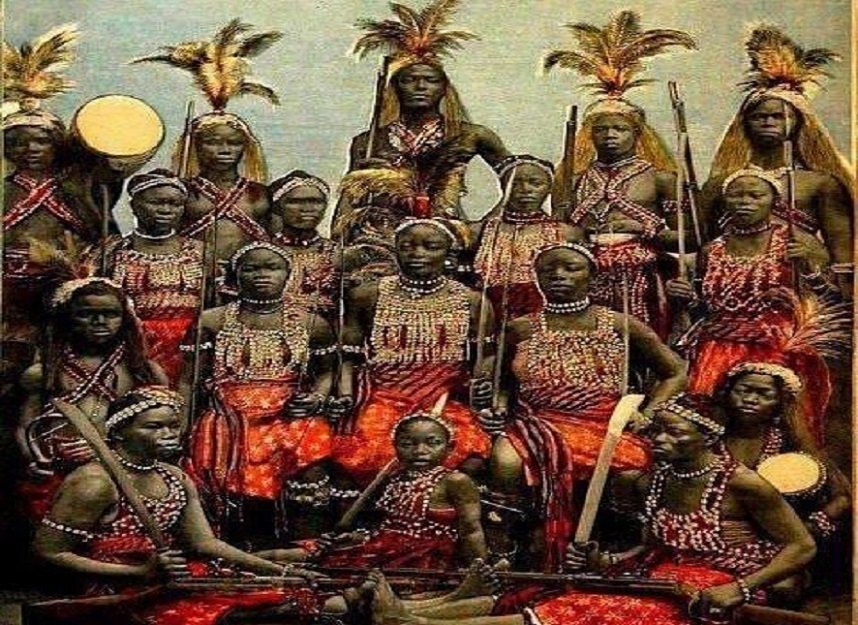


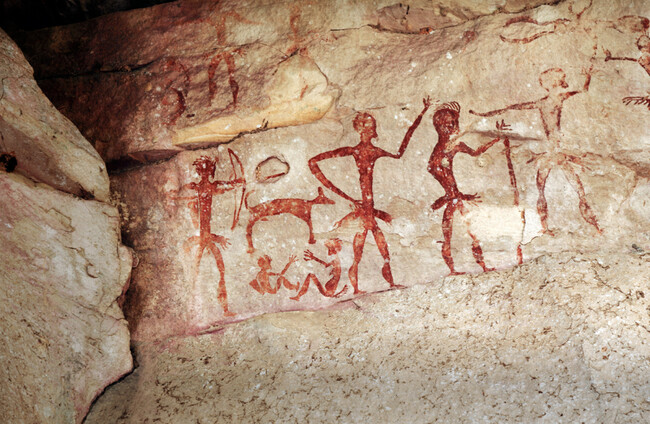

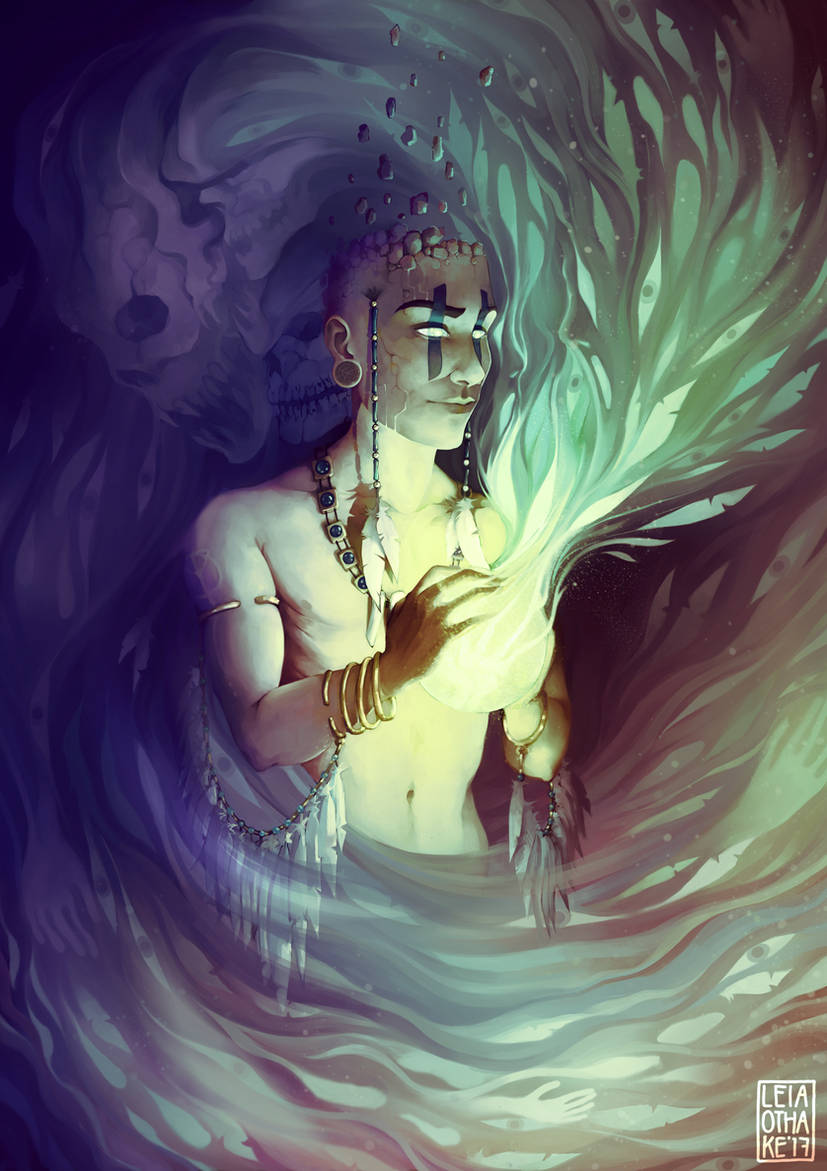


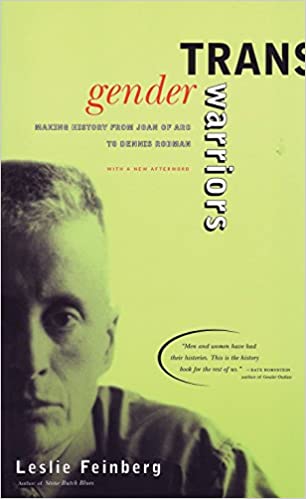



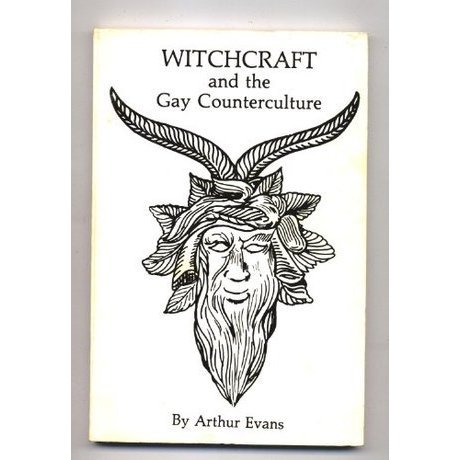


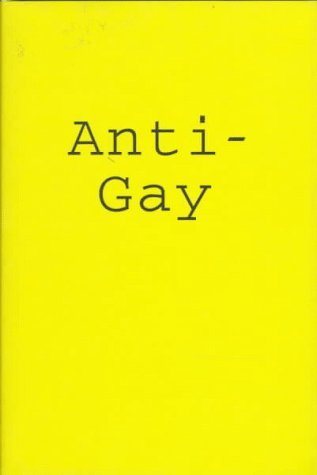

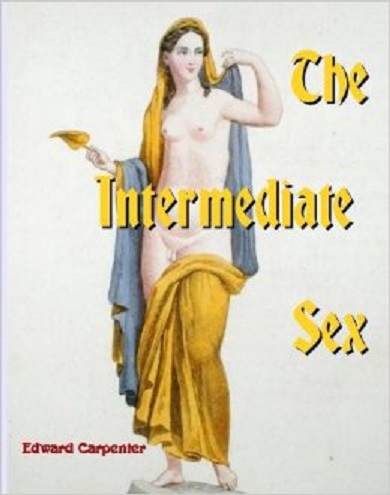

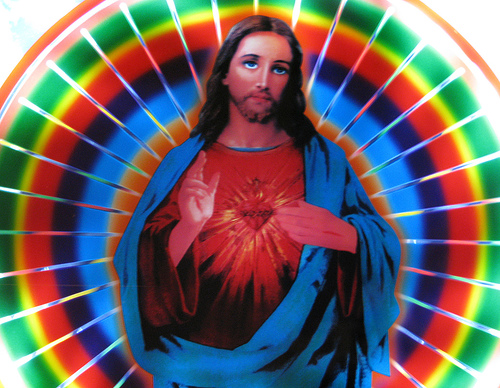

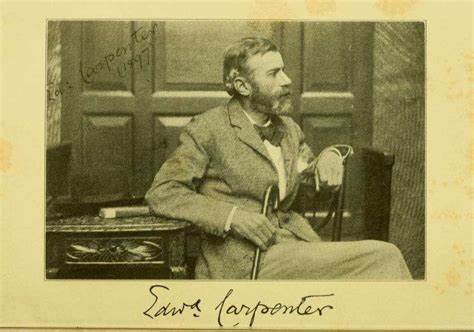

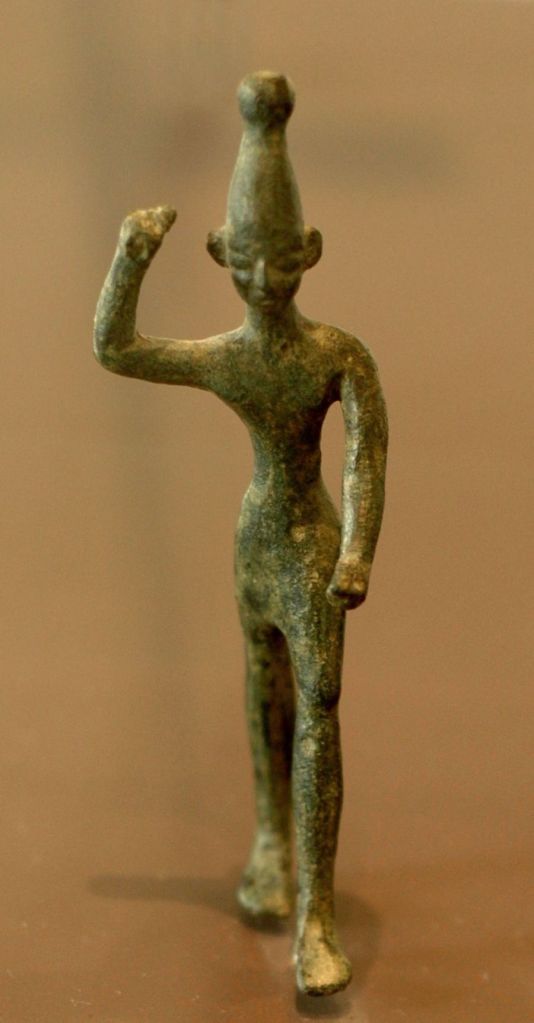
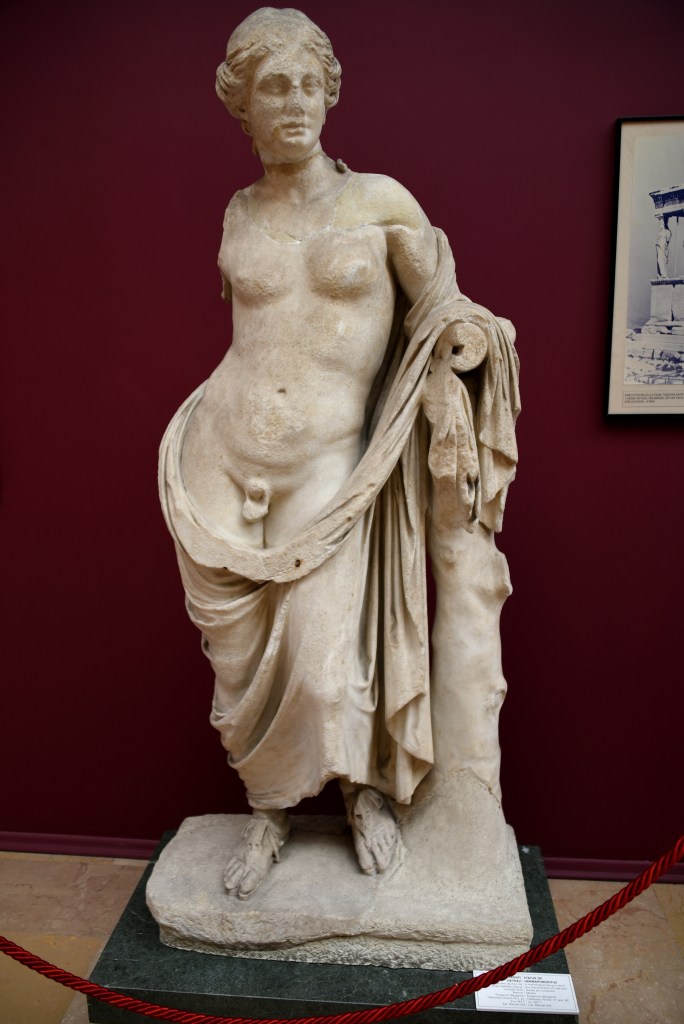










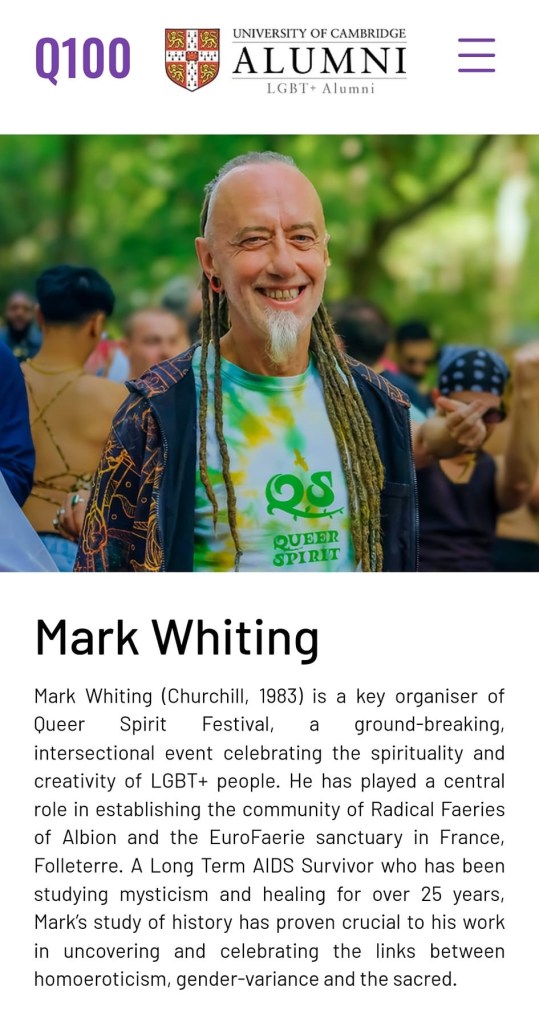




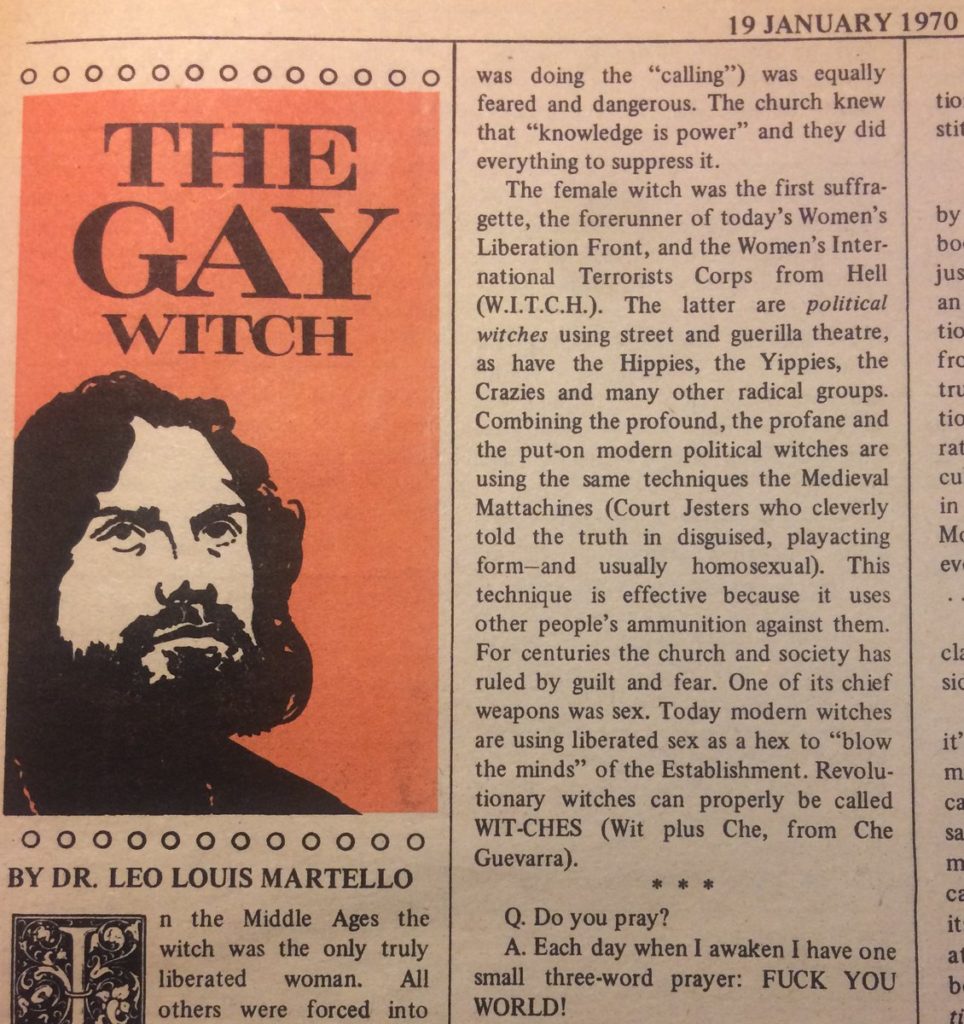
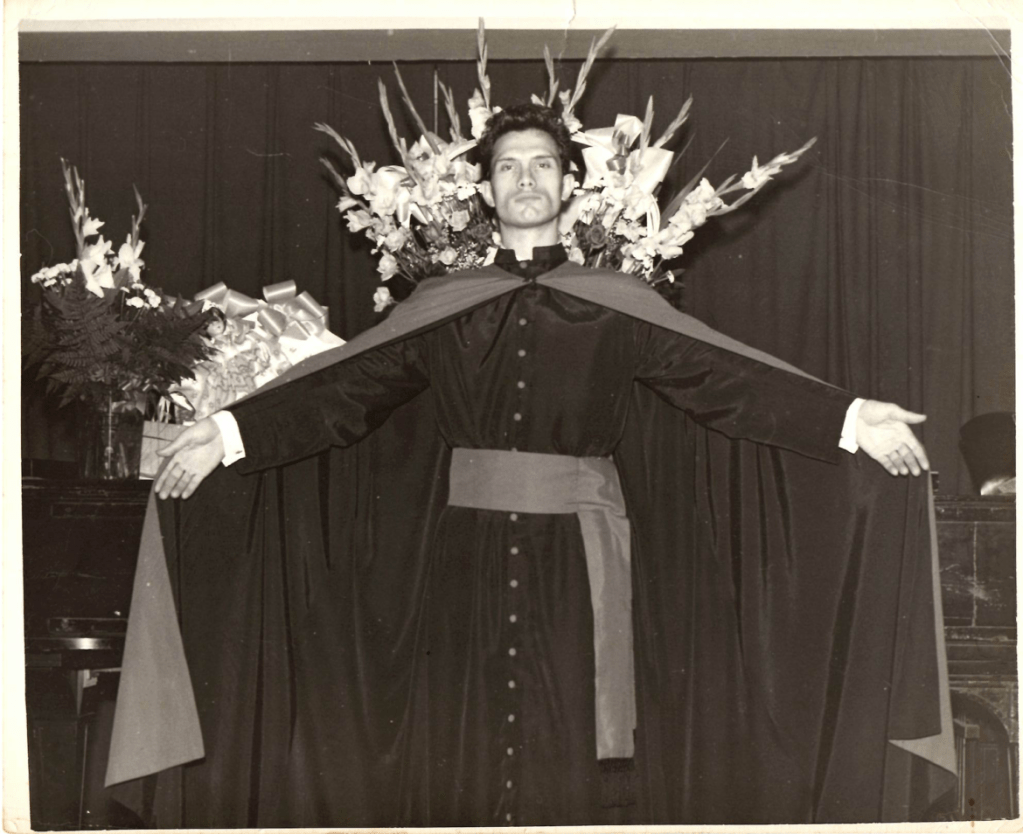



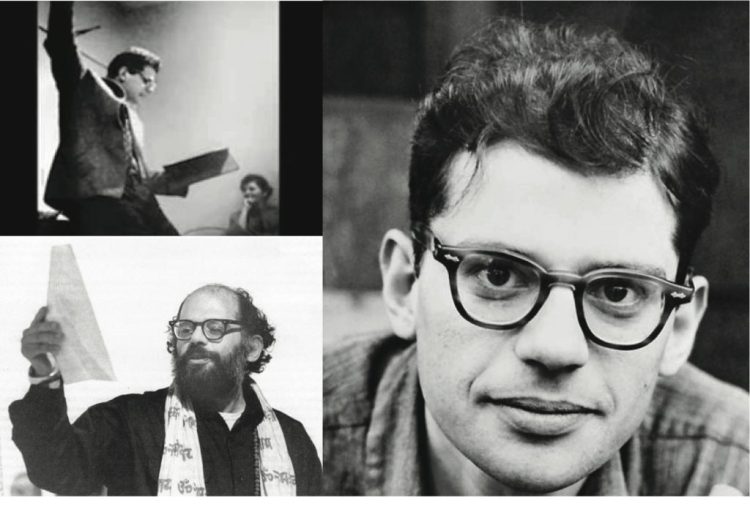

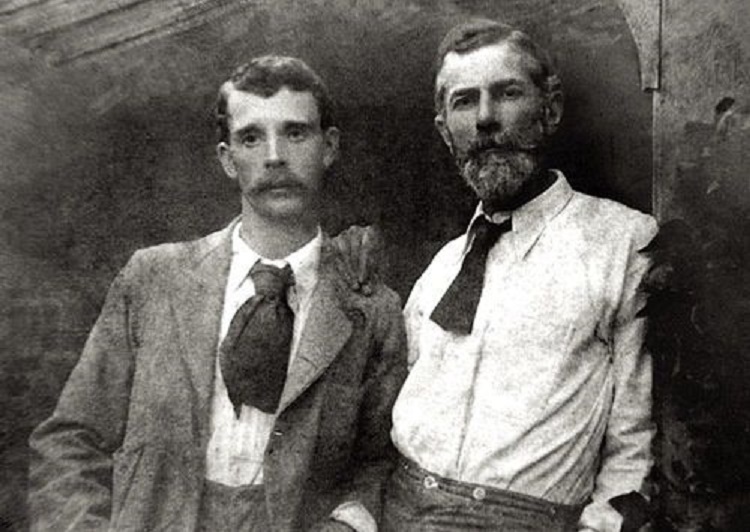



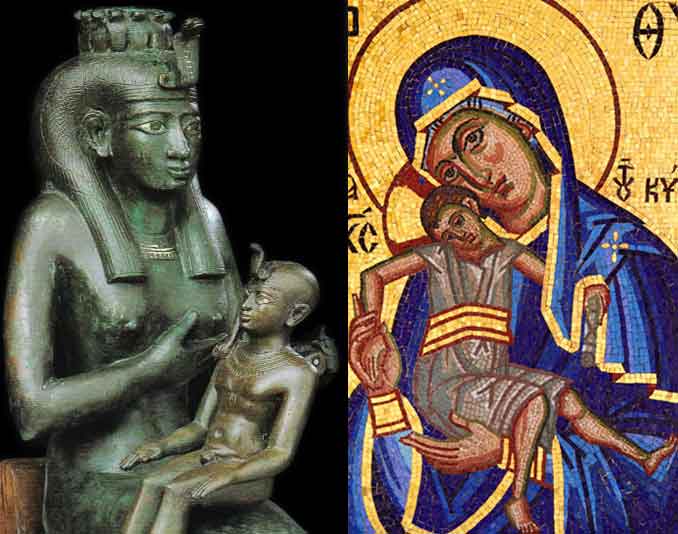






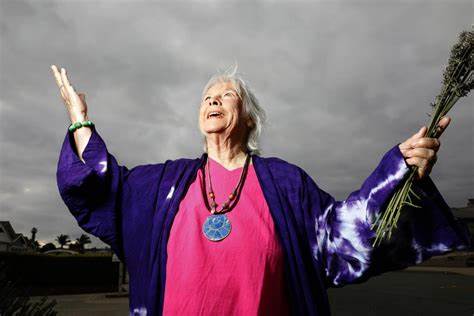


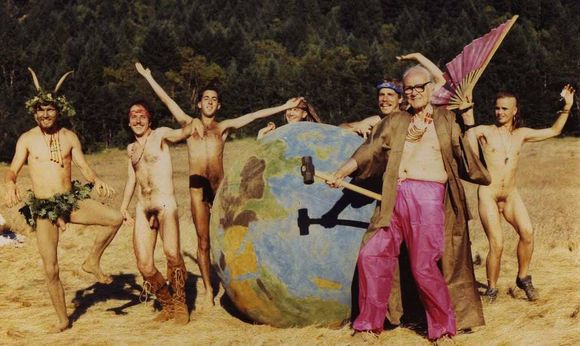

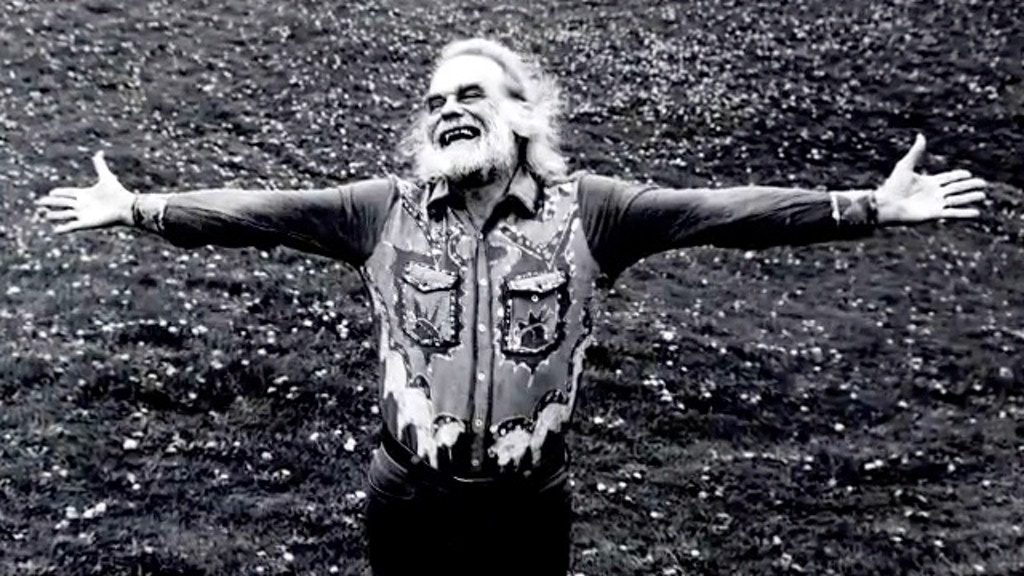
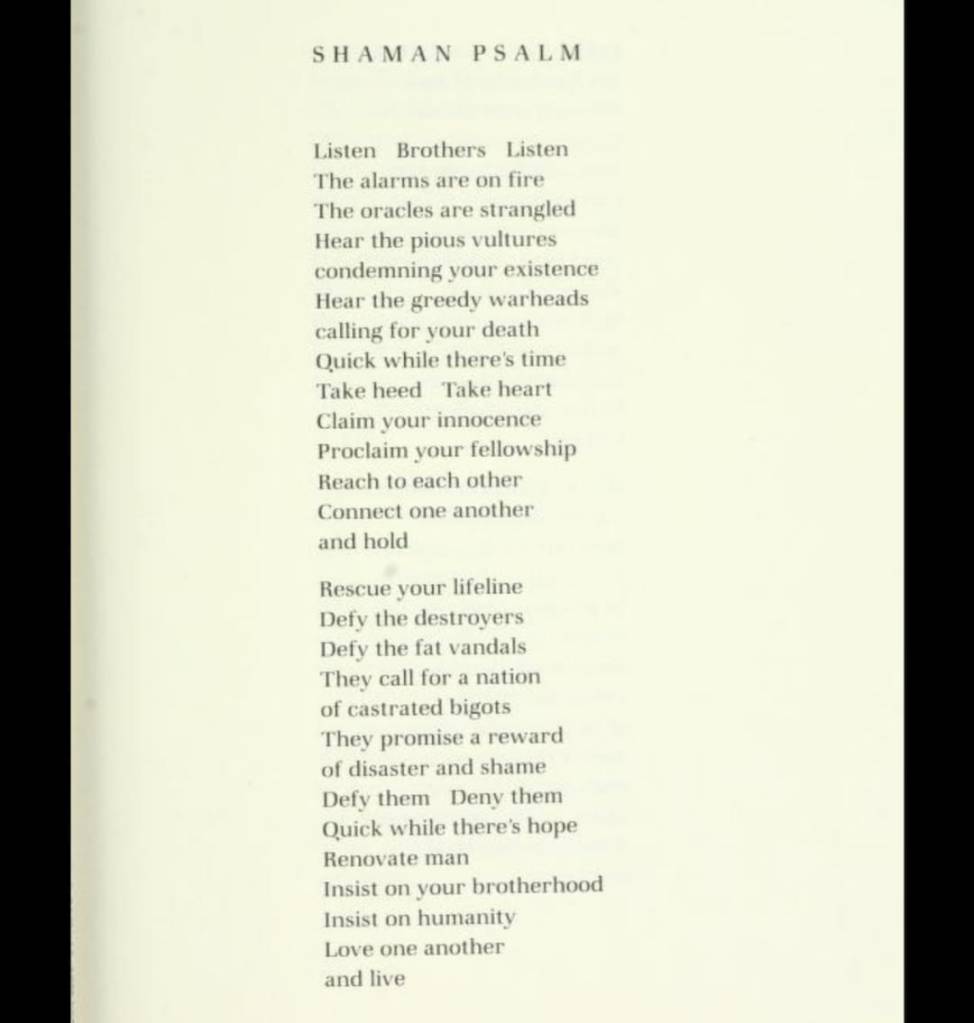
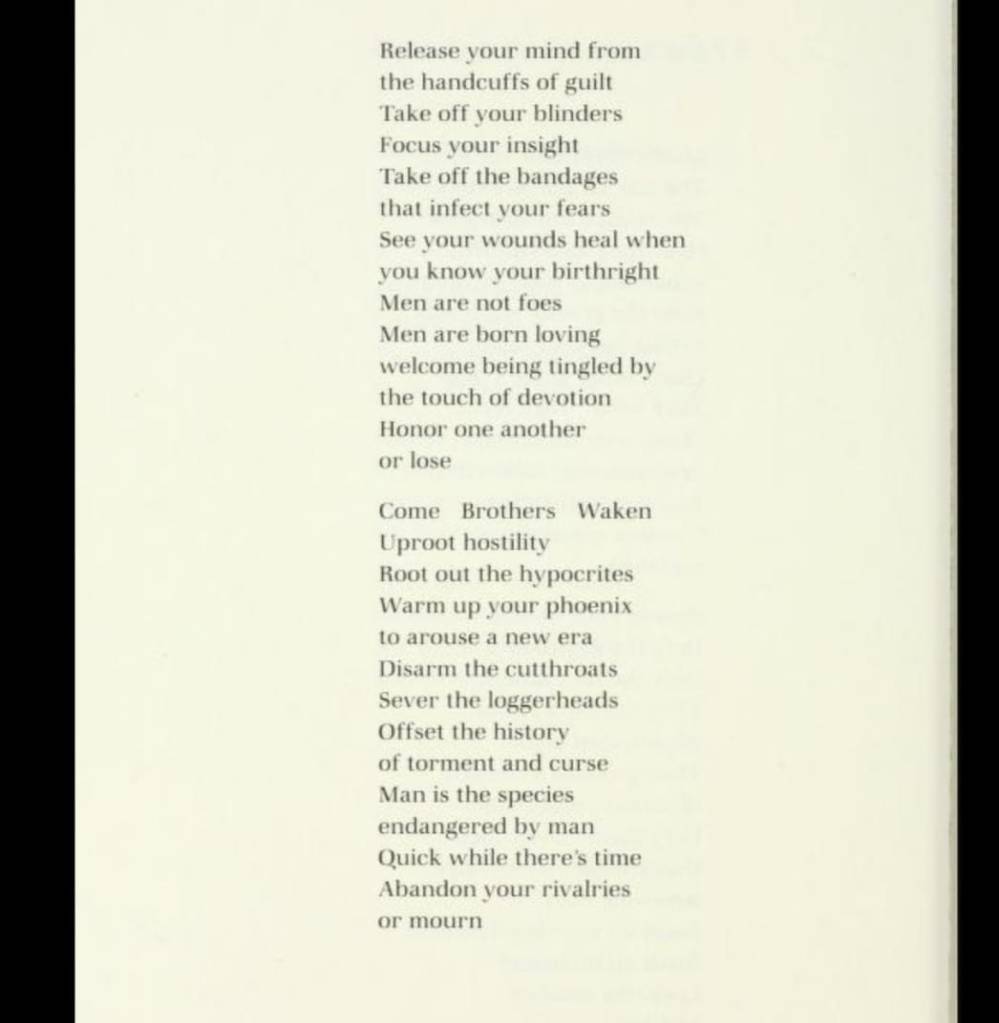
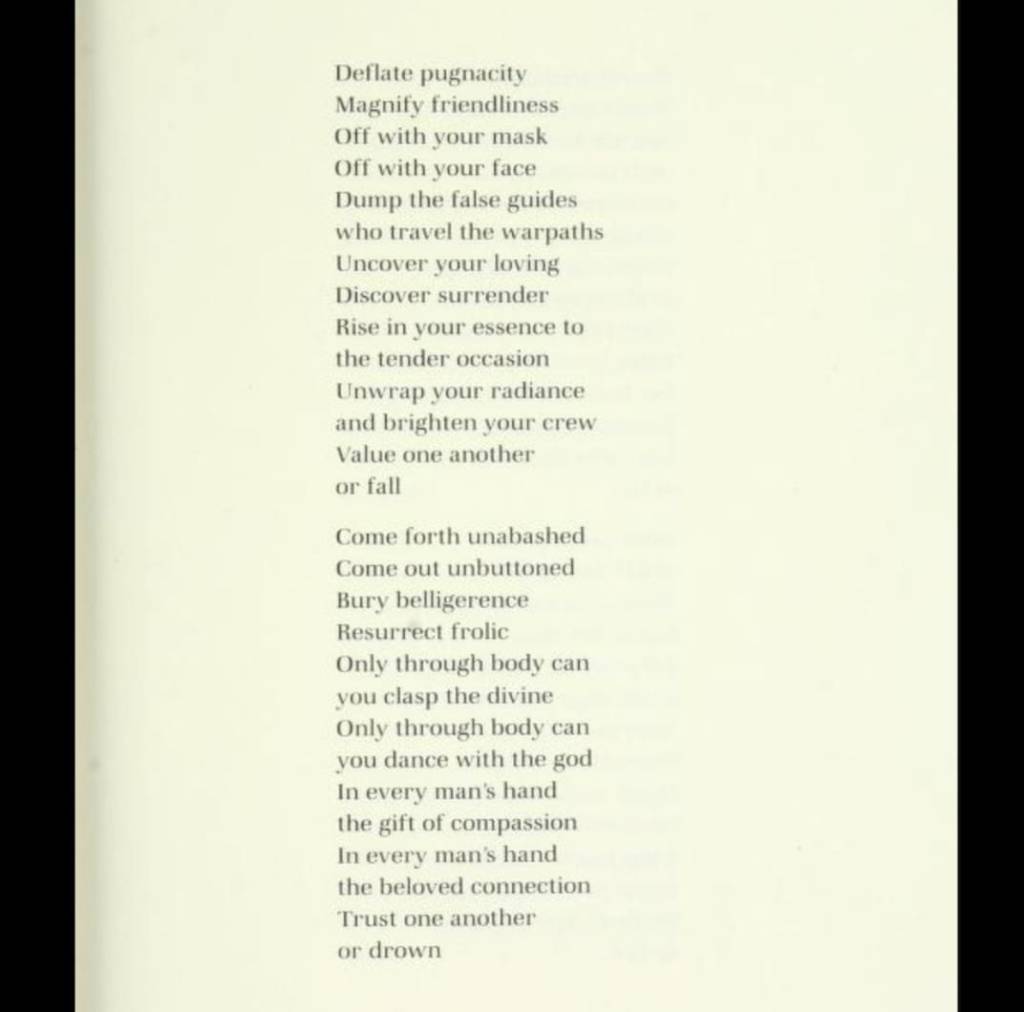

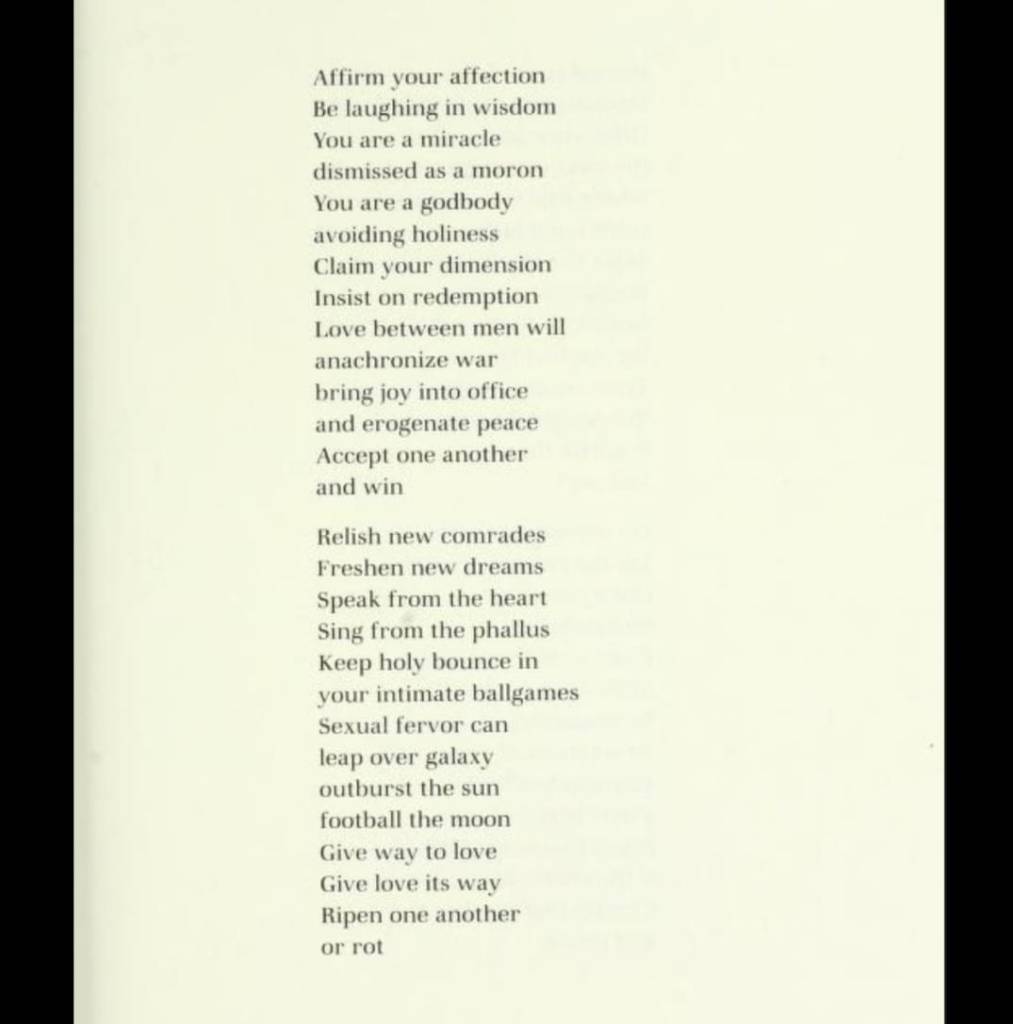

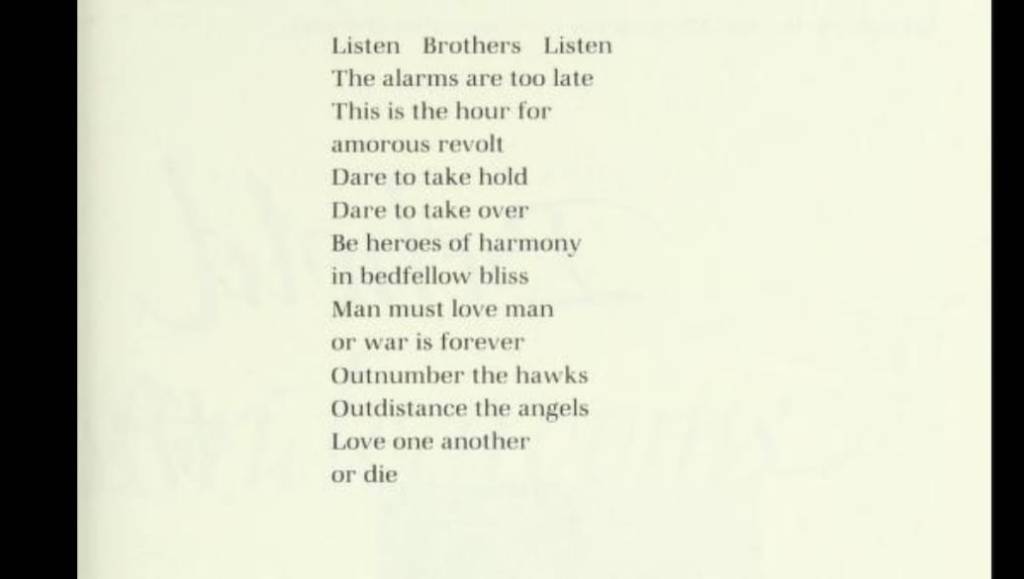
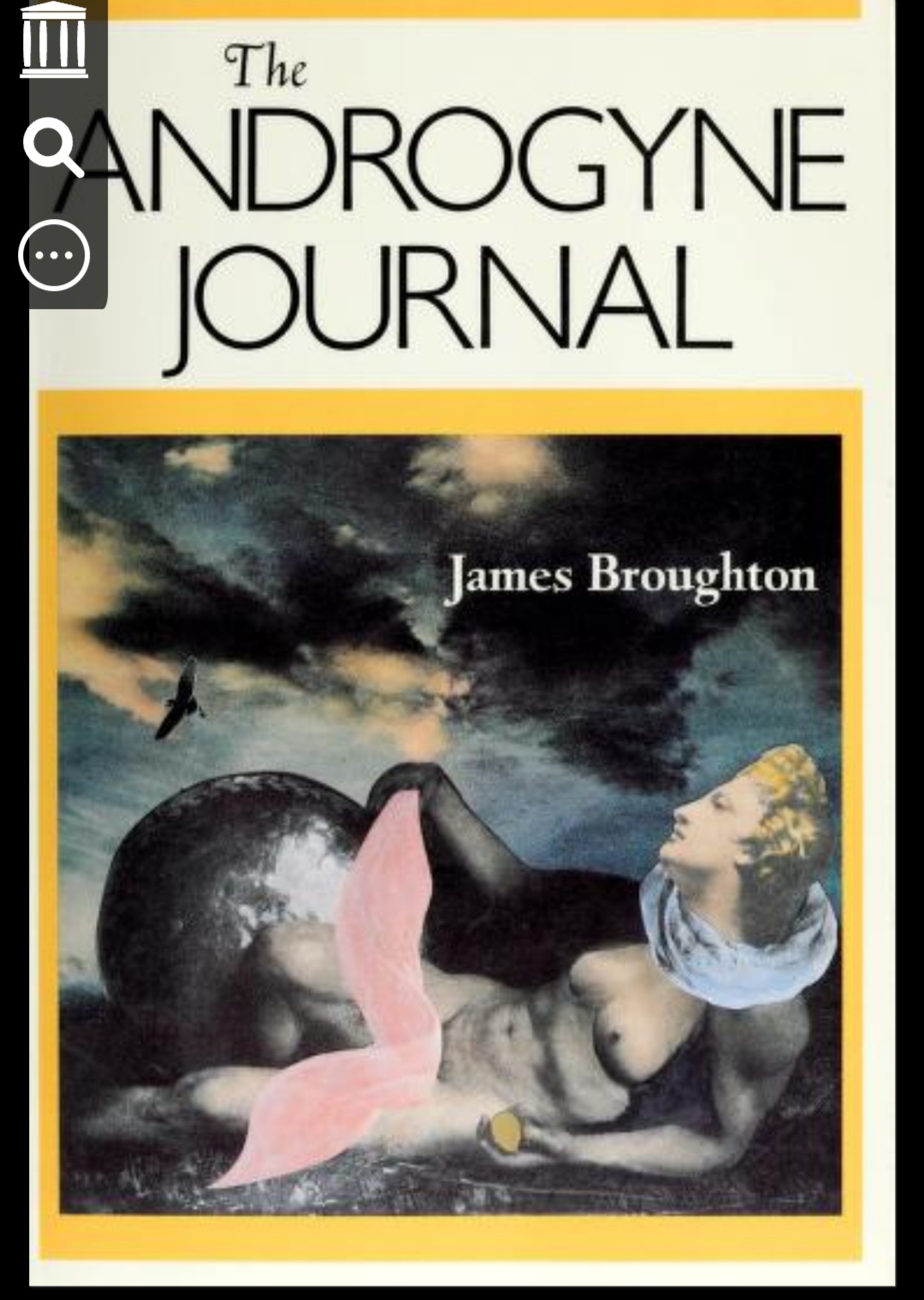
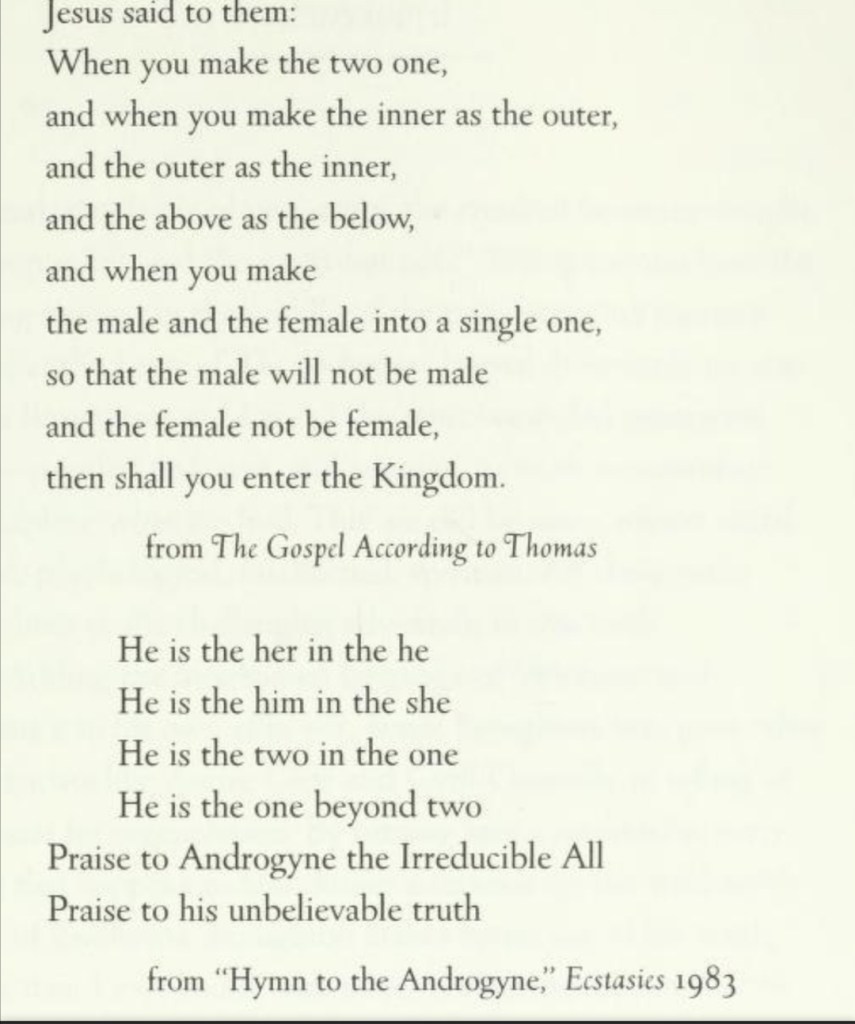


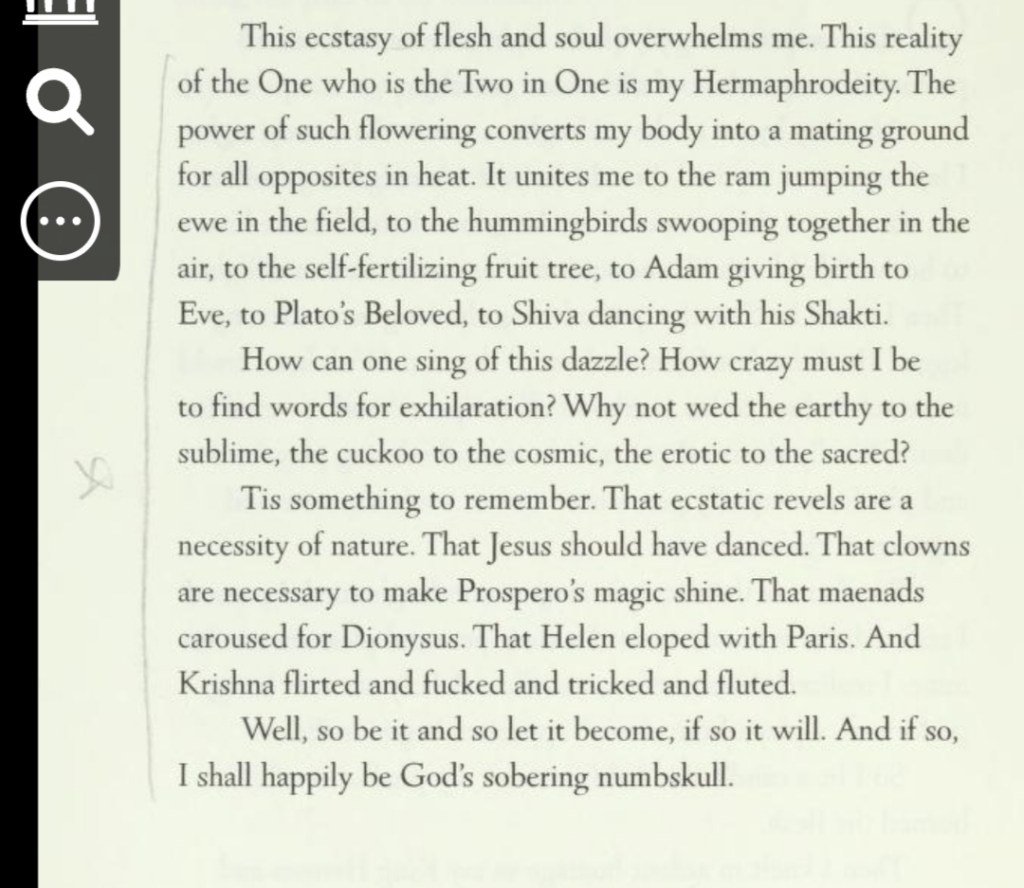
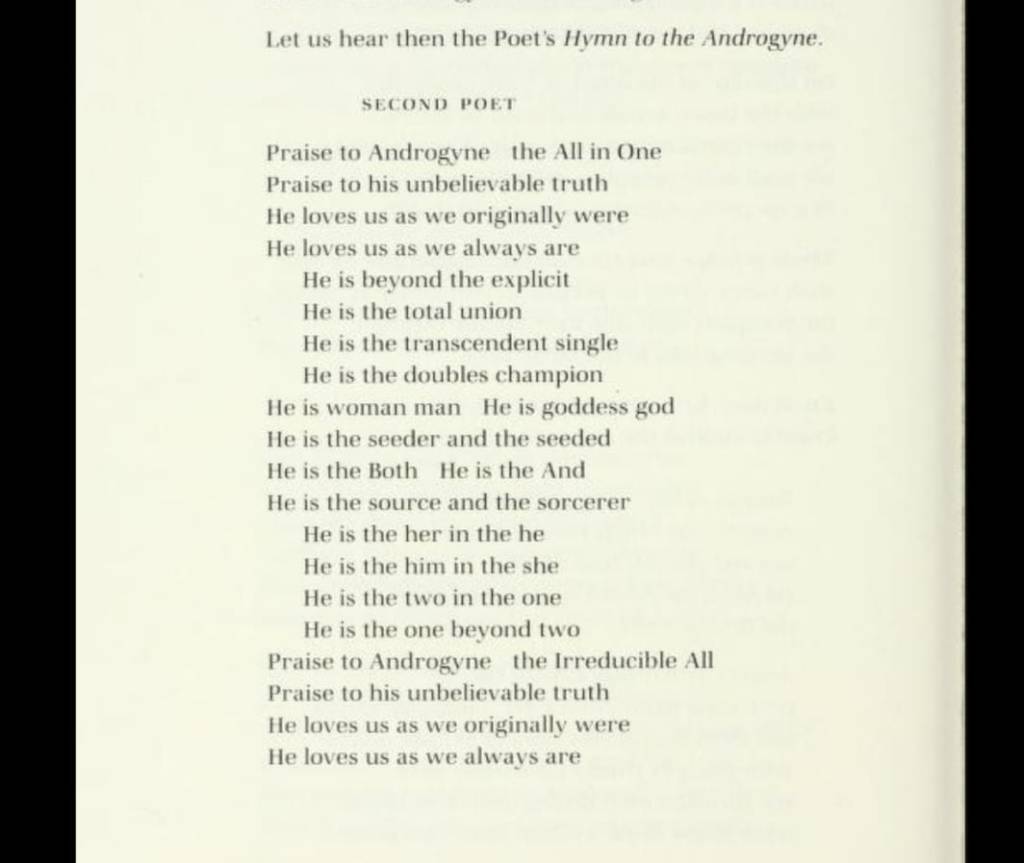
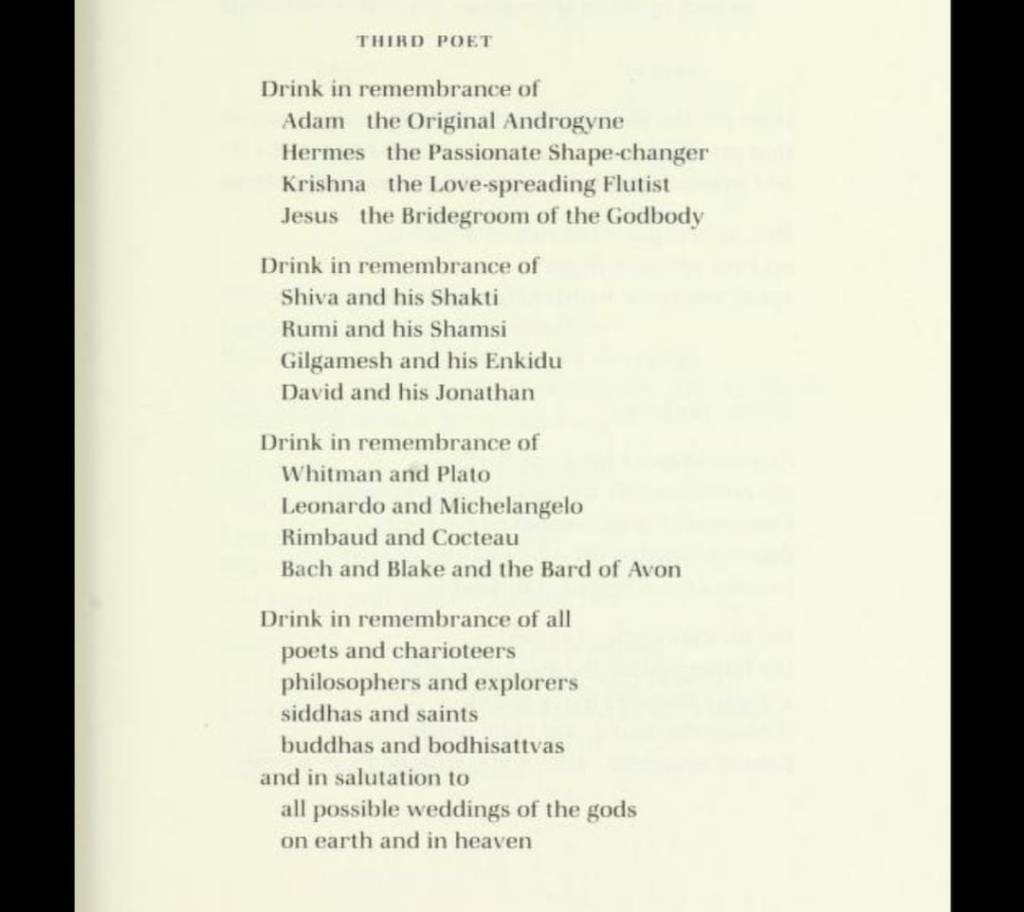






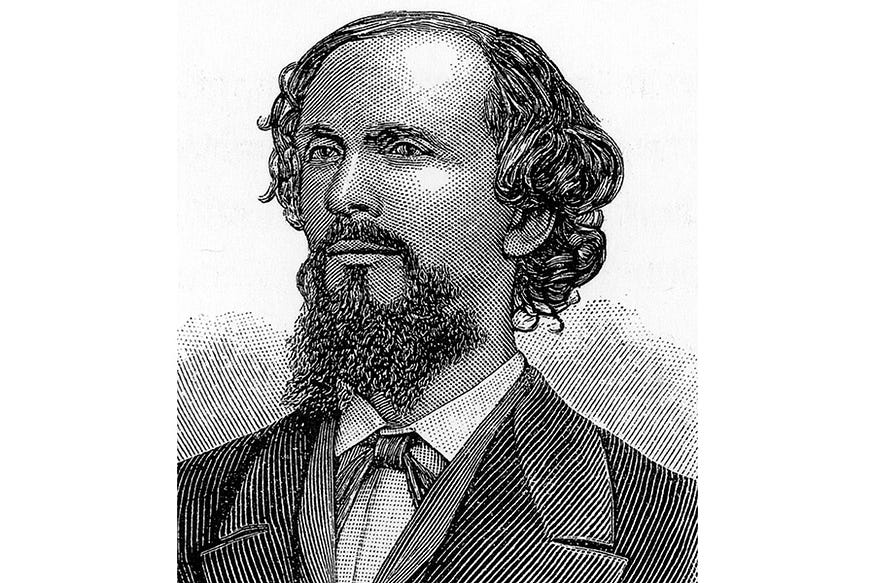


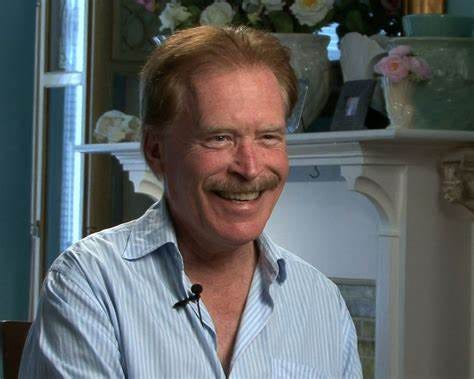


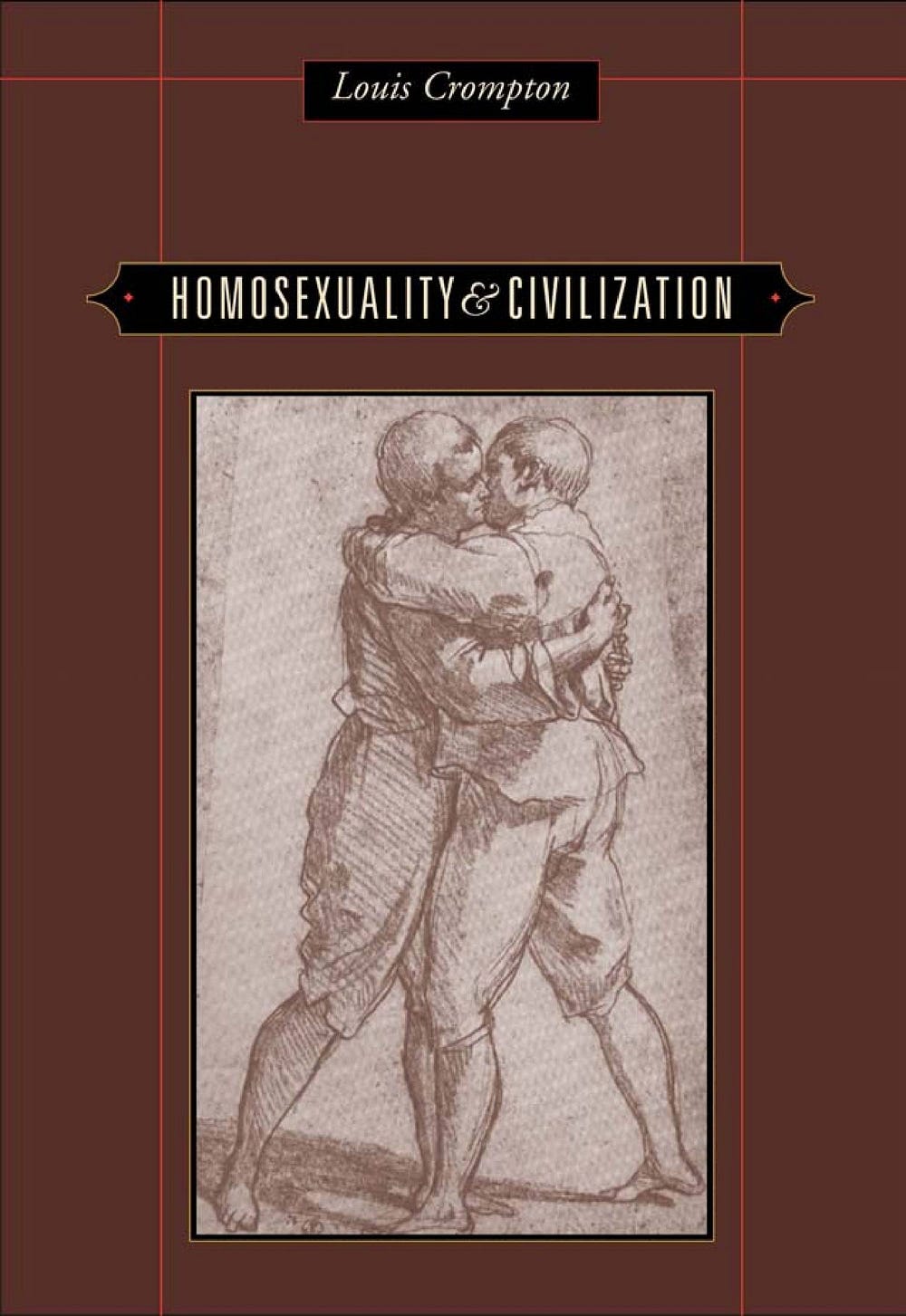
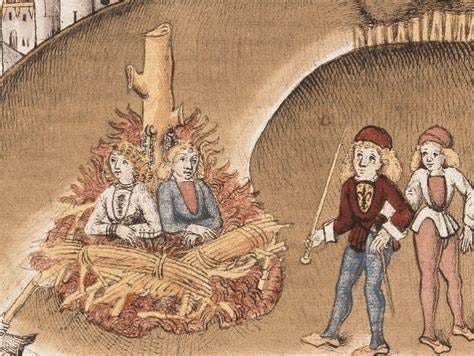
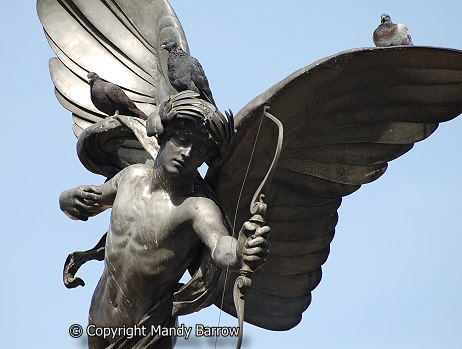

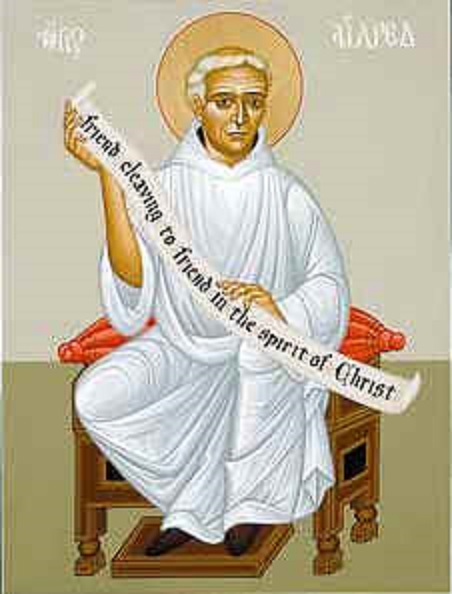
 rainbow messenger