Female Mystics of Albion

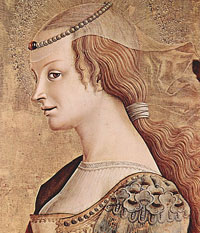
The British Isles have given birth to female mystical voices for at least 1400 years… here are some i have come to love and respect so far… starting with THREE from the seventh century AD through to Doreen Valiente and Kate Bush in the 20th.  Their stories and voices deserve to be heard, their messages are clear, profound and simple.  They are the missing voices of ecstatic love modern culture badly needs.

For the woman is the crown of man, and the final manifestation of humanity.
She is the nearest to the throne of God, when she shall be revealed.
But the creation of woman is not yet complete: but it shall be complete in the time which is at hand.”
(Anna Kingsford)

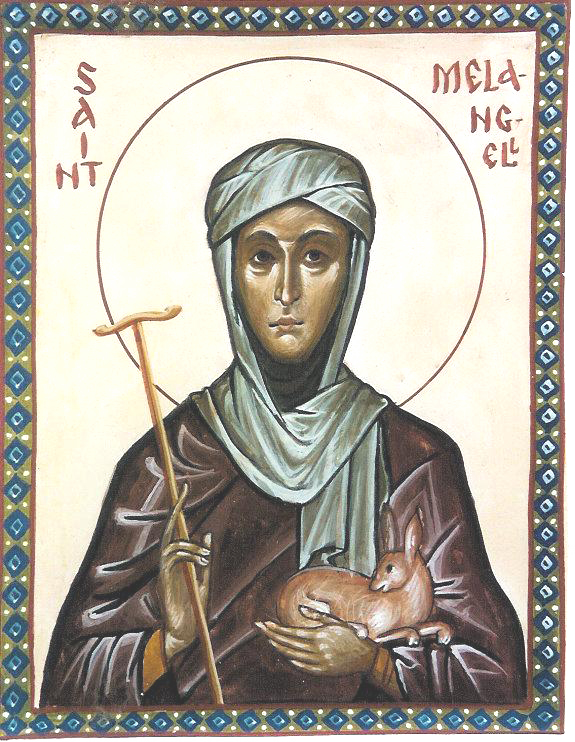
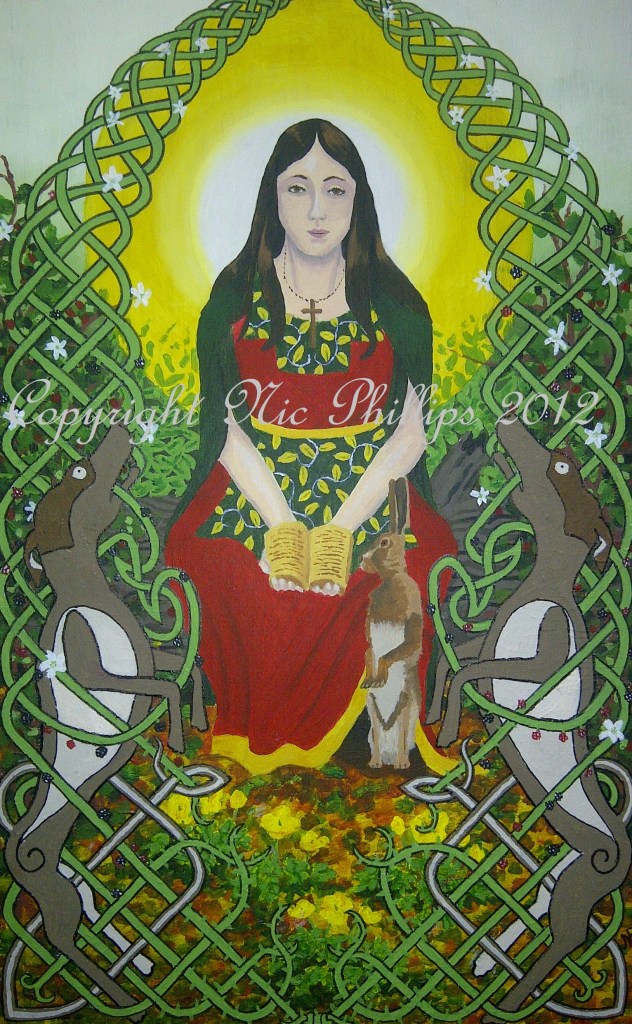
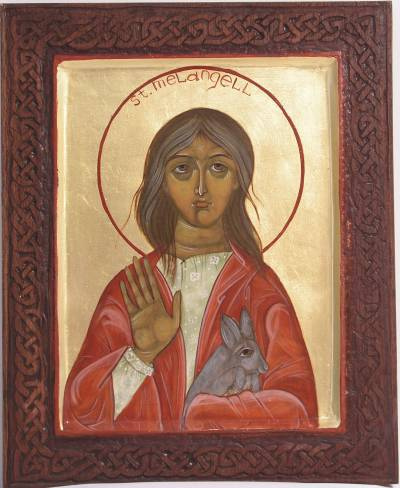
ST MELANGELL c 640

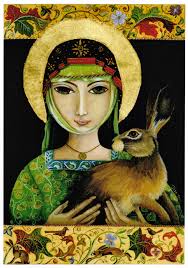
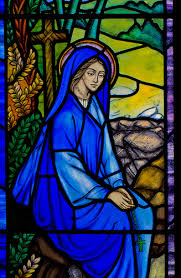
Daughter of an Irish king, Melangell escaped the wedding plans her father had for her, taking refuge in Powys, central Wales, seeing no man for 15 years.  The legend says that Brochwel Yscythrog, Prince of Powys, was hare hunting and came across her shining in a state of radiant devotion in a thicket, the hares hiding under her dress and his dogs unable to approach, wailing at a distance.  He listened to her story and gave her that piece of land to open an abbey where she lived to an old age, offering healing and wisdom.  Melgangell is the patron saint of hares.

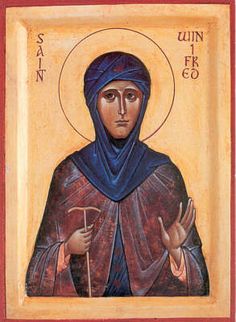
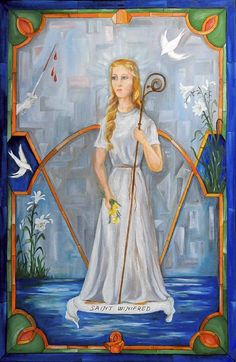
ST WINIFRED  7th century

Daughter of a Welsh chieftain, when Winifred decided to become a nun her suitor, Caradoc, was so upset he decapitated her.  Legend says her head rolled down a hill and where it landed a healing spring appeared.  The fortunate magical intervention of her maternal uncle Saint Bueno restored head to body and her to life, and also called down the intervention of heaven against Caradoc, who fell dead on the spot, with the ground opening to swallow him.  Winifred became a nun, then abbess for some years until called by God to seek a new resting place, setting off on a pilgrimage that included a visit to Rome.  In 1138 her relics were taken to Shrewsbury to be part of an elaborate shrine which was a major pilgrimage centre until destroyed during the reign of Henry VIII.

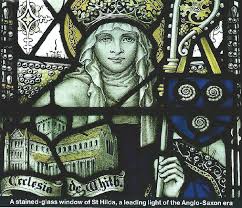
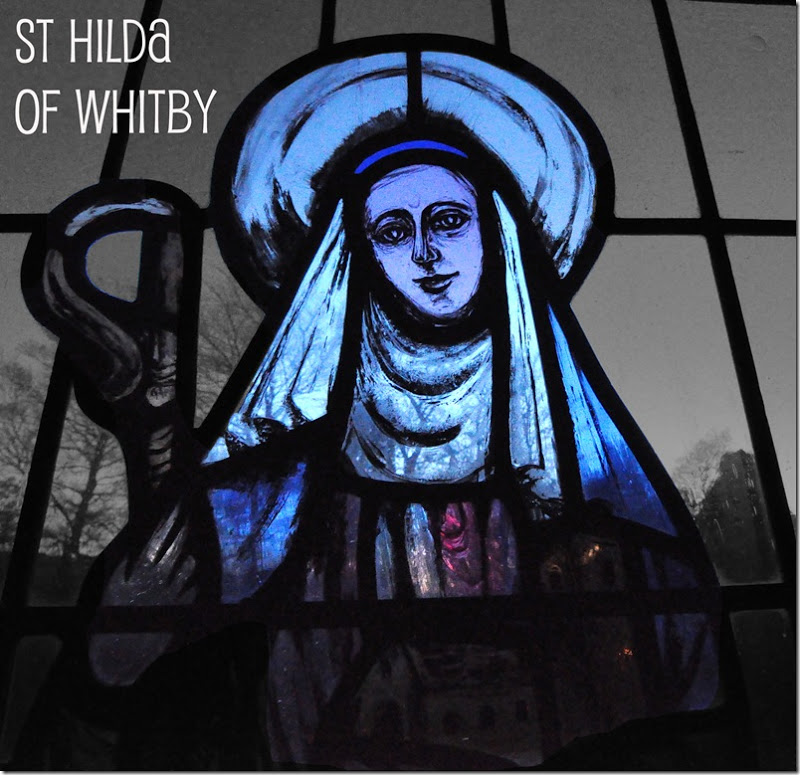
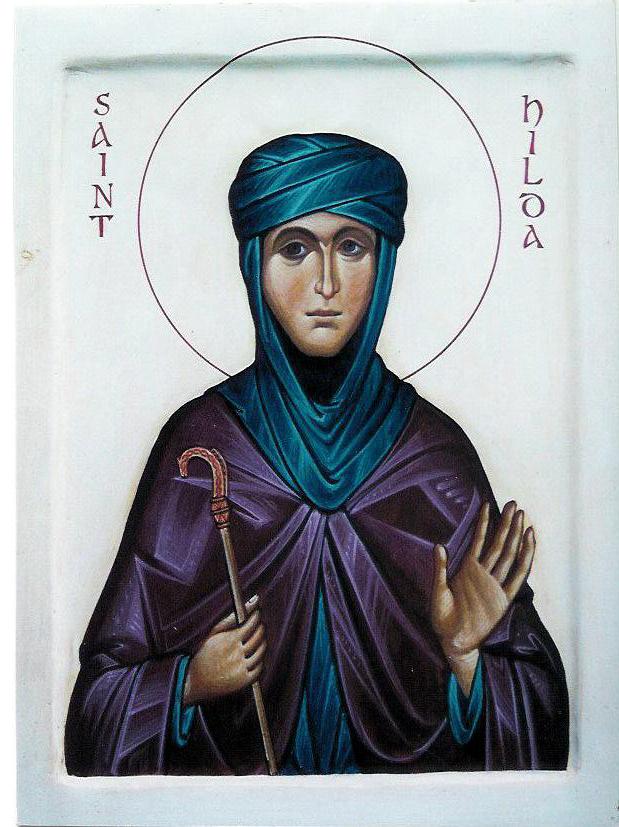
HILDA OF WHITBY 614-680

Described as ‘a ray of light in the dark ages’, Hilda was the daughter of the nephew of King Edwin of Northumbria.  Her father was murdered by poison and she was brought up in Edwin’s court.  The whole court underwent a mass baptism into Christianity at Easter 627.  HIlda founded and led a mixed gender monastic community in Whitby (then called Streanaeshalch – Whitby was the name the invading Danes would later give the place), at which the Venerable Bede tells us all virtues were practised, especially love, virtue and peace.  Men and women lived separately but worshipped together at the abbey.  Hilda was known as Mother, and her wisdom was sought out by both commoners and kings.  The nuns at Whitby reported seeing visions at the time of Hilda’s death.  The Danes destroyed all trace of the abbey when they invaded and monastic community would only be reestablished in Whitby after the Norman Conquest.

CHRISTINA OF MARKYATE 1096/8-1155

An Anchoress and head of a community of nuns, as a young girl Christina took a vow of chastity and dedicated her life to the church.  When her noble family forced her to marry she resisted consummating the deal and went on the run becoming an Anchoress, living in a tiny closet barricaded in by a tree trunk, spending her time in prayer and also offering spiritual guidance to those who came seeking it.  When her husband annulled the marriage she was able to come out into the world – a priory was founded for her in Markyate, which survived until the dissolution of the monasteries under Henry VIII.  Christina was known for her ecstatic visions of the presence of God.

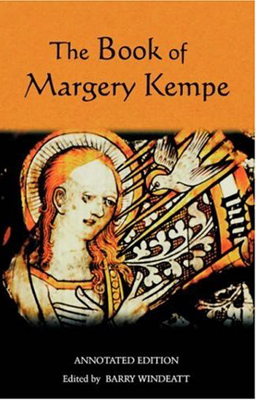
MARGERY KEMPE c. 1373-1478

Born King’s Lynn (then called Bishop’s Lynn), daughter of merchant, mayor and MP John Brunham, married John Kemp and had at least 14 children.  Marjery, like other medieval Catholic mystics, sought a greater intimacy with Christ…. She did not join a religious order, but lived her mysticism in the world, being prone to public displays of wailing, sobbing and writhing.  She dictated her mystical visions into what is considered the first autobiography – The Book Of Margery Kempe, including the stories of the ‘temptations to lechery’ she underwent, of her trial for heresy.  The book highlights the growing tension between institutional religion and public dissent.  Marjery is known to have visited the anchoress Julian of Norwich, who affirmed the validity of Margery’s visions and revelations.

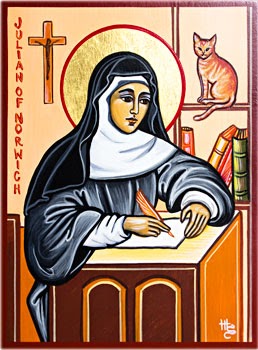
JULIAN OF NORWICH  1342-1416

Serious illness around the age of 30 brought the lady Juliana joyfilled visions of Christ  which led her to dedicate her life as an Anchoress, living in a small hut near Norwich.  She wrote the first book in English known to have been written by a woman: ‘Revelations of Divine Love’ in which she describes seeing God holding a tiny thing in his hand, like a small brown nut, which seemed so fragile and insignificant that she wondered why it did not crumble before her eyes. She understood that the thing was the entire created universe, which is as nothing compared to its Creator, and she was told, “God made it, God loves it, God keeps it.”  She was troubled by the plight of souls who never got to hear the gospel, but was assured by spirit “that all shall be well, and all shall be well, and all manner of thing shall be well.” “Glad and merry and sweet is the blessed and lovely demeanour of our Lord towards our souls, for he saw us always living in love-longing, and he wants our souls to be gladly disposed toward him . . . by his grace he lifts up and will draw our outer disposition to our inward, and will make us all at unity with him.”

“I knew by the common teaching of Holy Church and by my own feeling that the blame for our sins clings to us continually while we are on this earth…How amazing it was then to see our Lord God showing us no more blame than if we were as clean and whole as the angels in heaven!… in spite of all our feelings of sorrow or well-being, God wants us to understand and know by faith that we are more truly in heaven than on earth.

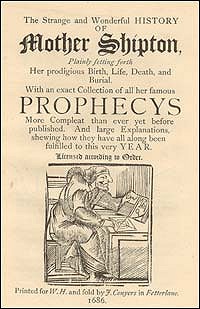
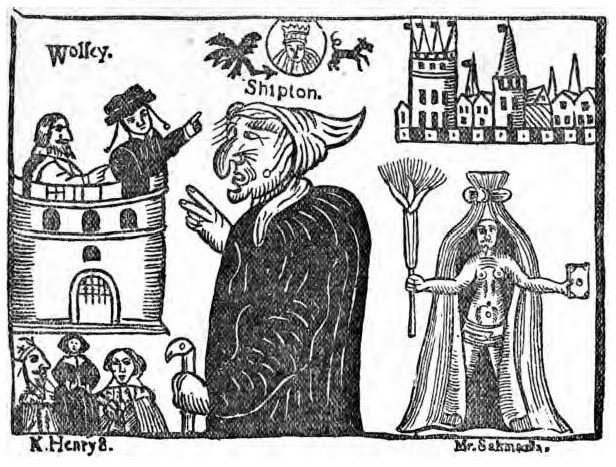
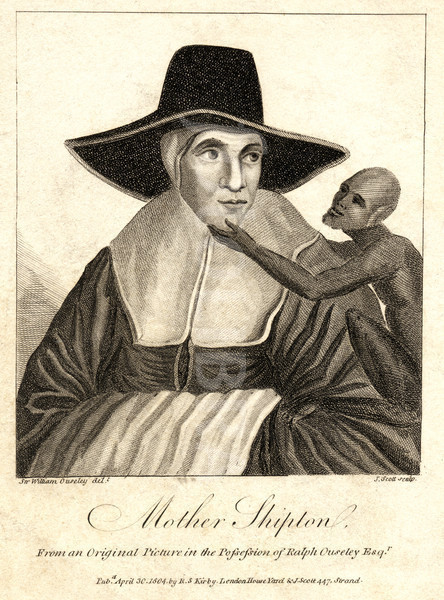
MOTHER SHIPTON c.1488-1561

Soothsayer and prophetess, said to be born in a cave in Knaresborough to a very young mother who refused to name the father.  After two years living in the cave the Abbot of Beverley took pity and found a family to bring up the child, with mother going to a nunnery.  Ursula had severe physical deformities and spent a lot of time alone, making healing potions and developing her skills of prophecy, for which she became very well known.  Her prophecies appear to cover the internet, air travel, underwater vessels, and cinema/tv, but she saw a lot of violence and suffering too:

Around the world men’s thoughts will fly, quick as the twinkling of an eye.

When pictures seem alive with movements free, when boats like fishes swim beneath the sea. When men like birds shall scour the sky. Then half the world, deep drenched in blood shall die.

References to a dragon’s tail in the night sky (a nuclear weapon?), natural disasters that have the survivors running to the hills, make a for a frightening read, but she sees hope in the end (coming from the galaxy?):

And before the race is built anew, a silver serpent comes to view and spew out men of like unknown to mingle with the earth now grown cold from its heat and these men can enlighten the minds of future man to intermingle and show them how to live and love and thus endow. the children with the second sight. a natural thing so that they might grow graceful, humble and when they do the golden age will start anew.

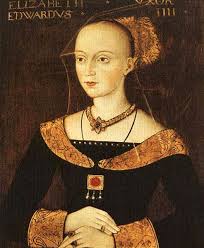
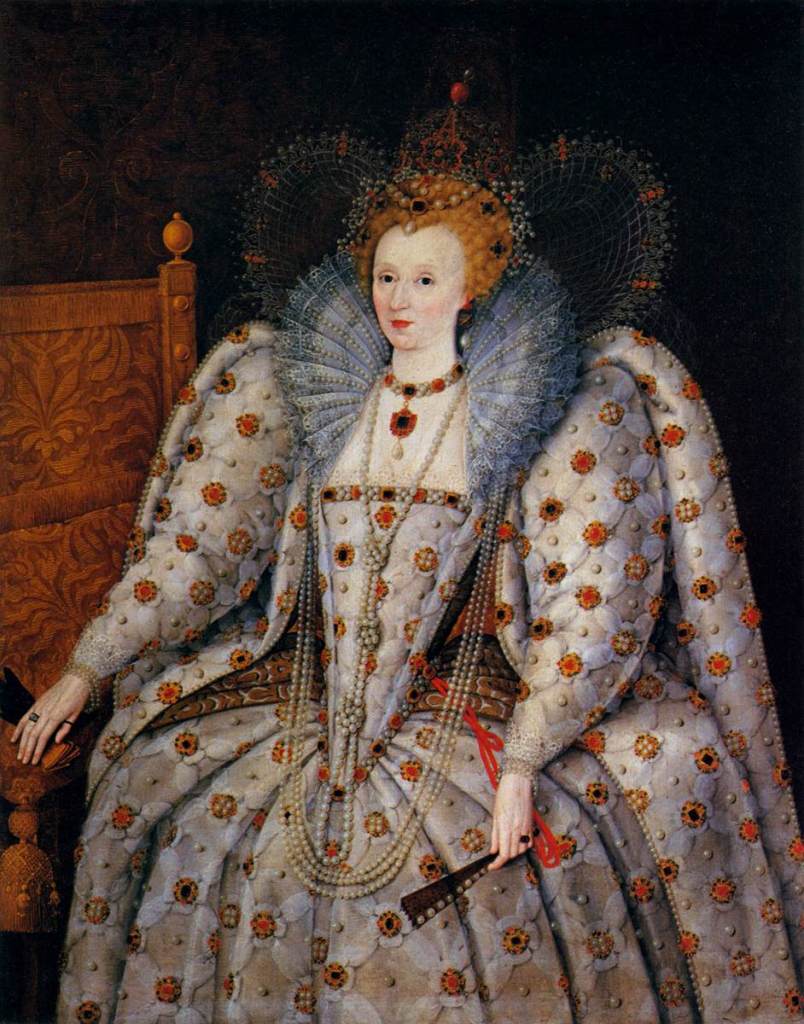
QUEEN ELIZABETH I  1533-1603

“There is but one God, one Jesus Christ; all else is dispute over trifles.” Our virgin Queen was a mystic, preferring her private practice of communion with God over lectures and sermons.  It was her policy to rise above the division between Catholics and Protestants over whether the wafer eaten during Mass was literally (Catholic) or symbolically (Protestant) the body of Christ.  This, incredibly, is the central issue of Transubstantiation that led to so much war and destruction in Europe.  The new Book of Common Prayer in 1559 attempted to appease as many of her subjects as possible with the phrasing,

“The Body of our Lord Jesus Christ which was given for thee, preserve thy body and soul unto everlasting life; Take and eat this in remembrance that Christ died for thee, and feed on him in thy heart by faith with thanksgiving.”

Her moderate and tolerant attitude of course angered the extremists on both sides – the Catholics who were looking for a reason to stage a revolution, and the extreme Protestants who wished to establish a more puritanical regime.  But she had observed the horrors of the religious wars in Europe and her policy led to a more tolerant society with less religious tension.

Her reign was also saw a surging interest in all things metaphysical.  This was the Renaissance period, the time of new thinking, of the fusion of astrology, kabbalah, alchemy, of Nostradamus, John Dee, Francis Bacon, with new visions of the coming Golden Age forming left, right and centre.

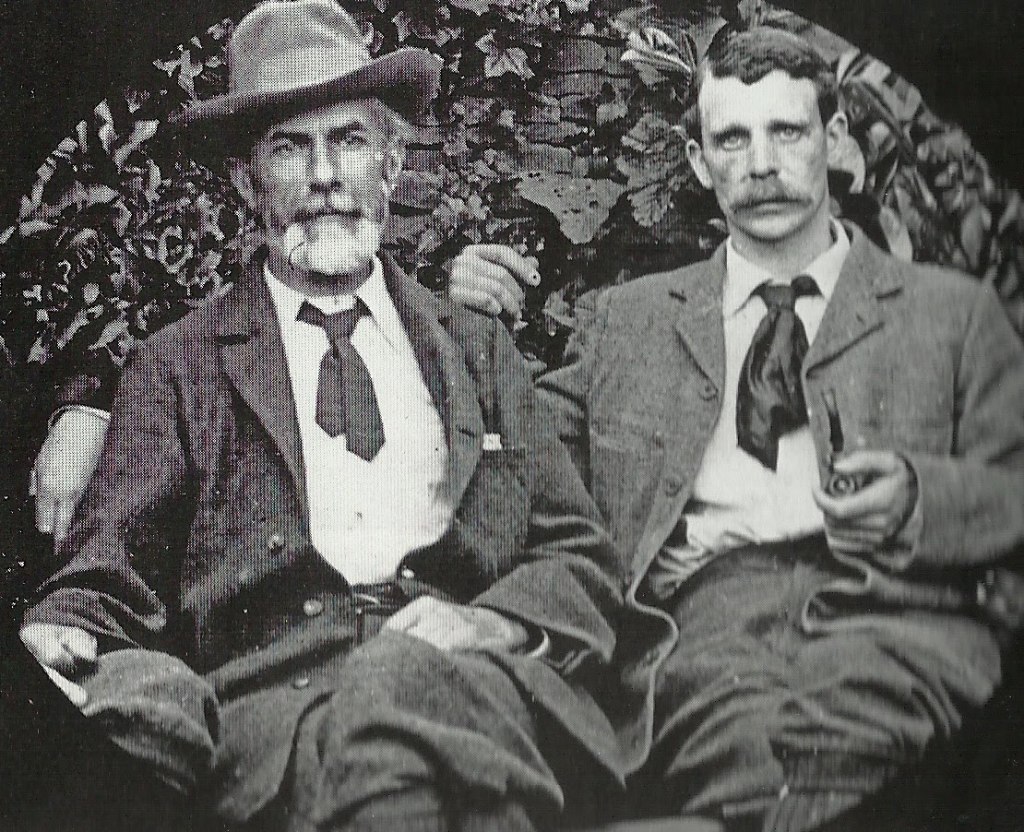
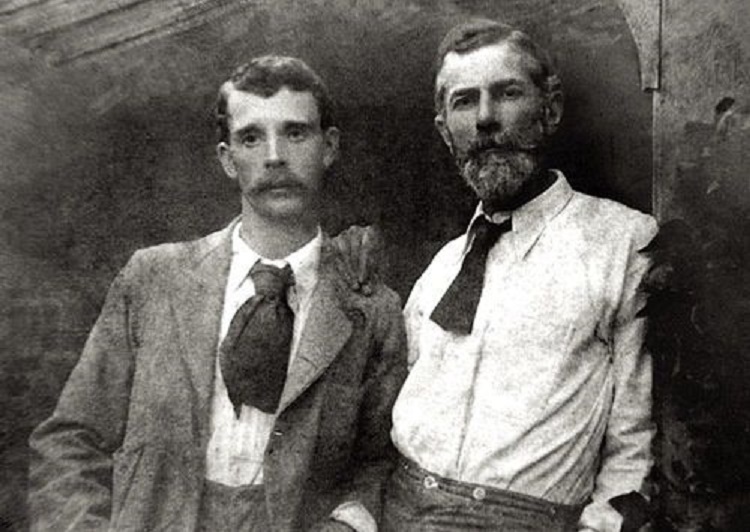
In 1555 alchemist and magician John Dee was imprisoned for heresy, but four years later he cast the horoscope that was used to choose the date of Elizabeth’s coronation.  In the following years Dee developed a deep mystical practice with Edward Kelly, a medium who connected with spirit guides using a crystal ball.  They channelled works from the angelic realms, eg the Enochian alphabet and the Heptarchia Mystica.  Via the angel Uriel they foretold the death of the Queen of the Scots and the coming of the Spanish Armada.  Fear of their activities (which were suspected of having homoerotic elements) led to a mob burning down Dee’s library at Mortlake in 1583.  The men took their work to Krakow and Prague for some years, then in 1595 Dee became warden of Manchester College.  Kelly died the same year, but Dee lived on until 1608, a respected citizen in a golden age for mysticism in Britain.

ANNA KINGSFORD 1846-1888

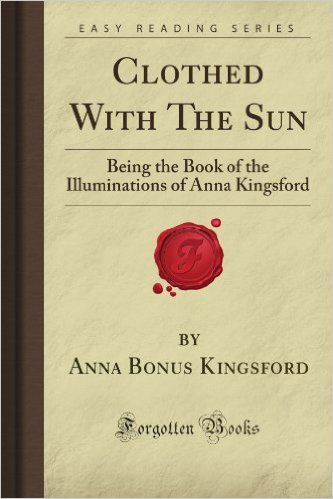
English campaigner for women’s rights and vegetarianism, Anna Kingsford became the president of the London Theosophical Lodge in 1883.  She received insights in trance states and sleep, which were recorded and published posthumously by her friend Edward Maitland in the book Clothed With the Sun, a reference to Revelation. Anna is perhaps the spiritual mother of feminism and her vision is profound:

“For the woman is the crown of man, and the final manifestation of humanity.
She is the nearest to the throne of God, when she shall be revealed.
But the creation of woman is not yet complete: but it shall be complete in the time which is at hand.
All things are thine, O Mother of God: all things are thine, O Thou who risest from the sea; and Thou shalt have dominion over all the worlds.”

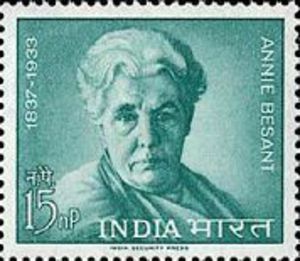
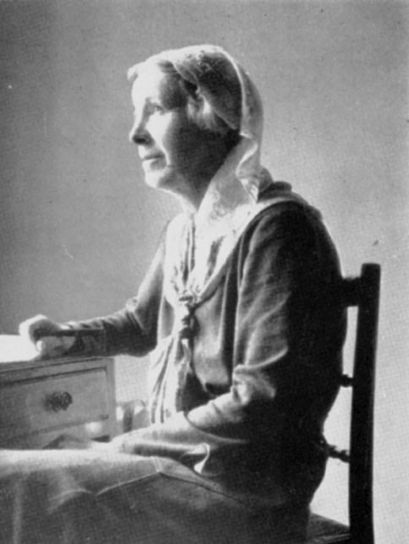
ANNIE BESANT 1847-1933

Theosophist, socialist, campaigner for women’s rights, Annie left her boring anglican vicar husband and set out to change the world, at first joining the secular society and nearly going to jail for advocating birth control.  In the 1890s she became a Theosophist, joining this philosophical movement created by Helena Blavatsky in 1875, and went to live in India.  She brought the young Krishnamurti to the world’s attention, believing him to be the next World Teacher sent by God, a claim he completely distanced himself from in 1929.“In a deep metaphysical sense, all that is conditioned is illusory. All phenomena are literally ‘appearances,’ the outer masks in which the One Reality shows itself forth in our changing universe. The more ‘material’ and solid the appearance, the further is it from reality, and therefore the more illusory it is.”“Sun-worship and pure forms of nature-worship were, in their day, noble religions, highly allegorical but full of profound truth and knowledge.”

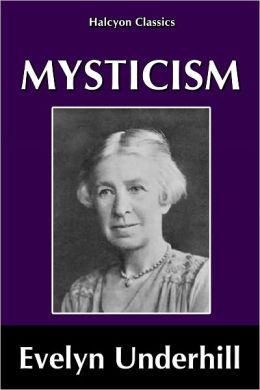
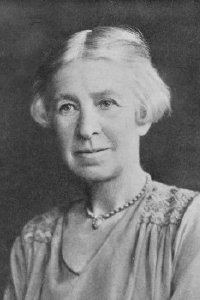
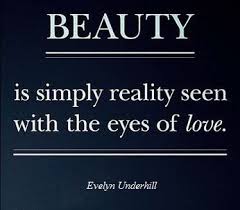
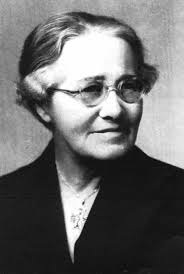
EVELYN UNDERHILL 1875-1941 Born in Wolverhampton, Evelyn was a poet, novelist, pacifist and mystic, who wrote the classic study Mysticism (1911).  Early 20th century England saw an excitement about the advance of science and understanding that went hand in hand with the exploration of psychic phenomena and spirit.  Evelyn found Anglican Protestant religion too rigid in this environment and sought to meet life directly through the heart, to live life as a sacred journey.  She viewed the world’s mystics as the spiritual pioneers of humanity and her studies of greats such as Neoplatonist Plotinus and 14th century Flemish writer Ruysbroeck led her to draw a 5 stage map of the mystic path.  Stage 1 = Awakening of Self. 2=  Purgation of Self (as illusions are stripped away).  3 = Illumination.  4 = Dark Night of the Soul (the trial period, when the light once gained seems gone).  5 = Unitive Life (when love has conquered the darkness, a state bursting over with creative energies.)  For Evelyn, the true mystic is active in the world bringing this divine creative energy forward, not a reclusive dreaming lover of God, is in a passionate engagement with life, not studying with detachment. “In mysticism that love of truth which we saw as the beginning of all philosophy leaves the merely intellectual sphere, and takes on the assured aspect of a personal passion. Where the philosopher guesses and argues, the mystic lives and looks; and speaks, consequently, the disconcerting language of first-hand experience, not the neat dialectic of the schools. Hence whilst the Absolute of the metaphysicians remains a diagram —impersonal and unattainable—the Absolute of the mystics is lovable, attainable, alive.” “The business and method of mysticism is love.”“The individual is reminded that in him, no less than in the Archetypal Universe, real life must be born if real life is to be lived.”

ALICE BAILEY 1880 – 1949

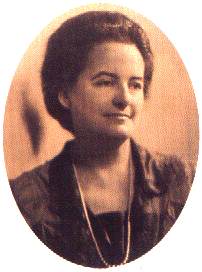
The first writer to make major use of the term ‘New Age’, Alice was born in Manchester and spent most of her life in the USA.  She wrote many books on Theosophical subjects, saying that they were channelled from a Tibetan master source, Djwal Kuhl, in which she downplayed traditional devotional, inward gazing, spiritual practice in favour of service to humankind.  She predicted  that “the day is dawning when all religions will be regarded as emanating from one great spiritual source” and believed in a hierarchy of Master souls guiding our evolution.  Her books are classics of modern esoteric mysticism, they include ‘Initiation, Human and Solar’, ‘A Treatise on Cosmic Fire’ and ‘Discipleship in the New Age’.  She gave the world the much used and loved Great Invocation:

“From the point of Light within the Mind of God
Let light stream forth into the minds of men.
Let Light descend on Earth.

From the point of Love within the Heart of God
Let love stream forth into the hearts of men.
May Christ* return to Earth.

From the centre where the Will of God is known
Let purpose guide the little wills of men –
The purpose which the Masters know and serve.

From the centre which we call the race of men
Let the Plan of Love and Light work out
And may it seal the door where evil dwells.

Let Light and Love and Power restore the Plan on Earth.”

*Many religions believe in a World Teacher, a “Coming One”, knowing him under such names as the Lord Maitreya, the Imam Mahdi, the Kalki Avatar and the Bodhisattva. These terms are sometimes used in versions of the Great Invocation for people of specific faiths.

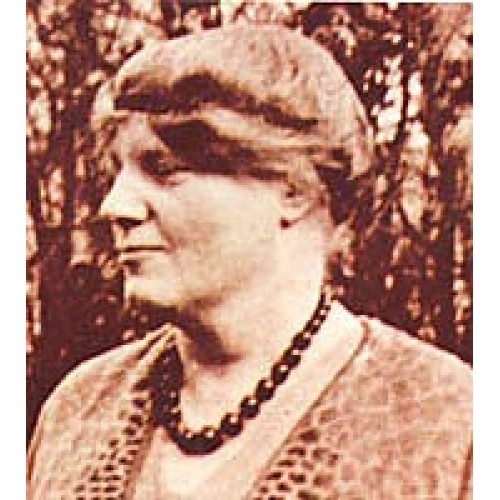
DION FORTUNE  1890-1946 Occultist, artist, psychologist and mystic, Dion was huge influence in the revival of the mystic arts in Britain.  She was born Mary Violet Firth in Llandudno, north Wales, joined the Theosophical movement and the Order of the Golden Dawn but was frustrated by their efforts so set up the Community (then Society) of the Inner Light, which still operates.  The Cosmic Doctrine is one of her famous written works.  During the second world war she insisted on remaining in blitz London, organising meditation groups to resist the attackers from the spiritual plane.
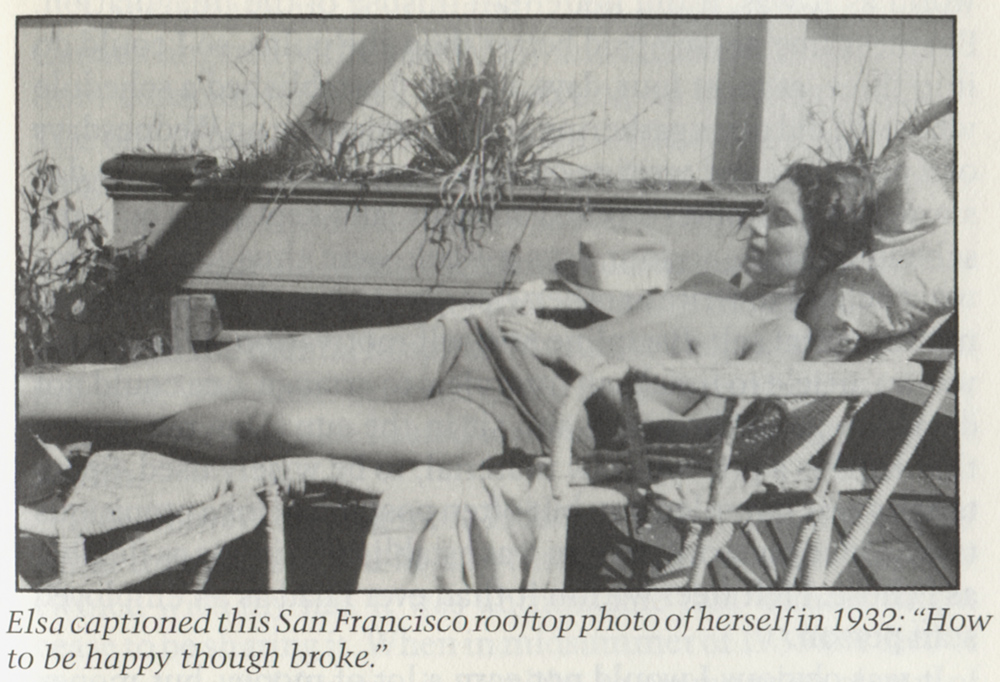
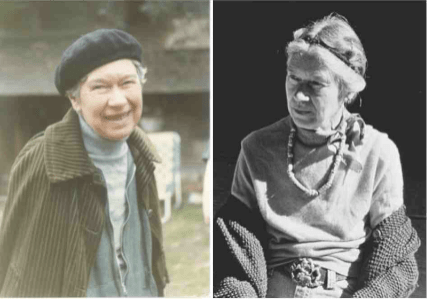
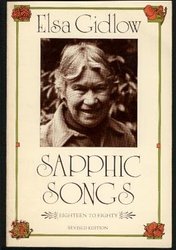
 ELSA GIDLOW 1898-1986 Born in Hull, Yorkshire, Elsa went on to live in Canada and the USA.  Her writing circle in 1918 created the first gay magazine in North America… Les Mouches Fantastiques.  From 1954 she lived in California. naming her ranch Druid Heights.  Among her companions there was philisopher Alan Watts, with whom she found the Society for Comparative Philiosophy, and her friends included Maya Angelou, James Broughton, Allen Ginsberg, Neil Young and Ram Dass.   She wrote poetry for 70 years, drawing on her own ecstatic experience of sexual passion with her lesbian lovers, and was a pioneer of sexual-spiritual freedom. Woman, so gentle in my armsLoving, you have opened to meFierce, my own dark heartAnd found therein and to me reflectedMy source of light…..Here on this bed, holding youSo human in your need (and knowing mine)Miraculous, the human veil is rent.Lover-beloved, WomanSmall and strong in my armsI know in youThe Goddesss, Mystery, fecund EmptinessFrom which all fullness comesAnd universes flower.””What if we smashed the mirrorsAnd saw our true face?What if we left the Sacred Books to the wormsAnd found our True Mind?What if we burned the wooden Buddhas?Gave the stone Buddhas back to the mountains?Dispersed the gurus with a great laughAnd discovered the path we had always been on?”

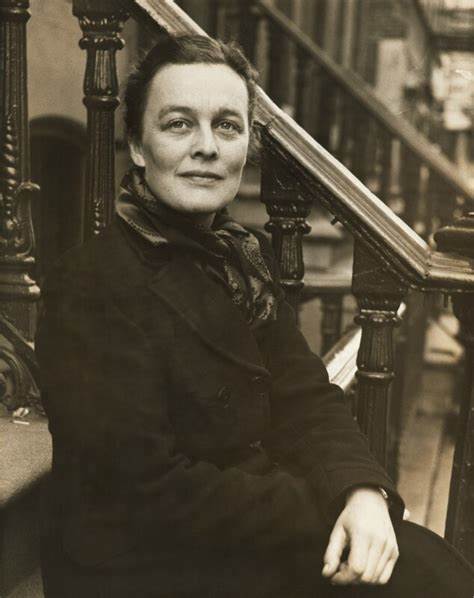
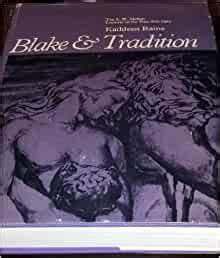
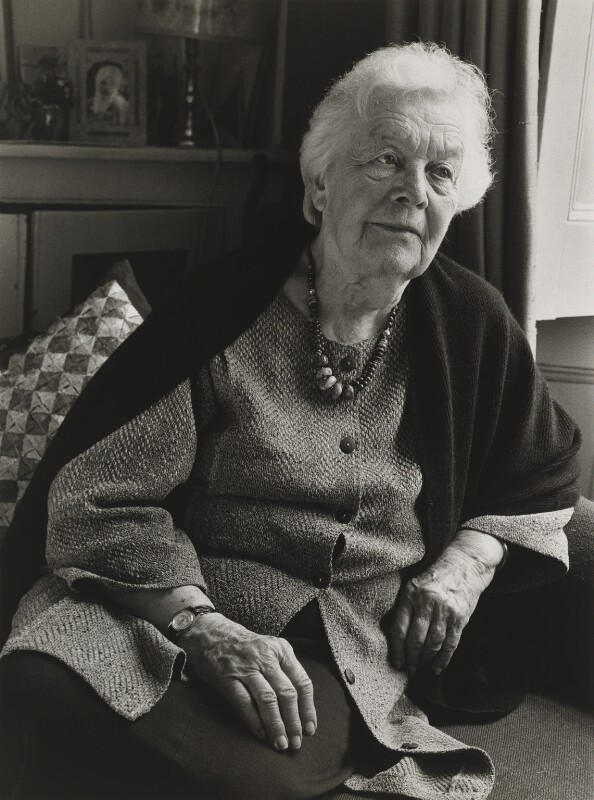
KATHLEEN RAINE 1908-2003  

"Kathleen Raine, who died aged 95, was a poet who believed in the sacred nature of all life, all true art and wisdom, and her own calling. She knew as a small child that poetry was her vocation.

"William Blake was her master, and she shared his belief that "one power alone makes a poet - imagination, the divine vision". As WB Yeats, her other great exemplar, put it, "poetry and religion are the same thing". To this vision she committed not only her poetry and erudition, but her whole life. She stood as a witness to spiritual values in a society that rejected them. 

"When asked how she wished people to remember her, Kathleen Raine said she would rather they didn't. Or that Blake's words be said of her: "That in time of trouble, I kept the divine vision". Better to be a sprat in that "true ocean", she believed, than a big fish in a literary rock pool."     Janet Watts Guardian 2003
There are but two alternatives. The first alternative is that of secular materialism – appealing to the authority of a science whose only reality is the measurable – “nothing is sacred” – and no bounds set to destructive exploitation. The second alternative – embraced in every tradition of wisdom – holds that man and nature alike are a manifestation of immeasurable spirit. If that is so, we are custodians of a world in which, in William Blake’s words, “everything that lives is holy” and our sacred trust.’  Kathleen Raine.

‘None is lost, not one, All are there, all That were or will be, none That is can cease. Dust, angels, particles, Number or song, We are they, and there The soul is gone. For through our sleep the bright River flows on.

Scent of the leaf, Scent of the lily, Scent of the may.

Whence and whither The memory-stirring Untellable, infinite Scent of the leaf? Everywhere nowhere Pole of the world

Immutable, stable, There the spindle Leaps in its circuit.

There sits the goddess Mother of number Duration and multitude. Setting her seal Upon all that grows. Scent of the rose.’

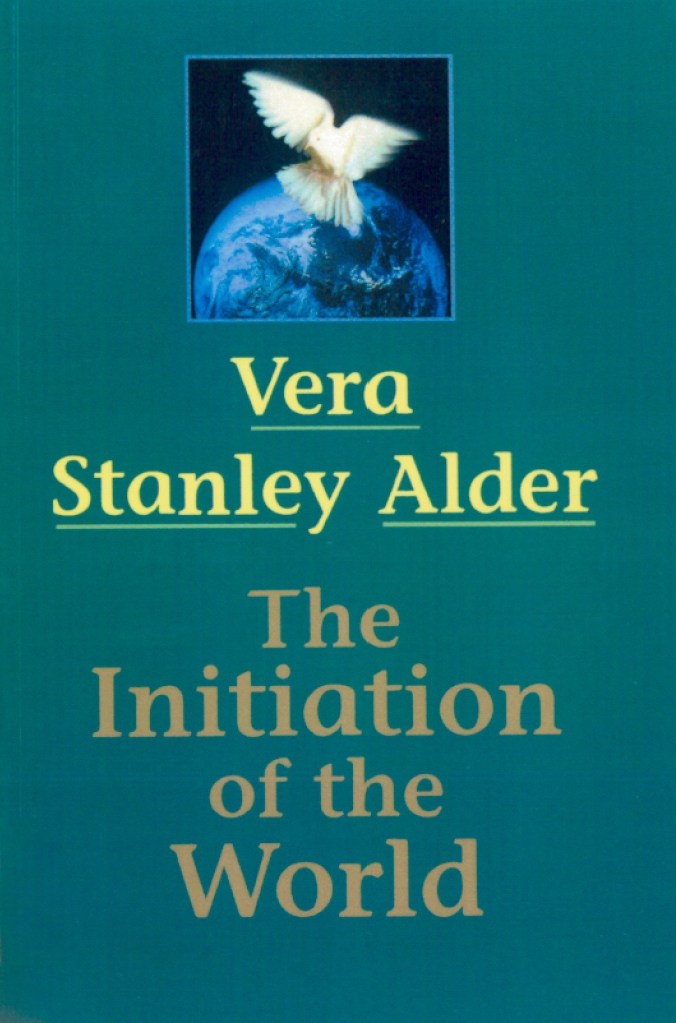
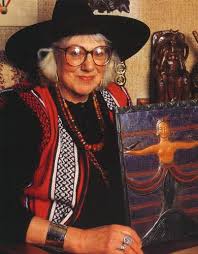
VERA STANLEY ALDER 1894-1984

“Vera Stanley Alder was a successful portrait painter who began to explore into the meaning of life and researched into what is known as ‘The Ancient Wisdom.’ This she defined as ‘the vast body of information dealing with the meaning and purpose of man himself and the constitution and evolution of the whole universe.’ She saw her task as one of simplifying and summarising this information in order for it to be more accessible.” (albion.org.uk) In her 1979 memoir she warns the spiritual quester ‘only through the resonance of his own integrity can he follow the golden thread of Truth to its ultimate fulfilment – and this is a hard but glorious pilgrimage.’

“This century has seen world war for the first time. It has seen a world civilisation threatened with self-destruction, not only through war but through the exploitation of all the kingdoms in nature. It has also seen the beginnings of international alignment and collaboration.

Let us avoid being misled by the apparent irresponsibility of the crowd with its absorption in crime films, dog racing and gambling, and its immorality and apathy! This side of human nature has always existed.

“What then is missing? An ideology which would produce full harmony, co-operation and growth in alignment with the laws and economy of nature!

“The age-old metaphysical conceptions of the Divine Plan for mankind shows us the story of the human spirit learning through a long series of incarnations upon earth all those lessons which will finally give him sovereignty over all the forces of growth, and knowledge as to how to work in with the pattern of creation – as a Group.

“World Unity is the goal towards which evolution is moving. When we can see the pattern of life as a whole, and understand how the spirit of give-and-take and of sharing is as necessary in the greater World-Body as it is between the cells of our own bodies, then we will unfailingly give our help in the right direction, and not be led into being anti-this or anti-that, or into harbouring destructive criticism against others – or even against ourselves. World progress depends gupon the time which it takes for you and me and all of us to realise our responsibility and do our bit towards bringing it about.”

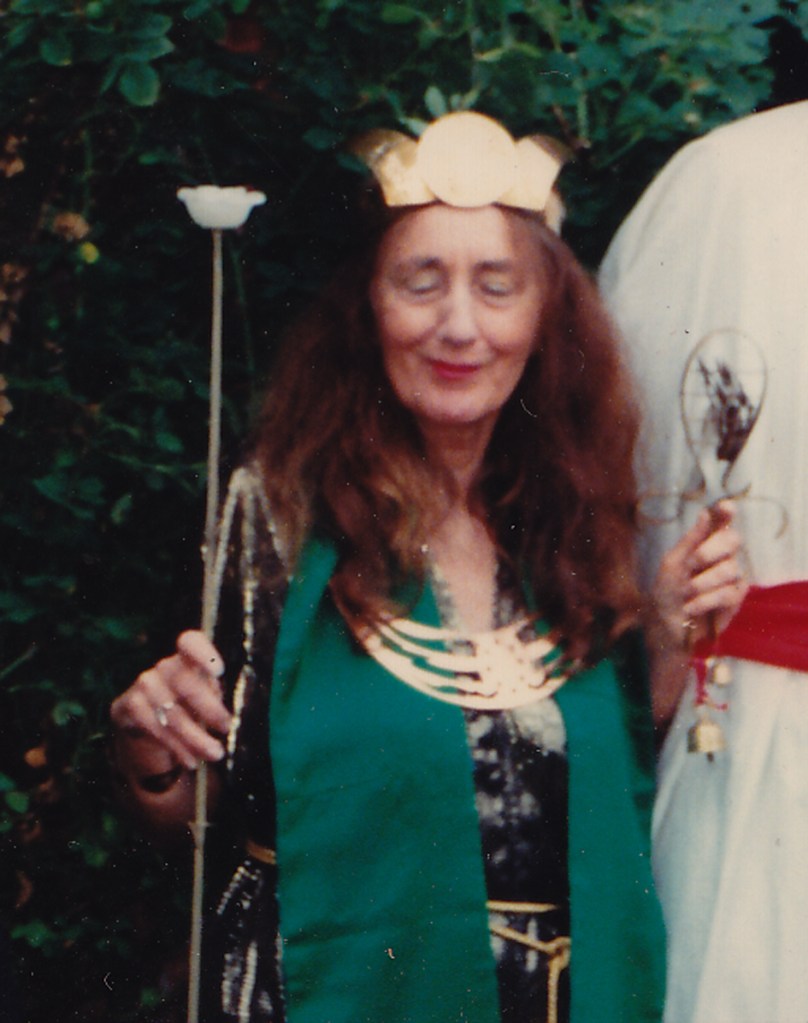
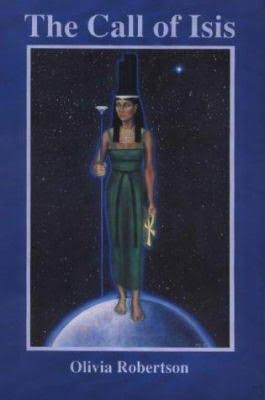
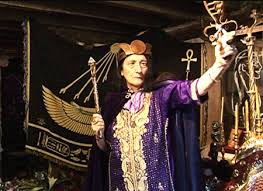
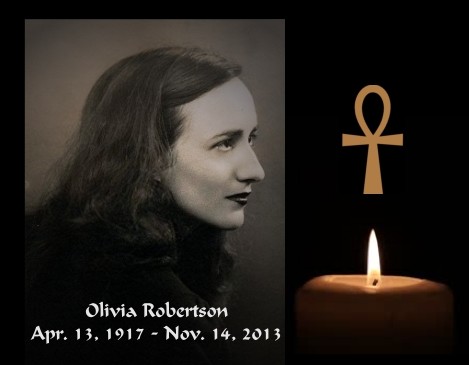
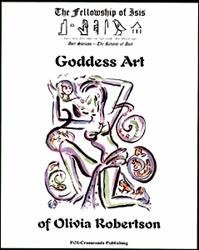
OLIVIA ROBERTSON 1917-2013 Born in London, Olivia was co-founder and archpriestess of the Fellowship of Isis, which she ran from her Huntington Castle in Co. Colway, Ireland.  Immersed in psychic work from an early age, a series of visions beginning in her late 20s convinced her of the femininity of God – she said telling others about this was like “trying to explain colour to someone born blind or a symphony to someone who’s deaf”.  Visions of Egyptian Goddess Isis and Irish Dana “made me realise that patriarchy had taken over religion, once the domain of matriarchs… and patriarchy had led to wars, greed and exploitation of the earth.”   The Fellowship’s castle became a centre of Goddess worship and received many visitors: “Some religions preach poverty, obedience and chastity,” Olivia explained. “We believe in love and beauty and have no truck whatsoever with asceticism…The point about the Fellowship of Isis is that we don’t interfere with anybody’s religion, they have all got something to offer…. The only thing we don’t like is people being boiled alive or burned or having their heads chopped off, that type of thing.”  As high priestess of Isis Olivia travelled to temples around the world and in 1993 she walked alongside Chicago’s Roman Catholic Cardinal in the opening procession of the World Parliament of Religions as representative of neopagan faiths.

DOREEN VALIENTE 1922-1999

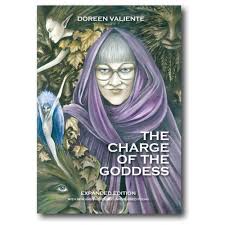
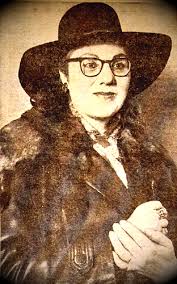
Doreen has been called the ‘Mother of modern Witchcraft’ because of the work whe did to develop Wiccan practice and to spread knowledge of it.  With Gerald Gardner she was key in the revival of paganism following the removal of the 400 year old ban on the craft in the 1950s.  Her work, the Charge of the Goddess, is very influential in magical circles, and deserves to be known by all:

“For I am the Soul of Nature, who giveth life to the universe; from me all things proceed, and unto me must all things return; and before my face, beloved of gods and mortals, thine inmost divine self shall be unfolded in the rapture of infinite joy.

“Let my worship be within the heart that rejoiceth, for behold: all acts of love and pleasure are my rituals. And therefore let there be beauty and strength, power and compassion, honour and humility, mirth and reverence within you.

“And thou who thinkest to seek for me, know thy seeking and yearning shall avail thee not, unless thou know this mystery: that if that which thou seekest thou findest not within thee, thou wilt never find it without thee.”  (From the Charge of the Goddess)

“The initiates of the ancient pagan Mysteries were taught to say ‘I am the child of earth and Starry Heaven and there is no part of me that is not of the Gods”. If we in our own day believe this, then we will not only see it as true of ourselves, but of other people also.” (Speech at Croydon Hall, 1997)

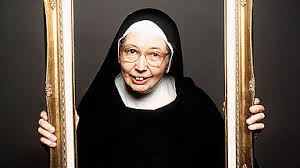
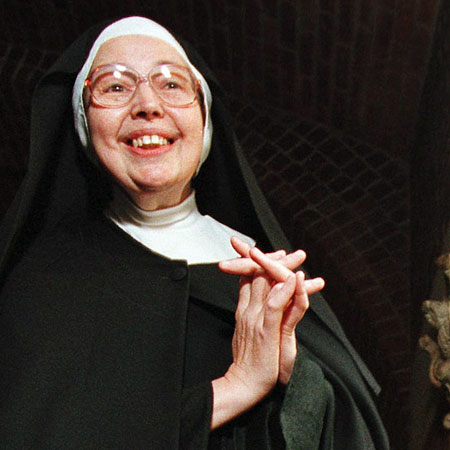
SISTER WENDY BECKETT born 1930

Born in South Africa and raised in Edinburgh, art historian Wendy leads a life of prayer in a Carmelite monastery in Norfolk.  She has written many spiritual works and is well known for her research into the expression of the sacred in art throughout the ages

“If we confuse ‘the sacred’ and ‘the solemn’, we are only allowing God to come to us from one direction.”

“This is the real power of joy, to make us certain that, beneath all grief, the most fundamental of realities is joy itself.”

“God never sends suffering. Never. It is never “God’s will” that we should suffer. God would like us not to suffer. But since the world brings suffering, and since God refuses to use His almighty power and treat us as foolish children, He aligns Himself with us, goes into Auschwitz with us, is devastated by 9/11 with us, and draws us with Him through it all into fulfillment. This is a high price to pay for our human freedom, but it is worth it. To be mere automatons for whom God arranges the world to cause us no suffering would mean we never have a self. We could not make choices.”

“We were created to be fully human – a lifetime effort – and using our minds intelligently and reverently is essential to full humanhood.”

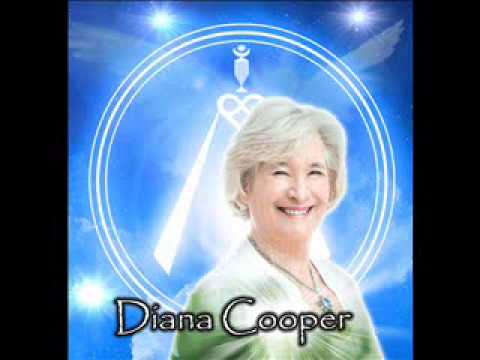
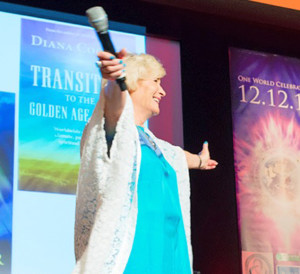
DIANA COOPER born 1940

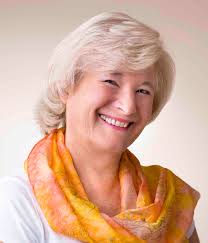
Born in the Himalayas as the first bombs were hitting London, Diana’s mystical life began aged 42 when divorce brought her to rock bottom.  Crying out to the universe for help a tall angel appeared and her journey of bringing to the world awareness of the angelic realms and of ascension began.  She has written 24 books and runs her own school, which includes teachings for children.  She teaches that we are no in a 20 year transition period post 2012, with the new Golden Age due to begin in 2032. http://www.dianacooper.com

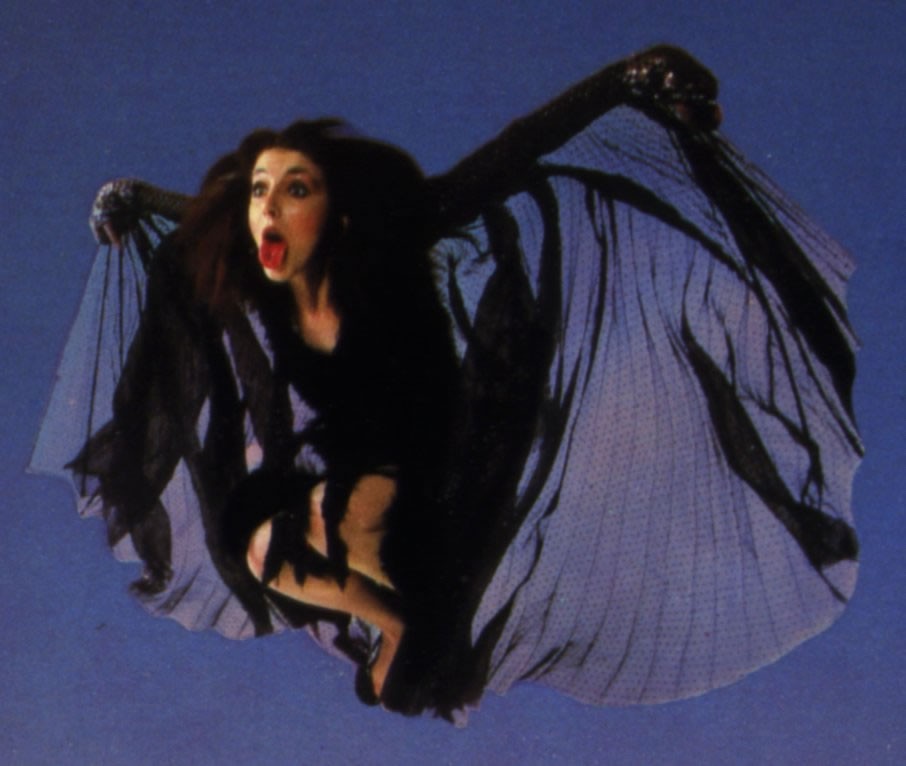
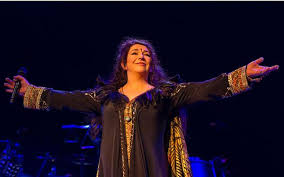
KATE BUSH   born 1958

Kate’s work has all been magical, inspired and full of spirit.  Her 2014 concerts were called ‘Before the Dawn’.  She is a Mother Spirit of Albion.

“We raise our hats to the strange phenomena.
Soul-birds of a feather flock together.
We raise our hats to the hand a-moulding us.
Sure ’nuff, he has the answer,
He has the answer
He has the answer, be-duh-be-duh-be-duh-be-duh…
“Om mani padme,
Om mani padme,
Om mani padme hum”  (Strange Phenomena 1978)

The Ninth Wave B-side of the Hounds of Love album in 1985 tells the story of a young woman drowning at sea who goes on as a ghost to visit her lonely husband, then meet her future self in spirit and experience rebirth into a new human body,

“I am falling/ Like a stone/ Like a storm/ Being born again/ Into the sweet morning fog/I’ll kiss the ground/ I’ll tell my Mother/ I’ll tell my Father/ I’ll tell my loved one/ I’ll tell my Brothers/ How much I love them”.

In Lily (1993) she featured an invocation to the archangels and the voice of her psychic medium friend….

“Oh thou, who givest sustenance to the universe
From whom all things proceed
To whom all things return
Unveil to us the face of the true spiritual sun
Hidden by a disc of golden light
That we may know the truth
And do our whole duty
As we journey to thy sacred feet”

Her 2005 album Aeriel is a symphony of soothing mystical sounds, these lines from Nocturn….

“The stars are caught in our hair
The stars are on our fingers
A veil of diamond dust
Just reach up and touch it
The sky’s above our heads
The sea’s around our legs
In milky, silky water
We swim further and further
We dive down… We dive down

A diamond night, a diamond sea
And a diamond sky…

We dive deeper and deeper
Could be we are here
Could be we are in a dream
It came up on the horizon
Rising and rising
In a sea of honey, a sky of honey
A sea of honey, a sky of honey

[The chorus:]
Look at the light, all the time it’s a changing
Look at the light, climbing up the aerial
Bright, white coming alive jumping off the aerial
All the time it’s a changing, like now…
All the time it’s a changing, like then again…
All the time it’s a changing
And all the dreamers are waking.”

12th Century Love Wisdom

12th century mystic Hadewijch of Antwerp is considered one of the creators of Dutch lyrical poetry. She is also one of the most enlightened mystics of the High Middle Ages. Her weaving together of love and reason reveals a wisdom not yet grasped by modern Western society, a template and understanding that could create a more holistic world.

Note that for Hadewijch Love is feminine. The Christian teaching that God Is Love hides the mystical understanding that the Presence of God-Love is the feminine aspect of the Divine, God as Mother – known in Sanskrit as Shakti… In Judaism as Shekhinah, Islam as Sakina (Rumi said that, “The eternal mystery of Allah’s uncreated Essence is the Divine Feminine.” , and hidden in Christianity as the Holy Spirit (presented in modern times as male or gender neutral, the word used in original biblical texts was feminine).

On Love :

However cheerless the season and little birds, The noble heart must not be sad, But ready to suffer for Love’s sake.

It must know and experience all: Sweetness and cruelty, Joy and pain, All that belongs to the service of Love…

The ways of Love are strange, As those who have followed them well know, For, unexpectedly, She withdraws Her consolation.

He whom Love touches Can enjoy no stability

And he will taste Many a nameless hour.

Sometimes burning and sometimes cold, Sometimes timid and sometimes bold, The whims of Love are manifold.

She reminds us all Of our great debt To Her lofty power Which draws us to Herself alone.

Sometimes gracious and sometimes cruel, Sometimes far and sometimes near He who grasps Her in faithful love Reaches jubilation.

Oh, how Love With one sole act Both strikes and embraces!

Sometimes humble, sometimes haughty, Sometimes hidden and sometimes revealed; To be finally overwhelmed by Love, Great adventures must be risked Before one can reach The place where is tasted The nature of Love.

Sometimes light, sometimes heavy, Sometimes somber and sometimes bright,

In freeing consolation, in stifling anguish, In taking and in giving,

Thus live the spirits Who wander here below, Along the paths of Love.

‘So that the soul should find her being in God, Hadewijch tells us to love Him with the love with which He loves Himself, in order to become one single being with Love, “one single spirit” (I Con 6:17), that is, “To become God with God”.

‘Union does not make the person disappear but, through divine action, instead of being dissimilar, God and the soul are equal in oneness… It is from God Himself that we receive our being, absorbed, but not destroyed, by divine light, as Hadewijch explains with a beautiful image: the soul can be compared to the moon which, receiving all its light from the sun, disappears from the sky at sunrise… The preparation for union involves a stripping of everything else. Hadewijch rarely uses the words naked (bloet) and intact (ongherijnleect) which, with Hadewijch II, are signs of a refusal of forms and images, but she employs much more often the word gheheel: whole, integral, referring rather to a reintegration of the powers—“the searching mind, the thirsting heart, the loving soul”—in the abyss of Love through the elimination of everything that is not Love. In spite of this negative ascetic phase, Hadewijch’s mysticism seems to us to be more a mysticism of plenitude than of void: “I have integrated all that was divided within me”… It consists of a widening of the soul to the dimensions of God. In Letter XXII, she refers to a hymn attributed to Hildebert of Lavardin who sings of the paradoxes of divine nature: “God is above everything without being raised up; below everything without being lowered, in everything without being circumscribed, outside everything and yet wholly comprised.” That is where proud souls are invited to enter and Hadewijch is only too anxious to accept. It is from a Trinitarian point of view that she comments on the plea contained in the Lord’s prayer: that His kingdom may come (within us). We ask the Father to let us participate in His “power and rich essence,” to make us love the Son with the Father and be the Son Himself.’

So we see that Hadewijch was not afraid of a bit of gender bending on the spiritual path. She was also a champion of diversity…

For Hadewijch God is “manifold in His unity and onefold in His multiplicity”.

Quoted from WOMEN MYSTICS IN Medieval Europe by Emilie Zum Brunn and Georgette Epiney-Burgard Translated from the French by Sheila Hughes (1989)

THE GAY PERSECUTION OF THE 520s

1500 years ago in the Byzantine Roman Empire the Emperor Justinian enacted a persecution against gay men that created a climate of fear which has echoed down the centuries to this very day. This pogrom of same sex lovers ended a millennium in which men who love men had been prominent in every aspect of community life, from politics and the military to philosophy, art and religion. Queer love, once hailed for its divine qualities, disappeared into the shadows.

The first attacks on queer people came as Christianity became established in the Roman Empire in the 4th century. Emperor Constantine granted toleration for Christianity in the Edict of Milan in 313, before the end of the century it was the official religion. Historian Eusebius praised Constantine for his suppression the effeminate pagan priests of the Goddess temples. Eusebius described a temple:

where men unworthy of the name forgot the dignity of their sex and propitiated the demon by the their effeminate conduct.”

The Emperor ordered the army sent in, “that this building with its contents should be utterly destroyed.” He went further, Eusebius recording that:

inasmuch as the Egyptians, especially those of Alexandria, had been accustomed to honour their river through a priesthood composed of effeminate men, a further law was passed commanding the extermination of the whole class as vicious, that no one might thenceforward be found tainted with the like impurity.”

The persecution stepped up under Constantine’s successors. Roman senator Firmicus Maternus wrote a polemic called ‘The Error of the Pagan Religions’ in 346 which firmly associated pagan cults with sexual immorality and especially homosexuality. He is particularly fired up about the effeminate priests or holy men, writing that those of a Carthaginian love goddess:

can minister to her only when they have feminised their faces, rubbed smooth their skin, and disgraced their manly sex by donning women’s regalia. In their very temples we see scandalous performances, accompanied by the moaning of the throng: men letting themselves be handled as women, and flaunting with boastful ostentatiousness this ignominy of their impure and unchaste bodies…. Next, being thus divorced from the masculine, they get intoxicated with the music of flutes and invoke the goddess with an unholy spirit so they an ostensibly predict the future to fools.”

A law passed in 342 orders ‘exquisite punishment’ for men who have sex with other men, and The Latin word used – nubit – translates as ‘marries’, but most historians agree the term was used in a wider sense. This prohibition was incorporated into the Theodosian Code of 438 and used by the Emperor Justinian in his virulent attack on gay men in the 520s.

The tide turned violently against paganism in the 380s when an imperial edict against sacrifices inspired what has been called ‘an orgy of destruction and spoliation’ when bands of monks and Christian fanatics destroyed temples and statues across the Empire. Thousands of years in which queers had served the holy life of the community came to an end, our ecstatic-erotic practices that opened the gateways to spiritual communion were wiped out.

More laws against gay sex followed. In 390 a law attacked “the poison of shameful effeminacy”, but focussed its attention on male brothels. In 438 this was expanded to call for all who engaged in gay sex to die “in avenging flames in the sight of the people.” The Code of Justinian, issued in 534, sealed the fate and set a legal climate regarding homosexuality that would influence Europe until the 18th century, and his violent actions in 528 against men who loved men established a climate of fear that would last longer. The Justinian Code expanded an old law from the time of Augustus against adultery to include the death penalty for ‘illicit sex with males’ (stuprum cum masculis).

Byzantine historian John Malalas (c 491-578) recorded the great persecution of men who loved men in the late 520s. Justinian issued laws that could be applied to past crimes, not simply ones that occurred after its creation. Note however that the Church did not support his actions, in fact the first victims were prominent men of the Church itself:

At that time, bishops of diverse provinces were prosecuted for the lustful act of sleeping with males. Among them were the bishops Isaiah of Rhodes, formerly the Nycteparchus of Constantinople, and Alexander of Diospolis in Thrace. After they were brought to Constantinople by an edict of the Emperor they were examined by the prefect of the city, stripped of their rank and punished. After he had suffered severe torture, Isaiah was sent into exile. Alexander, on the other hand, has his male organ cut off, and was place in a litter and exposed as a spectacle to the people. Shortly after, the emperor passed a law that the crime of sex with males should be punished by castration. And at that time many androkoitai (men who slept with men) were seized and their genitals were cut off. And a great fear ensued among those who suffered from the evil desire for males.” John Malalas

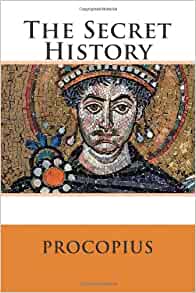
The Emperor’s court historian, Procopius, left us a ‘Secret History’ in which we read that Justinian:

…prohibited sodomy [paiderastein] by law, not examining closely into offences committed subsequently to the law but concerning himself only with those persons who long before had been caught by this malady. And the prosecution of these cases was carried out in reckless fashion, since the penalty was exacted without an accuser, for the word of a single man or boy, and even if it so happened, of a slave compelled against his will to give evidence against his owner, was considered definite proof. Those who were thus convicted had their privates removed and were paraded through the streets.”

Chronicler Theophanes, writing about 800 CE, said that:

Bishops Isaiah of Rhodes and Alexander of Diospolis in Thrace were deposed from office, as having been discovered to be lovers of boys, and were punished frightfully by the emperor, having their male organs cut off and being paraded through the streets….the emperor instituted harsh laws against the licentious and many were punished. And great fear and caution arose.”

Georgius Cedrenus, wrote in 1060 that : “Many citizens and senators and not a few of the high clergy were found guilty, were castrated and exposed naked in the forum and died miserably.”

1500 years ago the persecution of gay males, which began as attacks against the effeminate priests of the pagan religion expanded into a climate of fear for all men who had sex with men. This darkness intensified in the late Middle Ages and continues to blight the lives of all queer people around the world to this very day.

Sealing the deal, Justinian in 529 forbade non-Christians from teaching positions, and closed the ancient schools of Athens. Plato’s Academy, which had opened in 385 BCE, disappeared and a millennium of philosophical and religious qualities of same sex love disappeared from European discourse. The gay massacres and the clampdown on classical education brought the beginning of the medieval world.

SOURCE: Homosexuality and Civilisation, Louis Crompton 2006.

Free Spirits, Queer Souls

In Piscean oceans humanity has swum

unable to see the spiritual sun

above the water:

we’ve followed the Son

but forgotten the Daughter –

and life has become a feast of slaughter.

Victory became an exterior conquest

creating victims and enemies

and a drama that may never cease:

humanity lost track of the fact

that the true victories lie beneath

the surface, within ourselves

the only place true enemies are found.

All paths become One, the time of revelation has begun.

There are no End Times, that tale was spun

by men fearful of losing their place in the Sun,

by men who’d forgotten the Goddess unites all

with love, compassion, poetry and sex,

all elements of life are held in her loving breast.

The body stripped by religion of its holy raiment,

meant that people forgot what being gay meant!

The love of Ganymede and Zeus was seen as abuse,

Eros and Aphrodite were banished from the temple

of the Mother Church

and so began the search

of the same sex lovers to find each other,

so began the time of seeking for the ones who know

it’s not what you reap, it’s what you sow,

it’s not what you plant, it’s what you grow,

it’s not where you go, it’s what you do there,

it’s not whom you love, it’s how you love them.

In medieval times amongst the pagans, the heretics and free spirits

the queer spirit lovers could find themselves again

reflected in each other, remembering the way

that love in the body connects us to heaven –

whatever the preachers say.

In medieval times we were called Free Spirits, antinomian souls

who were burnt for believing that

women were equal to men

that pleasure is holy, not a sin

and that personal salvation directly through Christ

was a truly possible goal.

Inquisitions and Witch Hunters sought us out

unable to stand what we were about.

The end of authority, of rules and taboos

was not something acceptable in their views.

They had the power but we had the love

they lit the fires, but we listened

to the voices coming from above.

Beghards, Beguines and Bogomils,

Lollards, Cathars and Waldensians

killed for preaching that there is no sin for those

who have married with the Christ within,

for those who have recognised that God is the Source of All

surrendered their egos to follow God’s call.

We laughed at the idea of sexual taboos,

at the notion of bread and wine becoming Christ.

We hated the imagery of our Lord on the Cross

we refused to let the Church be our boss.

We were the ones hearing god full of kindness

reassuring us we were safe on this trip of life:

we even forgave our killers for their blindness

for we knew our souls would survive

their attacks against our love, our magic –

theirs were the lives that were truly tragic.

Without love, without pleasure

without liberty within

life becomes a forbidding trial

all joy ringfenced by sin.

Our faiths suppressed we moved to the next

stage of our manifestation:

Theatre called us, as it had Dionysus

through art and drama, the audience enthalled by us,

emotions were shared, wisdom was declared

and the world got a little bit lighter.

Still we were hunted, but our presence prevails

because you can’t destroy our spirit which avails

itself of gaiety even in gloom:

at courts and balls, in molly houses, bars and clubs

from the Renaissance to the time of AIDS

we’ve never stopped dancing even as we face our doom:

for we are the people of the moon

who know how to touch people’s hearts

with our stories and our arts

we know how to help hurting souls

with our healing crafts.

We’ve been put in the stocks

we’ve been hung, imprisoned

chemically castrated and made objects of derision,

but our spirit fights back, we never disappear

the eternal freedom loving spirit of queer.

The Aquarian Age is an Age of Light,

minds opened at last, the Goddess resurrected,

same sex love once more respected

as it was in ancient Celtic lands even more than in Greece –

that civilisation in which love of man for man

was raised to philosophical heights.

For the Celts passionate friendship was society’s glue

same sex love was seen as noble and true.

The Greeks saw man for man love as enlightening the mind and soul

but the Celts pursued another goal, all forms of love honoured, makes a people whole.

Pleasure is a Goddess – the Ancients knew

Pleasure dissolves the boundaries between Me and You.

Pleasure is a doorway to living deeply in the present

a vehicle for healing and revelation

a tool for our own personal salvation:

Pleasure is an Act of Creation.

Love connects all beings in a web of immortality

but love came under the yoke of religion and law:

ringfenced by morals, holy sexworkers named whores,

same-sex love was forbidden, named as immorality –

nature’s natural priests accused of depravity –

where love does not flow, spirit cannot go:

division and fear burst forth when love is met with NO.

Queer love connects the community

and opens the gates to eternity.

Queer Souls are Gatekeepers to the Aquarian Age.

Modern Day Sufis

In the early centuries of Islam, Christians and Zoroastrians in the community would run secret drinking dens, where muslim poets celebrated the love of Allah with colourful imagery of wine and beautiful young men. Hafiz, Abu Niwas, Rumi are among the poets who used intoxication and homoeroticism in their words to conjure the experience of heavenly embrace. Throughout history, acts of celebration, intoxication and revelry have served to feed human souls with the joy of connection, communion and intimacy, the antidote to the attitudes of religious madmen have always railed against such activity. Whenever the world rails and wails, the people in the Alehouse continue to laugh, love and dance.

THE WORLD IS FULL OF WAILING AND WEEPING

BUT IN THE ALEHOUSE PEOPLE ARE STILL DREAMING

THAT JOY AND PLEASURE CAN SAVE US ALL.

When will the wailing cease?

we wonder as we raise our toast

and the world once more respond

TO DIONYSUS’ CALL?

Why are people stuck in judgement?

Why are people stuck in hate?

THE PEOPLE IN THE ALEHOUSE

CAN IMAGINE A DIFFERENT A FATE.

ONLY JOY CAN SAVE THE WORLD

AND ONLY LOVE CAN GIVE BIRTH TO JOY:

Love connects all beings in a web of immortality

but same-sex love was forbidden, named as immorality –

where love does not flow, spirit cannot go:

division and fear burst forth when love is met with NO.

Pleasure is a Goddess – the Ancients knew

Pleasure dissolves the boundaries between Me and You.

GAY CELTS

In the 4th century BCE Greek philosopher Aristotle recorded that the Celtic peoples (“and a few others”) “openly approve of male love”.

SIX CENTURIES LATER, around 200 CE, Greek orator and author Athenaeus recorded the same thing in a play called ‘Savants at Dinner’. He places a selection of noble guests at a symposium at which they quote more than 1200 ancient authors, name a thousand Greek plays and philosophise on many subjects. In Book XIII we read “Altogether, many persons prefer liaisons with males to those with females.” He states that those cities in which male love is “zealously pursued” are rules by good laws (the Greeks had a millennium old tradition of celebrating male lovers who overthrew tyrant rulers and established fair laws). Some of those tyrants “even went as far as to set fire to the wrestling-schools, regarding them as counter-walls to their own citadels.” He lists the Cretans, Chalcidians, Medes, Tuscans, citizens of Massalis (modern Marseilles in France) and the Celts as being enthusiastically approving of male-male liaisons.

Historians have told us that the Classical Greek civilisation approved of homosexual relationships – in certain circumstances only – and that under the Roman Empire gay sex, while common, became a power game in which the passive partner was looked down on. These stances are getting a gradual reinterpretation, but for sure we do have quotations from several Greco-Roman writers expressing their shock at, in comparison to their own cultures, just how queer the goings on in the Celtic North were.

Greek philosopher Posidonius, 1st century BC, traveled into Gaul to investigate the truth of the stories told about the Celtic tribes, and put it very simply: “The Gaulish men prefer to have sex with each other.”

Diodorus Sicilus wrote in the 1st century CE, –

“Although they have good-looking women, they pay very little attention to them, but are really crazy about having sex with men. They are accustomed to sleeping on the ground on animal skins and roll around naked with male bed-mates on both sides. Heedless of their own dignity, they abandon without qualm the bloom of their bodies to others. And the most incredible thing is that they do not find this shameful. When they proposition someone, they consider it dishonourable if he doesn’t accept the offer!”

Sextus Empiricus wrote that among the Germanic people sodomy was “not looked upon as shameful but as a customary thing.”

Bardaisan of Edessa wrote (2nd century CE) that “In the countries of the north — in the lands of the Germans and those of their neighbors, handsome [noble] young men assume the role of wives [women] towards other men, and they celebrate marriage feasts.”

Eusebius of Caesarea, wrote that “Among the Gauls, the young men marry each other (gamountai) with complete freedom. In doing this, they do not incur any reproach or blame, since this is done according to custom amongst them.” (4th century CE)

Aristotle had coined a Greek term – synousia – to describe the ‘passionate friendship’ between Celtic men. The word suggests erotic passion. While there was marriage, friendship seems to have been the basis of loving connections between males, a friendship that was not bound by moral judgements about the body and sexual expression.

For 1000 years Greek civilisation raised the vision of male love to the highest philosophical heights it has yet reached on this planet. Yet these were also the years of rising patriarchal power and homophobia. In contrast to the Greeks, not far away in Canaan the efforts of the Hebrew priests to distinguish their tribe from the others around them produced the prohibitions of male-male sexuality (and on cross-dressing) in the Torah that continue to devastatingly affect the lives of gay people in the world to this very day.

Even in Greece the debate was on. Aristophanes speaks in Plato’s Symposium:

Those who love men and rejoice to lie with, be embraced by men, are also the finest bys and young men, being naturally the most manly. The people who accuse them of shamelessness lie; they do this not from shamelessness but from courage, manliness and virility, embracing what is like them.”

Plato himself, while seeing divine potential in male love, was opposed to the physical expression of that love. Yet even in the first centuries of Christian domination, when many Church Fathers were furiously railing against gay sex and gay people, there were strong voices presenting a different view. Plutarch’s ‘Dialogue on Love’ in the 2nd century makes a strong argument for the approval of love for both males and females – the play reveals how revered gay love still was at this time, and seems to argue that love of women can be brought up to the same level. 150 years later the dialogue ‘Affairs of the Heart’, by the satirist Lucian, is much less excited about the love of women, called “the more awkward cause” in the debate about which love is the best, and reveals that, as the new religious attitudes spread, non-Christian Greeks were holding on to their ancient attitudes.

The Celtic and Germanic people of northern Europe left us no written records, but archaeology has now revealed a prosperous, skilled, artistic culture that spanned the millennia of the Bronze Age. We know of warrior women among the Celts, and of softer, gentle Bardic men as well as fierce and powerful Druids (of both genders). History tells us these ancestors had no issue with male-male love, it was at least as respected and normalised as male-female. The Greeks elevated male love to a heavenly ideal, then ringfenced how that should be expressed (though we shouldn’t assume everyone saw it the same way), and looked on conjugal love as inferior. Perhaps the northern Europeans were more advanced in the sense of accepting that all love is natural and should be allowed its expression.

I conclude with one more quotation then a proposition:

Greek philosopher Ptolemy recorded in the 2nd century that Celtic men:

are without passion towards women and do not care much about the enjoyment of love in the union… with Men, on the other hand, are more excessive and more likely to be jealous. Those influenced in this way do not regard their behavior as immoral and do not become really unmanly and soft because they are not influenced in the passive sense, rather they keep their souls manly, sociable, loyal, family-friendly and well-disposed. ” – Ptolemy, Apotelesmatika 2.3.14

Homophobia is unnatural. It was invented to control people’s minds and souls. Same Sex love is completely natural and was once accepted as such in the very lands that went on to develop a vile, murderous attitude to gay people, then spread this evil around the world. But they never managed to get rid of us, and after long dark centuries of persecution we are slowly finding our way again, and finding out who we are.

The ancient people of northern Europe approved of same sex relationships.

Every gay European deserves to know this history. Let’s make sure they find out.

Gays and the Weather

Why do some Christians blame natural weather disasters on gay people?

This article gives a history of this 1500 year old habit, intended to amuse as much as horrify.

I then demonstrate why they are actually correct in their assumption that we affect the weather, but not in their interpretation of how. Yes you just read that.

THE BLAME-THE-GAYS GAME

The first recorded laws regarding same-sex liaisons that made the association between gay sex and natural disasters were enacted by the Roman Christian Emperor of Byzantian Rome Justinian in 534 CE. This law claimed that Jewish people and people who had sex with others of the same gender were undermining the very foundations of Roman society. This view was to darken European minds for one and a half millennia – and the great irony is that in fact it was a long series of same sex loving emperors who had brought the Empire to the point of its greatest expansion and established the ‘Pax Romana’ across the Meditteranean world and as far north as Britain, which enabled the Empire to thrive for centuries.

Justinian’s law code blamed same sex relations for ‘famines, earthquakes and pestilence.’ The punishment for the crime was death. But Justinian was Emperor of the eastern half of the Empire, the Roman civilisation in the west had already collapsed. Yet it was in the west that the law would reappear with a vengeance nearly a millennium later, and in the east it had little effect on the commonality of same sex activities. During the first millennium the Church authorities focussed their efforts on prohibiting homosexuality among their own clergy and monastics. It was from the 14th century that efforts to control the sex life of the general population were undertaken, via the Inquisition and laws enacted by states. (The Council of London in 1102 wanted to issue an edict against sodomy but Archbishop Anselm halted it. He stated that “This sin has hitherto been so public that hardly anyone is embarrassed by it.”)

The reference to bad weather appears again in law codes issued in the region of Castile, Spain, in 1265 (the Siete Partidas) and by the kings of Medina del Campo in 1497. The latter rails against this ‘nefarious crime against the natural order‘, which it also calls ‘unworthy of naming, destroyer of the natural order, punished by divine justice; through which nobility is lost and the heart becomes cowardly… abhorrence in the eyes of God‘, who is angered so much ‘as to deliver unto humankind pestilence and other torments on earth.’ They just cannot help themselves: ‘from this sin is born shame and insult toward the people and lands that consent to it; and it is deserving of greater punishments that can be given…’

From ancient times and throughout the medieval and early modern the phenomenon of gay sex causing natural disasters was considered to have begun with the Great Flood. This association was written down in the Holy Roman Empire during the reign of Charlemagne at the Council of Paris in 829, at which a Canon was published that declared:

‘Among all the other sins which the human race fatally committed at the beginning of creation, it is believed that, provoked to wrath especially by this sin (as certain teachers have maintained), [God] said: “I repent making man on the earth”. Therefore on this account, he utterly destroyed by a cataclysm [the Flood] the whole human race except for eight souls.

This belief fuelled various periods of persecution such as in the Netherlands in the 1730s when the country was threatened by rising sea levels. Sodom’s Sin and Punishment by Leonard Beel ascribed divine wrath at sodomy as the cause of an earthquake in 1692, and the loss of the town of Stavoren to the sea in 1657. In Portugal in 1446 during the reign of Afonso V an ordinance prescribed burning for sodomy with the justification that because of it “God set the Flood upon the earth.”

Let’s jump to the late 20th/early 21st centuries. We all know that hysterical accusations about gay people’s very existence setting off natural weather disasters still carries right on, even today in our apparently rational, educated, science based civilisation.

In May 1978 anti-gay campaigner Anita Bryant blamed gay behaviour for a drought affecting California. Despite her calling us ‘human garbage’ the weather gods clearly saw it differently, because one day after Harvey Milk became the first openly gay man elected to the San Franscisco City Supervisor office, abundant rains arrived.

In 1998 televangelist Pat Robertson warned that flying rainbow flags on city lampposts during Disney Gay Day events would ‘bring about terrorist bombs… earthquakes, tornadoes, and possibly a meteor.’ He was already blaming-the-gays for the East African famines in the 1970s.

Hurricane Katrina, which killed 1300 people in 2005, was declared by religious leader Maurice Mills to be God’s revenge for Gay Pride. “The media failed to report that the hurricane occurred just two days prior to the annual homosexual event called the Southern Decadence festival, which the previous year had attracted an estimated 125,000 people,” said Mr Mills… “Surely this is a warning to nations where such wickedness is increasingly promoted and practised.” Reported in the Belfast Telegraph.

Other hurricane disasters also bearing our stamp apparently included Andrew in 1992, Bonnie 1998, Isaac and Sandy in 2012. Of course we got blamed for the Japanese tsunami of 2011 too. (‘Jacobs: Blame Gays for Tsunami’ The Advocate.)

‘Kill the Gays’ pastor Kevin Swanson said in 2017 that the natural disasters hitting the USA were God’s judgements for turning ‘homosexuals into heroes.’

Judaism is not immune to this tendency…

Right-wing rabbi Noson Leiter of Torah Jews for Decency described Hurricane Sandy as ‘divine justice’ for the 2011 legalization of marriage for same-sex couples in the state of New York. He also claimed that ‘the Great Flood in the time of Noah was … triggered by the recognition of same-gender marriages.’

This kind of thing does not affect only the American mind:

Church ministers at a Climate Change conference at the University of the South Pacific in 2010 argued that climate chaos was attributable to homosexuals, giving the academics something to ponder.

In the UK a town councillor of the UKIP party blamed 2013-14’s storms and floods on the legalisation of gay marriage, blaming David Cameron: ‘It is his fault that large swathes of the nation have been afflicted by storms and floods.’ An Australian Christian group at the same time was blaming gay marriage for bushfires.

In India, 2018, just days after the Supreme Court decriminalised homosexuality, a Tamil Nadu-based pastor in a court complex raised slogans against the landmark judgment, claiming that same-sex marriage would lead to natural calamities

THE ROLE OF GAY PEOPLE IN TRADITIONAL TRIBAL CULTURES

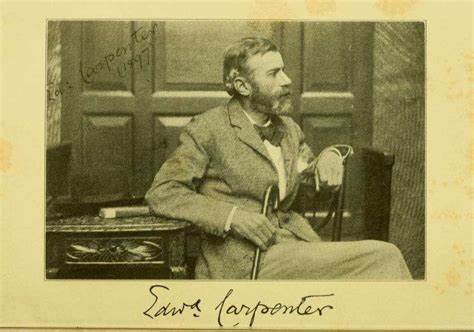
The first book published about the ritual roles undertaken by same sex loving and genderfluid people in ancient and modern cultures which kept a connection to the past was by English philosopher Edward Carpenter. ‘Intermediate Types Among Primitive Peoples’ in 1914.

He identifies a historical channelling of masculine homosexual energies into the military, giving examples of the Dorian Greeks and Japanese Samurai, and of feminine gay people ‘into the precincts of the Temples and the services (often sexual) of Religion – which, of course in primitive days, meant not only the religious life in our sense, but the dedication to such things as Magic, learning, poetry, music, prophecy, and other occupations not generally favoured by the normal man, the hunter and the warrior. There are also some considerations which go to show that this class of Intermediate did actually tend to develop faculties like divination, clairvoyance, ecstasy, and so forth, which are generally and quite naturally associated with religion.’

Carpenter remarked how ‘widespread the connection has been among the primitive peoples and civilisations’ of homosexuality and religion. In his book he writes about the Inuit shamans, the Native American berdache, the same phenomenon in the Pacific Islands, and links them to the priests of Apollo in ancient Greece and the moon goddesses of the Middle East and Europe, the Qedesha holy priests of the Old Testament (called sodomites or, nowadays, male shrine prostitutes in English Bible translations), and the Buddhist Bonzes monks of China and Japan. He quotes 19th century explorer Richard Burton who reported that same sex erotic practices had ‘been adopted by the priestly castes from Mesopotamia to Peru.’

It took a while before more gay writing on this subject appeared, and it’s taking even longer for queer people to have much awareness of this huge part of our collective history. ‘Witchcraft and the Gay Counter Culture’ Arthur Evans is a historic and inspired paean to our past in which he aspires to ‘…to regaining our ancient historical roles as medicine people, healers, prophets, shamans and sorcerers. We look forward to an endless and fathomless process of coming out – as gay people, as animals, as humans, as mysterious and powerful spirits that move through the life cycle of the cosmos….. Like butterflies we are emerging from the shells of our past restricted existence. We are re-discovering the ancient magic that was once the birth right of all human beings.’

Judith Grahn in Another Mother Tongue (1984) wrote that ‘The tribal attitude said, and continues to say, that Gay people are especially empowered because we are able to identify with both sexes and can see into more than one world at once, having the capacity to see from more than one point of view at a time.’

Blossom of Bone by Randy P Connor (1993) is the most thorough study of this subject. The book sets out to reclaim ‘the ancient link between homoeroticism, gender-variance and the sacred’. In Hermaphrodeities (2002) Raven Kaldera plainly states ‘Transgendered people have long been robbed of their own spiritual history, not knowing that there were once times and places where ours was considered a spiritual path in and of itself… We are all sacred and it is time that the world knew it.Thomas Prower more recently took a world tour of this priestcraft aspect of queer history in 2018.

THAT’S ENOUGH HISTORIANS NOW!

HERE’S THE JEWEL IN THIS MYSTERIOUS CROWN

A MODERN DAY SHAMANIC VOICE SPEAKS:

‘The words gay and lesbian do not exist in the village, but there is the word gatekeeper. Gatekeepers are people who live a life at the edge between the worlds – the world of the village and the world of spirit.

‘Most people in the West define themselves and others by sexual orientation. This way of looking at gatekeepers will kill the spirit of the gatekeeper. Gatekeepers in the village are able to do their job simply because of strong spiritual connection, and also their ability to direct their sexual energy not to other people but to spirit.

‘…there are two different kinds of gatekeeper.

‘The first group has the ability to guard a limited number of gates to the other world, specifically,those that correspond to the Dagara cosmology – water, earth, fire, minerals, and nature – because they vibrate the energies of those gates.

‘The second group of gatekeepers… has the responsibility of overseeing all the gates. They are in contact not only with the elemental gates but also with many others.’

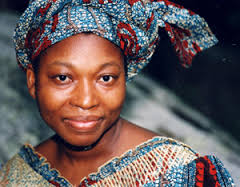
Sobonfu Some

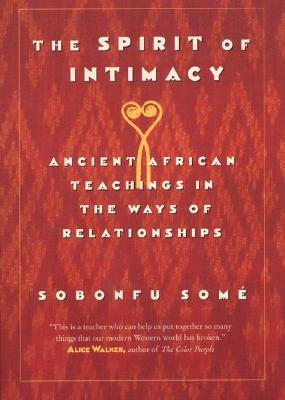
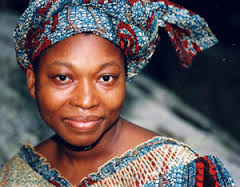
These are the words of Sobonfu Some of the Dagara Tribe of west Africa, who have never lost their memory of the original, sacred roles of genderfluid people and homo-erotic love, recorded in her book The Spirit of Intimacy (2000).

Sobonfu tells us:

Gatekeepers hold keys to other dimensions. They maintain a certain alignment between the spirit world and the world of the village. Without them, the gates to the other world would be shut.

On the other side of these gates lies the spirit world or other dimensions. Gatekeepers are in constant communication with beings who live there, who have the ability to teach us how to deal with ritual’.

Turning back 3000 years to an early Zoroastrian text we perhaps find a turning point recorded at which same-sex love started to be viewed as suspicious because of its magical associations with nature’s spirits, and thus the beginning of the loss of this wisdom in the western world.

The Vendidad is an early Zoroastrian text, dating back to around 800 BCE, that records conversations between the prophet and God, Ahura Mazda. It compares queer people with faery beings – Daeva is also often translated as demons, but note that, unlike in the dualistic minded west, in India devas were never split into good and evil categories. The text goes….

“Ahura Mazda answered: ‘The man that lies with mankind as man lies with womankind, or as woman lies with mankind, is the man that is a Daeva; this one is the man that is a worshipper of the Daevas, that is a male paramour of the Daevas, that is a female paramour of the Daevas, that is a wife to the Daeva; this is the man that is as bad as a Daeva, that is in his whole being a Daeva; this is the man that is a Daeva before he dies, and becomes one of the unseen Daevas after death: so is he, whether he has lain with mankind as mankind, or as womankind.”

— Avesta, Vendidad, Fargard 8. Funerals and purification, unlawful sex, Section V (32) Unlawful lusts.

read more on this click here

MYTHOLOGICAL DEPICTIONS OF THE ELEMENTAL FORCES

When we look at the mythologies of the world there are of course many deities associated and involved with natural forces, and they are often queer. There are gods of thunder and rain, goddesses of the sun as well as gods, goddesses of the earth. Here i focus on just one past culture.

In ancient Greece the Sun’s fire was associated with the handsome Apollo, the most popular god of the culture. He was well known for his erotic dalliances with men, including the Macedonian Prince Hyakinthos. His relationship with Thracian singer Thamyris was said to be the first man on man relationship in history. Apollo also had a thing going with Hymen, the God of Marriage. Gay marriage is totally not a new thing.

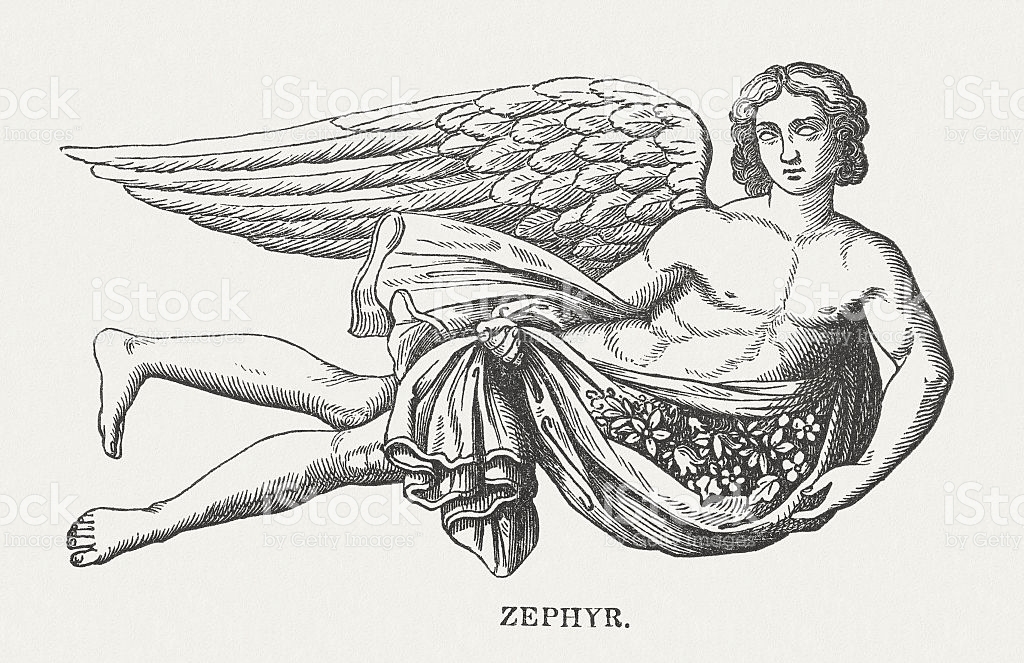
The beautiful Hyakinthos met his death through a discus blown by an air god – Zephyrus of the west, one of the four seasonal Wind Gods. Zephyrus was depicted as a handsome, winged youth, and often appears in Greco-Roman mosaics carrying a basket of unripe fruit.

Aphrodite, the Goddess of Love, was born from the Ocean. She emerged from the sea-foam after the genitals of Uranus were castrated and thrown into the water. She became the Goddess of all things loving and sensual and appears in hermaphrodite version and as patron of same sex love (Aphrodite Urania) as well as procreative love (Dionea).

Poseidon, the God of the sea, was said in Greek poet Pindar’s First Olympian Ode to have shared ‘Aphrodite’s sweet gifts’ with Pelops, the king of Pisa. The king also got to visit Olympus and train to drive the divine chariot.

The Earth Goddess was known as Gaia. She was worshipped as part of the cult of Demeter and associated with Rhea, the Greek name for the oldest Mother Goddess who was known as Cybele in her most ancient shrines in Anatolia, and who became in 200 BC the Magna Mater of the Roman Empire. Cybele’s priests were the queer, loud and flamboyant Gallae, hated by Christians, but loved by the people because of the wild, frenzied celebratory rituals they brought to the whole Empire as they travelled around with the armies.

CONCLUSION

Some religious folk have been blaming-the-gays for natural weather disasters for 1500 years. They can not get over their obsession that we have something to do with balance and nature.

Before those accusations started, the cultures that they sprang from once associated same sex relationship with the gods, with nature, with the elemental forces of the climate, as have other traditional people around the planet.

Today some shamanic peoples remember things the west has long forgotten.

Sobonfu tells us gay people can talk to the spirit worlds, that some of us control the elemental gates.

The Greek myths tell us the elemental spirits were once considered themselves to be very queer indeed.

Sobonfu, and a global history most queer people have not paid attention to yet, tell us that what we limit to a sexual or gender ‘identity’ is in fact a spiritual force, a soul energy in the matrix of life, that is needed to bring balance in society and the world.

Perhaps queer people are response-able to create balance in the world. Souls that contain a balance of masculine and feminine spirit which opens up life experiences that are unavailable to those stuck in binary extremes. Those who have studied us with their rational, scientific minds, or judged us with their religious prejudice, have never been able to see this aspect of what we are in the world, because they do not have it in themselves.

Perhaps we are the ones who keep insular human minds connected to the Whole, through providing experiences that remind people of the mystery game of life and the magical reality we are deeply involved in. With our natural, ecstatic, spirit-lifting, life-balancing presence suppressed, life on earth has spun out of control.

It is absolutely not gay marriage or gay pride that creates climate chaos.

IT IS THE REJECTION AND SUPPRESSION OF GAY LOVE,

AND OF GENDER-FLUID PEOPLE.

HUMANS ARE NOT SEPARATE FROM NATURE

BUT CLOSED HEARTS ARE.

LOVE CONNECTS HUMANITY TO THE INTERCONNECTED WEB OF LIFE. IT IS THROUGH LOVE THAT WE KNOW, THROUGH FEELING, WHERE WE BELONG.

BUT ALL KINDS OF LOVE ARE NEEDED IN THE GRAND SCHEME OF LIFE.

ALL KINDS OF LOVE MUST BE ALLOWED, RESPECTED AND REJOICED IN FOR LOVE TO BRING OUR COLLECTIVE HUMAN CONSCIOUSNESS BACK INTO BALANCE WITH THE NATURAL WORLD.

People believe their thoughts exist only inside their heads. They don’t – they transmit their chaos, their doubt, fear and negativity into nature’s energy fields. Energy follows thought. Empowered heart centred people emit strong good thoughts. The world needs a lot of them.

THERE IS NOTHING NATURAL ABOUT HOMOPHOBIA AND TRANSPHOBIA.

THE MOST UNNATURAL THING HUMANITY CAN DO

IS TO STOP EACH OTHER LOVING WHOM WE LOVE

TO STOP LOVE FLOWING WHERE IT WANTS TO FLOW.

THE CLIMATE IS IN CHAOS BECAUSE THE CHAOTIC HUMAN MIND IS RUNNING THE SHOW

ONLY HUMAN HEARTS FILLED WITH LOVE AND COMPASSION FOR ALL BEINGS

CAN RESTORE THE DIVINE PLAN FOR OUR SPECIES AND THE EARTH.

THE CLIMATE WILL FIND A NEW BALANCE

ONLY WHEN HUMANITY REACHES THE PLACE OF LOVE.

Someday, after mastering the winds, the waves, the tides and gravity, we shall harness for God the energies of love, and then, for a second time in the history of the world, man will have discovered fire.” Teilhard de Chardin.

The HUMAN

What we are is not a body

What we are is not a mind

What we are is pure awareness:

conscious potential with bliss built in.

Everyone is female and male on the inside.

The exterior is just a shell,

the inner world is where we experience reality

and the inner marriage of Shakti and Shiva –

is the key to a life lived well.

It’s not where you go, it’s what you do there…

the world is split between those

who have learnt that sharing connection, love and joy is the goal

and those who can’t see that yet, who remain in their heads, issues, problems;

between those who see diversity and celebration,

and those who can only see difference and strangeness:

The latter group are in the majority, but the former have a lot more fun.

Church and State spent 1000 years

perfecting the art of mind control,

then brought us up in the 20th century

to do what we were told.

We were told life has no meaning

we were told to go to work

we’re told to be afraid, destruction lurks at every turn:

it seems we have been played

and now our planet burns.

Our minds are as polluted

as the rivers, air, land and seas.

A world of disconnect and dysfunction

created by just one species.

Like the mushrooms, humans are linked

by subterranean mitochondria:

our Underworld is our collective subconscious

an Ocean of hopes and dreams,

and like the magic shroom we have the gift within us

to open the doors to other worlds

and see that life is so much more interconnected

than on the outside it often seems.

For, what we are is not a body

What we are is not a mind

What we are is pure awareness:

conscious potential with bliss built in.

Warriors of the New Age

Warriors of the New Age

here to turn the collective page

here to birth a new paradigm.

Finding Oneness within ourselves

and together in collective fire –

to bring humanity home is the goal to which we aspire.

The external world dominates modern lives

it’s only on the outside we are encouraged to thrive:

but the inner being is the source of real wealth

the inner search the way to true health.

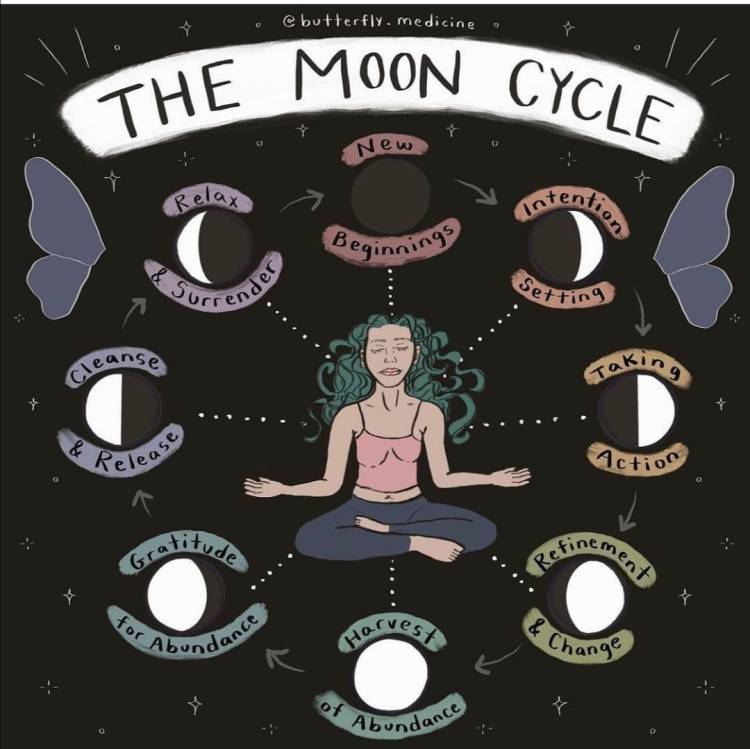
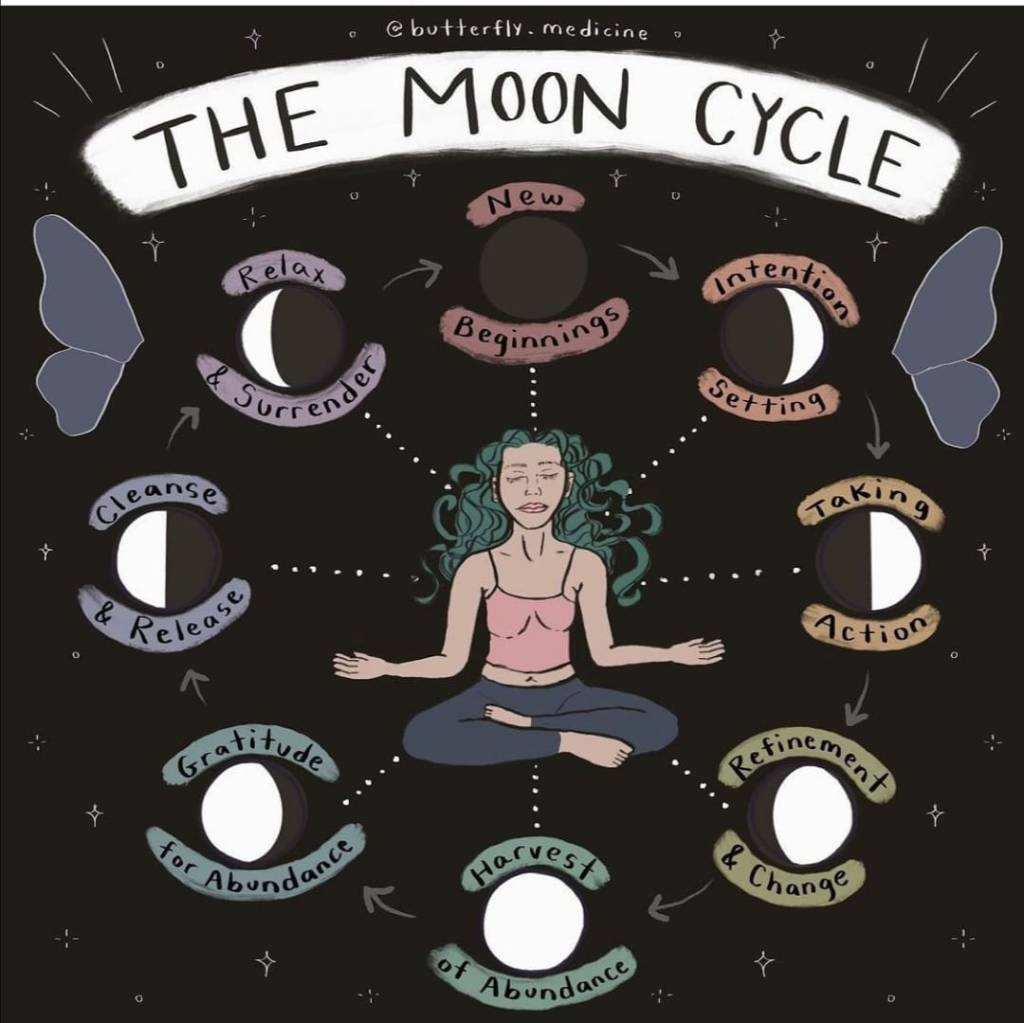
As the moon waxes from new to full

and wanes back down to darkness

our souls expand, contract, fill up and release

the watery waves of emotion never cease.

Our minds are steering the way through the waves

but the body’s wisdom is greater:

the physical form has it’s own reality

listening to it can restore our sanity.

The mind creates, every thought has a vibration

that attracts or repels, intakes or expels;

the mind has no answers, those exist in the soul,

mind analyses, and should seek for the goal

of it’s own annihilation as we come to find

a much older Self within, deeper than the mind,

the place of Oneness with All That Is –

the entrance to Bliss and the end of this global,

damnable journey of duality and suffering.

Salvation through pain became a religious obsession

at the same time as the Bearers of Joy were struck down:

the ecstatic priests/priestesses of the pagan gods,

who kept Life connected to worlds above and below,

who celebrated the body as the holy vessel,

born to bear light, ecstasy, love and joy –

the Holy Ones became the Queer and Feared –

our sacred sexuality turned into the devil’s sin

as greedy males came up with a plan

to overrun the earth, make her a resource,

and to dominate the souls of every woman and man

by dividing the world into sacred and profane

religion took over with its dark, bloodthirsty game.

Life is a Unity, there is no exclusion

in the Divine Kingdom here on Earth.

All is interdependent, dancing in Oneness

the only species seeing it differently – is us.

Warriors of the New Age are turning the page

embodying a paradigm where the body is holy,

sexuality is divine, ecstatic behaviours release the soul,

bringing humanity home – quickly – is our goal.

We see no differences to fear, only diversity, joyous and queer

life in all its riches, life’s rebirth comes near.

Oneness embodied in group dynamic rapidly changes the game.

Rainbow Warrior Spirits are born everywhere –

each generation brings a new brood;

forerunners of a divine multitude,

preparing for the Aquarian Age –

balancing the heights of technology and science

with the reclaimed wisdom of crone and sage.

Meeting in circles where love is the gateway

to union, light and bliss.

With reverence, rhythm, playfulness and passion

we dance, we sing, we kiss.

Energy flowing in every direction –

the goddess is honoured like this.

Her shakti flows amongst us

and out into the world –

changing vibrations through acts of elation.

Oneness embodied in group dynamic rapidly changes the game.

REACHING FOR OUR GAY ROOTS

excerpts from In The Temple of Father Earth and Mother Sky

In ‘Two Flutes Playing’ by Andrew Ramer

There was a time when the world was poised between the way things are now, and the way that they were then. The ice was gone. Towns and villages were being established. Men and women owned their differences and were still able to communicate with each other. The sacred places of the Mother still functioned, in groves and caves and on the tops of mountains….

the world was changing. The old ways were being forgotten. What made people different from each other was becoming more important than what connected them, and the need for connectors from any of the scouting tribes was becoming less and less honoured…

In those days, the ancient belief in God as Mother was being replaced by an awareness of God’s Father aspects, and women’s sacred powers were being questioned. So too, the old male sense of Earth was being replaced by a belief in female Earth, as a mother without limits. Men in all tribes were taking more and more power onto themselves, beginning to pillage the earth in the process. Now, we were a people known for our ability to contain both male and female energies in one body in a state of perfect balance. And as the distance between female and male continued to grow, it became more and more difficult for people to see us in our wholeness…

The chief of [our] elders at that time was a man named Kuniata. It was he who first dreamed about building a permanent temple and community in that place. In his dream he saw the first courtyard of the temple, and the walls, both inner and outer. It was he who marked out on the dirt the lines that became walls, the lines that became lodgings and healing rooms, the lines that became the inner shrine of the temple, where the men of our tribe gathered to pray, meditate, connect with each other, with the spirits of the ancestors of our tribe, and with the Oneness that connects us all.

They called it ‘Nas-mahay Tal-wah-hahn’ the Temple of Father Earth and Mother Sky. There, our priests were able to teach and share and preserve their ancient wisdom – for our tribe and for all the people. The memory of that first gay temple is still carried in the collective unconscious…. all the temples of our people that followed it were patterned by this first temple, in every part of the Western world, from Africa to Sweden, from Palestine to Spain…

We may think of these people as primitive, but their spiritual culture was as advanced as our material culture is today. They understood both the physical body and the subtle bodies. Through dreams they were able to connect across great distances with other elders of our tribe, just as we do by telephone. Their chosen work was to help the people remember love and loving in a time when humanity was beginning to explore physicality, power, separation and destruction….

In that time people still understood that healing energy and sexual energy are the same. So the raising of sexual energy was taught, the ways to use that energy to awaken healing and awareness in the physical body. Through different access patterns in the body, initiates could be opened up to other states of consciousness and other levels of inner wisdom. In sexual trance they travelled to other realms and met the earth ancestors of our tribe, the gay elders who became their teachers on other planes…

At moon festival and other sacred times, the men of our tribe who did not live in the temple came to be with the priests and novices who did. They came together there, to learn our ancient history, through stories, through music, through dance and through sacred touch. They came to bask in the power we had in our tribes, the power of love that the men and women loving tribes did not have, the power for every single member of our tribe to be the potential partner of every single other member. It was that power, that unity, that nurtured us, empowered us, made us holy and the reflection on Earth of the Greater Oneness that is the source of all that is and ever will be….

But the growing into strength of what we call the patriarchy began to intrude into the workings of that temple, and all the other temples that were built after it, both our temples and all the temples of women everywhere… the priests and leaders of the new gods were taking over people’s lives… in the West and in the East as well… the journey to wisdom through suffering became a global art form.

No longer did humanity move through the world in a sacred way. In turning our focus to the physical world, we as a species created a rift between our physical bodies and our energy bodies. Once, living in a body on the Earth was a source of sacredness. But disconnected from the spiritual energies that come to us through our subtle bodies, people no longer felt sacred all the time. Once, every relationship between two lovers, two men, two women, a woman and a man, was a source of sacredness, a channel to Divine energy. But in that time, humanity turned away from the doorway to sacredness that is love, and began to explore other realms of consciousness.

Over the centuries, as our focus on the physical world grew stronger, our collective ability to sense and move in the non-physical realms grew more restricted. Hoping to prevent a total separation between the two, the priests in our temples began to work in a new and more focussed way. Where they had once helped the people to keep their energies balanced, all that was left to them was to serve the people as conduits for Divine connection. So in rooms once used for all kinds of healing work, in temples all across the ancient world, men we now call sacred prostitutes began to appear…

For thousands and thousands of years, everyone had seen us a people, a people with specific gifts and powers. But in those days, for the first time in human history, others were starting to see our power as coming from our sexuality, and not as coming from our peoplehood and from our inner gifts. For the first time in history, they began to see our work as about sex, and not about consciousness scouting, healing and transformation…

As men and women drew apart, the universe itself was coming to be seen as divided between male and female – with nothing to connect them but the act of sex itself, on a personal and on a cosmic level. For the first time in history our tribe was divided. Those who found it easier to connect with their femaleness had no other role available except for that of serving in the temples; while those who found it easier to connect with their maleness were excluded, forced to join the tribe of all tribes, to marry and focus their love of other men into sexual connection only…

In that time, to echo in their bodies the mutilation that was happening to us as a people, and to echo in their bodies the unbalanced femaleness that was being imposed on them, our sacred priests began to be castrated, to dress in women’s garments, to offer in a fragmented way what little remained of our ancient powers…

… the word in the Bible that is translated as cultic prostitute is a word that means Holy One….

…We are the ones who still carry the knowledge that the body is holy, that sex is holy, that the only way we can heal the air, the water, the land, is by loving our own and each other’s bodes again, by loving the body of the planet we live on… by bringing love back to the places we live in – to our bodies and to the world.

In time, there were temples all around the Great Inner Sea, the Mediterranean, where men of our tribe, cut away from each other and from their own inner balance of genders, lived out the last of our powers, serving the Mother as sacred prostitutes. Alone, yet in holy service, we did what we remembered of our ancient work, in the best ways that we could. We were called Holy Ones. And yet, the holy power we had in those days was but a fragment of the powers we once had. For a thousand years, the last of our priests served in goddess temples. Then, the powers of the male gods and their priesthood grew. Villages became cities, and cities became nations with vast standing armies. Soon, the male gods would became a male God, and even the great temples we served in would be ‘cleansed’ of our presence. Prophets would rail against us. The people would come to hate and fear us. What little remained of our love and power would be branded as unnatural. The sacred groves of our temples would be cut down, our living altars, cut down. The goddesses we served would be debased, their priestesses forced into virginity, then excluded from sacred service all together.

As the patriarchal priesthood took over the world, there was no room for women, for men who were seen as women, no room for joy or pleasure or physical sacraments. But our energy is strong, too strong to be completely denied. And we who are born to draw in Earth and Sky for all the people, who chose to enter our tribe to express something of our inner balance in the world of form, took our ancient powers and transformed them once again. There had always been sacred dances, trance dances, sacred singers and choruses who helped to align and connect and heal the people. This had gone on in every tribe. But in the time when the old ways were being destroyed, when our scouting powers were gone, our shamanic powers gone, it was then that men of our tribe took one of our innate powers, our ancient flute player energies, and redefined them again.

No longer able to connect with each other, no longer able to serve in the temples to retune other men, we tapped into our ancient powers, and invented something new. In ancient Greece, in the service of a new god come from the East, where our people remembered more of our old power, a new god born from the body of his father, and connected to the earth as we had been, in the service of Dionysus, we invented something new out of our ancient powers. In the last of the groves, on the hillsides behind temples, there we created theatre. There, in a sacred way, in costumes and masks, we became goddesses and gods, heroes and heroines. We did this to preserve what is innate and true and holy in us in the best ways we could find. We did this for all the people, to align and connect and heal them. And we carried this gift to all of our people, so that they too, wherever they were, could make use of our sacred powers in the world again. For we are the people who can hold male and female equally in balance in our bodies. And we took that power, that balancing power, and we gave it back to all the people, in a new way. If we could not balance them as healers, if we could not balance them as lovers, we would balance them on stage. The earliest plays were not about ordinary men and women. They were about gods and heroes, because the actors were trained to channel the energies of those gods and heroes from the spirit realms. The last of our priests became writers, directors, stage master shamans, who taught other men of our tribe how to draw in those energies, and how to beam them out to the people who watched them, listened to them. This was as true in the East as in the West, that men of our tribe came together in this way to serve all the people.

This was in the time when women, except for the last of the priestesses and sacred prostitutes, were seen as nothing more than the possessions of their fathers and then husbands. So there were no female performers, and would not be for thousands of years. We, the men of our tribe, we carried that energy out into the world, in the only ways that the patriarchy would allow it. And so it was in that time, that the only way the men of our fragmented tribe could find each other, to do what remained of our sacred work, was in theatres, on stages. Our loving had to be kept secret. Our power had to be kept secret. Even on stage, who we were was a secret. And even in ancient Greece, often thought of as the home of homosexuality, we could only love each other in unequal relationships, where instead of being teacher-partners, one man became the other’s teacher. But still, we did our work, the work we were born to do. We built our theatres, we told the old stories in the best ways that we could, as female and male, with music and dancing, in honor of the god who was himself in balance. And if we were no longer powerful as a people, our work was.

Then as a species, we deepened further into our journey of exploration of physicality. We had no more room for joy, for pleasure. The male God demanded sacrifice and obedience. Even theatre was seen as debasing. Ancient stages were destroyed. The sacredness of our work, of what remained of our work, was once again denied. Our capacity to love was forbidden, considered evil. And this time, many of the men of our people, remembering their inner priesthood, but having forgotten any sense of our tribe, turned away from the ancient body sacraments all together, became celibate, joined new priesthoods—but still continued to teach and heal in the best ways they knew how. Here and there, someone remembered our ancient history, in stories, in fragments. Sometimes all that was remembered was that this god had loved a mortal man, in this or that place, a long, long time ago, be he Zeus or perhaps Jesus. But even those fragments were enough to feed us in the years of forgetting. For we took our last remaining power, we took our hunter energy, and we wandered out into the wilderness of the world, hunting for ourselves, hunting for each other. At times we went so far into the wilderness of plains and cities that we lost sight of who we were and why we were there.

Alone, each one of us thought himself to be the only one. For just as the world forgot, or tried to, that we exist, that we exist in a sacred way, with sacred powers meant to be used for all the people, we ourselves forgot who we are. All over the Western world, we were tortured and burned at the stake, with witches and others who struggled to live and to remember the old healing ways. This part of our history we know, have lived with. And when we met, if we met at all, the only thing left to us was sexual connection. Nameless, faceless, in fear, in shame, in bliss, we met each other, hungering for something of our ancient selves that sex alone could never satisfy, and never will. But some of our ancient wisdom remained in other places. When the people of Europe invaded the Americas, they found a proud and living tradition of men who remembered the balancing ways, men sometimes dressed in women’s garments, men who lived their lives in a sacred way, who were sexual with other men. This was too much for the European terror merchants, who transported their life-negating inquisitions to a world still new to them. And we live in the culture they brought with them. We are a part of that ‘civilization.’ And yet just beneath our asphalt streets, something of the old sacredness of the peoples of this continent remains for us to connect with. No, we did not go away. We could not. In a village, in a province, in a kingdom, in an empire, they could try to exterminate all of us—and in the next generation, their very own bodies would betray them—and give birth to us again, to us and to all the peoples of the scouting tribes. They could take away our history, destroy our sacred places, burn us, look on while disease took away our young men. But we are a part of this planet, woven into and out of its body. And, we will never go away.

The Path of the Moon

The ancients worshipped the sun and the moon –

they knew that life does sing two tunes:

the outer and the inner are two realities

but humanity now only worships the sun

as money, beauty, riches and fame –

status and power the name of the game.

The inner divine is left unknown,

the soul denied, forgotten –

our mental states pathologised,

human connection to spirit circumcised.

The inner search is our way home

it’s on the inside that the goddess is found

if we attune to both sun and the moon

our souls will surely bloom.

During this dark age of science and confusion

humanity has been led into a state of delusion

so cut off in our hearts from the Earth Mother

no longer speaking to animals as sisters and brothers:

the people of the Moon repressed, killed, denied

and the world now run by weavers of lies.

The path of the Moon illuminates the inner journey

that we are here to take in this life:

atoms, quarks and photons mean nothing here –

for the soul life comes down to daily choices

between love and fear

and, to the soul, life’s not linear, controllable and straight

it is cyclical, chaotic and queer.

The path of the Moon reveals there’s meaning in everything

for Creation is in a constant state of communication,

exchange of information and erotic interaction;

streaming frequencies connect like vibrations

whatever the physical locations.

The path of the Moon reveals there’s no end to this voyage we’re on,

through space and time and infinity beyond

and reveals the timelessness that also exists

that’s available everywhere and whose nature is bliss.

Humanity forgot the Goddess

Lost touch with the cycles of Nature

Forgot the sacred power of Queer

Fell into the trap of Fear.

The call to JOY is urgent

to awaken to the game of dark and light

humanity has to transform through love.

The Moon is calling us home.

An Ancient Reference to Gays as Faerie Spirits

There is an ancient religious text from Persia that directly associates men who love men with the magical underworld of demons and faery spirits – the Vendidad of the Zoroastrian faith. Written around the same time as the 5th book of the Jewish Torah, Deuteronomy, which forbids Israelites from cross-dressing, becoming temple sex-workers, or bringing the earnings of female or male sex-workers (the males were known as ‘dogs’) into Jewish temples, the Vendidad basically calls men who sleep with men ‘faeries’.

In Deuteronomy the Hebrews were attempting to clearly define themselves as different to the many other tribes around. The prohibition in Leviticus against men sleeping with men uses the word word ‘toevah’, which has been translated into English as ‘abomination’ but etymologically is related to foreign ritual practices, and very possibly related to the Persian term used in the Vendidad. In the Zoroastrian text men who have sex with men are named ‘daevas’, translated as demons and related to the ‘deva’ spirits of the Indian sub-continent. Devas however are simply magical beings in India, not associated specifically with evil, whereas the Persians over time came to regard them as supernatural entities to be avoided. The oldest Zoroastrian text, the Gathas, calls the daevas ‘gods that are to be rejected’. In the Avesta, they are divinities that promote chaos and disorder, and in later tradition they become personifications of every evil possible.

The Vendidad is an early Zoroastrian text, dating back to around 800 BCE, that records conversations between the prophet and God, Ahura Mazda. One goes….

“Ahura Mazda answered: ‘The man that lies with mankind as man lies with womankind, or as woman lies with mankind, is the man that is a Daeva; this one is the man that is a worshipper of the Daevas, that is a male paramour of the Daevas, that is a female paramour of the Daevas, that is a wife to the Daeva; this is the man that is as bad as a Daeva, that is in his whole being a Daeva; this is the man that is a Daeva before he dies, and becomes one of the unseen Daevas after death: so is he, whether he has lain with mankind as mankind, or as womankind.”

— Avesta, Vendidad, Fargard 8. Funerals and purification, unlawful sex, Section V (32) Unlawful lusts.

From nearly 3000 years ago we have this religious text directly associating gay sex with the underworld of magical spirit beings. At this period, and for another millennium until the rise of Christianity, across southern Europe and the Middle East gender fluidity and homosexual acts were strongly associated with worship of the Goddess. She was known in many forms and by many names, all served by women and gay/transgender priest/esses, and that service could include sexual acts that brought connection to the deity. In fact round the whole world gay/queer beings once served in sacred roles, as shamans, medicine men, priests and sacred sex workers… our power was taken away, as was that of women, by men seeking to dominate and rule over others, to conquer territory and accumulate wealth. This process has now reached its apogee, the world is on the brink of global disaster unless humanity changes the way it lives.

To achieve this women and queers need to be brought to the table as equals to men, and all forms of love respected and honoured.

To achieve this we all need to seek deep within ourselves to find our reconnection to the planet, to the spirit and go beyond ego to our true divine selves.

To achieve this the Gatekeepers are needed.

The journey of Gay Liberation, the gradual emergence and acceptance of LGBTQ+ people around the world, is still in its early stages. Queer people have more to discover about who we are….

SOBONFU SOME, priestess of the Dagara Tribe of western Africa – a tribe that remembers the magical role of what we call queers – said in her book ‘Spirit of Intimacy’:

The words gay and lesbian do not exist in the village, but there is the word gatekeeper. Gatekeepers are people who live a life at the edge between the worlds – the world of the village and the world of spirit…

Gatekeepers in the village are able to do their job simply because of strong spiritual connection, and also their ability to direct their sexual energy not to other people but to spirit.

There are many gates that link a village to other worlds. The only people who have access to all these gates are the gatekeepers. I should mention here that there are two different kinds of gatekeeper.

The first group has the ability to guard a limited number of gates to the other world, specifically,those that correspond to the Dagara cosmology – water, earth, fire, minerals, and nature – because they vibrate the energies of those gates.

The second group of gatekeepers… has the responsibility of overseeing all the gates. They are in contact not only with the elemental gates but also with many others. They have one foot in all the other worlds and other foot here. This is why the vibration of their body is totally different from others. They also have access to other-dimensional entities such as Kontombile, small beings who are very magical and knowledgeable. They are known as leprechauns in the Irish tradition.

Gatekeepers hold keys to other dimensions. They maintain a certain alignment between the spirit world and the world of the village. Without them, the gates to the other world would be shut.

On the other side of these gates lies the spirit world or other dimensions. Gatekeepers are in constant communication with beings who live there, who have the ability to teach us how to deal with ritual. And gatekeepers have the capacity to take other people to those places.

Gays and lesbians in the West are often very spiritual, but they have been taken away from their connection with spirit. My feeling is that without that outlet or that role in the culture, they have to find other ways of defining themselves.”

FROM TWO FLUTES PLAYING, channelled by Andrew Ramer:

“It is time for the gay community to heal itself. It is time for the gay community to assume the place in the human community that it was created for. It is time to come together in loving communities, for gay men to explore their inner femaleness so that they can help men and women communicate. It is time for gay men to own their capacity for youthfulness and their ability to be wise elders, so that they can once again sit with a child and be an adult who remembers being a child, so that they can talk to parents who thought they needed to forget their inner child in order to have children of their own. And it is time for gay people to start using, for planetary transformation, the global network that already exists, spreading information, love, advice, support, money, food, clothing.

The gay community can heal. It will not heal from focussing on combatting disease alone. A healing must include a spiritual element. And this is what has often been withheld from gay people. The religious communities of this planet have for the most part excluded, or at best ignored, their gay members. But religions is not necessarily spirituality. And it is through a spiritual connection, not a religious one, that the human community of this planet will find its healing.

“What is spiritual, what is sacred, is being redefined. It is being redefined in a fluid way. Gay people, by their very nature, exist in a state of internal fluidity that will make us vital in this time of planetary challenge. As we enter the Age called Aquarius it is useful to remember that the constellation Aquarius represents the youth Ganymede, who Zeus took up to Mount Olympus to be cupbearer to the gods, and his own lover. Gay people have a share in this coming transformation. To the ancient Epyptians, the water carrier was the source of the Nile, pictured as a man with breasts. When Jesus was preparing for the Last Supper, it is recorded in Luke that he sent his disciples into the city to meet a man carrying a jar of water, in a culture where only women were supposed to carry water.”

To be gay is something that begins within ourselves. In begins in our hearts, in that place that is never separate from the living heart of Infinite Oneness. To be gay is something that begins with ourselves, that finds itself mirrored back, echoed back to us by the tribe of men who love men. This tribe, our people , is a scouting tribe, a Walks-Between people, bridge-making people, walking between men and women, between night and day, between matter and spirit, between the living and the dead.”

When purposeful, spiritual connection is forgotten, the depth of sexual connection often takes it place. Sex points one in the right direction, deep into the self, into the mystery. But sex alone is not the answer to the gay dilemma of the present, the sense of meaninglessness. A sense of spiritual participation in the community of the planet is the answer. For no one else will tell us our purpose. Its discovery must come from ourselves.”

Since 1979 gay men, and nowadays an increasingly queer medley of magical folk, have been meeting in Radical Faerie gatherings and sanctuaries, seeking to create community from the heart, in harmony with nature, and to reclaim and explore our innate spiritual magic. The term Faerie was chosen as a reference to our connection to nature and spirit, as well as being a positive reclamation of the term ‘fairy’, so often used as an abusive insult in western cultures – and therefore implying a folk memory in Europe too between gay men and nature’s magic. Radical refers to getting to the roots of who we are:

HARRY HAY 1912-2002, gay rights activist and Radical Faerie Duchess:

“We have been a SEPARATE PEOPLE…. Drifting together in a parallel existence, not always conscious of each other.. yet recognising one another by eyelock when we did meet… here and there as outcasts… Spirit people… in service to the Great Mother.. Shamans.. mimes and rhapsodes, poets and playwrights, healers and nurturers… VISIONARIES… REBELS”

Our beautiful lovely sexuality is the gateway to spirit. Under all organised religions of the past, Judaism, Christianity, Islam, there has been a separation of carnality, or shall we say of flesh or earth or sex, and spirituality. As far as I am concerned they are all the same thing, and what we need to do as faeries is to tie it all back together again.”

REUNION WITH HEAVEN

According to certain mythologies, humanity once lived in Paradise and since leaving it has been trying to return. This can be interpreted as referring to the natural state of feeling our interconnectedness with all existence, which humans lost once we began to develop our own individual self-awareness, as society became more complex, language developed and the incredible variety of human cultures emerged.

All religious, magical and spiritual rituals and practices are designed to help bring us back to union with All That Is.

The most ancient written sources on the planet record humanity’s efforts to restore connection with its divine source:

GILGAMESH (c. 3000 BCE) is an epic tale from Mesopotamia of love between two men which turns into the hero’s search for the meaning of life. Gilgamesh is a part-mortal, part-divine, king out of control – the people of the city of Uruk appealed to the Gods for help because the king was claiming the right to sleep with all of their sons and daughters. Enter Enkidu, a wild and free man so strong and attractive that Gilgamesh pairs up with him. When the Goddess Ishtar later demands Gilgamesh become her consort he declines: She sends the Bull of Heaven to attack him. With Enkidu’s help the bull is killed – but this leads to divine punishment, and Enkidu gets sick and dies. From that point on the inconsolable Gilgamesh goes searching for the meaning of life and immortality – and almost achieves his goal. He is given a plant with the power of rejuvenation but leaves it by the shore where it gets eaten by a snake, thus explaining why the snake can shed its skin!

The EGYPTIAN BOOK OF THE DEAD (Book of Emerging Forth into Light, is a more accurate title translation) is a collection of spells and prayers written over thousands of years designed to give mystical knowledge of the afterlife, find safe passage through it and harness the powers available there for one’s own use after death.

The book tells us: “In the womb before the world began, I was a child among other gods and children who were, or may be, or might have been. There in the dark when we could not see each other’s faces, we agreed with one mind to be born, to separate, to forget the pact we made that we might learn the secrets of our fraternity. We agreed to know sorrow in exchange for joy, to know death in ex­change for life. We were dark seeds of possibility whisper­ing. Then one by one we entered alone. We walked on our legs, and as we had said, we passed in well-lit streets without recognizing each other; yet we were gods sheathed in flesh, the multitude of a single spirit. Gods live even in darkness, in the world above your heads, in the crevices of rocks, in the open palms of strangers.”

DISPUTE BETWEEN A MAN AND HIS BA (SOUL) dates from Egypt’s Middle Kingdom (2040-1782 BCE) and features someone struggling to come to terms with life’s struggles. The soul encourages him to pursue his spiritual practice in the hope of attaining the afterlife, but to enjoy the experience of being alive, and not rush to end it.

Ancient pagan faiths developed out of shamanistic cultures of the Stone and Bronze Ages and took union with spirit as granted, as our natural state of being. There was no need to philosophise about the meaning of life until we became aware that we had forgotten it, you simply went to the temple to make offerings to the deities that would help and empower you here on earth. As civilisations emerged and rulers sought to bring order to society and a sense of cohesion and belonging, they understood that the way to achieve this was to manipulate and control the spirituality of the masses, using tools such as fear, doubt and shame.

The 8th to 3rd centuries BCE, known as the ‘AXIAL AGE’, was a period when, as put by German philosopher Karl Jaspers (1883-1969) who birthed the term, “the spiritual foundations of humanity were laid simultaneously and independently in China, India, Persia, Judea, and Greece. And these are the foundations upon which humanity still subsists today”. During this period, cultures were established and settled enough for deep thinkers to emerge and the long journey back to reconnection with our natural state of union with all existence began to be written about. The widespread existence of tombs, sacred stones and other evidence from several millennia preceding the Axial Age show that rituals to affirm and strengthen belief in and experience of the holy state of union were a central feature of our ancestors’ lives – the earliest Greek philosophers looked to the Druids of western Europe and Shamans of Eurasia as their forbears, but from this Age the quest to unite everyone under structured and defined religious banners came to the fore, leading to the religious age.

Zoroaster

In PERSIA, Zoroastrianism became the world’s first state religion, and remained so for over a thousand years until the rise of Islam in the 7th century CE. Its roots go back to the 2nd millennium BCE, but Zoroaster is generally reckoned to have lived in the 7th or 6th century BCE. With a monotheistic take on God, a clear duality between good and evil, messianic and apocalyptic themes and emphasis on judgement after death, Zoroastrianism had a profound effect on subsequent religious cultures.

ANCIENT GREECE birthed an exploration of philosophy. Greece was where the relationship between philosophy, the heavens and love between men was deeply explored, providing models that influenced Arabic and later European Renaissance cultures. The Greeks worshipped a vast number of gods and goddesses, yet also appreciated that all deities were divine powers ultimately coming from the same source, be that seen as Mother (as it was in the vast majority of ancient cultures) or Father (as among the ancient Celtic peoples, who saw Dis Pater, a Plutonic underworld figure, as the Source of all, and by the Hebrews who were the first to make efforts to eradicate the worship of the Goddess, and Her gay/queer priests the Qedesha).

Some of the earliest Greek philosophers wrote lines that can speak to us clear and loud today.

Lyric poet Pindar, (518-438 BCE):

“Creatures of a day! What is anyone?

What is anyone not? A dream of a shadow

Is our mortal being. But when there comes to men

A gleam of splendour given of heaven,

Then rests on them a light of glory

And blessed are their days.”

“Pindar makes all men akin to gods if they realize their full potential: their innate gifts are divinely bestowed, and even then success still depends on the gods’ active favour.” Wikipedia.

PIndar

In INDIA, Hinduism also teaches that the potential in humans is nothing less than divine. “Atman (the individual soul) is Brahman (the god soul)”. During the Axial Age a synthesis of many ‘Vedic’ teachings developed over the millennia formed the roots of Hinduism in the form of the Upanishads. During these centuries Jainism and Buddhism were both born – the Buddha’s teachings focus on transcendence of the individual ego to attain Nirvana, a state of reunion with the Source which ends the cycle of death and rebirth. Buddhism spread throughout Asia, and continues to grow globally today, a truly world religion. Jainism and Hinduism also teach that ‘moksha’ (liberation) is the goal of life, though for most people the recommendation is to create good karma in order to achieve a good rebirth which will bring liberation closer.

In JUDEA, Judaism also took a more regulated and formalised structure during these centuries, revitalised by prophets such as Isaiah and forced to reorganise during the time of Exile from the homeland. The Torah took shape and influences from Zoroastrian thought took hold. It is from this point that Judaism drops its associations with Goddess Asherah, once seen as wife of Allah, and monotheism takes a firm hold. The universe starts to be seen in absolute terms of right and wrong, and an elaborate depiction of the afterlife gradually develops, filled with judgement and punishment, while previously the ‘land of Sheol’ was just a place of dust where souls went for a brief period of time before rebirth.

In CHINA the period of the Zhou dynasty (11th to 4th centuries BCE, the longest lasting Chinese dynasty) brought the birth of the spiritual philosophies Confucianism and Taoism. Confucianism does not separate the spiritual from the earthly, instead seeks to find the sacred in the normality of everyday life. Taoism teaches how to attune to the Tao, the Way of Heaven, and both paths affirm that humans are capable of attuning themselves to the ‘Law of Heaven’ by being compassionate and doing good deeds.

SO WHAT WENT WRONG?

WHY DID ALL THE CLEAR TEACHING OF THE ANCIENTS TURN INTO THE LIFE DENYING, MISOGYNIST, PLEASURE PHOBIC, HOMOPHOBIC MIND CONTROLLING AUTHORITARIAN WORLD RELIGIONS OF CHRISTIANITY AND ISLAM?

BECAUSE OF POWER-HUNGRY, GREEDY MEN

FIRST THEY INVENTED SIN

THEN THEY CAME UP WITH SHAME

THEY NAMED THE HOLY LOVE OF MEN FOR MEN UNNATURAL

AND FOR LIFE’S TRIALS GAVE WOMEN THE BLAME.

THEY TOOK UP THE SWORDS OF BATTLE

AND BELIEVED THE END WAS NIGH

THEY BROUGHT DESTRUCTION AND DEATH

TO GOD’S PEOPLES

TO GOD’S CREATURES

TO MOTHER EARTH.

THE AIR IS POLLUTED

THE SEAS ARE SICK

FIRES ARE RAGING

AND THE LAND IS SUFFERING

THE LIES OF MEN HAVE BROUGHT ABOUT THIS END

YET THE LIGHT OF TRUE SPIRIT CAN HELP US TRANSCEND

THE DELUSIONS THAT ARE CLOUDING OUR MINDS

THE DIVISIONS THAT FUEL HURTS OF MANY KINDS

UNION IS OURS TO RECLAIM

THERE’S ULTIMATELY NO FAULT AND NO BLAME

WE ARE ALL INVOLVED IN THIS DIVINE GAME

THE DARK AND LIGHT TWO SIDES BUT THE SAME

UNION IS OURS TO RECLAIM.

“… human consciousness is a monitoring system with almost the sole function of calling attention to unusual changes and disturbances in the environment. It has, therefore, an extremely superficial, restricted, and, shall we say, one-sidedly anxious apprehension of all that is going on in the organism-environment field. In particular, it is ignorant of the unbelievable harmoniousness and perfection of our constant and basic psychophysiological functions, and of their exquisitely complex ties and balances with the outside universe. It is possible, then, that any method of turning the senses back upon themselves will restore awareness of this ignored aspect of life, for consciousness is thereby led back to its own organic roots. The extreme subtlety and beauty of these processes thereupon invade consciousness like a vision from heaven.”
—Alan Watts, The Two Hands of God, ‘Dismemberment Remembered’

Alcibiades: A 17th Century Gay Novel

Alcibiades The Schoolboy is a book from the 1630s praising homosexuality and providing us with evidence that a self-aware gay identity existed long before the 19th century, when such a self-conscious identity is generally supposed to have been formed. Originally in Italian, the novel was finally translated and published into English in the year 2000.

Writer D.H. Mader says that Alcibiades is “the first clear expression of a homosexual identity and subculture in the modern West; and it is significant as a reminder of the cultural importance and heritage of age-structured homosexual relationships in European culture.” Love between men and youths has in fact been a feature of many cultures around the world, and was held in very high esteem in the philosophies of ancient Greece, which left Europe with a cultural legacy that men who loved men would draw on throughout the dark, homophobic Christian ages.

The earliest editions bore the attribution “D.P.A.,” which the reader was clearly supposed to expand into “di Pietro Aretino.” Pietro Aretino (1492-1556) was the bad boy of Renaissance culture… A true Renaissance man, he was a painter, art critic, poet, playwright, religious biographer, epistler, gossip monger, political satirist and pornographer… He rose to fame in the mid-1520’s with a series of lewd sonnets … Not just his pornographic works, but all the fruit of his pen proved wildly successful commercially, making Aretino the best-selling author of his day, and for a long period afterward.”

However, Mader points out – “To create the impression that a text came from his hand – particularly an erotic text – was merely smart advertising.” Written, or at least published, a century after Aretino’s death, there is debate about the actual author, with the most likely candidate being Antonio Rocco (1586-1652), a priest and philosophy teacher in Venice, who was denounced for his religious views and sexual behaviour and is recorded as arguing “that tool was made by Nature for us to have from it our pleasures and delights.”

Antonio Rocco

Alcibiades the Schoolboy is presented as a conversation between the pupil and his teacher, echoing debates from ancient Greek texts and similar offerings from the medieval Christian monasteries. The story rises to a sexual climax following a detailed discussion of the joys of sexual relations between men. At first hesitant, Alcibiades ends up hot, horny and eager to please his master.

The teacher, Philotemus, is not holding back: having pointed out many examples of male bonding amongst animal species, he advises that:

To acquire more virtue, to rid themselves of sorrow, it is necessary, too, that men will mount the one upon the other, and it is they who are made in the image of God, it is they who must truly make the most of themselves and be fully self-sufficient.”

However, this is not always easy…

…if a man cannot find the love of a boy to complement his imperfect existence, a stream to extinguish his ardours, he will lose his liberty, his mind, his activity; he will become the most miserable, the most wretched of creatures.”

Give up your love for boys, then,” replied Alcibiades, “And in an instant you will have put an end to your torments.”

It is not within our power, my dear Alcibiades, to decide to love or not to love someone who has captured our heart, who attracts us with an incomprehensible force, whose very soul we endlessly gaze upon. A divine appearance, provoking dreams of the infinite joys of possession, inflames love, ignites desire. And if it cannot become intoxicated at the spring of such a coveted pleasure, if it cannot bathe in it, dive in it, it will burn until it becomes reduced to ashes. And if a coveted liquor invites the lips to bathe in its sweetness, what matter, provided that we drink, whether the drinking-vessel is round or square? When we want to extinguish the flame, can we? When we could, should we? He who wants to do it cannot, and he who can do it does not wish to.”

The novel is also a polemic against the religious disapproval of same sex relations, stating bluntly…

…it is boys who carry the sceptre of love; women stand only in the second rank of authority, as those to whom power is delegated. So those who believe that this sovereign desire is an affront to the gods, and that they who taste of it consign themselves to dreadful punishments, are as far divorced from truth and justice as is the man who punishes a slave for following the orders of his master. If you subscribe to this belief, you could equally well believe, like the common people, that, at night, the sun hides himself in a hole in the moon.

Those who, in their own interests, have believed it convenient to forbid this form of love, know very well that their proscription is, to those of wisdom, contrary to all reason, so they have sought to attribute their pathetic law to the dictates of God. In the same way do deceitful men use the Oath to cover their lies and to introduce their false dogmas, mingling the sacred and the profane.

Nothing is more capable of perverting our reasoning than the threat of dreadful torments awaiting us. All men have a natural respect of God at the bottom of their heart, because the eternal soul, a man’s very essence, communicating through all aspects of Creation, penetrating his spirit and his substance, awakens in them the deepest sentiments of awe and reverence. This is why, everywhere, God is more or less the object of worship – and of fear – among men. It is on this basis, then, that our rulers frame their delightful laws. In attributing to the will of God what is nothing more than their own self-serving whims, they give them credence and ensure that they are promptly observed. This causes us to reject with horror any act which would violate them. And they have made us take in their beliefs with our milk, our souls have been imbued with them in our cradle, they are part of us.”

Alcibiades asks why passive sexual partners are held in low esteem by the populace and called ‘bum-boys’. The master says:

The name of bum-boy,” replied the master, “Should neither be given to nor taken by boys who, out of pure affection and courtesy, give themselves graciously to good and honest men who have merited their favour. One does not inflict such epithets upon Love, who comes so kindly to heal suffering hearts. Thus, it right that persons of wisdom have replaced these odious terms with the names of gods and goddesses, for such is the true rank of those who heal human miseries, the comforters of souls that are feeble and afflicted. In other times, many great princes have raised altars and temples to these deities, consecrated by priests, and have offered to them sacrifices and incense; the histories of Greece and Rome are full of the records of such devotions. By contrast, ‘bum-boy’ refers to a mercenary lad who wants nothing but money, who does not give himself but sells himself, who makes love into something base and commercial.

Between a loving and courteous boy and a ‘bum-boy’ there is the same difference as exists between a venerable priest and a low Simonite. They are both attired as priests, they both administer the same sacraments, but we see in the ministry of one the sterling worth of his character, his joy in ministering to the spiritual needs of his flock, in his fulfilling of the divine laws; the other does only what is useful to him, what is in his interest, what brings him profit.”

Alcibiades and Socrates in Socratic Love by Edouard-Henri Avril, 1906

The master makes a plea for moderation and respect for a boy’s innocence and purity. He attacks men who abuse younger guys, but he also makes clear how holy he considers the sexual connection between men can be:

When you play with a boy, one is deprived neither of the sweetness of a kiss, nor the pleasure of breathing the breath that fills the amorous mouths. With a boy, too, union is complete and the intoxication of love is shared, so long as the beloved takes up a position which allows him to turn his face easily towards that of his lover, while the gherkin is either planted in his garden or quivering gently between his hands, according to the caprice of the delightful imp. And even if that position is in any degree uncomfortable – far from harming pleasure, it sharpens it, the wrigglings – like those of a young eel – stimulate it, sharpen and spice the sensual appetite. To feel this pixie twist, rise, gasp, twitch and quiver in your hands, frolic against you in a thousand ways – does not this delight beckon you, urge you to further attack, multiply the blows born of your burning ardour?”

Listen well,” replied Philotimes, “The human brain, which is both the abode of the human spirit and the place from which intelligence derives, is, by its nature, excessively damp and cold; if nothing warms it, it will remain sluggish and obtuse, incapable of comprehension, full of foul humours. So one can understand how fluids that are sweet, warm and temperate will serve powerfully to purify it. And nothing fulfils this purpose better than the sperm of a man who is wise and spiritual; this substance has miraculous virtues in this regard. Infused through the little gate of the garden, thanks to its natural warmth, it carries living and subtle spirits to all the farthest regions of the brain – spirits which carry with them the qualities of the giver. A boy who wishes to be the equal of his master has no other way than this. I admit that to be fucked by any man, given that his fluid is warm and temperate, can make the brain of a boy develop wonderfully, but to bear the true fruits, let him be fucked by a man who is noble and distinguished.”

The magic cast, the argument won….

the loving boy smiled delightedly and, wishing to show his great willingness, he disposed himself to satisfy his master, who was by now panting with desire.

I give myself to your wishes,” said Alcibiades, “It is your desire to instruct me, more than other reason, that decides me. See, I prepare myself for you.”

So saying, he lifted his robe and modestly adopted the posture appropriate to the circumstances. The master, assisting him, soon saw revealed such glorious treasures of love as made heaven and all the stars blush with shame; even the sun, vanquished by more celestial splendours, could only hide his face. Who could ever detail the incredible marvels spread out in profusion in this little Paradise; the two rounded hemispheres like celestial globes, coloured with warm blood, a garden planted with lilies and narcissi. At the slightest touch of the hand there trembled therein a thousand rubies, exploding on a background of milk and amber. All was flowering gardens, white radiance, and twinkling stars. The regular, amorous movements, such as could be expected from this glorious child, would have given an erection to a marble statue…

Very soon, overflowing with immense joy and getting ready for a higher enterprise, the master broke into a hymn of joy:

If wise men name as Paradise the place where we enjoy celestial happiness, you would be the Paradise of Athens, you in whom living men find their happiness, and, since man is a creation more complete than the soul alone, you would be a paradise far more glorious because in one only the soul is happy, while in you the body is also happy. Since you are the seat of happiness where the true god of love resides, and gives true happiness, I consecrate myself to you with total devotion, and, if there are any other paradises, I renounce them all for yours. What is the glory of heaven in comparison to such a prize?

While thus speaking, the passionate master, multiplying his sweet caresses, continued to play with the adorable child. Which he did with such skill that, from then onwards, Alcibiades knew no greater pleasure than to have his master’s prick in his asshole, nor did he believe it possible to attain perfection by any other path. Happy preceptor who knew how, by making himself the slave of such beauty, to satisfy his desires to their uttermost limit!”

Translation by J C Rawnsley, taken from https://www.greek-love.com/fiction/to-read-on-this-website/rocco-antonio-alcibiades-the-schoolboy

The Goddess in Europe

The People of Europe once worshipped the Goddess

in forests, at lakes, on mountains and in caves –

that instinct still manifests today, at carnivals, festivals and raves…

Her worship was led by women and queer gender-bending servants,

Hers were the powers of nature, the animals, the body and the moon,

But men turned the healing snake into the evil serpent

cast the body as unclean and made people ashamed,

and for humanity’s miseries women and queers given the blame.

Her worship was erotic, ecstatic, intoxicating

Her love is healing, revealing, liberating.

With Her out of the picture God becomes something separate

a presence to shake before in fear

but bring Her into your heart, mind and body

you will shake with pleasure, excitement and joy:

The Time of Return is Near.

The People of Europe still worshipped the Goddess through the dark age of Christianity

in secret as Diana of the Moon, Lady of the Beasts, and many other names,

meeting at night to dance and commune

to make love in nature as their ancestors had –

but the Church was determined to name their worship bad

and these days much of the world think to praise Her is mad.

The worship of the Goddess was transferred to the Christ Mother,

the Blessed Virgin, Sacre Coeur, her shrines filled the land

until dour, joy hating Protestants had even her banned –

ejected from the people’s hearts – this in turn playing its part

in preparing the way for an even colder age

of atheism, industry and abuse of the earth:

but as the darkness peaks there will come a rebirth.

Now the Earth is sick and the elementals gone crazy,

on an overpopulated planet where the people are lazy,

used to their comforts, feeding their greed

failing to address the ailing earth’s needs:

We must repair our relationship with the water, air, fire and earth

purify and renew and appreciate their sacred worth.

But as the darkness peaks a dawning appears

an awakening, a revelation of mysteries long concealed

it’s time for the forgotten Goddess to once more be revealed.

Pisces Full Moon

FULL MOON is a time of culmination and emotional release, each month creating a tension, and opportunity for growth, in a certain area of our lives. At full moon there is always a polarity at play within us, one that can reveal to us more about who we are.

The Virgo-Pisces axis combines earth and water elements and is one of the more inward, gentle full moons of the year, but also the most sensitive of the six polarities of our lives as revealed through the noble and ancient art of astrology. Virgo is focussed on structure, manifestation, analysis – while its opposite sign Pisces is all about dissolution, about accepting what is and merging with it. Virgo wants to make things better, Pisces accepts things can’t always be as we want them, and meets that fact with compassion. Virgo is material reality, Pisces is heavenly spirit – working in harmony together these two polarities can give us much power and joy, and give us the ability to bring the light vibrations of spirit to earth. This polarity is here to teach us how to ground our spirituality in practical ways, and to remind us to make sure we are not over absorbed in either the material or immaterial realities, to find balance between them.

“Pisces represents the sum total of everything while Virgo represents that part you are aware of and are actively working on. Virgo keeps accurate track of which karma, how much and when to be repaid. Pisces feels his way through. In this axis, when Pisces acts, he feels the joy of liberation as Virgo guides where to act. Pisces is abstract while Virgo is his rational pragmatic mate. A Virgo acts with precision, Pisces goes with the flow. Together they work beautifully, the iron fist in a velvet glove, completing karma, experiencing the understanding and joy of completion.” https://psychologicallyastrology.com/2019/05/06/virgo-and-pisces-the-most-sensitive-axis-part-3/

Virgo is the sixth sign of the zodiac, ending the first half of the astrological year where the energetic focus is on the self. At Virgo we get to see clearly what kind of reality we have created for ourselves since the start of the cycle in Spring, and the problems or issues that have arisen to be addressed as we enter the second half of the year, where the focus is about self and others from Libra through to Pisces, before the cycle starts again with individuated Aries.

“This Virgo-Pisces axis represents karmic balance, completion, realisation of the Ultimate Experience and dissolution of the self-ego.”

No wonder it’s the most supremely sensitive of all the full moon polarities! If we can balance the needs and wishes of our individuated self with the awareness (and the feeling, because Pisces reveals through the emotional and spiritual bodies) of our place in and oneness with the Whole, we can seize the opportunity for healing, to release old patterns and problems while opening to the wonders and mysteries the cosmos longs to bring us when we are able and open to receive.

The first week of each moon month is the best time for setting intentions and goals. When the first quarter moon arrives it is time to take action, get things moving. As the moon waxes to fullness the energy supports refining and adapting whatever we are developing, and there can be a gradual increase in tension, or emotional pressure as the challenge and opportunity of the incoming polarity kicks in. Then at the full moon we reach an energetic peak, a time of release and start to receive the rewards for the efforts put in.

In 2021 the full moon is followed immediately by the Autumn Equinox – a time of balance and reflection as the Sun moves into Venus-ruled Libra and summer gives way to autumn. The spirit will calm and we will harvest the results of the efforts we have put into our own growth during the year as spirit takes us deeper into the journey of relationship with others for the second half of the zodiac wheel – our lovers, our community and our connection to the cosmos: the stars and planets will invite and guide our human consciousness to explore, travel and discover during the autumn and winter.

At Pisces Full Moon and the Equinox the cosmos offers us the chance to see more clearly who we are, what we are creating in our lives and how to move forwards confidently.

PISCES FULL MOON: TUNE IN, TURN ON, DREAM………..

Gender

Modern society seems to have got itself into a place of utter confusion about gender identity – and this will likely not clear until the fundamental flaw in the culturally dominant scientific material paradigm is corrected. This flaw, from which so many failures of understanding stem, is that we live in a physical universe, in which our inner experience is regarded as secondary, a product of the outer. The inner self is not given equality with the outer being, science has not given anything like as much energy to exploring subjective experience as it has objective. Luckily, for thousands of years, pioneering mystics and spiritual seekers have, so there are other ways of understanding our lives, if we choose to engage them.

In a materialist paradigm, we are each given a gender label at birth, and are expected to experience life as that gender, completely overlooking profound wisdom about human nature gained over millennia: this wisdom teaches us that on the inside, in our hearts, minds and spirits, we are all a combination of male AND female.

Science is gradually finding its own way to this truth, however reluctantly…

On the BIGTHINK website Paul Ratner reports on scientists using Virtual Reality to give people an experience of being in the body of another gender. He asks:

“Is associating with a certain gender more of a flexible sense than hardwired biological fact? A new study shows that people who were put under the illusion of having an opposite-sex body developed a more equal understanding, with fewer stereotypes, of both male and female aspects.

“In their paper, the scientists defined gender identity as “a collection of thoughts and feelings about one’s own gender, which may or may not correspond to the sex assigned at birth.” To probe this, they designed three experiments using virtual reality that allowed people to experience what it’s like to have a body they weren’t born with.”

The results led the scientists to conclude: “The fluidity of gender identity that we report here extends previous knowledge by demonstrating that the link between own body perception and the sense of own gender is dynamic, robust, and direct.”

( Gender identity shifts: Experiencing opposite-sex body in VR – Big Think )

The above article reports that

“Current gender theories, as outlined in the study, have moved away from positioning gender identity as a strict “male-female dichotomy.” Instead, the scientists say, the prevailing view is that gender is derived individually from a variety of associations with both genders, as well as from personal genetics, hormones, patterns of behavior and social life. There is also the understanding that the sense of your own gender is determined by your beliefs about males and females overall.”

This is at least a positive development, but note that the inner experience is still not given the level of respect it really deserves. Spiritual teachers have long pointed out that reality starts in the mind, that our beliefs create our life experiences. By ignoring this, modern science, either by design or default, is keeping us all dumbed down – left ignorant, being told what is what by our clever masters, which has led society into the nightmare phenomenon known as ‘Gender Wars’, where outspoken Trans activists and Radical Trans Exclusionary Feminists fight it out, generating headlines and media debate that fuel more division and confusion.

The dictates about how things are and should be from materialist viewpoints is no different to the religious dominance that science is supposed to have liberated us from. By default, and we presume not by design, science is actually using the metaphysical principle that Mind creates to convince everyone to believe we are just atoms randomly colliding in a meaningless, disconnected universe – if that is what you believe, it is how you will experience your life – the result is an increasingly divided, soulless world in which we are simply workers and consumers. Mystics know that there is much more to our presence here on the Earth, and they have long been trying to tell us to wake up and see through the lies imposed on society by people in power.

In mystical circles it has also long been taught that the soul is both male and female. For many centuries this knowledge had to be kept hidden, taught in secret in mystery schools only to initiates, because the Church would not tolerate such a view. The Holy Bible is actually a set of books written and chosen to firmly underpin the patriarchal system that developed to dominate the planet in the past few thousand years, following millennia when the feminine was at the centre of life in matrifocal cultures where God was worshipped in female forms, predominantly by female or gay/transgender priests.

In the Bible the prohibition on cross-dressing is clear –

“A woman shall not be clothed with man’s apparel, neither shall a man use woman’ s apparel: for he that doeth these things is abominable before God.” (Deuteronomy 22:5)

Note the abomination word which also gets applied in the Old Testament to same sex relations – the original Aramaic word that is so translated was in fact a reference to ritual practices of non-Hebrew peoples. Indeed, cross-dressing and same sex-loving priests/priestesses serving the Goddess in ways that united the sensual and the spiritual, the erotic and the ecstatic, were the norm in ancient times among the tribal peoples in Europe and the Middle East through to India and beyond, and that is really why the Hebrews, and later the Christians, took so against trans and gay people. The Church wished to control people’s minds and sex lives (making reproduction the only reason for having sex was in order to give birth to more Christians, as well as to control leisure activities so that people would be more available for work, and wars).

Much of the mystical knowledge taught in the mystery schools of the ancient world and in the secret societies of medieval and early modern Europe had its source in Egyptian magical teachings. The Emerald Tablet of Thoth is believed by some to be thousands of years old – from it were derived the 7 Hermetic Principles, number 7 of which is the Principle of Gender. This teaches that everything contains both masculine and feminine energy, everything has in it both yin and yang:

The Hermetic Principle teaches that on the physical plane each person has a male or female physical body, however on the spirit and mind planes each person is androgynous with male and female qualities.

It is from this principle that our discussions around gender should begin.

Judith Butler in Gender Trouble: ‘‘In as much as ‘identity’ is assured through the stabilizing concepts of sex, gender, and sexuality, the very notion of the ‘person’ is called into question by the cultural emergence of those ‘incoherent’ or ‘discontinuous’ gendered beings who appear to be persons but who fail to conform to the gendered norms of cultural intelligibility by which persons are defined’’

“Mythological images imply that holiness is hermaphroditic, for it holiness is wholeness the complete human being is at once male and female – the man who has developed his feminine aspect, and the woman her masculine. In Buddhist icongraphy, therefore, the Bodhisvatta is very frequently a hermaphrodite… the Bodhisattva Avalokiteshvara, who, though masculine in name, is always feminine or near-feminine in form, especially in the Far East, where he appears as Kwan-yin, or Kannon – the ‘goddess’ of mercy…. it is not uncommon to find ardhanari or ‘half-woman’ images of Shiva, in which the body is female on the left and male on the right.”

Alan Watts, The Two Hands of God

In Buddhism, anatta is the teaching of no self: it states that nothing conditional can be pointed to as being who or what you are. It accepts that no aspect of being can be identified with in any kind of continuous, independent sense, so gender itself is a veil through which our deeper nature manifests.

Hindu sages have long taught that the soul is genderless, but everything in creation results from the interplay of masculine and feminine energies, and everything is in fact birthed by shakti, the feminine power of the universe, including gender itself. Hinduism views the mind and body as the energy of Prakriti, the female spirit, and the soul as Purusha, the male aspect. Deep inside, we are all seen to be the same indivisible, indistinguishable, imperishable and eternal Brahman, who is extolled in the Vedas as the One without a second. Hindu teachings recognise that gender is not permanent, that we all incarnate over time as male, female or transgender due to karmic and cosmic reasons.

Institutional Christianity has been the most effective totalitarian mind control system ever invented. It has poisoned human minds, setting barriers on sexual and gender expression, turning the body into something evil, along with women and queers, the people most attuned to the sacredness of the flesh and of sensual connection. It did not have to be this way. From the 1st century through to the late Middle Ages there were rival Christian movements that considered personal spiritual revelation more than important than orthodox dogmas. They tended to accepted forms of sexuality, gave power to women as well as men and resisted the authoritarianism of the established Church. Some of these became so powerful – such as the Cathars – that the Church, in league with the political state, sent armies to crush them and their free spirited beliefs.

One way to ensure their faithful followers approved of the actions against the heretics was to focus on their approval of homosexual acts. So associated were gay sex and heresy that slang words for queer derive from their names – Ketzer in German after the Cathars and Bugger in English from the Bulgarian Bogomil sect that spread across Europe in the 12th and 13th centuries. In fact the first use of buggery in English in 1330 was a reference to ‘abominable heresy’ and it was only from the 16th century references to it start to relate simply to sexual activity.

In fact the very basis of Christian prejudice is blown away by a correct reading of the line in the first book of the Old Testament that tells us that God created humans ‘male and female in his image’ – this is generally taken to mean two separate sexes, whereas it is actually a reference of the Principle of Gender, that all things contain both male and female energy, that is how creation works. If this is grasped, the idea on which Christian discrimination against trans people is based is immediately washed away. In the ancient pre-Christian world trans people were considered to be closer to god and therefore often served in temples.
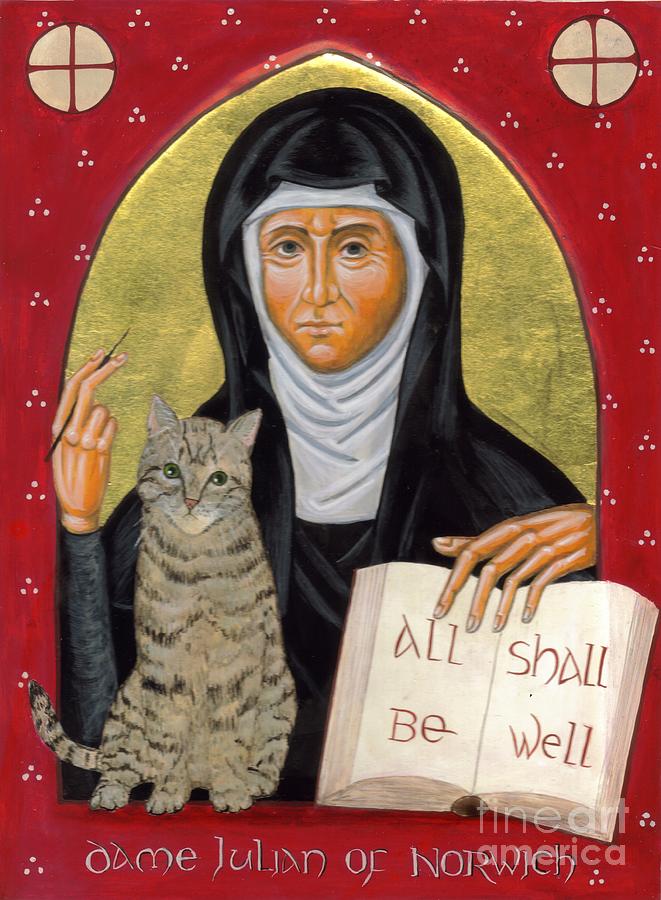
Science has tried to make Creation fit into neat, tidy, boundaried boxes. But life is more fluid and flexible than that. Science seeks understanding by examination of the material. Spirituality, which is way, way older than science, teaches us how to examine the immaterial, for that is where life begins. Resulting from the mix of religious and scientific prejudice over such a long time, there is now a ‘war’ underway over gender definition, but this war is a false war, keeping firmly in place the paradigm of separation and division, whereas the explosion in trans exposure, confidence and awareness happening in the world is really a sign that we as a species are ready to move on, to grow in understanding, as well as in acceptance and celebration of the magnificent diversity of the human race.
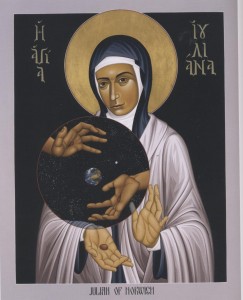
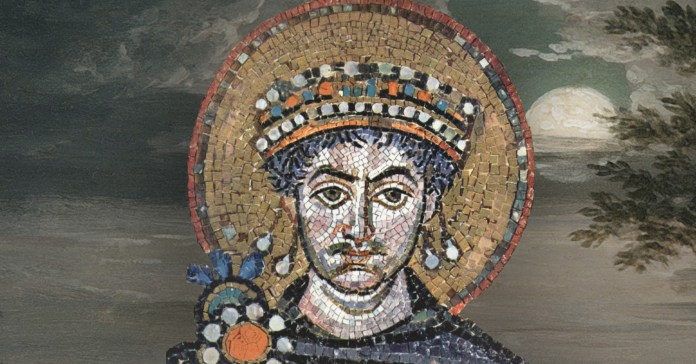
Things will change when we each grasp and the world accepts the Hermetic Principle – that on the physical plane each person has a male or female physical body, however on the spirit and mind planes each person is androgynous with male and female qualities.

It is from this principle that our discussions around gender should begin.

The Elements of Oneness

Many people on planet Earth are waking up to the realisation that human consciousness is undergoing a vast and profound shift. The roots of this change happening to us go way back into our history and have long been predicted, but in the last 50 years humanity has not just had a rapid evolution in science and technology, it has also been changing in other ways. The outer change mirrors the rapid growth also going within us, individually and collectively.

Now in the 2020s more of us than ever before are getting the picture that humans are spirit having a material experience, not material beings that have developed mind and spirit through a physical evolution. Spirit and Mind come first. More people than ever before are grasping the idea of Oneness, that life is a unity. Our bodies give us an individual experience of something that is actually collective. While in these bodies we can enjoy separation but we also crave reconnection, which we can find through physical, mental, emotional and spiritual acts.

Having got the idea that we are spirits in material form, the next step towards manifesting a joyful experience of that is to grasp that spirit manifests through the elements. The five pointed star, the pentagram, symbolises this with points for fire, earth, air, water and spirit/consciousness.

As beings of fire we possess potent creative energy. The fire element in us manifests in our passions and joys, in our sexuality and in our search for identity, our urge to shine our individual, personal light in the world. This powerful inner fire can ignite when we are ready to reach for higher truths about who we are, connecting us to spirit, to the higher self, to the divine. Fire tended well takes us into ecstatic states of being. It can also get out of control, can burn and destroy, but a well kept inner fire has the power to nurture, warm, protect – us and those around us.

As beings of earth we experience ourselves in bodies, we share ourselves through touching the world around us. Our bodies are created by a physical act that brings together the fire of sexuality with the earth of the flesh. The body is our vehicle while on earth for pleasure, love and joy. It is designed for labour, but also to play, to feel and channel the bliss of the divine, for, contrary to what religion or science might tell you, the body is holy, created by love making. To start worshipping our own (and others’) bodies as sacred in themselves is to hasten the journey to the realisation of our soul’s true divine nature.

As beings of air we share in the universal Mind, our portion largely veiled so that we can’t see the full picture. We can lift the veils and let in the light of consciousness, in order to grow in awareness and attain wisdom, but we are not generally encouraged to. Sometimes our veils are leaky and unwanted mental energies can enter us, though sometimes we can control the leaks and speak to beings in the universal state of being. Our thoughts direct energy, energy creates emotion – to enjoy good feelings in the body we need to generate them first with thought. Mind is the creative driver, telling the fire where and how hot to burn.

As beings of water we share in the universal love of the divine creation. The water element gives and sustains life, and also exists in us as our feeling bodies, which shift in shape and quality constantly, connecting and disconnecting us from each other and the world around us, and reaching to the depths and the heavens. When we pass emotions between us the spiritual quality of the water element is at play. Water holds presence, including divine presence, something that is usually at first felt rather than seen or heard. Beings in spirit dimensions can connect to us in the physical through feelings, through love.

As conscious beings we are individuals having an experience on planet Earth in which our innate and eternal relationship with the Source of all existence is cut off from our awareness. We may seek to reconnect to the Source, or we may be quite happy enjoying being separate for a lifetime. The universe doesn’t mind which we choose.

But Gaia, the Earth herself, needs us to choose to remember Source, and honour it by honouring her and all other living beings. She does not need us to bow down to gods in the sky, nor to obey the man made restrictions on our freedom set in place by religions, but she does need, and want, us to know that we are always part of everything, always held, always loved and always, ultimately, safe. We need not fear, that is simply the shadow of love.

A quick way to SOURCE is through each other. LOVE is the experience of Oneness.

“You can develop the right attitude toward others if you have kindness, love and respect for them, and a clear realization of the oneness of all human beings.” Dalai Lama

We are in world of shadows that is becoming a world of love.

We each get to play a part, we each get to make this happen.

In us the union of heaven and earth,

in us the dance of the elements of nature

in us the birth of divine light.

Imagine if every problem were solved appropriately, if every relationship evolved appropriately, if every act were an appropriate one. That alone would be the kingdom of heaven. And that is, I think, what we’re pushing toward. Not cosmic fireworks or the descent of alien beings in flying saucers, but simply appropriate activity – empowered, felt experience – and the abandonment of the illusion of separateness.” Terence McKenna, The Archaic Revival.

The Faery Star

THE FAERY STAR POINTS TO WHO WE ARE

The seven points of the FAERY star

reveal and connect us to all that we are.

In bodies we unite spirit and matter,

through the elements we weave our ways,

our consciousness stretches between the worlds:

gates to other dimensions exist in our hearts and minds,

for each person is actually a star

come to earth to shine their light.

The first point is the Gate of Earth:

our bodies of mortal flesh

are destined to become bearers

of immortal light,

are designed for pleasure as well as toil

and to take us on ecstatic flights.

The second point is the Gate of Water:

feeling, flowing, emotional energy

that brings us together or pulls us apart,

can unite, bond and soften our hearts

bring us to heaven and the creation of arts.

The third point is the Gate of Air:

the mind, that can travel anywhere

on earth or in the cosmos, it’s our most powerful tool

but to use it well we need to learn some rules.

Energy follows thought, our beliefs create our experience

reality is flexible, it bends to our will

so best use the mind to create good, not ill.

Dark stories in the head do not reflect reality

they call more pain to us, they encourage insanity.

We generate emotions in our bodies by how we think –

a positive mind becomes gentle and kind,

seeing itself in others, all are its sisters and brothers.

The fourth point is the Gate of Fire:

the passion and drive to lift life higher.

“He who knows the fire within himself

shall ascend into the eternal fire and dwell in it eternally.

Fire, the inner fire, is the most potent of all forces.” (Thoth)

The fifth point is the Gate to Below:

the underworld of spirit wherein all things grow,

the subconscious layer, the fears and inner foes

the shadows to be befriended

the lost parts of our souls.

The sixth point is the Gate to Above:

the upperworld of spirit where all things glow

in the glory of light, in the power of knowing

we reach to the Worlds Above to hasten our growing.

The seventh point is the Gate to WITHIN:

THE SOURCE IN OURSELVES FROM WHICH ALL THINGS BEGIN

THE DIVINE SPARK THAT OVERSEES ALL

THAT SPEAKS TO US AND GUIDES US

ONCE WE HAVE HEARD ITS CALL.

Spirit and Matter are One

in us united so we can become

divine conscious beings

on a planet of love

united with the elements

and the worlds below and above.

Change the belief, change the experience

be sure in your core –

humans are ready for a rapid evolution,

to get out of our little ego minds

and discover there’s SO MUCH MORE.

What the World needs Now is: KNOWLEDGE

In the mid 90s I underwent a dramatic awakening to the subtle realms of reality, to the sacred dimension of life, to the great mystery of our existence – and to the fact that for thousands of years these aspects of creation had been at the centre of human research and enquiry, while in the 20th century the external search for answers to life’s questions through science had largely become the focus of our seeking, pursued by professionals, while the mass population was persuaded to not question things, to simply work, marry, breed, consume and die.

It was hard to find people on my new found wavelength at the time, but I was in London and able to visit esoteric bookshops like Watkins and Mysteries, and libraries such as at the College of Psychic Studies. In those places I at least did not feel so alone in my quest. But in general to talk to people about the unity and evolution of consciousness, about astrology, chakras or witchcraft, was to be considered very weird.

And how right they were… for weird comes from Anglo-Saxon WYRD, and relates to much more than strangeness. It relates to our involvement and interdependence with the invisible energies of creation, the practices and practitioners of which were eventually viewed as strange and dangerous due to Christian propaganda.

In 2021 I simply have to sit home and browse the internet to find thousands – millions????- of voices declaring the realities of UNITY, LOVE, COMPASSION that I felt so alone waking up to just two and a half decades ago. In the 90s I sought connections in the physical world, and found some – discovering the somewhat hidden, underground networks of groups, festivals, new age teachers and intentional communities that had been developing since the 1960s. I saw my generation as a bridge between the 60s awakeners and those to come in the new millennium.

The new generation is now waking up. Many more people in their 20s now are questioning the underlying assumptions on which society, law and government is based than did in the 1980s/90s. But where do they, or people of any age opening their minds to the bigger picture, find clear answers and direction in an age where esoteric information and spiritual teachings are suddenly available everywhere. From hard to find just 2 decades ago to overkill and overwhelm. You won’t hear about it in the mainstream media, but check YouTube and spiritual/consciousness related material is everywhere. This is what humanity is ready for. The 2020s is going to bring the massive shift in understanding, in human consciousness, that many of us have been preparing for since decades.

SPIRITUALITY

CAN SEEM DAUNTING AND CONFUSING

IF IT’S A CONCEPT NEW TO YOU

BUT THAT’S BECAUSE THE MEDIA AND THE MUDDLED

PRESENT IT THAT WAY:

SPIRITUALITY IS ABOUT SIMPLICITY

ABOUT COMING TO THE CORE OF WHO WE ARE –

SPIRIT BEINGS IN MATTER AROUND THIS STAR…

CONSCIOUSNESS IS A UNITY

BODIES CREATE THE ILLUSION

OF A SEPARATE YOU AND ME…

WE EXPERIENCE THROUGH THE BODY (EARTH)

THROUGH THE MIND (AIR) EMOTIONS (WATER).

INSIDE US IS AN INNER FIRE, OUR SPIRIT

POWERFUL, DIVINE AND OURS TO FEED:

THIS FIRE IS OUR OWN GODSEED.

“Let he who would be free from the bonds of darkness first divine the material from the immaterial, the fire from the earth. For know ye that as earth descends to earth so also fire ascends to fire and becomes one with fire. He who knows the fire within himself shall ascend into the eternal fire and dwell in it eternally. Fire, the inner fire, is the most potent of all force, for it overcometh all things and penetrates into all things of the earth….

“Man is a fire burning bright through the night, never is quenched through the veil of darkness, never is quenched by the veil of night. ….. Man is a star bound to a body, until he is freed through his strife…only by struggling and toiling to the utmost shall the star within thee bloom out in new life. He who knows the commencement of all things shall free his star from the realms of night.”

EMERALD TABLET 4, THOTH (A’an communications translation)

FOR THOUSANDS OF YEAR HUMANITY HAS STRUGGLED AND TOILED

BUT THE TIME OF LIGHT AND UNDERSTANDING HAS ARRIVED.

THE STRUGGLES DO NOT END, THE WORK GOES ON

BUT WITH NEW LIGHT IN OUR EYES WE WILL SING A NEW SONG.

The Emerald Tablet from ancient Egypt is a foundation stone of the collective path humanity is on. Studied throughout the Ages in philosophical and mystery schools in a collection of teachings known as the Kybalian, its principles are easily available to all today. Grasping these can accelerate your evolution, and make the process easier.

The principles of truth are seven; He who knows these, understandingly, possesses the magic key before whose touch all the doors of the temple fly open.

The Principle of Mentalism

The all is mind; the universe is mental. – The Kybalion

The Principle of Mentalism embodies the idea that “All is Mind.” Everything that happens has to be a result of a mental state which precedes it. For anything to exist, thoughts had to form first, which then form physical reality or manifestation. “Your thoughts are seeds, plant positive seeds in your mind garden.”

The Principle of Correspondence

As above so below: as below, so above. – The Kybalion

The Principle of Correspondence expresses the idea that there is always a correspondence between the laws of phenomena of the various “planes” of being and life. As above, so below; as below, so above. This principle states that there is a harmony which can be made, agreement and correspondence between these planes:

  • The Great Physical Plane
  • The Great Mental Plane
  • The Great Spiritual Plane

The outer world is a mirror of our inner world

The thoughts and images we hold in our mind will attract their physical likeness to us in our external circumstance. This law works unceasingly for the good or the bad. By understanding this law, we can use it for our benefit instead of our detriment.

Earth is a school for practising these laws of mind and spiritual control.

 The Principle of Vibration

Nothing rests; Everything moves; Everything vibrates. – The Kybalion

Motion is manifest in everything in the Universe, nothing rests, and everything moves, vibrates and circles. This principle explains that the distinction between manifestations of Matter, Energy, Mind, and even Spirit, are the result of only different “vibrations”.

Mental Transmutation is described as the practical application of this principle. To change one’s mental state is to change vibration.

The Principle of Polarity

 Everything is dual; Everything has poles; Everything has its pair of opposites; Like and unlike are the same; Opposites are identical in nature, but different in degree; Extremes meet; All truths, are but half-truths; All paradoxes may be reconciled. – The Kybalion

 Take, for example, hot and cold. Though they are opposites they are really the same thing. It is merely a matter of degree. The same could be said of spirit and matter. They are really the same thing.

The same principle also applies on the mental plane of reality. Take, for example, love and hate. They are the same thing but different degrees. The importance of this law comes in the understanding of one’s ability to transmute and change the vibrations from one extreme to another. This in reality is the study of alchemy.

Hate can be transformed by the power of your mind into love (gold). Your lower self can be transformed into your higher self. Your physical body can be transformed into your light body (ascension). Separation can be turned into oneness. Guidance by your negative ego can be turned into guidance by your soul, using the art of polarization.

The Principle of Rhythm

 Everything flows, out and in; Everything has its tides; All things rise and fall; The pendulum swing manifests in everything; The measure of the swing to the right is the measure of the swing to the left; Rhythm compensates. – The Kybalion

 The Principle of Rhythm expresses the idea that in everything there is manifested a measured motion, a to and from, a flow and inflow, a swing backward and forward, a pendulum-like movement. There is rhythm between every pair of opposites, or poles, and is closely related to the Principle of Polarity. It can be seen that this Principle enables transition from one pole to the other, and not necessarily poles of extreme opposites.

The Principle of Cause and Effect

Every cause has its effect; Every effect has its cause; Everything happens according to law’ Chance is but a name for law not recognized’ There are many planes of causation, but nothing escapes the law. – The Kybalion

 This explains that there is no such thing as chance, there are no accidents in the universe. Everything in the universe is governed by laws. There are physical laws, emotional laws, mental laws, and spiritual laws. By understanding these laws, we can learn to operate in grace instead of karma. Many times, we don’t know the cause for the reason things happen to us. This is because there are seven dimensions of reality in which causation can occur.

The basic cause of your life are the thoughts and images you hold in your conscious and subconscious mind. By learning to be absolutely vigilant and only allowing into your mind thoughts of God, love, perfection, perfect health, prosperity, joy, oneness, and equanimity, then this is all you will create both inwardly and outwardly. For your thoughts cause your reality.

The Principle of Gender

Gender is in everything; Everything has its masculine and feminine principles; Gender manifests on all planes.” – The Kybalion

 This does not relate to the commonly understood notion of sex, but rather “… to procreate, to generate, to create, or to produce…” in general.

Mental Gender is described as a Hermetic concept which relates to the feminine and masculine principles. It does not refer to someone’s physical sex, nor does it suggest that someone of a certain sex necessarily has a matching mental gender. Ideally, one wants to have a balanced mental gender.

The Kybalion states that gender exists on all planes of existence (Physical, Mental and Spiritual), and represents different aspects on different planes. Everything and everyone contains these two elements or principles.

 Everything has a yin and yang. On the physical plane each person has a male or female physical body, however psychologically each person is androgynous with male and female qualities. Each person has a left brain and right brain.

The spiritual path is the path of balance and integration. Buddha called this the middle way.

It is the path of balancing the male and female aspects within self and also balancing the heavenly and earthly aspects within self.

Quoted from The 7 Hermetic Principles for Self-Mastery – The Teachings of Hermes-Thoth (garylite.com)

You Are Everything: YouTube Pride

“YOU ARE NOT JUST L G B T or Q: YOU ARE EVERYTHING”

The introductory video of the online global celebration of PRIDE 2021 on YouTube features this awesome, magical message – that as a queer person you are not simply the label attached to you in our ever expanding alphabet of definitions, that within you exists ALL IDENTITIES, ALL POTENTIAL, PLUS LIMITLESS SOUL POWER, LOVE AND THE MAGIC OF OUR QUEER SPIRIT.

Queer people can reproduce sexually just as well as Straights, but we do it by choice, rarely by accident. So Queer also contains the potentiality of Straight, we ARE INDEED EVERYTHING.

Homosexuality as an identity did not arise in the 19th century as social scientists like to say – heterosexuality did. Prior to these scientific minded definitions being applied to human nature, sex was generally seen as just sex. It was common for lesbians and gay men to also have spouses. People who crossed or combined the gender lines have always existed. There have been many societies in history where people we today call queer were accepted and even given respect because of the roles they played in society. Church and State in Europe put so much effort over so many centuries trying to suppress queerness because there was just so much of it about!

The assumption in modern times that Straight is normal and Queer a deviance is an utter fabrication. What is normal is Physical Attraction, Sexual Desire and Love. All forms of love are sacred and sexual connection CAN be holy. Until humanity wakes up to this we are a species stuck in an age of darkness, conflict and pain.

Queer people can lead this revolution, this awakening to the true powers of

LOVE, COMPASSION AND CONSCIOUSNESS,

and it starts from the point of realising for ourselves that

WE ARE LOVE, WE ARE EVERYTHING:

THE REVOLUTION OF LOVE AND SPIRIT THAT WE BRING

IS THE SIGN OF THE AGE OF AQUARIUS BEGINNING.

Pleasure

Pleasure is a Goddess

The Ancients knew

Pleasure dissolves the boundaries

Between Me and You.

Pleasure is Divine

You know this is True

Pleasure can unchain the Soul

Let the Real You through.

.

Pleasure opens the Way

to Connection, Emotion, Devotion

and Pleasure must occasionally make way

for the many feelings it sets in motion.

Pleasure opens up our Hearts

Lets in the Light,

which illuminates the parts

of us hidden in the shadows:

so after Pleasure comes the chance

to turn within, take care of those.

Sadness, guilt, regret, shame

all arise at times in life’s great game:

these shadows are normal

we are not to blame.

.

Pleasure is a Goddess

The Ancients knew

Pleasure opens the way for Joy and Love

to pour from the Cosmos right into You

with which we can bathe our wounds,

feed our Souls,

and look forward to Life Renewed.

From AIDS to ETERNITY

NOW ON SALE IN PRINT OR EBOOK FORMAT AT LULU.COM : click here

From Smalltown Boy to Queer Spirit Warrior, from gay bars to Radical Faerie gatherings, here is a tale of awakening to a multi-dimensional reality and of discovering the hidden spiritual powers of gay/lesbian/bi/trans/queer people and how they are manifesting in the world today. AIDS took me to the twilight world between life and death, a place where realities merged and spirit entered. HIV opened my mind to the fact that humanity needs to awaken and realise that we are cut off from our true source and nature, to understand that: Healing Is Vital: healing of our belief in separation.

AIDS became my Accelerated Individual Discovery of Self.

In this book I offer my story of awakening to spiritual light and discovery of the magic inherent in queer sexualities. I hope to offer perspectives on life, and our queer part in it, that I hope will assist in the evolution of a more compassionate world of enhanced understanding, well-being and joy. I hope it will help queer people especially to overcome negative attitudes around spirit and faith as we realise we can find our own answers through direct experience. Answers that will help all of humanity to overcome the fear of death, the ultimate illusion, and live a more fully divine life. The emergence of gay people into society, accepted and embraced as never before, is changing the world, and the Queer Age of Aquarius is only just beginning.

From the Foreword by Toby Johnson (author of Gay Spirituality, Gay Perspective, Find Your Own Myth. tobyjohnson.com):

‘Early in his exploration of gay life and love in mid-80s London, Mark Whiting is going to tell us in this autobiographical portrayal of his gay spiritual hero journey AIDS to Eternity, he was faced with an HIV diagnosis and prediction of imminent death. As he prepared himself for the end, he dove into the mysteries of religion, occult magic, mysticism and new age teachings, seeking answers to why he had been born in the first place.

‘AIDS, he says, took him into the twilight world between life and death, a place where realities merged and spirit entered, where spirit pointed to a way to change and healing, where—by transforming acronyms—HIV could reveal that Healing Is Vital and AIDS could act as an Accelerated Individual Discovery of Self. He describes his journey with AIDS—the symptoms, the sufferings, the despair, the hope when new successful treatments arrived—as a rite of passage into the multidimensional nature of life. It forced him to grow out of the blinkered, limited ego-mind and discover himself as a ‘divine child’ with a rightful place in the great scheme of the universe. And after he opened his inner eyes, he found the motivation within to bring light, love and joy into life and to the planet. And subsequently his health returned and his life utterly transformed.

‘The healing crisis of nearly dying with AIDS allowed him to get in touch with his soul, his true self, and to see just how deeply we human beings— including we gay/ queer men—are involved in a spiritual, not simply physical, experience here on planet Earth, and how blind humanity— and so much of the gay/queer world—has been to that. But things were changing… It was as he prepared to die, he says, in the mid ’90s, just a decade after coming out, that he learnt, not least from reading the 19th C. British philosopher and precocious sexologist, Edward Carpenter, that what we call ‘queer’ people were often the shamans and healers of traditional tribal societies across the globe. Gender-diversity and healing go together…

‘Learning the lessons from the AIDS years, in the early 2000s Mark became involved with Queer Pagan Camp, the Edward Carpenter Community which holds retreats for gay men, and the global Radical Faerie community, thus becoming Shokti. He was part of the team that established Folleterre Sanctuary in France and the Albion Faerie gatherings in the UK, LoveSpirit in London, and the Queer Spirit Festival dedicated to celebration of the creative, loving spirit—and innate spirituality—of LGBTQ+ people.

‘This book too is such a celebration of creative, loving spirit. It is the story of how Mark became Shokti and recovered his true life. It is an account of a not uncommon spiritual journey of men who lived through the era of AIDS. And it is a kind of treatise on the Gay Spirituality Movement. One of the remarkable aspects of Shokti’s wisdom is that he tells us about the books he’s read, the teachers he’s learned from, the names of the other gay men and women who have contributed to this field. He demonstrates its breadth. Shokti Lovestar seems to speak for a deep and broad current of spiritual wisdom that runs—karmically—through our queer lives.’

I blog at rainbowmessenger.blog and queerspirit.net.

I have been running a Queer Spirit Full Moon Drum Circle in south London since 2005, a rich occasion of vibrant trance rhythms and ecstatic dance, often attended by 70+ people.

I am one of the core team organising Queer Spirit Festival, which brought together 500 questing queers at its third manifestation in 2019 to celebrate our queer creative spirit and healing gifts. Another festival is in planning. http://queerspirit.net/

I’ve experienced the many shifts on the London gay scene since I arrived here aged 21 in 1986. HIV pushed me early on that road into a spiritual search for meaning, which has flowered into community activism amongst the global Radical Faerie community and the founding of Queer Spirit Festival:

Queer people have long been associated with magic and mystery – but modern queers may not even know this… Our sacred roles were suppressed in Europe but survived longer in the rest of the world. As we decolonise gay history, it is in our power to reclaim our spiritual magic, but only if we can get over the lies about us forced on the world by religion, and over the centuries of virulent homophobia that lies deep seated in our collective memory.

AIDS threatened to end my life at an early age – but gave me the motivation to seek the path to inner liberation, and in FROM AIDS TO ETERNITY I offer insights gained on that journey, hoping to shine some light for others.

marcolovestar@gmail.com Mark Whiting | Facebook

rainbow messenger.blog Queerspirit.net

CHAPTER HEADINGS:

PART ONE
1. My Aquarian Story
2. The Shift of the Ages
3. Magical Roots
4. Childhood and Coming Out
5. Positive
6. Start of the Awakening
7. Meeting the Mother
8. At the Edge with AIDS
9. Awakening Accelerated
10. Landing
PART TWO
11. Emergence
12. Passion
13. Queer Spirit
14. Back to the Roots
15. Into Eternity

REVIEWS WELCOME!!!

GET YOUR COPY click here


Gay Love is Ancient & Innate

The generally accepted belief that any kind of self-aware homosexual identity did not exist until the late 19th century was invented by heterosexuals who sought to ensure their dominance over society. This belief stands on shaky ground and deserves to be blown away and replaced by awareness of the many centuries in which gay love was able to blossom and thrive around the world.

The Middle Ages in Europe saw a flowering of gay love that was arguably a cultural peak with roots going back into pre-history, but which underwent the most severe repression possible for most of the last millennium. Historian John Boswell writes that in the 13th century “the voice of Europe’s gay minority was stilled, not to be heard again for centuries”. It is generally believed today that there was no self-identified gay minority at that time, but the frequent appearance of the word ‘sodomites’, and not just ‘sodomy’ in medieval literature suggests that some men were indeed known to be attracted only to other men.

The gay voice has found its expression in poetry, art and love letters since the earliest recorded writings. The oldest story in the world, Gilgamesh from the Sumerian civilisation of the 2nd millennium BCE, is a passionate story of love between two men, of heartbreak, loss and the search for the meaning of life.

The mythology of ancient Greece, where for 1000 years gay love was interwoven with society at every level, is abundant in same sex love, both among Gods and heroes. Zeus falls in love with the beautiful young Ganymede, Apollo with Hyacinth, Hymen (god of marriage) and, according to Pseudo-Apollodorus was with Thracian singer Thamyris in the first man-on-man relationship in history. Virgin Goddess Artemis was known for her affairs with female nymphs. Greek historian Plutarch said the male lovers of the hero Hercules were beyond numbering, meanwhile Achilles was lover with his sidekick Patroclus.

Alexandrian poet Theocritus (300-260 BCE) wrote:

“Divine were they among those who lived in earlier times,

The one the inspirer,” as a man of Amyclae (Sparta) might say.

“The other a mirror,” as a Thessalian might say,

“And under an equal yoke did they love one another,

Then there were golden men, when the beloved reflected the love of the lover.”

During Greek’s Classical Age, in Plato’s Symposium Aristophanes proclaims:

Those who love men and rejoice to lie with, be embraced by men, are also the finest bys and young men, being naturally the most manly. The people who accuse them of shamelessness lie; they do this not from shamelessness but from courage, manliness and virility, embracing what is like them.”

Plato argued that pairs of lovers would make the best soldiers, and this was put into practise by the Sacred Band of Thebes in the 4th century BCE. Note the emphasis on the virility and strength of the male same sex lovers, both mythological heroes and among living men. Also in the 4th century BCE Alexander the Great, known for his great love of his companion Hephaestion, led the Greek Empire to its greatest victories, and in the 1st Julius Caesar, great warrior and empire builder of the Romans, was bisexual, and commonly called “every Man’s husband, every man’s wife”.

Around 200 CE, six centuries after the Classical Age, Greek rhetorician Athenaeus reported that “Altogether many person prefer liaisons with males to females.”

Of the first 14 emperors who led Rome after Caesar, 13 of them were bisexual or exclusively homosexual, including famously Hadrian, whose young lover Antinous died tragically while in Egypt and was raised to the status of a God – within a decade statues and temples dedicated to him spread across the Empire, presenting an attempt to revive the very sex-positive and gay-positive ancient pagan religion, making Antinous a serious competitor with the new young God on the scene, Jesus Christ.

Polybius recorded in the 3rd century CE that back at the height of the Republic, pre Empire, moderation in sexual matters was almost impossible for young men, who engaged in love affairs with both courtesans and other young men. John Boswell argues that in Roman society it was almost unanimously assumed that adult males were capable of having sexual relations with both sexes. We know from the poet Marshall that same sex marriages took place in first century Rome, that early Christian writers considered same sex love to be “held in high esteem by the Romans” (Tatian the Syrian, C2), even“the Roman religion” (Marcus Minucius Felix writing in a dialogue called Octavian in the 3rd century). Male prostitution was taxed under the Empire, and continued to be under the Christian emperors for two centuries.

A dialogue called “Affairs of the Heart” from the early 4th century, like others at the time, debated the pleasures of gay versus straight love affairs, starting from a equanimous place that viewed “women at their fairest and young men in the flower of manhood” as two sides of the same coin, but concluding that the love of boys is preferable! This work heralds same sex love as having “a hallowed and lawful heritage”. It argues that:

Marriages are devised as a means of ensuring succession, which was necessary, but only the love of men is a noble undertaking of the philosopher’s soul” and that “Human wisdom coupled with knowledge has after frequent experiments chosen what is best, and has formed the opinion that male-male love is the most stable of loves”.

However, times were already changing – the author of Affairs of the Heart describes lovers of the same gender as“strangers cut off in a foreign land”, but declares:

We shall not, all the same, be overcome by fear and betray the truth”.

From the fourth century same sex love was under attack from Christians who were opposed to all sexual activities except those necessary to maintain the species. Writers such as Jerome and Origen hated all the hedonistic sexuality of the pagan past. Augustine, who recorded the suffering he underwent after lust had entered his friendship with another male, also proclaimed “There is nothing which degrades the manly spirit more than the attractiveness of females and contact with their bodies”. But not all Christians were on the same page – John Chrysostom recorded that gay sex was rampant in the Christian society of 4th century Antioch (in modern Turkey):

There is some danger that womenkind will become unnecessary in the future with young men instead fulfilling all the needs women used to… No-one is ashamed, no one blushes, but rather they take pride in their little game”.

Unlike Augustine, the 4th century Bishop of Nola, St Paulinus, was not troubled by his same sex attraction. He wrote passionate letters to the poet Ausonius:

Through all that life may allot

Or assign to mortals,

As long as I am held within this prison body,

In whatever world I am found,

I shall hold you fast,

Grafted onto my being,

Not divided by distant shores or suns.

Everywhere you shall be with me,

I will see with my heart

And embrace you with my loving spirit.”

It took until the 13th century for Augustine’s pleasure-denying outlook to finally gain the upper hand in the Christian Church and for homosexuality to become viewed as such a terrible sin. The ongoing struggles of the religion against Christian heresies and traditional religions, in both of which sex was viewed much more liberally, plus the reports coming back from the Crusades of the relaxed sexuality in the Muslim lands, served to strengthen the Church’s anti-sex stance.

However, although known as the Dark Ages, from the minimal records we do have we can tell that the European early Middle Ages had been a very gay time indeed, as it seems likely Europe had been for thousands of years already….

When writers from the Roman Empire visited the northern European Celtic and Germanic peoples they recorded their surprise that, as common as same sex relationships were in the Empire (within certain bounds), in the pre-literate cultures to the north they were accepted as completely normal. Aristotle had coined a word for the Celtic love between males much earlier in the 4th century BCE – synousia, meaning passionate friendship, with sexual overtones, and there was plenty of it about in the first millennium, to the shock of some writers. The early modern Europeans were in for the same shock as they took to their ships and explored the world over a millennium later.

Greek philosopher Posidonius, 1ST century BC, traveled into Gaul to investigate the truth of the stories told about the Celtic tribes, and put it very simply: “The Gaulish men prefer to have sex with each other.”

Diodorus Sicilus wrote in the 1st century CE, –

“Although they have good-looking women, they pay very little attention to them, but are really crazy about having sex with men. They are accustomed to sleeping on the ground on animal skins and roll around naked with male bed-mates on both sides. Heedless of their own dignity, they abandon without qualm the bloom of their bodies to others. And the most incredible thing is that they do not find this shameful. When they proposition someone, they consider it dishonourable if he doesn’t accept the offer!”

Bardaisan of Edessa wrote (2nd century CE) that “In the countries of the north — in the lands of the Germans and those of their neighbors, handsome [noble] young men assume the role of wives [women] towards other men, and they celebrate marriage feasts.”

Eusebius of Caesarea, wrote that “Among the Gauls, the young men marry each other (gamountai) with complete freedom. In doing this, they do not incur any reproach or blame, since this is done according to custom amongst them.” (4th century CE)

Jumping forwards to the next millennium:

Jesuit leader Francis Xavier, in the mid 16th century complained that the Buddhist bonzes of Japan: “.. are inclined to sins, abhorred by nature. They even confess it and don’t deny it. It is visible and public to all, including men and women, young and old, none of whom think much of it nor despise it as it seems to be a common habit indeed.”

Father Pero Correia 1551 letter from Sao Vicente, Brazil related that female homosexuality:

as in Africa, is most common”… the women “carry weapons like men and marry other women. Being called ‘women’ was perceived as a major insult.”

Bernal Diaz del Castillo 1605, one of many authors commenting on sodomy in the New World:

Most of them moreover were sodomites, especially those who lived in the coastal and warm areas. Boys walked about dressed like women and engaging in this diabolic and abominable activity.”

Portuguese Jesuit Joao dos Santos wrote in 1625 that the chibados of southwestern Africa were: “attyred like women, and behave themselves womanly, ashamed to be called men; are also married to men, and esteeme that unnaturale damnation an honor.

Antonio Cardonega, C17, mentioned that sodomy was:

rampant among the people of Angola. They pursue their impudent and filthy practices dressed as women.”

He also stated that the sodomites often served as powerful shamans, were highly esteemed among most Angolan tribes and commonly called “quimbanda.

As recently as the early 20th century among the Ila people of Zambia there are records of the mwammi, translated as prophets:

dressed always as women,did women’s work such as plaiting baskets, and lived and slept among, but not with, the women”.

quimbanda

The repression of same sex love that continues to be such an issue in Christian circles today, has its roots in the late Roman Empire, but did not take hold until the 13th century. The first Roman legislation directly outlawing homosexual behaviour came in 533, two centuries after Christianity had become the state religion of the Empire. Emperor Justinian, who may have been the first person in history to blame natural disasters on gay people (“because of such crimes there are famines ,earthquakes and pestilence”) gave gay sex the same punishment as for adultery – death. This law seems however to have only been used against bishops, suggesting the emperor found it a useful tool against his enemies, and that the general population had little interest in it – a parallel with the Sodomy Law of Henry VIII of England in the 16th century, which was at first only used against the monastic community.

When the Visigothic kingdom in Spain adopted Catholicism in 589 CE there was a drive to establish conformity that included legislation against gays and jewish people, but when Arabs invaded the peninsular in the 8th century laws against gay sex disappeared, it being regarded as entirely normal. John Boswell says that gays flourished in Spain in the 9th-10th centuries, and most of the Islamic poetry from Hispano-Arab Iberia, written by all ranks of society, has gay imagery, which was also standard in the writings of Islamic mystics for hundreds of years. The 11th century King of Seville, al-Mutamid, wrote of his page-boy:

I made him my slave, but the coyness of his glance has made me his prisoner, so that we are both at once slave and master to each other”.

Some Muslim sources of the time criticise Christian clergy for their addiction to sodomy, and indeed there may have been a lot of same sex action going on, both in the Church and in society at large. Boswell’s study of punishments set by the Catholic Church against sexual activities among the clergy “suggests that despite considerable local variation, attitudes towards homosexuality grew steadily more tolerant throughout the early Middle Ages”. Homosex was regarded as one of many forms of illicit fornication, often seen as less serious than having ‘unnatural’ sex with women.

In 1051 in ‘The Book of Gomorrah’ Saint Peter Damian railed against the evils of sex between males, especially clergy, which he said were extemely common. However, Pope Leo declined his demand that all clergy guilty of homosexual relations should be removed from office. In 1102 the Council of London proposed to make sure the public knew how serious a sin sodomy is by having it condemned from every pulpit on every Sunday. The Archbishop of Canterbury, Anselm wrote in a letter prohibiting the publication of the Council’s decree:

This sin has hitherto been so public that hardly anyone is embarrassed by it, and many have therefore fallen into it because they were unaware of its seriousness”.

Love and sex between people of the same gender probably enjoyed a relatively tolerant atmosphere in the 12th century. Satirical literature of that time includes references to priests who were more likely “to love gods than goddesses” (Walther of Chatillon).

An anonymous manuscript from Zurich writes of the local Bishop:

The man who holds this seat is Ganymedier than Ganymede,

Consider why he excludes the married from the clergy:

He does not care for the pleasures of a wife”.

In medieval monasteries there was a flowering of (celibate of not) love between the monks, as evidenced by their letters and the literature they created, such as ‘On Spiritual Friendship’ by Yorkshire abbot Aelred of Rievaulx. Benedictine monk Bernard of Cluny in France wrote that same sex lovers “are as numerous as grains of barley, as many as the shells of the sea, or the sand of the shore”, complaining that cities were “awash” with gay sexuality – the terms he used were Sodomes and Ganymedes.

John Boswell called the High Middle Ages the time of the ‘Triumph of Ganymede’ and finds evidence for a “reappearance for the first time since the decline of Rome of … what might be called a gay subculture” between 1050-1150 which completely disappears by 1300. Baudri of Bourgeuil, an abbot then later archbishop, wrote many affectionate verses, such as to Ralph the Monk whom he called his “Other self, or myself, if two spirits may be one, And if two bodies may actually become one”. But he was aware of the dangers:

What we are is a crime, if it is a crime to love,

For the God who made me live made me love”.

Marbod of Rennes, a master of the Church at Chartres, wrote many gay love poems that were copied in manuscripts across Europe, and even used as teaching material. Hilary the Englishman wrote verses praising the beauty of English young men, while complaining of their aloofness (“Oh how I wish you wanted money!”) The Carmina Burana contains a poem that is a debate between two male lovers, who are clerics – one is sick and offers to God that he will join a monastery if God makes him well. On eventually working out this would mean not seeing his lover again, he decides against the monastic life.

Ganymede became a prominent character in medieval literature, sometimes appearing in debates about gay vs hetero love that revived a subject and style once common in Greek literature. Ganymede was used to replace the term sodomite, which was widely used before and after this period. One of the most popular poems of the time was the ‘Debate between Ganymede and Helen‘, which survives in manuscripts from England to Italy. Unlike with the older Greek debates, the fertility of heterosexuality wins out over the gay “waste of seed”, but we learn from the poem that gayness was very common amongst important, influential people, that the very people who call it a sin also are involved in it. “Some are drawn by Helen, others by Ganymede” says the poem, revealing an open minded medieval mind-set.

A similar debate between Ganymede and Hebe claims that the boy’s beauty eclipses Hebe “as the sun outshines the moon”. Ganymede’s lines in the poem strongly suggest that gay people of the time saw their sexual and romantic preferences as innate and natural. A copy of this debate from Leiden has these words written into it:

The indiscriminate Venus grasps at any remedy,

But the wise one rejoices with the tender Ganymede.

I have heard it said that he plays Venus more than she,

But Venus is happy, since he stuffs only boys…

Venus kindles all fires, but the greatest heat

Is in sex with males, whoever has tried it knows it”.

The same manuscript has verses added attacking gay love and sex, and names Chartres, Sens, Orleans and Paris as preeminent centres of gay subculture and prositution:

“Let Chartres and Sens perish, where Adonis sells himself

According to the law of the brothel, where males are prostituted.

A noble city, a unique city infected with these evils,

Paris rejoices to wed a young master.

You are more depraved than all of these, Orleans;

You perish holding the title for this crime…

The men of Orleans are preeminent – if you think well

Of the manners of this type – at sleeping with boys.”

A very similar debate to Ganymede and Helen appears in the collection of stories from the Islamic world of the 12-13th centuries known as the Arabian Nights. Richard Burton translated the 419th Night, ‘The Dispute between the Man and the Learned Woman from Baghdad concerning the Relative Excellence of Girls and Boys’, in which the female disputant is presented as the intellectual equal of the male. In another tale a young woman dresses as a man to convince her husband that same sex activity is the only fashionable form of love.

In his 1980 work, ‘Christianity, Social Tolerance and Homosexuality’ John Boswell details the evidence for what he considers an “extraordinary efflorescence of gay subculture, with a highly developed literature, its own argot and artistic conventions, its own low life, its elaborate responses to critics”. But this subculture disappears entirely early in the 13th century, and by the start of the 14th the death penalty had been put in place for sodomitcal acts in most of Europe. Persecution of homosexuals was added to the remit of the Inquisition in the 15th century. England caught up with mainland Europe in the 16th, with Henry VIII’s Buggery Act, and although punishments under this act were at first directed against the monastic community, over the following centuries many men fell foul to its terms, with the last being executed in 1835. In contrast, in 1830s Africa, King Mwanga II of Buganda was openly gay, and actively opposing Christianity and colonialism.

Why did Europe become so obsessed with an anti-gay outlook? Fostered in religious circles, from the 14th to the 20th centuries the political state has considered itself the arbiter of society’s morals, imposing strict punishments on same sex lovers. It is striking that heterosexual love, so long applauded for its ‘normality’ requires such stringent rules in order to maintain its cultural hegemony.

Seeking reasons, Boswell idenfiies that the 13-14th century in Europe saw a rise of absolutist governments; there was a quest for intellectual and institutional conformity; a strengthening of ecclesiastical and civil adminstrative machinery and power to exert their authority (there was an astronomical increase in legislation in the C13); theology was forced into systematic formulas and the Inquisition was formed to eliminate theological loose ends and differences of opinion. Pope Gregory IX sent Dominican friars to root out homosexuality in Germany which he considered “so ridden with the unnatural vice”. The Black Death spread through Europe, in the 14th, decimating the population, who sought scapegoats to blame for the suffering, and minorities came in for attack. Jewish people were expelled from England and France, lepers were accused of poisoning wells in France, gays and wtiches all came under suspicicion. The openly gay monarch of England, Edward II, was deposed and murdered, and the Knights Templar orders were accused of sorcery and deviant sexuality, and dissolved.

Law codes of the time start to pinpoint sodomy for severe punishments, often quoting the fashionable accusation of gay love being ‘contrary to nature’ which became sealed as a Christian belief thanks to the work of St Thomas Aquinas (died 1274) who “promoted (homo acts) to a position of unique enormity” and argued that semen was intended only for producing children.

In the 15-16th centuries a gay subculture would begin to re-emerge, especially in Renaissance Florence and Elizabethan England, but would be constantly in conflict with the legal and religious authorities. London of the 18th century had its molly houses and gay brothels, and while these are often seen as the precursors of the modern gay movement and gay identity they might be viewed differently once the long ancient history of queer people is better known. (Mollis was a Latin word for a ‘soft man’, one of many queer-related words in the language). The illegality of gay sex was overthrown by the French Revolution at the end of the 18th century, but after centuries of effort to poison the minds of the population against gay people, being queer in France retained risks, but made the country a safer haven for persecuted queers such as Oscar Wilde in the late 19th.

In the 20th century we were told to believe that gay identity was a modern thing, though of course In Europe and north America it continued to be regarded as a sickness, a problem, a crime, for much of the century. Some Churches, and non-Christian faiths, continue to virulently believe that gay sex is a sin into the 21st. In fact it would likely be fair to say that for most of human history men have been regarded as sexual beings who were naturally inclined to have sex with each other as well as with women. Only imposed societal taboos makes affection between men difficult, and these include 20th century statistical bias from surveys such as the Kinsey Report: most people know that his famous American report suggested the number of 1 in 10 for homosexuals – more recent studies have suggested it is much less – but do you know that the report also showed that ONE THIRD of men had had some kind of homosexual experience. Taboos on love and sexual activity between men are entirely man-made, based on fear and on efforts to control others and society in general.

GAY LOVE IS AS OLD AS HUMANITY

AS NATURAL AS NATURE HERSELF

far from being a crime, a sin, a sickness

same-sex love is a powerful source of personal and collective well-being and health.

As leaves belong to a tree

HUMANITY SO DISTRACTED

by its stories and its woes

it can’t see what’s in front of it,

can’t see how this story goes

because it can’t see what IS

in the HERE and NOW

the reality that hold us all:

we’ve maybe forgotten HOW.

Elemental energies are building

to a climax like never before,

the human spirit is bursting

to break through the cosmic door…

So many paths converging

at the point of UNITY

so many realities shifting

pushing us to see:

HUMANITY BELONGS TO ONE SPIRIT

as leaves belong to a tree:

that tree so vast each leaf cannot hope to see the whole

but the leaves listen to each other and to those out on the edges of limbs

who can see up to the summit and speak of the light that begins

somewhere far away in the sky

(and manifests here as you and I, the leaves whisper along the branch)

always there to remind us we are born again after we die.

When we drop the delusions of separation, superiority, meaninglessness and death,

learn to discover life anew with each breath

we enter the 4th dimension of challenge and transformation

in which we can be assisted by the love of the SPIRIT NATIONS

to ASCEND through to 5D, where all is seen and known as LOVE

and we know that I am another YOU and YOU are another ME:

subject with SUBJECT we can be free.

Living Is An Art

Living is an ART, not a SCIENCE:

It’s about our MINDS and HEARTS

not quarks and atoms.

It’s about the CREATIVE SPARK

a dance in which all play a part.

Just as the stars in the sky make a whole

as the leaves and branches make a tree

as the blades of grass form a lawn

the AWARENESS of HUMANITY as ONE GREAT SOUL

is the level of consciousness trying to be born.

A global REVELATION

an end to complication,

a brand new vision of CREATION:

When we can see the WHOLE

and each discover our ROLE

the healing of MOTHER NATURE

will become our UNITED GOAL.

When we can sense the ONENESS,

the bigger picture holding us all,

humanity will no longer need to fight,

will answer to the call

to re-attune to heaven’s cycles

and dance the dance of spirit on earth.

Humanity is headed for

AN INSPIRED DIVINE REBIRTH.

(despite appearances to the contrary!)

Beltane Rites: A History

BELTANE is an ancient fire festival marking the point in Spring when Winter is finally defeated and the journey into Summer truly underway. The last vestiges of the dark half of the year were burned away in the Beltane fires, and Maypole dances whisked up a spirit of revelry and celebration. Of all the pagan festivals “May was the popular festive occasion that … best resisted Christianisation” (Historian Robert Muchembled). With origins in Greco-Roman, Celtic and Germanic pagan cultures, the celebrations around the coming of May, and the rituals of May Eve, are deeply embedded in the soul of European peoples, and have never fully disappeared.

The Romans celebrated the Goddess Flora or Maia, considered by many a form of the Earth Mother, synonymous with the Magna Mater, Cybele. The Germanic tribes seem to have honoured the coupling of Woden and Freya at this time. The Celts worshipped a male Sun God, Bel/Belenus, and associated Beltane in Ireland with the arrival of the ancient magical race the Tuatha De Danaan. This festival is considered a time when the veils between the worlds are thin, as at Samhain on the opposite side of the Wheel of the Year, but now especially to the realm of the nature spirits, the faeries.

C15 Maypole Dance by Bruegel the Younger, Holland

Named Beltane in the Celtic lands, the May Day feast’s long history is hinted at by the earliest written record of it from ‘Sanas Cormiac’, a 10th century work attributed to Irish churchman Cormac of Cashel, who wrote about the ‘lucky fire’ made by Druids: the cattle were driven between two fires to protect them against summer diseases. Later works record people passing between the fires too. The same ritual, minus the Druids, was recorded nearly 1000 years later at Beltane 1838 by a farmer, Humphrey O’Sullivan in Leinster, who noted in his diary that he had driven his cattle between the fires. In 1852 in ‘Irish Popular Superstitions’ Sir William Wilde wrote that:

With some, particularly the younger portion, this was a mere diversion, to which they attached no particular meaning, yet others performed it with a deeper intention, and evidently as a religious rite. Thus, many of the old people might be circumambulating the fire, and repeating to themselves certain prayers. If a man was about to perform a long journey, he leaped backwards and forwards three times through the fire, to give him success in his undertaking. If about to wed he did it to purify himself for the marriage state. It going to undertake some hazardous enterprise, he passed through the fire to render himself invulnerable. As the fire sank low, the girls leaped across it to procure good husbands: women great with child might be seen stepping through it to ensure a happy delivery, and children were also carried across the smouldering ashes. At the end the embers were thrown among the sprouting crops to protect them, while each household carried some back to kindle a new fire in its hearth.”

The mention of Druids in the first written record of Beltane, from Ireland where there were still active Druids around 900 CE, unlike Britain where the wisdom keepers of the ancient Celtic faith were wiped out during the Roman occupation, hints that this Spring festival may have very ancient roots in both lands. Certainly the folk memory, and practice, of Beltane ceremonies remained strong in the psyche of the British as well as Irish people for most of the last millennium, and remains with some of us today.

In the Scottish lowlands in 1571 the records show that the corporation doubled the watch “on Beltane eve, Beltane at eve and the morn after Beltane day”. The court at the 1597 trial of alleged witch Margaret Aitken, known as ‘the great witch of Balwery’, heard of a great ‘convention‘ of over 2000 witches held in the Highlands at Beltane. In Sir John Sinclair’s surveys of the country in the 1790s we read of Beltane fires made in Perthshire by young cowherds. The last fires in Scotland slowly faded away in the 19th century, surviving the longest, until the 1870s, in the Shetlands.

There are some records of Beltane fires in Wales and the west of England, but in the main the May Day was more associated across England’s pastoral lands with processions, dances and the Maypole. The origins of Maypole ceremonies are unknown, but note that worship involving tall poles is a common trait around the world in many traditional cultures, from the Native American totem poles to the Asherah poles built by the Hebrews to worship their ancient Goddess, much to the displeasure of the writers of the Old Testament. Historian Jennifer Russ suggests the Maypole originated from a birch tree decorated for Goddess Freya.

Freya

The earliest mention of a British Maypole comes from Wales in the mid 14th century in a poem by Gryffydd ap Adda ap Dafydd which describes the festivities around a birch tree that had been chosen for the pole, and by this time the ceremony was for certain well established across southern Britain, in towns and villages. Chaucer refers to the permanent Maypole standing in London at Cornhill in his poem Chaunce of the Dice. Although poles were rare in Scotland and not found Ireland, they were also common from the Pyrenees to Scandinavia and Russia, suggesting a history back to Celtic and Norse times.

May rituals included ceremonial animal dressing, cross-dressing and lots of dancing. The Morris Dance was “typically danced to ‘pagan gods’ by males wearing bells or dressed as women or animals, the morris celebrated ‘the return of vegetation’ and was thought to ‘bring luck’ to participants.” (Randy P. Connor). From 19th century records we know that May rites still featured cross-dressing, eg some London chimney sweeps would dress in feminine attire for this day, and in Hertfordshire there were male couples going to the rites as “Mad Moll and her husband”.

This was a time of celebrating fertility, and therefore also human love and flirtation. English evangelical pamphleteer Philip Stubbes angrily railed against the May fun, saying that one third of the women who participated in them were deflowered during the night. After celebrating all day people “would go to the woods, and groves, some to the hills and mountains… where they would spend all the night in pleasant pastimes… The May games celebrated the growth of the fruits of the earth and the fruits of love.” (Robert Muchembled)

18th century historian Henry Bourne wrote a pioneering study of English folkore called Antiquitates Vulgares (Antiquities of the Common People) in which he recorded the May celebration:

On the calends or first of May, commonly called May Day, the juvenile part of both sexes were wont to rise a little after midnight and walk to some neighbouring wood, accompanied with music and blowing of horns, where they break down branches from the trees and adorn themselves with nosegays and crowns of flowers… The after part of the day is chiefly spend in dancing round the Maypole; and being placed in a convenient part of the village, the Maypole stands there, as it were, consecrated to the Goddess of Flowers, without the least violation being offered to it in the whole circle of the year.”

Maypoles were a prominent feature of English life until the Puritan revolution of the 1640s. A description of one was given in 1580 by pamphleteer Philip Stubbes:

They have 20 or 40 yoke of oxen, every ox having a sweet nose-gay of flowers placed on the tip of his horns, and these oxen draw home this Maypole… which is covered all over with flowers and herbs, bound about with strings, from the top to the bottom, and sometimes painted with variable colours, with two or three hundred men, women and children following it with great devotion. And thus being reared up, with handkerchiefs and flags hovering on the top, they strew the ground around about, bind green boughs about it, set up summer halls, bowers and arbours hard by it. And then they fall to dance about it”.

Maypoles could also become a focus for communal misbehaviour, such as at the May Day riots in London in 1517, after which the Cornhill pole was no longer erected. Rivalry between villages led to the theft of Maypoles, which could lead to violent behaviour.

During the reign of Edward VI (1547-53) the Cornhill pole, which had been kept in storage, was cut up and burnt after being denounced as an idol by a Protestant preacher. Along with the Catholic religion, vestiges of the pagan past including the Maypole (the Church had largely tolerated such collective festivities in the late medieval period of ‘Merrie Olde England’) revived under Queen Mary I and were accepted, and appreciated, by open minded Elizabeth. During her reign however the pressure built from Protestant thinkers against all activities that involved mixed gender dancing, intoxication and making merry on a Sunday and from 1570 until 1630 Maypoles were banned in many cities from Canterbury to Bristol to Doncaster.

In London the May Day focal point in the 17th century was a great fixed pole on the Strand, which stood 100 feet tall at a site long regarded as a pagan centre of worship. One of the first thing Londoners did at the Restoration of the monarchy in 1660 after 18 years of strict Puritan rule under Oliver Cromwell was to erect a 134 feet tall Cedar Maypole at this spot, with the King in attendance. A pamphlet entitled “The Cities Loyalty Displayed” celebrated the return of the Maypole to London. Historian Catherine Arnold writes in ‘City of Sin’ that as Charles II took the throne “the city erupted into one giant party which was to last for the rest of his life.” Diarist Samuel Pepys (1633-1703) was delighted when the May rites returned, recording in 1661 that he and his wife and friends went to Woolwich to spend the night in the countryside in preparation to ‘gather May-dew’ in the morning.

It was not only in central London that the downfall of fundamentalist religious control was met with an upsurge of pagan sentiment, as evidenced by the reappearance of maypoles around the country. Philosopher and amateur archaeologist (he discovered the Avebury stone circle!) John Aubrey (1626-97) wrote that poles “were set up at every crossway”. Jonathon Swift celebrated the return of the Maypole under Charles II in poetry written from the pole’s point of view:

“And once a Weaver in our Town,

A damn’d Cromwellian, knock’d me down.

I lay a prisoner twenty Years;

And then the Jovial Cavaliers

To their old Posts restor’d all Three

I mean the Church, the King, and Me.”

The huge Strand Maypole was severely damaged by strong winds in 1672, and only a stump remained until 1713, when it was rebuilt again – this time it only survived until 1717. The Maypole site was taken over to build the Church of St Mary le Strand, which still stands, and the pole itself was bought by Isaac Newton, who used it in the building of an aerial telescope. So the last London pagan ritual pole, representative of our ancient search for spiritual answers, became part of the search for a new scientific explanation of our existence here on Earth.

The Maypole is one of the most powerful symbols of paganism– it represents the union of earth and heaven. It is decorated and danced around to invoke that experience of cosmic connection in the revellers, or simply to have a good rocking time. To the Puritans of the 17th century, who were determined to complete the Protestant conversion of the country begun a century earlier under Henry VIII, the Maypole was a “stynkynge idoll” because it was associated with drunken and sexualised goings on. In 1644 Maypoles were outlawed, and poles around the country torn down, including London’s central pole on the Strand. Sociologist Max Weber in 1905 described Protestantism as descending “like a frost on the life of ‘Merrie Olde England’.”

It wasn’t only Puritans getting worried about the goings on at these festive celebrations. The ecclesiastical and secular authorities disliked the lawlessness that these occasions brought out., however their attempts to ban the poles probably served to make them become more powerful focal points of defiance and political action. Historian EP Thompson wrote that well into the 18th century the political aspirations of the English people were expressed in “a language of ribbons, of bonfires, of oaths and the refusal of oaths, of toasts, of seditious riddles and ancient prophecies, of oak leaves and maypoles, of ballads with a political double-entendre”.

For the mass population, Maypoles retained their popularity for a long time. In 1708 the British Apollo reported that it was now commonly accepted that the Maypole rite came from the ancient Britons, before conversion to Christianity, in worship of the Roman Goddess Flora. Historian Ronald Hutton writes that “During the 18th century Maypoles seem to have been both very common and taken for granted in the English and Welsh countryside.” This continued, but from the end of the 18th, reports speak of the neglect and rotting away of the permanent poles – the last Maypole in London was taken down in 1795.

May rites carried on: John Brady recorded in ‘Clavis Calendria: Or, a compendious analysis of the calendar’ in 1814:

“…no only common people, but those of every rank in the vicinity of the place, joined in the tumultuous dissipations of the day… [the crowd] gave a free indulgence to riotous and disorderly practice, dancing through the streets in wanton attitudes… Even the priests, joining with the people, went in procession to some adjoining wood on the May morning.”

Frederick Goodall, Raising the Maypole 1855

In France Maypoles became a symbol of defiance among the peasant people in the 18th century, becoming known as ‘liberty trees‘, upsetting the Catholic establishment because of political demands attached to the pagan symbol. The pole remained a focus of collective ecstatic joy, with an edge of spontaneous revolution from below. A report written by the local revolutionary society in Perigord, records how peasants in July 1791 attacked weathercocks and church pews (symbolising feudal and religious authorities) “both with some violence and their effusion of joy… they set up Maypoles in the public squares, surrounding them with all the destructive signs of the feudal monarchy”. French Revolutionary Abbe Henri Gregoire stressed in a 1794 treatise the connection of trees, revolutionary fervour and pagan traditions, reminding his audience that trees and plants were dedicated to divinities, such as the Oak to Ceres and the vine to Bacchus. He also recorded that American Revolutionaries were erecting Maypoles on the banks of Delaware river as a “citizen’s rallying signal in every community.”

Fear of the Maypole’s pagan and anarchic associations declined and concern in the Victorian era about the breaking down of social bonds led writers such as Sir Walter Scott to romanticise medieval culture and its festivals which he saw as bringing all layers of society together in celebration, offering a “happy holiday to the monotony of a life of labour” which he felt could help “resolve the difficulties and distractions” of his time. Similar sentiments came from Wordsworth, Tennyson, Coleridge. A romantic drama, ‘Richard Plantagenet’ by JT Haines, staged in 1836 at the Victoria Theatre in London featured the first known example of an English Maypole dance with ribbons attached to the top of the pole. This struck a chord, was featured yearly thereafter and the practice spread to May Day festivities around the land, replacing older dances by 1880. Lord John Manners of the ‘Young England’ Conservatives in Parliament, a group which included Benjamin Disraeli, called the Maypole a symbol of social unity and harmony as he called for a revival of traditional festivals to restore health and loyalty among the common people.

The 20th century saw its own periods of decline and revival of interest in May celebrations. Large public events developed such as the Beltane festivities in Edinburgh and Jack in the Green in Hastings and are going strong. At my primary school in the 1970s in Suffolk we were introduced to the Maypole dance, but not to its history. May Day had become largely associated with worker’s rights, with the Labour government introducing a national May Day Bank Holiday in 1975, but the role of the Maypole as a symbol of collective defiance was forgotten, as was the healing and bonding of the experience of collective joy raised in ecstatic Maypole ceremonies, which once went hand in hand with political demands.

Radical Faerie Maypole

In the early 21st century I found a place that the spirit of Beltane had made a new home – with the Radical Faeries, a global manifestation of creative, expressive, queer community that celebrates nature and our defiant, queer place in it as sacred physical and spiritual beings (I might add, with no need of religions to connect us to the spirit). Radical Faeries celebrate Beltane with erotic, ecstatic passion, erecting Maypoles in out-of-the-way nature places where the festivities are not overseen by the over-prying eyes of the authorities or the judgmental general public. One day Maypoles may return to our towns and villages again, but I doubt they will have the passion and power of these wild, free, bliss soaked ceremonies out in the woods. Beltane Spirit is alive and well,and known about across the world more widely than ever before thanks to the Internet and the massive, but little acknowledged by the mainstream establishment, return and spread of nature based wisdom among all the peoples of the world.

At Beltane we finally release the last dregs of Winter, and raise our spirits into the sunshine to empower the goals and intentions we have for the summer ahead. We remember the ancestors and the spirits of nature, call upon the magic of the May Queen and the Green Man to bless us in all our endeavours and remember that we are part of a cosmic dance that has been going for a very long time. Taking the time to mark and celebrate the seasonal festivals of the solar calendar brings us into alignment with the natural energy flows of nature, and bring our souls and bodies into states of harmony, opening our minds to understanding and wisdom and our hearts to the universal, divine love flowing through all life.

That’s why we dance. Because life dances. At Beltane we drop the worries and woes, and learn to trust in the universe, our Mother, to look after us. We dance and She dances with and within us. We share Joy and the Worlds are Blessed.

TEXTS:

The Pagan Heart of the West, Randy P Connor

The Stations of the Sun, Ronald Hutton

Dancing in the Streets, Barbara Ehrenreich

BELTANE 2021

All Change! All Change! All is Changing at Beltane!

Take a ribbon, take a chance, let Nature lead us into the Dance!

At Scorpio Full Moon the shadows are illumined, the past is released,

We commune at the fire with spirits both living and deceased.

Dis Pater Pluto takes a four month seat at the Sabian place of Mountain Retreat

Telling us to strive for the thing we seek, to climb to the heights,

Release complications for a life more simple, serving our souls and the coming of Light.

.

All Change! All Change! All is Changing at Beltane!

It’s time to emerge from the covid cocoon, souls recharged and purpose renewed,

The wings of Spring are ready to soar, lift us into remembrance

Of what we truly came here for.

The Web of Life

THE WEB OF LIFE

Is a Dancing Oneness

LIFE – DEATH – REBIRTH

An Eternal Cycle

Designed to Carry Us Home.

.

The Web gave birth

to a self-conscious species

whose purpose it is to care for the creatures

and create with the power divine within us –

the Infinite Creative Potential of the Holy I AM.

.

Gifted with Self Awareness,

but blind to Unity and Interdependence,

this species birthed religions to bridge the gap

but forgot that religion is meant to be a map

not a destination.

.

The goal is to return to the Garden

where once our games were all joy

before the rules and rigours of our evolution

sent humans into dreams and delusion.

.

We will still experience separation

but once we understand the game

we’ll be on the path of re-unification

and life will never be the same.

Trans Day of Visibility

In the years 1995-2000 I underwent a transformation of my being – due to sickness I was motivated to explore the metaphysical layers of existence and quickly worked out that:

THERE ARE TWO LAYERS TO OUR HUMAN REALITY

THE MATERIAL (PHYSICAL BODY) AND THE NON-MATERIAL (MIND, SPIRIT)

The Western culture lost this understanding at some point in its history, and began to see the mind as a feature or function of the physical brain, but in the Eastern world the exploration of Mind (which in the East includes thought, imagination, memory, emotion and spirit) took central place in the philosophical and religious sectors.

In the West all our incredible scientific and medical advances in understanding are missing awareness of this fundamental nature of reality, and will ultimately all one day be revised, when the nature of consciousness is better understood. For example I have learnt through my studies and experience that how we think, what we believe and imagine are always creating frequencies that generate well-being or dis-ease in our bodies.

Regarding GENDER, both body and mind/spirit express through gender and the gender of each part of us may be differently aligned. The rise in TRANS VISIBILITY, especially since 2014, is happening in the West where this basic metaphysical reality is not understood. The inner gender may well not align with the body gender, and this is normal, as traditional cultures once understood. We may feel we are both genders on the inner planes, or that we are a medley of frequencies that need no gender label at all.

Among the Dagara people, gender has very little to do with anatomy. It is purely energetic. In that context, a male who is physically male can vibrate female energy, and vice versa. That is where the real gender is.” Malidoma Some of the Dagara people of West Africa, http://www.menweb.org/somegay.htm

(This was once widely accepted in the pre-Christian and pre-Islamic pagan cultures of Europe and the Middle East where TRANS PEOPLE FULFILLED SACRED ROLES, a vestige of which is still present in the Hijra people of India).

This accepted, we can then see how it is possible to transform one’s gender in two ways. It might be that a person feels motivated to embrace and expand their inner gender, but not necessarily wish to change the body. Every single personality is formed through an interplay of gender, awareness and belief, and we can all expand our life experience in each area.

This was my path. In the mid 90s, as I faced living and dying with AIDS, my inner feminine took over and led me on a path of soul transformation. I love my male body and have no wish to change it, but I had never felt fully at home in all male company, often even in gay male venues. In the Radical Faerie tribe I have met men who naturally and joyfully embrace and express their inner feminine. These are the kind of men I can be around, assuming they also get that female and trans-identified faeries are also part of this mix of gender fluidity that has within it the potential to transform not only individuals but the understanding, behaviour and attitude of the whole human race.

Rock icon Debbie Harry said in an interview a few years ago, in her nonchalant manner – like ‘why doesn’t everyone get it?’ – that she has always just felt the point was to embrace both male and female within ourselves, I’m sure that’s her secret to still rocking on in her 70s.

The flow of feminine and masculine in the body and the mind makes me whole.

The modern emergence of gay, lesbian, bisexual and trans people has happened in a western world somewhat lost in a spiritual void, but if voices of the traditional cultures are listened to, and our own western history revisited, we could find out much more about who we are why we are here.

Gays in the Age of Aquarius

The age of Pisces: we swim around like fish in water, unaware that we are totally immersed in the element that gives us life. We fall for the illusions that rulers, religions, society want us to buy. We believe that we are limited and born to merely die.

The age of Aquarius: the soul of life has had enough of our misunderstanding of the play, and is constantly trying to reveal to us the Way, known as the Tao in the Far East and as the Wyrd in the Germanic West, but forgotten in a world driven by other creeds that conceal the truth of our existence here, reserving it for an elect few, or that deny the existence of the Way all together.

Gradually the skies brighten, higher visions open minds and hearts. Crisis creates compassion, limitation comes before growth, contraction before expansion.

In this shift of the ages, queer people play a crucial part. We are awakeners, healers, witches, shamans: genderbending is a transcendental portal, through our bodies we connect the worlds. We reveal the multidimensional nature of love, we restore balance to a humanity obsessed with polarity and power.

The mythology of Aquarius speaks of the role we play in bringing the love of the gods to the people of earth. Ganymede becomes the cup-bearer to the Gods, honoured and adored in Heaven. Our role here is to help this planet achieve its ascension, its multidimensional rebirth. To reconnect and resurrect the Goddess, the ancestors, the nature spirits and humanity’s soul to help life on earth enter the conscious awareness of Oneness, to become whole.

“The mythological traditions about Ganymede beautifully evoke the numinous dimension of same-sex love. The myth persuades that to love a youth with the passion, tenderness, and fidelity exhibited by Zeus is divine. It also expresses the sense in which the beloved is eternally young and beautiful, how what is literally true at the beginning of a relationship may for the soul, the psyche, remain true ‘forever’.” MYTHS AND MYSTERIES OF SAME-SEX LOVE, Christine Downing. Published 1989

Queer sexuality has historically been associated with magic, priestcraft, ritual and spiritual power. The suppression of gay and trans people was a power grab by the patriarchal male, part of their subjugation of the mysterious and mystical powers of the feminine. The most powerful shamans of the pre-religious cultures from Siberia to Africa, America to Australasia and East Asia accessed their powers through their gender-variant, two-spirited, sexual natures. The Great Goddess was served by queer priest/esses in the temples of the ancient Empires and in raucous street festivals that celebrated deities such as Dionysus and Cybele.

400 BCE – 300 AD has been called by historian Will Roscoe a ‘renaissance’ of queer-led religions:

“At the time of the birth of Christ, cults of men devoted to a Goddess flourished throughout the broad region extending from the Mediterranean to south Asia. (Priests of the Goddess: Gender Transgression in Ancient Religion,1996).

The philosophers of ancient Greece considered same sex love to be spiritually charged with heavenly potential, while heterosexual relationships were seen as much more earth-bound and mundane. The Renaissance philosophers realised the same thing, as Michelangelo recorded when he wrote in a sonnet to his male lover,

And if the vulgar and malignant crowd

misunderstand the love with which we’re blessed

its worth is not affected in the least

our faith and honest love can still be blessed.

Some 19th century gay men were thinking along the same lines when they adopted the word ‘Uranian’ to describe queer people. They were invoking the spirit of Aphrodite Urania, the Greek patron of same sex love – and Uranus means ‘heaven’. Oscar Wilde said,

“To have altered my life would have been to have admitted that Uranian love is ignoble. I hold it to be noble—more noble than other forms.”

This poetic term was competing with others such as ‘invert’ to become the general label, but of course ‘homosexual’, the preferred word used by the new science psychology, won out.

Yet while homosexuality was the term adopted by the 20th century scientific mind, there had always been words for both queer sexual acts and those who perform them, such as catamite, sodomite and molly. One of the most enduring of those words was Ganymede. The Glossographia Anglicana Nova of 1719 defined a Ganymede as,

“…the Name of a Trojan Boy; now it commonly signifies any Boy loved for Carnal Abuse, or hired to be used contrary to Nature, to commit the Sin of Sodomy”

However, in the High Middle Ages Ganymede had stood for much more than a young bottom. Historian John Boswell has called the period 1050-1150 ‘The Triumph of Ganymede’, because there was a “reappearance for the first time since the decline of Rome of evidence for what might be called a gay subculture” ( Christianity, Social Tolerance and Homosexuality, 1980). Debates about the merits of gay vs straight love appear, which had been common in Greek literature until the 4th century. The earliest and longest of these is the “Debate between Ganymede and Helen” which was once recited aloud and known by heart by many educated people. An absolute acceptance of the normality of same sex love is reflected in the line about the Gods which says that “some are drawn by Helen, others by Ganymede“. Gay people were sufficiently important in society at this time to feel able to take a defiant tone in this text and others, such as “Ganymede and Hebe” which describes the boy as eclipsing the former cup-bearer “as the sun outshines the moon”.

One medieval manuscript reads,

“The indiscriminate Venus grasps at any remedy,

But the wise one rejoices with the tender Ganymede…

Venus kindles all fires, but the greatest heat

Is in sex with males, whoever has tried it knows it”.

Arabian Islamic culture was also at that time embracing of gay love. Sufi poetry used homoerotic language and the collection of stories in the medieval Arabian Nights includes one similar to that of Ganymede and Helen, “The Dispute between the Man and the Learned Woman from Baghdad concerning the Relative Excellence of Girls and Boys”

Islamic countries are notorious today for their homophobic laws and attitudes, but these are a relatively recent arrival, brought on by exposure from the 19th century to the ‘civilising’ efforts of the Christian west. Gay subcultures existed and thrived in islamic lands until modern times, but In Europe the medieval gay surge was over by the start of the 13th century, to be replaced by centuries of virulent homophobic treatises, laws and punishments. These were fuelled in part by the Crusaders discovering just how queer things were in the Middle East and by the association of both Christian heresies and Pagan magical practices with same sex ritual. The Cathars and Bogomil heretics in Europe bequeathed their names to modern queers – Ketzer in German and Buggers/Bougres in English/French. The actual meaning of Cathar is Pure One, and of Bogomil is Beloved of God.

This twisting of meanings has been going on for a long time, all to serve the goals of a fem-phobic patriarchy. An example are the Qedesha of the Old Testament – their name also means ‘Holy’ or ‘Anointed Ones’ but, because of the sacred sexual practices carried out in their Goddess temples, Qedesha became ‘sodomites’ in the King James English Bible and ‘male shrine prostitutes’ in modern translations. Feminist historian Merlin Stone wrote in When God Was A Woman, 1976, that the,

“…anti-sexual stance of the Hebrews, and subsequently the Christian religions.. was not the result of a more inherent purity or lesser sex drive… it was probably developed and propagated for purely political motives”.

The noble spirit of transgender people and same sex love has been denigrated for so long by religion, made illegal by governments, analysed and pathologised by psychiatry and science, that queer people today have very little notion of the true picture of the history of gay men, lesbians, bisexuals and trans people – of just how widespread and normal bi + homosexuality and gender variant expression has often been, nor the special holy roles that people like us were once associated with.

Modern queers tend to look only to the 20th century for our history – but that is the century that gave birth to a gay liberation movement that tried to reassure the dominant hetero culture that we pose no threat, that claimed we are no different to them except for whom we love. This view of us as minority simply locks us into being a sub-class, assimilated into the whole, adopting their goals and ceremonies.

However, an essentialist view of our nature proposes that we have our own ways of being and our own destiny, that the sexual and gender subcultures bring something unique, powerful and necessary to the human whole: especially those gifts of vision, love and spirit that have been denied and repressed for so long – such long centuries in fact that we often have to some deep digging within before we even see them within ourselves.

The long lost spiritual history of same sex love and gender-fluidity can reveal to us what we might be in the world today as the Age of Aquarius begins, how our global liberation is actually a quest for the spiritual liberation of all humanity. When false notions of natural and unnatural sexual orientations and gender expression are dropped completely we have a new playing ground in which to explore the mysteries and discover the gifts of our human and queer nature. We get to redefine ourselves, in ways that supersede the limiting notions of sexuality imposed on us by homophobes.

“When Salome inquired when the things concerning which she asked should be known, the Lord said: When ye have trampled on the garment of shame, and when the two become one and the male with the female is neither male nor female”. Clement of Alexandria, quoting Gospel of Thomas in his Second Epistle, 2nd century.

Christ and Cybele

In the ancient pagan world the arrival of Spring was time for ceremonies celebrating rebirth and renewal. Christianity followed this pattern with its Easter festival.

Will Roscoe writes in Jesus and the Shamanic Tradition of Same Sex Love (published 2004):

In late antiquity, the worship of Cybele and Attis was one of Christianity’s chief sources of competition. It is not surprising, therefore, that Christian authors were venomous in denouncing the goddess and her priests.

Around 340 c.e., Firmicus Maternus wrote: ‘In their very temples can be seen deplorable mockery before a moaning crowd, men taking the part of women, revealing with boastful ostentation this ignominy of impure and unchaste bodies. They broadcast their crimes and confess with superlative delight the stain of their polluted bodies’. (De errore profanarum religionum 4.2)

The cult of Attis had begun competing directly with Christianity with the introduction of a rite called the hilaria in the mid-third century. This annual, springtime festival celebrated Attis’s rebirth and incorporated themes of death, salvation, and resurrection quite similar to those of Christianity. In fact, the hilaria was often held at the same time that Christians observed Easter, leading to street battles between the two groups in some cities.

The relationship between the religion of Jesus and that of Cybele resulted in more than just antagonism, however. Evidence suggests that the two religions influenced each other, as well. In the mid-second century, for example, Montanism, the so-called Phrygian heresy, arose in the traditional homeland of Cybele. Its leaders included two female prophets, Maximilla and Priscilla, one of whom had visions of Christ as a woman. According to Epiphanius, the sect ordained women as priests. Both Montanism and the cult of Attis featured sacramental meals, blood offerings, and baptisms.

The Roman bishop Hippolytus, writing in the first half of the third century, described at length the cult of the Naasenes in which Christianity and Attis worship appear to have been thoroughly merged. According to Hippolytus, the Naassenes: … ‘constantly attend the mysteries called those of the “Great Mother,” supposing especially that they behold by means of the ceremonies performed there the entire mystery. For these having nothing more than the ceremonies that are performed there, except that they are not emasculated: they merely complete the work of the emasculated. For with the utmost severity and vigilance they enjoin (on their votaries) to abstain, as if they were emasculated, from intercourse with a woman. The rest, however, of the proceeding (observed in these mysteries), as we have declared at some length, (they follow) just as (if they were) emasculated persons.’ (5.9.74-81)

This revealing passage provides evidence not only of contact between the cult of Attis and Christianity, but precisely how this contact occurred.

In many respects, Attis worship was the pagan cult most like Christianity. The key difference was that in Christian mythology Jesus is sacrificed and then revived through the agency of a father god, while Attis’ transubstantiation is effected by a mother goddess. Even so, the ascetic practices of the galli, which included not only emasculation but blood-letting and self-flagellation, were not unrelated to the forms of self-abnegation practiced by some Christians. Indeed, for men of a certain disposition, both religions may have had equal and similar appeal.

Consider the statement attributed to Jesus in Matthew: “For there are eunuchs who have been so from birth, and there are eunuchs who have been made eunuchs by others, and there are eunuchs who have made themselves eunuchs for the sake of the kingdom of heaven. Let anyone accept this who can” (19:12). The phrase “kingdom of heaven” links this passage to mystical ascents and the Secret Gospel. Indeed, self-castration would be a practical if crude way of achieving what the Gospel of Thomas recommends as a means for entering heaven: making “the male and the female one and the same, so that the male not be male nor the female female” (22).

Hetero-androgyny, asceticism, and sexual transformation all lead to similar ends—becoming spiritual by shedding gender and sexual desire and thereby entering the kingdom of heaven. Basilides, a Gnostic Christian in Alexandria sometime between 125 and 150, gave Matthew 19:12 a suggestive interpretation. Jesus, he argued, was referring to three types of male celibates: those with a natural revulsion to women; those who practice asceticism out of a desire for glory from their peers; and those who remain unmarried to better do the work of the kingdom (quoted in Clement of Alexandria, Miscellanies 3.1.1-4). Basilides’ first category would include individuals who are not necessarily castrated but are classified as eunuchs because they lack heterosexual desire—or preferred same-sex relations.

According to academic A.E. Harvey (2013), in the Matthew 19:12 verse, Jesus was shocking for effect, making an obvious reference to the Gallae, and suggesting that if pagans would go so far in their devotion, Christians should be equally devoted.

Long after pagan temples throughout the Mediterranean stood in ruins (the last observance of the rites of Cybele and Attis in Rome occurred in 394), Church authorities found it necessary to pass canon laws against the practice of self-castration. This appears to have been a particular problem in the very areas where eunuch priesthoods originated—ancient Turkey and Syria.

Spring Rises Within

Fresh Start Aries Moon Day

SPRING RISING WITHIN

From simple, humble beginnings

GREAT THINGS BEGIN.

At Equinox the Sun reaches

The sign of the Ram:

The first month of Spring

Is the month of the I Am.

Aries Fire warms us at Winter’s end –

Spring calls us to growth,

To renew bonds with friends,

To think for ourselves

And plan our steps forward –

Spirit responds to our dreams & goals,

Spirit calls us to dream ourselves whole:

A UNITED HUMANITY

Moving beyond vanity

Beyond fear, shame and blame,

Tuning into the game

Of life, love and starlight,

Ending the long dark night

Of our collective soul,

Still drifting in blindness

As the Way rolls on –

As the Wheel turns

May the blinkers on our souls be gone.

Spring sunlight invites us

To see more clearly Who We Are

The Divine Children of our

Motherfather Star:

As that star begins a new voyage

Around the zodiac wheel

It invites us to tune in – to Oneness

To turn on – our individual light

And drop the delusions

That disturb how we feel

To see for ourselves

What is real.

Heading into Spring :

The Moon phase and sign placement gives us insight into the ever changing collective emotional field. Pisces New Moon brought a collective release of Winter’s emotional journey ready for Spring renewal. Since Saturday (13th March) night in Aries, the Moon is transiting the most individuated energy in the zodiac. It’s a fire energy, a doing energy and its about fresh starts and self love, self definition. Taurus moon on Tuesday brings friendships, nourishment into the picture we’ve just formed of ourselves during the 2 Aries days 💙 Gemini moon later in the week brings a social spirit in which to greet the arriving Spring then Cancer Moon will give us the chance to experience this equinox shift as a homecoming.

Shivratri

When I awoke from the materialist atheistic delusion that dominated my adolescent and early adult outlook on life at the age of 30, awoke to the sacred flow of Creation and humanity’s integral part in it, I searched for explanations of the Great Mystery of our existence in all the world’s major religions. Ultimately I found truth in all of them, but from Hindu spiritual philosophy I gained insights and language that deeply resonated within me. Unlike under most lands conquered by the monotheistic Abrahamic religions, the Indian subcontinent retained its links to original ancient wisdom tradition – it continued to honour both the female and male aspects of the Divine, and it tells us straight up that we are the manifestation of divine love and consciousness, not ever separate from it, and certainly not suffering from the after shocks of original sin, destined forever to suffer shame and guilt about the natural habits and desires of our own flesh.

The Divine in Hinduism is known both as an impersonal Absolute and as personified deities. As the absolute it is known as SAT-CHIT-ANANDA, which is Existence-Consciousness-Bliss, and the teaching is THOU ART THAT.

When personified, the Divine is equally feminine and masculine – so fundamentally so that the most powerful and beloved of the Hindu deities, SHIVA, is often depicted as half female, half male. Shiva, known as the Destroyer, is also the perfect embodiment of love. What he destroys are our illusions of suffering and separation, and all the fantasy stories we tell ourselves.

The last dark moon of the winter season, during the astrological month of Pisces, is the great annual festival of Shiva, Maha Shivaratri. This is one of the quieter, more contemplative Hindu holy occasions which honours the unmanifest reality of Pure Consciousness underlying all creation, and people might keep vigil all night simply with the intention of self-reflection aimed at growth and release of all things that hold them back.

AMMA, the Mother of Immortal Bliss, on Shivaratri:

“May my children see themselves in everything and everything in themselves, this is the real message of Shivaratri.”

“Shivaratri is a celebration of sacrifice, dispassion and renunciation. Shivaratri teaches us to abandon all other thoughts in contemplation of God and to realize the ultimate purpose of human life…

“May Divine Grace take us beyond all sense of duality and make us one with the Supreme.The real consecration of God should take place in our heart. It is not enough if it is done outside. Our mind should become pure. It should become filled with love and devotion. It should become one-pointed and filled with awareness. Our mind should become a fertile soil in which all virtues can grow. If this happens, God will automatically shine within. May the light of knowledge dispel the darkness of ignorance in everyone. May all my children gain awareness of unity and become beneficial to the world. Instead of thinking what we have gained, let us think what we can give. Only when we give to society, do we really gain. The one who removes thorns from others path spreads flowers in his own path. Let the flowers of selflessness bloom in my children. May Grace protect us all.”

The Hindustani Times says: “In Hindu culture, this is a solemn festival that marks the remembrance of ‘overcoming darkness and ignorance in life’. Different legends, throughout history, describe the significance of Maha Shivratri and according to one of them, it is on this night that Lord Shiva performs his cosmic dance of ‘creation, preservation and destruction’. Another legend dictates that on this night, offerings of Lord Shiva’s icons can help one overcome and let go of their sins and start on the path of righteousness, allowing the individual to reach Mount Kailash and achieve ‘moksha’. “Unlike a lot of Hindu festivals, Maha Shivratri is not an overtly joyous festival. This is a night reserved for self-reflection and introspection for the purpose of growing and leaving behind all things that hinder our success.”

moksha – is translated as ‘liberation’. It is the liberation that results from giving up on the drama of the ego, from completely putting oneself in the loving arms of the divine in complete trust, freeing oneself of any attachment or giving any meaning to life’s trials and temptations. It is also recognised as a childlike state, in which the liberated individual is likely at times to behave in unusual and risky ways, for in order to ground the intense excitement of that liberation further work will follow, built on deep compassion for the world.

Shivratri celebrates the convergence of Shiva and Shakti, the masculine and feminine energies to bring balance to the world, just as European cultures celebrate balance at the upcoming Spring Equinox. The spirit of Pisces at this dark-new moon takes us into the dreamtime. American Trans Shaman Raven Kaldera calls this new moon the Dreamer’s Moon:

“On the Dreamer’s Moon, we dream. It’s a good time for reading and writing fantasy or for utopian politics. Spend all the time you can afford daydreaming. It’s not a time for practical planning. Instead, write down what you wish was in the world without regard to pessimism or practicality. Picture the outcome in your head and mediate on it. Then wish hard, or clap your hands, or click your heels together three times, or whatever else comes to mind. Don’t let the rational side of your mind get in the way. Whatever you do have faith; the Pisces strength is believing.”

The Potential of Shamanism in Gay Life

Modern western world has elevated the external – the objective, scientific, material – universe over the subjective, internal experience. The common goals in our culture are physical beauty, fame and fortune, not wisdom, compassion and spiritual awareness. Gay subculture buys into this big time, with the help of apps such as Grindr we are making sex the ultimate commodity, we are programming our minds to always objectify each other. As a German Radical Faerie recently wrote: in this cruising culture,

“People who are not perfectly attractive get put aside and hurt, and those who are, just as much, because they always feel in the need to set borders and protect themselves…. this quick-sex culture neither creates good sex nor healthy souls, it’s like a human throw-away-culture, and it creates a lot of loneliness and disorientation.”

He wishes gay men to

“realize, we are beings beyond sex, and that the deepest joy of sexuality also comes from openness + heart contact.”

This is what Radical Faeries experience in gatherings and sanctuaries around the world. Faerie space exists to help us “shake off the ugly frogskin of heteroconformity” as Harry Hay put it back in the 70s, when communities of queers were already seeing the drift towards commercialism and consumerism in gay life, and starting to create spaces where we might recreate life on our own terms, where healing from growing up gay in a straight world might happen and the faerie prince emerge.  Here we are able to fully relax and be ourselves, and soon discover that an open mind and loving heart makes for great sex!

.

Shamanism provides straightforward tools for us to employ on the path of self-knowledge. Shamanism does not provide answers, it provides means to find our own answers. It starts from core basic truths of our existence and enables us to explore them for ourselves and within ourselves. These core facts of our existence underpin everything – every religion, every science… yet it seems nearly the whole world has been brainwashed to not believe them.

1. we are matter and consciousness, or spirit, as it has often been called. Physical matter and consciousness/spirit exist independently. The crucial point is we merge the two.

2. we are male and female. All of us, whatever our body type. The Bible even says this in Genesis, but it’s meaning long misinterpreted to uphold the patriarchal hegemony.

3. we are made of earth, air, fire, water. These are the elemental bases of all existence, in us they manifest through body, mind, spirit and emotion. By honouring all four parts of ourselves we can generate balance in our lives and world.

I hardly need to point out that modern medicine works on a body-mind-emotion paradigm, leaving care of the soul to others. A lot of resources are basically wasted, because we cannot have health without seeing all as part of the wholeness of who we are.

The reality of our nature as consciousness/spirit – and what that is – is for us to find out for ourselves. Experience teaches louder than words. We live at a time when ecstatic states are considered ‘recreational’, when realities of the soul are little addressed and the external, material world is held up as the most worthy of our attention, yet vast numbers of people are drawn every week, or in some parts of town, every day, to use substances that draw us into our inner world, that open up the rich feelings, desires and dreams that exist in there. We are encouraged by the general culture to belittle the spiritual, ridicule and criticise the religious, but we are all in this dance of consciousness together – on some level or other we are all seeking the goal of transcendence, awakening, self-knowledge and divine realisation. Drug users are arguably seeking this more fervently than many religious or spiritual groups, but generally doing it UNCONCSIOUSLY, not understanding this impulse within themselves, this urge to get high is an urge to know God.

The shamanic worldview says EXPLORE, EXPAND, BECOME WHO YOU ARE. Know yourself as pure consciousness, as earth, air, fire, water, as the dance of life, as the animals, as ecstasy and light. Then make your own mind up about Gods and religions. Maybe it’s all a lot simpler than we’ve been led to believe.

The rise of secular, atheistic, humanistic thinking has liberated us from the controlling morality of the patriarchal religions, which had worked hard for centuries to stifle the feminine impulse in life, subjugating women, persecuting same sex lovers, and demonising pleasure. The release from that stranglehold is only a few decades old, and a serious point is being missed:

“Some call the Creator of this Universe God, but our earliest ancestors, when they looked in awe at the world around them and tried to understand where it came from, saw the ultimate creative force as Goddess, as Mother. The Father of our culture created the world by speaking it into existence. The Mother of our ancestors birthed the universe from her body. There was no separation between Creator and creation. And as we shift our thinking and come back to this ancient wisdom, we will find balance and healing for ourselves. Ultimately the Creator is neither male nor female, but Oneness. It is the Prime Vibration. It is Absolute Information. In Seeing It as Mother we honour own own capacity for connection, compassion, clarity and communion of the soul. In knowing It as Mother we cycle back to the beginning of this era so that we can step into the next in wholeness.

“The liturgies of the Father are spoken, as revelation comes the from the Father in words, for with words he created the universe. The universe itself is the revelation of the Mother, and her liturgies are of the body. As we open to seeing her and her creation, as we learn to feel our place in it and know that we are never separate from it, and cannot ever be separate from it, then everything we becomes a prayer. Anchored in love, our bodies filled with joy, reaching out in ecstasy to express our gratitude, we ground the Mother’s bliss in the world.

“In our Mother’s world we do not have to struggle for enlightenment, Her light is always with us. We do not have to be reborn, for each moment of our lives is a new creation in her infinite, eternal body, and we are always a part of it.”

Andrew Ramer, Two Flutes Playing: A Spiritual Journeybook for Gay Men.

Gay people do not like to be told how to behave, nor what to believe. The part of us that makes us question who we are and Come Out does more than dictate our sexuality. It wants us to think for ourselves, to find our own answers and own ways of living. Using Ramer’s words we can see ourselves as the children of the mother goddess, we don’t need holy books and cathedrals to celebrate life – we rejoice in the body, we love to dance, to get high, to make love, to fill the world with joy. There is so much more to us than sex.

“Anchored in love, our bodies filled with joy, reaching out in ecstasy to express our gratitude, we ground the Mother’s bliss in the world.

But currently a lot of gay men in particular are close to drowning, not anchored in anything, their bodies filled with longing and loneliness, not joy. We chase bliss through sex and drugs because it gives us a fix, it takes us to the place where everything is alright. If we get our bodies and souls aligned with the energies of creation, and get that bliss is the vibration of the divine in life, instead of buying into the – literally – ‘blinded by science’ attitude of the modern age, we can start to live in that place.

Shamanism offers ways to connect the body, open the heart, clear the mind and raise the spirit. It offers healing and discovery – through the very things gay boys love to do so much: dancing, dressing up, undressing, taking substances, sex. All our chasing after bliss, after extremes of experience, or just the next fuck, would be seen as part of bringing joyful, light vibrations to the planet (to replace the centuries of darkness and fear around sex) if we let in some understanding of the Source consciousness, perhaps even coming to see ourselves as the priests of the Mother, banished for centuries in a world where straight men ruled by force. Gay liberation has achieved masses on the social and political levels in a few decades, but spiritually we are a very confused people. Shamanism could provide the tools and understanding for a rapid spiritual awakening, happening like a wave of light illuminating the increasingly dark shadows lurking in parts of our queer utopia, sending out the message to gay people and to all people everywhere that SEX and LOVE and AWARENESS are three sexy, BEAUTIFUL things that all belong together.

tumblr_nk2xd3FDVo1rn2lrdo1_540