There was a muchacha who lived near my house, La gente del pueblo talked about her being una de las otras, “of the Others”.
They said that for six months she was a woman who had a vagina that bled once a month, and that for the other six months she was a man, had a penis and she peed standing up. They called her half and half, ‘mita y mita’, neither one nor theother but a strange doubling, a deviation of nature that horrified, a work of nature inverted. But there is a magic aspect in abnormality and so-called deformity.
Maimed, mad, and sexually different people were believed to possess supernatural powers by primal cultures’ magico-religious thinking. For them, abnormality was the price a person had to pay for her or his inborn extraordinary gift. There is something compelling about being both male and female, about having an entry into both worlds. Contrary to some psychiatric tenets, half and halfs are not suffering from a confusion of sexual identity, or even from a confusion of gender.
What we are suffering from is an absolute despot duality that says we are able to be only one or the other. It claims that human nature is limited and cannot evolve into something better. But I, like other queer people, am two in one body, both male and female. I am the embodiment of the hieros gamos: the coming together of opposite qualities within…
For the lesbian of color, the ultimate rebellion she can make against her native culture is through her sexual behavior. She goes against two moral prohibitions: sexuality and homosexuality. Being lesbian and raised Catholic, indoctrinated as straight, I made the choice to be queer (for some it is genetically inherent). It is an interesting path, one that continually slips in and out of the white, the Catholic, the Mexican, the indigenous, the instincts. In and out of my head. It makes for loqueria, the crazies. It is a path of knowledge, one of knowing (and of learning) the history of oppression of our raza. It is a way of balancing, of mitigating duality.
“The year 1987 was also a pivotal one for queer Chicanxs, marked by the publication of Gloria Anzaldúa’s groundbreaking Borderlands/La Fronterathat gave us an intersectional analysis of the “borders” between cultures, genders, and sexualities. It was against her own Chicano community’s sexism and homophobia that Anzaldúa asserted her determination “to stand and claim my space.” In her “How to Tame a Wild Tongue” she declared: “I will no longer be made to feel ashamed of existing. I will have my voice: Indian, Spanish, white. I will have my serpent’s tongue—my woman’s voice, my sexual voice, my poet’s voice.” In doing so she helped to open spaces for other queer Chicanxs. Chicana Lesbians: The Girls Our Mothers Warned Us About, for example, was published in 1991, and in 1995 Galería de la Raza hosted Mi corazón me dió un salto: A Queer Raza Exhibition.“
We are living in a false reality, a fake dream of separation, competition and scarcity. This dream has been imposed and its days are ending. In Britain the accelerating breakdown of the unfair, unequal, manipulative political and economic system is the fake dream breaking down. At the same time, more people are waking up to our “overinvolvement in the material world and a complete lack of understanding of the nonphysical world that exists all around you, so there will be a reprioritising of what comes first in life. People will stand up, once they have lost everything, who had never thought of standing up when they owned everything. People will awaken to the incredible potential of themselves.“
It is time to realise that all the crises affecting us are the result of living in a falseself philosophical belief system. True Self is being born: connected to nature, motivated by love, aware of oneness and interdependence, of eternity found in the here and now.
“Darkness grows in falseself lands. This is not a coincidence. Those of us who live there live in a time-bomb, in a monstrously climaxing karmic behemoth, live in a violent dinosaurian genetic fate. Tyrannosaur Rex is a thrashing in ecstatic S&M pain, is the ultra-victim in a self-induced snuff movie involving the entire Earth, enacting his last act and ringing down the curtain on World 4.
“We have been deceived! Caught in a mythological tyranny, in a web of falseself perversions, in a maze of deceptional violence, in a world of twisted words, cut off at the roots by shadows, trapped within spells of the word-masters. We have forgotten. We became thought-slaves.” Visionary Love, by Mitch Walker (1980)
‘The ultimate tyranny in a society is not control by martial law. It is control by the psychological manipulation of consciousness, through which reality is defined so that those who exist within it do not even realise that there is something outside of where they exist………. You have been controlled like sheep by those who think they own you….. You have been deprived of knowledge by frequency control…… Consciousness must change. This is part of the Divine Plan, and this opportunity and setup are not going to be missed. There has been an overinvolvement in the material world and a complete lack of understanding of the nonphysical world that exists all around you, so there will be a reprioritising of what comes first in life. People will stand up, once they have lost everything, who had never thought of standing up when they owned everything. People will awaken to the incredible potential of themselves.’
Barbara Marciniak, Bringers of the Dawn
“You have been controlled like sheep By those who think they own you You have been deprived of knowledge By freakquency control!
“Could you believe in physical immortality? Interdimensional love and truth and simplicity!” Nina Hagen, Frequenzkontrolle
“Gay shamanism is work in such times, work in the mode of death, work with the dying, death of oneself. Delightful communal Self realisation is the instantly real resurrection. Sorcerous faggot fighter is a menace to society, is a dangerous flaming phoenix, a glowingly rounded rebirth function, an extra-ordinary healing tool, a Rainbow-bridging eros-tool. Gay realisation is sorely needed life-light now. Concentrated eros, focussed will, activated anger, celebrated magick, shared love, are tactics to guard and guide our questing, to trans-form vision, trans-port worlds trans-vest Self.” Visionary Love, Mitch Walker
ONENESS STARTS WITHIN
AND WHEN ONENESS BECOMES THE GOAL
A NEW AGE OF COMPASSION AND UNDERSTANDING WILL BEGIN
The new British Prime Minister Liz Truss looked pretty scared out of her wits as the message contained in the words she was reading, at St Paul’s Cathedral during the memorial service for Queen Elizabeth II, sank in.
She read from the New Testament, Romans 14, verses 7 to 12.
For none of us lives for ourselves alone, and none of us dies for ourselves alone. If we live, we live for the Lord; and if we die, we die for the Lord. So, whether we live or die, we belong to the Lord. For this very reason, Christ died and returned to life so that he might be the Lord of both the dead and the living.
You, then, why do you judge your brother or sister? Or why do you treat them with contempt? For we will all stand before God’s judgment seat. It is written:
“‘As surely as I live,’ says the Lord, ‘every knee will bow before me; every tongue will acknowledge God.’”
So then, each of us will give an account of ourselves to God.
These are words, translated from their original language, that have been used over the centuries to keep people living in fear, to establish and maintain a collective delusion that God is exclusively a frightening Father who decides our fates and judges our decisions, who demands our obeisance, and who is accessible only through Jesus Christ, as presented by the Churches.
Yet this text could be ‘decolonised’ from its patriarchal agenda into a source of spiritual epiphany. Instead of engendering fear, as surely was intended, this passage, in a mystic’s hands, can become one of joy. On a positive note, the passage asks why people judge each other, and hold each other in contempt – hopefully this struck home to our new Prime Minister, whose Tory party has a long record of doing just that.
To my mystic’s mind the underlying message in these verses is not really about fear and judgement, but points towards ONENESS and INTERDEPENDENCE.
The gender of that Oneness is not exclusively MALE, and instead of the loaded LORD word I would say:
‘we live for the Spirit.. we die for the Spirit… we belong to the Spirit… and for this very reason, Christ died and returned to life so that we might all be able to become One with both the dead and the living.
‘Each of us is part of the Oneness, is the Oneness, and there is nothing else to answer to, but ourselves.’
COSMIC CONSCIOUSNESS (becoming aware of our Oneness with all life) is a natural stage in humanity’s growth, one that has been honoured in many cultures under various names, but which under Christianity became the exclusive property of Jesus Christ. Churches and doctrines were developed to impose this totalitarian belief that only Jesus could be the Son of God, condemning those who saw things differently as heretics, devil-worshippers or mad.
Cosmic Consciousness – Christ Consciousness – Krishna Consciousness – Nirvana: all refer to the state of coming into Oneness with Life Itself and its deepest nature Love, it is becoming aware of and attuned to the interplay of subtle and causal energies that are seen in Hinduism as the dance of Shiva, to Native Americans as the Great Spirit, and were known in pagan Europe as the Great Mother. A mystic realises that God is not something separate from us, God is what makes us all One – the union of spirit and matter, consciousness and the body is what makes us into Gods, as we grow into the Cosmic, Christ Conscious Self.
The Western World built a Tower of Power, based on the myth of a Big Daddy in charge, bossing us around and condemning us to suffering – and lost touch with the spiritual presence of the Eternal Mother, through whose compassion and comfort humanity feels and knows its Oneness. Queen Elizabeth II was an example of the Mother presence through her power to touch so many people’s hearts and lives around the world. Now that she has returned to spirit, her regal love can still touch, inspire and heal us. She can be a portal to the Divine, and bring us into right relation with the world, the relation based on kindness, compassion, generosity and love.
As the Tower of Power crumbles and collapses, the eternal presence of compassion and love will continue to grow, and long outlast mankind’s destructive greed. Love is the lasting reality of our existence. However, currently we live with the divine irony of a female Prime Minister delivering these patriarchal words of enslavement… symbolising how truly trussed up society is, and struggling to progress forwards.
IF ONLY WE COULD WAKE UP TRUSS, GET HER ON THE COSMIC BUS!
LET’S END THE DOMINATION OF THE PATRIARCHY AND SET HUMANITY FREE!
Chesterton once said that, because they take themselves lightly, angels can fly. One sees so many faces dulled by a seriousness which, if it were born of grief, would be understandable. But the kind of seriousness which drags man down to the earth and kills the life of the spirit is not the child of sorrow but of a sort of playacting in which the player is deceived into identifying himself with his part. There is a seriousness in the play of children, but even this is different, for the child is aware that it is only playing and its seriousness is an indirect form of fun. But this seriousness becomes a vice in the adult, because he makes a religion of the game, so identifying himself with his part of position in life that he fears to lose it. This is especially so when the unenlightened man attains to any degree of responsibility; he develops a heaviness of touch, a lack of abandon, a stiffness which indicates that he is using his dignity as stilts to keep his head above adversity. His trouble is that instead of playing his part, his part plays him and makes him the laughingstock of all who see through his guise.
Alan Watts
The message of the Eastern wisdom is that the forms of life are maya and therefore profoundly lacking in seriousness from the viewpoint of reality. For the world of form and illusion which the majority take to be the real world is none other than the play of the Spirit, or, as the Hindus have called it, the Dance of Shiva. He is enlightened who joins in this play knowing it as play, for man suffers only because he takes seriously what the gods made for fun. Thus man only becomes man when he loses the gods’ sense of levity. For the gods (or buddhas, or what you will) are simply our own innermost essence, and this could shatter the universe to nothingness in a moment if it willed. But it does not, and it keeps the worlds moving for the divine purpose of play, because, like a musician, it is a creator and delights in the fashioning of a shythm and a melody. To play with it is therefore not a duty but a joy, and he who does not see it as a joy can neither do it nor understand it.
Dear Friends and Followers of the Rainbow Messenger blog! Thank you for your interest and support! May I ask you to also check out my new blog page on Medium.com – I noticed that there was a gap in the conversation there when it came to queer spiritual matters, so I hope to in some part fill that!
‘The division of gender and sexuality into neatly defined and labelled boxes by the new scientific kids on the block, psychology and sociology, from the late 19th century onwards has never sat well with some gay, lesbian, bisexual and transgender people. There have always been queer voices in the west who objected to the limitations of an identity based on sexual attraction, and saw the commonality of gay men, lesbians and transgender people as stemming from our spiritual nature and history.
‘Some have viewed all LGBTQ+ people as part of a ‘third-gender’ that stands apart from, sees life from a different perspective to that experienced in the binary world of heterosexual men and women, and that brings about a natural compassion and aptitude for spiritual service to the community. As we gradually decolonise our understanding of gender and sexuality, many examples from around the world confirm this association…’
Queer Spirituality is the movement of LGBTQ+ people taking matters of faith into our own hands, making way for the discovery of the innate, magical flow of the divine gifts of the Soul. It is queer people finding our own ways to commune with and celebrate the Mystery behind all Creation, however we perceive that, and reclaiming our own nature-based, body-positive, spirituality after centuries of suppression.
It is queers opening the doors to freedom of self-expression, learning how we mould our own reality and chart our own path in life through our beliefs and attitudes, opening the heart to unconditional love and compassion, celebrating the the ecstatic and the erotic aspects of life and the divinity to be found in nature, each other and all existence…
Views, comments, shares and blog page followers sought!
19th century Hindu mystic saint Ramakrishna talked of a view of life that says “whoever has nipples is a woman.”
“The material world is all feminine. The feminine energy makes the non-manifest, manifest. So even men are of the feminine energy. We have to relinquish our ideas of gender in the conventional sense. This has nothing to do with gender, it has to do with energy. So feminine energy is what creates and allows anything which is non-manifest, like an idea, to come into form, into being, to be born. All that we experience in the world around us, absolutely everything is feminine energy. The only way that anything exists is through the feminine force.” ― Zeena Schreckhttps://www.zeenaschreck.com/
Mystics of the world throughout time have often declared that the same.
Nipples on men’s bodies are there to remind us that Life emerges from the feminine aspect of God, the Divine Mother.
Life on earth began in the Oceans, the great womb of the Earth Mother, and only evolved the penis once it moved onto land.
Ancient cultures honoured this truth through their mythologies of Mother Goddesses and her lovers and sons, Horned Gods who roamed the land, channelling the sexually charged male aspect of the earth spirit.
DIonysus
Horned God Dionysus/Bacchus visited Cybele, the Mother of the Gods in Anatolia, to learn the Mysteries and went on to teach humanity liberating ecstatic rites, involving intoxication, gender-fluidity, sexuality and dance that removed social constraints and inhibitions, liberated the ego to enjoy the primal, animal self – and also, over time, as the Mysteries of Dionysus developed, the mystical, transcendent Self. Also practised by the wild, frenzied, erotic rituals of Cybele’s priestly class, the Gallae, and other Goddess worshippers, this kind of liberating behaviour attracted the ‘underclasses’, who could forget their life situation for a while, and it really bothered and threatened the elite, who feared disorder in society. Bacchic rites were banned in the Roman Empire in 186 BCE, but continued in secret for centuries, leaving an indelible imprint on the collective consciousness. Roman writer Livy recorded that among the many revellers attracted to bacchanalian orgiastic rites were “men most like women.”
Horned God Pan brought the music to these parties and deepened the connection to both nature and to sexuality. Christian Church Father Augustine said of the flamboyant and loud Gallae priests of the Great Mother of the Roman Empire, Cybele (who castrated themselves to be like Attis, her lover): “They are the sons of the earth. The Earth is their mother.”https://rainbowmessenger.blog/2019/02/07/cybele-attis-and-the-gallae/
HINDUISM honours the feminine nature of the divine, shakti, equally with the masculine, shiva – while he represents the Self, the sense of I Am, shakti is the presence of the divine in all material Creation, including our bodies. An ultimate symbol for the divine in Hinduism is SHIVA ARDHANISHVARA, who is depicted as one side male, one side female.
Zulu Sangoma and High Sanusi Credo Mutwa explains, in the YouTube video below, the African wisdom that we each have inside us a warrior mind (which is the male god, the rational individualised sense of self), and the mother mind (which we all share as the portal to collective consciousness, which reveals our oneness with all life). He expresses in this video the simplicity of how we can know the Mother, saying “We must awaken the mother mind within us. We must feel what is going on in the world. We mustn’t just listen to newspapers. We must ourselves, feel.”
“She [The Goddess] is the body, and the body is sacred … Womb, breast, belly, mouth, vagina, penis, bone, and blood — no part of the body is unclean, no aspect of the life processes is stained by the concept of sin. Birth, death, and decay are equally sacred parts of the cycle. Whether we are eating, sleeping, or making love or eliminating body wastes, we are manifesting the Goddess.” Starhawk, The Spiral Dance 1979
“’Masculine’ and ‘feminine’ are descriptions of experience, not the experience itself…. ‘The map is not the territory’ as philosopher Gregory Bateson said. We end up with a neo-Manichean split if we’re not careful. The basic premise is that we are all, men and women alike, both male and female, biogenetically as well as psychologically.” From Conscious Femininity byMarion Woodman 1993
“…the androgyne may be the archetype that is struggling to emerge in our culture. Androgyny is not unisex, where male and female lose their boundaries and mush together. Magnetic poles must be differentiated if they are to attract each other.” From Conscious Femininity by Marion Woodman 1993
Science essentially, though non-mystically, says the same: “Basically, males and females are all built from the same genetic blueprint, then develop in slightly different directions in utero and particularly after we hit puberty.” Ian Tattersall, a paleoanthropologist at the American Museum of Natural History in New York City. https://www.livescience.com/32467-why-do-men-have-nipples.html
Science does not study the role of pleasure in human evolution, for pleasure is a subjective experience that cannot be measured. But another indication that male nipples are an indication of the feminine inside/underlying the masculine is the pleasure that (some) men get from them. Sensuality and pleasure are often regarded superficially in the modern world, but once they were seen as the gifts of the Goddess, full of sacred potential to enliven and awaken our divine souls: https://rainbowmessenger.blog/2021/07/11/pleasure/
Science tends to call male nipples a ‘vestigial’ aspect that evolution has not bothered to remove yet, while accepting they have a (minor) function as an erogenous zone. FROM A MYSTIC’S VIEWPOINT men have nipples to help get them in touch with their inner feminine, with the goddess in all things, the Mother Creatrix, so that men, with all their power and strength, might remember to revere and honour the feminine aspect of life. But men forgot what their nipples were for, lost touch with how to use them to awaken the inner (feminine) senses, forgot that the Goddess gives birth to life and foolishly fell into directly opposite belief – that woman was born from man. This insane and impossible belief has twisted life on earth into a form of suffering and inequality that is leading to the destruction of the physical world we live on.
Radical Faerie poet James Broughton found that his nipples were the doorway to discovery of his inner androgyny. He recorded in his book, The Androgyne Journal: “Always I had wondered why men retain vestigial nipples. Now I no longer question. They are not vestigial, they are the palpable doors to the chamber of the Goddess. She is present in every man’s breast. She lives in every man’s womb.“
MARION WOODMAN (1928-2018), Canadian mythopoetic author, poet, analytical psychologist and women’s movement figure, from her work Conscious Femininity, published 1993:
“… the goddess energy is trying to save us. If we go on with our power tactics, we’re going to destroy the earth. That’s why we haven’t got a long time to evolve. We’re either going to make a leap in consciousness or we aren’t going to be here. Sophia, Shakti, by whatever name we call her, is that wisdom deep down in all matter, pushing her way into consciousness, one way or another.
“The further you go in understanding yourself, the more you realise the kingdom of God is within…. So that in finding the ‘I’, you’re also finding the ‘I’ that is the God within. And in finding that, you are find the God in other people, in plants, in animals – that animating soul to which we all belong.
“Jung recognised soul. He talked the soul in a man, the anima. And he recognised the spiritual dimension of dream images that connects a person to what he called the Self. The Self is the God-image within, like the golden ball in fairy tales. That golden ball takes you where you need to be led in order to find all the parts of yourself. Your goal is not perfection (which is a very one-sided attitude toward life) but your unique totality. During the process you many not know what you’re doing, but as you look back you see that this unknown dream-maker has been taking you through a circuitous route to find your totality.
“I think that the situation of our planet, our Mother Earth – the earthquakes, overpopulation, the destruction of the rain forests – are perils forcing us to a new consciousness of what matter is. It’s not just black nothingness, opaque. There is energy waiting to be released. … I think ordinary human beings are now waking up to see what is in their own matter, their own bodies, in terms of the larger consciousness in all matter. That awareness is coming in physics, mathematics, biology, theology, psychology. I call it the feminine side of God – God in matter. Matter is metaphor of the Goddess.”
ADDICTION IS A DISTORTED RELIGION
“Creativity is divine! To me it is the virgin soul opening to spirit and creating the divine child. You cannot live without it. That’s the meaning of life, that creative fire.”
“We are human beings. And a human being has a divine creative intelligence. One way or another that creative intelligence is going to find an outlet. If it can’t find an outlet through the imagination, which is its natural route, it will find it in a concretized way. That becomes compulsive because there’s no way it can find what it’s looking for in a concrete way. You can’t find the Divine Mother in gobbling food….. If our creative energy is blocked, it will find an outlet in some kind of distorted religion, or addiction. An addiction to me is a distorted religion.
“Jung pointed out that it was no accident that alcohol is also called ‘spirits’ and said that the alcoholic’s thirst for alcohol is equivalent to the soul’s thirst for ‘the union with God.’
“Alcohol in Latin is spiritus, and you use the same word the for the highest religious experience sa well as for the most depraving poison. The helpful formula therefore is: spiritus contra spiritus,’ he wrote … in 1961. It’s an alchemical formula. It takes spirit to counter spirit.
“Looking at alcoholism and addiction as a longing for spirit might mean that something very different is going on in our society. One might say that we don’t have a crisis with alcohol and drugs as much as we have a spiritual crisis. Addiction is the perversion of spirit, our spiritual nature turned inside out, devouring itself. The epidemic of addiction can also be seen as spirit trying to reenter our society...
“A longing for alcohol does symbolise a longing for spirit. Think of the Greeks with Dionysus, the god of the vine. Intoxication and the transcendent experience with the god were intimately connected….. Alcoholics are longing for spirit because they are so mired in matter, but they make the mistake of concretizing that longing in alcohol. Maybe if they really understood what they were longing for and could go into the realm of the imaginal, the soul’s realm, then something very different could begin to happen.”
“Addicts are trying to run away from God as fast as they can. Paradoxically, they are running right into her arms. Consciousness makes them realise how the soul is trying to lead them into the presence of the divine if only they can understand the symbolism inherent in the addictive substance or behaviour.”
“All the running is away from the tragic fear that we are not loved. Unless we perform well, we are not lovable. That terror leads to self-destructive behaviour. It can also lead to global self-destruction. Addictions may be the Goddess’s way of opening our hearts to what love is – love of ourselves, love of others, love of the dear planet on which we live.”
“Lots of people are trying to find spirit through sexuality. Through orgasms they think they can be released from matter; for one brief moment they hope to experience this extraordinary union of spirit and matter. But if they can’t bring relationship into sexuality then it’s just a fly-by-night thing. Eventually it just becomes mechanical…. Sexuality without love is matter without spirit. People who are unable to love may be addicted to sexuality and be driven over and over again to try to find love. What they are projecting onto sexuality is the divine union they so desperately lack within themselves.”
“Jung said the opposite of love is not hate but power, and where there is love there is no will to power. I think this I a core issue in working with addictions. Sooner or later, the feminine face of God, Love, looks us straight in the eye, and though her love may manifest as rage at our self-destruction, she’s there. We can accept or reject – live or die.“
Edward Westermarck’s 1906 book The Origin and Development of Moral Ideas included a chapter presenting the world with an overview of the occurrence of homosexuality and gender fluidity around the world, showing their frequent association with the spiritual aspects of communal life, and their widespread acceptance in pre-Christian cultures as natural parts of God’s creation.
He also explained why the Old Testament prohibitions of same sex love and cross-dressing came about:
“…the Hebrew’s abhorrence of sodomy was largely due to their hatred of a foreign cult. According to Genesis, unnatural vice was the sin of a people who were not the Lord’s people…. we know sodomy entered as an element in their religion. Besides kedeshoth, or female prostitutes, there were kedeshim, or male prostitutes, attached to their temples. The word Kadesh, translated ‘sodomite’, properly denotes a man dedicated to a deity; and it appears that such men were consecrated to the mother of the gods, the famous Dea Syria, whose priests or devotees they were considered to be…. the sodomitic acts committed with these temple prostitutes may, like the connections with priestesses, have had in view to transfer blessings to the worshippers.”
This is still not a commonly known fact – the abomination word still influences the attitudes of many religious people towards gays, and of gays towards religion. I wish all queer people today knew that the roots of religious homophobia come from the deep association between our sexuality and pagan spirituality that honoured the body and sexuality as sacred.
In recent times other writers have covered this territory – in books such as Blossom of Bone by Randy P. Connor and Tomas Prower’s Queer Magic. To most modern queers this history of sacred sexuality comes as a big surprise, which it really shouldn’t since back in the early 1900s Westermarck was already laying out this bigger picture.
Here are some extracted sections of Westermarck’s chapter on homosexual love, published 1906:
In America, homosexual customs have been observed among a great number of native tribes. In nearly every part of the continent there seem to have been, since ancient times, men dressing themselves in the clothes and performing the functions of women, and living with other men as their concubines or wives…
Homosexual practices are, or have been, very prominent among the peoples in the neighbourhood of the Behring Sea… Dr Bogoras gives the following account of a … practice prevalent among the Chukchi: “It happens frequently that, under a supernatural influence of one of their shamans, or priests, a Chukchi lad at sixteen years of age will suddenly relinquish his sex and imagine himself to be a woman. He adopts a woman’s sex and imagine himself to be a woman. He adopts a woman’s attire, lets his hair grow, and devotes himself altogether to female occupation. Furthermore, this disowner of his sex takes a husband into the Yurt and does all the work which is usually incumbent on the wife… These abnormal changes of sex imply the most abject immorality in the community, and appear to be strongly encouraged by the shamans who interpret such cases as an injunction of their individual deity.
The change of sex was usually accompanied by future shamanship; indeed nearly all shamans were former delinquents of their sex. Among the Chukchi male shamans who are clothed in woman’s attire and are believed to be transformed physically into woman are still quite common; and traces of the change of a shaman’s sex into that of a woman may be found among many other Siberian tribes….
In the Malay archipelago, homosexual love is common… It is widely spread among the Bataks of Sumatra. In Bali it is practised openly, and there are persons who make it a profession. The basir of the Dyaks are men who make their living by witchcraft and debauchery…. Homosexual love is reported as common among the Marshall Islanders and in Hawaii. From Tahiti we hear of a set of men called by the natives mahoos, who ‘assume the dress, attitude and manners of women…”
In Madagascar there are certain boys who live like women and have intercourse with men, paying those men who please them…. Men behaving like women have also been observed among the Ondonga in German Southwest Africa and the Diakite-Sarracolese in the French Soudan… Homosexual practices are common among the Banaka and Bapuku in the Cameroons…
In North Africa they are not restricted to the inhabitants of towns; they are frequently among the peasants of Egypt and universal among the Jbala inhabiting the Northern mountains of Moroccco. ..
Homosexual love is spread over Asia Minor and Mesopotamia. It is very prevalent among the Tartars and Karatchai of the Caucasus, the Persians, Sikhs, and Afghans.. Old travellers make reference to its enormous frequency among the Mohammedans of India… In China, where it is also extremely common, there are special houses devoted to male prostitution… In Japan, pederasty is said by some to have prevailed since ancient times, whereas others are of the opinion that it was introduced by Buddhism about the sixth century of our era. The monks used to live with handsome youths, to whom they were often passionately devoted; and in feudal times nearly every knight had as his favourite a young man with whom he entertained relations of the most intimate kind, and on behalf of whom he was always ready to fight a duel when occasion occurred. Tea-houses with male gheishas were found in Japan till the middle of the nineteenth century….
No reference is made to pederasty in the Homeric poems or by Hesiod, but later on we meet with it almost as a national institution. It was known in Rome and other parts of Italy at an early period; but here also it became much more frequent in the course of time. At the close of the sixth century, Polybius tells us, many Romans paid a talent for the possession of a beautiful youth… During the Empire.. formal marriages between men were introduced with all the solemnities of ordinary nuptials. Homosexual practices occurred among the Celts, and were by no means unknown to the ancient Scandinavians, who had a whole nomenclature of the subject.
There is no indication that the North American aborigines attached any opprobrium to men who had intercourse with those members of their own sex who had assumed the dress and habits of women. In Kadiak such a companion was on the contrary regarded as a great acquisition; and the effeminate men themselves, far from being despised, were held in repute by the people, most of them being wizards…
Among the Illinois and Neudowessies, the effeminate men assist in all the Juggleries and the solemn dance in honour of the calumet, or sacred tobacco pipe, for which the Indians have such a deference… They are called into the councils of the Indians, and nothing can be decided upon without their advice; for because of their extraordinary manner of living they are looked upon as manitous, or supernatural beings, and persons of consequence. The Sioux, Sacs and Fox Indians give once a year, or oftener if they choose, a feast to the Berdache, or I-coo-coo-a, who is a man dressed in woman’s clothes, as he has been all his life…
In ancient Peru, also, homosexual practices seem to have entered in the religious cult…
Las Casas tells us that in several of the more remote provinces of Mexico, sodomy was tolerated.. because the people believed that their gods were addicted to it; and it is not improbable that in earlier times the same was the case in the entire empire.
These statements chiefly refer to homosexual practices between men, but similar practices also occur between women. Among the American aborigines there are not only men who behave like women, but women who behave like men…. Homosexual practices are said to be common among Hottentot and Herero women. In Zanzibar there are women who wear men’s clothes in private, show a preference for masculine occupations, and seek sexual satisfaction among women who have the same inclination, or else among normal women who are won over by presents or other means. In Egyptian harems every woman is said to have a ‘friend’. In Bali, homosexuality is almost as common among women as among men… and the same seems to be the case in India…
The division of gender and sexuality into neatly defined and labelled boxes by the new scientific kids on the block, psychology and sociology, from the late 19th century onwards has never sat well with some gay, lesbian, bisexual and transgender people. There have always been queer voices in the west who objected to the limitations of an identity based on sexual attraction, and some who preferred to see gay men and lesbians as sitting firmly in the same camp as transgender people – because of our spiritual nature and energy. This view regards all LGBTQ+ people as part of a ‘third-gender’, one that stands apart and sees life quite differently from that experienced in the binary world of heterosexual men and women.
Victorian philosopher Edward Carpenter called gay, lesbian and trans people ‘Intermediate Types’, pushing forward the evolution of the species. In Intermediate Types among Primitive Folk, published 1914, he wrote:
“…between the normal man and the normal woman there exist a great number of intermediate types – types, for instance, in which the body may be perfectly feminine, while the mind and feelings are decidedly masculine, or vice versa…Since the Christian era these intermediate types have been much persecuted in some periods and places…that they might possibly fulfil a positive and useful function of any kind in society is an idea which seems hardly if ever to have been seriously considered… In pre-Christian times and among the early civilisations… the intermediate people and their corresponding sex-relationships played a distinct part in the life of the tribe or nation, and were openly acknowledged and recognised as part of the general polity.”
The book focusses on many examples from around the world which link together same sex erotic behaviour, gender fluidity and the sacred, and speculates on the future of the species:
“This interaction in fact between the masculine and the feminine, this mutual illumination of logic and meditation, may not only raise and increase the power of each of these faculties, but it may give the mind a new quality, and a new power of perception corresponding to the blending of subject and object in consciousness. It may possibly lead to the development of that third order of perception which has been called the cosmic consciousness…”Intermediate types among primitive folks
Harry Hay, a founder of the Mattachine Society campaigning for gay rights in 1950s USA and of the Radical Faeries:
“It is time for us to reject the lie by which Organised Religions have attempted to obliterate us for two millennia. Sexual Orientation isn’t the only difference between Us and the Heteros. As a result of the way we had been malignantly demeaned and diminished over the centuries, it is the only difference LEFT between US and the Heteros. It is time we took a leaf from the lessons Third Gender Brothers in other cultures have to teach us in how to re-earn the respect and gratitude of our Hetero Communities for the Different people that we are – as well as for the talents and gifts we bring to share.”
Many traditional cultures around the world recognised more than two genders, and frequently considered third-gender people as having specific qualities, for which they were highly regarded. Hay wrote about:
“…our capacities as Mediators through History – in cultures around the world as diverse as the ancient Sumerians in the valleys of the Tigris and Euphrates, the Neolithic as well as the Barbarian Celts of the Danube and Rhine Valleys, the Achaeans of Macedonia, the Dyaks of Borneo, the Arabs of 19th and 20th century Morocco, and the Navaho of yesterday’s and today’s Arizona…
… MEDIATORS between the seen and unseen – as Berdache Priests and Shaman Seers, as artists and architects, as Scientists, as Teachers, and as Designers of the possible;
… MEDIATORS between the make-believe and the real – through Theatre and Music and Dance and Poetry;
… MEDIATORS between the Spirit and the flesh – as Teachers and Healers and Counsellors and Therapists.”
Hay proposed that western gays take “a hand-up example from our potential allies” in other cultures,and went as far as to suggest:
“...that we Gay Men of all colours prepare to present ourselves as the gentle non-competitive Third Gender men of the Western World with whole wardrobes and garages crammed with cultural and spiritual contributions to share”
Hay: “The Dine say, ‘When all the nadleehe [third-gender men and women] are gone, that will be the end of the Navaho.’ And equally, such different gentle men are seen among the largest Tribe in West Africa, the Hausa, as spirit mediators…”
“We Third Gender men of Indo-European stock equally have similar talents and treasures to share. Living in the cracks of Hetero Western World sidewalks for a millennium, we actually have learned a great deal, should we finally begin to put it to use.”
One of those talents, as identified by Hay, is gay men’s capacity for what he called subject-SUBJECT Consciousness, the natural occurrence of what Edward Carpenter had called a “new power of perception corresponding to the blending of subject and object in consciousness.”
Hay wrote:
“The way out of our comprehensional stalemate, the quagmire into which the Binary inheritances of our brain-training and our cultural superstructure have hurled us…. Humanity must expand its experience to thinking of another, that other, not as object – to be used, to be manipulated, to be mastered, to be consumed – but as subject, as another like him/her self, another self to be respected, to be appreciated, to be cherished.”
Timothy J Learyis a Palm Springs based experimental artist who heard Harry Hay’s call to embrace the spiritual ‘third-genderness’ of his gay sexual orientation. In an article for the White Crane Journal in the 1990s Timothy asked “Who Are the Third Sex in the 20th Century?” He concludes that many gay men are in fact third-gendered souls with a spiritual calling. Having learned of the Native American Two-Spirit ‘berdache’ shamans he:
“…felt a strong kinship toward these Native Americans. The berdache were considered a third sex in their tribes. Many were shamans and artists. It was as if I was reading a story about myself. Never before had I identified so closely with historical figures. They embodied qualities that I felt I had. They were sensitive, creative and homosexual. I was thrilled to learn that they had a place in their culture and an integral role to play in their tribes. They were not discarded as lesbians and gay men are in this day and age. I was sure that if I had been born Native American I would have been a berdache.
“I have concluded that many of us already lead lives like a man-woman, and that we can amplify certain qualities of our lives so that we can fulfill our destiny and follow in the footsteps of our spiritual ancestors, the berdache. But how do we identify our place in the 1990’s? For those gay men who grew up being called “sissy” and “faggot” this can be a very important question. We were robbed of our identity as children and not allowed to develop our individual personalities with proper respect for our natural inclinations. We were taught to disdain our most natural ways of being. But in spite of the efforts of our ministers and teachers, we have managed to maintain much of our personal difference. This is evidenced in how we live.
“I developed into a person who was different from the others, not better or worse, just different. Someone who perhaps could have represented a third sex in another place and time. Someone who embodied, at once, both genders and neither gender. I grew up to become a gay man in the twentieth century; complete with the advances made in the last few decades, but not having escaped the bitter hatred of society.
“One way I dealt with the isolation of growing up gay was by turning to my spiritual life. Many of us learn to build relationships with the spiritual world because we have very few peers to support us and from whom we can learn to be ourselves. So we find out how to be ourselves from the spirits. Because of our isolation, we learn to trust our instincts and our experiences when others tell us we are wrong or that our feelings are mistaken. This strong spiritual inclination was also common among the berdache.
“Those of us who openly identify with this spiritual androgyny live lives of celebration. We celebrate our differences by exaggerating what is different about us from the mainstream. We are more familiar than most with the idea of Carnival. At public gay events one sees drag queens and leathermen celebrating their individuality and their sexuality. We own our differences instead of trying to bury them. We’ve had to hide our differences for so long that we are happy to (and need to) celebrate them. This happens at Gay Pride Parade… The streets are filled with people in every imaginable kind of costume. A true celebration of diversity! When we celebrate our ability to embody the “other” sex, as drag queens and transgendered people do, we are celebrating that part of our spirit which can cross the typical gender boundaries. This is truly a gift. We are special because the spirit makes us different. There is only a relatively small percentage of the population who can access this special spirit, this special way of being. We are gifted by our differentness.
“The ways in which we express our neither-gender status come to us from a spiritual lineage. We are simply being our most natural selves and following in the footsteps of our spiritual ancestors.
“These experiences are not universal among all gay men. There are plenty of jocks who like to suck dick. But for those of us who were classified as sissies growing up, it is important for us to see that we have a place. We were told as children that we did not have a place, but we do; we always have. We were just unfortunate enough to grow up in an era when our natural state of being was devalued. We grew up as refugees from another time, and were forced to try to be something we were not; that is the most damaging spiritual exercise of all. We were denied our divine essence by the ones who were supposed to be showing us the way to he divine. They were damaged too by what they taught us, either by suffering the same fate they tried to impose on us or by not sharing and appreciating our gifts. The spirits will not tolerate this behavior forever. They have started the stirrings in us to be the best and most natural beings we can be. It is up to us to take the courage to follow their lead.
“Today’s society recognizes only two genders. Since there is no existing place for a third sex today, we need to forge one. Like the berdache, the spirits have gifted us with our difference and our neither-gender status. The gift is freedom from society’s polarization of masculine and feminine energy. Our experience and self expression are more fluid because we are not hemmed-in to society’s restrictive gender roles. This gives us the freedom to explore and express ourselves from a broader range of human experience. Our neither-gender status gives us freedom from societal expectations as well as the responsibility to create our own way of life. The only way we can do that is to turn off the old tapes about gender conformity. We must live our lives honoring what makes us different.”
On the whole, the gays and lesbians of the world have not embraced their third-gender nature, have not woken up to the spiritual calling inside, which is why IN THE 2020s TRANS PEOPLE ARE MORE VISIBLE AND VOCAL THAN EVER BEFORE. They are holding the flame of third-gender power, usually supported by the rest of the gay and lesbian community, but unfortunately sometimes not. Some queers have themselves fallen into the gender binary illusion – some gay men deny their inner feminine, some lesbians feel femaleness itself is under threat from the trans emergence!
The evolution of the species is taking us into the realm of the SOUL – the core spiritual nature within all of humanity – to the inner place where we are all MASC, FEM AND NON-BINARY at once! Transgender/Third Gender people are here to lead this spiritual evolution, and there are many more of them on the planet than we currently know – for many are disguised as gay men or lesbians, as bisexuals – unaware that our sexual orientations are in fact spiritual callings, and in that calling so much passion and power awaits us.
“One of the sacred functions of the tribe of men who love men is that we are Guardians of the Trees. There is something in our nature that is like the nature of the trees themselves, for the pattern of our love creates a ladder of energy, vertical, heaven and earth connecting, just as the tree-people do. And the first thing a tree presents to you is itself, not its gender, for most trees are androgynous, bearing male and female organs together. This balance of genders is an echo of our nature. This wholeness in one body is an echo of our purpose.” From Two Flutes Playing, by Andrew Ramer.
Holy Trees and Sacred Groves were central features of the lives of the ancient pagan communities of Europe, which is why Christian forces, over many centuries, put a lot of effort into destroying them, symbolically uprooting the old religion as well as eradicating sites of worship (perhaps building a Church to replace them) and pushing out the pagan priests/priestesses who tended them.
In the 1st century CE, Pliny the Elder indicated that trees were the first temples of the gods, and Roman historian Tacitus recorded that the Germanic peoples “consecrate woods and groves and they apply the name of gods to that mysterious presence which they see only with the eye of devotion.”
Christians came to see tree worship as ‘idolatrous’. Only their invisible god was allowed. Roman emperor Theodosius II (5th century) issued an edict directing that the groves be cut down unless they had already been appropriated for some purpose compatible with Christianity. Bishops preached against the groves in the 6th century and Pope Gregory banned offerings at sacred trees. Attacks on the trees by ardent priests and monks spread in the 7th century, but in the 10th and 11th centuries Church councils were still complaining about tree worship.
”Hagiography describes legends of monks working to root out paganism through the eradication of sacred trees and groves. The French historian Montalembert describes monks entering the forests, “sometimes axe in hand, at the head of a troupe of believers scarcely converted, or of pagans surprised and indignant, to cut down the sacred trees and thus root out the popular superstition.” On Monte Cassino, St Benedict cut down a sacred grove and destroyed the temple to Apollo in order to convert the people in the surrounding area to Christianity. In place of the grove he built the first monastery. Charlemagne felled Irminsal, the Anglo-Saxon World Tree. The most famous story of this sort… is that of St Boniface, who cut down the Oak of Thunor, the sacred tree of the Saxon thunder god. For a somewhat more recent example, the African St Bernard Mizeki cut down all the trees in a sacred grove in Zimbabwe in the late 1800s.” quoted from Ecospirit: Religions and Philosophies for the Earth (Transdisciplinary Theological Colloquia) 2007
“In legends of the old days… Moon was horned god, horned just as we are, a changing god, mirroring our capacity for change. Moon stands between light and darkness, between sun and earth. And in our sacred groves, on those nights of the moon’s phases, men who loved men gathered together to dance their sacred dances—just as we will dance together again.”Two Flutes Playing
As well as SACRED GROVES two other prominent features of the Old Religion that Christianity decided to firmly suppress were ECSTATIC DANCE and EROTIC LOVE BETWEEN MEN. In nature, all three went together: Groves were sites for ritual, dance, love-making– all of which enriched and sustained the sacred presence in the location, a presence that could only be known, as Tacitus said, ‘with the eye of devotion.‘
The groves were cut down, pagan rituals in the woods became secretive nighttime feasts of joy and pleasure, much to the horror of the medieval Inquisition who hunted down participants in these revelries, some of whom reported that in these erotic nocturnal rites, true heavenly bliss was found. The suppression of pagan ritual and also of same sex relationships, both long associated in people’s minds, intensified in the late medieval and early modern era – this is reflected for example in England by the prohibition of both ‘Buggery’ and ‘Witchcraft’ during the reign of Henry VIII.
Where once the whole community went into the woods to ‘commune’ with each other and nature, the eventual eradication of pagan practices by Christian forces meant that forests were turned into places of fear and darkness in popular legend. Forbidden from public displays of affection, only men who sought communion with other men continued to go to privacy provided by the trees to find each other. Cruising grounds were born.
“Remember… men who loved men were the guardians of the trees. To this day we meet in the trees as no other people do. Honor the trees.” Two Flutes Playing
Historian Rictor Norton points out that there were already city gay subcultures in Europe in the late medieval and Renaissance periods and those that came to public attention in early 18th century England were already well established, with their own rituals and accepted ways of being. In Italy, Florence was home to so much same sex activity in the 15th century that a special police force, the Uffiziali di Notte (Officers of the Night), devoted to controlling gay activities, operated for 70 years. Norton says that “by the late fifteenth century there were queer subcultures in major cities in Germany, France, Spain, and most large towns in Italy.”Where there are queers there is cruising:
“Queer geography turns around public parks, streets outside theatres in the evening, quays along the waterfront, and bridges (in days when one crossed them on foot rather than in cars). In early eighteenth-century Paris queers looked for pick-ups on the Pont-Neuf and then went to taverns where they hired a private room. The molly subculture in London was first revealed to the public in 1707, when the members of the Society for the Reformation of Manners set out to entrap the homosexuals who were in the habit of making their pick-ups on London Bridge. It was not long before at least eight men were arrested, and soon the agents discovered that the Royal Exchange was also a molly market, where further arrests were made, and eventually an extensive subculture of cruising grounds and molly houses was discovered. Some forty-three ‘He-Strumpets’ are supposed to have plied their trade in the Royal Exchange in 1707.” Rictornorton.com
Norton mentions St James’s Park in London, the Tuileries and Luxembourg gardens in Paris, all known cruising areas since at least the 18th century.
“For many of us, our secret sexual lives have taken place beside deconstructed trees, by streams, that are stalls and public toilets, the last reflection of our once having been the guardians of the trees.” Two Flutes Playing
Built in the 19th century, Duke’s Mound in Brighton has a long history of hosting gay encounters amongst its generous foliage. The sexual antics that happen there upset some, and recently the Council stepped in to alter the Mound’s geography to discourage goings-on, but an exhibition in Brighton is by contrast celebrating the historical importance of such cruising spaces for gay men in a homophobic world.
The artist, Tony Mentel writes:
“After seeing the destruction of this Queer landmark by the city council, it made me dream about all the pleasure, excitement and illicit meetings this beautiful place has embraced since 1829. Hearing Queer elders reminisce of how special this place was, in a time when being LGBTQ could ruin your life and land you in jail. I want to immortalise this precious space through my paintings and drawings evoking fragments of memories of desire and love. My tapestries, which are influenced by Victorian Church art, bless this space into a holy shrine to all the men who sheltered in her shady thickets, hoping for a moment of joy.”
“Golden boys of Dukes Mound” art by Tony Mentel
1st – 14th August 2022 @ The Naked Gallery, 283 Madeira Drive, BN2 1EN
Nobody will honour the SACRED ENERGY of GAY CRUISING GROUNDS unless GAY MEN DO. But how many of us have ‘the eye of devotion’ open and able to see the ‘mysterious presence’ of the sex-loving pagan ‘gods’… The mass population was trained over the centuries by religion to view sex… and especially gay sex… as something ‘bad’. When faith in religion waned, science appeared and declared sex as simply a biological process, a nonsense that continues to spread through the education system.
However, the world’s mystics of pagan and tantric faiths have long known sexual congress to be the fastest way to heavenly connection. Sex was honoured in the ancient pagan world as a divine force whose purpose was UNION, of soul and body, of person and person, of human and god. Many gay men served in pagan temples as they had in shamanic tribes. Gay men often took roles as priests in the sacred groves, they led rituals honouring Pan, Dionysus and the Great Goddess, rituals that opened humans up in mind and spirit to the earth and the heavens – with trees as the supreme model of this holy state.
“There is something in our nature that is like the nature of the trees themselves, for the pattern of our love creates a ladder of energy, vertical, heaven and earth connecting, just as the tree-people do. And the first thing a tree presents to you is itself, not its gender, for most trees are androgynous, bearing male and female organs together. This balance of genders is an echo of our nature. This wholeness in one body is an echo of our purpose. Reach out to the trees. When you gather together in community, gather whenever you can in a sacred grove. As guardians of the trees, part of our work in the healing of the planet is to plant trees, join organizations that plant trees, and work to end the destruction of the planet’s forests… This work with the trees is one of our sacred functions. Each time we plant another tree, we make love to Old Man Earth again. Remember this. Remember him. Geb, Enlil, Pan, Dagda, Earth Father of a thousand long forgotten names. Remember that each tree that grows is Earth reaching out to you, with love.
“Be Priests of Father Earth and Mother Sky, as gay men have been for ten thousand years. Love the Earth and work to heal it. Know that this work is a part of your gayness. Move freely in the world of plants and trees, finding friends there, comrades, allies. For your energy can be strong as a forest of deeply rooted trees, shimmering in the sunlight, whispering, sheltering, mighty. And remember the ancient/future ways in which God was also known once as the Mother. Feel her power and claim it as your own. Be loving mothers to each other, nurturing and comforting and strong. Let the world that is changing include you with its changers. Own the power to heal and the power to renew.” Two Flutes Playing
There’s more to cruising in the woods than most people think!
Gay men, the only segment of society that still goes to the trees to open their energy bodies through sexual congress in order to experience heightened, ecstatic states of being may be keeping the ancient spirit of the woods alive through the dark ages of Christianity and Scientism, in order that the whole population might one day be reunited with the spirit dimension through nature.
Gay philosopher and poet Edward Carpenter wrote:
“The meaning of the old religions will come back to him. On the high tops once more gathering he will celebrate with naked dances the glory of the human form and the great processions of the stars, or greet the bright horn of the young moon which now after a hundred centuries comes back laden with such wondrous associations – all the yearnings and the dreams and the wonderment of the generations of mankind – the worship of Astarte and of Diana, of Isis or the Virgin Mary; once more in sacred groves will he reunite the passion and the delight of human love with his deepest feelings of the sanctity and beauty of Nature; or in the open, standing uncovered to the Sun, will adore the emblem of the everlasting splendour which shines within”Edward Carpenter, Civilisation: Its Cause and Cure 1889
The homosexual in America; a subjective approach by Donald Webster Cory (the pen name of Edward Sagarin) published 1957, recorded the development of queer culture during the early to mid twentieth century. To set the scene he offered this historical overview of homosexuality around the world, which shows that some gays in that time of pre-decriminalisation were more aware of the ancient association between homosexuality, transsexuality and spirituality than most queers are today.
Cory wrote: “To that strange realm beyond man’s comprehension, the mystic aura of faith or the sharp excommunication of the bedevilled is frequently assigned. These are but two sides of one coin, and indeed have not the homosexuals been the priests in some societies, the pariahs in other, and both at the same time in still others?“
“Homosexual practices were found in abundance when European travellers studied the lives of the American Indian tribes. Men were discovered dressed as women, acting as wives for their warrior-husbands, performing all the duties of the household, and accepted by the women of the tribes. Renunciation of one’s own sex was a tribal ritual of the Chukchis, and the youth who voluntarily performed the renunciation took a husband. The shamans, or high priests, were usually effeminate, and gave evidence of being homosexual. They were regarded by their tribe as magicians, having supernatural power and the ability to interpret dreams.
“Early travellers and explorers found homosexuality in many of the Malayan Islands, in New Guinea, the Marshall Islands, Hawaii, Tahiti, New Caledonia, and Australia. In her studies of life in the South Sea Islands, Margaret Mead found homosexual practices among adolescents prevalent and free from condemnation, but such practices seldom continued after the youths matured. In some of the primitive cultures a homosexual prostitution thrived. In others a warlike fraternity of men in which sexual relations took place was widely accepted. Native communities in Australia (before the conquest of that island by the white man) went through all the rituals and taboos of marriage between a man and a boy, such marriages being characterized as ‘exceedingly common’. The Japanese knew no punishment of public opprobrium for the homosexual until the influence of the West was felt, and the Japanese man who loved a man, it is said, was considered more heroic than the woman-lover in the great era of chivalry in Europe. The Chinese were likewise free of any attitude characterizing love of one’s own sex as wrong, until the influence of the Christian world became dominant.
“A great mystery surrounds the homosexual in early civilizations and among primitive peoples. The Scandinavian rulers were harsh; pederasty was form of sorcery, and sorcery was a supreme crime. But the Mexicans tolerated, permitted, nay encouraged the practices, even attributing them to their deities. The literature and history of ancient Greece show that homosexuality thrived, that it was fully and completely accepted by the people, but that it was seldom the exclusive channel of love for either man or woman. For the Greeks, pederasty was a noble form of love. It was linked with courage, devotion, sacrifice on the battlefield; with athletics and physical prowess. It was a glorification of both strength and tenderness. Plutarch pointed out that love of youths was found in the greatest and most warlike of nations, and among the greatest and most warlike of heroes, and Plato said that an army made up of lovers and their beloveds, fighting at each other’s side, could overcome the whole world, even though these lovers be a mere handful. In Rome, during the most successful days of the Empire, homosexual love was glorified by the great poets. Catallus wrote a love lyric to Juventius, whose ‘honeysweet lips’ he sought to kiss; and Vergil, Horace and Tibullus sang praises to love of youths. Ovid delved into this pathway of love, and Petronius found it equal to love for women. Thus from the Romans and the Greeks was received the first heritage of a literature in which the homosexual theme is acceptable and in fact is even dominant. At the same time, the portrait of these cultures shows that the homosexual activity, widely practised and accepted, justified as having a place in society, neither dominated nor conflicted with the position of the family.
“Nevertheless, the voices against homosexuality were beginning to be heard. The population of Rome was diminishing, and a code of morality was required which would tend to increase childbirth. Justinian spoke in strong words, striking fear into the hearts of the people: “It is on account of such crimes that famines and earthquakes take place and also pestilences.” No culture had been more severe in its condemnation than that of the Hebrews – despite their early approval of homosexuality. About six to seven centuries before Christ, a campaign against the homosexual practices was undertaken, on the grounds that they belonged to a foreign people. The Hebrew moral judgements became the inheritance of the Christians.
“During the Middle Ages, homosexuals were likened to sorcerers and linked with heretics. They were burned at the stake. With the revival of learning on the European continent, a new interest in homosexuality was displayed by the men of genius. Leonardo was accused of having had an ‘abnormal’ relationship and Michaelangelo of having addressed his love sonnets to a male. The spirit of the Renaissance culture was imbued with an undertone of homosexuality.., There were many trials and death sentences during the years that followed, but seldom a word of protest. The homosexuals feared to defend their practices, yet no severity of punishment sufficed to diminish the desire or inhibit the fulfilment.
“The first expression of a changed attitude appeared in the Napoleonic Code, which omitted homosexuality from its list of crimes….
“Punishments for homosexuality and sorcery were identical in many lands, and even the same word was used to denote the practice of homosexuality and of witchcraft.”
The sensitive, emotional, homely, and yet directed and determined, rays of the Cancer Sun shine on us during the first month of Summer. This is the month that the Earth pulls us out of the fast-paced growth energies of the last half of the Spring into the Summer place of being and feeling. After a month of heady, airy, speedy Gemini vibrations, which were all the more intense this year due to Jupiter and Mars both pumping Aries fire into the lifestream, we are forced by nature to slow down and get back into our bodies. This process particularly kicked in once the New Moon in Cancer arrived in the last days of June – this moon month takes us through our emotions to bring us home to ourselves, which may involve ‘down time’, perhaps manifesting as sickness and lethargy, as we release tensions, anxieties, projections, overthinking that may be causing us dis-ease.
The Full Moon in Cancer’s opposite sign Capricorn on the 13th July highlights our purpose and direction in life. As well as being at home in our physical and emotional bodies this month asks us to get clear on who we are in the wider world as well, what we are contributing to society and humanity’s evolution. Much discomfort or dis-ease can arise if our thoughts and attitudes are keeping us stuck in our judgemental heads. To be well we need to focus on ourselves, own our feelings and follow our passions, get clear on why we are here on the planet, and forgive the people and things that give us grievance. Dark feelings we hold cause more harm to ourselves than to those they are about. During Cancer Sun month the Mother of Creation is trying to bring us home, to take us into the journey to Oneness, which we access firstly through our emotional bodies.
After a lively Spring when we were called to think and act independently, to forge our own path, we are now called to also get sensitive to emotions, both our own and others. This can be so painfully challenging that we avoid it and as a result find ourselves spinning into an ego story, that ultimately disconnects and isolates us. Cancer Sun calls us to choose love and compassion over judgement because we are preparing ourselves for the journey into closer connection and oneness with ourselves and others later in the year. From 21st July Leo Sun will invite us to perform and celebrate both our individual uniqueness and our place in the whole. Virgo month then gives us the opportunity to spot where we can do both these things better and get on it before the second half of the zodiac year offers us open doorways into experiencing our deep, innate, interdependent oneness with others and all existence.
Cancer Sun month takes us into the water element. We are always swimming in the waters of life, but we cannot sense these through the mental processes. We are used to breathing the air and take for granted that we connect to each other through the mind, through communication. But we also connect deeply through the emotional fields, through the ever moving, ever flowing waters of life – we attune to and see these through the eyes of the heart. Cancer month invites us to open to subtlety and sensitivity, to compassion and love.
The first London Gay Pride in 1972, organised by the Gay Liberation Front was a protest “against all forms of oppression and victimisation” (GLF Manifesto) of gay people. The GLF demanded:
that all discrimination against gay people, male and female, by the law, by employers, and by society at large, should end.
that all people who feel attracted to a member of their own sex be taught that such feeling are perfectly valid.
that sex education in schools stop being exclusively heterosexual.
that psychiatrists stop treating homosexuality as though it were a sickness, thereby giving gay people senseless guilt complexes.
that gay people be as legally free to contact other gay people, though newspaper ads, on the streets and by any other means they may want as are heterosexuals, and that police harassment should cease right now.
that employers should no longer be allowed to discrim inate against anyone on accou nt of their sexual preferences.
that the age of consent for gay males be reduced to the same as for straight.
that gay people be free to hold hands and kiss in public, as are heterosexuals.
About 1000 queers marched from Trafalgar Square to Hyde Park, accompanied by 2000 police. The 1.5 million people expected to take part in London Pride on 2nd July 2022 shows how far LGBTQ Liberation has come, how much has been achieved in 5 decades, as does reading the above demands. Pride has become a fantastic rainbow day of celebration where people of all races, religions, genders and sexualities mingle together peacefully in bright clothes, with smiling faces, filling the city centre with so much positivity that you can feel the love in the air. Joyfulness abounds, and the few religious types who still turn out to protest our ‘abominable’ presence are more than counter-balanced by happy church crews waving rainbows. The police, the military, major businesses all are keen to show up and march proudly, though this development, like corporate sponsorship of Pride, makes some members of the LGBTQ community very uncomfortable.
Ever since it began, the movement of Gay Liberation has been divided between those who sought assimilation and acceptance by the wider society, and those who believed as queers we have a deeper purpose in life that we need to find, and mission to transform society on many levels.
The Gay Liberation movement is in many ways the love-child of the 1960s counter-culture, which shook up societies attitudes to both sexuality and spirituality. In 5 decades the powerful energy of Gay Liberation has brought huge advances in political, legal and social realms – but hatred and prejudice still exist, with the trans community taking the brunt of it in the UK at the moment (in which there are clear parallels to the treatment of gay men by the government and media in the 1980s). This situation will not fully resolve until we tackle and transform the spiritual world too:
The global LGBTQ community has yet to address the cause of, and uproot, the religious homophobia that continues to blight the lives of queer people around the world, and is still used to justify persecution in many countries. Homophobia was part of the effort of the Father God religions to separate themselves from the Goddess worshipping pagan past, in which the body and sexuality were highly revered as sacred, as were the gay and transgender priests who enacted her, often erotic and ecstatic, rituals.
As we gradually today decolonise notions of sexuality we are learning about the common association around the world of gender-fluid and same-sex loving people with ‘magic’, with the spirit world, with priestcraft, divination and healing. This was also observed by many European explorers from the 16th to 19th centuries, who saw parallels to the ancient pagans of Europe. The Europeans called the shamans of the Americas ‘berdache’, a term, originally Persian, for a gay bottom – this term was only dropped in the 1990s when the shamans themselves adopted the term ‘Two-Spirit’.
It is not simply queer sexualities and gender identities that the patriarchal, religio-political system has been suppressing for centuries – it is also our dimension-crossing queer spirit of freedom, love and joy:
Queers are barrier breakers, consciousness scouts, healers and shamans connecting worlds, becoming chalices, channels for spiritual energies, mediators, peace bringers and liberators. It is time to dismantle the edifices of homophobia that were built in the name of prejudice and fear and for queers to see who we really are.
On the sidelines of the queer universe groups such as the Radical Faeries have been exploring this territory during the last 5 decades, reclaiming our sacred queer connection and learning what it can mean for us today. One result of this has been the creation of Queer Spirit Festival in the UK, which celebrates the natural, healing, world-connecting spirit of queer people.
Throughout history queers have been associated with mystical practices, divination, magic and priestcraft. The Father religions suppressed our power because our magic is for everyone, it liberates in mind, body and soul. For five decades the queer community has grown in confidence, strength and power – we have grown as a transformational presence in the world. Now it’s time for us us to embrace the next step – spiritual liberation, to release the shackles binding the natural liberating spirit of queer people around the world.
In his 1914 book, INTERMEDIATE TYPESamong PRIMITIVE FOLK: A Study in Social Evolution, English gay philosopher-poet EDWARD CARPENTER studied the connection of homosexuality with divination and religion, commenting in that “it certainly is remarkable to find – even from this slight study – how widespread the connection has been among the primitive peoples and civilisations.”
I present some juicy excerpts for your delight – and perhaps amazement that this knowledge was available and highlighted over 100 years ago but as yet the underlying truths to which this information points is still hidden and largely unknown, even to gay, lesbian, bi and trans people today.
From the Introduction:
It would seem – as a first generalisation on this unexplored subject – that there have been two main directions in which the intermediate types have penetrated into the framework of normal society, and made themselves useful if not indispensable. And the two directions have been in some sense opposite, the one being towards service in Warfare and the other towards the service of Religion. It would seem that where the homosexual tendency was of the robuster and more manly sort, leading men to form comrade alliances with each other in the direction of active and practical life, this tendency was soon reinforced and taken advantage of by the military spirit. Military comradeship grew into an institution, and the peoples who adopted it became extraordinarily successful in warfare, and overcoming other tribes spread their customs among them. Such was the case with the Dorian Greeks, whose comradeship institutions form the subjects of chapters v., vi., and vii. of this book and such also appears to have been the case in a somewhat different way with the Samurai of Japan (chapter viii.) in the twelfth and succeeding centuries; and in lesser degree with many Mohammedan peoples in Arabia, Persia, Afghanistan, and elsewhere.
On the other hand, it would seem that where the homosexual tendency was of a more effeminate and passive sort, it led to a distaste, on the part of those individuals or groups who were affected by it, for the ordinary masculine occupations and business of the world, and to an inclination to retire into the precincts of the Temples and the services (often sexual) of Religion – which, of course in primitive days, meant not only the religious life in our sense, but the dedication to such things as Magic, learning, poetry, music, prophecy, and other occupations not generally favoured by the normal man, the hunter and the warrior. There are also some considerations which go to show that this class of Intermediate did actually tend to develop faculties like divination, clairvoyance, ecstasy, and so forth, which are generally and quite naturally associated with religion.
From Chapter 1 – As Prophet or Priest
Among the tribes, for instance, in the neighbourhood of Behring’s Straits – the Kamchadales, the Chukchi, the Aleuts, Inoits, Kadiak islanders, and so forth, homosexuality is common, and its relation to shamanship or priesthood most marked and curious. Westermarck, in his well-known book, The Origin and Development of the Moral Ideas, quoting from Dr. Bogoraz, says:
It frequently happens that, under the supernatural influence of one of their shamans, or priests, a Chukchi lad at sixteen years of age will suddenly relinquish his sex and imagine himself to be a woman. He adopts a woman’s attire, lets his hair grow, and devotes himself altogether to female occupation. Furthermore, this disclaimer of his sex takes a husband into the yurt (hut) and does all the work which is usually incumbent on the wife, in most unnatural and voluntary subjection. . . . These abnormal changes of sex imply the most abject immorality in the community, and appear to be strongly encouraged by the shamans, who interpret such cases as an injunction of their individual deity.”
[2 vols. (Macmillan, 1908), vol ii., p. 458.]
Further, Westermarck says
“the change of sex was usually accompanied by future shamanship; indeed nearly all the shamans were former delinquents of their sex.”
[In regard to North American tribes Westermarck’s comments included:]
“There no indication that the North American aborigines attached any opprobrium to men who had intercourse with those members of their own sex who had assumed the dress and habits of women. In Kadiak such a companion was on the contrary regarded as a great acquisition; and the effeminate men, far from being despised, were held in repute by the people, most of them being wizards.”
“Among the Illinois Indians, the effeminate men assist in [i.e., are present at] all the juggleries and the solemn dance in honour of the calumet, or sacred tobacco-pipe, for which the Indians have such a deference. . . . but they are not permitted either to dance or to sing. They are called into the councils of the Indians, and nothing can be decided without their advice; for because of their extraordinary manner of living they are looked upon as manitous, or supernatural beings, and persons of consequence.”
“The Sioux, Sacs, and Fox Indians, give once a year, or oftener, a feast to the Berdashe, or I-coo-coo-a, who is a man dressed in women’s clothes, as he has been all his life.”
[Drawing comparisons to the ancient pagan practices of Europe and the Middle East, Carpenter quotes famous British explorer Richard Burton’s explanation of the roots of Hebrew then Christian homo and transphobia:]
“The Hebrews entering Syria, found it religionised by Assyria and Babylonia, when the Accadian Ishtar had passed West, and had become Ashtoreth, Ashtaroth, or Ashirah, the Anaitis of Armenia, the Phoenician Astarte, and the Greek Aphrodite, the great Moon-goddess who is queen of Heaven and Love. . . . She was worshipped by men habited as women, and vice versa; for which reason, in the Torah (Deut. xxii. 5), the sexes are forbidden to change dress.”
[The Thousand Nights and a Night (1886), vol. x., p. 229.]
[On the Old Testament:]
The word … translated “sodomites” is the Hebrew word Kedeshim, meaning the “consecrated ones” (males), and it occurs again in i Kings xiv. 24; xv. 12; and xxii. 46. And the word translated “grove” is Asherah. There is some doubt, I believe, as to the exact function of these Kedeshim in the temple ritual, and some doubt as to whether the translation of the word given in our Authorised Version is justified. It is clear, however, that these men corresponded in some way to the Kedeshoth or sacred women, who were – like the Devadasis of the Hindu temples – a kind of courtesan or prostitute dedicated to the god, and strange as it may seem to the modern mind, it is probable that they united some kind of sexual service with prophetic functions. Dr. Frazer, speaking of the sacred slaves or Kedeshim in various parts of Syria, concludes that
“originally no sharp line of distinction existed between the prophets and the Kedeshim; both were ‘men of God,’ as the prophets were constantly called; in other words they were inspired mediums, men in whom the god manifested himself from time to time by word and deed, in short, temporary incarnations of the deity. But while the prophets roved freely about the country, the Kedeshim appears to have been regularly attached to a sanctuary, and among the duties which they performed at the shrines there were clearly some which revolted the conscience of men imbued with a purer morality.”
[Moving to Asia:]
Throughout China and Japan and much of Malaysia, the so-called Bonzes, or Buddhist priests, have youths or boys attached to the service of the temples. Each priest educates a novice to follow him in the ritual, and it is said that the relations between the two are often physically intimate. Francis Xavier, in his letters from Japan (in 1549), mentions this. He says that the Bonzes themselves allowed that this was so, but maintained that it was no sin. They said that intercourse with woman was for them a deadly sin, or even punishable with death; but that the other relation was, in their eyes, by no means execrable, but harmless and even commendable. And, as it was then, so on the whole it appears to be now, or to have been till very lately. In all the Buddhist sects in Japan (except Shinto) celibacy is imposed on the priests, but homosexual relations are not forbidden.
And to return to the New World, we find Cieza de Leon – who is generally considered a trustworthy authority – describing practices and ceremonials in the temples of New Granada in his time (1550) strangely similar to those referred to in the Hebrew Bible:-
“Every temple or chief house of worship keeps one or two men, or more, according to the idol – who go about attired like women, even from their childhood, and talk like women, and imitate them in their manner, carriage, and all else.” [La Chronica del Peru, by Cieza de Leon (Antwerp, 1554), ch. 64.]
These served in the temples, and were made use of “almost as if by way of sanctity and religion” (casi come por via de santidad y religion); and he concludes that
“the Devil had gained such mastery in that land that, not content with causing the people to fall into mortal sin, he had actually persuaded them that the same was a species of holiness and religion, in order that by so doing he might render them all the more subject to him. And this (he says) Fray Domingo told me in his own writing – a man of whom everyone knows what a lover of truth he is.”
Thus, as Richard Burton remarks, these same usages in connection with religion have spread nearly all over the world and “been adopted by the priestly castes from Mesopotamia to Peru.”
From Chapter 2 – As Wizard or Witch
Westermarck mentions the ancient Scandinavians as regarding passive homosexuals in the light of sorcerers; and refers to Thomas Falkner, who, in his Description of Patagonia (1775), says that among the Patagonians
“the wizards are of both sexes. The male wizards are obliged (as it were) to leave their sex, and to dress themselves in female apparel, and are not permitted to marry, though the female ones or witches may. They are generally chosen for this office when they are children, and a preference is always shown to those who at that early time of life discover an effeminate disposition. They are clothed very early in female attire, and presented with the drum and rattles belonging to the profession they are to follow.”
The following is an account given by Dawydow, the Russian traveller, of the quite similar custom prevalent in his time (about 1800) among the Konyagas in the Alaska region:-
“There are here (in the island of Kadiak) men with tatooed chins, who work only as women, who always live with the women-kind, and like the latter, have husbands – not infrequently even two. Such men are called Achnutschik. They are not by any means despised, but, on the contrary, are respected in the settlements, and are for the most part wizards. The Konyaga, who possesses an Achnutschik instead of a wife, is even thought fortunate. When father or mother regard their son as feminine in his bearing they will often dedicate him in earliest childhood to the vocation of Achnutschik. Sometimes it will happen that the parents have in mind beforehand to have a daughter, and when they find themselves disappointed they make their new-born son an Achnutschik.”
With regard to the attribution of homosexuality also to female wizards, or witches, I believe that, rightly or wrongly, this was very common in Europe a few centuries ago. Leo Africanus (1492) in his description of Morocco says,
“The third kind of diviners are women-witches, which are affirmed to have familiarity with divels. Changing their voices they fain the divell to speak within them: then they which come to enquire ought with greate feare and trembling (to) aske these vile and abominable witches such questions as they mean to propound, and lastly, offering some fee unto the divell, they depart. But the wiser and honester sort of people call these women Sahacat, which in Latin signifieth Fricatrices, because they have a damnable custom to commit unlawful venerie among themselves, which I cannot express in any modester terms.”
For myself, I think that there are two quite possible and not unreasonable theories on the whole matter. The first and most important is that there really is a connection between the homosexual temperament and divinatory or unusual psychic powers; the second is (that there is no such particular connection, but) that the idea of sorcery or witchcraft naturally and commonly springs up round the ceremonials of an old religion or morality when that religion is being superseded by a new one. This is, of course, a well-recognised fact. The gods of one religion become the devils of its successor; the poetic rites of one age become the black magic of the next. But in the case of the primitive religions of the earth their ceremonials were, without doubt, very largely sexual, and even homosexual. Consequently, when new religious developments set in, the homosexual rites, which were most foreign to the later religionists and most disturbing to their ideas, associated themselves most strongly with the notion of sorcery and occult powers. For myself I am inclined to accept both explanations, and – leaving out, of course, the clause in brackets in the second – to combine them. I think there is an organic connection between the homosexual temperament and unusual psychic or divinatory powers; but I think also that the causes mentioned in the second explanation have in many cases led to an exaggerated belief in such connection, and have given it a sorcerous or demonic aspect.
…when the Jews established their worship of Jehovah as a great reaction against the primitive nature-cults of Syria – and in that way to become in time the germ of Christianity – the first thing they did was to denounce the priests and satellites of Baal-Peor and Ashtoreth as wizards and sorcerers, and wielders of devilish faculties. These cults were frankly sexual – probably the most intimate meaning of them, as religions, being the glory and sacredness of sex; but the Jews (like the later Christians) blinding themselves to this aspect, were constrained to see in sex only filthiness, and in its religious devotees persons in league with Beelzebub and the powers of darkness. And, of course, the homosexual elements in these cults, being the most foreign to the new religion, stood out as the most sorcerous and the most magical part of them.
Westermarck points out (” Moral Ideas,” ii. 489) that the Medieval Christianity constantly associated homosexuality with heresy – to such a degree in fact that the French word herite or heretique was sometimes used in both connections; and that bougre or Bulgarian was commonly used in both, though to begin with it only denoted a sect of religious heretics who came from Bulgaria.And he thinks that the violent reprobation and punishment of homosexuality arose more from its connection in the general mind with heresy than from direct aversion in the matter – more in fact from religious motives than from secular ones.
From Chapter 4: Hermaphrodism
Pere Lafitau (Jesuit missionary, 1681-1746) who was a keen observer and a broad-minded man, says, in one passage of his Sauvages Americains:
“The spectacle of the men disguised as women surprised the Europeans who first landed in America. And, as they did not at all understand the motives of this sort of metamorphosis, they concluded that these were folk in whom the two sexes were conjoined: as a matter of fact our old records always term them hermaphrodites.”
He goes on to say that though the spirit of religion which made these men embrace this mode of life caused them to be regarded as extraordinary beings, yet the suspicions which the Europeans entertained concerning them took such hold upon the latter
“that they invented every possible charge against them, and these imaginations inflamed the zeal of Vasco Nugnes de Vabra, the Spanish captain who first discovered the Southern Sea (la mer du Sud), to such an extent that he destroyed numbers of them by letting loose upon them those savage dogs, of whom his compatriots indeed made use for the purpose of exterminating a large proportion of the Indians.”
On the cruelties of the Spanish conquerors among the Indian tribes – only paralleled apparently by those of modern Commercialism among the same – we need not dwell. What interests us here is the evidence of the wide-spread belief in hermaphroditism current among the early European travellers. That a similar belief has ruled also among most primitive peoples is evident from a consideration of their gods.
Brahm, in the Hindu mythology, is often represented as two-sexed. Originally he was the sole Being. But,
“delighting not to be alone he wished for the existence of another, and at once he became such, as male and female embraced (united). He caused this his one self to fall in twain.” [Quoted from the Yajur-Veda
There are many such illustrations in Hindu literature and art, representing the gods in their double or bi-sexual role – e.g., as Brahma Ardhanarisa, Siva Ardhanarisa (half male and half female). And these again are interesting in connection with the account of Elohim in the 1st chapter of Genesis, and the supposition that he was such an androgynous deity. For we find (v. 27) that
“Elohim created man in his own image, in the image of Elohim created he him, male and female created he them.”
And many commentators have maintained that this not only meant that the first man was hermaphrodite, but that the Creator also was of that nature. In the Midrasch we find that Rabbi Samuel-bar-Nachman said that
“Adam, when God had created him, was a man-woman (androgyne)”
The tradition that mankind was anciently hermaphrodite is world-old. It is referred to in Plato’s Banquet, where Aristophanes says:-
“Anciently the nature of mankind was not the same as now, but different. For at first there were three sexes of human beings, not two only, namely male and female, as at present, but a third besides, common to both the others – of which the name remains, though the sex itself has vanished. For the androgynous sex then existed, both male and female; but now it only exists as a name of reproach.”
Venus or Aphrodite was sometimes worshipped in the double form.
“In Cyprus,”
says Dr. Frazer in his Adonis, etc.,
“there was a bearded and masculine image of Venus (probably Astarte) in female attire: according to Philochorus the deity thus represented was the moon, and sacrifices were offered to him or her by men clad as women, and by women clad as men (see Macrobius Saturn iii. 7, 2).”
This bearded female deity is sometimes also spoken of as Aphroditus, or as Venus Mylitta. Richard Burton says:-
“The Phoenicians spread their androgynic worship over Greece. We find the consecrated servants and votaries of Corinthian Aphrodite called Hierodouloi (Strabo, viii. 6), who aided the 10,000 courtesans in gracing the Venus-temple. . . . One of the headquarters of the cult was Cyprus, where, as Servius relates (Ad. Aen. ii. 632), stood the simulacre of a bearded Aphrodite with feminine body and costume, sceptred and mitred like a man. The sexes when worshiping it exchanged habits, and here the virginity was offered in sacrifice.” [The Thousand Nights and a Night (1886), vol. x., p. 231. 76]
The worship of this bearded goddess was mainly in Syria and Cyprus. But in Egypt also a representation of a bearded Isis has been found, – with infant Horus in her lap; while again there are a number of representations (from papyri) of the goddess Neith in androgyne form, with a male member (erected). And again, curiously enough, the Norse Freya, or Friga, corresponding to Venus, was similarly figured. Dr. von Romer says:-
“Just as the Greeks had their Aphroditos as well as Aphrodite so the Scandinavians had their Friggo as well as their Friga. This divinity, too, was androgyne. Friga, to whom the sixth day of the week was dedicated, was sometimes thought of as hermaphrodite. She was represented as having the members of both sexes, standing by a column with a sword in her right hand, and in her left a bow.” [Jahrbuch, pp. 735-744.]
In the Orphic hymns we have
“Zeus was the first of all, Zeus last, the lord of The lightning; Zeus was the head, the middle, from him all things were created; Zeus was Man, and again Zeus was the Virgin Eternal.”
And in another passage, speaking of Adonis
“Hear me, who pray to thee, hear me 0 many-named and best of deities, Thou, with thy gracious hair . . . both maiden and youth, Adonis.”
Again, with regard to the latter, Ptolemaeus Hephaestius (according to Photius) writes:-
“They say that the androgyne Adonis fulfilled the part of a man for Aphrodite, but for Apollo the part of a wife.”
Dionysus, one of the most remarkable figures in the Greek Mythology, is frequently represented as androgyne. Euripides in his Bacchae calls him “feminine-formed” or thelumorphos, and the Orphic hymns “double-sexed” or diphues; and Aristides in his discourse on Dionysus says:-
“Thus the God is both male and female. His form corresponds to his nature, since everywhere in himself he is like a double being; for among young men he is a maiden, and among maidens a young man, and among men a beardless youth overflowing with vitality.”
Apollo is generally represented with a feminine – sometimes with an extremely feminine – bust and figure. The great hero Achilles passed his youth among women, and in female disguise. Every one knows the recumbent marble Hermaphrodite in the Louvre. There are also in the same collection two or three elegant bronzes of Aphrodite-like female figures in the standing position – but of masculine sex.
…we can understand this representation of intermediate forms from actual life, but we do not see why such mingling of the sexes should be ascribed to the gods, unless it might be from a merely fanciful tendency to personify the two great powers of nature in one being – in which case it is strange that the tendency should have been so universal. To this we may reply that probably the reason or reasons for this tendency must be accounted quite deep-rooted and anything but fanciful. One reason, it seems to me, is the psychological fact that in the deeps of human nature (as represented by Brahm and Siva in the Hindu philosophy, by Zeus in the Orphic Hymns, by Mithra in the Zend-avesta, etc.) the sex-temperament is undifferentiated; and it is only in its later and more external and partial manifestations that it branches decidedly into male and female; and that, therefore, in endeavoring through religion to represent the root facts of life, there was always a tendency to cultivate and honor hermaphroditism, and to ascribe some degree of this quality to heroes and divinities. The other possible reason is that as a matter of fact the great leaders and heroes did often exhibit this blending of masculine and feminine qualities and habits in their actual lives, and that therefore at some later period, when exalted to divinities, this blending of qualities was strongly ascribed to them and was celebrated in the rites and ceremonies of their religion and their temples. The feminine traits in genius (as in a Shelley or a Byron) are well marked in the present day. We have only to go back to the Persian Bab of the last century or to a St. Francis or even to a Jesus of Nazareth, to find the same traits present in founders and leaders of religious movements in historical times. And it becomes easy to suppose the same again of those early figures – who once probably were men – those Apollos, Buddhas, Dionysus, Osiris, and so forth – to suppose that they too were somewhat bi-sexual in temperament, and that it was really largely owing to that fact that they were endowed with far-reaching powers and became leaders of mankind.
Dionysus
From the Conclusion:
…the foundational occupations of human life – such as fighting, hunting, child-rearing, and agriculture having been laid down by the normal sex types, it was largely the intermediate types who developed the superstructure. The priest or medicineman or shaman was at first the sole representative of this new class, and we have seen that he was almost invariably, in some degree or other, of Uranian temperament.
His work, to begin with, was prophetic or divinatory; but this soon branched out on the one hand into rude poetry, drama, dance and song – what we should call Art – and on the other into elementary observation of the stars and the seasons, medicine and the herbs – what we should call Science. The temples became centres of learning and of the development of the arts and crafts. And a god who combined in some degree the attributes of both male and female was commonly worshipped in their courts.
“I celebrate myself, and sing myself, And what I assume you shall assume, For every atom belonging to me as good belongs to you.”
Walt Whitman, Song of Myself
50 years on from the first Gay Pride March in London – that of the Gay Liberation Front on 1st July 1972, walking from Trafalgar Square to Hyde Park, the resurrected GLF is celebrating and recreating the original march on 1/7/22, the day before the ‘official’ London Pride celebration. The activist core of the original Pride protest marches is still alive – if the celebratory official Pride reflects the huge advances in acceptance and visibility of LGBTQ+ people, the GLF march highlights the fact that some of us are very conscious that the LIBERATION JOURNEY IS NOT COMPLETE, because…
Gay Liberation is intimately involved with the spiritual liberation of all of humanity.
I believe a time is coming when the true purpose behind all religious and spiritual paths – the discovery and realisation of the divine potential in human consciousness – will become apparent to ever increasing numbers. A time is coming when the the search for the true Self, free of all masks and roles that the world asks us to play, becomes the driving force in human existence.
This affects all the people of the world, and how it affects, and alters, the story of LGBT people around the planet at this time is crucial. The emergence of LGBT communities in the past century is a sign of this emerging spiritual transformation happening to the species. Gays, Lesbians and Bisexuals have done a vast amount to break down social taboos around sexual activity, relationship models, gender expression…. the current global phenomenon of increasing numbers of people questioning their gender identity is a call to us all to realise there is a deeper identity within us than the gender we were born (or transition) into. The emergence of gay/lesbian identity is a call to us all to realise the same thing…..that the boxes humanity divides itself up into are illusions. The TRUE SELF is manifest as all things, underlying all our identities, the same Self exists in all of us, limitlessly. Male, Female, Trans, Non-Binary, Gay, Bi, Straight – are simply versions of the same thing which we all are.
The Great Spirit is calling humanity to know itself, know The Self, at last. The breakdown of sexuality taboos and gender norms are a call from this Self to us to destroy all illusions and come home to what we really are and have always been. As LGBT people we are primed and ready for this awakening – the questioning and soul searching we go through in order to come out of the sexual closet prepares us for the shaking off of other illusory concepts and identities too. Our queer culture is still immature however, it supports us in coming out but then encourages blind identification with the pleasures and spectacles of the queer universe. A mature queer culture will recognise that the journey of self discovery goes much further than what we do sexually, or even than whom we love. It will encourage Self discovery on every possible level of our being.
The spiritual path has two key elements – it is as much about removing the blocks that exist in our mental and emotional planes, which prevent us from knowing and being the core divine consciousness within us, as it is also about embracing and evolving the unique talents, gifts and perspective that we are each born with in order to fully experience the joy and love that is possible once we are aware of and aligned with our own divine core, our soul essence.
Awareness is key. Awareness is SEXY. Yes we are animals, some of us go far into exploring the sexual beast within.. And we are lovers, friends, a tribe of people whose queer eye makes us bearers of a unique and important view on the world… the queer eye of the age of Aquarius, which looks at the world and brings r-evolutionary new ways of being in it. Coming out is our response to the call of the Self within us to be expressed. We need the awareness in gay life that the story does not stop there. Our queer perspective on gender, sexuality, relationships, society, spirituality is invaluable to the whole. In fact our experience as outsiders in society makes LGBT people preeminently ready for the step into spiritual consciousness. All it takes really is to step outside of all the labels that we have become associated with in our lives and step into the holy presence of our own unique soul. A person in touch with the deep truths of their soul is a much sexier shag, a much more attractive lover prospect, than one using drugs as a way to avoid the challenges of love, of connection, of life.
In his book Gay Mystics, Andrew Harvey shares this:
“Many shamans were are homosexual; many of the worshippers of the Goddess under her various names and in her various cults all over the world … openly avowed their homosexuality and were accepted and even specially revered as priests, oracles, healers and diviners. Homosexuals, far from being rejected, were seen as sacred – people who, by virtue of a mysterious fusion of feminine and masculine traits, participated with particular intensity in the life of the Source. The Source of Godhead is, after all, both masculine and feminine, and exists in a unity that transcends both…”
We are no longer bound by the homophobic religious and secular laws that forbad the development of gay identity. We are free to be who we are and to explore our fascinations, but we are seeing many, especially gay men, lost in the fantasy worlds we create within our subculture. We need to know that we are more than these bodies, more than animals that got lucky in the evolutionary game, more than any identity label through which we experience our existence on this world.
Our queer spirit has already produced its prophets of love and pioneers of evolved queer consciousness – voices that we badly need to hear, such as Walt Whitman, Edward Carpenter, Harry Hay, Judy Grahn, Ram Dass, Arthur Evans, Starhawk, Andrew Ramer, Andrew Harvey, Toby Johnson, Christian de la Huerta and others… these are the gay visionaries every gay person should know about, these are voices of those who recognised the journey of love and spirit that all humanity is on, and which gay people are in fact born to lead. Every gay kid deserves to know that the shamanic medicine men of the tribal peoples of the whole planet were often the genderbenders – that these shamans are our ancestors.. They did not build churches and create religions, they explored the natural connection to the non-physical, spirit realms of creation that they were born with, and used that special power to serve the wider community. We do not have to deny spirit because we are gay, nor do we have to exist uncomfortably in archaic religious institutions – the inheritance of the shamanic peoples of planet earth is ours to receive and explore, in our own spaces, in our own ways. This is the kind of intelligent awareness that gay life needs NOW.
Since 1979 Radical Faerie gatherings and sanctuaries around the world have manifested, in these words from Faerie pioneer Mitch Walker, “the first indigenous spiritual tradition created and sustained by the gay male community in modern times. By “indigenous” I mean gay-centered and gay-engendered, in contrast to the various gay synagogues, churches, covens etc. In the latter groups, gayness is incidental or additional to the tradition espoused, while in the former it is central and causal. Radical Faeries celebrate and explore the Gay Spirit, which is itself the source of spiritual existence, wisdom and initiation. Because of its indigenous, gay-centered nature, the Radical Faerie movement pioneers a new seriousness about gayness, its depth and potential, thereby heralding a new stage in the meaning of Gay Liberation.” https://www.whitecraneinstitute.org/wcjarchives/wc01019.htm
Coming out Spiritually will be the Second Coming for the LGBTQI+ community. We thought for ourselves. fought for our rights and declared the goodness in our sexuality. Now as we get bolder and learn to think for ourselves on the spiritual level it becomes increasingly apparent that we do not have to belong to religious institutions to express our spirituality. We can be signs to the whole of humanity that a direct relationship with spirit can be ours to enjoy, that spirituality is about finding out who we are on the most fundamental level, then bringing that joy filled soul essence into life.
Queer Spirit Festival is a UK festival where we celebrate the natural earthy spirit of LGBTQ+ people. 500 attended the third festival in 2019, plans are underway for the festival to return in 2023.
by Arthur Evans, author of Witchcraft and the Gay Counter-Culture:
“The scene was San Francisco’s Sutro Park, near the beach at Land’s End. A new group I had helped create, the Faery Circle, had decided to conduct a night-time ritual here. It was held in honor of the ancient Roman goddess Diana, whose statue overlooks the Roman-like ruins of the old Sutro Baths. We gathered in a semi-circle before the goddess, chanting her name, and calling down the power of the moon, which the ancients identified with her. Since Diana is also the patron of animals, one celebrant (Earl Galvin) wore an enormous green frog’s head that he had made. He also carried a large banner of Our Lady of Guadeloupe (to remind Mary of her pagan roots!). After paying our respects to Diana, we descended to the beach, crossing the highway that separated it from the park. As we did so, motorists were forced to a jaw-dropping stop by the spectacle of a giant frog crossing the road with a banner of the Virgin Mary. After the frog came a procession of men wearing dresses and brightly flowing gowns, tinkling finger symbols, and chanting the name of Diana.
“Once we got to the beach, we built a fire, chanted, and danced joyously in a circle. We experienced in the flesh an ancient system of meaning that had validated human sexuality.”
In the same article Arthur says:
“My experiences as a gay political activist, faery celebrant, and gay scholarly researcher have been quite diverse. Yet they all share a common determination to create meaning, based on a positive sense of gay identity.
“I am not alone in having such a motivation. Whether as political activists, spiritual seekers, or innovative scholars, many lesbians and gay men are now challenging the prevailing assumptions of our time. They are also helping to create a more humane and livable world. The experiences of a lifetime tell me that this process — of challenging what is taken for granted and of building something better — is part of what it means to create and live a meaningful human life.”
Ralph Waldo TRINE (1866-1958) excerpted from In Tune with the Infinite
“The great central fact of the universe is that spirit of infinite life and power that is back of all, that manifests itself in and through all. This spirit of infinite life and power that is back of all is what I call God. I care not what term you may use, be it Kindly Light, Providence, the Over-Soul…
“The great central fact in human life is the coming into a conscious vital realisation of our oneness with this Infinite Life, and the opening of ourselves fully to this divine inflow. In just the degree that we come into a conscious realisation of our oneness with the Infinite Life, and open ourselves to this divine inflow, do we actualise in ourselves the qualities and powers of the Infinite Life, do we make ourselves channels through which the Infinite Intelligence and Power can work. In just the degree in which you realise your oneness with the Infinite Spirit, you will exchange dis-ease for ease, inharmony for harmony, suffering and pain for abounding health and strength. To recognise our own divinity, and our intimate relation to the Universal, is to attach the belts of our machinery to the power-house of the Universe. One need remain in hell no longer than one chooses to; we can rise to any heaven we ourselves choose; and when we choose so to rise, all the higher powers of the Universe combine to help us heavenward.”
When Napoleon Bonaparte’s French troops were occupying Egypt at the end of the 18th century they discovered cannabis, liked it and brought it back to France with them, where it’s use and effects excited both psychiatrists and artists. The war to conquer Algeria from 1830-47 brought more hashish into France. Psychiatrist Jacques-Joseph Moreau studied use of the plant extensively and produced a ground-breaking work ‘Du Hachisch et de l’aliénation mentale’ in 1845 (translated into English as ‘Hashish and Mental Illness’) – he is considered the forerunner of modern psychopharmacology. Moraeu concluded that cannabis is safe to use, while “wine and liquors are a thousand times more dangerous.” He was also a member of the Club des Hashashins, where he rubbed shoulders with such great French thinkers and writers as Charles Baudelaire, Eugene Delacroix, Victor Hugo, Alexander Dumas and Honore de Balzac.
Meeting from 1845 to 1849 once a month for a ‘séance’ at Hotel Pimodan on L’Isle Saint-Louis on the RIver Seine, members at the Club des Hashishins wore traditional Arab clothing, drank strong coffee laced with hash, and ate cannabis edibles.
Novelist and club member Theophile Gautier described his initiation into hashish: following a “convulsive gaiety of the beginning, an indefinable feeling of well-being, a boundless calm took over… I was like a sponge in the middle of the ocean. At every moment streams of happiness penetrated me, entering and leaving through my pores… I had never been so overwhelmed with bliss.”
‘While most of the club members would get high and write about their experiences being “stoned,” others like Balzac would stay sober, most of the time. In 1845, he gave in, and when he did, told his fellow club members that he heard heavenly voices and saw visions of Godly paintings.’
The club only lasted four years but had much longer lasting influence, literary and social. Dumas classic novel ’The Count of Monte Cristo’ dives into cannabis use. The count offers some paste to a visitor saying “Taste this, and the boundaries of possibility disappear, the fields of infinite space open to you, you advance free in heart, free in mind… Taste the hashish, guest of mine—taste the hashish… open your wings and fly into superhuman regions.” By contrast, Baudelaire’s disappointment led to ‘Les Paradis Artificiels’ (Artificial Paradises), a much more sombre affair.
Some of its literary fans may have got tired of it: Theophile Gautier, who in 1846 wrote an article praising the “oasis of solitude in the middle of Paris, which the river, by surrounding it with its two arms, seemed to defend against the encroachments of civilization,” later reported: “After a dozen experiments we renounced forever this intoxicating drug, not that it would have hurt us physically, but the true literator needs only his natural dreams, and he does not like his thought to be influenced by any agent.”
While the JaneStreet article puts the closure of the club down to restrictive laws, it was not until France signed the Geneva Convention in 1953 that cannabis became illegal in the country. It’s seems that cannabis clubs quietly existed in certain places alongside opium dens and ether houses – I found a reference to them in a classic work of sexology from 1907 by German Iwan Bloch, called ‘The sexual life of our time in its relations to modern civilization’. (This fascinating book also lists the many gay cruising grounds of Paris and Berlin at the turn of the 19th century.)
In it we read:
‘There exist in Paris special opium houses, hashish houses and ether houses, some for men and some for women. Three opium-houses are to be found, for example, in the Avenue Hoche, the Avenue Jena and the Rue Lauriston; there is an ether-restaurant in Neuilly; one for opium, hashish and ether in Rue de Rivoli. All three means of enjoyment evoke after a time sexual ideas and fantasies of an extremely peculiar character, associated with actual voluptuous sensations. Opium gives rise to ‘ardent, brilliant pictures of an excessively stimulated imagination, frequently of a perverse character; hashish has a similar but even stronger influence; and ether gives rise to a more powerful stimulation of the sexual organs, to a ‘vibration of the flesh and of the soul.’ The interior of these unwholesome places of exotic enjoyment, in which frequently homosexual acts also occur, is vividly described…” [in novels by Rene Schwaeble and bisexual crossdresser Gisele D’Estoc]
It was through Parisian contacts that Irish poet William B Yeats came into contact with hashish, which he used in his occult experiments in the Hermetic Order of the Golden Dawn and as a member of the Rhymers’ Club. This was set up in London in the 1890s in emulation of the Club des Hashashins, as a meeting place for poets to share their work while enjoying a drink and a pipe. It met until the early 1900s.
In the 20th century cannabis became illegal in much of the world – while alienation, mental illness, social problems grow and grow, often fed by the most destructive of licit substances, alcohol, and the medical benefits of cannabis are still not fully embraced. Back in the more open-minded 19th century, the German visionary Friedrich Nietzsche bemoaned the pervasive sense of alienation in modern society and the attempt by many to overcome it through intoxication, hedonism, disembodied mysticism, and ‘the voluptuous enjoyment of eternal emptiness.’
But Nietzsche, who called alcohol and Christianity ‘the two great European narcotics,’ was not averse to the therapeutic use of cannabis: ‘To escape from unbearable pressure you need hashish.’
At the Club des Hashashins they knew that cannabis could also be used to access the higher mind and riches of the imagination, fuelling creativity as well as easing life’s burdens.
When I write and speak about the commonalities between the spiritual roles often taken by same-sex loving and gender-fluid people in traditional cultures around the world and also in pre-Christian Europe I tend to feel like I am delivering ‘news’, releasing a perspective little known in the world. However it is no new discovery I am offering – I am repeating an observation that has been made ever since the European explorers of the 16-18th centuries set out around the world. Why is it taking so long for the implications of this to become clear?
The modern LGBTQ+ movement was born in a secular age, but Coming Out is a SPIRITUAL step on the journey of Self Awareness, Discovery and Realisation. Life is not a secular experience, but humanity has become so cut off from the spiritual levels of existence that many believe we are material beings having a temporary experience. I was atheist when I came out aged 21: nine years later I was facing a serious decline in health due to HIV, with AIDS and death looming. As I prepared myself to leave the planet my soul came online and woke me up: it is entirely possible that humans are not material beings having a spiritual experience, but actually spiritual beings having a time in materiality. But how can we know this, when the true priests, priestesses and priestexes are prevented from doing their work of keeping human consciousness connected to the other dimensions, or even knowing that this work exists, and has long been part of the spiritual life of communities around the planet.
Malidoma Some
Malidoma Some of the Dagara Tribe of West Africa said in 1993: “The modern world was built by Christianity. They have taken the gods out of the earth sent them to heaven, wherever that is. And everyone who aspires to the gods must then negotiate with Christianity, so that the real priests and priestesses are out of a job.” In his tribe there are no gay people – instead there are gatekeepers, their role is spiritual and their sexuality is considered magical and private.
Cabeza de Vaca
Early European explorers in the Americas recorded the presence of both same sex couples and transgender people in many tribes. Spanish explorer Cabeza de Vaca’s spent five years in captivity among the natives of Florida, from 1528 to 1533, stated:
“During the time that I was thus among these people I saw a devilish thing, and it is that I saw one man married to another, and these are impotent, effeminate men [amarionados] and they go about dressed as women, and do women’s tasks, and shoot with a bow, and carry great burdens, … and they are huskier than the other men, and taller..”
Juan de Torquemada
Also in Florida, Juan de Torquemada‘s reported male natives marrying each other in ‘Monarchia Indiana’, which he began in 1609. He called these men ‘mariones’ (effeminate men), and wrote that they dressed like and did the work of women, comparing these Indian customs to those of the French and Greeks.
Cieza de Leon
Everywhere they went, the Europeans found that these queer beings were seen as having spiritual powers. Spanish conquistador Cieza de Leon wrote a chronicle of his time in Peru, recording, in 1554 that:
“Every temple or chief house of worship keeps one or two men, or more, according to the idol – who go about attired like women, even from their childhood, and talk like women, and imitate them in their manner, carriage, and all else.”
Father Jacques Marquette
Jesuit Father Jacques Marquette‘s account of his first voyage down the Mississippi in 1673-77 declares:
“I know not through what superstition some Illinois, as well as some Nadouessi, while still young, assume the garb of women, and retain it throughout their lives. There is some mystery in this, For they never marry and glory in demeaning themselves to do everything that the women do. They go to war, however, but can use only clubs, and not bows and arrows, which are the weapons proper to men. They are present at all the juggleries, and at the solemn dances in honor of the Calumet; at these they sing, but must not dance. They are summoned to the Councils, and nothing can be decided without their advice. Finally, through their profession of leading an Extraordinary life, they pass for Manitous,-That is to say, for Spirits;-or persons of Consequence.”
Father Josepth-Francois Lafitau
In 1724 Jesuit Father Joseph-Francois Lafitau published, in French, a massive work named ‘The Customs of American Savages Compared to the Earliest Times’ in which he wrote about des Amities porticufieres, or ‘special friendships,’ among the male Native Americans:
“the Athenrosera, or special friendships among young men, which are instituted in almost the same manner from one end of America to the other, are one of the most interesting sides of their customs, since they entail a most curious chapter of Antiquity, and serve to reveal to us what was practiced in that regard, particularly in the Republic of the Cretans and in that of the Spartans…They are highly ancient in their origin, highly marked in the constancy of their practice, consecrated, if I dare say as much, in the union which they create, whose bonds are as close as those of blood and nature, and cannot be dissolved, unless one of the two makes himself unworthy of the union by acts of cowardice that would dishonor his friend, and is compelled to renounce his alliance, as several Missionaries have told me that they have seen examples. The parents are the first to encourage them and to respect their rights…”
Lafitau also recorded that:
“Among the Illinois, among the Sioux, in Louisiana, in Florida, and in Yucatan, there are young men who adopt the garb of women, and keep it all their lives. They believe they are honored by debasing themselves to all of women’s occupations; they never marry, they participate in all religious ceremonies, and this profession of an extraordinary life causes them to be regarded as people of a higher order, and above the common man. Would these not be the same peoples as the Asiatic adorers of Cybele, or the Orientals of whom Julius Fermicus speaks, who consecrated priests dressed as women to the Goddess of Phrygia or to Venus Urania, who had an effeminate appearance, painted their faces, and hid their true sex under garments borrowed from the sex whom they wished to counterfeit?
“The view of these men dressed as women surprised the Europeans who first encountered them in America; as they did not at first guess the motives for this species of metamorphosis they were convinced that these were people in whom the two sexes were confounded. To be sure our old Relations called them no other than hermaphrodites.
“Although the religious spirit which made them embrace this state causes them to be regarded as extraordinary human beings, they have nevertheless really fallen, among the savages themselves, into the contempt into which the priests of Venus Urania and Cybele were held of old.”
Don Pedro Fages
In 1775 Don Pedro Fages, third in command of the 1769-70 Spanish Portolà expedition, wrote an account of the first European land exploration of what is now the state of California, in which he said:
“I have submitted substantial evidence that those Indian men who, both here and farther inland, are observed in the dress, clothing and character of women – there being two or three such in each village – pass as sodomites by profession…. They are called joyas, and are held in great esteem.”
Also in 1775 Thomas Falkner in his ‘Description of Patagonia’ (1775), said that among the south Americans:
“The wizards are of both sexes. The male wizards are obliged (as it were) to leave their sex, and to dress themselves in female apparel, and are not permitted to marry, though the female ones or witches may. They are generally chosen for this office when they are children, and a preference is always shown to those who at that early time of life discover an effeminate disposition. They are clothed very early in female attire, and presented with the drum and rattles belonging to the profession they are to follow.”
French writer Perrin du Lac‘s report of his travels in Louisiana and among the Natives of Missouri, Ohio, and the bordering areas (1801-03), mentions “men dressed in women’s clothes,” who, along with prisoners, perform the “humiliating task” of serving at Native ceremonies.
Bonze Priest
This was not only the case in the Americas:
Jesuit leader Francis Xavier, in the mid 16th century complained that the Buddhist ‘bonzes’ of Japan: “.. are inclined to sins, abhorred by nature. They even confess it and don’t deny it. It is visible and public to all, including men and women, young and old, none of whom think much of it nor despise it as it seems to be a common habit indeed.”
Portuguese Jesuit Joao dos Santos wrote in 1625 that the ‘chibados’ of southwestern Africa were: “attyred like women, and behave themselves womanly, ashamed to be called men; are also married to men, and esteeme that unnaturale damnation an honor.”
quimbanda
Antonio Cardonega, in the 17th century, mentioned that sodomy was: “rampant among the people of Angola. They pursue their impudent and filthy practices dressed as women.” He also stated that the sodomites often served as powerful shamans, were highly esteemed among most Angolan tribes and commonly called “quimbanda.”
19th century British explorer Richard Francis Burton found homosexual and cross-dressing practices common around world, and recorded they had “been adopted by the priestly castes from Mesopotamia to Peru.”
Maria Antonina Czaplicka
A 1904 study of Shamanism in Siberia by Polish anthropologist Maria Antonina Czaplicka (1884 – 1921) recorded the discoveries of earlier explorers, including the frequent association with gender-fluidity:
“As to the people of Siberia, the ‘change of sex’ is found chiefly among Palaeo-Siberians, namely the Chukchee, Koryak, Kamchadal, and Asiatic Eskimo. Even the earliest travellers record instances of this phenomenon. Krasheninnikoff in 1755, Steller in 1774, Wrangel in 1820, Lüdke in 1837, and others. They do not give complete accounts, but merely mention the fact. It differs, however, in their description from ordinary homosexualism in that there is always reference to shamanistic inspiration or evil biddings.”
She recorded also that : “Effeminate sorcerers and priests are found among the Sea-Dyak of Borneo (Capt. Brooke, Schwaner); the Bugis of South Celebes (Capt. Mundy); Patagonians of South America (Falkner); the Aleutians, and many Indian tribes of North America.”
Edward Westermarck
Finnish philosopher and sociologist Edward Westermarck (1862-1949) wrote in his study ‘The Origin and Development of the Moral Ideas’ that:
“the change of sex was usually accompanied by future shamanship; indeed nearly all the shamans were former delinquents of their sex.”
He wrote also:
“There no indication that the North American aborigines attached any opprobrium to men who had intercourse with those members of their own sex who had assumed the dress and habits of women. In Kadiak such a companion was on the contrary regarded as a great acquisition; and the effeminate men, far from being despised, were held in repute by the people, most of them being wizards.”
Aus: Jahrbuch für sexuelle Zwischenstufen, Jg. 1 (1899)
The 19th century brought the first ‘gay rights’ pioneers in western Europe, who resisted the new medicalisation of – and even the very term – homosexuality: proposing instead not only that same sex and gender fluidity is natural, but that they have a vital role to play in the evolution of humanity.
Seeing gayness as a medical or mental issue was, for these self-aware men who loved men, a continuation of the prejudice promulgated over the centuries by both Church and state authorities. These writers were well aware that certain pre-Christian pagan cultures held gay love in high esteem, and they followed the example of de Torquemada in the 17th and Lafitou in the early 18th century to reveal the common association of same sex eroticism with the spiritual realms both in ancient Europe and in indigenous tribes around the world.
German writer and campaigner Karl Heinrich Ulrichs (1825-1895) came out in 1862 calling himself an Urning, which became Uranian in English, in reference to the Greek Goddess Aphrodite Urania, who was born from the testicles of Uranus, with no female involved, and considered a patron of love between men. Oscar Wilde famously said:
“To have altered my life would have been to have admitted that Uranian love is ignoble. I hold it to be noble—more noble than other forms.”
English philosopher and socialist Edward Carpenter (1844-1929), in a book called ‘Intermediate Types Among Primitive Folk ‘, published in 1919, explored the link between homoeroticism and the sacred in ancient religions of Europe and elsewhere, including the Samurai of Japan, drawing comparisons with ancient Greece. He concluded that certain:
“…classes of men and women, diverging from the normal in their sex-customs and habits, became the repositories and foci of new kinds of learning and skill, of new activities and accomplishments Thus the foundational occupations of human life – such as fighting, hunting, child-rearing, and agriculture having been laid down by the normal sex types, it was largely the intermediate types who developed the superstructure The priest or medicineman or shaman was at first the sole representative of this new class, and we have seen that he was almost invariably, in some degree or other, of Uranian temperament.
“His work, to begin with, was prophetic or divinatory; but this soon branched out on the one hand into rude poetry, drama, dance and song – what we should call Art – and on the other into elementary observation of the stars and the seasons, medicine and the herbs – what we should call Science. The temples became centres of learning and of the development of the arts and crafts. And a god who combined in some degree the attributes of both male and female was commonly worshipped in their courts.”
English poet and writer John Addington-Symonds (1840-1893), felt the spiritual power in his love for other men, opposed the scientific mind’s attempts to replace religious and legal prohibitions with medical diagnoses, and dreamed of the love of man for man changing the world:
“The new school of anthropologists and psychological physicians study sexual inversion partly on the lines of historical evolution, and partly from the point of view of disease. Mixing up atavism and heredity with nervous malady in the individual, they wish to substitute medical treatment for punishment, lifelong sequestration in asylums for terms of imprisonment differing in duration according to the offence. Neither society nor science entertains the notion that those instincts which the laws of France and Italy tolerate, under certain restrictions, can be simply natural in a certain percentage of male persons… Society lies under the spell of ancient terrorism and coagulated errors. Science is either wilfully hypocritical or radically misinformed. Walt Whitman, in America, regards what he calls “manly love” as destined to be a leading virtue of democratic nations, and the source of a new chivalry.” (A Problem in Modern Ethics, published 1896)
German anthropologist Ferdinand Karsch-Haack in 1911 published ‘Uranismus oder Päderastie und Tribadie bei den Naturvölkern’ [Uranism, or Pederasty and Tribady among Primitive Peoples].
Over five hundred pages in length, this book gave a comprehensive compilation of primary source materials on male homosexuality among the North and South American Indians, Australian aborigines, Malayans and Melanesians, Eskimos and other Arctic peoples, and Africans. A short section on lesbianism was also included.
Karsch-Haack rejected the new academic term ‘homosexuality’ because of its hybrid combination of a Greek and a Latin root, as well as the term ‘third sex’, which was popularized by Magnus Hirschfeld of the Institut für Sexualwissenschaft. Instead of these terms, Karsch-Haack mostly used the German terms ‘homoërotische’ or ‘gleichgeschlechtliche Liebe’ that can be translated as ‘homoerotic’ or ‘same-sex love.’ Karsch-Haack sought to dismantle the hierarchy of love-forms, which made hetero superior to same sex love and insisted on the recognition of its naturalness.
German psychiatrist Dr Iwan Bloch (1872-1922), co-founder with Hirschfeld of the Institute for Sexual Science, and known as the ‘first sexologist’ , proposed that ‘primitive peoples’ saw homosexuality as something mysterious and magical:
“This riddle, which despite all our efforts, present-day science has not yet satisfactorily solved, must to the primitive intelligence have appeared even more inexplicable than to us; and a man born with the inclination towards his own sex must have been regarded as something extraordinary, as one of those strange freaks of Nature which among Primitives are so easily accounted divine marvels and honored as such. The by no means scanty supply of ethnological facts on this subject which we possess confirms the above view, and shows in what odour of sanctity homosexual individuals have often stood among Nature-folk – for which reason they frequently played an important part in religious rituals and festivals.“
Not written from a gay man’s perspective, Sir James George Frazer (1854-1941, author of The Golden Bough), in his work ‘Adonis, Attis, Osiris: Studies in the History of Oriental Religion’ attributed the adoption by south Pacific island priests of female attire to the fact that:
“it often happens that a goddess chooses a man, not a woman, for her minister and inspired mouthpiece. When that is so, the favoured man is thenceforth regarded and treated as a woman.”
He added – “These unsexed creatures often, perhaps generally, profess the arts of sorcery and healing, they communicate with spirits and are regarded sometimes with awe and sometimes with contempt, as beings of a higher or lower order than common folk.”
The association of (what we now call) transgender and gay/queer people with the spiritual realms is ancient and universal, yet somehow the memo did not make it into the modern gay liberation movement, which was born in a secular age, when religious attitudes were being overthrown. Liberation, however, is more than a political concept – it has a deep spiritual meaning, and by uncovering the hidden spiritual history of queer people we discover that the suppression of sexuality by Church and state over the centuries has both a suppression of LOVE and a denial of the natural priests of the species.
Same sex love was once deeply associated with philosophy, magic and also, along with gender fluidity, with the spiritual life of the community. In tribal settings queer shamans were highly regarded because their spiritual energy kept the community connected to the spirit of the earth, the ancestors and the Great Mother/Great Spirit. In the pagan civilisations of ancient Europe, queer people had prominent roles in temples, rituals and festivals – and, 1000 years after the Christian Church, hand in hand with armed and brutal political forces, had began its campaign to eradicate queerness from its domains in Europe, when Europeans went out to explore and conquer they found the same phenomenon going on in every part of the world.
IN THE 21st CENTURY IT IS TIME FOR THE QUEER PEOPLES OF PLANET EARTH TO CLAIM OUR SPIRITUAL INHERITANCE.
“Out of the mists of our long oppression,
We bring love for ourselves and each other,
And love for the gifts we bear,
So heavy and so painful the fashioning of them,
So long the road given us to travel them. A separate people,
“The influence of the Holy Spirit, exquisitely called the Comforter, is a matter of actual experience, as solid a reality as that of electro-magnetism”
W. C. Brownell, American art and literary critic (1851-1928)
“We All Come From the Goddess” Pagan Chant
The Divine Feminine – known as shakti – shekinah – holy spirit– is the LIVING PRESENCE OF DIVINITY within us, around us, and in all things. By making religion all about Father God and his Son, Christianity restricted the Sacred Presence to its selected places, making it necessary to go through the Church and its priests to get access to it. The Goddess however was and is always with all the people, her celebrations are for everyone. Her ecstatic presence was and can still be found in nature, in the body, in friendship, pleasure, joy, laughter, sex.
“… in all countries and in all ages, some form of physical enlargement – singing, dancing, drinking, sexual excitement – has been intimately associated with worship. Even the momentary expansion of the soul in laughter is, to however slight an extent, a religious exercise… It is the infinite for which we hunger, and we ride gladly on every little wave that pioneers to bear us towards it.” Havelock Ellis, The New Spirit, 1892
I was named Shokti by a group of mystical adventurers, led by a female Swiss former disciple of the crazy mystic Osho, whom I met in the jungle close to Hampi, in Karnataka, India, in 2003 – in reference to my spiritualised inner feminine: the name came because they were shocked by my personal shakti! I turned up in their magic circle with my French boyfriend, the two of us both skinny, energised and spiritually awake AIDS survivors, taking a tropical holiday to boost our immune systems and to spend time at the ashram of Amma, the Divine ‘Hugging’ Mother of Kerala as well as travelling to Goa and Hampi.
I had awoken to the reality, presence and unconditional love of the Divine Feminine eight years earlier when I plunged into questioning the purpose of existence while facing likely death from encroaching HIV-related illnesses. As I emptied my mind of life’s concerns there was room for the light of spirit to enter. I soon came to understand that mystical teachers the world over had long considered God’s presence in the world to be a feminine one – and suddenly I saw that by suppressing women and the feminine side of men, by destroying Goddess worshipping religions and the often gay and trans priest/esses who served in her ancient temples, the religions of the Father had been able to indoctrinate the world’s population to believe that ‘God’ is somewhere outside of the world, which eventually led many people to not believe in any form of divinity or holiness at all. The idea that ‘god’ could be known as a presence was until then unknown to my atheistic mindset.
SHAKTI – In Hindu lore shakti is the name for the presence of the divine and is considered feminine. While the masculine Shiva is the transcendent aspect of divinity, Shakti is the immanent, presence, felt and experienced tangibly.
SHEKHINAH In Judaism, Shekinah is the ancient word for the presence within and around us as god’s immanent force. (Islam has sakina). “ The relatedness of Shekinah to the Spirit is important to feminist theology because Shekinah is decidedly feminine and also relates to the concept of faith as a lived experience in Shekinah’s close connection to the concept of tikkun or ‘gathering the sparks’, a concept centered around the idea that god’s feminine aspect (Shekinah) has been lost—scattered—and must be restored in order to make the world, humankind and god whole once more.”(Rebecca Burton Prichard, Sensing the Spirit: The Holy Spirit in Feminist Perspective, 1999)
THE HOLY SPIRIT – In Christianity, the presence of God is known as the Holy Spirit, and named also ‘the Comforter’. The Hebrew word for Spirit, ruach, was feminine in gender – the word translated to the neutral Greekpneumathen masculine Latin wordspiritus.
Jesus referred to the Holy Spirit as feminine in various gnostic texts – in the Gospel According to the Hebrews, Jesus is quoted as saying, “Then my Mother, the Holy Spirit…” In The Acts of Thomas, the expression “the Holy Spirit, the Mother of all creation,” is used. Gnostic groups the Mandaeans and Ophites called the Spirit ‘the first woman’ and ‘the Mother of all living.’ For the Valentinians, the Spirit as a dove represented “the word of the Mother from above.” According to theologian Peter Gerlitz, speculation on the Holy Spirit as feminine was common among certain Christian sects before they were suppressed after the Council of Nicaea in 325 CE.
3rd century scroll of mystical Coptic Christianity, The Acts of Thomas, gives a graphic account of the Apostle Thomas’ travels to India, and contains prayers invoking the Holy Spirit as “the Mother of all creation” and “compassionate mother,” among other titles. Church Fathers Clement of Alexandria Origen and St. Jerome quoted from the pseudopigraphic Gospel of the Hebrews, which depicted the Holy Spirit as a mother figure. [more: The Holy Spirit: The Feminine Aspect Of the Godhead | Pistis Sophia]
“The most common Hebrew term for God’s Holy Breath was the feminine noun ‘ruah’. Its closest English equivalent is probably ‘breathing’ rather than ‘breath.’ For ‘ruah’ connotes breath in motion. In its application to God ‘ruah’ designates a transcendent, divine life force which nevertheless enters human experience as a source of gracious illumination. The Ruah inspires every authentic witness of faith. Through the action of the divine Breath Yahweh becomes present in the midst of His people. A swooping, rushing wind, the Ruah comes unannounced and carries with it those whom it engulfs. Far from being remote, abstract, or ethereal the divine Ruah enters human experience as an empowering enlightenment, as force doing work.” The Divine Mother, a trinitarian theology of the Holy Spirit, by Donald Gelpi. 1984
I came to see that to know the Divine Mother I had to unite with her inside myself, to ‘become’ Her – by embracing the ‘feminine’ aspects of myself, which I now saw as the powers of the Soul, capable of radiating divine glory. Feminine power is accessed through the body, through emotion and sexuality, through gender-fluidity – all things which the patriarchal religions set out to suppress, thereby cutting humanity off from this powerful magic, indeed from its mother source and its own sacred, eternal nature.
Zulu Sangoma and High Sanusi Credo Mutwa explains, in the YouTube video below, the African wisdom that we each have inside us a warrior mind (which is the male god, the rational individualised sense of self), and the mother mind (which we all share as the portal to collective consciousness, which reveals our oneness with all life). He expresses in this video the simplicity of how we can know the Mother, saying “We must awaken the mother mind within us. We must feel what is going on in the world. We mustn’t just listen to newspapers. We must ourselves, feel.”
The Divine Feminine is missing. Trapped in the Underworld of the human subconscious. Yet She is also right here, in front of our eyes, speaking into our ears and into our hearts. We simply forgot how to see and listen to Her. There has been a growing Goddess movement increasingly active in the world for some decades now – but this movement seems slow to impact the world with its awesome divine truth perhaps because it is missing so many of its key troops, the ones who are designed to enact the union of heaven and earth through their own bodies made sacred by the presence of both female and male soul in one person: many of those who came here to be priestesses and shamans of the Goddess are swimming in the secular vibrations of the sexually/politically charged gay/queer subculture.
The gay subculture is the child of secular society, and gay people have long been reviled as the incarnate devils of the Christian hegemony. For these reasons it is taking some time for the LGBTQ+ movement to embrace its spiritual side – wherein it will find its power and destiny. The world awaits the GAYWAKENING.
I am proud to be named SHOKTI because my dream in this lifetime is to deliver the shock the world needs in order to re-awaken to the ever-present SHAKTI-SHEKHINAH-SPIRIT that sustains and fuels both our consciousness and our physical forms with Her unconditional love….
AND TO SEE GAY PEOPLE RESTORED TO THEIR ROLES AS NATURE’S PRIESTS, as HEALERS, SHAMANS and SCOUTS OF CONSCIOUSNESS, serving the restoration of wholeness on planet Earth.
As Rumi said:
“Though we seem to be sleeping, there is an inner wakefulness that directs the dream, and will eventually startle us back to the truth of who we are.“
Will Roscoe wrote in From ‘Priests of the Goddess: Gender Transgression in Ancient Religion (1996) “At the time of the birth of Christ, cults of men devoted to a Goddess flourished throughout the broad region extending from the Mediterranean to south Asia.”
“The modern world was built by Christianity. They have taken the gods out of the earth sent them to heaven, wherever that is. And everyone who aspires to the gods must then negotiate with Christianity, so that the real priests and priestesses are out of a job.” Malidoma Some, Dagara Tribe, west Africa
American gay writer Arthur Evans looked forward in Witchcraft and the Gay Counter-Culture, (1978)“…to regaining our ancient historical roles as medicine people, healers, prophets, shamans and sorcerers. We look forward to an endless and fathomless process of coming out – as gay people, as animals, as humans, as mysterious and powerful spirits that move through the life cycle of the cosmos….. Like butterflies we are emerging from the shells of our past restricted existence. We are re-discovering the ancient magic that was once the birth right of all human beings. We are re-learning how to talk to the worms and the stars. We are taking flight on the wings of self-determination. Come, blessed Lady of the Flowers, Queen of Heaven, creator and destroyer, Kali – we are dancing the dance of your coming.”
The world is torn apart, the world is falling apart –
because the holy souls who walk between the worlds
have been prevented from practising their pagan art.
Once as shamans we served, or as priestesses of pleasure –
we knew the body as the temple of the soul –
our erotic magic has an invisible role
in connecting humanity to the whole.
Those who bridge the gender divide,
uniting female and male on the inside,
are also bridges between the worlds –
our fem-masc bodies connect heaven and earth.
We do this through sex,
through rhythm and dance,
going deep into the body,
the mind enters a trance.
The body contains portals
through which cosmic light can come,
and the most sacred portal of all,
is that found within the bum.
The call to unite, through love or lust
is a call to come home
to deep peace and trust
in the powers of the universe
as we navigate life’s deep seas
and explore our desires and needs.
Yet we’ll never truly fulfil our deep desires for union –
it comes, it goes, in flashes of bliss –
these moments remind us of the truth beyond,
we have to come back to earth to sing our own song
knowing that it’s to earth and to spirit that we belong:
separated in appearance, thought and form –
when reunion comes through spirit and emotion,
the cosmic human will be born.
Before the ravages of two world wars,
and the ongoing battles to even up scores,
there were those who saw that the evolution of the race
was happening apace.
Ancient visions seemed close to fulfilment,
humanity reaching its finest hour
but dark forces of greed, hatred, fear
manipulated the game
kept humanity asleep, in a state of near slavery,
and now global disaster seems near.
Instead of rising to our spiritual destiny
humanity chose to repeat its history
with greater weapons and enforced mind control –
the world’s mystics denied their central role
in bringing humanity home through love and compassion –
in the 21st century will the search for Oneness finally come into fashion?
“I believe in you my soul, . . . the other I am must not abase itself to you, And you must not be abased to the other. Loaf with me on the grass, . . . loose the stop from your throat, Not words, not music or rhyme I want, . . . not custom or lecture, not even the best, Only the lull I like, the hum of your valved voice. I mind how we lay in June, such a transparent summer morning; You settled your head athwart my hips and gently turned over upon me, And parted the shirt from my bosom-bone, and plunged your tongue to my bare-stript heart. And reached till you felt my beard, and reached till you held my feet. Swiftly arose and spread around me the peace and joy and knowledge that pass all the art and argument of the earth; And I know that the hand of God is the elder hand of my own, And I know that the spirit of God is the eldest brother of my own, And that all the men ever born are also my brothers, . . . and the women my sisters and lovers, And that a kelson of creation is love.” Leaves of Grass, Walt Whitman (1819-1892)
“Whatever plane our consciousness may be acting in, both we and the things belonging to that plane are, for the time being, our only realities. As we rise in the scale of development we perceive that during the stages through which we have passed we mistook shadows for realities, and the upward progress of the Ego is a series of progressive awakenings, each advance bringing with it the idea that now, at last, we have reached “reality”; but only when we shall have reached the absolute Consciousness, and blended our own with it, shall we be free from the delusions produced by Maya [illusion]. ” ― Helena P. Blavatsky (1831-1891)
“If religion is to mean anything definite for us, it seems to me that we ought to take it as meaning this added dimension of emotion, this enthusiastic temper of espousal, in regions where morality strictly so called can at best but bow its head and acquiesce. It ought to mean nothing short of his new reach of freedom for us, with the struggle over, the keynote sounding in our ears, and everlasting possession spread before our eyes.” William James, Varieties of Religious Experience, 1902
“The simple truth is, that there has lived on the earth, “appearing at intervals,” for thousands of years among ordinary men, the first faint beginnings of another race; walking the earth and breathing the air with us, but at the same time walking another earth and breathing another air of which we know little or nothing, but which is, all the same, our spiritual life, as its absence would be our spiritual death. This new race is in act of being born from us, and in the near future it will occupy and possess the earth.” Richard Bucke, Cosmic Consciousness, published 1905.
“We are arriving at one of the most fruitful and important turning points in the history of the race. the Self is entering into relation with the Body. for, that the individual should conceive and know himself, not a toy and a chance-product of his own bodily heredity, but as identified and continuous with the Eternal Self of which his body is a manifestation, is indeed to begin a new life and to enter a hitherto undreamed world of possibilities….this transformation, whilst the greatest and most wonderful, is also of course the most difficult in Man’s evolution, for him to effect. it may roughly be said that the whole of the civilisation-period in Man’s history is the preparation for it.”
“This interaction in fact between the masculine and the feminine, this mutual illumination of logic and meditation, may not only raise and increase the power of each of these faculties, but it may give the mind a new quality, and a new power of perception corresponding to the blending of subject and object in consciousness. It may possibly lead to the development of that third order of perception which has been called the cosmic consciousness and which may also be termed divination.” Edward Carpenter, Intermediate types among primitive folks , 1913
“In these days of the shattering of the old form and the building of the new, adaptability is needed. We must avert the danger of crystallization through pliability and expansion. The ‘old order changeth,’ but primarily it is a change of dimension and of aspect, and not of material or of foundation.”
“Christ when He said: “the kingdom of God is within you,” thus pointing all human atoms to the center of life or energy within themselves, and teaching them that from and through that center they must expand and grow. Each one of us is conscious of being centered within himself;”
“Initiation, or the process of undergoing an expansion of consciousness, is part of the normal process of evolutionary development, viewed on a large scale, and not from the standpoint of the individual.”
“Hundreds in the East and in the West are pressing onwards towards this goal. and in the unity of the one ideal, in their common aspiration and endeavor, they will meet before the one Portal. They will then recognize themselves as brothers, severed by tongue and apparent diversity of belief, hut fundamentally holding to the same one truth and serving the same God.”
THE BIG LIE OF THE MODERN AGE IS THAT WE ARE MATERIAL BEINGS, WHO HAVE SOMEHOW EVOLVED TO BE CONSCIOUS.
THE BIG TRUTH IS EXACTLY THE OPPOSITE: WE ARE CONSCIOUS BEINGS WHO HAVE EVOLVED INTO MATERIAL FORM.
TO COMPLETE THE JOURNEY WE NEED TO UNITE CONSCIOUSNESS WITH THE BODY – THIS IS THE SACRED JOURNEY OF HOMECOMING AND ITS NATURE IS EMOTIONAL, EROTIC AND ECSTATIC.
THE MYTH OF THE MODERN AGE IS THAT WE ARE MATERIAL AND MENTAL BEINGS. THE EMOTIONAL IS SEEN AS A SIDE EFFECT, THE SEXUAL AS FUNCTIONAL AND THE SPIRITUAL AS DEBATABLE.
THE MYTH OF THE NEW AGE WILL HONOUR WHO WE ARE AS SPIRITUAL/SEXUAL AND EMOTIONAL BEINGS EQUALLY WITH MENTAL AND PHYSICAL. THE BODY IS THE SACRED TEMPLE OF THE DIVINE, AT ITS BEST WHEN CHANNELLING LOVE AND BLISS.
WE LIVE TO GROW THROUGH EXPERIENCE AND FEELING – EVEN MORE THAN THROUGH PHYSICALITY AND KNOWLEDGE. EXPERIENCE AND FEELING CONNECT US TO EACH OTHER, TO NATURE AND LIFE ITSELF. THE BODY IS OUR VEHICLE AND MIND IS OUR TOOL. SEXUALITY IS THE FIRE OF CREATION ALIVE IN US. THE HEART IS OUR GUIDE ON THE PATH, AND ETERNAL SPIRIT IS THE CORE TRUTH OF WHO WE ARE.
“Whether woman or man, one’s real humanity comes to light only when the feminine and masculine qualities within one are balanced.”
Amma (Mata Amritanandamayi, Mother of Immortal Bliss)
A few decades ago the ‘Battle of the Sexes’ was a commonly heard phrase, one rarely used now – did men and women declare a truce? Maybe for most people the battle was always an illusion to be transcended, but for some the fight goes on – nowadays in a new form of Gender War known often as the Trans Debate. This tends to manifest in arguments over trans inclusivity in women’s spaces, the media obsession with medical approach to trans youth, and an apparent ‘trans agenda’ to teach children that gender and sexuality are not fixed at birth.
This debate is based on illusory materialism – and a blind, arrogant ignorance of the spiritual nature of the human being. Mystic masters, gurus and witches have been studying human nature much longer than biological science, and unlike science, which divides, dissects and see only the material, their approach respects and reflects the unified, interdependent, composition of life’s many layers of spirit, mind, emotion and matter.
Spiritual wisdom teaches us that we are each male and female – on the inside – and that some people also manifest the combination externally, in their physical appearance and behaviours. Every culture on the planet has found terms for the ones who stood between or beyond the gender binary, often giving them specific roles in the community, roles that often included a strong spiritual element.
Hinduism honours the two primary genders—potent males (pums) and fertile females (stri)—but also acknowledges a third, less common sex (tritiya-prakriti or napumsa) considered to be a natural combination of the male and female natures
Hindu texts such as the Kama Sutra, Mahabharata, Artha-sastra, etc. mention third-gender men working as domestic servants, go-betweens in the affairs of men and women, barbers, masseurs, florists and prostitutes. The Kama Sutra also mentions homosexual marriages based on “great attachment and complete faith in one another.” Transgenders are described as especially talented in the feminine arts of music playing and dancing, and lesbians are mentioned as skilled vaisyas (businesswomen), armed military guards, domestic servants and courtesans. Third-gender citizens were renowned for their special talents and often served in the homes of wealthy landholders, generals and kings.
Another role held by homosexuals, transgenders and other third-gender people in traditional Hindu society was their special non-procreative status and association with supernatural powers. Revered astrological and omen-reading texts such as the Brihat Jataka and Brihat Samhita all mention planetary alignments at the time of conception that indicate a third-gender birth. Such births are associated with the three napumsa planets (Mercury, Saturn and Ketu) and indicate intelligence, mastery of the arts and sciences, detachment from family life, and clairvoyant abilities. In Hinduism, people of the third gender are believed to hold special powers that allow them to bless or curse others, and this traditional belief can still be seen in India today.
The name Ardhanarishvara means “The Lord whose half is a woman”. This form of Shiva represents the “totality that lies beyond duality”, and is associated with communication between mortals and gods and between men and women. Alain Danielou says that “The hermaphrodite, the homosexual and the transvestite have a symbolic value and are considered privileged beings, images of the Ardhararishvara.”
“Among the Dagara people, gender has very little to do with anatomy. It is purely energetic. In that context, a male who is physically male can vibrate female energy, and vice versa. That is where the real gender is. Anatomic differences are simply there to determine who contributes what for the continuity of the tribe.”
The term Two Spirit was coined in 1990 in Winnipeg, Canada as a means of unifying various gender identities and expressions of Native American/First Nations/Indigenous individuals, the term is not a specific definition of gender, sexual orientation or other self-determining catch-all phrase, but rather an umbrella term.
Two Spirit people have both a male and female spirit within them and are blessed by their Creator to see life through the eyes of both genders.
The term does not diminish the tribal-specific names, roles and traditions nations have for their own Two Spirit people. Examples of such names are the winkte among the Lakota and the nadleeh among the Navajo people. These names and roles go back to a time before western religion.
Two Spirit people held significant roles and were an integral part of a tribal social structures. In many tribes Two Spirits were balance keepers. Thought to be the “dusk” between the male morning, and the female evening.
ASTROLOGY:
The birth chart reveals how the interplay of female, male and ‘other’ energies form our personality. In everyone’s chart the position of Venus reveals how the feminine nature plays out for them, of Mars for the masculine – and Mercury for the transgender aspect of each of us. Note that Mercury is the closest to the Sun, ie the Source creator energy.
“Harnessing the mystery of sexes is one of the keys to transformation. Identifying and artfully “surfing” the gender polarities that are always present inside of human psyche and manifested through the planetary forces of an astrological chart is what can make a happier and fuller person.”Masculine, feminine and transgender in astrology. (timenomad.app)
THE TRANS DEBATE reveals that SCIENTIFIC MATERIALISM and the belief in BIOLOGICAL EVOLUTION is leading humanity into a SPIRITUAL VOID, a DEAD END of consciousness.
THE REAL EVOLUTION IS THAT HAPPENING IN THE HUMAN MIND.
The old story of division, discord, separation are still running the show –
BUT A DIFFERENT STORY IS EMERGING
FROM THOSE WHO HAVE COME TO KNOW
THAT LIFE IS ONE SPIRIT, AND LOVE IS THE KEY
TO REVEALING THE INTERCONNECTEDNESS
AND INTEGRAL INTERDEPENDENCY
BETWEEN THE YOU AND THE ME.
By embracing feminine and masculine within ourselves that we can set ourselves free.
through the heart we tune into the vibrations around.
It’s through accepting and loving all beings
and letting intuition be our guide,
that humanity will evolve to a new level,
discovering the cosmic senses inside.
We are more than the body, and more than the mind,
everyone benefits, when we choose to be kind.
Transcend the body, transcend the mind –
there’s a multiverse of consciousness waiting for us to find.
AMMA
“When you live in the moment, you are completely here—the next moment doesn’t matter at all, it never enters your mind. You do not worry about anything, you have no fears of preconceived ideas. Similarly, as you continue on to the next moment you let go of the previous one. The past doesn’t matter to you anymore; you forget it. Nothing can bind you—you are ever free. To truly be able to love, you need to be free of everything. But at the same time, if you are to be completely free, you must have love within… Only when you learn to love everyone and everything can we truly be free. Only then will the night of ignorance come to an end and the day of Supreme Realization begin.” —Mata Amritanandamayi, AMMA
“When I look into the world it seems that so much has been forgotten, and a sorrowful fog of trauma lingers, keeping the illusion of separation dominant and overbearing. It is time to transcend this suffering and remember who we are as individuals, and as a collective, so we can alter the course of generational trauma. Such healing can be triggered through witnessing the face of the Holy Mother in myriad ways, such as mindfulness practice, meditation, art, dreams, near-death experiences, and psychedelic journeys. Most controversial is still the psychedelic experience, even though it has been practiced as a holy ritual longer than can be remembered.
“The use of sacred concoctions to stimulate this dying unto oneself and provoke the experience of oneness is vast in origin and practice. If the psychedelic experience is there to show us this deeper truth and layer of reality, then why has it not been celebrated as a rite of passage for every human interested in such concepts as they come into maturity? Why is it not accepted as therapy, and a medicine, in this experience of being human?
“Thousands of years later, we are now living in times where a great remembering is happening, a fractaling mycelium web is connecting billions of people directly to each other in ways never seen before. Daily stories of unity, alignment, and harmony are surfacing, in opposition to the screaming walls of war and chaos…
“I see no choice after seeing what I have seen, but to be one of Her children on the front lines of Her revolution, of the Divine Mother being remembered and celebrated as the Divine Father steps beside her, into harmonic union.” Amanda Sage in Psychedelic Mysteries of the Feminine (2019)
“The philosophers of the ancient world were the spiritual masters of the Inner Mysteries… At the heart of the Mysteries were myths concerning a dying and resurrecting godman, who was known by many different names. In Egypt he was Osiris, in Greece Dionysus, in Asia Minor Attis, In Syria Adonis, in Italy Bacchus, in Persia Mithras. Fundamentally all these godmen are the same mythical being.“ Timothy Freke and Peter Gandy, The Jesus Mysteries – Was the Original Jesus a Pagan God? 1999
J. G. Frazer in The Golden Bough: a Study in Magic and Religion (published in 1890) first proposed the existence of a universal core in religion – a myth about a dying and rising fertility god, along with associated rituals. The idea was popular and quickly adopted, and although sometimes challenged, reveals something of the mystical reality underlying all faiths.
OSIRIS
“The central figure of the ancient Egyptian Religion was Osiris, and the chief fundamentals of his cult were the belief in his divinity, death, resurrection, and absolute control of the destinies of the bodies and souls of men. The central point of each Osirian’s Religion was his hope of resurrection in a transformed body and of immortality, which could only be realized by him through the death and resurrection of Osiris.” E. A. Wallace Budge, Osiris & the Egyptian Resurrection, 1973 (1911), Preface
Pyramid texts
Utterance 498 “Awake, Osiris! awake, O King! Stand up and sit down, throw off the earth which is on you! I come and give you [the eye of] Horus… Go up and take this bread of yours from me.”
Utterance 532 “Raise yourself, O Osiris, first-born son of Geb, at whom the Two Enneads tremble… Your hand is taken by the Souls of On, your hand is grasped by Ra, your head is raised by the Two Enneads, and they have set you, O Osiris, at the head of the Conclave of the Souls of On. Live, live and raise yourself!”
TAMMUZ
After escaping from the Underworld Inanna found that she was being chased by demons who demanded to take back the third-gendered beings who had rescued her. To protect her rescuers the Goddess appointed them to be her priests and bargained with the demons to find a substitute, Discovering that her husband Tammuz/Dumuzi, the human King of Sumeria, had not been mourning her loss, she sent him back to the Underworld in her place, for six months of every year..
Dumuzi/Tammuz, was mourned every year upon the anniversary of his entrance to the Underworld (his death), and then celebrated every year upon his reappearance from the Underworld (his resurrection). The Old Testament contains references to women mourning for him.
ADONIS
Adonis was a young hunter who was killed by a boar. This version of the myth is elaborated upon in Lucian’s second century AD work, De Dea Syria:
“I did see… in Byblos a great sanctuary… in which they perform the rites of Adonis… They say… that what the boar did to Adonis occurred in their territory. As a memorial of his suffering each year they beat their breasts, mourn, and celebrate the rites… they first sacrifice to Adonis as if to a dead person, but then, on the next day, they proclaim that he lives and send him into the air.”
Adonis’s mainly female devotees would join with Astarte each year weeping for her lost son slain by a boar. They then rejoiced when he was restored to life.
‘ADONIS… was castrated; “gored in the groin” by APHRODITE’S boar-masked priest. His severed phallus became his “son”, the ITHYPHALLIC g.o.d, PARAPUS’ {Priapus}. Quoted from Adonis,Adonai=Tammuz – Forums at EliYah’s Home Page
Fifth century BC author, Panyassis:
“Some say that when Adonis was still an infant Aphrodite, for the sake of his beauty, hid him in a chest unknown to the gods and entrusted it to Persephone. But when Persephone beheld him, she would not give him back. The case being tried before Zeus, the year was divided into three parts, so that Adonis should stay by himself for one part of the year, with Persephone for one part, and with Aphrodite for the remainder. However Adonis made over to Aphrodite his own share in addition. For this reason Adonis may be counted among those who were in the Underworld and came back to be among the living.”
Both Dumuzi and Adonis were said to live a portion of their lives in the Underworld. With Dumuzi it was half the year and with Adonis it was a third. Also, the ritual of the mourning of Tammuz was held in the summer, which was the same time that the annual mourning/celebrating of Adonis took place, while the raising of Tammuz must have taken place in the winter, near the month of Peritius (February-March) when the celebration of the “Awakening of Heracles” took place. Christian Church Fathers Origen and Jerome both clearly believed that Adonis and Tammuz were the very same figure.
PERSEPHONE
In Greece the changing seasons were personified by a Goddess:
When Hades, lord of the underworld, fell in love with Persephone, he carried her off into death to be his queen. But as soon as Demeter began mourning for her daughter, the Earth’s plants began to wither. In order to prevent life on Earth from dying, Zeus ordered Hades to release Persephone. Unfortunately,Persephone had already eaten some of the food of the dead, and so she would have to return to the underworld for one third of every year. So whenever her daughter returns to Hades, Demeter mourns—and this is why winter descends on Earth. Growth only resumes properly when Persephone is returned to the world of the living.
The Ancient Greek god of wine and divine madness – one of the many names attached to him is ‘Twice-born’. ..When Zeus made Persephone pregnant, his wife Hera fell into a jealous rage. She sent the Titans to tear the infant Dionysus apart. They then consumed all of the corpse except the heart. This was saved and modern myths tell us it was sewn into Zeus’ thigh (actually testicles), where he was gestated and born anew.
Attis was a beautiful young shepherd whom the Great Mother Goddess Cybele loved. Attis died either slain by a boar sent by Zeus, like the Syrian god Adonis, or by bleeding to death under a pine tree, after castrating himself in a madness sent by Cybele out of jealousy. Every spring, the death of the god was mourned until he was resurrected by the Great Mother, when grief turned to joy. At this festival the new initiate priests of Cybele castrated themselves, holding up their bloody organs to the heavens to make themselves eligible for the priesthood, the Galli.
MITHRAS
Mithraist ritual involve the liturgical representation of the death, burial in a rock tomb and resurrection of the very ancient god Mithras, who was especially popular in the male legions of the Roman Empire.
HERCULES
An ancient text says, as James Frazer worded it, “Heracles on his journey to Libya had been slain by Typhon and brought to life again by Iolaus, who held a quail under his nose: the dead god snuffed at the bird and revived” (Frazer1922).
The text is by Eudoxus of Cnidus from an inscription dating to around 200 BC,
“…the Phoenicians sacrifice quails to Heracles, because Heracles, the son of Asteria and Zeus, went into Libya and was killed by Typhon; but Iolaus brought a quail to him, and having put it close to him, he smelt it and came to life again.
ODIN
The chief god of Norse mythology gained great wisdom by undergoing several trials. In order to achieve knowledge from beyond the realm of the dead, Odin decided to sacrifice himself. He took a spear and drove it into his side. Then he tied a noose to the world-tree Yggdrasil, and hanged himself for nine days. It was after this sacrifice that Odin returned, stronger than ever.


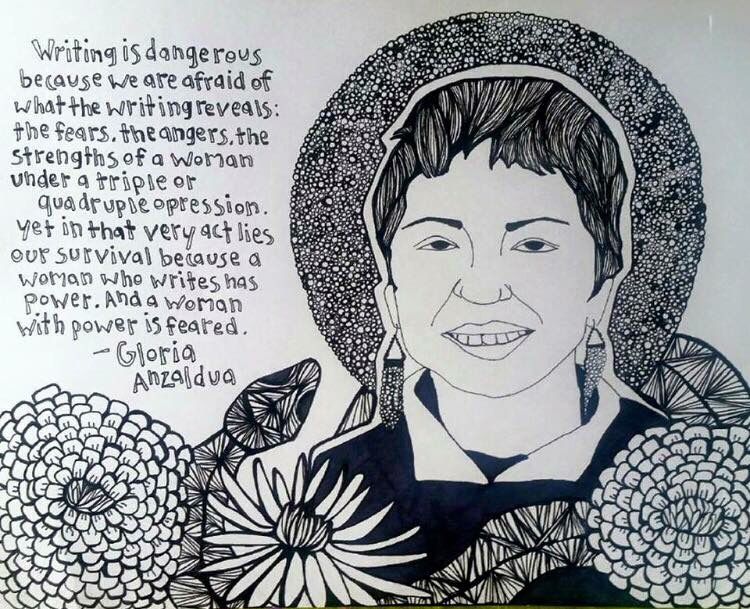



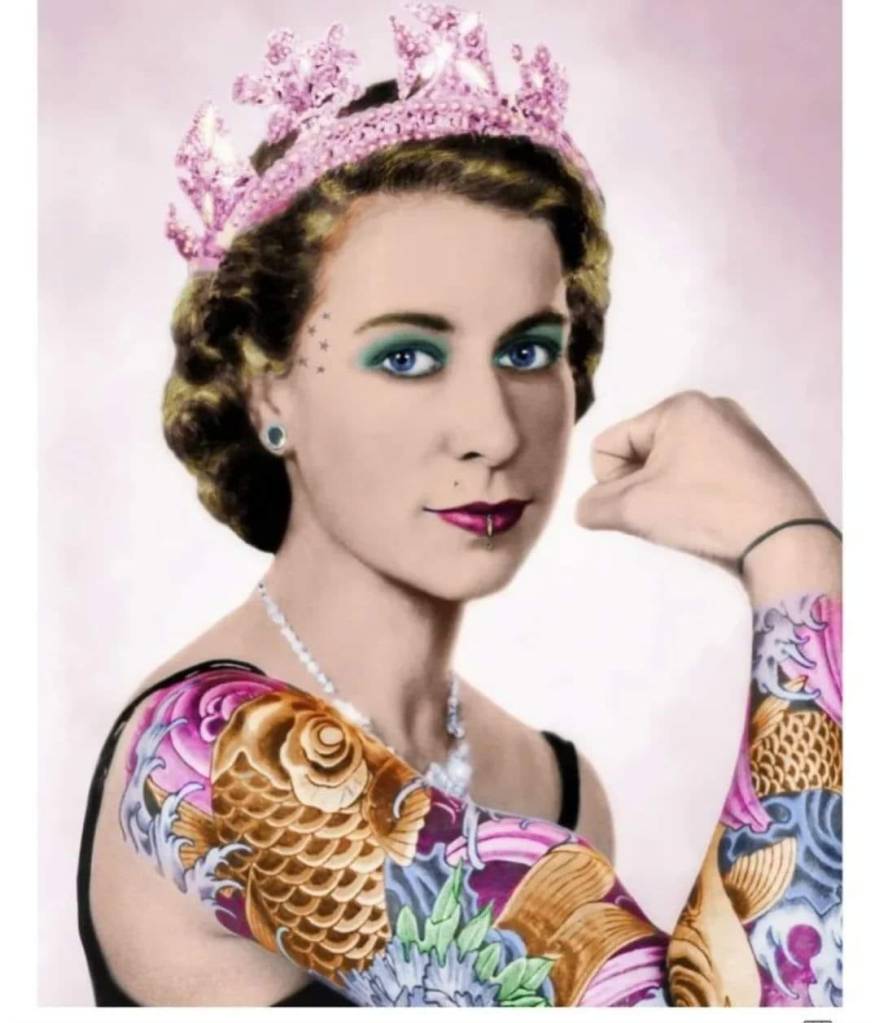

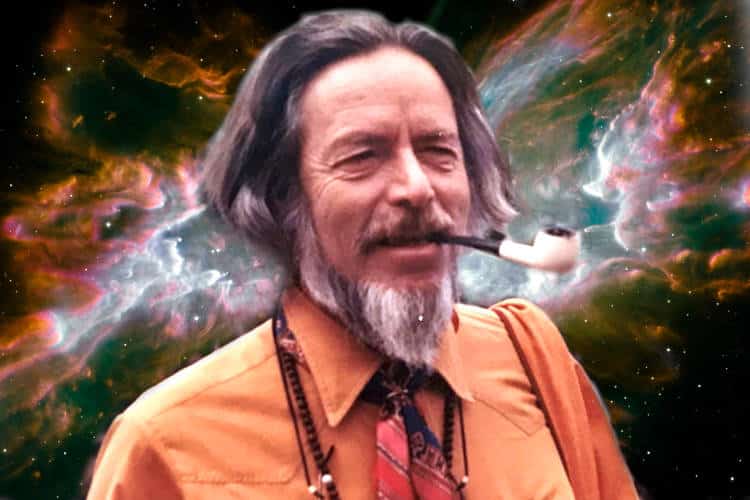



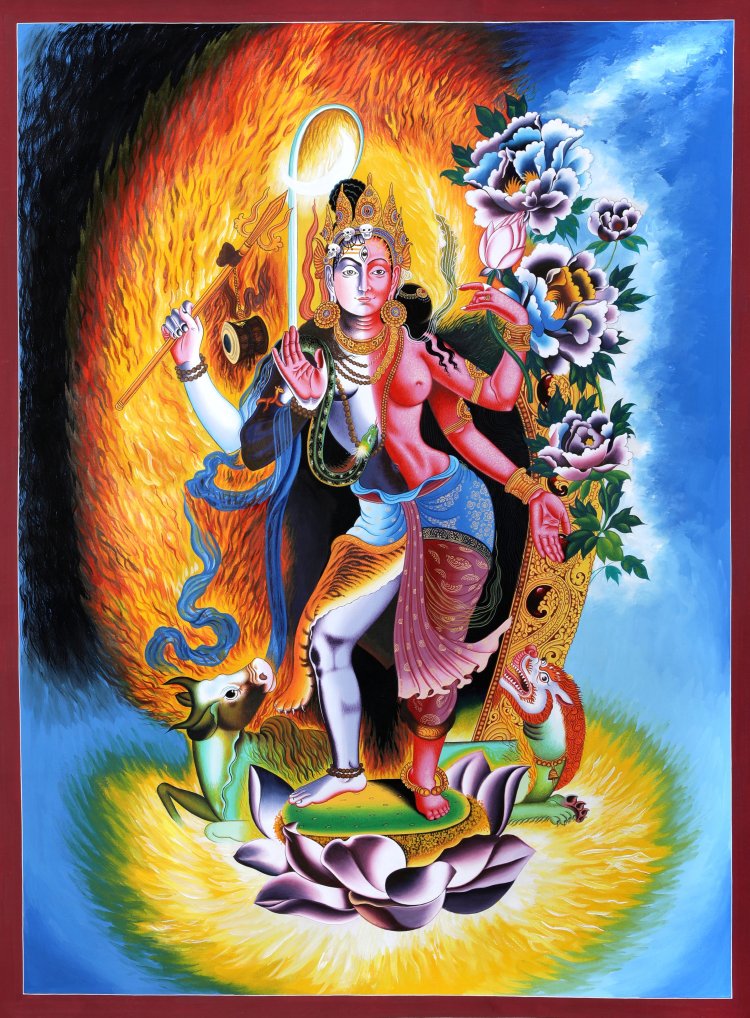


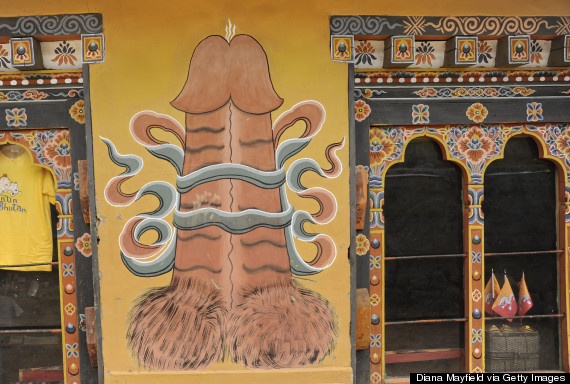
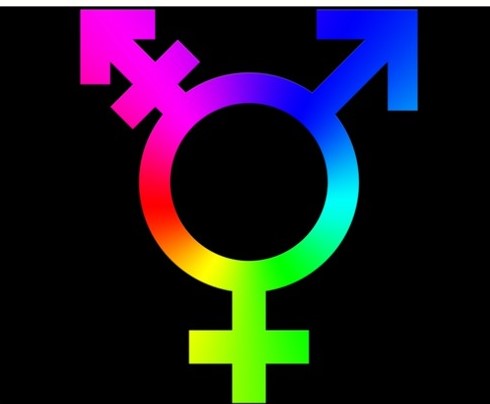



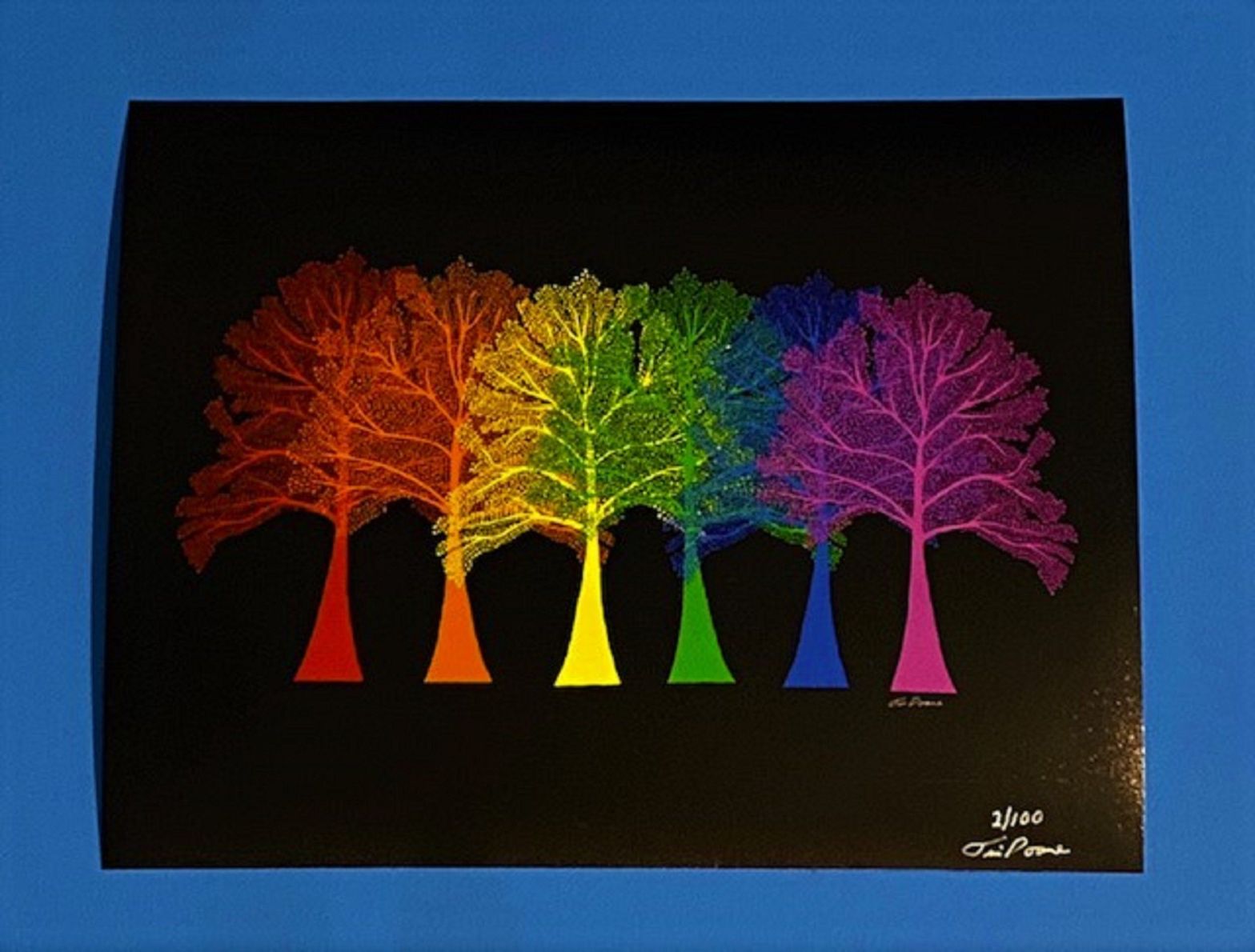
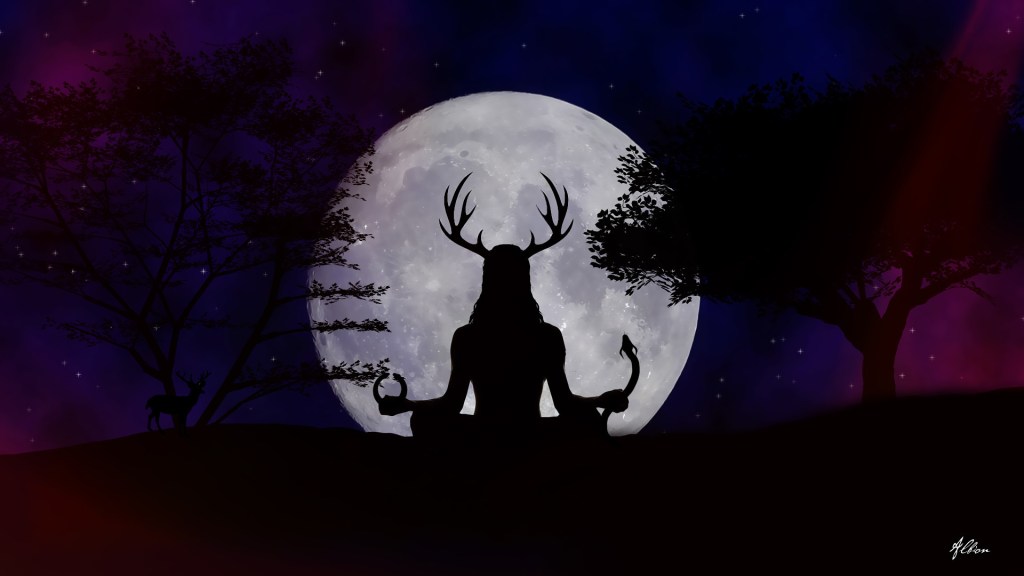
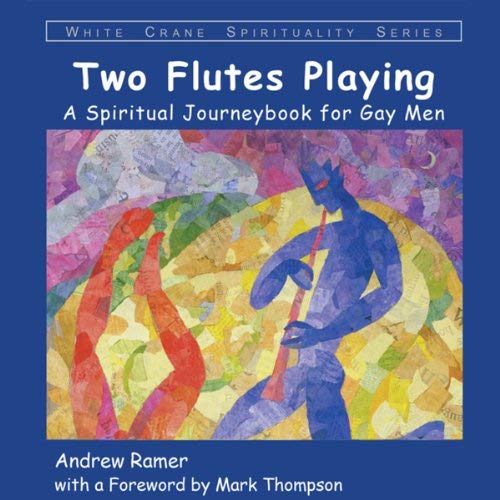


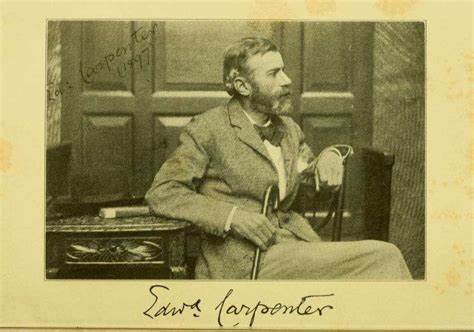

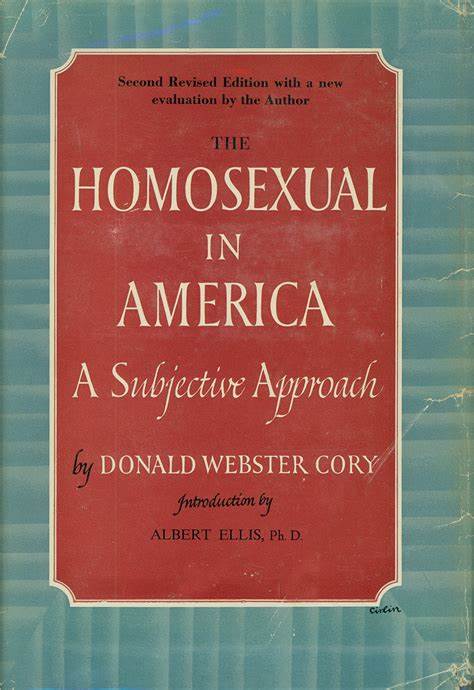

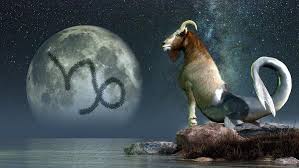

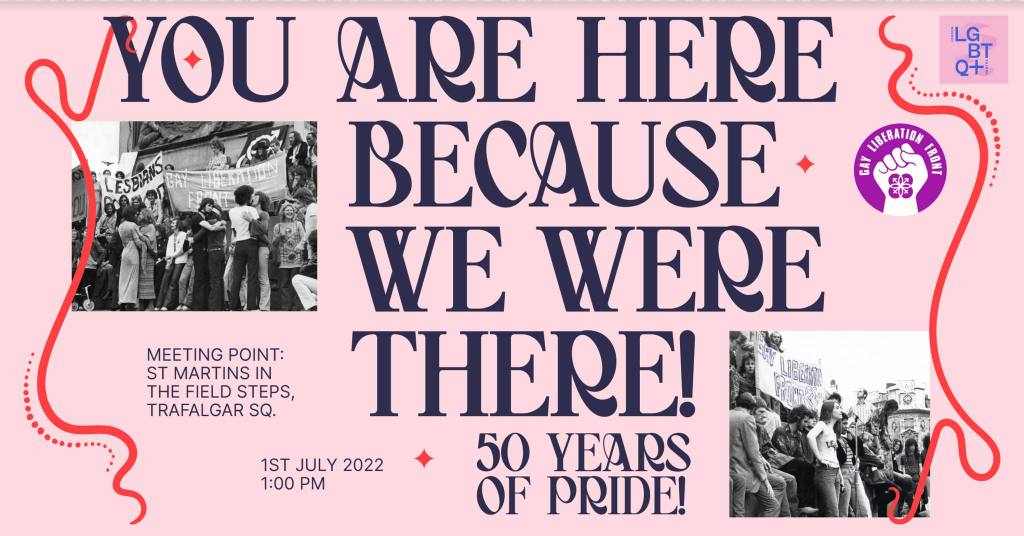
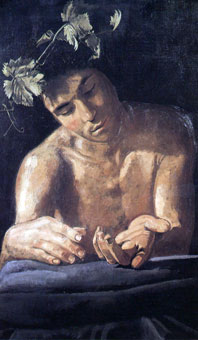

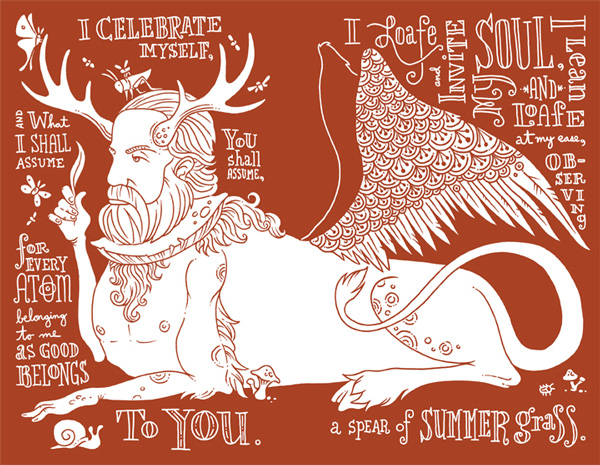


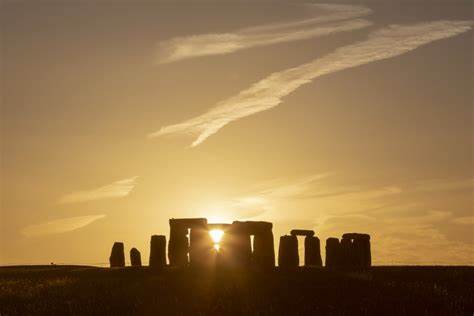
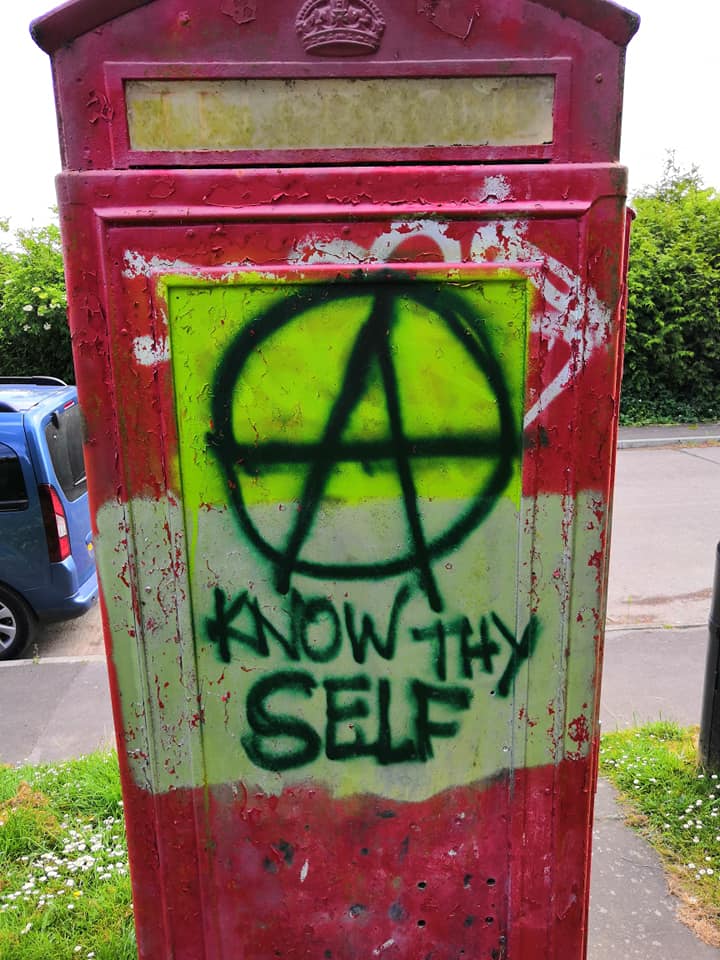





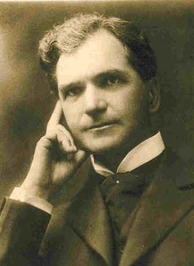
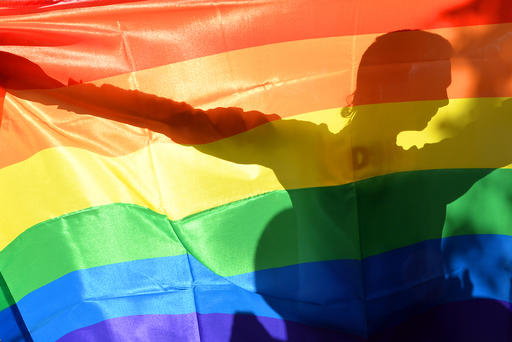



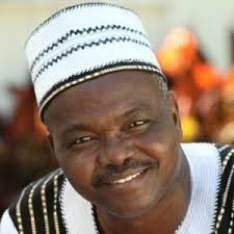



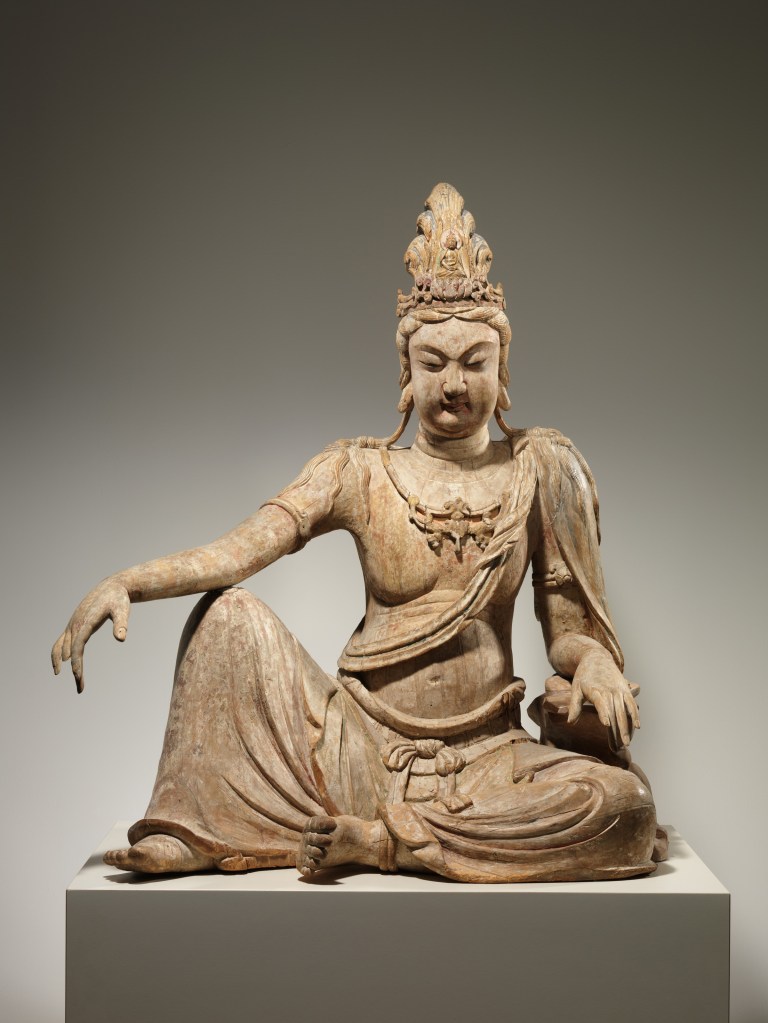

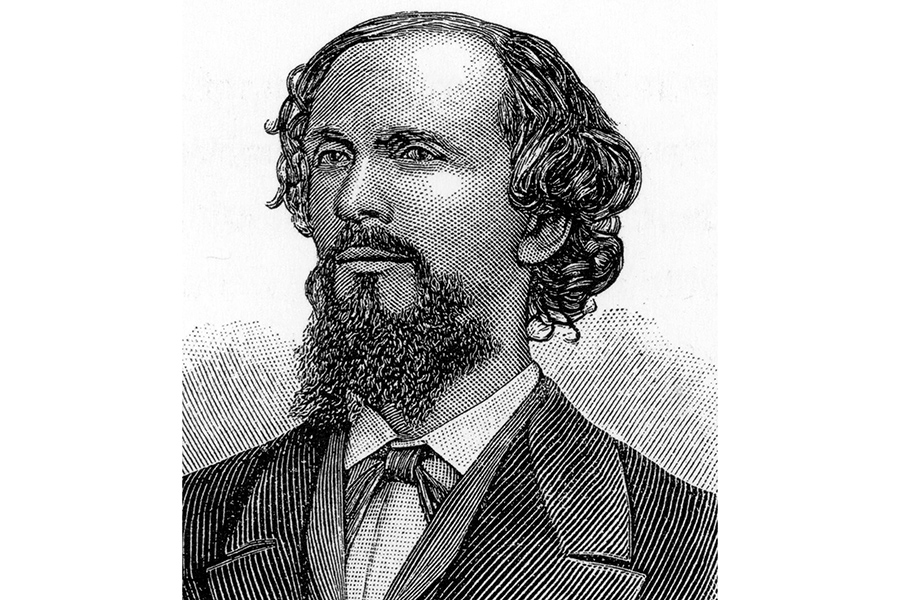
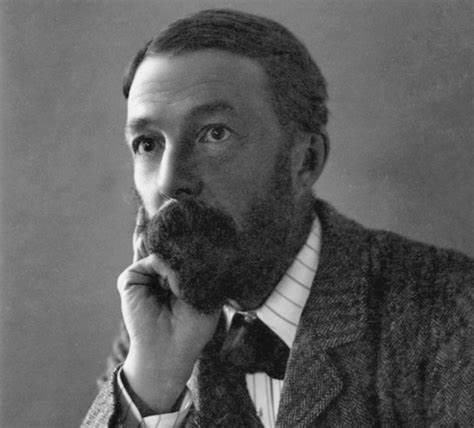


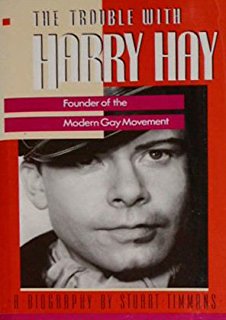





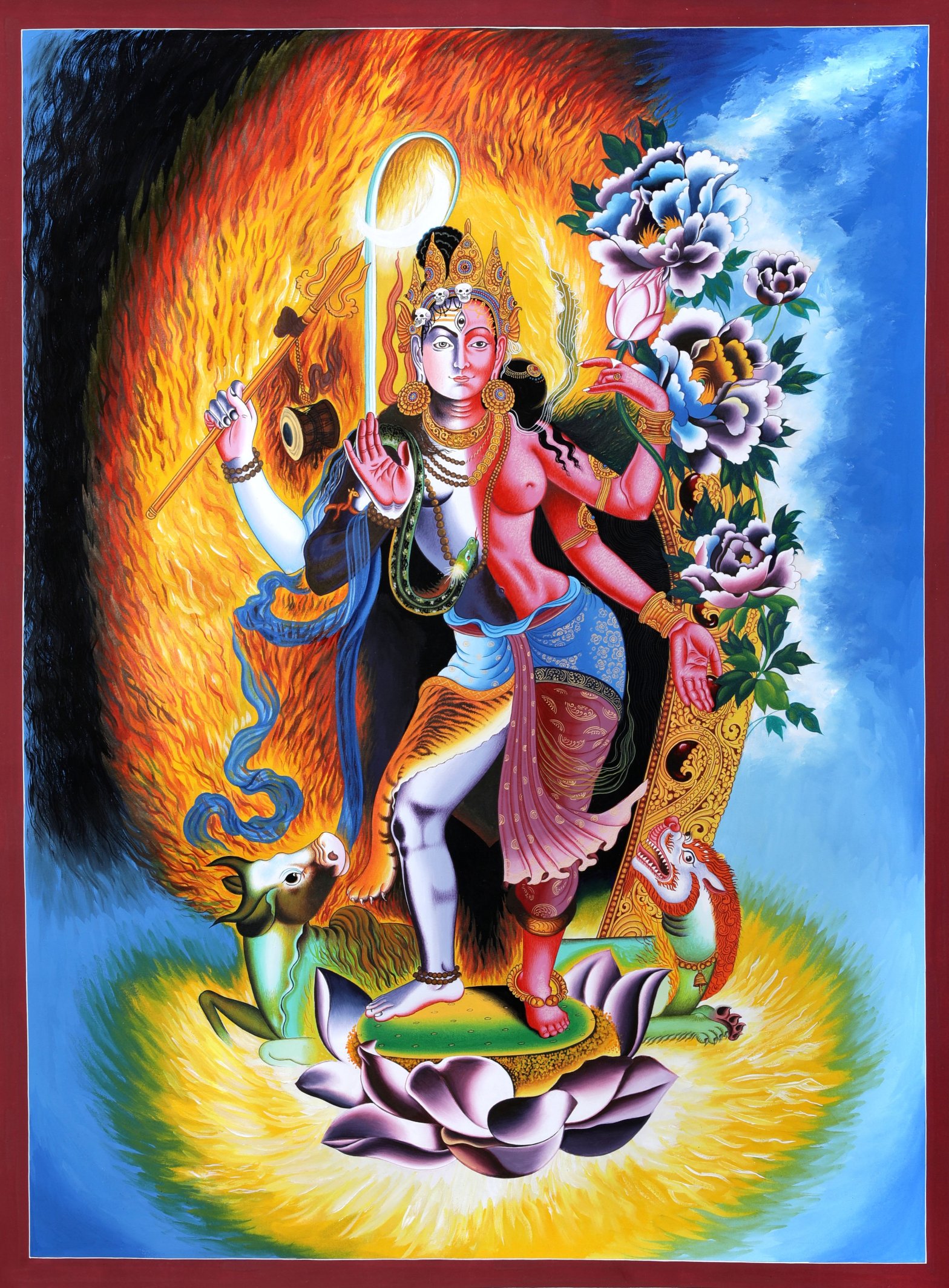
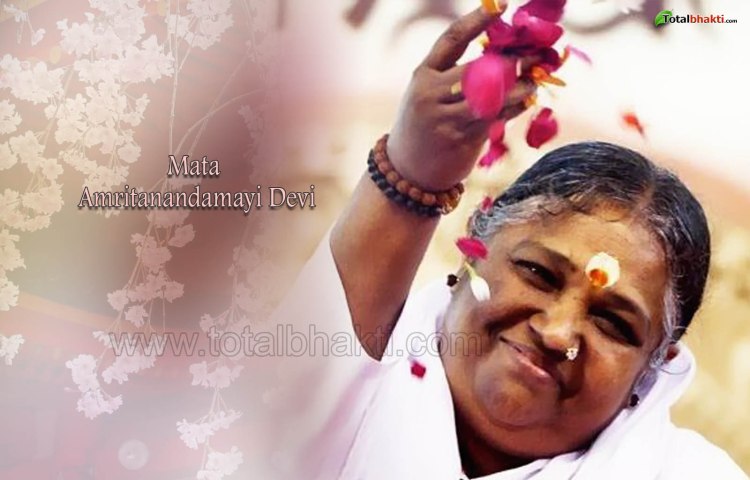


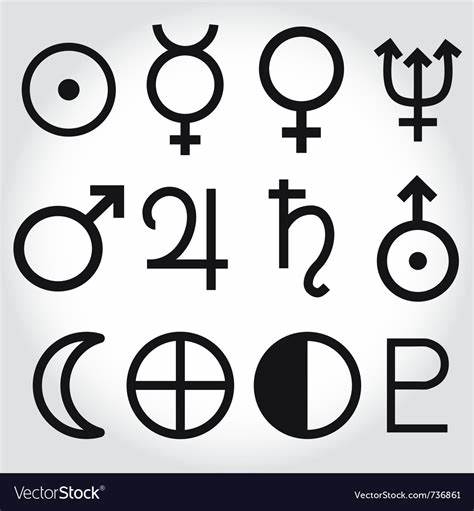

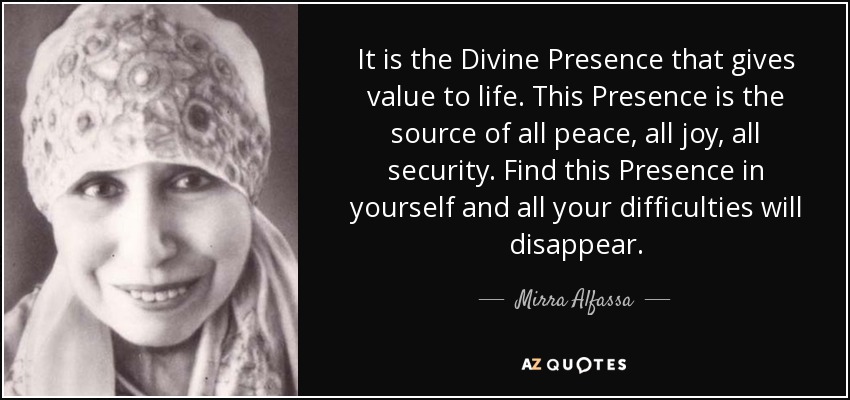

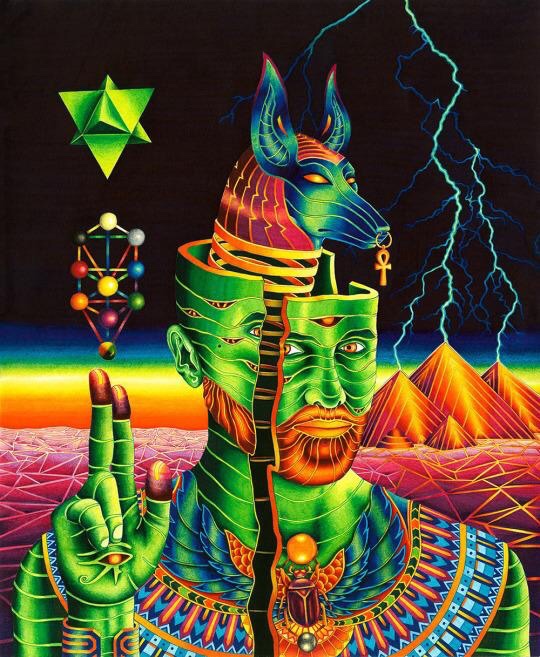
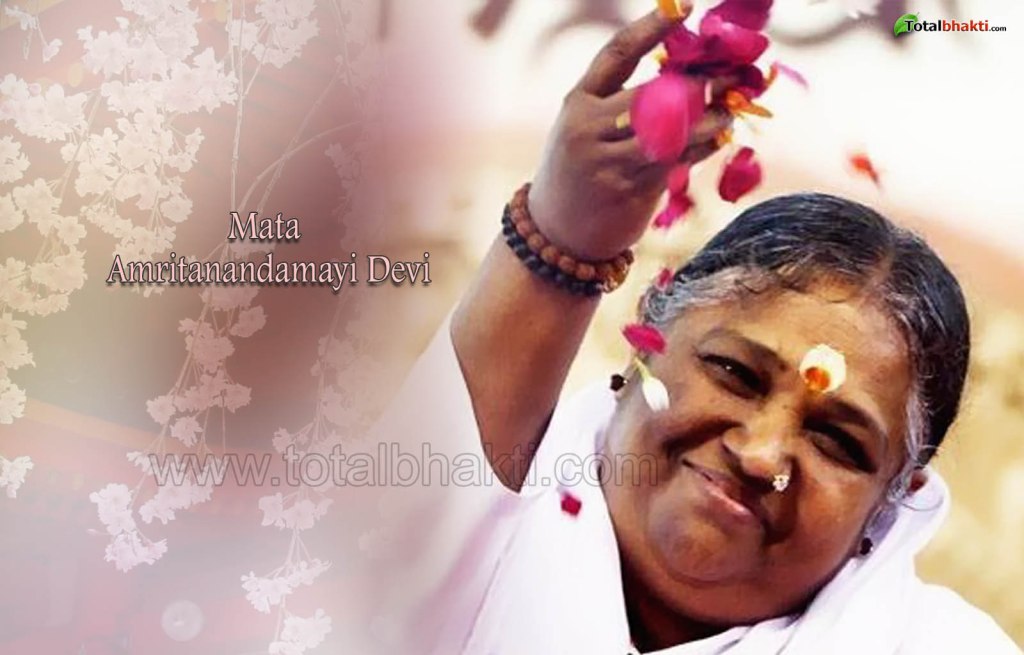
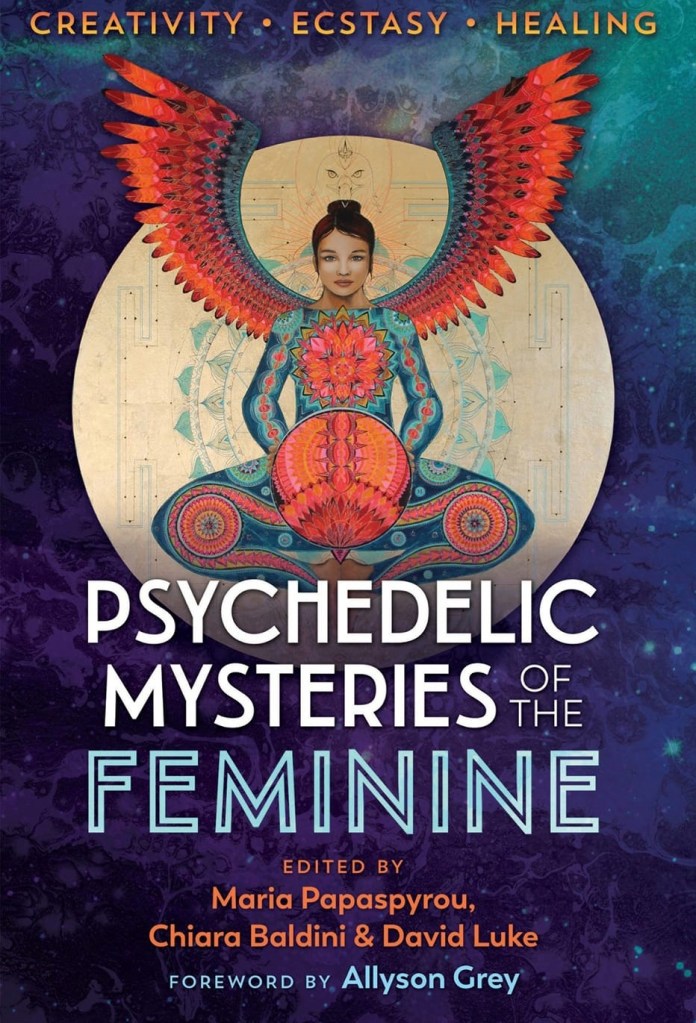
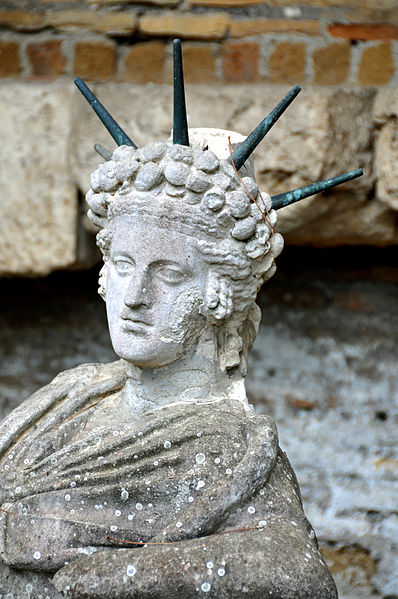
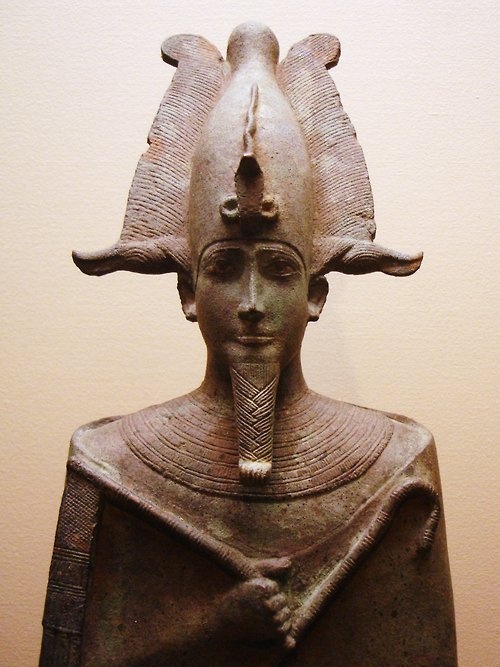
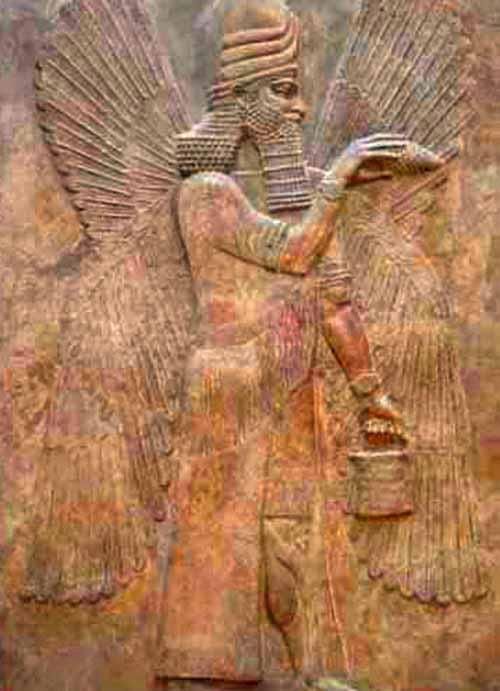
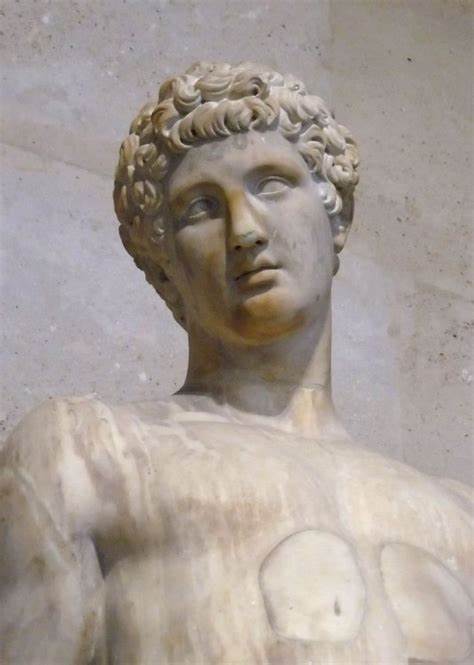
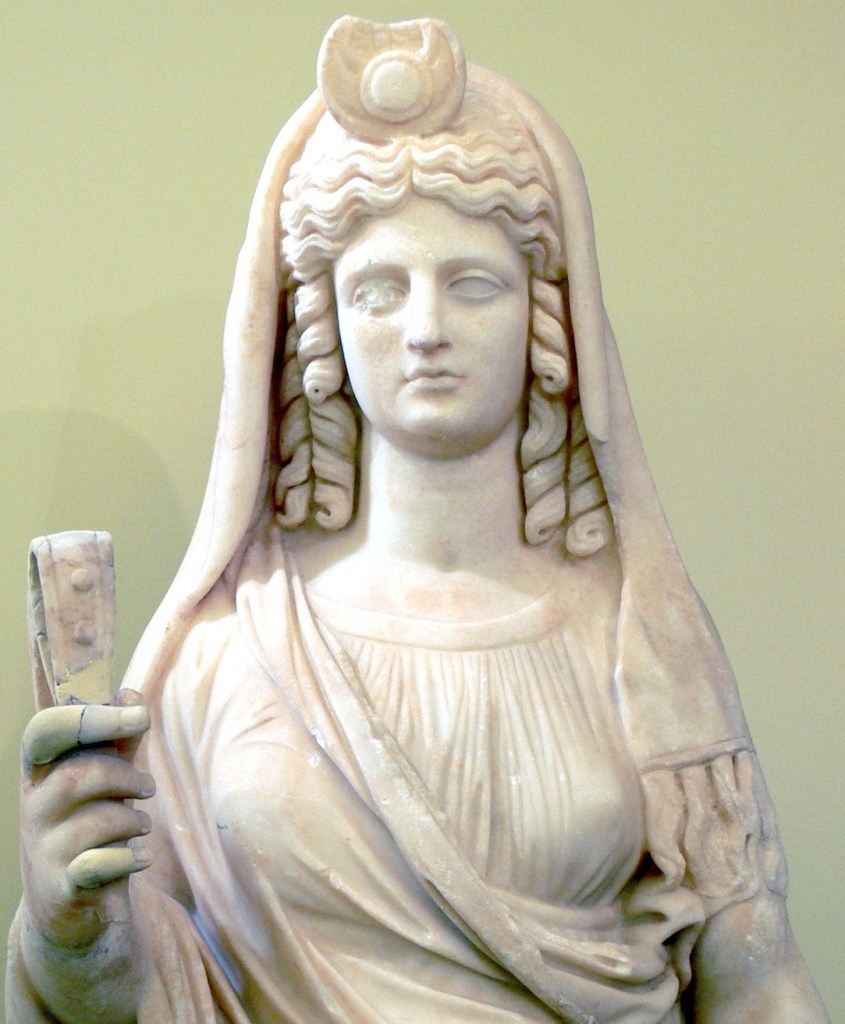
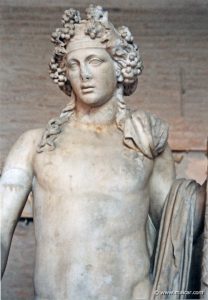
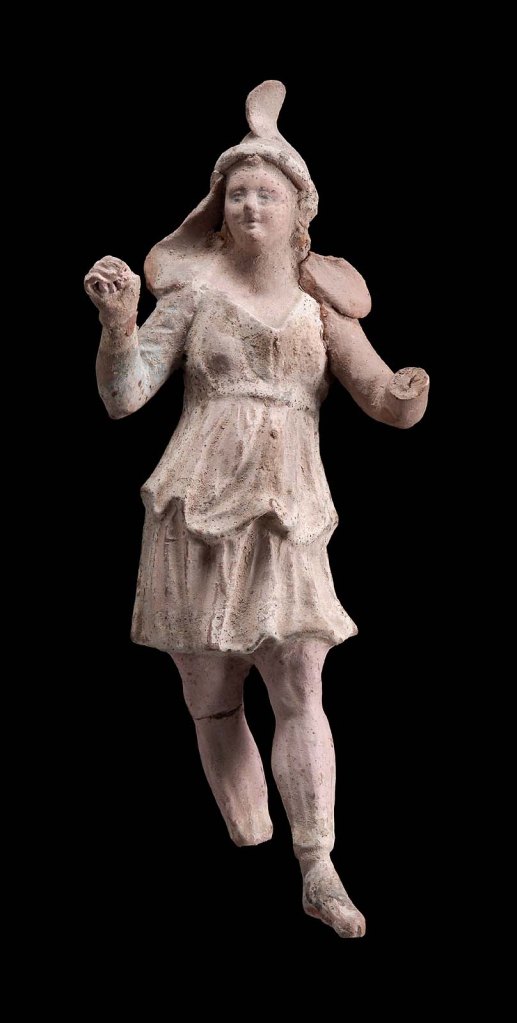
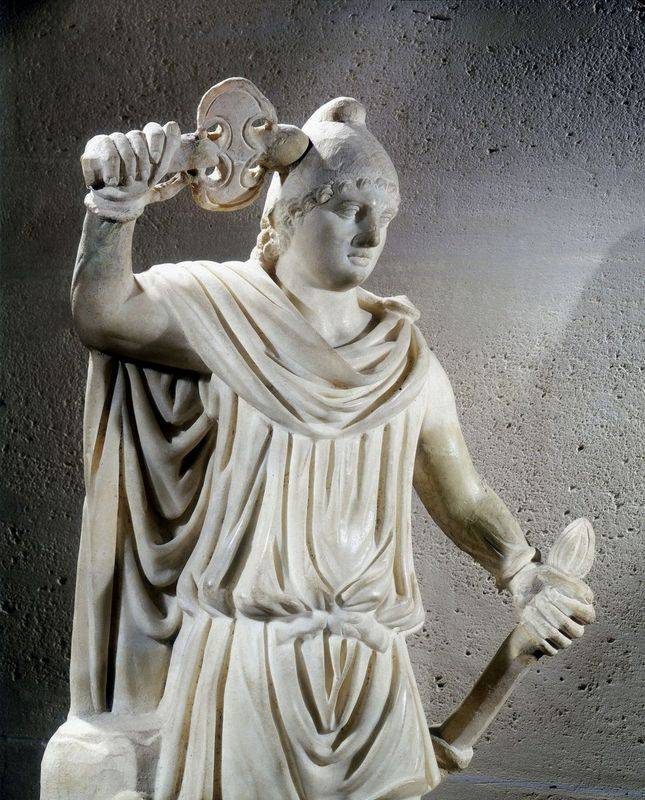

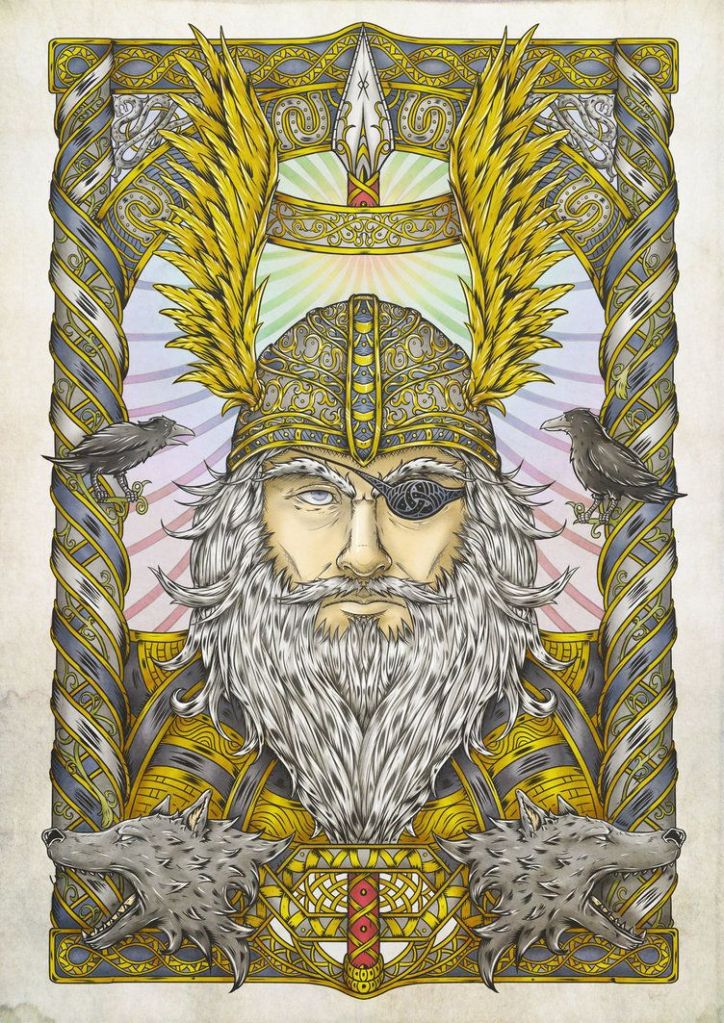
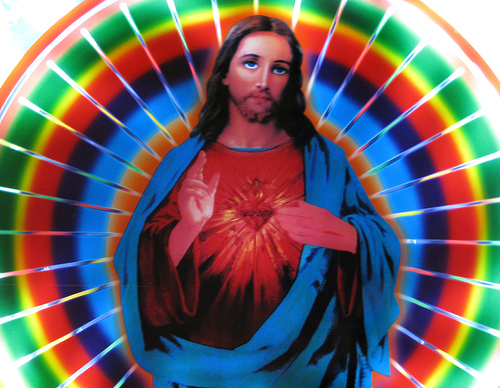
 rainbow messenger